“I pray that the eyes of your heart may be enlightened, so that you will know what is the hope of His calling, what are the riches of the glory of His inheritance in the saints, and what is the boundless greatness of His power toward us who believe. These are in accordance with the working…
(these words, ‘the working’, from Strong’s Greek concordance #1753, enérgeia = working, action, productive work, activity; in the NT, confined to superhuman activity; “divine energy”; typically refers to God’s energy which transitions the believer from point to point in His plan (accomplishing His definition of progress),
…of the strength of His might which He brought about in Christ, when He raised Him from the dead and seated Him at His right hand in the heavenly places, far above all rule and authority and power and dominion, and every name that is named, not only in this age but also in the one to come. (Ephesians 1:18-21, NASB.)

In physics, energy (from Ancient Greek word, enérgeia = ‘activity’) is the quantitative property that is transferred to a physical body or to a physical system, recognizable in the performance of work and in the form of heat and light. Energy is a conserved quantity—the law of conservation of energy states that energy can be converted in form, but not created or destroyed.
Mass is an intrinsic property of a body.
In physics, mass–energy equivalence is the relationship between mass and energy in a system’s rest frame. Mass–energy equivalence states that all objects having mass, or massive objects, have a corresponding intrinsic energy, even when they are stationary.
I do not believe that it is simply a coincidence that science and the Bible use the Greek word energeia when describing natural physical or metaphysical energy and mass and the working of God’s strength. I am certain that physicists use this word as they unwittingly confirm what the Bible had already said about energy and its observable results.
For example: Elements gather in space. Gas drifts through the universe and is drawn together by the force of gravity.
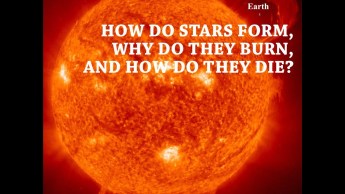
A star is ‘born; It burns brightly and releases energy and heat; too much mass gathers for the star to counteract the gravitational pull through the exclusion principle. The mass continues to collapse under gravitational forces, expelling and returning its mass out into the universe until it ‘burns out’ and a black hole is formed. Its purpose is accomplished, and the star returns its remains back to the universe and is recycled in an unknown and altered form. That is what is called ‘the death of a star’.

Is this not anagolos to the creation and birth and death of a person? Is this not a shadow of the boundless greatness of God’s power toward us who believe, in accordance with the working of the strength of His might which He brought about in Christ, when He raised Him from the dead and seated Him at His right hand in the heavenly places, far above all rule and authority and power and dominion, and every name that is named, not only in this age but also in the one to come?
Is the scientific description of ‘the birth and death’ of a star also a fitting analogy to our birth, life and death? We are born and we ‘burn brightly’, releasing energy and heat; at some point our ‘mass’ begins to collapse, expelling and returning our mass from whence it came. Our purpose accomplished, our remains go back to the earth and the universe. But in this case our spirit lives on either as a glorified body joined with the Spirit of God or it goes to eternal death and destruction – an unknown and altered form.
Scientists observe the universe in terms of energy and mass. They theorize what they see using prior knowledge, some empirical evidence, their trained and educated imagination, complex mathematical equations, and assumptions to tell each other and the world what they think is going on in our natural physical world. They anthropomorphize their nature finding to make them more lifelike, relatable and easier for the non-scientific world to accept.

But take the same theories and assumptions and frame them in the language of the Bible and the scientific elite frown and shake their heads in disparaging disagreement.
Nonetheless, these highly educated and supremely intelligent people are also among the most biased, narrow-minded and myopic people on the planet. They expand their minds and understanding through a very narrow lens and down an ever narrower path. (And they have been wrong in their theories more than they have been right, hence the endless litany of ‘new or corrected findings’ on age old matters, once thought settled.)
The scientific community says it is normal that they are evolving and refining their studies and findings. They say this is how science works.
Physicists have done and are doing amazing things. Their findings and the application of those inventions continue to make life much better for people. But any moral and ethical standards guiding scientific research and discovery have been lowered or are frighteningly absent. We thank you scientists for your dedication and hard work and for all of your accomplishments. Now we pray you don’t find ways to annihilate us all.
The Bible states its findings of science in an alternative language which is constrained and guided by moral and ethical absolutes. And that, in my opinion, is the rub for most scientists. They, like most people resent being told what to do and how the should live.

“The fact that the universe is not locally real is one of the more disquieting discoveries of the last half-century.”
Scientists, and physicists in particular. could be described as ‘odd fellows’ and as ‘weird’ or ‘strange’, not people who think like the ‘normal person’ thinks. Many of them describe themselves as much. Watch them and listen to them and you will probably agree (unless you too are a ‘brainiac’).
Physicists, astrophysicists, quantum physicists, theoretical physicist, etc., think. They think about the physical world around us. A physicist specializes in the study of the fundamental principles governing the behavior of matter and energy in the universe. Physicists explore the laws of nature, seeking to understand phenomena ranging from the behavior of subatomic particles to the large-scale structure of the cosmos. They employ mathematical models, experiments, and advanced technologies to formulate theories and contribute to our understanding of the physical world.
I could have said that physicists dream, if I wanted to super-simplify my point, and that would have been mostly correct. They dream up things from their odd way of looking at the world and universe and wonder how they work or why they work the way the work. They even dream about unseen things that seem possible or interesting and then go about trying to prove them correct or false.
The latest crazy idea is that the universe is not real. (First, let’s define ‘real’ according to the referenced article). “Real,” indicates that objects have defined attributes independent of observation—for example, an apple can be red even when no one is looking; “local,” which means that objects can only be impacted by their surroundings, and that any effect cannot travel faster than light. Quantum physics researchers have discovered that these concepts cannot both be true. Instead, the evidence suggests that objects are not only influenced by their surroundings, and that they may lack distinct properties prior to measurement.
‘Three physicists: John Clauser, Alain Aspect, and Anton Zeilinger were awarded the Nobel Prize in Physics in 2022 in equal parts “for experiments with entangled photons, establishing the violation of Bell inequalities, and pioneering quantum information science.” (“Bell inequalities” alludes to the early 1960s pioneering work of Northern Irish physicist John Stewart Bell, who established the groundwork for this year’s Physics Nobel.)
Now if you think that is weird (and unintelligible), try this one:

Scientists (physicists), say that the universe is made up of approximately 68% dark energy and 27% dark energy and 5% of visible matter. Scientists surmise that these types of matter exist by the effect they have on the universe. They go on to explain that you cannot see dark energy or dark matter and you cannot measure them. In fact, they cannot prove either exist and will admit they aren’t even certain they do exist. They just THINK they do. And with their record of accuracy, they are probably right, to some degree. It sounds rude perhaps, but they dream this stuff up from observation and imagination based on established science.
SO IF SCIENCE CAN ACCEPT THAT, WHY WON’T SCIENCE ACCEPT THIS?
Strangely similar to the study of quantum mechanics, the existence of God is can be observabed by the effects He has on the universe. Romans 1:20 says, “For ever since the creation of the world His invisible attributes, His eternal power and divine nature, have been clearly seen, being understood through His workmanship [all His creation, the wonderful things that He has made], so that they [who fail to believe and trust in Him] are without excuse and without defense.”
Additionally, read Genesis 1:1-5, “In the beginning God (Elohim) created [by forming from nothing] the heavens and the earth. The earth was formless and void or a waste and emptiness, and darkness was upon the face of the deep [primeval ocean that covered the unformed earth]. The Spirit of God was moving (hovering, brooding) over the face of the waters. And God said, “Let there be light”; and there was light. God saw that the light was good (pleasing, useful) and He affirmed and sustained it; and God separated the light [distinguishing it] from the darkness. And God called the light day, and the darkness He called night. And there was evening and there was morning, one day.”

The study in Genesis is supported by scholastic research. Scholars attribute the authorship of Genesis – and the other first four books of the Old Testament known as the Pentateuch – to Moses. But how do we know this? How do we know that Moses, and not a series of authors as proposed in the JEDP theory linked above, wrote this book?
First, as this Answers in Genesis article explains, we have documentary witnesses. This means we have verses in the Bible that attribute the authorship to him such as Numbers 33:1-2.
Second, as mentioned in the Answers in Genesis article, not only does the Pentateuch confirm Moses’ authorship, but the rest of the Bible, including the New Testament does as well. This means thousands of years of Jewish tradition would have upheld this position.
But this does bring forth the question: how would Moses know all of these things? How would he know about the events of Genesis and other events that happened hundreds (even thousands) of years before his time?
First, we cannot discount supernatural revelation. Scripture is divinely inspired.
Second, we also have evidence throughout Scripture of tradition being passed down – from specific prayers of Abraham to the bones of Joseph. Their culture worked quite differently than ours. They remembered details better, had a stronger oral tradition, had longer attention spans. Not to mention the events of Genesis ended about 300 years before Moses came into existence. Because of the strong oral tradition and duty of the Jewish people to preserve their roots, not much could have changed in the accounts throughout that time.
God spoke to Moses and Moses had those thoughts. That’s right. Moses thought these things and then wrote them. Does that sound pretty astounding? It is much less incredible than unprovable dark matter, dark energy, the existence of parallel universes and the idea that ‘the universe is actually not real’.
So, is science unwittingly proving the Bible has been right all along? If so, can science and the Bible become compatible once again?

In the end, it’s up to each person to decide. Here is a link to the movie and sequel to IS GENESIS HISTORY? I am pretty sure it will help you along your way.
Your Brother and Friend,
Mike Young
PS: I realize this article may seem esoteric to some – or unnecessary to others. But I love science. I like to read about what humankind is learning and doing with science. When this is framed within the parameters of THE GOD WHO CREATED IT ALL, and science points irrevocably toward God, I love it even more. I hope you can, too.
Discover more from Whitestone Fellowship
Subscribe to get the latest posts sent to your email.

