THE BOOK OF MATTHEW – Chapter 15
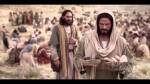
Inner Purity, Faith of a Gentile, Jesus Heals, Jesus Feeds 4,000
The language and style of Jesus’ teaching and remarks in this chapter are striking. He is direct and does not dull His points with apologies nor does He sidestep the issues He faces. One might even ask if His speech is perhaps unnecessarily harsh? The answer is NO. His speech and demeanor are on target. Time is short and there is much work to be accomplished. There is no time for long accommodating oratories or pathetically compromised teachings to convince the rebellious. Jesus is here to call the children of Israel to repentance. His speech is sharp to the hard of hearing and gentle to the willing, whether He is speaking to the Pharisees, His disciples, the Jews or a gentile woman.
Please pay attention and learn. This is our model. The time is short. There is much work yet to be done.
Tradition and Commandment
Matthew 15:1, Then some Pharisees and scribes came to Jesus from Jerusalem and said, verse 2, “Why do Your disciples break the tradition of the elders? For they do not wash their hands when they eat bread.” Verse 3. And He answered and said to them, “Why do you yourselves also break the commandment of God for the sake of your tradition? Verse 4. For God said, ‘HONOR YOUR FATHER AND MOTHER,’ and, ‘THE ONE WHO SPEAKS EVIL OF FATHER OR MOTHER IS TO BE PUT TO DEATH.’ Verse 5. But you say, ‘Whoever says to his father or mother, “Whatever I have that would help you has been given to God,” verse 6, he is not to honor his father or mother.’ And by this you have invalidated the word of God for the sake of your tradition. Verse 7. You hypocrites, rightly did Isaiah prophesy about you, by saying:
Verse 8, ‘THIS PEOPLE HONORS ME WITH THEIR LIPS,
BUT THEIR HEART IS FAR AWAY FROM ME.
Verse 9. ‘AND IN VAIN DO THEY WORSHIP ME,
TEACHING AS DOCTRINES THE COMMANDMENTS OF MEN.’”
(Commentary Break): Jesus is being challenged by the Pharisees about their tradition of washing one’s hands before eating bread. This tradition, known as netilat yadayim required that Jews wash their hands and say a blessing before eating any meal that includes bread or matzah. This ritual, although instituted by the religious establishment of priests and not found in the Talmud, it was a serious matter to the Jew and it was to be followed and obeyed or suffer imposed consequences (see myjewishlearning for more detail).
Jesus call the Pharisees to account on this man-instituted ritual, comparing and contrasting their ritual demands to an actual requirement of the Torah, (the Jewish ‘bible’), one of the ten commandments, that of honoring father and mother. The Jews would find ways to side-step helping a parent in need by claiming all their excess of available finances or goods had had already been given to God. Jesus called these Pharisees, hypocrites, and quoted the commandment that such as these should be put to death. Jesus, thereby, invalidates their ritual and calls out their hypocrisy. Jesus continues to quote from Isaiah 29:13-14, saying, “This people honors Me with their lips, but their heart is far away from me. In vain do they worship Me, teaching as doctrines the rituals of men.”
This is not just to explain the context and the meaning of these verses, but to warn present and future generations of Christians against abrogating God’s law with the traditions of people. It leads to death, and a great majority of churches around the world are doing just that: replacing the plain teachings and commandments of God with what pleases men and women. Take note. Time is short. Jesus says we are to repent, today, and follow Him! (End Commentary Break).
Verse 10. After Jesus called the crowd to Him, He said to them, “Hear and understand! Verse 11. It is not what enters the mouth that defiles the person, but what comes out of the mouth, this defiles the person.”
Verse 12. Then the disciples came and said to Him, “Do You know that the Pharisees were offended when they heard this statement?” Verse 13. But He answered and said, “Every plant which My heavenly Father did not plant will be uprooted. Verse 14. Leave them alone; they are blind guides of blind people. And if a person who is blind guides another who is blind, both will fall into a pit.”
(Commentary Break): Jesus says, “Hear and understand”. These Words are very important and specific.
The word “Hear” is from the Greek word ‘akoúō, which means to hear God’s voice which prompts Him to birth faith within the listener!
The word, “understand” from the Greek word, ‘syníēmi, means to ‘put the facts together’ to arrive at a final conclusion, complete with life-applications. This ideas is closely connected with discerning and doing the preferred will of God.
Once again referring to Jewish teachings about rituals concerning dietary purity, Jesus explains that the Pharisees have it wrong again. They are seeing the outer laws but Jesus is and is explaining the indwelling law, the law that is to be written on our hearts. He says, it is what comes out of the mouth that defiles; for from the mouth spring issues of the heart. (see Proverbs 4:23).
Nowadays, it seems, that we don’t worry too much about silly, frivolous or profane speech, if it is all in fun, even in the church. And we establish many rituals, practices, habits or ‘legacies’ of our own and impose the on our Churches.
Jesus warns that those who practice such things are blind guides leading the blind, and they both will fall into a pit! (End Commentary Break).
The Heart of Man
Verse 15. Peter said to Him, “Explain the parable to us.” Verse 16. Jesus said, “Are you also still lacking in understanding? Verse 17. Do you not understand that everything that goes into the mouth passes into the stomach, and is eliminated? Verse 18. But the things that come out of the mouth come from the heart, and those things defile the person. Verse 19. For out of the heart come evil thoughts, murders, acts of adultery, other immoral sexual acts, thefts, false testimonies, and slanderous statements. Verse 20. These are the things that defile the person; but to eat with unwashed hands does not defile the person.”
The Faith of a Canaanite Woman
Verse 21. Jesus went away from there, and withdrew into the region of Tyre and Sidon. Verse 22. And a Canaanite woman from that region came out and began to cry out, saying, “Have mercy on me, Lord, Son of David; my daughter is severely demon-possessed.” Verse 23. But He did not answer her with even a word. And His disciples came up and urged Him, saying, “Send her away, because she keeps shouting at us!” Verse 24. But He answered and said, “I was sent only to the lost sheep of the house of Israel.” Verse 25. But she came and began to bow down before Him, saying, “Lord, help me!” Verse 26. Yet He answered and said, “It is not good to take the children’s bread and throw it to the dogs.” Verse 27. And she said, “Yes, Lord; but please help, for even the dogs feed on the crumbs that fall from their masters’ table.” Verse 28. Then Jesus said to her, “O woman, your faith is great; it shall be done for you as you desire.” And her daughter was healed at once.
(Commentary Break): Once again, the language Jesus uses here seems stark and harsh.
A Canaanite woman pleads with Jesus to help here demon possessed daughter, and she apparently knew about Jesus, as she called Him “Lord, Son of David”. But Jesus seems to ignore her. Even the disciples urged Jesus to dispatch her.
Finally, Jesus answers and refers to her a ‘dog’ and says He has come only to the lost sheep of Israel. But she would not relent nor would she be denied, so she pleads further, “Lord, help me!”
Jesus refers to her as a ‘dog’ again, but it is interesting to know that Greek word Jesus uses for ‘dog’ is more like a ‘puppy’ or a house pet, not a mongrel. Jesus is showing compassion while speaking in the local vernacular.
The woman continues to plead with Jesus and He says to her, “Woman, your faith is great; it shall be done for you as you desire.” And her daughter was healed at once! Demanding things or matters of Jesus only leads to silence, but Jesus shows grace, mercy and favor to the meek, the humble, the needy, and to those who believe. So, when you pray, take note of this teaching. Hear and understand. (End Commentary Break).
Healing Crowds
Verse 29. Departing from there, Jesus went along the Sea of Galilee, and after going up on the mountain, He was sitting there. Verse 30. And large crowds came to Him bringing with them those who were limping, had impaired limbs, were blind, or were unable to speak, and many others, and they laid them down at His feet; and He healed them. Verse 31. So the crowd was astonished as they saw those who were unable to speak talking, those with impaired limbs restored, those who were limping walking around, and those who were blind seeing; and they glorified the God of Israel.
Four Thousand Men Fed
Verse 32. Now Jesus called His disciples to Him and said, “I feel compassion for the people, because they have remained with Me now for three days and have nothing to eat; and I do not want to send them away hungry, for they might faint on the way.” Verse 33. The disciples said to Him, “Where would we get so many loaves in this desolate place to satisfy such a large crowd?” Verse 34. And Jesus said to them, “How many loaves do you have?” And they said, “Seven, and a few small fish.” Verse 35. And He directed the people to sit down on the ground; verse 36, and He took the seven loaves and the fish; and after giving thanks, He broke them and started giving them to the disciples, and the disciples gave them to the crowds. Verse 37. And they all ate and were satisfied, and they picked up what was left over of the broken pieces, seven large baskets full. Verse 38. And those who ate were four thousand men, besides women and children.
(Commentary Break): Verses 29 through 38, although bear great symbolism, are self-explanatory. What I would point out is that “Jesus felt compassion” for those who are following Him, and He did something about it.
Let me make that personal: “Jesus feels compassion for those who follow Him, and for those in need, He does something about it.” (End Commentary Break).
Verse 39. And sending away the crowds, Jesus got into the boat and came to the region of Magadan.
(Commentary Break): Magadan is locality on the western shore of the Sea of Galilee to which Jesus came after feeding the 4,000. Magadan was identical with, or at least included in, Magdala, the home of Mary Magdalene. Khirbet Mejdel, three miles N.W. of Tiberias is believed to stand on the site of Magdala today. (End Commentary Break).
Embracing Movement and Change
Jesus’ journey to Magadan underscores the importance of movement and change in the life of a believer. Just as Jesus traveled from place to place to fulfill His mission, modern Christians are called to embrace change and be willing to move wherever God leads them. This might mean physical relocation, changes in vocation, or shifts in ministry focus. The key lesson is to remain flexible and obedient to God’s direction.
The Power of Miracles
The mention of Magadan follows the miracle of feeding the four thousand. This event reminds Christians of the power of Jesus’ miracles and His ability to provide abundantly. Modern believers are encouraged to trust in Jesus’ power to meet their needs, both physical and spiritual. Miracles, both great and small, continue to testify to God’s active presence in the world.
Faithful Witness
The account of Jesus’ travels and the inclusion of places like Magadan serve as a reminder of the importance of being a faithful witness. Just as Jesus reached out to different regions, Christians are called to be witnesses of His love and truth in diverse settings. This involves sharing the gospel, serving others, and living out one’s faith authentically in various contexts.
Connection to a Loving God – God’s Care for All People
Jesus’ movement to regions like Magadan reflects God’s care for all people. Jesus did not limit His ministry to one place or one group of people. Instead, He demonstrated God’s love and compassion by reaching out to different communities. This underscores the inclusive nature of God’s love, reminding believers that God’s care extends to everyone, regardless of their location or background.
God’s Guidance in Transitions
The transitions in Jesus’ ministry, including His journey to Magadan, illustrate God’s guidance in times of change. Just as Jesus was guided by the Father in His earthly ministry, modern Christians can trust in God’s guidance during their own transitions. Whether facing personal, professional, or spiritual changes, believers can rely on God’s wisdom and direction.
Connection to Jesus Christ – Jesus as the Good Shepherd
Jesus’ movement to Magadan and other regions showcases Him as the Good Shepherd who goes after His flock, seeking to save and serve. This reflects His heart for the lost and His dedication to bringing God’s message to all. For modern Christians, this connection emphasizes the need to follow Jesus’ example in seeking out and ministering to those in need.
The Bread of Life
The miracle preceding Jesus’ departure to Magadan, where He fed the four thousand, highlights Jesus as the Bread of Life. This miracle symbolizes Jesus’ ability to satisfy the deepest needs of humanity. Christians are reminded that true fulfillment and sustenance come from Christ alone, who provides both physical and spiritual nourishment.
Conclusion
For modern Christians, this provides valuable lessons about embracing change, witnessing faithfully, and trusting in God’s provision and guidance. Understanding Magadan’s place in biblical history connects believers to the broader narrative of God’s redemptive plan, ultimately fulfilled in Jesus Christ, who continues to guide, provide, and care for His people. (the preceding 8 paragraphs are from videobible.com).
There is a lot to be considered in this chapter. I would caution us to remember, first, that Jesus is Lord and that we are His servants. We do not supersede Him, and that it is He who does His works through us.
Secondly, straight talk, delivered in love with the intention of drawing all people to Christ. We should remember to season our speech with the power and fire of the
Gospel of Jesus, but to temper it with the love and compassion shown by Christ our Lord.
Your Brother and Friend,
Mike Young.
Discover more from Whitestone Fellowship
Subscribe to get the latest posts sent to your email.

