THE BOOK OF JOHN, Chapter 1, part 3
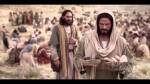
(verses 19 – 51)
Jesus’ Public Ministry
This Book and this chapter are not meant to be just a narration of the life and ministry of John the Baptist nor of Jesus’ Himself. It is meant to be an example and a pattern for our lives. It gives us a deeper understanding of the lives of Jesus, His disciples for application to our lives.
Please, as you read and listen to these verses, meditate on them as if you are there, participating. Absorb every word, action and thought. Then, go and do as He has done and what He has taught.
John 1:19. This is the testimony of John, when the Jews sent priests and Levites to him from Jerusalem to ask him, “Who are you?” Verse 20. And he confessed and did not deny; and this is what he confessed: “I am not the Christ.” Verse 21. And so they asked him, “What then? Are you Elijah?” And he said, “I am not.” “Are you the Prophet?” And he answered, “No.” Verse 22. Then they said to him, “Who are you? Tell us, so that we may give an answer to those who sent us. What do you say about yourself?” Verse 23. He said, “I am THE VOICE OF ONE CALLING OUT IN THE WILDERNESS, ‘MAKE THE WAY OF THE LORD STRAIGHT,’ as Isaiah the prophet said.”
Commentary Break: (It is striking how John (the author) refers to John the Baptist in this narration. It is also striking that he uses the phraseology “he confessed and did not deny” as both a first-hand witness and the interrogated. Here is the interrogation and his confession:
(#1). I am not the Christ (assuming he has been asked if he claims to be the One).
(#2). “Are you Elijah?” John’s answer is a simple and straight forward “I am not”.
And, considering that Elijah did not die, but was taken to heaven in a whirlwind as he rode in a chariot of fire (2 Kings 2:11), then, arguing for a reincarnation (or a resurrection) of Elijah would miss the point. If anything, the prophecy of the Elijah “to come” would have been viewed as Elijah’s physical return to earth from heaven. The Bible is quite clear that John the Baptist is called “Elijah” because he came in the “spirit and power of Elijah” (Luke 1:17), not because he was Elijah in a literal sense. John the Baptist is the New Testament forerunner who points the way to the arrival of the Lord, just as Elijah filled that role in the Old Testament (and might again in the future—see Revelation 11).
(#3). Next, they asked, “are you the prophet?”, to which John replies with a definitive, “no”. (This question either seems redundant, shows that the priests and Levites were ignorant or denying that Jesus and the prophet could be the same or more likely were pressing him on his answer as is shown when they say, “Who are you? Tell us, so that we may give an answer to those who sent us. What do you say about yourself?” To which John answers by quoting Isaiah 40:3-5, “I am THE VOICE OF ONE CALLING OUT IN THE WILDERNESS, ‘MAKE THE WAY OF THE LORD STRAIGHT,’ as Isaiah the prophet said.”
NOTE: This is the quintessential pattern for our testifying to Christ. John does not claim to be anything more than a messenger sent by God, in the pattern and likeness of Isaiah.
Likewise, we are sent by God as his witnesses: “You shall be my witnesses both in Jerusalem and in all Judea and Samaria and to the remotest part of the earth (see Acts 1:8).
We are not to make claims beyond those of John the Baptist nor claims beyond the scope and authority conferred by Christ Jesus, whether as an overzealous and overly ambitious Christian or as do so many cults. (see Christian cults).
We are to “go, and make disciples of all the nations, baptizing them in the name of the Father and the Son and the Holy Spirit, teaching them to follow all – and only – those things He has commanded”. (see Matthew 28:18-20). (End Commentary Break).
Verse 24. And the messengers had been sent from the Pharisees. Verse 25. They asked him, and said to him, “Why then are you baptizing, if you are not the Christ, nor Elijah, nor the Prophet?” Verse 26. John answered them, saying, “I baptize in water, but among you stands One whom you do not know. Verse 27. It is He who comes after me, of whom I am not worthy even to untie the strap of His sandal.” Verse 28. These things took place in Bethany beyond the Jordan, where John was baptizing people.
(Commentary Break: And these messengers asked, “Why then” now becomes the question. “Why then are you baptizing if you are not the Christ, nor Elijah, nor the Prophet?”
A Jewish man called “Yochanan”, (John from the Hebrew language), was baptizing people in the Jordan River in first century Israel, including his cousin who would later become world famous: “Yeshua of Nazareth”, (Jesus of Nazareth). Many Jewish people responded to the call of this Jewish man to immerse themselves in the river as a sign of repentance, and a desire to get right with God. Some of the Pharisees were also among them. Did Yochanan, (John), invent baptism at this time? Or was it part of Jewish tradition and practice before that? No he did not invent baptism, and yes it was part of Jewish tradition.
And the Hebrew word for an immersion pool built for this purpose, “mikveh”, also points us in the right direction in understanding deeper meaning in the practice. The Jewish laws which had been passed down orally from generation to generation had several things to say about the need for ritual washing, and the most desirable places to do it, and “living waters” (as found in natural lakes and rivers) which were considered to be the best possible situation. (see OneForIsrael.com).
Although the Jews held a misconception of John’s mission to baptize, there is unmistakable symbolism for the coming and prophesied Messiah. The Jews saw a need for ceremonial and ritual cleansing, but John is taking this matter to an entirely new level. Although John is baptizing for repentance and a ritual cleansing of sin, he is introducing One who will obliterate and replace the old understanding of ritual cleansing and baptism with a transformational Spiritual Truth – a Spiritual Baptism which is only possible by the grace of God through a newfound faith in Jesus, alone.
Let’s be clear. Salvation comes by way of God’s grace and one’s from faith in Christ, alone. Baptism does not save, but it is God’s Sign and Seal, “having been buried with Him in baptism, in which you were also raised with Him through faith in the working of God. (see Colossians 2:8-15).
This is a radical transformation of our standing before God for all eternity. It is important that we not only the nature of this covenant of this Baptism, but we understand its gravity and, with Whom we are making an irrevocable contract. Imagine the potential consequence of willingly receiving such gift as the salvation of your soul only to turn back on your promise?
(Dare I say, remember Judas? He was called by the name of Christ, and turned his back his promise. The Bible clearly indicates that Judas was not saved. Jesus Himself said of Judas, “The Son of Man will go just as it is written about him. But woe to that man who betrays the Son of Man! It would be better for him if he had not been born” (Matthew 26:24). Here is a clear picture of the sovereignty of God and the will of man working together. God had, from ages past, determined that Christ would be betrayed by Judas, die on the cross for our sins, and be resurrected. This is what Jesus meant when He said He would “go just as it is written about him.” Nothing would stop the plan of God to provide salvation for mankind. (see GotQuestions.Org). (End Commentary Break).
Verse 29. The next day he saw Jesus coming to him, and said, “Behold, the Lamb of God who takes away the sin of the world! Verse 30. This is He in behalf of whom I said, ‘After me is coming a Man who has proved to be my superior, because He existed before me.’ Verse 31. And I did not recognize Him, but so that He would be revealed to Israel, I came baptizing in water.” Verse 32. And John testified, saying, “I have seen the Spirit descending as a dove out of heaven, and He remained upon Him. Verse 33. And I did not recognize Him, but He who sent me to baptize in water said to me, ‘He upon whom you see the Spirit descending and remaining upon Him, this is the One who baptizes in the Holy Spirit.’ Verse 34. And I myself have seen, and have testified that this is the Son of God.”
(Commentary Break): Once again John keeps his testimony brief, to the point and focused on Jesus. This is our pattern for witnessing and testifying to the Christ. God reveals Himself only to those whom He knows, and they will hear His voice and they will follow Him. (End Commentary Break).
Jesus’ Public Ministry; First Converts
Verse 35. Again the next day John was standing with two of his disciples, Verse 36. and he looked at Jesus as He walked, and said, “Behold, the Lamb of God!” Verse 37. And the two disciples heard him speak, and they followed Jesus. Verse 38. And Jesus turned and saw them following, and said to them, “What are you seeking?” They said to Him, “Rabbi (which translated means Teacher), where are You staying?” Verse 39. He said to them, “Come, and you will see.” So they came and saw where He was staying, and they stayed with Him that day; it was about the tenth hour. Verse 40. One of the two who heard John speak, and followed Him, was Andrew, Simon Peter’s brother. Verse 41. He first found his own brother Simon and said to him, “We have found the Messiah” (which translated means Christ). Verse 42 He brought him to Jesus. Jesus looked at him and said, “You are Simon the son of John; you shall be called Cephas” (which is translated Peter).
Verse 43. The next day He decided to go to Galilee, and He found Philip. And Jesus said to him, “Follow Me.” Verse 44. Now Philip was from Bethsaida, the city of Andrew and Peter. Verse 45. Philip found Nathanael and said to him, “We have found Him of whom Moses wrote in the Law, and the prophets also wrote: Jesus the son of Joseph, from Nazareth!” Verse 46. Nathanael said to him, “Can anything good be from Nazareth?” Philip said to him, “Come and see.” Verse 47. Jesus saw Nathanael coming to Him, and said of him, “Here is truly an Israelite, in whom there is no deceit!” Verse 48. Nathanael said to Him, “How do You know me?” Jesus answered and said to him, “Before Philip called you, when you were under the fig tree, I saw you.” Verse 49. Nathanael answered Him, “Rabbi, You are the Son of God; You are the King of Israel!” Verse 50. Jesus answered and said to him, “Because I said to you that I saw you under the fig tree, do you believe? You will see greater things than these.” Verse 51. And He said to him, “Truly, truly, I say to you, you will see heaven opened and the angels of God ascending and descending on the Son of Man.”
First, it is Jesus Who calls us by name and it is His Spirit Who leads us to follow Him. No amount of convincing speech will do any more or any less. We give our testimony, as John, and that is sufficient.
Secondly, Jesus has seen us, even before we were aware of Him.
Finally, we should all pray that we too could see “the angels of God ascending and descending on the Son of Man”. None-the-less, those of us who are called, will see Him. Rest in that.
Your Brother and Friend,
Mike Young
NEXT: THE BOOK OF JOHN, Chapter 2, The Miracle at Cana, The First Passover – Cleansing the Temple.
PREVIOUS: THE BOOK OF JOHN – CHAPTER 1, part 2, (Verses 6 – 18), The Witness of John the Baptist.
(Please bookmark this page or subscribe for future episodes).
Discover more from Whitestone Fellowship
Subscribe to get the latest posts sent to your email.

