THE BOOK OF ACTS – Chapter 11
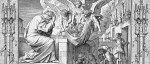
Peter’s Report in Jerusalem, The Church in Antioch.
These were special times in the birth, growth and expansion of the Church. It is obvious from what we read that God was mightily at work in the lives of the Apostles and in the Church. So, what has happened since that time? Is He being silent today? Has God gone to sleep? And before you cite a few paltry examples of your own, please read this chapter, then consider your answers. Visions from God? Scores of people coming to faith in Christ at the risk of life and property? Prophecies coming to pass?
(Speaking for myself, I believe it may be fair to say that what has changed is our postmodern Christian attitudes, our commitment to Christ and our lack of humility). These men were not only called by God, but they knew and trusted without any doubt that their salvation and the power, and the kingdom of God and the authority of Christ had come, and the accuser was being thrown down. And they overcame because of the blood of the Lamb and because of the word of their testimony, and that they did not love their life even when faced with death!
Peter Reports in Jerusalem
Acts 11:1, Now the apostles and the brothers and sisters who were throughout Judea heard that the Gentiles also had received the word of God. Verse 2, And when Peter came up to Jerusalem, the Jewish believers took issue with him, verse 3, saying, “You went to uncircumcised men and ate with them.” Verse 4. But Peter began and explained at length to them in an orderly sequence, saying, verse 5, “I was in the city of Joppa praying; and in a trance I saw a vision, an object coming down like a great sheet lowered by four corners from the sky; and it came to where I was, verse 6, and I stared at it and was thinking about it, and I saw the four-footed animals of the earth, the wild animals, the crawling creatures, and the birds of the sky. Verse 7. I also heard a voice saying to me, ‘Get up, Peter; kill and eat.’ Verse 8. But I said, ‘By no means, Lord, for nothing unholy or unclean has ever entered my mouth.’ Verse 9. But a voice from heaven answered a second time, ‘What God has cleansed, no longer consider unholy.’ Verse 10. This happened three times, and everything was drawn back up into the sky. Verse 11. And behold, at that moment three men who had been sent to me from Caesarea came up to the house where we were staying. Verse 12. And the Spirit told me to go with them without misgivings. These six brothers also went with me, and we entered the man’s house. Verse 13. And he reported to us how he had seen the angel standing in his house, and saying, ‘Send some men to Joppa and have Simon, who is also called Peter, brought here; verse 14, and he will speak words to you by which you will be saved, you and all your household.’ Verse 15. And as I, (Peter), began to speak, the Holy Spirit fell upon them, just as He did upon us at the beginning. Verse 16. And I remembered the word of the Lord, how He used to say, ‘John baptized with water, but you will be baptized with the Holy Spirit.’ Verse 17. Therefore, if God gave them the same gift as He also gave to us after believing in the Lord Jesus Christ, who was I that I could stand in God’s way?” Verse 18. When they heard this, they quieted down and glorified God, saying, “Well then, God has also granted to the Gentiles the repentance that leads to life.”
(Commentary Break): It would take too much time and space to explore the insurmountable obstacles of the Jewish religious establishment, the harsh political climate and the unforgiving social order of that day in order for us to understand how incredibly dangerous and practically foolish it would have been to assume that a group of radical religious reformers making wild claims of a Messiah risen from the dead, who were now hearing from God through visions and prophecies could make a difference.
But that is just the point we should take from this. These early Christians were not trying to make a point. They were hearing from God both through the prophetic scriptures of the Torah and through dreams and visions and were being obedient to God, even to death.
(In order to emphasize this point, George Barna, a well-known and highly respected Professor at Arizona Christian University and Director of Research at its Cultural Research Center, focusing on worldview assessment and development, and cultural transformation; also the Sr. Research Fellow at Family Research Council Center for Biblical Worldview, and a Fellow at the Townsend Institute at Concordia University, has recently reported that seventy percent of the Churches interviewed, across the nation, do not believe in the basic doctrines of the Bible. And of the remaining thirty percent, only two percent teach on the basic truths of scriptures such as “did Jesus live a sinless life?” or “is hell real?” from fear of offending the congregants.)
Please read verses 17 again, “Therefore, if God gave them the same gift as He also gave to us after believing in the Lord Jesus Christ, who was I that I could stand in God’s way?”
Take from this what you will. Make what decision you must. But please remember that silence is a decision. (End Commentary Break).
The Church in Antioch
Verse 19. So then those who were scattered because of the persecution that occurred in connection with Stephen made their way to Phoenicia, Cyprus, and Antioch, speaking the word to no one except to Jews alone. Verse 20. But there were some of them, men of Cyprus and Cyrene, who came to Antioch and began speaking to the Greeks as well, preaching the good news of the Lord Jesus. Verse 21. And the hand of the Lord was with them, and a large number who believed turned to the Lord. Verse 22. The news about them reached the ears of the church in Jerusalem, and they sent Barnabas off to Antioch. Verse 23. Then, when he arrived and witnessed the grace of God, he rejoiced and began to encourage them all with a resolute heart to remain true to the Lord; verse 24, for he was a good man, and full of the Holy Spirit and faith. And considerable numbers were added to the Lord. Verse 25. And he left for Tarsus to look for Saul; verse 26, and when he had found him, he brought him to Antioch. And for an entire year they met with the church and taught considerable numbers of people; and the disciples were first called Christians in Antioch.
Verse 27. Now at this time some prophets came down from Jerusalem to Antioch. Verse 28. One of them, named Agabus, stood up and indicated by the Spirit that there would definitely be a severe famine all over the world. And this took place in the reign of Claudius. Verse 29. And to the extent that any of the disciples had means, each of them determined to send a contribution for the relief of the brothers and sisters living in Judea. Verse 30. And they did this, sending it with Barnabas and Saul to the elders. (End of Chapter 11).
These were the continuing Acts of the Apostles. But to what end? What purposes can be found in this recounting of events from A.D 61 to around A.D. 64?
Purpose of Writing: The book of Acts was written to provide a history of the early church. The emphasis of the book is the fulfillment of the Great Commission. Acts records the apostles being Christ’s witnesses in Jerusalem, Judea, Samaria, and the surrounding world. The book of Acts sheds light on the gift of the Holy Spirit, who empowers, guides, teaches, and serves as our Counselor. Reading the book of Acts, we are enlightened and encouraged by the power of the gospel as it spread throughout the world and transformed lives. Many miracles were performed during this time by the apostles to validate their message. The book of Acts covers the transitional time between the ascension of Christ and the completion of the New Testament canon, and the apostolic miracles were God’s means of authenticating His message through the men who penned the Bible.
Practical Application: God can do amazing things through ordinary people when He empowers them through His Spirit. The book of Acts shows how God essentially took a group of fisherman and commoners and used them to turn the world upside down (Acts 17:6). God took a Christian-hating murderer and transformed him into history’s greatest Christian evangelist, the author of almost half the books of the New Testament. God used the persecution the Christians endured to help stimulate the incredibly rapid expansion of the fledgling church. God can and does do the same through us if we are willing by changing our hearts, empowering us by the Holy Spirit, and giving us a passion to spread the good news of salvation through Christ. If we try to accomplish God’s work in the world in our own power, we will fail. Like the disciples in Acts 2, we must faithfully proclaim the gospel, trust God for the results, and devote ourselves “to the apostles’ teaching and to fellowship, to the breaking of bread and to prayer” (Acts 2:42). (see GotQuestions.Org).
I hear people say that these things are above my abilities. And they are correct in a sense. They are from ABOVE. We do not need to be considered special, just gifted by the Holy Spirit. Just use what He has given you and that is enough. These men, the early disciples were considered as uneducated and untrained men, but they were known to have been with Jesus. And, that is enough.
Your Brother and Friend,
Mike Young.
PREVIOUS: THE BOOK OF ACTS – Chapter 10, Cornelius’ Vision, Peter in Caesarea, Gentiles Hear The Good News.
NEXT: THE BOOK OF ACTS – Chapter 12, Peter’s Arrest and Deliverance, The Death of Herod.
(Please bookmark this page or subscribe for future episodes).
Discover more from Whitestone Fellowship
Subscribe to get the latest posts sent to your email.

