


God has a Master Plan for all His creation, which, of course, includes you and me. And, all of His teachings, commandments and examples are to show us how to avoid the obstacles and pitfalls along our way and to show us how to access His presence and His power to overcome the obstacles, endure and successfully arrive at His appointed destination and at the appointed time.
God’s plan is seen in a repeating pattern throughout the Bible, of God’s people entering into a captivity, escaping the captivity only to wander in a wilderness until God graciously shows them the way into a promised land – of sorts.
This pattern is seen from Genesis through the Exodus, repeating itself through the advent of Christ and up to this very day. And it is not over yet.
This has been God’s Pattern and His Plan since before time began, and it would appear that we Christians have, once again, just like the Israelites and the children of Israel, wandered off into a wilderness on our own. This can even been seen in our individual lives.
Perhaps if we really understood God’s Plan, Purpose, Methods and His Ways AND where all this is leading, and WHY it is this way, we could find the motivation and the strength to “endure to the end” and enter the final and permanent Promised Land.
To help us better understand this journey, I am offering this series “The Exodus Way”, presented by The Bible Project.
The Exodus Way – Summary.
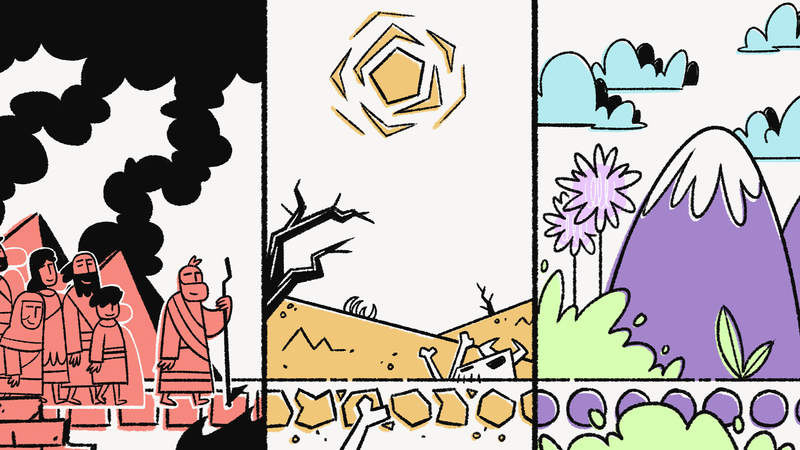
In the story about God delivering Israelites from slavery in Egypt, a literary pattern emerges—an exodus pattern that authors repeat over and again throughout the biblical story. This pattern often involves God providing people with the way out of bondage or oppression, the way through a period of challenge or testing, and the way into new life.
The Big Picture – The Exodus Way Pattern.
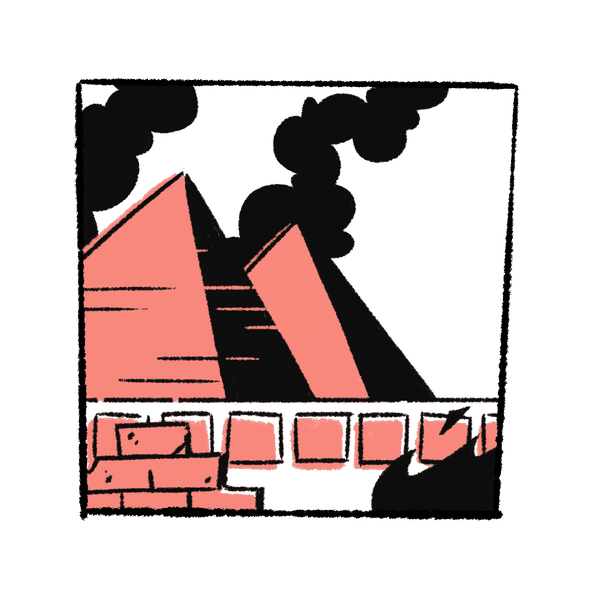
The exodus story involves an epic showdown between Pharaoh and Moses that includes 10 intense plagues, a massive group of escaping slaves who safely walk through the Red Sea’s chaotic waters, and freedom for Israel on the other side. But the story continues well beyond the showdown and escape to establish a three-part pattern we discover in Scripture so often that it becomes thematic. We’re calling this theme the exodus way—it’s the way out of slavery, the way through a wilderness transformation, and the way into the abundant life God offers in the promised land.
The exodus story begins when Pharaoh, a harsh Egyptian dictator, crushes the Israelites under the weight of oppressive slavery. After hearing the cries of his people, God sends Moses to rescue them. So Moses commands Pharaoh to let God’s people go. After Pharaoh refuses, he watches his kingdom crumble as all of Egypt suffers from things like heaps of invasive frogs, incurable bursting boils, and crop-destroying hailstorms.
As the Israelites march out of a defeated Egypt, they stop at what seems like a dead end: the chaotic waters of the Red Sea. But God provides a way through, parting the waters so that the Israelites can pass through on dry ground. This moment illustrates a recurring pattern for the way out of slavery—God guides his people along paths that look like death but ultimately lead to life.
Now free, the people follow God through the wilderness, which provides an opportunity for them to learn to trust God for food, water, and protection. In a harsh and barren wasteland, it’s easy to despair at the first sign of hunger and thirst. But God supplies food from the sky and water from a rock. The way through the wilderness requires increased faith and reliance on God. As God leads people through this experience, he seeks to transform them.
On the far side of the wilderness journey, the Israelites encounter the way into the promised land—a land flowing with milk and honey. Here the former slaves can roam free and enjoy God’s goodness and provision. The wasteland gives way to abundant harvest, so that the people can spread God’s blessing to their neighbors and the world. The way out of slavery, through the wilderness, and into the promised land provides a three-part pattern that other key events in the biblical story will follow, like a repeated melody.
Out, Through, and In—Again and Again.
After settling in the promised land, the Israelites face a fresh crop of new Pharaohs, the rulers of neighboring nations, who oppress them. Again and again, God rescues them by sending Moses-like figures called judges. They also lead the people out of slavery and into freedom, while facing tests along the way. Like Moses and the Israelites, they are challenged to trust God to guide them through difficult situations. And when God brings them through the difficulties, he leads them into a time of peace in the land. We see the pattern on repeat, but then something shifts.
In a tragic reversal, Israel’s own kings begin to oppress their people. God has already warned them about the dire consequences sure to result from such rebellion, but his warnings are ignored as the oppression continues. So God allows a foreign enemy to remove Israel from the land. The king of Babylon—the greatest Pharaoh-like figure since the book of Exodus—conquers the Israelites and places the yoke of slavery back on their necks. He takes them on a backward journey along the exodus way: out of the good land, back through the wilderness, and into slavery once again.
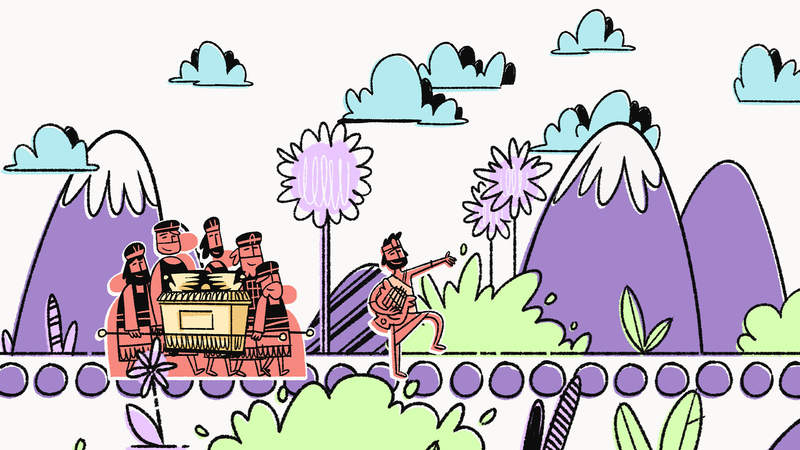
Though exiled and oppressed, Israel still has reason to hope. Even in these bleak circumstances, God’s prophets imagine a way out of slavery. They speak of a new rescuer—a better Moses—who will again lead God’s people to freedom. Isaiah describes God leading his people out of exile on a highway through the wilderness, as he makes the dangerous wasteland a safe and fertile path. And on the other side of that wilderness is something greater than the original promised land of Canaan. This new rescuer will lead the whole world on the way into a freedom and abundance that lasts forever.
Jesus Is the Way.
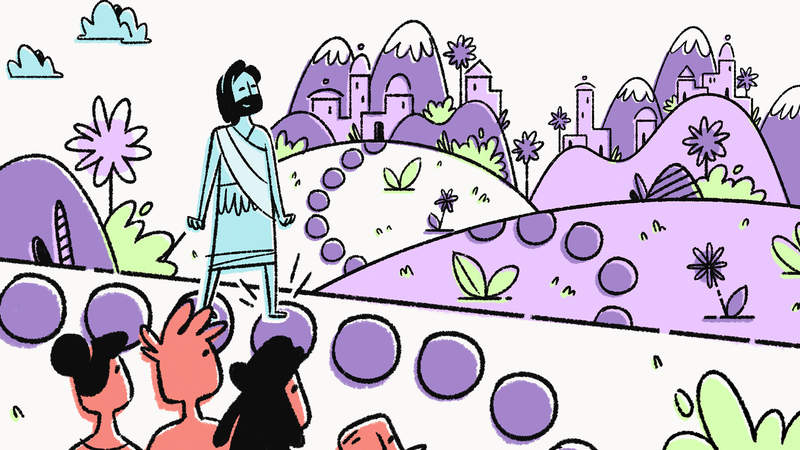
The Israelites eventually return from exile to re-enter the promised land, but God’s promises of blessing and abundance have not yet been fully realized. So, clinging to the prophets’ words, the people continue to wait for a new Moses. Then, one day, this rescuer shows up in a surprising place, as a baby lying in a manger in the little town of Bethlehem.
People hope that Jesus will rescue them from their oppression under Rome and the corruption of their own religious leaders. But he has his sights set on a much bigger, far more deadly “Pharaoh”—a merciless slave master called sin and death that captures and ensnares all humanity. Instead of wielding a sword or leading an army, Jesus walks humbly into the chaotic waters of death and destroys this last and greatest enemy, making a path to true freedom for anyone who wants to follow.
The first people to walk that path with Jesus call themselves followers of “The Way.” They enter the waters of baptism as a sign that they are following Jesus out of slavery to death, through the transforming wilderness experience of learning to trust God amidst the fear and uncertainty of this dark world, and into the restful peace God has promised. That place of peace involves both a new way of life with him and an entirely renewed cosmos, one no longer suffering under any form of oppression.
Jesus’ followers still endure corruption and death as they continue on the path through the wilderness. But God ultimately provides everything they need for this difficult journey. And they can walk confidently, knowing that Jesus’ path will one day lead them into the reunion of Heaven and Earth, where love, joy, and peace saturate every relationship.
So as a patterned literary theme, the exodus way extends well beyond Moses and Israel, reaching its climax in the story of Jesus and his followers. Jesus is the way out, the way through, and the way in.

Discover more from Whitestone Fellowship
Subscribe to get the latest posts sent to your email.

