THE FLESH AND BLOOD OF JESUS

(It’s not what you learned in Sunday School)
In John 6:53–58, Jesus says, “Very truly I tell you, unless you eat the flesh of the Son of Man and drink his blood, you have no life in you. Whoever eats My flesh and drinks my blood has eternal life, and I will raise them up at the last day. For My flesh is real food and my blood is real drink. Whoever eats My flesh and drinks My blood remains in Me, and I in them. Just as the living Father sent Me and I live because of the Father, so the one who feeds on Me will live because of Me. This is the bread that came down from heaven. Your ancestors ate manna and died, but whoever feeds on this Bread will live forever.” Upon hearing these words, many of Jesus’ followers said, “This is a hard teaching” (verse 60), and many of them actually stopped following Him that day (verse 66).
When Jesus said we must “eat the flesh of the Son of Man and drink his blood” (John 6:53), He spoke, as He often did, in parabolic terms. We must receive Him by faith (John 1:12). “Blessed are those who hunger and thirst for righteousness, for they will be filled” (Matthew 5:6). We understand that we need physical food and drink; Jesus wants us to understand that we also need spiritual food and drink—and that is what His sacrifice provides. (see https://www.gotquestions.org/Jesus-eat-flesh-drink-blood.html).
Oh, Yeah? Is it that simple? Eating His Flesh and drinking His Blood Is little more than “receiving Him by faith”?
Well Jesus was more graphic and a lot more precise:
John 6:55, For my flesh is true food, and my blood is true drink. Verse 56. Whoever feeds on my flesh and drinks my blood abides in me, and I in him. Verse 57. As the living Father sent me, and I live because of the Father, so whoever feeds on me, he also will live because of me. Verse 58. This is the bread that came down from heaven, not like the bread the fathers ate, and died. Whoever feeds on this bread will live forever.”
Leviticus 17:11 says, “For the life of the flesh is in the blood, and I have given it for you on the altar to make atonement for your souls, for it is the blood that makes atonement by the life.” But drinking blood was strictly forbidden in Jewish law (Leviticus 17:10-14), making this statement particularly shocking to the Jew. It signifies the new covenant in Jesus’ blood, which is essential for eternal life. This anticipates the sacrificial death of Christ and the shedding of His blood for the forgiveness of sins.
Additionally, we are told that Jesus is the Word of God. So, metaphorically speaking, eating His flesh is tantamount to getting your spiritual nourishment from The Word of God.
Well, with all that said, I would ask “who accomplished this – metaphorically, of course – that is, eating Jesus’ Flesh and drinking His Blood? Could we at least say that Jesus’ Apostles came as close as anyone? I think that is a safe statement. Could you agree? If so, then is the litmus test of “Eating Jesus’ Flesh and Drinking His Blood”?
HAVING LOVE FOR ONE ANOTHER
John 13:34-35, “ I am giving you a new commandment, that you love one another; just as I have loved you, that you also love one another. By this all people will know that you are My disciples: if you have love for one another.”
FAITH & OBEDIENCE
John 15:14, “You are My friends if you do what I command you.”
THE WORLD WILL HATE YOU
John 15:18-19, “If the world hates you, [a]you know that it has hated Me before it hated you. If you were of the world, the world would love you as its own; but because you are not of the world, but I chose you out of the world, because of this the world hates you.”
GREATER WORKS
John 14:12, “Truly, truly I say to you, the one who believes in Me, the works that I do, he will do also; and greater works than these he will do; because I am going to the Father.”
BECOMING POOR & DESTITUTE IN SPIRIT
Matthew 5:3, “Blessed are the poor in spirit, for theirs is the kingdom of heaven.”
BEING GENTLE
Matthew 5:5, “Blessed are the gentle, for they will inherit the earth.”
HUNGER & THIRST FOR RIGHTEOUSNESS
Matthew 5:6, “Blessed are those who hunger and thirst for righteousness, for they will be satisfied.”
BEING MERCIFUL
Matthew 5:7, “Blessed are the merciful, for they will receive mercy.”
BEING PURE IN HEART
Matthew 5:8, “Blessed are the pure in heart, for they will see God.”
BEING A PEACEMAKER
Matthew 5:9, “Blessed are the peacemakers, for they will be called sons of God.”
SUFFERING PERSECUTION AS A CHRISTIAN
Matthew 5:10-11, “Blessed are those who have been persecuted for the sake of righteousness, for theirs is the kingdom of heaven. Blessed are you when people insult you and persecute you, and falsely say all kinds of evil against you because of Me.”
These are not the things we typically strive for but the Bible consistently tells us these are the sufferings and rewards of one who follows Jesus as His disciple – i.e., “eats His Flesh and drinks His Blood”.
Read these synopses of the Apostles:
Matthew was the disciple who had been a tax collector before he met Christ. He wrote the Gospel of Matthew after the Ascension. He likely spent a great deal of time writing to and teaching the Jews in Judea before he went abroad to do missionary work for the Gospel. He was martyred, some say stabbed to death for His faith in Jesus, in Ethiopia in 68 AD.
Simon Peter was one of the first Apostles to be arrested, and the first to preach a sermon after the day of Pentecost. He would be called by God to affirm the acceptance of gentiles into the church, as well as lifting the food restrictions in the age of grace. He was considered a leader of the early church in Jerusalem, and wrote two letters that were inspired by the Holy Spirit as part of Scripture. At some point that is not recorded in the Bible, scholars believe he was brought to Rome, where he was crucified upside down.
Andrew, the brother of Simon Peter, is believed to have gone as a missionary to parts of the Greek colonies on the northern sides of the Black Sea near modern day Crimea, as well as other areas of Greece. Church history holds he was martyred by crucifixion in Patras in 60AD. Tradition holds he was on the cross for three days.
James son of Zebedee and his brother John were cousins of Jesus. The Bible records, “About that time King Herod violently attacked some who belonged to the church, and he executed James, John’s brother, with the sword” (Acts 12:1-2). Tradition holds he was the first of the Apostles to be martyred.
John son of Zebedee wrote five books of the Bible, the Gospel of John, the epistles of 1, 2, and 3 John, and the Book of Revelation during the years after the Ascension. He also took responsibility for Mary, the mother of Jesus during this time. At some point he was arrested, and according to tradition, boiled in oil but did not die. He was exiled to Patmos where he received the visions that inspired Revelation. After several years in exile, tradition says he spent his last years in Ephesus, dying between 98 and 100AD.
Philip is believed to have taken the Gospel to Gaul, or modern day France, as well as Turkey, specifically the city of Hierapolis. Scholars believe he was both crucified and stoned to death.
James Son of Alphaeus is held to have gone to Syria to support transplanted Jews there, but that he mostly helped run the church in Jerusalem. Church tradition holds he was arrested by Ananias and told to deny Christ; he was taken to the top of the temple, where he boldly proclaimed Jesus as the Messiah, but he was then pushed off the temple and stoned. He is said to have died from a blow to the head.
Bartholomew aka Nathanael may have gone to India, as there are two records that indicate this, though most of them are from the 4th century. Stronger tradition holds that he went to Armenia, partnering with Thaddaeus. In Azerbaijan, Christians believe he brought the Gospel there as well. Tradition says he was flayed and then crucified in 71 AD.
Thaddaeus is believed to have partnered with Bartholomew for many of his missionary travels, so he may have gone to India and Turkey. He may have gone to Armenia as well. Tradition holds that he suffered martyrdom in 65 AD in Syria, in the city of Beirut.
Simon the Zealot is believed to have left Jerusalem and gone to Africa, traveling the northern empires like Egypt, Libya, and Mauritania. Some even think he may have gone to Spain and even Britain and then Persia. Tradition holds he was martyred in the Middle East by being crucified upside down then sawed in half around 74 AD.
Thomas may have doubted the stories of the resurrected Jesus, but after he saw Jesus, he became zealous. Scholars believe Thomas went the farthest of the apostles, and there are multiple records that he went as far as India. While there are varied accounts of his death, it is generally agreed that he was speared to death by Hindu priests in 70 AD. The city of Mylapore has a place they believe is his tomb.
Matthias is believed to have mostly stayed in Jerusalem, helping the members of the persecuted church and edifying the saints. He may have gone north, and some traditions hold that he went north of the Black Sea. It is generally held he died in Jerusalem, though there are differing accounts of how he died. He may have been stoned, crucified, or beheaded.
Paul would go on to have three missionary journeys across the Mediterranean, suffering much for the cause of Christ as the primary missionary to the gentiles. His life is recorded in the Book of Acts and across the multiple letters he wrote that became a part of the New Testament. He was imprisoned in Rome, and some believe he was executed under Emperor Nero in 66 AD by beheading.
While the fates of the apostles are somewhat shrouded by lack of documentation and two thousand years of separation, their devotion to the Lord should be inspiring, and a reminder that these men proudly and bravely bore the marks of “eating Jesus’ flesh and drinking His Blood”.
And we must remember that persecution of believers is still a common trait among true followers of Jesus, all across the world, and ask ourselves, “Am I fitting in as a follower of Jesus”?
Your Brother and Friend,
Mike Young
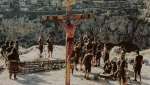
PS: It seems to me that something has happened since the days of the Apotsles, so that have now have a really toned down and tamed version the written word. I mean, read it for yourself. This wasn’t meant to be some little sinner’s prayer when they initially wrote about it!!
Discover more from Whitestone Fellowship
Subscribe to get the latest posts sent to your email.

