THE BOOK OF JOHN, Chapter 11
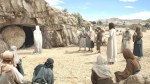
The death and resurrection of Lazarus, The conspiracy to kill Jesus
Reading this just as a ‘story’ may well just leave you with idle information. Although informative, instructional and emotionally provocative, one must grasp the foreshadowing prophetic nature, and the inherent spiritual conflict and the tenacity, the driving force and power of God, in these events. We must learn that even in the most trying and challenging circumstances the nature of God, His goodness, His mercy and His redemptive power is always triumphant and that we are called and made in that image of Him. Above all, however, remember that this is not a “story” at all. This is the truth of real events!
Additionally, throughout this chapter Jesus is teaching and demonstrating that He was (and is) sent by the Father with a three-fold purpose: (1) To do the Will of the Father, (2) to seek and save the lost, and to reconcile people with God, (3) to pay the ‘sin penalty’ of death by His own death, for those who would believe and follow Him. Everything else, everything He said, taught and did, exemplified and magnified His purpose. We, as Christians, are called to follow His example and purpose exactly as He commanded. (Any variation, deviation or improvisation from Jesus’ model is a fraud. Thinking you can make your life better now, enriching yourself in this world, using the Gospel as your method or excuse makes you a wolf among the sheep. We find peace in Christ, knowing we are to be witnesses (see Acts 1:8) which literally translates to the word ‘martyrs’ for Jesus. We are to do the Will of the Father; we are to seek the lost and bring them to The Savior; we are too, in a very real way, pay the sin penalty of death, by dying to self – crucifying our flesh – and walk in a new life with Christ Jesus).
The Death and Resurrection of Lazarus
John 11:1,.Now a certain man was sick: Lazarus of Bethany, the village of Mary and her sister Martha. Verse 2. And it was the Mary who anointed the Lord with ointment, and wiped His feet with her hair, whose brother Lazarus was sick.
(Commentary Break): These opening verses give us a location, identifies several of the main characters and lays out the plot.
Lazarus is a central figure in this chapter, and his name means “God has helped.” Lazarus can be considered a type and condition of every-man and every-woman. We all are in need of God’s help and of His intervention in our lives.
Mary and Martha are well-known figures in the Gospels, particularly for their interactions with Jesus. Mary is often associated with devotion and worship, as seen in her anointing of Jesus’ feet (John 12:3), while Martha is known for her service and hospitality (Luke 10:38-42). Their relationship with Jesus is intimate and personal, highlighting the human aspect of His ministry and the importance of faith and relationship with Him. Again, one might see the necessity of our own “devotion and worship“ and “service and hospitality” as a follower of Jesus. This is no mistake or coincidence in scriptures. It is a model and a pattern for us to follow. This is simply another way to say that we are always to ‘read ourselves into the scriptures’. (End Commentary Break)
Verse 3. So the sisters sent word to Him, saying, “Lord, behold, he whom You love is sick.” Verse 4. But when Jesus heard this, He said, “This sickness is not meant for death, but is for the glory of God, so that the Son of God may be glorified by it.” Verse 5. (Now Jesus loved Martha and her sister, and Lazarus.) Verse 6. So when He heard that he was sick, He then stayed two days longer in the place where He was. Verse 7. Then after this He said to the disciples, “Let’s go to Judea again.” Verse 8. The disciples said to Him, “Rabbi, the Jews were just now seeking to stone You, and yet You are going there again?” Verse 9. Jesus replied, “Are there not twelve hours in the day? If anyone walks during the day, he does not stumble, because he sees the light of this world. Verse 10. But if anyone walks during the night, he stumbles, because the light is not in him.”
(Commentary Break): “So the sisters sent word to Him, saying, “Lord, behold, the one whom you love is sick”; the word love here, is ‘phileó’, From philos; to be a friend to (fond of an individual or an object), i.e. Have affection for (denoting personal attachment, as a matter of sentiment or feeling. This is the same word used in John 5:20, “For the Father loves (‘phileó’) the Son and shows Him all things that He Himself is doing.” The term signals intimate delight, assuring readers that redemptive revelation flows from a Father who cherishes His Son. The risen Christ affirms the same reality to you, His disciple: “For the Father Himself loves you, because you have loved Me and have believed that I came from God” (Biblehub) (John 16:27). Jesus has said in John 15:15 that He considers you His friend, emphasizing our close personal relationship – and yes, as the song reminds us, what a friend we have in Jesus.
Jesus reminds the sisters that Lazarus’ sickness is not meant for death, but is for the glory of God, so that the Son of God may be glorified by it.
The disciples became alarmed that they and Jesus would dare go back to Judea because the Jews there were seeking to kill Him.
It is at this point that Jesus uses a complex metaphor saying “Are there not twelve hours in the day?”, contrasting light and darkness, daytime and nighttime, while at the same time comparing walking in the Light of God which gives insight, wisdom and discernment versus walking in the darkness of evil which cause one to stumble and fall in defeat from ignorance.
He is also pointing out that you must act at the precise moment in time, and the time Jesus would have referred to, from an ancient Greek word ‘kairos’, meaning “the right or critical moment”, which signifies a qualitative time for action, contrasted with ‘chronos’, which refers to chronological or sequential time. Kairos is a frame of time which is passing, and the window of opportunity will last only for a specified period. You must ‘go through that window of time when it is presented, or the opportunity is lost.
(This is important to know because Jesus always refers us to the correct time for you to act – for example, when He refers to the ‘end of the age’ in the Gospels, Jesus speaks primarily in the future tense; but when He refers to these very same days in the book of The Revelation, He speaks in the aorist tense, which is saying “what was, is now and shall be in the future”. It is a continuous action which will be fulfilled only when Jesus culminates the age.
Another example is found in 2 Corinthians 6:2 when the Apostle Paul says, “Today is the day of your salvation”, he emphasized the urgency and the immediacy of God’s grace for your salvation. (End Commentary Break).
Verse 11. This He said, and after this He said to them, “Our friend Lazarus has fallen asleep; but I am going so that I may awaken him from sleep.” Verse 12. The disciples then said to Him, “Lord, if he has fallen asleep, he will come out of it.” Verse 13. Now Jesus had spoken of his death, but they thought that He was speaking about actual sleep. Verse 14. So Jesus then said to them plainly, “Lazarus died, verse 15, and I am glad for your sakes that I was not there, so that you may believe; but let’s go to him.” Verse 16. Therefore Thomas, who was called Didymus, said to his fellow disciples, “Let’s also go, so that we may die with Him!”
(Commentary Break): It is clear now that Jesus has chosen the “Kairos” moment, “the right or critical moment”, which signifies a qualitative time for action. Why does this matter in general? Because all of us, as Christians, need to seek God and know our “Kairos moments”, whether as a witness of Jesus, a Warrior of the Cross, in serving, testifying, pulling down strongholds, defending the faith or any calling or mission from God. When we act in concert with God’s voice and according to His timing and see His Hand move, we too will believe!
(Just as a matter of interest, Thomas remarks “Let’s also go, (with Jesus to Judea) so that we may die with Him!” Some commentators will say this shows Thomas’ willingness to die with Jesus. But, considering Thomas’ doubting nature (see John 20:24-29) perhaps he was sarcastically lamenting the wisdom of going to Judea? If so, Thomas was missing the “Kairos moment”. Once again, this should serve as a caution to all of us who are following Jesus to get ready and stay ready. (End Commentary Break).
Verse 17. So when Jesus came, He found that he had already been in the tomb four days. Verse 18. Now Bethany was near Jerusalem, about fifteen stadia (about 2 miles) away; verse 19, and many of the Jews had come to Martha and Mary, to console them about their brother. Verse 20. So then Martha, when she heard that Jesus was coming, went to meet Him, but Mary stayed in the house. Verse 21. Martha then said to Jesus, “Lord, if You had been here, my brother would not have died. Verse 22. Even now I know that whatever You ask of God, God will give You.” Verse 23. Jesus said to her, “Your brother will rise from the dead.” Verse 24. Martha said to Him, “I know that he will rise in the resurrection on the last day.” Verse 25. Jesus said to her, “I am the resurrection and the life; the one who believes in Me will live, even if he dies, verse26, and everyone who lives and believes in Me will never die. Do you believe this?” Verse 27. She said to Him, “Yes, Lord; I have come to believe that You are the Christ, the Son of God, and He who comes into the world.”
(Commentary Break): I suggest reading the 10 preceding verses again and give consideration to what you are ‘hearing’. Martha sounds accusatory, confused and her statements are contradictory. It is as if she is saying, “Jesus, I believe in you and I believe you, but…”. This reminds me of how so many people view God. “I believe in you, but, why aren’t things going my way – the way I imagined they should go so I could be pleased with the chain of events and their outcome – implying that we know better than God. And unfortunately, so many people get angry with God when things don’t go their way or if they have to face a tragedy or a difficulty. This reveals our lack of understanding about our relationship with God, His plan and purpose for us, our lack of faith in God and our complete failure to understand the sovereignty of God. This is a serious condition for any believer. However, rather than impatience, Jesus explains to Martha the purpose of the events of this moment.
(What follows is very technical and is spoken from God’s perspective of and reality in time. He sees the past, present and future as one entire whole – it is all occurring at the same instance with God. And since our perspective of time is linear, we often have trouble grasping these amazing realities of God).
“Verse 23. Jesus said to her, “Your brother will rise from the dead.” (This spoken in the present tense. However, Martha misunderstands Jesus and says to Him), “I know that he will rise in the resurrection on the last day. (spoken in the future tense).” Verse 25. But Jesus says (in the aorist tense, indicating to her that what He is saying is continuously true, has already occurred, is presently occurring and will continue to occur into the future) , “I am (spoken in the present tense) the resurrection (anastasis), meaning “a standing up again”, i.e. literally a resurrection from death, now, standing before you. I.e., death has no dominion and no place in me nor in my presence. (I am) the life; (This is simply a staggering truth) and the one who believes (present tense) in Me will live, even if he dies (aorist tense), verse 26, and everyone who lives and believes in Me will never die. Do you believe this?” This is the eternal truth. If we will not or cannot accept this, then there is a great chance that we can never fully understand or trust God, His ways or His plans for our lives. Sadly, we will live in the middle ground of doubt, worry and fear. Just know that God loves us so much that He gave His only Son for us, that we should not perish. Therefore all things are always working for our good – that is for those who love God and are called according to His purpose. And the PURPOSE of God’s plan is found in Daniel 9:24:
1) “to finish transgression,” (that is, to end man’s rebellion toward God),
2) “to put an end to sin,” (that is, to bring an end to sin),
3) “to atone for wickedness,” (that is, to make amends or reparation for wickedness),
4) “to bring in everlasting righteousness,” (that is, the quality of being morally right or justifiable),
5) “to seal up vision and prophecy,” and (that is, to confirm these prophetic visions),
6) “to anoint the most holy.” (that is, to anoint, or to confer divine or holy office upon; in this case the Holy One, Jesus.).
We are included in God’s PURPOSE. His METHOD as found in Daniel 12 which is that,
1) Many will be cleansed,
2) Many will be purified,
3) They will be made spotless and,
4) They will be refined.
5) Will live eternally with God.
(also see Romans 8:28). (End Commentary Break).
Verse 28. When she had said this, she left and called Mary her sister, saying secretly, “The Teacher is here and is calling for you.” Verse 29. And when she heard this, she got up quickly and came to Him.
Verse 30. Now Jesus had not yet come into the village, but was still at the place where Martha met Him. Verse 31. Then the Jews who were with her in the house and were consoling her, when they saw that Mary had gotten up quickly and left, they followed her, thinking that she was going to the tomb to weep there. Verse 32. So when Mary came to the place where Jesus was, she saw Him and fell at His feet, saying to Him, “Lord, if You had been here, my brother would not have died.” Verse 33. Therefore when Jesus saw her weeping, and the Jews who came with her also weeping, He was deeply moved in spirit and was troubled, verse 34, and He said, “Where have you laid him?” They said to Him, “Lord, come and see.” Verse 35. Jesus wept. Verse 36. So the Jews were saying, “See how He loved him!” Verse 37. But some of them said, “Could this man, who opened the eyes of the man who was blind, not have also kept this man from dying?”
(Commentary Break): It is widely known and repeated that the shortest verse in the Bible is verse 35, “Jesus wept”, and it is the most misunderstood and misinterpreted. Most every commentary will tell you that Jesus was mournful, sorrowful and sad over Lazarus’ death. Please, dear friend, Jesus has just explained to Martha and now to Mary, in length, that Lazarus is not dead, but just sleeping, a figure of speech to say that it is temporary and he will shortly ‘awaken’. He has explained that Lazarus will live again, now and not just in the resurrection. So why would Jesus mourn Lazarus’ death? He would not and He did not. This word carries with it a guttural sorrow and mourning.
(The word ‘troubled’ in the phrase in verse 33, “He was deeply moved in spirit and was troubled, comes from the Greek word, ‘tarassó’ , meaning ‘He was agitated, roiled , as making water turbulent or muddy, by stirring up sediment).
Jesus wept because of the lack of their faith and the inability of His followers to understand what Jesus is saying and doing. They fail to see that He is indeed the Son of God in the flesh.
If we find ourselves in the same situation, bearing all our burdens and grief without complete faith in Him, is something to be mourned about, indeed. (End Commentary Break).
Verse 38. So Jesus, again being deeply moved within, came to the tomb. Now it was a cave, and a stone was lying against it. Verse 39. Jesus said, “Remove the stone.” Martha, the sister of the deceased, said to Him, “Lord, by this time there will be a stench, for he has been dead four days.” Verse 40. Jesus said to her, “Did I not say to you that if you believe, you will see the glory of God?” Verse 41. So they removed the stone. And Jesus raised His eyes, and said, “Father, I thank You that You have heard Me. Verse 42. But I knew that You always hear Me; nevertheless, because of the people standing around I said it, so that they may believe that You sent Me.” Verse 43. And when He had said these things, He cried out with a loud voice, “Lazarus, come out!” Verse 44. Out came the man who had died, bound hand and foot with wrappings, and his face was wrapped around with a cloth. Jesus said to them, “Unbind him, and let him go.”
Verse 45. Therefore many of the Jews who came to Mary, and saw what He had done, believed in Him. Verse 46. But some of them went to the Pharisees and told them the things which Jesus had done.
(Commentary Break). These foregoing verses speak for themselves on this matter. “Therefore many of the Jews who came to Mary, and saw what He had done, believed in Him.” But please do not miss the lurking evil, the darkened and selfish hearts that run to the Pharisees. (End Commentary Break).
Conspiracy to Kill Jesus.
Verse 47. Therefore the chief priests and the Pharisees convened a council meeting, and they were saying, “What are we doing in regard to the fact that this man is performing many signs? Verse 48. If we let Him go on like this, all the people will believe in Him, and the Romans will come and take over both our place and our nation.” Verse 49. But one of them, Caiaphas, who was high priest that year, said to them, “You know nothing at all, verse 50, nor are you taking into account that it is in your best interest that one man die for the people, and that the whole nation not perish instead.” Verse 51. Now he did not say this on his own, but as he was high priest that year, he prophesied that Jesus was going to die for the nation; verse 52, and not for the nation only, but in order that He might also gather together into one, the children of God, who are scattered abroad. Verse 53. So from that day on they planned together to kill Him.
(Commentary Break). These verses reveal a complex social, religious, governmental and military matter. From BibleHub.com commentary we read, that “the religious leaders are expressing concern over Jesus’ growing influence. This phrase highlights their fear of losing control and authority. The miracles and teachings of Jesus were drawing large crowds, which threatened the established religious order. The leaders were worried that Jesus’ popularity would undermine their power and influence over the people.
The leaders acknowledge the compelling nature of Jesus’ works and words. This phrase indicates their awareness of the potential for widespread belief in Jesus as the Messiah. It reflects their fear that Jesus’ message could lead to a mass movement that would challenge their authority. The leaders’ concern was not just theological but also political, as they feared the implications of a large following.
The Roman Empire had control over Judea, and the Jewish leaders were concerned about maintaining peace and order to avoid Roman intervention. This phrase reflects their fear that a messianic movement could be seen as a rebellion against Roman rule, prompting a military response. The leaders were trying to prevent any action that might provoke the Romans and lead to the loss of their limited autonomy.
The leaders feared that Roman intervention could lead to the destruction of the Temple, as had happened in the past. The Temple was not only a religious center but also a source of power and prestige for the Jewish leaders, making its preservation crucial to them.
The leaders were concerned about the survival of the Jewish nation under Roman rule. They feared that any unrest could lead to severe repercussions, including the loss of their national identity and autonomy. This phrase underscores the political and nationalistic concerns of the leaders, who were trying to balance their religious authority with the practical realities of Roman occupation. Their fear was ultimately realized in 70 A.D. when the Romans destroyed Jerusalem and the Temple, fulfilling Jesus’ prophecy in Matthew 24:2. It is indeed interesting how, despite their strongly held belief of a coming Messiah is obscured by their earthly possessions of their religious order, the national state of Israel, their power, wealth and influence.
So it is for us in our day. Please, dear friends, let’s learn from this and relinquish our grip on our natural lives so God can release us from the grip the world has on our futures. (End Commentary Break).
Verse 54. Therefore Jesus no longer continued to walk publicly among the Jews, but went away from there to the region near the wilderness, into a city called Ephraim (double ash heap / I shall be fruitful); and there He stayed with the disciples.
Verse 55. Now the Passover of the Jews was near, and many went up to Jerusalem from the country prior to the Passover, in order to purify themselves. Verse 56. So they were looking for Jesus, and saying to one another as they stood in the temple area, “What do you think; that He will not come to the feast at all?” Verse 57. Now the chief priests and the Pharisees had given orders that if anyone knew where He was, he was to report it, so that they might arrest Him. (End text for Chapter 11).
We can see many examples throughout history, and even in our own day, where good men are murdered and assassinated for no other reason than their goodness. They stand as an obstacle of and in the face evil and selfish people, and they hate it, just as John 3:19-20 states, “The Light, (Jesus), has come into the world, and people loved the darkness rather than the Light ; for their deed were evil. For everyone who does evil, hates the Light, and does not come to the Light, so that their deeds will not be exposed”.
But our calling and purpose is found in John 3:21, “But the one, (those of us) who practice the truth come to the Light, so that his deeds will be revealed as having been performed in God.”
Jesus said to them, “My food is to do the will of Him who sent Me, and to accomplish His work.” (John 4:34). Jesus’ earthly ministry is complete. Let’s call that stage 1.
Stage 2, This is our ministry. Jesus said, “I sent you to reap that for which you have not labored; others have labored, and you have come into their labor.” (John 4:38). We are to be found doing this work when Jesus returns to claim His own from this harvest. “Therefore be on the alert, for you do not know which day your Lord is coming. But [ai]be sure of this, that if the head of the house had known at what time of the night the thief was coming, he would have been on the alert and would not have allowed his house to be broken into. For this reason you must be ready as well; for the Son of Man is coming at an hour when you do not think He will.
“Who then is the faithful and sensible slave whom his master put in charge of his household slaves, to give them their food at the proper time? Blessed is that slave whom his master finds so doing when he comes”. (Matthew 24:42-46).
Stage 3. Then comes the Lord. The beginning of the End. Stage 3 is found in Matthew 24:29-31. “But immediately after the tribulation of those days THE SUN WILL BE DARKENED, AND THE MOON WILL NOT GIVE ITS LIGHT, AND THE STARS WILL FALL from the sky, and the powers of the heavens will be shaken. And then the sign of the Son of Man will appear in the sky, and then all the tribes of the earth will mourn, and they will see the SON OF MAN COMING ON THE CLOUDS OF THE SKY with power and great glory. And He will send forth His angels with A GREAT TRUMPET BLAST, and THEY WILL GATHER TOGETHER His elect from the four winds, from one end of the sky to the other.”
We are near the end of stage 2, the Birth Pains (Matthew 24:8) of the tribulation period (seals 1 through 5). Then comes the rapture. Be found doing what He has commanded. Be ready or be left behind.
Your Brother and Friend,
Mike Young
PREVIOUS: THE BOOK OF JOHN, Chapter 10, The Parable of The Good Shepherd, Jesus Asserts His Deity
(Please bookmark this page or subscribe for future episodes).
Discover more from Whitestone Fellowship
Subscribe to get the latest posts sent to your email.

