HEY CHURCH – HAVE WE OUTSMARTED OURSELVES?

(Programs From a Leading Chritian University)
“Training Chapions for Christ”
Find a Program
Bachelor’s Degrees
Master’s Degrees
Postgraduate Degrees
Doctoral Degrees
Associate Degrees
Certificate Programs
Minors
(“Does this mean I can learn to be an advanced Christian disciple and disciple-maker?”)

Jesus and the Pre-Church Age
Jesus. Yes, just Jesus. (See Matthew 4:13-17). Then He called men and made them His disciples, (see Matthew 4:18-23), who were men who learned from Him – through His teaching and by His example. These disciples were considered as “uneducated and untrained men – they were amazing, were recognized as having been with Jesus.” (see Acts 4:13).
Jesus took His disciples from person to person, town to town, city to city demonstrating and “teaching in their synagogues and proclaiming the Gospel of the Kingdom, and healing every disease and every sickness among the people.” (see Matthew 4:23-24).

Then Jesus sent these men out own their own to do the work He had assigned them – and gave them authority over unclean spirits, to cast them out, and to heal every disease and every sickness. He told them, “as you go, preach, saying, ‘The kingdom of heaven has come near.’ Heal the sick, raise the dead, cleanse those with leprosy, cast out demons.” (See Matthew 10).
Unlike the Pharisees and the Sanhedrin, there were no schools of Rabbinic Judaism. There were no universities, no formal education except for what they had learned about the Torah from their father, by reading, listening and through example. And unlike today, where formal education in doctrine, dogma, form and fashion of a Christian Religion is taught in colleges, universities and seminaries.
And they righted the world by turning it upside-down in the name of Jesus. (see Acts 17:6).

The Early Church
The first use of the word “Church” is found in Matthew 16:18, when Jesus says, “And I also say to you that you are Peter, and upon this rock I will build My church; and the gates of Hades will not overpower it.” This word then appears 75 more times in the New Testament (KJV). It is derived from the Greek word “ekklesia,” meaning an assembly or congregation of called-out ones.
When they had entered the city, that is Peter, John, James, and Andrew, Philip and Thomas, Bartholomew and Matthew, James the son of Alphaeus, Simon the Zealot, and Judas the son of James, they went up to the upstairs room where they were staying. All these were continually devoting themselves with one mind to prayer, along with the women, and Mary the mother of Jesus, and with His brothers. (see Acts 1:12-14).
At this time Peter stood up among the brothers and sisters (a group of about 120 people was there together and said, “Brothers, the Scripture had to be fulfilled, which the Holy Spirit foretold. (see Act 2:42).
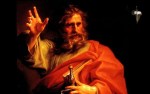
The Church is Born
And with many other words Peter solemnly testified and kept on urging them, saying, “Be saved from this perverse generation!” So then, those who had received his word were baptized; and that day there were added about three thousand souls.
They were continually devoting themselves to the apostles’ teaching and to fellowship, to the breaking of bread and to prayer. (see Act 2:40-42).
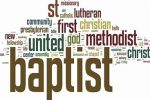
Then Came Denominationalism
The first Christian church is generally considered to be the Church of Jerusalem, founded around 33 A.D following the Ascension of Christ. This early church was composed of Jesus’ disciples and was recognized as the mother of all Christian communities.
The first Christian church was established in Jerusalem around 33 AD, shortly after the Ascension of Jesus Christ. This church is often referred to as the “Mother of all Churches.” It was founded by Jesus’ disciples, who were primarily Jewish, and it served as the initial community for early Christians.
As Christianity spread beyond Jerusalem, it began to diversify. The early followers initially identified as Jews and practiced their faith within the context of Second Temple Judaism. Over time, as the message of Christianity reached Gentiles, the church evolved, leading to various interpretations and practices.
By the end of the first century, Christianity had spread to various regions, including Rome, Greece, and North Africa. This expansion led to the formation of different communities, each with unique beliefs and practices. The term “Christian” was first used in Antioch, where followers of Jesus were distinguished from other Jewish sects.
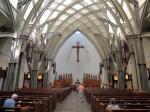
The Catholic Church claims to be the original Christian church, tracing its leadership back to the apostles, particularly Peter, who is considered the first pope. The term “Catholic” was first used by Ignatius of Antioch in the early 2nd century, indicating a universal church that included all believers.
| Century | Events and Developments |
| 1st Century | The birth of Christianity with the ministry, crucifixion, and resurrection of Jesus Christ. Formation of the earliest Christian communities in Jerusalem, Antioch, and other locations. |
| 2nd Century | Emergence of various theological schools and interpretations of Christian doctrine, including Gnostic sects and early Christian apologists. Development of the office of bishop in some Christian communities. |
| 3rd Century | Persecutions of Christians under Roman emperors. Development of the Nicene Creed in response to theological controversies, defining key Christian beliefs. |
| 4th Century | 313 AD: Emperor Constantine’s Edict of Milan legalizes Christianity in the Roman Empire. |
| 325 AD: The First Council of Nicaea is convened to address theological disputes and establish the Nicene Creed. | |
| 381 AD: The First Council of Constantinople reaffirms and amends the Nicene Creed. The emergence of Eastern Orthodox Christianity and Western (Roman) Christianity. | |
| 5th Century | 431 AD: The Council of Ephesus deals with Christological controversies, contributing to the schism between Eastern and Western Christianity. |
| 451 AD: The Council of Chalcedon addresses further Christological issues, deepening the divide between the Eastern Orthodox and the Oriental Orthodox churches. | |
| 11th Century | 1054 AD: The Great Schism occurs, leading to the formal split between the Eastern Orthodox Church and the Roman Catholic Church. |
| 16th Century | 1517 AD: Martin Luther’s Ninety-Five Theses mark the beginning of the Protestant Reformation. |
| 1520s-1530s: Emergence of various Protestant denominations, including Lutheranism, Calvinism, and Anabaptism. | |
| 1534 AD: Henry VIII of England establishes the Church of England (Anglicanism) after his break with the Roman Catholic Church. | |
| 17th Century | 1600s: The Baptist tradition emerges, with various Baptist denominations forming in England and North America. |
| 18th Century | 1700s: The Methodist movement begins as a reform movement within Anglicanism, eventually leading to the formation of the Methodist Church. |
| 19th Century | 1800s: The Restoration Movement in the United States gives rise to the Churches of Christ, Disciples of Christ, and other Restorationist groups. |
| 1830: The Church of Jesus Christ of Latter-day Saints (Mormonism) is founded by Joseph Smith. | |
| 20th Century | Various Pentecostal and Charismatic movements gain prominence within Protestantism. Ecumenical efforts lead to increased dialogue and cooperation between some Christian denominations. |
| 21st Century (up to 2021) | see below |
Continued growth of non-denominational and independent churches. Ongoing dialogue and attempts at ecumenism among various Christian groups. Various theological and social issues continue to shape the landscape of Christian denominations.
Today, it is reported that there are over 2,000 Christian denominations in America alone (including those claiming to be non-denominational and some considered as cults). Worldwide there are estimated to be over 30,000 varying denominations claiming the name of Jesus in one fashion or another.

Then Came the Religious Training – Colleges and Seminaries – And we got really “smart” at religion.
The first Christian seminaries were established during the Counter-Reformation, particularly after the Council of Trent in the 16th century, which called for the creation of seminaries to train clergy. Along with the spread of denominationalism came the spread of religious training. Initially churches were the training ground for pastors and preachers. Then various denominations established formal institutions for educating student and future pastors in their particular brand of Christianity. And with time, this training became intensely formal and academic, offering levels of degrees, mimicking secular universities undergraduate bachelor’s degrees, master’s level of degrees and doctorates in multiples of disciplines. Each denomination with their own twist. A far cry from Jesus and his band of twelve uneducated and untrained men who turned the world upside down.

Then Came the Apostasy
As the training and teaching expanded so did the innovation and opinion-based influences creep into the church.
For further examples, scores of protestant denominations and hundreds of thousands of churches, over time, have abandoned the clear mandates, doctrines and teachings of the Bible.
AD 1 The Church of Jesus Christ, The Body of Christ, had no buildings, little money and no wealth. The Church was a Movement.
Jesus said to make disciples; collect no money except to make your journey.
The penalty for becoming a Christian was often death.
The Church grew exponentially.
AD 49 The Church expanded into Greece. The Church became a philosophy to many. The Church grew and size and influence.
AD 313 The Church expanded into Rome and it gained recognition. It grew in power and popularity. It obtained wealth, buildings, property and influence. It became an institution.
AD 380 The Church expanded into Europe. It was becoming a worldwide phenomenon. It grew in wealth, stature, power and influence. It had become a culture.
AD 1607 The Church reaches America.
AD 1681 The Church became corporate. It had become a business and incorporated. It became regulated by the government.
The Corporate Church grew. It needed money to support growth and expansion, which meant the Corporate Church needed more people.
AD 1777 The state of Virginia granted tax exemption to houses of worship.
AD 1894 The corporate church was granted tax exemptions by the Federal Government.
AD 1954 The Federal Government regulated what a church could and could not say in order to retain tax-exempt status.
The church continued to grow, and in order to attract more people the Corporate Church lowered its membership and doctrinal standards. More people became ‘members’ and gave more money to support more growth.
The Church corporation is complete with leaders, boards and membership and a business model.
Local churches compete against one another for members (customers). The church is selling itself in “three line slogans”.
The Church members now have choices and have become religious consumers. Church people can shop around for the religious brand and standards that best suits them. (2 Timothy 3)
The Leadership (pastors and preachers) have become CEOs, disciples have become church leaders, growing their 501(c)(3) business models.
Record numbers of pastors quitting because of stress, burnout or are being fired by their congregations (some stats say 1500 – 1700 leave “the ministry” each month).
Church debt in America soars; church foreclosures soar.
AD 1968 The church ordains homosexuals as clergy.
AD 1972 The United church of Christ ordains homosexual clergy
AD 2010 The Lutheran church ordains homosexual clergy
AD 2012 The Presbyterian church USA ordains homosexual clergy (not to be confused with the Presbyterian church PCA).
The Episcopal Church in the United States and the Christian Church (Disciples of Christ) have also allowed ordination of openly gay and lesbian candidates for ministry for some years. (Etc).
Internationally, churches that are not practicing nor are they teaching the Gospel of Jesus Christ and have ordained openly lesbian or gay clergy include the Church of Scotland, the Church of England, the Church in Wales, the Church of Sweden, the Church of Norway, the Church of Denmark, the Church of Iceland, the Evangelical Lutheran Church of Finland, the Evangelical Church in Germany, the Methodist Church in Britain, the Protestant Church in the Netherlands, the United Protestant Church in Belgium, the Swiss Reformed Church, the United Protestant Church of France, the Evangelical Lutheran Church in Canada, Anglican Church in Canada, the Old Catholic Church, the Czechoslovak Hussite Church and the United Church of Christ in Japan.
AD 2024 The church is losing and has lost influence. The church in 2020 is losing members.
AD 2025 Much of the church is teaching and living a different Gospel than that of the Apostles.

SO, WHAT TO DO?
Let me begin by saying that I know very few will have read this. I also know that I have little to no influence on the church or on those who lead and formulate policy for the church. So, why bother? Am I just ranting? Perhaps. But like the man who would stroll the beach after the tides would recede, picking up starfish, one at a time, tossing them back into the water. When asked why he would bother since thousands and thousands are stranded, dying on the beach, he picked up one more and said, it means something to this one. So it is with me.
We need to let our faith in Christ, and our understanding and belief in The Word, be expressed – pressed out – our expression, conviction and confession.

Put in the simplest and perhaps the most mundane of terms, ask yourselves, WWJD, (What would Jesus do?) And in order to find your answer, read the New Testament Gospel Books (and I suggest using the New American Standard Version of the Bible). Then do exactly as He taught and demonstrated. Period.
Or, if you want a more detailed and slightly more complicated answer:

The Holy of Holies in the Tabernacle, should be expressed by how we speak, how we deport ourselves, how we live and how we treat others. It is Christ in us, our hope of glory, on display.\
The Holy place in the Tabernacle is where we prepare ourselves as a living and holy sacrifice, acceptable to God, which is our spiritual service of worship, through words and deeds of love, joy, peace, patience, kindness, goodness, faithfulness, gentleness, and self-control.

Our ‘Camp of Israel’ is where we stand firm against the schemes of the devil. Our struggle is not against flesh and blood, but against the rulers, against the powers, against the world forces of this darkness, against the spiritual forces of wickedness in the heavenly places. Therefore, we take up the full armor of God, and resist.
The inner courts, are where we congregate and express our Spiritual Gifts in service to God and to one another.
The outer courts and where we invite and receive those who are drawn to Christ, where we proclaim the Gospel message and make disciples. This work takes place both outside and inside the Temple.

CHRIST DWELLS WITHIN – YOU ARE NOW THE EDIFICE
Although the architecture of modern-day church buildings may differ from the Tabernacle and the Temple, and the spiritual significance and symbolisms have been fulfilled with the coming of the Christ Jesus. It remains true that our beliefs and faith are expressed within the Church – be it a building, a program or a person. All of these things should not conform to the world, but must be transformed by the renewing of our minds so the we may prove what is the will of God, that which is good, acceptable and perfect! Or do you not know that your body is a temple of the Holy Spirit within you?
In conclusion, we should allow the Holy of Holies to influence, guide, direct and establish our ways. It should be ‘from the inside to the outside’. Every act and service of our worship is a result of our focus on the Holy of Holies, from the Holy places, to our priesthood as believers, to our encampment around our Tabernacles, through our inner courts, outer courts and into this world. Anything and everything else, is just a sideshow.
Your Brother and Friend,

Mike Young
PS: Examples of sideshows: Easter bunnies and egg hunts at church. Halloween at church disguised as Fall festivals. Christmas parties at church focused on materialism. There are times for these things, but not in the sanctuary, remembering, the Church is an Expression of what you really and truly believe. Just don’t do them and do not teach them to your children.
Additional Reading: The Church – The Edifice
Discover more from Whitestone Fellowship
Subscribe to get the latest posts sent to your email.

