HAVE YOU MET THE WOMAN AT THE WELL?
(Are You LikeThat Person?)
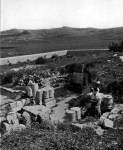
(Jacob’s Well)
But first, let me ask “Why and how do you read the Bible?”
Do you read it as one would read a novel; looking for interesting stories, mysteries? Or do you read it as a self-help book, looking for moral and ethical lessons? Or perhaps you read the Bible as a “How To” book, looking for instructions on how to pray, how to be saved, how to witness, how to be a better person, how to receive from God?
But what if you read the Bible as if it were factually true? I mean, not only without error, but literally true and factually accurate in ways we fail to recognize? What if the Bible is truly a gateway to an unseen (Spiritual) realm from which all things originate? A place where you can have peace in the midst of the tribulations of this physical world, knowing for certain that “He who dwells in you has overcome this world”?
Jesus was fully human and fully divine – fully God. He could and did experience all the feelings and emotions of humankind, but without sin. And still, He is fully God. And He – God – came to this world for you, to show you the way to an abundant and an eternal life, in heaven with God. Just imagine:
Revelation 22:1, And he showed me a river of the water of life, clear as crystal, coming from the throne of God and of the Lamb (Jesus), verse 2, in the middle of its street. On either side of the river was the tree of life, bearing twelve kinds of fruit, yielding its fruit every month; and the leaves of the tree were for the healing of the nations. Verse 3. There will no longer be any curse; and the throne of God and of the Lamb will be in it, and His bond-servants will serve Him; verse 4, they will see His face, and His name will be on their foreheads. Verse 5. And there will no longer be any night; and they will not have need of the light of a lamp nor the light of the sun, because the Lord God will illuminate them; and they will reign forever and ever. And Jesus is the only way and the only One Who is able to keep this promise and to lead us to safety.
The Bible gives us examples of how God may come to us in the most unlikely of places at the most unexpected times and yet speak to us in the most relatable of ways to bring us to the most amazing of all Truth.
How is it possible that you could experience such wonders? It is by faith.
You see, the Bible says that God is able to do all things and that He is sovereign, omnipotent, omniscient and omnipresent and that He has a divine purpose and plan. His plan to find you, bring you back to Himself and give you an eternal home with Him, through His Son, Jesus. (see Luke 19:10).
Let’s look at just one such example found in the book of John, chapter 4, verses 1 through 46.

John 4:1, So then, when the Lord knew that the Pharisees had heard that He was making and baptizing more disciples than John, verse 2, (although Jesus Himself was not baptizing; rather, His disciples were), verse 3, He left Judea and went away again to Galilee.
(Commentary Break): This event or narrative of these verses is often repeated as a ‘story’ about Jesus and the woman at the well in order to observe and to muse about the historical religious significance of the site, insights of Jesus Words to this woman at the well. But little is said about the reason why Jesus followed the route he took, or why He stopped at the well, except that He was tired from His long journey. Let’s step back and look at the larger picture and consider that there is a ‘backstory’ or a larger mission.
It is all by design. There is nothing that humanly happens in this life that is not both divinely decreed and intersected by human free will. The possibilities, mathematically speaking, are humanly incalculable. The Bible says God is sovereign, omnipotent, omniscient and omnipresent. As such, He is never anyplace at any time without a divine purpose and plan. God sees and knows each and every possibility and the outcomes all at once and “His Will is done, on this earth even as it is in heaven”.
Therefore, as it says in verse 1, “the Lord knew”, so He left Judea and went away again to Galilee; (on purpose and with a purpose). Why did He leave at this time? Was it because He knew that because His influence was surpassing that of John the Baptist the Pharisees had taken notice and this was not the time for a confrontation with the Pharisees? Perhaps. But there is a greater reason and cause at hand.
Please remember that Jesus is on earth – He, in fact, has been sent to earth by The Father – to do the will of His Father. Jesus has said in many ways and at many times that He is on a schedule, His time is valuable and is limited because He has a Mission to accomplish – “to seek and save the lost” and “I seek not my own will, but the will of my Father who sent Me”, and “For even the Son of Man did not come to be served, but to serve, and to give His life as a ransom for many.”
So then, when the Lord knew (ginosko, from the Greek language, – a deep, complete, penetrating, intimate and perceptive knowledge), in the aorist tense – i.e., He knew beforehand, He knows presently and He will always know),
He left Judea (aphiēmi, from the Greek language,– left, abandoned, mission there was finished), in the aorist tense – i.e., He knew He would be leaving, He is certain the time had come, He would never doubt it), and He
Went away (aperchomai – to depart in of an evanescent state of things – vanishing as a vapor, imperceptible),
Again (palin – through the idea of oscillatory repetition; a renewal or repetition of the action).
to Galilee (Galiloea – A circle of gentiles or ‘the heathen circle’, a region of Palestine).
Jesus was ‘invading’ the heart of ‘the heathen circle’. Let’s step back to Matthew 4:12-16 and see a broader view and that the importance of Galilee is that this is the place, when Jesus heard that John had been taken into custody, He withdrew into Galilee; This happened so that what was spoken through Isaiah the prophet would be fulfilled:
“The land of Zebulun and the land of Naphtali, By the way of the sea, on the other side of the Jordan, Galilee of the Gentiles— The people who were sitting in darkness saw a great Light, And those who were sitting in the land and shadow of death, Upon them a Light dawned.”
Genesis 1:1 tells us that God said “let there be light”; and the Words of God in Matthew 4:16 are no less significant, no less creative and no less prophetic that those from Genesis 1.
Then In Matthew 4 verse 17 we read, “From that time Jesus began to preach and say, “Repent, for the kingdom of heaven is at hand.”
In Matthew 4:17, the Bible tells us, FIRST that “From that time” what time is this? This can be considered as one of the most important historical time markers in the Bible – it is a line of demarcation.
This is the point Jesus began His earthly ministry as commissioned by God the Father, and This is beginning of the invasion of earth by the kingdom of heaven! The greatest of all spiritual wars has begun!
GOD is announcing that He has come back to reclaim what is His and those who are His! He is here to take His land and to take His kids back from the devil’s captivity – you and me and millions more like us.
This event is a NEW dawn, a NEW beginning – no less fantastic that when in the beginning God said, “LET THERE BE LIGHT”, GOD is now saying “A GREAT LIGHT HAS DAWNED”.
And like we often recite from the “Lord’s Prayer”, “Your Kingdom come, Your will be done, on earth as it is in heaven”, Jesus is saying that time is at hand!
(Now let’s return to John chapter 4).
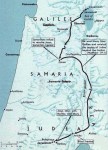
Verse 4. And He had to pass through Samaria.
(Commentary Break):
And He had to pass through Samaria (dei, from the Greek language – is saying it is necessary, there is need of, it behooves, is right and proper).
At first glance it might see that the only pathway from Judea to Galilee was through Samaria. But that is not what this is saying. It is saying that this
- Was an ongoing necessity which was lying in the nature of the case.
- Was a necessity brought which was on by circumstances or by the conduct of others toward us.
- Was a necessity which was in reference to what is required to attain some end.
- Was a necessity which was of law and command, of duty, equity.
- Was a necessity established by the counsel and decree of God, especially by that purpose of his which relates to the salvation of men by the intervention of Christ and which is disclosed in the Old Testament prophecies.
- Represents continual or repeated action. Where the present tense might indicate “He kept on passing through,” (End Commentary Break).
Verse 5. So He came to a city of Samaria called Sychar, near the parcel of land that Jacob gave to his son Joseph;
(Commentary Break): For commentary on verse five please see BibleHub.com). (End Commentary Break).
verse 6, and Jacob’s well was there. So Jesus, tired from His journey, was just sitting by the well. It was about the sixth hour (12:00 o’clock noon time).
(Commentary Break): For commentary on verse six please see BibleHub.com). (End Commentary Break).
Verse 7. A woman of Samaria came to draw water. Jesus said to her, “Give Me a drink.”
(Commentary Break): This is not a metaphor nor is it just a story. It is an account of an actual event. However, there is a purpose, a lesson, a teaching and an eternal Truth to be gained from this encounter.
First, let’s consider that The woman of Samaria is “every man and every woman” – the nature of this woman is you and me. Secondly, we can see ourselves in the lives, thoughts and behaviors of Jesus’ disciples as we hurry about tending to our own physical needs. Finally, Jesus’ words and actions are the Words and Actions of God and are the model for every Christian and disciple of Jesus as we are the appointed representatives and ambassadors of Christ.
As the “Samaritan woman”, we all will come to “draw water” (to slack or to satisfy our physical, mental, emotional or spiritual thirst or to thereby nourish ourself) at one time or another. (As a footnote, in this case, although it was sociologically normal for a man to make demands of a woman, it was not acceptable for a Jewish man to condescend to speak to a Samaritan, and especially to a Samaritan woman. They were at least to be ignored. How often are these social or psychological standards imposed on us, today, but in a sense of feeling worthy or of feeling unworthy? (For a more detailed commentary of verse 7, please seeBibleHub.com). (End Commentary Break).
Verse 8. For His disciples had gone away to the city to buy food.
Verse 9. So the Samaritan woman said to Him, “How is it that You, though You are a Jew, are asking me for a drink, though I am a Samaritan woman?” (For Jews do not associate with Samaritans.)

Verse 10. Jesus replied to her, “If you knew the gift of God, and Who it is who is saying to you, ‘Give Me a drink,’ you would have asked Him, and He would have given you living water.” Verse 11. She said to Him, “Sir, You have no bucket and the well is deep; where then do You get this living water? Verse 12. You are not greater than our father Jacob, are You, who gave us the well and drank of it himself, and his sons and his cattle?” Verse 13. Jesus answered and said to her, “Everyone who drinks of this water will be thirsty again; verse 14, but whoever drinks of the water that I will give him shall never be thirsty; but the water that I will give him will become in him a fountain of water springing up to eternal life.”
(Commentary Break): The stage is set. The conversation has begun. First, Jesus goes straight to the point by explaining, “If you knew the gift of God, and Who it is who is saying to you, ‘Give Me a drink,’ you would have asked Him, and He would have given you living water.”
Jesus is thinking in His heavenly ‘spiritual language’, so-to-speak, as He translates into the human language of this Samaritan woman. (This is done because, as Isaiah 55:8-11 tells us, “For My thoughts are not your thoughts, Nor are your ways My ways,” declares the Lord. “For as the heavens are higher than the earth, So are My ways higher than your ways, And My thoughts than your thoughts. For as the rain and the snow come down from heaven, And do not return there without watering the earth, And making it produce and sprout, And providing seed to the sower and bread to the eater; So will My word be which goes out of My mouth; It will not return to Me empty, Without accomplishing what I desire, And without succeeding in the purpose for which I sent it.”).
The gift of God – dórea – a gift, freely given and hence not acquired by merit or “entitlement” expresses a brand of giving that highlights the beneficent desire of the giver. This “gift of God” refers to the salvation and eternal life offered through Jesus Christ. This phrase emphasizes the grace and generosity of God, who offers salvation freely to those who believe. It echoes Ephesians 2:8-9, which speaks of salvation as a gift from God, not a result of works. The concept of God’s gift is central to the Gospel message, underscoring the unmerited favor bestowed upon humanity.
Who it is – Only God could offer a Gift of God. Jesus is identifying Himself as God. He is God with us, Immanuel.
Living Water – This is the gift of the indwelling Holy Spirit. The Holy Spirit plays a vital role in the believer’s life. He convicts the world of sin, righteousness, and judgment (John 16:8-11), and regenerates those who believe in Christ, making them new creations (John 3:5-6; Titus 3:5). The Spirit sanctifies believers, helping them grow in holiness and conform to the image of Christ (2 Thessalonians 2:13; 1 Peter 1:2).
Jesus is telling this woman, as He is telling each one of us who are confronted by Him, “If you knew the gift of God, and Who it is who is saying to you, ‘Give Me a drink,’ you would have asked Him, and He would have given you living water.”
The indwelling presence of the Holy Spirit is the evidence and the proof that one is saved – SOZO, (sode’-zo) – in the Bible, means to be rescued from destruction and brought into divine safety”. To deliver or protect— (From Strong’s Bible Concordance).
SAVED: To be made safe, to be made healthy, to be made whole (complete with purpose). Delivered from the evil one and from the coming Messianic Judgment of God – NOW and for all of eternity,
Made safe, to be made healthy, to be made whole In your body. In your mind. In your soul and spirit.
Made safe, to be made healthy, to be made whole In your home. With your family, your children, your spouse and relatives. In your work. With your friends. In every aspect of your life.
Made safe, to be made healthy, to be made whole even in times of distress, tribulation, trials, sickness, poverty and chaos. You are made to prosper even as your soul prospers!
(This is not a magic formula or a spell. It is the Word of God through your faithful, submissive obedience in following Jesus.
This is the Good News that God gave John to proclaim.
This is the Good News and the reason God sent us His Son. Jesus.
This is the Good News that Jesus proclaims to the world, then and now. (End Commentary Break).
Verse 15. The woman said to Him, “Sir, give me this water so that I will not be thirsty, nor come all the way here to draw water.”
Commentary Break): And still, this woman only understands from an earthly and unregenerate perspective of a lost soul. (End Commentary Break).
Verse 16. He said to her, “Go, call your husband and come here.” Verse 17. The woman answered and said to Him, “I have no husband.” Jesus said to her, “You have correctly said, ‘I have no husband’; verse 18, for you have had five husbands, and the one whom you now have is not your husband; this which you have said is true.” Verse 19. The woman said to Him, “Sir, I perceive that You are a prophet.
(Commentary Break): Jesus uses the common and what is thought to be hidden to open the eyes of her mind and to bring this woman to the Truth. (End Commentary Break).
Verse 20. Our fathers worshiped on this mountain, and yet you Jews say that in Jerusalem is the place where one must worship.” Verse 21. Jesus said to her, “Believe Me, woman, that a time is coming when you will worship the Father neither on this mountain nor in Jerusalem. Verse 22. You Samaritans worship what you do not know; we worship what we do know, because salvation is from the Jews. Verse 23. But a time is coming, and even now has arrived, when the true worshipers will worship the Father in spirit and truth; for such people the Father seeks to be His worshipers. Verse 24. God is spirit, and those who worship Him must worship in spirit and truth.” Verse 25. The woman said to Him, “I know that Messiah is coming (He who is called Christ); when that One comes, He will declare all things to us.” Verse 26. Jesus said to her, “I am He, the One speaking to you.”
(Commentary Break): Please use these links For a full commentary on verse 20, verse 21, verse 22. Verse 23 through verse 26 gives us one of the most profound and amazing statements found in the Bible. Jesus has clearly announced to humanity that He is the One – the prophesied Messiah, the promised King of Israel and of the Savior of the world. “I know that Messiah is coming (He who is called Christ); when that One comes, He will declare all things to us.” Verse 26. Jesus said to her, “I am He, the One speaking to you.” (End Commentary Break).
Jesus is still speaking to us, today. Representative of each time that “Jesus began to preach and say”, Matthew 4:17 tells us that the word used there, from the Greek language, is ‘kerusso’. This is NOT a casual statement nor is it just a narration. It is a word of formality, gravity and an authority which must be listened to and obeyed; something which has been done, first in the Spiritual realm and to be manifest in the natural. It is not a general statement nor is it a request. It is PROPHETIC command. Kerusso!

Next, let’s notice that Jesus says “Repent”. What is often overlooked but should be glaringly obvious is that Jesus does not tell us WHAT to repent from. We typically assume we are to repent of our sins. But that is not what He actually says. He simply says, “Repent”.
But REPENT from what?
“Repent, (‘metanoeo’), from the Greek, means to change one’s mind – to change one’s mind for the better.
And if it is that we are to REPENT of our sins, it is just as important to know that the word Sin, from the Greek word ‘hamartia’ – literally means to be without a share in; to miss the mark. To miss the mark both of all that God has intended for your life and all that He has for you now, and for all of eternity.
It is commonly accepted that Jesus meant that we are to heartily amend, with abhorrence of our past sins. And it can mean that and it DOES mean that. BUT IT MEANS SO MUCH MORE.
So, when Jesus says to REPENT, the overall meaning, the connotation of this word it to CHANGE AND CONDITION YOUR MIND TO THINK LIKE JESUS, TO SEE THINGS FROM HIS PERSPECTIVE AND TO RESPOND IN ALL CIRCUMSTANCE AND SITUATIONS OF LIFE AND DEATH AS JESUS DOES.
This requires a radical redefining or our understand. It demands that we turn our minds to what Jesus says and what He means – even if it makes us uncomfortable.
Jesus is saying that REPENTANCE is a radical reformation and shift in our paradigms. It is a change in our attitudes, and of our mindset, our will and emotions from how we naturally see things to HOW JESUS SEES THINGS. It is a change in the all the choices we make in life so WE CAN SEE THEM AS JESUS SEES THEM.
Jesus is saying we must change how see or view and deal with our relationships with others, our families, marriage, and even our disputes. How we react to being wronged, how we give of ourselves, of our time of our resources. How we view work, money, wealth, and anxiety. How we view our community, our country and the world and how we view the lost – from how we see them to HOW HE SEES THEM. We must see the world around us and what Jesus is commanding of us AS HE SEES IT. THAT IS TRUE AND COMPLETE REPENTANCE.
We begin to see that the Words of Jesus are life giving words. They protect us, they guide and direct us. They strengthen us and provide us with purpose and hope.
And finally, in this verse, Jesus says, for the kingdom of heaven is now at hand (The words ” the Kingdom of Heaven” are so descriptive that you must take the definition of each word and consider the impact and importance.
The Kingdom of God is now at hand, describes the long awaited arrival of the Messiah who is now to establish His Kingdom on earth. As the “Lord’s Prayer” even says, “Thy Kingdom come, Thy will be done, on earth as it is in heaven”. A Kingdom of forgiveness, of grace, mercy, justice and eternal salvation. A Kingdom conquering death, disease, sin and darkness.
His Kingdom is a royal power, a kingship, dominion, rule and the right or authority to rule over a kingdom; the royal power of Jesus as the triumphant Messiah and the royal power and dignity conferred on Christians in the Messiah’s kingdom.” This is our calling and our role as Christians, Disciples of Jesus,
And finally, the phrase, the kingdom is now “At hand.” (“At hand” comes from a Greek word of with a meaning like the ‘crook of your arm’ and with the action like a mounting wave which has the power to knock you off your feet and roll you over and over; indicating a distance which is as close as your hand is to your wrist, AND as Luke 17:21 puts it, “the kingdom of God is now within you”. Romans 10:8 ALSO tells us, that “THE WORD (OF GOD) IS NEAR YOU, IN YOUR MOUTH AND IN YOUR HEART”.
Jesus is saying, today, we are to “Repent, for the Kingdom of Heaven is now at hand”. (End Commentary Break).
John 4:27, And at this point His disciples came, and they were amazed that He had been speaking with a woman, yet no one said, “What are You seeking?” or, “Why are You speaking with her?” Verse 28. So the woman left her waterpot and went into the city, and said to the people, Verse 29. “Come, see a man who told me all the things that I have done; this is not the Christ, is He?” Verse 30. They left the city and were coming to Him.
(Commentary Break): Look and see: you are at various times do the works of Jesus; at other times you are the woman; still at other times you are the people in the city. At all times, as it says in verse 30, we are to be coming to Him. (End Commentary Break).
Verse 31. Meanwhile, the disciples were urging Him, saying, “Rabbi, eat something.” Verse 32. But He said to them, “I have food to eat that you do not know about.” Verse 33. So the disciples were saying to one another, “No one brought Him anything to eat, did he?” Verse 34. Jesus said to them, “My food is to do the will of Him who sent Me, and to accomplish His work.
(Commentary Break): What are you looking for? Do you have natural eyes or spiritual eyes? You will only see that of which you seek. The disciples were thinking of earthly matters and that is all they could see – Jesus is speaking of heavenly matters. Let’s pray that God enlightens the eyes of our hearts. (End Commentary Break).
Verse 35. Do you not say, ‘There are still four months, and then comes the harvest’? Behold, I tell you, raise your eyes and observe the fields, that they are white for harvest. Verse 36. Already the one who reaps is receiving wages and is gathering fruit for eternal life, so that the one who sows and the one who reaps may rejoice together. Verse 37. For in this case the saying is true: ‘One sows and another reaps.’ Verse 38. I sent you to reap that for which you have not labored; others have labored, and you have come into their labor.”
(Commentary Break): “Already the one who reaps is receiving wages and is gathering fruit for eternal life, so that the one who sows and the one who reaps may rejoice together.” These “wages” refer to the spiritual rewards and fulfillment that come from participating in God’s work. This echoes the principle found in 1 Corinthians 3:8, where Paul speaks of each worker receiving their reward according to their labor. The imagery of reaping suggests a time of joy and completion, as seen in the agricultural practices of the time, where harvest was a season of celebration.
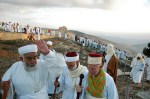
The Samaritans
Verse 39. Now from that city many of the Samaritans believed in Him because of the word of the woman who testified, “He told me all the things that I have done.” Verse 40. So when the Samaritans came to Jesus, they were asking Him to stay with them; and He stayed there two days. Verse 41. Many more believed because of His word; verse 42, and they were saying to the woman, “It is no longer because of what you said that we believe, for we have heard for ourselves and know that this One truly is the Savior of the world.”
And so by these and even greater works the world came to know Jesus. No flashing lights, no stage smoke, no twanging of guitars or banging of symbols. No singers jumping up and down to the rhythmic beat of passions drums. And encounter with the Living Word of Truth.
Let’s let this be a lesson to us – indeed.
Your Brother and Friend,
Mike Young
Discover more from Whitestone Fellowship
Subscribe to get the latest posts sent to your email.

