The Book of First Peter, Chapter 4

Be of the Same Purpose, Share the Sufferings of Christ
Peter offers what could be considered one of the great challenges for the Christian – deliberately follow Christ and likewise endure His sufferings joyfully so that you may cease from sin. (Please note that the commentaries on this chapter are long and confrontational and some might even say controversial and unconventional.)
Be of the Same Purpose
1 Peter 4:1, Therefore, since Christ has suffered in the flesh, arm yourselves also with the same purpose, because the one who has suffered in the flesh has ceased from sin, verse 2, so as to live the rest of the time in the flesh no longer for human lusts, but for the will of God. Verse 3. For the time already past is sufficient for you to have carried out the desire of the Gentiles, having pursued a course of indecent behavior, lusts, drunkenness, carousing, drinking parties, and wanton idolatries.
(Commentary Break): Perhaps you are like me in that when I look back over my life, I am sorrowful for the trail of sin in my life, and from that perspective, I do not feel qualified to call myself a Christian. But thanks to God for His wonderful grace and such a great salvation. I am learning that when I embrace the same purpose of Christ and His sufferings that I begin to find a relief from sin.
This is a hidden truth of the human psyche – you cannot think narrowly upon one thing that brings you intense suffering passion and pain and yet do another. Scriptures are admonishing us to willfully “arm ourselves with the same purpose as Christ”, because engaging in such a worthy purpose that brings this vexing cleansing pain, the flesh will cease from sin – so we may live the rest of the time in the flesh not for human lusts, but for the will of God. There a few teachings such as this one. It is an unvarnished truth and a dividing line between “knowing about God” and truly knowing Him. It is the difference between calling oneself a Christian and truly being a follower, a disciple a brother and joint-heir with Him.
Those who think they can ‘comfortably serve’ the purposes of Christ will only find the disappointing plague of sin haunting them along the way. Rid yourself of this plague.
(The law of the Spirit of life in Christ Jesus has set you free from the law of sin and of death; for the mind set on the Spirit is life and peace.) (End Commentary Break).
Verse 4. In [connection with] all this, they [the unbelievers] are resentful and surprised that you do not [think like them, value their values and] run [hand in hand] with them into the same excesses of dissipation and immoral freedom, and they criticize and abuse and ridicule you and make fun of your values; verse 5, but they will give an account to Him who is ready to judge the living and the dead. Verse 6. For the gospel has for this purpose been preached even to those who are dead, that though they are judged in the flesh as people, they may live in the spirit according to the will of God.
(Commentary Break): Another effect of “arming oneself with the purpose and the suffering of Christ” is that those with whom you have run in a life of “indecent behavior, lusts, drunkenness, carousing, drinking parties, and wanton idolatries”, will begin to ridicule you and will separate from you and you from them. Do not be discouraged, but embrace the safety of the presence of God, and the Family of God, the Ekklesia, which is now round about you.
Secondly, this spiritual life is not bound by physical death but is eternal, aligning with the promise of eternal life through Jesus Christ (John 3:16). The contrast between judgment in the flesh and life in the spirit emphasizes the hope and assurance of salvation for believers, despite earthly trials. (End Commentary Break).
Verse 7. The end of all things is near; therefore, be of sound judgment and sober spirit for the purpose of prayer.
(Commentary Break): Verse seven should be clear enough when red at its face value. But its clear meaning has been obfuscated by agenda-oriented denominationalists, particularly the dispensationalists. Peter is clearly prophetically stating “The end of all things is near”.
Dispensationalists and religious Traditionalists, however, will say things like “During this time, Christians were experiencing increasing hostility and persecution, which forms the backdrop for Peter’s exhortations, and because of the severe persecution and the ascension of Christ, many Christians including John of Patmos had come to believe the end of all things had come”. Some will even venture to guess that the Apostles were confused or had mistaken the times. All of which is egregiously incorrect, a poor guess at best and at worst, a deliberate misinterpretation of scriptures.
I will concede that if Peter alone had made such a radical statement that “The end of all things is near”, there might be some reason to question his remark. However, Peter was not alone in his remarks. The disciple Timothy, and the Apostles Paul and John made the same and similar references. And if that isn’t enough to settle the matter, Jesus, Himself, has settled the matter in His prophetic remarks found in Matthew chapter 24 and in The Book of The Revelation, chapters six through eight.

Matthew 24:4-31, (Jesus), describing a panorama of the tribulation and the Last Days. Jesus was sitting on the Mount of Olives, the disciples came to Him privately, saying, “Tell us, when will these things happen, and what will be the sign of Your coming, and of the end of the age?” And Jesus answered and said to them, (see Matthew 24:3-4),
(1). In the Last Days, there will be a rise of false Christs and false prophets. (This was an ongoing problem since as early as A.D. 35. See Matthew 24:4-5).
(2). In the Last Days, there will be famines and earthquakes. (This has been a regular occurrence since as early as A.D. 35 or earlier. See Matthew 24:7 and the Fourth Tribulation Seal, found in Revelation 6:5-8).
(3). In the Last Days, there are wars and rumors of wars. (Wars and rumors of war have been occurring since as early as A.D. 35 or earlier. See Matthew 24:6 and the Second Tribulation Seal, found in Revelation 6:3-4).
(4). In the Last Days, there will be a persecution and martyrdom of Christians. (This has been an ongoing problem since as early as A.D. 35. See Matthew 24:9 and the Fifth Tribulation Seal, found in Revelation 6:9-11).
(5). In the Last Days, there will be a falling away from the faith. (This has been an ongoing problem since as early as A.D. 35, and has been increasing to this very day. See Matthew 24:10).
These things, false Christs, wars and rumors of war, famines, earthquakes and plagues, persecutions, martyrs, which Jesus calls the ‘Birth Pangs’ of the tribulation, are nothing new; and from these cited verses, we can plainly see that the first 5 tribulation Seals have been broken, and the effects had begun between the time of the birth of Jesus and A.D 95, and have been overlapping and increasing in their intensity since those early days.
Jesus calls the First phase of the tribulation the ‘Birth Pangs’ (Matthew 24:8). Jesus then calls the Second phase of the tribulation, the Great Tribulation (Matthew 24:21), also known as the Sixth Tribulation Seal (Revelation 6:12-14), and the Great and Terrible Day of the Lord (Joel 2:31), and the Wrath of the Lamb (Revelation 6:16).. (Please click these links for verification and understanding).
Now, what would you think?
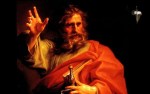
Acts 2:14-17, (the Apostle Peter), saying, “let this be known to you, and give ear to my words. For these people are not drunk, as you suppose, since it is only the third hour of the day. But this is what was uttered through the prophet Joel: ‘And in the last days it shall be…’ (Spoken and written in or around A.D. 30 to A.D. 60).
1 Peter 1:20, (the Apostle Peter), saying, “He, (Jesus), was foreknown before the foundation of the world, but was made manifest in the last times for the sake of you.” (Spoken and written in or around A.D. 30 to A.D. 60).
1 Peter 4:7, (the Apostle Peter), saying, “The end of all things is at hand.” (Spoken and written in or around A.D. 30 to A.D. 60).
2 Peter 3:3. (the Apostle Peter), saying, “knowing this first of all, that scoffers will come in the last days.” (Spoken and written in or around A.D. 30 to A.D. 60).
If these verses say all these things began occurring in or around A.D. 30 to A.D. 60, and Peter called those days the LAST TIMES, THE LAST DAYS, and it is THE END OF ALL THINGS.
What would you think?

1 Corinthians 10:11, (the Apostle Paul), saying, “Now these things happened to them as an example and warning [to us]; they were written for our instruction [to admonish and equip us], upon whom the ends of the ages have come.” (Spoken and written in or around A.D. 30 to A.D. 60).
Hebrews 1:2, (the Apostle Paul), saying, “but in these last days he has spoken to us by his Son.” (Spoken and written in or around A.D. 30 to A.D. 60).
Hebrews 9:26, (the Apostle Paul), saying, “But as it is, Jesus has appeared once for all at the end of the ages to put away sin by the sacrifice of himself.” (Spoken and written in or around A.D. 30 to A.D. 60).
If these verses say all these things began occurring in the LAST TIMES, THE DAYS, and it is THE END OF ALL THINGS.
What would you think?

2 Timothy 3:1, (Timothy), saying, “But understand this, that in the last days there will come times of difficulty.” (Spoken and written in or around A.D. 30 to A.D. 60).
If these verses say all these things began occurring in the LAST TIMES, THE DAYS, and it is THE END OF ALL THINGS.
What would you think?

1 John 2:18. (the Apostle John), saying, “Children, it is the last hour, and as you have heard that antichrist is coming, so now many antichrists have come. Therefore, we know that it is the last hour.” (Spoken and written in or around A.D. 30 to A.D. 60).
Revelation 1:9, (The Apostle John), saying, “I, John, your brother and fellow participant in the tribulation.” (Spoken and written in or around A.D. 95 to A.D. 100).
If these verses say that John was a fellow participant IN THE TRIBULATION in the year A.D. 95.
What would you think?
Our Lord spoke of these things as they were occurring. The Apostles spoke of these things as they were occurring. They were not confused nor were they mistaken. These testimonies clearly tell us that the Last Days, also known as The End of All Things, The End of the Ages, The Last Hour, The Last Times and the tribulation, began at the birth of Christ and these first 5 tribulation Seals have been overlapping and intensifying since those days. (We are still awaiting the breaking of the Sixth tribulation seal, also known as the Great and Terrible Day of The Lord, the Wrath of the Lamb and the Great Tribulation.
And why is this important? Readiness. Most Christians, including the Church leadership are woefully unprepared, thinking they have nothing more to do or to expect. But if you will read Matthew chapters 24 through 25 you will find that Jesus warns of the consequences of being unprepared. And Peter is warning and instructing Christians, as early as A.D. sixties. These Tribulation Seals of Birth Pains (see Matthew 24:8) have been overlapping and increasing in their intensity to this day. We are now, as Peter has said, “near the end of all things” which commence with the breaking of the Sixth Tribulation Seal and conclude with the pour out of the Seventh Tribulation Bowl – a period referred to in scriptures as The Great Tribulation, The Great and Terrible Day of the Lord and the Wrath of the Lamb – The end of all things, the end of the age. (End Commentary Break).
Verse 8. Above all, keep fervent in your love for one another, because love covers a multitude of sins. Verse 9. Be hospitable to one another without complaint. Verse 10. As each one has received a special gift, employ it in serving one another as good stewards of the multifaceted grace of God.
(Commentary Break): Two Sides of One Coin. On the one side, These verses eight through ten emphasize the supreme importance of the following command. In the context of First Peter, the apostle is addressing believers who are experiencing persecution and suffering. The phrase “above all” indicates that what follows is of utmost priority in the Christian life, surpassing other duties and responsibilities. It echoes the teachings of Jesus, who emphasized love as the greatest commandment (Matthew 22:37-39).
The call to love deeply suggests an intense, fervent, and sincere love that goes beyond superficial or casual affection. This love is rooted in the Greek word “agape,” which denotes selfless, sacrificial love. In the early Christian community, such love was essential for unity and support, especially during times of trial. This command aligns with Jesus’ new commandment to love one another as He loved us (John 13:34-35). The depth of this love is a reflection of the love Christ showed through His sacrifice.
This phrase suggests that love has the power to forgive and overlook offenses, promoting reconciliation and peace within the community. It is reminiscent of Proverbs 10:12, which states, “Hatred stirs up conflict, but love covers over all wrongs.” The idea is not that love ignores sin but that it seeks to forgive and restore relationships. This covering of sins is a type of Christ’s atoning work, where His love and sacrifice cover the sins of humanity. In a communal setting, this principle helps maintain harmony and reflects the forgiving nature of God, as seen in passages like Ephesians 4:32.
On the other side of this coin, it is the unity of believers in Christ that will give us the strength, encouragement, and the help needed both in the days in which we live and in the days to come, as we “arm ourselves with the same purpose as Christ who suffered in the flesh”. (End Commentary Break).
Verse 11. Whoever speaks is to do so as one who is speaking actual words of God; whoever serves is to do so as one who is serving by the strength which God supplies; so that in all things God may be glorified through Jesus Christ, to whom belongs the glory and dominion forever and ever. Amen.
(Commentary Break): Please dear friends in Christ; please read and re-read these words in verse eleven. Jesus gave:
-
-
- Spiritual authority (over demons, sin, and evil)
- Mission authority (to preach, teach, and make disciples)
- Representative authority (acting in Jesus’ name)
- Empowered authority (through the Holy Spirit)
-
Authority Given During Jesus’ Ministry
-
-
- Matthew 10:1
“He gave them authority over unclean spirits, to cast them out, and to heal every disease and every affliction.”
Jesus directly empowers the twelve disciples. - Luke 9:1–2
“He gave them power and authority over all demons and to cure diseases, and he sent them out to proclaim the kingdom of God…” - Luke 10:19
“I have given you authority… over all the power of the enemy…”
Spoken to a wider group of 72 disciples.
- Matthew 10:1
-
Authority in Spiritual Identity & Representation
-
-
- John 20:21–23
“As the Father has sent me, even so I am sending you…”
Includes authority connected to forgiveness of sins. - Matthew 16:19
“I will give you the keys of the kingdom of heaven…”
Spoken to Peter the Apostle; symbolic authority to bind and loose. - Matthew 18:18
“Whatever you bind on earth shall be bound in heaven…”
→ Extended to the broader group of disciples.
- John 20:21–23
-
The Great Commission (Ongoing Authority)
-
-
- Matthew 28:18–20
“All authority in heaven and on earth has been given to me. Therefore go and make disciples…”
Jesus delegates His mission under His authority. - Mark 16:17–18
“These signs will accompany those who believe…”
Authority expressed through miraculous signs. - Acts 1:8
“You will receive power when the Holy Spirit has come upon you…”
Authority empowered through the Holy Spirit.
- Matthew 28:18–20
-
Acting in Jesus’ Name (Delegated Authority)
-
-
- John 14:12–14
“Whoever believes in me will also do the works that I do…” - Luke 24:49
“Stay… until you are clothed with power from on high.” - Ephesians 2:10
Believers are created for works prepared by God—implying participation in His will.
- John 14:12–14
-
We are not to be idle bystanders. We are active participants in His Purpose. We are His disciples, His ambassadors, sent to do His Works and greater works, all for the glory of God through Jesus Christ our Lord and our Savior! (End Commentary Break)
Share the Sufferings of Christ
Verse 12. Beloved, do not be surprised at the fiery ordeal among you, which comes upon you for your testing, as though something strange were happening to you; verse 13, but to the degree that you share the sufferings of Christ, keep on rejoicing, so that at the revelation of His glory you may also rejoice and be overjoyed. Verse 14. If you are insulted for the name of Christ, you are blessed, because the Spirit of glory, and of God, rests upon you. Verse 15. Make sure that none of you suffers as a murderer, or thief, or evildoer, or a troublesome meddler; verse 16, but if anyone suffers as a Christian, he is not to be ashamed, but is to glorify God in this name. Verse 17. For it is time for judgment to begin with the household of God; and if it begins with us first, what will be the outcome for those who do not obey the gospel of God? Verse 18. AND IF IT IS WITH DIFFICULTY THAT THE RIGHTEOUS IS SAVED, WHAT WILL BECOME OF THE GODLESS MAN AND THE SINNER? Verse 19. Therefore, those also who suffer according to the will of God are to entrust their souls to a faithful Creator in doing what is right. (End Chapter 4).
I have recently spoken to an associate pastor search committee who are having a difficult time finding a suitable candidate. They have been meeting in the same school gymnasium for over 16 years. They once had a youth program but lost them to another nearby church. Their attendance is steady at around fifty people. Their pastor is nearing 60 years of age. The worship team’s average age is around 70 years of age. When asked, I suggested they begin ministering to those nearby instead of serving themselves. One of the lead elders remarked, “but we are comfortable with the way things are”. And I say that it would appear that so are those who lie in coffins.
Jesus says that we are to go and make disciples. And yes, even when it makes us uncomfortable.
Your Brother and Friend,
Mike Young
NEXT: (Coming Soon) The Book of First Peter, Chapter 5, Serve God Willingly.
PREVIOUS: The Book of First Peter, Chapter 3, Godly Living
(Please subscribe or bookmark this page for future episodes).
(For a more detailed description and scriptural confirmation that we are in the “Last Days” (also known as the “Birth Pains of the Tribulation“, please see “Could This Be the Beginning of The End?”
Discover more from Whitestone Fellowship
Subscribe to get the latest posts sent to your email.

