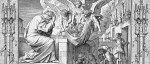
THE BOOK OF ACTS – Chapter 16, The Macedonian Vision, First Convert in Europe, Paul and Silas Imprisoned, Jailer Converted


THE BOOK OF ACTS – Chapter 16

The Macedonian Vision, First Convert in Europe, Paul and Silas Imprisoned, Jailer Converted.

An apostle, (Apostolos), from Strong’s concordance is a delegate; specially, an ambassador of the Gospel; officially a commissioner of Christ. As an “apostle”, with miraculous powers; a messenger that is sent. The name of apostle denotes a person personally sent with full authority to represent the sender. In the New Testament it describes those chosen and commissioned by Jesus Christ, together with a small circle of later appointees, who bear foundational authority for proclaiming the gospel, establishing churches, and penning inspired Scripture. Eighty occurrences trace the word from the calling of the Twelve in the Gospels to the eschatological vision of Revelation (see BibleHub.com).

One of the major questions surrounding the gift of an apostle is its continuance. Are there still apostles functioning in the church today? Do people still hold this particular office or have this gift?

There are two basic views. One position sees the apostles having a limited ministry during the early years of the church. Hence there are no more apostles today.

Another perspective believes this was to be a continuing gift until the Lord returns. Therefore, people today do have the gift of an apostle though there is not the office of apostle in the same sense as in Jesus’ day.  (see Blue Letter Bible.com).

Either way, study the Book of the Acts of the Apostles and consider the difficulties faced by the early church and how the Apostles dealt with what they faced as it can serve as an encouragement to us in the present-day church. The disciples’ zeal that took the gospel across ethnic and national boundaries must inspire us today. The Spirit, Who is so active in Acts is the same Holy Spirit that is currently at work today in the church. Let it be so!

Acts 16:1, Now Paul also came to Derbe and to Lystra. And a disciple was there, named Timothy, the son of a Jewish woman who was a believer, but his father was a Greek, verse 2, and he was well spoken of by the brothers and sisters who were in Lystra and Iconium. Verse 3. Paul wanted this man to leave with him; and he took him and circumcised him because of the Jews who were in those parts, for they all knew that his father was a Greek.

(Commentary Break): The Council of Jerusalem or Apostolic Council is a council described in chapter 15 of the Acts of the Apostles, held in Jerusalem in A.D. 48 to A.D. 50. The council decided that Gentiles who converted to Christianity were not obligated to keep most of the rules prescribed to the Jews by the Mosaic Law, such as Jewish dietary laws and other specific rituals, including the rules concerning circumcision of males. It is suspected, however, that Paul circumcised Timothy because Timothy was half Jewish, and it would help him gain acceptance among Jewish communities during their missionary work. This decision, although strategic, as it allowed Timothy to better connect with the people they were trying to reach, despite the broader church consensus that Gentiles did not need to be circumcised, set an unfortunate precedent. (Hence, the during the establishment and spread of the church and denominationalism. Many new manmade and self-serving rites, rituals and doctrines, some superstitious on witchcraft, have been included and are practiced to this day. Unfortunately, practices that take liberties with the original texts of Scriptures have spread and been embedded in Christiandom creating sub-cultures and cults which distract from the primary message and mission of Christ, even leading many astray of the Gospel. (End Commentary Break.)

Verse 4. Now while they were passing through the cities, they were delivering the ordinances for them to follow which had been determined by the apostles and elders in Jerusalem. Verse 5. So the churches were being strengthened in the faith, and were increasing in number daily.

(Commentary Break): These decisions are referring to the decrees from the Jerusalem Council, as recorded in Acts 15. This council addressed the issue of whether Gentile converts needed to follow Jewish law, particularly circumcision. The decisions were crucial for maintaining unity between Jewish and Gentile believers and for clarifying the requirements for Gentile inclusion in the church. This reflects the early church’s struggle with maintaining doctrinal purity while embracing cultural diversity.

The apostles and elders in Jerusalem were the recognized leaders of the early church, including figures like Peter, James, and John. Their authority was rooted in their direct relationship with Jesus and their role in the foundational events of the church. The decisions handed down were not considered as merely human opinions but were seen as guided by the Holy Spirit (Acts 15:28). This underscores the importance of apostolic authority, the role of church leadership in doctrinal matters and adhering to doctrinal accuracy and purity. (End Commentary Break).

Verse 6. They passed through the Phrygian and Galatian region, after being forbidden by the Holy Spirit to speak the word in Asia; verse 7, and after they came to Mysia, they were trying to go into Bithynia, and the Spirit of Jesus did not allow them; verse 8, and passing by Mysia, they went down to Troas. Verse 9. And a vision appeared to Paul in the night: a man of Macedonia was standing and pleading with him, and saying, “Come over to Macedonia and help us.” Verse 10. When he had seen the vision, we immediately sought to leave for Macedonia, concluding that God had called us to preach the gospel to them.

Verse 11. So after setting sail from Troas, we ran a straight course to Samothrace, and on the following day to Neapolis; verse 12, and from there to Philippi, which is a leading city of the district of Macedonia, a Roman colony; and we were spending some days in this city. Verse 13. And on the Sabbath day we went outside the gate to a riverside, where we were thinking that there was a place of prayer; and we sat down and began speaking to the women who had assembled.

First Convert in Europe

Verse 14. A woman named Lydia was listening; she was a seller of purple fabrics from the city of Thyatira, and a worshiper of God. The Lord opened her heart to respond to the things spoken by Paul. Verse 15. Now when she and her household had been baptized, she urged us, saying, “If you have judged me to be faithful to the Lord, come into my house and stay.” And she prevailed upon us.

(Commentary Break): Here is what we can know for our own understanding and benefit: (1). A woman named Lydia was listening. She was listening. How many times do you or I, having our mind made up, fail to listen, consider, think and allow the Lord to speak to our heart and mind? Lydia not only listened to the words of Paul and Timothy – She heard and listened to God. This is what we must remember for ourselves.

(2). Lydia was a businesswoman. In a male dominated world, she thrived. She was smart, wise and careful. She had her priorities on the correct order. If you are a woman, take notice.

(3). She was a worshipper of God. Therefore, the Lord was able to open her heart so she could respond to the things spoken by Paul. Worship – true worship of God is essential in hearing God. (4). Her worship, her listening, her response resulted in an open heart to the Word. (5). She and her household came to believe and were baptized. (6). Lydia and her household desired the fellowship of believers. This is a good measurement for all who would seek to hear from and come into relationship with God. (End Commentary Break).

Verse 16. It happened that as we were going to the place of prayer, a slave woman who had a spirit of divination met us, who was bringing great profit to her masters by fortune-telling. Verse 17. She followed Paul and us and cried out repeatedly, saying, “These men are bond-servants of the Most High God, who are proclaiming to you a way of salvation.” Verse 18. Now she continued doing this for many days. But Paul was greatly annoyed, and he turned and said to the spirit, “I command you in the name of Jesus Christ to come out of her!” And it came out at that very moment.

Verse 19. But when her masters saw that their hope of profit was suddenly gone, they seized Paul and Silas and dragged them into the marketplace before the authorities, verse 20, and when they had brought them to the chief magistrates, they said, “These men, Jews as they are, are causing our city trouble, verse 21, and they are proclaiming customs that are not lawful for us to accept or to practice, since we are Romans.”

(Commentary Break): The men and women during the age of the Apostles dealt in the dark arts of magic, witchcraft and divination. Now-a-days, many contemporary people would say those ancient people were just ignorant and superstitious – thinking this way contributes to our own foolish harm. But if you believe what you read in the Bible, it is clear that the Apostles took magic, witchcraft and divination seriously and they worked against it. It is why The Bible warns against “witchcraft and sorcery” (from the Greek word ‘pharmakeia’). This denotes the practice of (1) manipulating human life or circumstances through potions, drugs, (whether for recreational use, for abortions or for even more nefarious uses), magical arts that invoke supernatural influence apart from the living God. In Scripture it is consistently grouped with sins that fracture covenant fidelity, whether toward God (idolatry) or neighbor (hatred, jealousy, murder). While the modern term “pharmacy” descends from the same root, the biblical concern is not legitimate medicine but the use of substances or rituals to gain illicit spiritual power or to deceive. Several verses, emphasizing that these practices are detestable to God. Key passages include Deuteronomy 18:10-12, which states that no one should practice divination or consult the dead, and Galatians 5:19-21, which lists witchcraft among the acts of the flesh that prevent inheriting the kingdom of God.

And if you have ever wondered why our current-day society and world has become so violent, perverse, deceitful and murderous, you need look no further than this. And the only workable solution, the only answer is to do what the Apostle Paul has done when he “turned and said to the spirit and said, “I command you in the name of Jesus Christ to come out of her!” And be certain you are faithfully and thoroughly filled with the Spirit of God and clothed in the righteousness of Jesus. (End Commentary Break).

Paul and Silas Imprisoned

Verse 22. The crowd joined in an attack against them, and the chief magistrates tore their robes off them and proceeded to order them to be beaten with rods. Verse 23. When they had struck them with many blows, they threw them into prison, commanding the jailer to guard them securely; verse 24, and he, having received such a command, threw them into the inner prison and fastened their feet in the stocks.

Verse 25. Now about midnight Paul and Silas were praying and singing hymns of praise to God, and the prisoners were listening to them; verse 26, and suddenly there was a great earthquake, so that the foundations of the prison were shaken; and immediately all the doors were opened, and everyone’s chains were unfastened. Verse 27. When the jailer awoke and saw the prison doors opened, he drew his sword and was about to kill himself, thinking that the prisoners had escaped. Verse 28. But Paul called out with a loud voice, saying, “Do not harm yourself, for we are all here!” Verse 29. And the jailer asked for lights and rushed in, and trembling with fear, he fell down before Paul and Silas; verse 30, and after he brought them out, he said, “Sirs, what must I do to be saved?”

The Jailer Converted

Verse 31. They said, “Believe in the Lord Jesus, and you will be saved, you and your household.” Verse 32. And they spoke the word of God to him together with all who were in his house. Verse 33. And he took them that very hour of the night and washed their wounds, and immediately he was baptized, he and all his household. Verse 34. And he brought them into his house and set food before them, and was overjoyed, since he had become a believer in God together with his whole household.

Verse 35. Now when day came, the chief magistrates sent their officers, saying, “Release those men.” Verse 36. And the jailer reported these words to Paul, saying, “The chief magistrates have sent word that you be released. So come out now and go in peace.” Verse 37. But Paul said to them, “After beating us in public without due process—men who are Romans—they threw us into prison; and now they are releasing us secretly? No indeed! On the contrary, let them come in person and lead us out.” Verse 38. The officers reported these words to the chief magistrates. And they became fearful when they heard that they were Romans, verse 39, and they came and pleaded with them, and when they had led them out, they repeatedly asked them to leave the city. Verse 40. They left the prison and entered the house of Lydia, and when they saw the brothers and sisters, they encouraged them and departed. (End Chapter 16 text).

The things we are reading about in this Book, The Act of the Apostles, are little different than what we are facing today except perhaps we have become too arrogant or think we are too sophisticated too believe what we are seeing. But beware – for false christs and false prophets will arise and will provide great signs and wonders, so as to mislead, if possible, even the elect, (God’s Chosen ones). And because our technologies are far advanced from Paul’s day, this deceit can be magnified and manipulated and can spread throughout our societies and the world at “the speed of light and sound” and can overtake us before we can adjust and repent.

Hear and heed the warnings of Jesus, and follow the example of Paul and the Apostles. Behold, Jesus has told us in advance!. (see Matthew 24:24-25).

Your Brother and Friend,

Mike Young

PREVIOUS: THE BOOK OF ACTS – Chapter 15, The Council in Jerusalem, James’s Judgment, The Second Missionary Journey

NEXT: THE BOOK OF ACTS – Chapter 17, Paul in Thessalonica, Berea, and Athens, The Sermon on Mars Hill.

Please bookmark this page or subscribe for coming episodes.

THE BOOK OF ACTS – Chapter 15,The Council in Jerusalem, James’s Judgment, The Second Missionary Journey


THE BOOK OF ACTS – Chapter 15

The Council in Jerusalem, James’s Judgment, The Second Missionary Journey

Bible scholars, seminary professors, and many if not most pastors following their formal training, will explain that the book of Acts is the second volume of the good news. They will tell you that this is the sequel to the Gospels. In it, they will tell you that Luke explains Christianity’s amazing growth, perhaps to legitimize the church to civil authorities or to confirm the faith of believers. Luke seems to have wanted congregations to understand the source of conflict between Jewish and Gentile Christians who were brought together through Jesus the Messiah as members of God’s family. The difficulties faced by the early church can serve as an encouragement to us in the present-day church. The disciples’ zeal that took the gospel across ethnic and national boundaries can also inspire us today. The Spirit so active in Acts is the same Holy Spirit that is currently at work today in the church.

However, the truth and ‘the rest of the story’ as Paul Harvey used to say, is that Matthew, Mark, Luke and John, the writers of the four Gospels,  stumbled along as they followed Jesus. They went from being, at times,  skeptical, confused, afraid, to being astounded and finally boldly committed to telling the world about their experiences with Jesus, about Him, and about the Good News, The Gospel of Christ.

All of this should be interesting and perhaps even helpful for the student of Bible history or those interested in following the threads and paths of the early Church development, the personality development of the Apostles, the skirmishes and conflicts within the church and the tensions that existed between Christians, their religious opponents and the unbelieving world. Where this leads the reader or how it aids them in their quest to become “fully devoted followers of Christ”, however, is anyone’s guess. You can gain knowledge being a student of these matters, but please remember that “unapplied or idle knowledge is simply worthless information.

It should be our intention, however, to discover the power of God through a careful and personal study of this letter by digesting His Word; and to allow this Word to transform us by the renewing of our mind so we may prove what the will of God is, that which is good, acceptable and perfect. I invite you to come along.

The Council in Jerusalem

Acts 15:1, Some men came down from Judea and began teaching the brothers, “Unless you are circumcised according to the custom of Moses, you cannot be saved.”

(Commentary Break): Read what BibleHub.com says about verse one: “Circumcision was a sign of the covenant between God and Abraham (Genesis 17:10-14) and was later incorporated into the Mosaic Law. It was a physical mark of Jewish identity and religious commitment. The insistence on circumcision highlights the tension between Jewish traditions and the new covenant in Christ, which emphasized faith over law (Galatians 5:6). This issue was central to the early church’s struggle to define the role of the Law in salvation.” To which I say, interesting. Informative. But, for the average “Christian in the pew”, like me, I ask – “So what?” And here is the answer:

This reflected a belief that adherence to the Mosaic Law was necessary for salvation, a view that was challenged by the apostles, particularly Paul, who argued that salvation is through faith in Jesus Christ alone (Ephesians 2:8-9). This controversy led to the Jerusalem Council (Acts 15:6-29), where it was decided that Gentile believers were not required to follow the entirety of the Jewish Law. This decision was pivotal in shaping the identity of the Christian faith as distinct from Judaism. It, in fact, shaped the unique characteristic of salvation by grace through faith in Christ Jesus, alone! Nothing more is necessary to be saved.

Just like “some of the sect of the Pharisees who had believed stood up, saying, (that to be saved) “It is necessary to circumcise them and to direct them to keep the Law of Moses”, religious people and institutions in our day – such as the Catholic Church or the Church of Christ – have been adding or trying to add requirements for salvation or to validate your salvation. In other words, it’s Jesus plus something else like being baptized or maintaining good church standing. Others have a myriad of rituals, practices and additional beliefs, but “it is by grace you are saved, through faith, and not from yourselves, for it is a gift of God – not by works, so that no one can boast” (in their salvation). (See Ephesians 2:8-9),

If this seems too simplistic, then you are both right and mistaken. It is simple to say that you surrender your life to Jesus and accept Him, His Ways and His teachings and commit to follow Him faithfully and dutifully; but it is anything but simple or easy to follow through on that commitment.

Now, ask yourself, “So What?”

Jesus warns us of the “So What?”, saying that in these last days many will come in His Name and will mislead many. Don’t fall for it. And if you are still confused, pray and read The Word; then just Believe and Do! (End Commentary Break).

Verse 2. And after Paul and Barnabas had a heated argument and debate with them, the brothers determined that Paul and Barnabas and some others of them should go up to Jerusalem to the apostles and elders concerning this issue. Verse 3. Therefore, after being sent on their way by the church, they were passing through both Phoenicia and Samaria, describing in detail the conversion of the Gentiles, and they were bringing great joy to all the brothers and sisters. Verse 4. When they arrived in Jerusalem, they were received by the church, the apostles, and the elders, and they reported all that God had done with them. Verse 5. But some of the sect of the Pharisees who had believed stood up, saying, “It is necessary to circumcise them and to direct them to keep the Law of Moses.”

Verse 6. The apostles and the elders came together to look into this matter. Verse 7. After there had been much debate, Peter stood up and said to them, “Brothers, you know that in the early days God made a choice among you, that by my mouth the Gentiles would hear the word of the gospel and believe. Verse 8. And God, who knows the heart, testified to them giving them the Holy Spirit, just as He also did to us; verse 9, and He made no distinction between us and them, cleansing their hearts by faith. Verse 10. Since this is the case, why are you putting God to the test by placing upon the neck of the disciples a yoke which neither our forefathers nor we have been able to bear? Verse 11. But we believe that we are saved through the grace of the Lord Jesus, in the same way as they also are.”

(Commentary Break): In these last days there are many voices within the Church and they are leading many astray. We, as Christians, have always been faced with choices within the Church. Some are Biblical and necessary; others, and many others, are clothed in religious garb, ritual and language, but they are not of God. They sound similar, but they are counterfeits. And how can you tell the difference between a counterfeit and the Truth? Pray and ask for wisdom and discernment; study the entire Bible in the context of the entire Bible. Watch the fruit of those who practice such things – those things that seem to be close to the Biblical interpretations, but seem questionable or a “derived from” but not “found in” or “plainly contained in” the Bible. And remember: if it sounds cheap, it is cheap. A cheap imitation, a knock-off.

By comparison, the cost of your salvation was and is the death of God’s One and Only Son on your behalf, which is of inestimable value. The cost of your salvation is the death of your ‘self’ and your former life. That cost you everything you once held valuable. The cost of your salvation may have been and may yet be extended to scores of others, who might otherwise perish in the lake of eternal fire, but may find life because of your life as a testimony. There is just no way to put a value on those lives.

This is why Paul and the others were called to Jerusalem; to hear God and to settle these matters for the rest of us. Now, let’s make use of this. (End Commentary Break).

Verse 12. All the people kept silent, and they were listening to Barnabas and Paul as they were relating all the signs and wonders that God had done through them among the Gentiles.

James’ Judgment

Verse 13. After they stopped speaking, James responded, saying, “Brothers, listen to me. Verse 14. Simeon has described how God first concerned Himself about taking a people for His name from among the Gentiles. Verse 15. The words of the Prophets agree with this, just as it is written:

Verse 16. ‘AFTER THESE THINGS I will return,

AND I WILL REBUILD THE FALLEN TABERNACLE OF DAVID,

AND I WILL REBUILD ITS RUINS,

AND I WILL RESTORE IT,

Verse 17. SO THAT THE REST OF MANKIND MAY SEEK THE LORD,

AND ALL THE GENTILES WHO ARE CALLED BY MY NAME,’

Verse 18. SAYS THE LORD, WHO MAKES THESE THINGS known from long ago.

(Commentary Break): These preceding verses are taken from Amos 9:11:12, and gives us the example of how we too, are to read, interpret and understand the Word of God – in context of the entire Bible. (End Commentary Break).

Verse 19. Therefore, it is my judgment that we do not cause trouble for those from the Gentiles who are turning to God, verse 20, but that we write to them that they abstain from things contaminated by idols, from acts of sexual immorality, from what has been strangled, and from blood. Verse 21. For from ancient generations Moses has those who preach him in every city, since he is read in the synagogues every Sabbath.”

Verse 22. Then it seemed good to the apostles and the elders, with the whole church, to choose men from among them to send to Antioch with Paul and Barnabas: Judas who was called Barsabbas, and Silas, leading men among the brothers, verse 23, and they sent this letter with them:

“The apostles and the brothers who are elders, to the brothers and sisters in Antioch, Syria, and Cilicia who are from the Gentiles: Greetings. Verse 24. Since we have heard that some of our number to whom we gave no instruction have confused you by their teaching, upsetting your souls, verse 25, it seemed good to us, having become of one mind, to select men to send to you with our beloved Barnabas and Paul, 26, men who have risked their lives for the name of our Lord Jesus Christ. Verse 27. Therefore, we have sent Judas and Silas, who themselves will also report the same things by word of mouth. Verse 28. For it seemed good to the Holy Spirit and to us to lay upon you no greater burden than these essentials: verse 29, that you abstain from things sacrificed to idols, from blood, from things strangled, and from acts of sexual immorality; if you keep yourselves free from such things, you will do well. Farewell.”

(Commentary Break): To abstain from food polluted by idols: Is this a custom, from the culture, a superstition or a law from the Old (Testament) Covenant?
In the Greco-Roman world, idol worship was prevalent, and food offered to idols was a common practice. Abstaining from such food was crucial to avoid participating in idolatry, which was strictly forbidden in Jewish law (Exodus 20:3-5).

This directive aimed to prevent Gentile Christians from being associated with pagan rituals and to maintain a clear distinction from idolatrous practices. So this was not just about obeying a law or a rule, it is about attitudes, mindsets and foremost, have a belief in God alone.

To abstain from sexual immorality:
Sexual immorality was rampant in the pagan cultures surrounding the early church. The Greek word used here, “porneia,” encompasses various forms of illicit sexual behavior. This command aligns with the moral teachings found throughout Scripture, such as in Leviticus 18 and 1 Corinthians 6:18-20, emphasizing the call to holiness and purity for believers. Many people, then and now, would argue that God was withholding or forbidding a personal pleasure.  But again, this was not just about obeying a law or a rule, it is about attitudes, mindsets and foremost, not to be drawn away from the ability to obey and worship the One True God. Sexual perversity or even sexual addictions have the ability to draw a person away from purity, honoring one another and God and destroy ones honesty toward our One God.

To abstain from the meat of strangled animals:
Jewish dietary laws, as outlined in Leviticus 17:13-14, prohibited consuming blood, which included meat from strangled animals since the blood was not properly drained. This instruction was given to respect Jewish sensibilities and promote fellowship between Jewish and Gentile Christians, ensuring that Gentile believers did not offend their Jewish brethren. This was not just about obeying a law or a rule, it is about attitudes, mindsets and foremost, unity in the Body of Christ.

To abstain from blood:

The prohibition against consuming blood dates back to Genesis 9:4, where God commanded Noah not to eat flesh with its lifeblood still in it. This command was reiterated in the Mosaic Law and was significant for maintaining ritual purity. For the early church, this directive served to uphold a standard that would facilitate unity and respect between Jewish and Gentile believers, reflecting the continuity of God’s moral law.

Now, ask yourself, what is more important? Serving God and the Body of Christ, or taking what you think you might deserve?

God placed a capacity within us to do right according to His design. But knowing what is right and not doing it, is sin for the one who does not do it. And as we know, the penalties of sin are many. This is given so we may be made safe, healthy, whole and able to succeed in our purpose in life as God has deemed. (End Commentary Break).

Verse 30. So when they were sent away, they went down to Antioch; and after gathering the congregation together, they delivered the letter. Verse 31. When they had read it, they rejoiced because of its encouragement. Verse 32. Judas and Silas, also being prophets themselves, encouraged and strengthened the brothers and sisters with a lengthy message. Verse 33. After they had spent time there, they were sent away from the brothers and sisters in peace to those who had sent them out. Verse 35. But Paul and Barnabas stayed in Antioch, teaching and preaching the word of the Lord, with many others also.

Second Missionary Journey

Verse 36. After some days Paul said to Barnabas, “Let’s return and visit the brothers and sisters in every city in which we proclaimed the word of the Lord, and see how they are.” Verse 37. Barnabas wanted to take John, called Mark, along with them also. Verse 38. But Paul was of the opinion that they should not take along with them this man who had deserted them in Pamphylia and had not gone with them to the work. Verse 39. Now it turned into such a sharp disagreement that they separated from one another, and Barnabas took Mark with him and sailed away to Cyprus. Verse 40. But Paul chose Silas, and left after being entrusted by the brothers to the grace of the Lord. Verse 41. And he was traveling through Syria and Cilicia, strengthening the churches. (End Chapter 15).

Now, please ask yourself, “So what?” How does what I have read in chapter 15 help me? What am I to do about what I have learned, and why? According to Genesis 1:27 God has created us in His image. A careful study of those words (especially in the Hebrew language) you will find that the “image” (tselem), is a “likeness, a form, but a vain show, but only a resemblance and an illusion who is of a dubious character – but with the potential to be made in the likeness of Christ”. And it is the things taught in this and other Books of the Bible that “transform us by the renewing of our mind into what the will of God is, that which is good, acceptable and perfect”.

Your Brother and Friend,

Mike Young

PREVIOUS: THE BOOK OF ACTS – Chapter 14, Acceptance and Opposition

NEXT: THE BOOK OF ACTS – Chapter 16, The Macedonian Vision, First Convert in Europe, Paul and Silas Imprisoned, Jailer Converted.

Please bookmark this page or subscribe for coming episodes.

THE BOOK OF ACTS – Chapter 14, Acceptance and Opposition


THE BOOK OF ACTS – Chapter 14

Acceptance and Opposition

Paul, Barnabas Simeon, Lucius, and Manaen had left the region of Pisidian Antioch and continue their ministry journey to Iconium in Galatia Iconium, located in ancient Galatia which is present-day Konya in Turkey. It was a significant city during the time of Paul the Apostle and is situated in the central part of the country.

As a note of important interest for us today, is that the Holy Spirit empowered each of these men with specific spiritual gifts with the purpose of building up the Body of Christ which is The Church and are needed to fulfill the mission of the Church.  Spiritual Gifts enable Christians to serve the Lord and His Church.

Paul exemplified several spiritual gifts such as prophecy, teaching, preaching, encouragement, healing, and leadership. But his dominant gift, undoubtedly was that of an Apostle.

This is also the pattern and the example for each Christian today. Each of us have been gifted and empowered by the Holy Spirit with certain Spiritual Gifts enabling us, as Christians, to serve the Lord and His Church. If you are not employing your Spiritual Gift(s), be aware that you are not doing what Jesus has commanded of you and all of us will answer to Him on that final day. Please, as you read on, make notes and call upon God to give you insight, courage and the impetus to move forward in The Mission.

Acceptance and Opposition

Acts 14:1, In Iconium they entered the synagogue of the Jews together, and spoke in such a way that a large number of people believed, both of Jews and of Greeks. Verse 2. But the unbelieving Jews stirred up the minds of the Gentiles and embittered them against the brothers. 3. Therefore they spent a long time there speaking boldly with reliance upon the Lord, who was testifying to the word of His grace, granting that signs and wonders be performed by their hands.

Verse 4. But the people of the city were divided; and some sided with the Jews, while others, with the apostles. 5. And when an attempt was made by both the Gentiles and the Jews with their rulers, to treat them abusively and to stone them, verse 6, they became aware of it and fled to the cities of Lycaonia, Lystra and Derbe, and the surrounding region; verse 7, and there they continued to preach the gospel.

(Commentary Break): Please take note of the process. (1). Paul, Barnabas, Simeon, Lucius and Manaen enter the Synagogue of the Jews and Gentiles were present also – and a large number of them believed. (2). But the unbelieving Jews turned the Gentiles against Paul and the rest. (3). So Paul and the rest spent a long time there speaking boldly with reliance upon the Lord, who was testifying to the word of His grace, granting that signs and wonders be performed by their hands – using, employing the Spiritual Gifts they had been given. (4). But, the people were divided, as is always the case. Some with the Jews and others with the apostles. (5). The crowds became abusive, so the apostles fled to the cities of Lycaonia, Lystra and Derbe, and the surrounding region. (6). And they continued to preach the Gospel.

Very-little-to-nothing has changed since that day concerning our witnessing and proclaiming the Gospel and how that is to be accomplished. I would encourage all of us to refrain from pandering to the lost and putting on expansive and expensive church stage productions, expecting people to come to be entertained, mistaking the resulting endorphins and adrenalin for the movement of the Holy Spirit and follow the examples of these men: speaking boldly with reliance upon the Lord, who was testifying to the word of His grace, granting that signs and wonders be performed by your hands! (End Commentary Break).

Verse 8. In Lystra a man was sitting whose feet were incapacitated. He had been disabled from his mother’s womb, and had never walked. 9. This man was listening to Paul as he spoke. Paul looked at him intently and saw that he had faith to be made well, verse 10, and he said with a loud voice, “Stand upright on your feet!” And the man leaped up and began to walk. 11. When the crowds saw what Paul had done, they raised their voice, saying in the Lycaonian language, “The gods have become like men and have come down to us!” Now there were prophets and teachers at Antioch, in the church that was there: Barnabas (son of prophecy), Simeon (hearing) who was called Niger (black, a Christian), Lucius (illuminated, a Christian) of Cyrene, Manaen (a Christian) who had been brought up with Herod the tetrarch, and Saul. 12. And they began calling Barnabas, Zeus, and Paul, Hermes, since he was the chief speaker. Now there were prophets and teachers at Antioch, in the church that was there: Barnabas (son of prophecy), Simeon (hearing) who was called Niger (black, a Christian), Lucius (illuminated, a Christian) of Cyrene, Manaen (a Christian) who had been brought up with Herod the tetrarch, and Saul. 13. Moreover, the priest of Zeus, whose temple was just outside the city, brought oxen and garlands to the gates, and wanted to offer sacrifice with the crowds. Now there were prophets and teachers at Antioch, in the church that was there: Barnabas (son of prophecy), Simeon (hearing) who was called Niger (black, a Christian), Lucius (illuminated, a Christian) of Cyrene, Manaen (a Christian) who had been brought up with Herod the tetrarch, and Saul. 14. But when the apostles Barnabas and Paul heard about it, they tore their robes and rushed out into the crowd, crying out verse 15, and saying, “Men, why are you doing these things? We are also men, of the same nature as you, preaching the gospel to you, to turn from these useless things to a living God, who MADE THE HEAVEN AND THE EARTH AND THE SEA, AND EVERYTHING THAT IS IN THEM. 16. In past generations He permitted all the nations to go their own ways; verse 17, yet He did not leave Himself without witness, in that He did good and gave you rains from heaven and fruitful seasons, satisfying your hearts with food and gladness.” Verse 18. And even by saying these things, only with difficulty did they restrain the crowds from offering sacrifices to them.

(Commentary Break): What we see here is that even when God moves it can be the nature of the unregenerate mind to attribute the works of God to their own pre-existing beliefs; whether it be false religions and false gods or even science and medicine. These things can become idols when they remove, are substituted for or are comingled with God. The Bible says our God is a jealous, (“quanna’” from the Hebrew language, meaning ardent, protective zeal Yahweh displays toward His covenant people and His own honor. Rather than suggesting petty envy, it portrays the intensity with which God safeguards, the exclusivity of the relationship He established through covenant.) Just like Paul and the other apostles, we are to deny these things and clearly proclaim that God is the only One due and worthy of such Glory – unlike so many past and present preachers, who take credit for themselves. (End Commentary Break).

 Verse 19. But Jews came from Antioch and Iconium, and having won over the crowds, they stoned Paul and dragged him out of the city, thinking that he was dead. Verse 20. But while the disciples stood around him, he got up and entered the city. The next day he left with Barnabas for Derbe. Verse 21. And after they had preached the gospel to that city and had made a good number of disciples, they returned to Lystra, to Iconium, and to Antioch, verse 22, strengthening the souls of the disciples, encouraging them to continue in the faith, and saying,It is through many tribulations that we must enter the kingdom of God.” Verse 23. When they had appointed elders for them in every church, having prayed with fasting, they entrusted them to the Lord in whom they had believed.

(Commentary Break): And, they thought they had killed Paul. But he got up and entered the city. (Dwell on that for a minute). And the Gospel we witness to others and the one we preach today is presented as a ‘feel good’, “I’m okay, you’re okay”, ‘God loves you so much, he understands your weaknesses’ tripe. Listen: They stoned Paul and dragged him out of the city, thinking that he was dead. But while the disciples stood around him, he got up and entered the city, preached the Gospel and made a good number of disciples. THIS IS NOT A STORY TO MARVEL AT, AND IT IS NOT A BID TO GIVE PAUL CREDIT OR PRAISE. THIS IS WHAT IT MEANS TO BE A FOLLOWER AND A DISCIPLE OF JESUS. After every apparent defeat, disappointment or loss, we get up and go again!

Additionally, and even after a severe beating, Paul goes on to strengthen the souls of the disciples, encouraging them to continue in the faith, and saying, “It is through many tribulations that we must enter the kingdom of God.” IT IS THROUGH MANY TRIBULATIONS THAT WE MUST ENTER THE KINGDOM OF GOD. Honestly, folks. There will be blessings, times of joy and there will be challenges. But, as Paul put it, “I consider the sufferings of this present time not to be worthy to be compared with the glory that is to be revealed to us”. All of these things are working together for our good – for those of us who love God and are called according to His purpose!

And finally, the Apostles appointed Elders for them in every church – not deacons, not church ‘leaders’, no special interests – Elders, (Also known as Presbyters, Overseers or Administrators) who are tasked with the proper administration of the Church. These men are held to the same standard as a pastor or shepherd of God’s Church and often function interchangeably in the same capacity as the pastor.

(Pastor:   This term derives from a Greek word for “shepherd”.  Pastoral Gifts include integrity and compassion. The term “poimén” primarily refers to a shepherd, one who tends, leads, and cares for a flock of sheep. In the New Testament, it is used both literally and metaphorically. Literally, it describes those who care for sheep, while metaphorically, it refers to leaders or pastors who guide and nurture a community of believers, akin to a shepherd with his flock. The image of a shepherd was deeply embedded in the cultural and religious consciousness of the Israelites, often symbolizing leadership, provision, and protection. This imagery is prevalent throughout the Bible, where God is depicted as the ultimate Shepherd of His people, and leaders are often called to emulate this role. The tasks of a Near Eastern shepherd were to watch for enemies trying to attack the sheep to defend the sheep from attackers to heal the wounded and sick sheep to find and save lost or trapped sheep to love them, sharing their lives and so earning their trust.)

Correctly called, this is the spiritual gift of  Administration is also called the gift of governing, the Greek word translated “governments” is “kubernesis”, the verb form of which means “to steer” or “to be a helmsman”. This gift then refers to the God-given capacity to oversee or guide the Church through storms and difficult seas. NOTE:  Many versions of the Bible and many theologians and bible teachers say the word “leader” or “leadership” is a Spiritual gift.  That is incorrect and a gross misunderstanding of the correct word and intention of the word which is presbyter or “overseer”. Jesus clearly taught, in Matthew 23:8-12 But as for you, do not be called Rabbi (teacher); for only One is your Teacher, and you are all brothers and sisters. And do not call anyone on earth your father; for only One is your Father, He who is in heaven. And do not be called leaders; for only One is your Leader, that is, Christ. But the greatest of you shall be your servant. Whoever exalts himself shall be humbled, and whoever humbles himself shall be exalted.”

This is important because “Unless the Lord builds the house, its builders labor in vain; unless the Lord watches over the city, the watchmen stand guard in vain.” This verse from Psalm 127 emphasizes the importance of divine guidance and support in all human endeavors, but especially in the administration of His Church. (Too many churches have been modeled after the schemes of men, with corporate identities, manmade and man-identified corporate structures, overlaid with a dose of religious language and a prayer here and there as an attempt to validate a house built on sand. And the results are apparent – “they deny the power thereof”, referring to those who may appear to be religious or godly but do not truly embrace or exhibit the transformative power of faith in their lives. This concept is often highlighted in the context of warning against hypocrisy and superficial expressions of faith.). (End Commentary Break).

Verse 24. They passed through Pisidia and came into Pamphylia. Verse 25. When they had spoken the word in Perga, they went down to Attalia. Verse 26. From there they sailed to Antioch, where they had been entrusted to the grace of God for the work that they had accomplished. Verse 27. When they had arrived and gathered the church together, they began to report all the things that God had done with them and how He had opened a door of faith to the Gentiles. Verse 28. And they spent a long time with the disciples. (End of Chapter 14).

These are the struggles of establishing the Church which is still the task at hand for all believers. Begun by the Lord Jesus Christ at the behest of God the Father and empowered and guided by the Holy Spirit, the building of His Church is still underway.

The Church, over the centuries since Jesus walked on the earth, has rarely seen times of true peace. It has seen growth despite opposition and persecution; it has seen turmoil and fractures within despite times of peace and exponential growth; it has seen attacks within and without accompanied by the shame and failure of its leaders. Still, The Church is the sanctuary for the called, the governing body of the elect and the battlefront of saints of God. (see “I Will Build My Church”).

What has followed its establishment has been an intensifying spiritual war which has been marked by the breaking of the tribulation seals as Daniel 12:10 prophesied, “many will be purged, cleansed and refined, but the, wicked will act wickedly and none of the wicked will understand, but those who have insight will understand”. By all appearances, when reflected upon in the light and context of scriptures, we may very well have entered a time of intensification and an overlapping of the first four “birth pain” tribulation seals (see Matthew 24:3-9), and are experiencing all except the revealing of the man of lawlessness (the antichrist) of the fifth tribulation seal (see 2 Thessalonians 2:1-4). This will, in turn, lead to the onset of The Great Tribulation and the breaking of the Sixth Seal (see Matthew 24:29-31) followed by the Great and Terrible Day of the Lord and the Wrath of the Lamb Trumpet and Bowl Judgments which lead to the Final Days and the End of The Age.

As we read and trace the progression of the establishment of the Church, we will find God’s method, purpose and plans, and by the will of God and the Light of His Spirit, we, the remnant, will endure to the end. Never shrinking back or compromising; we will overcome because of the Blood of The Lamb and because of the word of our testimony – we will not love our life more, just like the Apostles, even when faced with death.

Your Brother and Friend

Mike Young

PREVIOUS: THE BOOK OF ACTS – Chapter 13, part 2, Paul Turns to the Gentiles.

NEXT: THE BOOK OF ACTS – Chapter 15, The Council in Jerusalem, James’s Judgment, The Second Missionary Journey

Please bookmark this page or subscribe for coming episodes.

THE BOOK OF ACTS – Chapter 13, Part 2, Paul Turns to the Gentiles

THE BOOK OF ACTS – Chapter 13, Part 2

Paul Turns to the Gentiles

Paul first preaches to the Jews in this synagogue and gives a survey of Israel’s history. Paul notes important events such as the choosing of the patriarchs, the deliverance from Egypt, the time in the wilderness, the conquest of Canaan, the time of the Judges, the creation of a monarchy as it all leads up to Jesus. This sermon of Israel’s history demonstrates to the people that God has a plan for all of humankind, and we need to see the connection of that plan to our lives as Christians. Jesus is the centerpiece of all of history, and we are not just ‘in the flow’ of God’s great plan of redemption, but we are active participants and recipients. This also shows us that Christianity is not just a philosophy or a set of ethics, but that Christianity is a proclamation of facts that concern what God has done, is doing and shall be doing in this world and in our lives, and in the world to come. Then, when Paul turns to the Gentiles, the Jews become jealous and outraged, and things take a drastic turn.

Acts 13:13. Now Paul and his companions put out to sea from Paphos and came to Perga in Pamphylia; but John left them and returned to Jerusalem. Verse 14. But going on from Perga, they arrived at Pisidian Antioch, and on the Sabbath day they went into the synagogue and sat down. Verse 15. After the reading of the Law and the Prophets, the synagogue officials sent word to them, saying, “Brothers, if you have any word of exhortation for the people, say it.” Verse 16. Paul stood up, and motioning with his hand said, “Men of Israel, and you who fear God, listen: Verse 17. The God of this people Israel chose our fathers and made the people great during their stay in the land of Egypt, and with an uplifted arm He led them out from it. Verse 18. For a period of about forty years He put up with them in the wilderness. Verse 19. When He had destroyed seven nations in the land of Canaan. He distributed their land as an inheritance—all of which took about 450 years. Verse 20. After these things He gave them judges until Samuel the prophet. Verse 21. Then they asked for a king, and God gave them Saul the son of Kish, a man of the tribe of Benjamin, for forty years. Verse 22. After He had removed him, He raised up David to be their king, concerning whom He also testified and said, ‘I have found David, the son of Jesse, a man after My heart, who will do all My will.’ Verse 23. From the descendants of this man, according to promise, God has brought to Israel a Savior, Jesus, verse 24, after John had proclaimed, before His coming, a baptism of repentance to all the people of Israel. Verse 25. And while John was completing his course, he kept saying, ‘What do you suppose that I am? I am not He. But behold, one is coming after me, the sandals of whose feet I am not worthy to untie.’

Verse 26. “Brothers, sons of Abraham’s family, and those among you who fear God, to us the message of this salvation has been sent. Verse 27. For those who live in Jerusalem, and their rulers, recognizing neither Him nor the declarations of the prophets which are read every Sabbath, fulfilled these by condemning Him. Verse 28. And though they found no grounds for putting Him to death, they asked Pilate that He be executed. Verse 29. When they had carried out everything that was written concerning Him, they took Him down from the cross and laid Him in a tomb. Verse 30. But God raised Him from the dead; Verse 31, and for many days He appeared to those who came up with Him from Galilee to Jerusalem, the very ones who are now His witnesses to the people. Verse 32. And we preach to you the good news of the promise made to the fathers, verse 33, that God has fulfilled this promise to those of us who are the descendants by raising Jesus, as it is also written in the second Psalm: ‘YOU ARE MY SON; TODAY I HAVE FATHERED YOU.’ Verse 34. As for the fact that He raised Him from the dead, never again to return to decay, He has spoken in this way: ‘I WILL GIVE YOU THE HOLY AND FAITHFUL MERCIES OF DAVID.’ Verse 35. Therefore, He also says in another Psalm: ‘YOU WILL NOT ALLOW YOUR HOLY ONE TO UNDERGO DECAY.’ Verse 36. For David, after he had served God’s purpose in his own generation, fell asleep, and was buried among his fathers and underwent decay; Verse 37, but He whom God raised did not undergo decay. Verse 38. Therefore let it be known to you, brothers, that through Him forgiveness of sins is proclaimed to you, verse 39, and through Him everyone who believes is freed from all things, from which you could not be freed through the Law of Moses. Verse 40. Therefore, see that the thing spoken of in the Prophets does not come upon you:

Verse 41. ‘LOOK, YOU SCOFFERS, AND BE ASTONISHED, AND PERISH;

FOR I AM ACCOMPLISHING A WORK IN YOUR DAYS,

A WORK WHICH YOU WILL NEVER BELIEVE, THOUGH SOMEONE SHOULD DESCRIBE IT TO YOU.’”

(Commentary Break): This phrase is a direct quotation from Habakkuk 1:5, where the prophet warns the people of Judah about the impending Babylonian invasion. In Acts 13:41, Paul uses this Old Testament reference to address the Jewish audience in the synagogue at Pisidian Antioch. The term “scoffers” refers to those who mock or dismiss God’s message. Historically, scoffers were often those who rejected the prophets’ warnings, leading to their downfall. The call to “wonder and perish” serves as a stark warning that disbelief in God’s works leads to destruction. This reflects a common biblical theme where disbelief and rejection of God’s message result in judgment, as seen in the stories of Noah’s flood and Sodom and Gomorrah.

The verse is a direct appeal to the Jewish audience then, and to us today, to heed the warning and avoid the fate that befell those who ignored the prophets. It implies a personal responsibility to respond to God’s message. Historically, the Jewish people faced numerous consequences for not heeding prophetic warnings, such as the Babylonian exile. In the New Testament context, this serves as a caution against rejecting the gospel of Jesus Christ, which is seen as the ultimate fulfillment of prophetic revelation. (the foregoing from BibleHub.com Study Bible). (End Commentary Break).

Verse 42. As Paul and Barnabas were going out, the people repeatedly begged to have these things spoken to them the next Sabbath. Verse 43. Now when the meeting of the synagogue had broken up, many of the Jews and the God-fearing proselytes followed Paul and Barnabas, who were speaking to them and urging them to continue in the grace of God.

(Commentary Break): An irony will become apparent, momentarily. The people (the Jews) repeatedly begged to have these things spoken to them the next Sabbath… (End Commentary Break).

Paul Turns to the Gentiles

Verse 44. The next Sabbath nearly all the city assembled to hear the word of the Lord. Verse 45. But when the Jews saw the crowds, they were filled with jealousy and began contradicting the things spoken by Paul, and were blaspheming.

(Commentary Break): The jealousy of the Jews reveals the intention of their hearts. It seems, as Paul turn to the Gentiles, as if the Jews instantly turn from desiring and following the teaching of Paul and Barnabas to contradicting them and considering them blasphemy. But it is, in reality, showing what is hidden in hearts of the unbelieving. This serves as a caution to us, today.

I can hardly tell of the many churches have I visited or attended and seen the people agree heartily with the Gospel message preached, only to show jealousy of one another or of anyone desiring to take up their place in their assembly without the tacit approval of the established hierarchy of the laity and of the clergy. It reveals the hypocrisy of pride and self-righteousness, very much like what Paul encountered among the Jews.

‘LOOK, YOU SCOFFERS, AND BE ASTONISHED, AND PERISH;

FOR I AM ACCOMPLISHING A WORK IN YOUR DAYS,

A WORK WHICH YOU WILL NEVER BELIEVE, THOUGH SOMEONE SHOULD DESCRIBE IT TO YOU.’”  (End Commentary Break).

Verse 46. Paul and Barnabas spoke out boldly and said, “It was necessary that the word of God be spoken to you first. Since you repudiate it and consider yourselves unworthy of eternal life, behold, we are turning to the Gentiles. Verse 47. For so the Lord has commanded us,

‘I HAVE APPOINTED YOU AS A LIGHT TO THE GENTILES,

THAT YOU MAY BRING SALVATION TO THE END OF THE EARTH.’”

Verse 48. When the Gentiles heard this, they began rejoicing and glorifying the word of the Lord; and all who had been appointed to eternal life believed. Verse 49. And the word of the Lord was being spread through the whole region. Verse 50. But the Jews incited the devout women of prominence and the leading men of the city, and instigated a persecution against Paul and Barnabas, and drove them out of their region. Verse 51. But they shook off the dust from their feet in protest against them and went to Iconium. Verse 52. And the disciples were continually filled with joy and with the Holy Spirit. (End chapter 13).

What we are reading in chapter thirteen can be seen as part of the Spiritual battle that has raged since creation. The Gospel is being proclaimed, and the evil one is at work as well, not just proffering a counterfeit gospel, but infecting the minds and hearts of the recipients with pride, arrogance, and self-righteousness, so they hear the words but fail to understand. They receive the Gospel in their minds but their hearts remain hard and darkened by their passions and desires of the flesh.

Perhaps this is one of the reasons that, in the twenty-first century, there are over 200 different Christian denominations in the U.S., and over 45,000 Christian denominations worldwide, arising from various differences in beliefs, practices, and historical developments within Christianity.

But when Jesus returns, the Truth will be seen and known. It is up to each of us to read, study and meditate on His word and pray that we are able to dismiss the influences of our selfish passions and desires and of the world around us so we may know Him and His Words, the only True Source of Life.

Your Brother and Friend,

Mike Young

PREVIOUS: THE BOOK OF ACTS – Chapter 13, part 1, The First Missionary Journey.

NEXT: THE BOOK OF ACTS – Chapter 14, Acceptance and Opposition.

Please bookmark this page or subscribe for coming episodes.
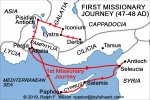
 

THE BOOK OF ACTS – Chapter 13, Part 1, The First Missionary Journey


THE BOOK OF ACTS – Chapter 13, Part 1

The First Missionary Journey

Previously, Jesus had summoned His twelve Apostles and gave them authority over unclean spirits, and told them to heal every disease and every sickness, instructing them, saying, “Do not go on a road to Gentiles, and do not enter a city of Samaritans; but rather, only go to the lost sheep of the house of Israel (see Matthew 10:1-15). Then we read in John 1:11-13, “He came to His own, and His own people did not accept Him. But as many as received Him, to them He gave the right to become children of God, to those who believe in His name, who were born, not of blood, nor of the will of the flesh, nor of the will of a man, but of God.”

So began the spread of Christianity and God’s gift of salvation being offered to the entire world. This marks the beginning of the prophesied great apostasy and the great persecution of Christians. Jesus warned that they would be handed over to tribulation and would be killed and hated by all nations because of His name. And at that time many would fall away from the faith, and they would betray one another and hate one another. And that many false prophets would rise up and would mislead many people. And because lawlessness would increase, most people’s love would become cold. This would be one of the hallmarks that the Last Days were well underway.

First Missionary Journey

Acts 13:1, Now there were prophets and teachers at Antioch, in the church that was there: Barnabas (son of prophecy), Simeon (hearing) who was called Niger (black, a Christian), Lucius (illuminated, a Christian) of Cyrene, Manaen (a Christian) who had been brought up with Herod the tetrarch, and Saul. Verse 2. While they were serving the Lord and fasting, the Holy Spirit said, “Set Barnabas and Saul apart for Me for the work to which I have called them.” Verse 3. Then, when they had fasted, prayed, and laid their hands on them, they sent them away.

(Commentary Break): The Holy Spirit “said” (to lay forth). We must assume the Holy Spirit spoke to all who were present: Barnabas (son of prophecy), Simeon (hearing) who was called Niger (black, a Christian), Lucius (illuminated, a Christian) of Cyrene, Manaen (a Christian) who had been brought up with Herod the tetrarch, and Saul; and the Holy Spirit said “Set Barnabas and Saul apart for Me for the work to which I have called them.”

[The phrase “set apart” indicates a divine selection for a specific purpose, echoing the Old Testament practice of consecrating individuals for God’s work (e.g., Jeremiah 1:5). Barnabas and Saul (later named Paul) were chosen for a mission that would expand the church’s reach beyond Jewish communities. Barnabas, known for his encouragement and leadership, and Saul, a former persecutor turned apostle, were uniquely equipped for this task. Their selection underscores God’s sovereignty in choosing and equipping His servants.] (the foregoing purple text is an excerpt from a BibleHub.com commentary).

However, if all you or I get from this is a narrative on the expansion of the Church, then we are reading the Bible only as an historical document, but the Bible is not meant to be an historical document!

The Bible is the Breathed Word of God, (2 Timothy 3:16); the Bible is the longest love letter ever written, and it is written by the One True God to His beloved created ones; the Bible is the Word of God and it is alive and active, and sharper than any two-edged sword; The Bible penetrates and divides the soul and spirit of each man, woman and child, and discerns the thoughts and intentions of each person’s heart and mind (Hebrews 4:12); The Bible is creative, it is causative, instructional and prophetic – prophetic in the sense that it tells the truth to you, past present and future; and when that Word dwells in you, it tells the truth through you! Therefore, the book of Acts and this chapter and these verses in particular are speaking to you! They are instructing you and creating in you and causing you to hear and to do what God has instructed to His Church – it is telling the Truth through you if you are obedient to His Voice. (End Commentary Break).

Verse 4. So, being sent out by the Holy Spirit, they went down to Seleucia and from there they sailed to Cyprus. Verse 5. When they reached Salamis, they began to proclaim the word of God in the synagogues of the Jews; and they also had John as their helper. Verse 6. When they had gone through the whole island as far as Paphos, they found a magician, a Jewish false prophet whose name was Bar-Jesus, verse 7, who was with the proconsul, Sergius Paulus, a man of intelligence. This man summoned Barnabas and Saul and sought to hear the word of God.

(Commentary Break): God has a plan for each of our lives and it begins with this missionary journey. And it is not a plan to suit our personal whims, wants, selfish goals, desires, and supposed needs. It is His plan of telling the Good News of Jesus Christ. It is for the purging, cleansing, refining, redeeming and restoring His creation and His created ones into the very image and likeness of Jesus in preparation for us to spend eternity in His presence in a new and perfect heaven and a new and perfect earth. (see Daniel 12:12). This was written to you, about Barnabas, Simeon, Lucius, Manaen, and Saul on a missionary journey, but it is also written to you and about you. You too are sent! Now, go! (End Commentary Break).

Verse 8. But Elymas the magician (for so his name is translated) was opposing them, seeking to turn the proconsul away from the faith. Verse 9. But Saul, who was also known as Paul, filled with the Holy Spirit, stared at him, verse 10, and said, “You who are full of all deceit and fraud, you son of the devil, you enemy of all righteousness, will you not stop making crooked the straight ways of the Lord? Verse 11. Now, behold, the hand of the Lord is upon you, and you will be blind and not see the sun for a time.” And immediately a mist and a darkness fell upon him, and he went about seeking those who would lead him by the hand. Verse 12. Then the proconsul believed when he saw what had happened, being amazed at the teaching of the Lord.

(Commentary Break): Paul and the others are confronted with dark magic and resistance to their Message, and Paul, instead of being in fear of offending someone and instead of shrinking back, responds with a strong spiritual rebuke, saying, “You who are full of all deceit and fraud, you son of the devil, you enemy of all righteousness, will you not stop making crooked the straight ways of the Lord?” Then, upon instructions from the Lord, Paul proclaims, “Now, behold, the hand of the Lord is upon you, and you will be blind and not see the sun for a time.” And immediately a mist and a darkness fell upon him. How can this be? How can this happen? Is this just a story to amaze us, today? Or is it an example of the prophetic power of a fully submitted and obedient servant of the Most High God?

This reminds me of God’s servant David, as he stood before the giant, Goliath, and spoke these words, “Just who is this uncircumcised Philistine, that he should defy the armies of the living God?” Then David said to the Philistine, “You come to me with a sword, a spear, and a saber, but I come to you in the name of the LORD of armies, the God of the armies of Israel, whom you have defied. This day the LORD will hand<mh5462, 3027=””> you over to me, and I will strike you and remove your head from you. Then I will give the dead bodies of the army of the Philistines this day to the birds of the sky and the wild animals of the earth, so that all the earth may know that there is a God in Israel, and that this entire assembly may know that the LORD does not save by sword or by spear; for the battle is the LORD’S, and He will hand<mh5414, 3027=””> you over to us!” </mh5414,></mh5462,></mh6793c,>

Then it happened, when the Philistine came closer to meet David, that David ran quickly toward the battle line to meet the Philistine. And David put his hand into his bag and took from it a stone and slung it, and struck the Philistine on his forehead. And the stone penetrated his forehead, and he fell on his face to the ground. So David prevailed over the Philistine with the sling and the stone: he struck the Philistine and killed him, and there was no sword in David’s hand. Then David ran and stood over the Philistine, and took his sword and drew it out of its sheath and finished him, and cut off his head with it. When the Philistines saw that their champion was dead, they fled.” (see 1 Samuel 17:45-51).

This only comes about when we are fully submitted to our God, fully prepared by His Word. Then we can say that we are not among those who shrink back to destruction, but of those who have faith for the safekeeping of our soul (see Hebrews 10:39); and we will overcome because of the Blood of the Lamb and because of the word of our testimony, that we did not love our life even when faced with death! (see Revelation 12:11). (End Commentary Break – End Chapter 13, part 1, The First Missionary Journey).

What we are reading tells and shows us the difference between calling oneself a Christian and actually being a Christian. Although it is worthy to note that not everyone can be like Paul or Barnabas, but each of us have been called to go into the world around us and proclaim the Good News of Jesus, preaching and saying, ‘The kingdom of heaven has come near’. Heal the sick, raise the dead, cleanse those with leprosy, cast out demons. Freely you received, freely give”. We have been equipped by the Holy Spirit with Gifts for the building up of the Body and as a witness to the risen Christ.

Your Brother and Friend,

Mike Young

PREVIOUS: THE BOOK OF ACTS – Chapter 12, Peter’s Arrest and Deliverance, The Death of Herod.

NEXT: THE BOOK OF ACTS – Chapter 13, part 2, Paul Turns to the Gentiles.

(Please bookmark this page or subscribe for future episodes).

THE BOOK OF ACTS – Chapter 12, Peter’s Arrest and Deliverance, The Death of Herod


THE BOOK OF ACTS – Chapter 12

Peter’s Arrest and Deliverance, The Death of Herod

It could be said that much of what is recorded in the Book of Acts is bizarre in natural terms, and this chapter is no different and is in fact a prime example. So, I ask again, has God gone silent in our days? Has He fallen asleep? Has He forgotten us? For we do not see these great acts of God that these disciples were seeing. Why is that? (Read to the end of this chapter for an answer).

Peter’s Arrest and Deliverance.

Acts 12:1, Now about that time Herod the king laid hands on some who belonged to the church, to do them harm. Verse 2. And he had James the brother of John executed with a sword. Verse 3. When he saw that it pleased the Jews, he proceeded to arrest Peter as well. (Now these were the days of Unleavened Bread.) Verse 4. When he had arrested him, he put him in prison, turning him over to four squads of soldiers to guard him, intending only after the Passover to bring him before the people.

(Commentary Break): King Herod was distrustful, jealous, and brutal, ruthlessly crushing any potential opposition. The Jews never accepted him as their legitimate king, and this infuriated him.

(He constantly feared conspiracy. He executed his wife when he suspected she was plotting against him. Three of his sons, another wife, and his mother-in-law met the same fate when they too were suspected of conspiracy.) Herod, feigning to be a legitimate Jew, would not eat pork, but he freely murdered his sons! Matthew’s account of Herod’s slaughter of the infants in Bethlehem fits well with what we know of the king’s ambition, paranoia, and cruelty (Matt. 2:1–18).

So, true to form, when Herod found it expedient to jail or murder Jews who belonged to the church, he went after the leadership, Peter being central. But, being aware of His timing, rather than execute Peter during the days of Unleavened Bread, he jailed him until after these feast days. And it was under the crafty deceit of evil, God moved in, and things became very strange.

(Subscribe Here) —–>

Does this mean this will happen for you or for me? There is no way of telling. But we do know this: God’s Plan and Purpose is always in motion and nothing will divert, stop or thwart His Plan. It is us – Christians – who are slumbering, not God. He has not forgotten us, but it would seem that we may have forgotten about Him. And why would God rescue a person who did not need or did not want to be rescued?

If we would do as the disciples and Apostles were doing, we just might, once again, see the mighty Hand of God move on our behalf.

Perhaps in our modern context we should remember the significance of the Feast of Unleavened Bread. The timeless themes of freedom, spiritual purification, and humility reflected a commitment to doing what is right in the sight of the Lord (Deuteronomy 6:18). Although New Testament believers are not obligated to observe the Feast of Unleavened Bread, may we never forget that it is our Father in heaven who provides our daily bread (Matthew 6:11). (End Commentary Break).

Verse 5. So Peter was kept in the prison, but prayer for him was being made to God intensely by the church.

(Commentary Break): Please read the significance and the symbolism of verse 5: “So (i.e., therefore), Peter (from the Greek word petros, “small stone, a rock, part of a the greater Cornerstone – God has Plan for Peter), was kept (from the Greek word tēreō, to tend to carefully, to take care of, to keep on in the state in which he is, to reserve for something), in the prison (from the Greek word, phylakē, to guard, watch, persons keeping watch, such as guards or sentinels, of the place where captives are kept, a prison – Peter was not only being held by guards and being watched, he was also being held by God and God was keeping watch over him, keeping him safe), but prayer for him was being made to God intensely (from the Greek word ektenōs, fervently, intensely, earnestly, as reaching a hand out toward.. This kind of prayer is in essence and in fact God reaching His Hand toward Peter), by the church .

This is the interaction of the church and the Apostles with God. It is our service to God that brings God to our rescue. It is our knowing and doing the will of God that moves His Hand in our favor. It is all about God, His Plan, His Purpose and His Ways.

Do you wish to bring God out of ‘His slumber’? Come out of YOUR slumber. (End Commentary Break)

Verse 6. On the very night when Herod was about to bring him forward, Peter was sleeping between two soldiers, bound with two chains, and guards in front of the door were watching over the prison.

(Commentary Break): God is never too early and never too late. He does not slumber and He never forgets. Remember this. Rest in this. “Seek first His Righteousness and His kingdom and all these other things will be added to you”. (End Commentary Break).

Verse 7. And behold, an angel of the Lord suddenly stood near Peter, and a light shone in the cell; and he struck Peter’s side and woke him, saying, “Get up quickly.” And his chains fell off his hands. Verse 8. And the angel said to him, “Put on your belt and strap on your sandals.” And he did so. And he said to him, “Wrap your cloak around you and follow me.” Verse 9. And he went out and continued to follow, and yet he did not know that what was being done by the angel was real, but thought he was seeing a vision.

(Commentary Break): When your friends, the watching world and even those in the faith tell you that you are imagining things when God shows you the way or calls you to His service even in the seemingly smallest of matters, search the scriptures; then trust Him first. Obey Him and follow Him. He will never lead in the wrong direction, but always in holiness according to His Purpose. (End Commentary Break).

Verse 10. Now when they had passed the first and second guard, they came to the iron gate that leads into the city, which opened for them by itself; and they went out and went along one street, and immediately the angel departed from him. Verse 11. When Peter came to himself, he said, “Now I know for sure that the Lord has sent forth His angel and rescued me from the hand of Herod and from all that the Jewish people were expecting.”

(Commentary Break): Please remember the words from these verses, “When Peter came to himself (i.e., realized what was going on), the results of his obedience were made clear, “Now I know for sure that the Lord has sent forth His angel and rescued me.”

When you hear the voice of God or see His Hand moving, join Him in what He is doing and you will be made safe in His Arms for His Purpose. (End Commentary Break).

Verse 12. And when he realized this, he went to the house of Mary, the mother of John, who was also called Mark, where many were gathered together and were praying. Verse 13. When he knocked at the door of the gate, a slave woman named Rhoda came to answer. Verse 14. When she recognized Peter’s voice, because of her joy she did not open the gate, but ran in and announced that Peter was standing in front of the gate. Verse 15. They said to her, “You are out of your mind!” But she kept insisting that it was so. They said, “It is his angel.” Verse 16. But Peter continued knocking; and when they had opened the door, they saw him and were amazed.

(Commentary Break): I encourage us to see the contrast of looking but not seeing and believing before you see. The former says, “You are out of your mind”; the former says “and they were amazed”. Live in His Amazement! (End Commentary Break).

Verse 17. But motioning to them with his hand to be silent, he described to them how the Lord had led him out of the prison. And he said, “Report these things to James and the brothers.” Then he left and went to another place.

Verse 18. Now when day came, there was no small disturbance among the soldiers as to what could have become of Peter. Verse 19. When Herod had searched for him and had not found him, he examined the guards and ordered that they be led away to execution. Then he went down from Judea to Caesarea and was spending time there.

Death of Herod.

Verse 20. Now he was very angry with the people of Tyre and Sidon; and with one mind they came to him, and having won over Blastus the king’s chamberlain<mg1909, 2846=””>, they were asking for peace, because their country was supported with grain from the king’s country. Verse 21. On an appointed day, after putting on his royal apparel, Herod took his seat on the rostrum and began delivering an address to them. Verse 22. The people repeatedly cried out, “The voice of a god and not of a man!” Verse 23. And immediately an angel of the Lord struck him because he did not give God the glory, and he was eaten by worms and died.

(Commentary Break): Verses 22 and 23 give us an astonishing look at the vengeance of God. “Immediately – an angel of the Lord struck him because he did not give God the glory – (and immediately) he was eaten by worms and (then) died.”

This is an eternal warning to those who would claim the glory of God as their own. Beware pastors. Beware preachers, theologians, and church leaders. Beware unless an angel of the Lords strikes because you try to keep even a small part of God’s glory for yourselves. Remember the fate of Ananias and Sapphira when they held back on God. They immediately collapsed and died and were buried in shame. (End Commentary Break).

Verse 24. But the word of the Lord continued to grow and to be multiplied.

Verse 25. And Barnabas and Saul returned when they had fulfilled their mission to Jerusalem, taking along with them John, who was also called Mark. (End of Acts chapter 2).

I see, hear and read about supposed pockets of Christian revival taking place. I believe most of these spontaneous ‘revivals’ are more like ‘religious flash mobs’. I agree their intentions may be good, but I wonder if the results are life changing and lasting?

Revival refers to a spiritual reawakening from a state of dormancy or stagnation in the life of a believer. It encompasses the resurfacing of a love for God, an appreciation of God’s holiness, a passion for His Word and His church, a convicting awareness of personal and corporate sin, a spirit of humility, and a desire for repentance and growth in righteousness. Revival invigorates and sometimes deepens a believer’s faith, opening his or her eyes to the truth in a fresh, new way. It generally involves the connotation of a fresh start with a clean slate, marking a new beginning of a life lived in obedience to God. Revival breaks the charm and power of the world, which blinds the eyes of men, and generates both the will and power to live in the world but not of the world.

In the USA, the first revival, also called the First Great Awakening, produced an upsurge of devotion among Protestants in the 1730s and 1740s, carving a permanent mark on American religion. It resulted from authoritative preaching that deeply moved the church members with a convicting awareness of personal guilt and the awesome nature of salvation through Christ. Breaking away from dry ritual and rote ceremony, the Great Awakening made Christianity intensely personal to the average person, as it should be, by creating a deep emotional need for relationship with Christ.
Revival, in many respects, replicates the believer’s experience when he or she is saved. It is initiated by a prompting of the Holy Spirit, creating an awareness of something missing or wrong in the believer’s life that can only be righted by God. In turn, the Christian must respond from the heart, acknowledging his or her need. Then, in a powerful way, the Holy Spirit draws back the veil the world has cast over the truth, allowing the believers to fully see themselves in comparison to God’s majesty and holiness. Obviously, such comparisons bring great humility, but also great awe of God and His truly amazing grace (Isaiah 6:5). Unlike the original conversion experience that brings about a new relationship to God, however, revival represents a restoration of fellowship with God, the relationship having been retained even though the believer had pulled away for a time. (see GotQuestions.Org).

Either way, I must defer to scriptures when considering these matters.

Characteristics of Revival:

1. Repentance and Confession:

Genuine revival is marked by a deep conviction of sin and a heartfelt turning away from it. Psalm 51:10-12 captures the essence of this transformation: “Create in me a clean heart, O God, and renew a right spirit within me.”

2. Prayer and Intercession:

Revival is often preceded and sustained by fervent prayer. James 5:16 emphasizes the power of prayer: “The prayer of a righteous man has great power to prevail.”

3. Renewed Love for God’s Word:

A hallmark of revival is a renewed hunger for Scripture. As seen in Nehemiah 8:1-8, the reading and understanding of God’s Word led to a revival among the Israelites.

4. Holiness and Obedience:

Revival results in a renewed commitment to holiness and obedience to God’s commands. 1 Peter 1:15-16 exhorts believers, “But just as He who called you is holy, so be holy in all you do.”

5. Evangelistic Zeal:

Revived individuals and communities are often characterized by a passion for sharing the gospel. Acts 4:31 illustrates this: “After they had prayed, the place where they were assembled was shaken, and they were all filled with the Holy Spirit and spoke the word of God boldly.”

Impact and Legacy:

Spiritual revival has a profound impact on both individuals and society. It leads to personal transformation, church renewal, and societal change. Historically, revivals have been catalysts for missionary movements, social reforms, and cultural shifts. The Great Awakenings in America, for example, were periods of intense revival that significantly influenced the spiritual and moral landscape of the nation.

Conclusion:

While revival is a work of God, it often begins with a small group of believers who are willing to humble themselves, seek God’s face, and pray for His intervention. As such, it serves as a powerful reminder of God’s desire to renew and restore His people, drawing them closer to Himself and empowering them for His purposes. (see BibleHub.com).

Your Brother and Friend,

Mike Young.

PREVIOUS: THE BOOK OF ACTS – Chapter 11, Peter’s Report in Jerusalem, The Church in Antioch.

NEXT: THE BOOK OF ACTS – Chapter 13, The First Missionary Journey, Paul Turns to the Gentiles.

(Please bookmark this page or subscribe for future episodes).

THE BOOK OF ACTS – Chapter 11, Peter’s Report in Jerusalem, The Church in Antioch


THE BOOK OF ACTS – Chapter 11

Peter’s Report in Jerusalem, The Church in Antioch.

These were special times in the birth, growth and expansion of the Church. It is obvious from what we read that God was mightily at work in the lives of the Apostles and in the Church. So, what has happened since that time? Is He being silent today? Has God gone to sleep? And before you cite a few paltry examples of your own, please read this chapter, then consider your answers. Visions from God? Scores of people coming to faith in Christ at the risk of life and property? Prophecies coming to pass?

(Speaking for myself, I believe it may be fair to say that what has changed is our postmodern Christian attitudes, our commitment to Christ and our lack of humility). These men were not only called by God, but they knew and trusted without any doubt that their salvation and the power, and the kingdom of God and the authority of Christ had come, and the accuser was being thrown down. And they overcame because of the blood of the Lamb and because of the word of their testimony, and that they did not love their life even when faced with death!

Peter Reports in Jerusalem

Acts 11:1, Now the apostles and the brothers and sisters who were throughout Judea heard that the Gentiles also had received the word of God. Verse 2, And when Peter came up to Jerusalem, the Jewish believers took issue with him, verse 3, saying, “You went to uncircumcised men and ate with them.” Verse 4. But Peter began and explained at length to them in an orderly sequence, saying, verse 5, “I was in the city of Joppa praying; and in a trance I saw a vision, an object coming down like a great sheet lowered by four corners from the sky; and it came to where I was, verse 6, and I stared at it and was thinking about it, and I saw the four-footed animals of the earth, the wild animals, the crawling creatures, and the birds of the sky. Verse 7. I also heard a voice saying to me, ‘Get up, Peter; kill and eat.’ Verse 8. But I said, ‘By no means, Lord, for nothing unholy or unclean has ever entered my mouth.’ Verse 9. But a voice from heaven answered a second time, ‘What God has cleansed, no longer consider unholy.’ Verse 10. This happened three times, and everything was drawn back up into the sky. Verse 11. And behold, at that moment three men who had been sent to me from Caesarea came up to the house where we were staying. Verse 12. And the Spirit told me to go with them without misgivings. These six brothers also went with me, and we entered the man’s house. Verse 13. And he reported to us how he had seen the angel standing in his house, and saying, ‘Send some men to Joppa and have Simon, who is also called Peter, brought here; verse 14, and he will speak words to you by which you will be saved, you and all your household.’ Verse 15. And as I, (Peter), began to speak, the Holy Spirit fell upon them, just as He did upon us at the beginning. Verse 16. And I remembered the word of the Lord, how He used to say, ‘John baptized with water, but you will be baptized with the Holy Spirit.’ Verse 17. Therefore, if God gave them the same gift as He also gave to us after believing in the Lord Jesus Christ, who was I that I could stand in God’s way?” Verse 18. When they heard this, they quieted down and glorified God, saying, “Well then, God has also granted to the Gentiles the repentance that leads to life.”

(Commentary Break): It would take too much time and space to explore the insurmountable obstacles of the Jewish religious establishment, the harsh political climate and the unforgiving social order of that day in order for us to understand how incredibly dangerous and practically foolish it would have been to assume that a group of radical religious reformers making wild claims of a Messiah risen from the dead, who were now hearing from God through visions and prophecies could make a difference.

But that is just the point we should take from this. These early Christians were not trying to make a point. They were hearing from God both through the prophetic scriptures of the Torah and through dreams and visions and were being obedient to God, even to death.

(In order to emphasize this point, George Barna, a well-known and highly respected Professor at Arizona Christian University and Director of Research at its Cultural Research Center, focusing on worldview assessment and development, and cultural transformation; also the Sr. Research Fellow at Family Research Council Center for Biblical Worldview, and a Fellow at the Townsend Institute at Concordia University, has recently reported that seventy percent of the Churches interviewed, across the nation, do not believe in the basic doctrines of the Bible. And of the remaining thirty percent, only two percent teach on the basic truths of scriptures such as “did Jesus live a sinless life?” or “is hell real?” from fear of offending the congregants.)

Please read verses 17 again, “Therefore, if God gave them the same gift as He also gave to us after believing in the Lord Jesus Christ, who was I that I could stand in God’s way?”

Take from this what you will. Make what decision you must. But please remember that silence is a decision. (End Commentary Break).

The Church in Antioch

Verse 19. So then those who were scattered because of the persecution that occurred in connection with Stephen made their way to Phoenicia, Cyprus, and Antioch, speaking the word to no one except to Jews alone. Verse 20. But there were some of them, men of Cyprus and Cyrene, who came to Antioch and began speaking to the Greeks as well, preaching the good news of the Lord Jesus. Verse 21. And the hand of the Lord was with them, and a large number who believed turned to the Lord. Verse 22. The news about them reached the ears of the church in Jerusalem, and they sent Barnabas off to Antioch. Verse 23. Then, when he arrived and witnessed the grace of God, he rejoiced and began to encourage them all with a resolute heart to remain true to the Lord; verse 24, for he was a good man, and full of the Holy Spirit and faith. And considerable numbers were added to the Lord. Verse 25. And he left for Tarsus to look for Saul; verse 26, and when he had found him, he brought him to Antioch. And for an entire year they met with the church and taught considerable numbers of people; and the disciples were first called Christians in Antioch.

Verse 27. Now at this time some prophets came down from Jerusalem to Antioch. Verse 28. One of them, named Agabus, stood up and indicated by the Spirit that there would definitely be a severe famine all over the world. And this took place in the reign of Claudius. Verse 29. And to the extent that any of the disciples had means, each of them determined to send a contribution for the relief of the brothers and sisters living in Judea. Verse 30. And they did this, sending it with Barnabas and Saul to the elders. (End of Chapter 11).

These were the continuing Acts of the Apostles. But to what end? What purposes can be found in this recounting of events from A.D 61 to around A.D. 64?

Purpose of Writing: The book of Acts was written to provide a history of the early church. The emphasis of the book is the fulfillment of the Great Commission. Acts records the apostles being Christ’s witnesses in Jerusalem, Judea, Samaria, and the surrounding world. The book of Acts sheds light on the gift of the Holy Spirit, who empowers, guides, teaches, and serves as our Counselor. Reading the book of Acts, we are enlightened and encouraged by the power of the gospel as it spread throughout the world and transformed lives. Many miracles were performed during this time by the apostles to validate their message. The book of Acts covers the transitional time between the ascension of Christ and the completion of the New Testament canon, and the apostolic miracles were God’s means of authenticating His message through the men who penned the Bible.

 Practical Application: God can do amazing things through ordinary people when He empowers them through His Spirit. The book of Acts shows how God essentially took a group of fisherman and commoners and used them to turn the world upside down (Acts 17:6). God took a Christian-hating murderer and transformed him into history’s greatest Christian evangelist, the author of almost half the books of the New Testament. God used the persecution the Christians endured to help stimulate the incredibly rapid expansion of the fledgling church. God can and does do the same through us if we are willing by changing our hearts, empowering us by the Holy Spirit, and giving us a passion to spread the good news of salvation through Christ. If we try to accomplish God’s work in the world in our own power, we will fail. Like the disciples in Acts 2, we must faithfully proclaim the gospel, trust God for the results, and devote ourselves “to the apostles’ teaching and to fellowship, to the breaking of bread and to prayer” (Acts 2:42). (see GotQuestions.Org).

I hear people say that these things are above my abilities. And they are correct in a sense. They are from ABOVE. We do not need to be considered special, just gifted by the Holy Spirit. Just use what He has given you and that is enough. These men, the early disciples were considered as uneducated and untrained men, but they were known to have been with Jesus. And, that is enough.

Your Brother and Friend,

Mike Young.

PREVIOUS: THE BOOK OF ACTS – Chapter 10, Cornelius’ Vision, Peter in Caesarea, Gentiles Hear The Good News.

NEXT: THE BOOK OF ACTS – Chapter 12, Peter’s Arrest and Deliverance, The Death of Herod.

(Please bookmark this page or subscribe for future episodes).

THE BOOK OF ACTS – Chapter 10, Cornelius’ Vision, Peter in Caesarea, Gentiles Hear The Good News.


THE BOOK OF ACTS – Chapter 10,

Cornelius’ Vision, Peter in Caesarea, Gentiles Hear The Good News.

 Once again, I remind us that this is about the ‘Acts of the Apostles’. There are many suppositions and details we could discuss, about the area, the geography, the social and political environs, and the mindsets of these various individuals. If that is your interest, then find a commentary for those matters. But for this study, please read as if you are there, with Jesus and His Apostles. Immerse your mind in the experiences of this journey. Consider yourself actively participating in these events as they take place. Consider this your discipleship training to actually go, and make disciples, baptizing them in the name of the Father, The Son and the Holy Spirit, teaching them to follow all that Jesus has commanded, in the same way as Luke and the other disciples and Apostles of Jesus.

Cornelius’ Vision

Acts 10:1, Now there was a man in Caesarea named Cornelius, a centurion of what was called the Italian cohort, verse 2, a devout man and one who feared God with all his household, and made many charitable contributions to the Jewish people and prayed to God continually. Verse 3. About the ninth hour of the day, he clearly saw in a vision an angel of God who had just come in and said to him, “Cornelius!” Verse 4. And he looked at him intently and became terrified, and said, “What is it, lord?” And he said to him, “Your prayers and charitable gifts have ascended as a memorial offering before God. Verse 5. Now dispatch some men to Joppa and send for a man named Simon, who is also called Peter; verse 6, he is staying with a tanner named Simon, whose house is by the sea.” Verse 7. When the angel who spoke to him left, he summoned two of his servants and a devout soldier from his personal attendants, verse 8, and after he had explained everything to them, he sent them to Joppa.

Verse 9. On the next day, as they were on their way and approaching the city, Peter went up on the housetop about the sixth hour to pray. Verse 10. But he became hungry and wanted to eat; but while they were making preparations, he fell into a trance; verse 11, and he saw the sky opened up, and an object like a great sheet coming down, lowered by four corners to the ground, verse 12, and on it were all kinds of four-footed animals and crawling creatures of the earth and birds of the sky. Verse 13. A voice came to him, “Get up, Peter, kill and eat!” Verse 14. But Peter said, “By no means, Lord, for I have never eaten anything unholy and unclean.” Verse 15. Again a voice came to him a second time, “What God has cleansed, no longer consider unholy.” Verse 16. This happened three times, and immediately the object was taken up into the sky.

(Commentary Break):  The end of the previous chapter we see God, exercising the miraculous power of raising a woman named Tabitha from the dead through Peter, the Apostle. Next, we drop in on a man named Cornelius, a centurion, who feared God and showed favor to the Jewish people, who is to be used by God to instruct Peter about his mission. The text is self-explanatory.

(You can Subscribe Here –>)

What I would like to focus on is the process and ask why we do not see this kind of spiritual and direct communication between God and His people nowadays?

THIS IS IMPORTANT

Is it because we are distracted by the cares of this world and our busy day-to-day lives? Matthew 13:22 warns of this, “And the one sown with seed among the thorns, this is the one who hears the word, and the anxiety of the world and the deceitfulness of wealth choke the word, and it becomes unfruitful”.

 Peter, despite his many faults, seems to be totally and completely focused on the matters of God, and as a result he has the spiritual eyes to see and spiritual ears to hear (Proverbs 20:12).

 God is always at work around us and if we desire to be involved in what He is doing, we need to set our minds on the things above and not just on earthly things (Colossians 3:2)

Peter saw with his eyes and heard with his ears, and still had to be told THREE TIMES before he got it and obeyed. How much are we like this? But like Peter, let’s persist until we hear, see and act. (End Commentary Break).

Verse 17. Now while Peter was greatly perplexed in mind as to what the vision which he had seen might mean, behold, the men who had been sent by Cornelius had asked directions to Simon’s house, and they appeared at the gate; verse 18, and calling out, they were asking whether Simon, who was also called Peter, was staying there. Verse 19. While Peter was reflecting on the vision, the Spirit said to him, “Behold, three men are looking for you. Verse 20. But get up, go downstairs and accompany them without misgivings, for I have sent them Myself.” Verse 21.  Peter went down to the men and said, “Behold, I am the one you are looking for; what is the reason for which you have come?” Verse 22. They said, “Cornelius, a centurion, a righteous and God-fearing man well-spoken of by the entire nation of the Jews, was divinely directed by a holy angel to send for you to come to his house and hear a message from you.” Verse 23. So he invited them in and gave them lodging.

(Commentary Break): Peter’s vision and instructions were specifically confirmed through his obedience. Today, we can have the Word of God confirmed to us through the Bible, prayer, circumstances, and the church as God reveals Himself, His purposes, and His ways. (See Experiencing God, part 4).

Please, dear friends, let’s remember that calling ourselves Christians and Being a Christian are two very different things. Christians follow Jesus in thoughts, attitudes, speech and behavior. (End Commentary Break).

Peter in Caesarea

Now on the next day he got ready and went away with them, and some of the brothers from Joppa accompanied him. Verse 24. On the following day he entered Caesarea. Now Cornelius was expecting them and had called together his relatives and close friends. Verse 25. When Peter entered, Cornelius met him, and fell at his feet and worshiped him. Verse 26. But Peter helped him up, saying, “Stand up; I, too, am just a man.” Verse 27. As he talked with him, he entered and found many people assembled. Verse 28. And he said to them, “You yourselves know that it is forbidden for a Jewish man to associate with or visit a foreigner; and yet God has shown me that I am not to call any person unholy or unclean. Verse 29. That is why I came without even raising any objection when I was sent for. So I ask, for what reason did you send for me?”

Verse 30. Cornelius said, “Four days ago to this hour, I was praying in my house during the ninth hour; and behold, a man stood before me in shining clothing, verse 31, and he said, ‘Cornelius, your prayer has been heard, and your charitable gifts have been remembered before God. Verse 32. Therefore, send some men to Joppa and invite Simon, who is also called Peter, to come to you; he is staying at the house of Simon the tanner, by the sea.’ Verse 33. So I sent men to you immediately, and you have been kind enough to come. Now, then, we are all here present before God to hear everything that you have been commanded by the Lord.”

Gentiles Hear Good News

Verse 34. Opening his mouth, Peter said:

“I most certainly understand now that God is not one to show partiality, verse 35, but in every nation the one who fears Him and does what is right is acceptable to Him. Verse 36. The word which He sent to the sons of Israel, preaching peace through Jesus Christ (He is Lord of all)— verse 37, you yourselves know the thing that happened throughout Judea, starting from Galilee, after the baptism which John proclaimed. Verse 38. You know of Jesus of Nazareth, how God anointed Him with the Holy Spirit and with power, and how He went about doing good and healing all who were oppressed by the devil, for God was with Him. Verse 39. We are witnesses of all the things that He did, both in the country of the Jews and in Jerusalem. They also put Him to death by hanging Him on a cross. Verse 40. God raised Him up on the third day and granted that He be revealed, verse 41, not to all the people, but to witnesses who had been chosen beforehand by God, that is, to us who ate and drank with Him after He arose from the dead. Verse 42. And He ordered us to preach to the people, and to testify solemnly that this is the One who has been appointed by God as Judge of the living and the dead. Verse 43. All the prophets testify of Him, that through His name everyone who believes in Him receives forgiveness of sins.”

(Commentary Break): “Everyone who believes in Him receives forgiveness of sins”.

The Greek verb “pisteuó” primarily means to believe or to have faith. It conveys a sense of trust and reliance upon someone or something. In the New Testament, it is often used to describe the act of believing in Jesus Christ for salvation, trusting in God’s promises, and having faith in the truth of the Gospel. This belief is not merely intellectual assent but involves a deep, personal trust and commitment.

Cultural and Historical Background: In the Greco-Roman world, belief was often associated with trust in the gods or in philosophical truths. However, the New Testament writers redefined “pisteuó” within the context of a personal relationship with God through Jesus Christ. This belief was not just about accepting doctrines but involved a transformative trust that led to a new way of living. The early Christian community emphasized faith as central to salvation, contrasting it with the works-based righteousness prevalent in Jewish and pagan practices of the time.

This Forgiveness of sins is not a casual thing. In the New Testament, “aphesis” (forgiveness) primarily refers to the act of forgiving or the state of being forgiven. It conveys the idea of releasing someone from a debt or obligation, often used in the context of sin. The term emphasizes the liberation and pardon granted by God to sinners through Jesus Christ.

Cultural and Historical Background: In the Greco-Roman world, the concept of “aphesis” was understood in legal and financial contexts, often referring to the cancellation of debts or the release of prisoners. In Jewish tradition, the idea of forgiveness was deeply rooted in the sacrificial system and the Day of Atonement, where sins were symbolically transferred and removed. The New Testament writers, particularly in the context of Jesus’ ministry, expanded this concept to signify spiritual liberation and reconciliation with God. (End Commentary Break).

Verse 44. While Peter was still speaking these words, the Holy Spirit fell upon all those who were listening to the message. Verse 45. All the Jewish believers who came with Peter were amazed, because the gift of the Holy Spirit had also been poured out on the Gentiles. Verse 46. For they were hearing them speaking with tongues and exalting God. Then Peter responded, verse 47, “Surely no one can refuse the water for these to be baptized, who have received the Holy Spirit just as we did, can he?” Verse 48. And he ordered them to be baptized in the name of Jesus Christ. Then they asked him to stay on for a few days.

(Commentary Break): I would be remiss if I avoided what takes place in verses 44 through 48. I will admit that I can find nothing in the Bible that establishes speaking with tongues as a doctrine of the Church. In fact, there are only five mentions and only 10 remarks on Speaking in Tongues in the entire Bible (The Apostle Paul):

  1.  Mark 16:17 – “These signs will accompany those who have believed: in My name they will cast out demons, they will speak with new tongues;
  2. Acts 2:4 – And they were all filled with the Holy Spirit and began to speak with different tongues, as the Spirit was giving them the ability to speak out.
  3. Acts 2:11 – Cretans and Arabs—we hear them speaking in our own tongues of the mighty deeds of God.”
  4. Acts 10:46 – For they were hearing them speaking with tongues and exalting God. Then Peter responded,
  5. Acts 19:6 – And when Paul had laid hands upon them, the Holy Spirit came on them and they began speaking with tongues and prophesying.

One Teaching and Examples about Tongues as a Spiritual Gift

  1. 1 Corinthians 12:10 – and to another the effecting of miracles, and to another prophecy, and to another the distinguishing of spirits, to another various kinds of tongues, and to another the interpretation of tongues.
    1. 1 Corinthians 12:28 – And God has appointed in the church, first apostles, second prophets, third teachers, then miracles, then gifts of healings, helps, administrations, and various kinds of tongues.
    2. 1 Corinthians 12:30 – All do not have gifts of healings, do they? All do not speak with tongues, do they? All do not interpret, do they?
    3. 1 Corinthians 13:1 – If I speak with the tongues of mankind and of angels, but do not have love, I have become a noisy gong or a clanging cymbal.
    4. 1 Corinthians 13:8 – Love never fails; but if there are gifts of prophecy, they will be done away with; if there are tongues, they will cease; if there is knowledge, it will be done away with.
    5. 1 Corinthians 14:5 – Now I wish that you all spoke in tongues, but rather that you would prophesy; and greater is the one who prophesies than the one who speaks in tongues, unless he interprets, so that the church may receive edification.
    6. 1 Corinthians 14:6 – But now, brothers and sisters, if I come to you speaking in tongues, how will I benefit you unless I speak to you either by way of revelation, or of knowledge, or of prophecy, or of teaching?

And the Apostle Paul completes his teaching with both strong admonitions and encouragements. But speaking in tongues has become one of the most divisive practices in the church because of abuse. Let’s heed the words of Paul and do all things in a decent and orderly manner, not to bring attention to ourselves or our abilities, but only in ways that glorify God. (End Commentary Break).

(End Chapter 10).

We are being set free, liberated and pardoned. And not just pardoned,  but your record of past misdeeds and sins, with God, is expunged. You are made a new person with a new identity. You only need to live it out as the freed person you will have become.

Your Brother and Friend,

Mike Young.

PREVIOUS: THE BOOK OF ACTS – Chapter 9, The Conversion of Saul, Paul Preaches Christ, Peter’s Ministry.

NEXT: THE BOOK OF ACTS – Chapter 11, Peter’s Report in Jerusalem, The Church in Antioch.

(Please bookmark this page or subscribe for future episodes).

THE BOOK OF ACTS – Chapter 9, The Conversion of Saul, Paul Preaches Christ, Peter’s Ministry


THE BOOK OF ACTS – Chapter 9,

The Conversion of Saul, Paul Preaches Christ, Peter’s Ministry

 If you should encounter circumstances that seem to spell a calamitous or catastrophic end to your current way of life, consider that God may be putting the old ways to death and is birthing something new and purposeful, perhaps even magnificent, in His service.

The Conversion of Saul

Acts 9:1, Now Saul, still breathing threats and murder against the disciples of the Lord, went to the high priest, verse 2, and asked for letters from him to the synagogues in Damascus, so that if he found any belonging to the Way, whether men or women, he might bring them in shackles to Jerusalem. Verse 3. Now as he was traveling, it happened that he was approaching Damascus, and suddenly a light from heaven flashed around him; verse 4, and he fell to the ground and heard a voice saying to him, “Saul, Saul, why are you persecuting Me?” Verse 5. And he said, “Who are You, Lord?” And He said, “I am Jesus whom you are persecuting, verse 6, but get up and enter the city, and it will be told to you what you must do.”

(Commentary Break): The contrast of Saul’s attitude and behavior in verses one and two compared to verse five is stunning. Imagine in your mind’s eye, see Saul exhibit his power over others while “breathing threats and murder against the disciples of the Lord”. Then he is suddenly and instantly subdued. He is knocked to the ground by a sudden flash of light from heaven and cries out “Who are You, Lord?” Not knowing to Whom he is speaking, Saul calls Him “Lord”, (‘kurios’, from the Greek language, meaning supremacy or authority, denoting someone who possesses authority, control and power). Saul immediately recognizes that he is overpowered and rendered helpless by an ‘Ultimate Authority’. “Who are You, Lord, indeed. Oh, that each of us could recognize the Authority of Jesus before we, too, must be subdued. (End Commentary Break).

Verse 7. The men who traveled with him stood speechless, hearing the voice but seeing no one. Verse 8. Saul got up from the ground, and though his eyes were open, he could see nothing; and leading him by the hand, they brought him into Damascus. Verse 9. And for three days he was without sight, and neither ate nor drank.

(Commentary Break): The scriptures find it necessary to point out that Saul was blind and neither ate nor drank for three days. Numbers in Biblical times often held symbolic significance. The number three is frequently associated with completeness and divine perfection. In this case, it would appear that Saul was isolated in the dark, fasting food and water, alone with the thoughts of this experience. God was at work in the heart and mind of Saul.

How often do we find ourselves “alone in the dark” due to the life circumstances that overwhelm and subdue us. Our emotions so shaken that we resist eating or drinking for days? How often, when found in life’s worst circumstances, do we complain, worry and doubt rather than considering that the Hand of God is working to complete His divine perfection in our life? (End Commentary Break).

Verse 10. Now there was a disciple in Damascus named Ananias; and the Lord said to him in a vision, “Ananias.” And he said, “Here I am, Lord.” Verse 11. And the Lord said to him, “Get up and go to the street called Straight, and inquire at the house of Judas for a man from Tarsus named Saul, for he is praying, verse 12, and he has seen in a vision a man named Ananias come in and lay his hands on him, so that he might regain his sight.”

(Commentary Break): “A street called Straight”? I have often wondered about the ‘coincidence’ of this so-called ‘Straight street’ and the need to ‘straighten Saul out’. But that is an incorrect view and the name of this street is no coincidence.

This name, ‘Straight’, is used here in the New Testament Greek to convey a sense of immediacy or urgency. It often describes actions that occur without delay, emphasizing promptness and directness. This term is frequently used in the Gospel of Mark, highlighting the swift and decisive actions of Jesus and His disciples.

In the Greco-Roman world, the concept of immediacy was often associated with efficiency and decisiveness, qualities valued in leaders and individuals of authority. The use of this word in the New Testament reflects the urgency and importance of Jesus’ mission and the response it demands from His followers. The term underscores the dynamic and active nature of Jesus’ ministry, contrasting with the often slow and deliberate processes of religious and societal norms.

In other words, God is always working, and in this case, He is doing an urgent work of great importance, laying the groundwork to reach the entire world with the Good News of Jesus, through Paul. (End Commentary Break).

Verse 13. But Ananias answered, “Lord, I have heard from many people about this man, how much harm he did to Your saints in Jerusalem; verse 14. and here he has authority from the chief priests to arrest all who call on Your name.” Verse 15. But the Lord said to him, “Go, for he is a chosen instrument of Mine, to bear My name before the Gentiles and kings and the sons of Israel; verse 16, for I will show him how much he must suffer in behalf of My name.” Verse 17. So Ananias departed and entered the house, and after laying his hands on him said, “Brother Saul, the Lord Jesus, who appeared to you on the road by which you were coming, has sent me so that you may regain your sight and be filled with the Holy Spirit.” Verse 18. And immediately something like fish scales fell from his eyes, and he regained his sight, and he got up and was baptized; verse 19, and he took food and was strengthened.

Saul Begins to Preach Christ

Now for several days he was with the disciples who were in Damascus, verse 20, and immediately he began to proclaim Jesus in the synagogues, saying, “He is the Son of God.” Verse 21. All those hearing him continued to be amazed, and were saying, “Is this not the one who in Jerusalem destroyed those who called on this name, and had come here for the purpose of bringing them bound before the chief priests?” Verse 22. But Saul kept increasing in strength and confounding Jews who lived in Damascus by proving that this Jesus is the Christ.

Verse 23. When many days had elapsed, the Jews plotted together to do away with him, verse 24, but their plot became known to Saul. They were also closely watching the gates day and night so that they might put him to death; verse 25, but his disciples took him at night and let him down through an opening in the wall, lowering him in a large basket.

Verse 26. When he came to Jerusalem, he tried repeatedly to associate with the disciples; and yet they were all afraid of him, as they did not believe that he was a disciple. Verse 27. But Barnabas took hold of him and brought him to the apostles and described to them how he had seen the Lord on the road, and that He had talked to him, and how he had spoken out boldly in the name of Jesus at Damascus. Verse 28. And he was with them, moving about freely in Jerusalem, speaking out boldly in the name of the Lord. Verse 29. And he was talking and arguing with the Hellenistic Jews; but they were attempting to put him to death. Verse 30. Now when the brothers learned of it, they brought him down to Caesarea and sent him away to Tarsus.

Verse 31. So the church throughout Judea, Galilee, and Samaria enjoyed peace, as it was being built up; and as it continued in the fear of the Lord and in the comfort of the Holy Spirit, it kept increasing.

Peter’s Ministry

Verse 32. Now as Peter was traveling through all those regions, he also came down to the saints who lived at Lydda. Verse 33. There he found a man named Aeneas who had been bedridden for eight years, because he was paralyzed. Verse 34. Peter said to him, “Aeneas, Jesus Christ heals you; get up and make your own bed.” Immediately he got up. Verse 35. And all who lived at Lydda and Sharon saw him, and they turned to the Lord.

Verse 36. Now in Joppa there was a disciple named Tabitha (which when translated means Dorcas); this woman was excelling in acts of kindness and charity which she did habitually. Verse 37. But it happened at that time that she became sick and died; and when they had washed her body, they laid it in an upstairs room. Verse 38. Since Lydda was near Joppa, the disciples, having heard that Peter was there, sent two men to him, urging him, “Do not delay in coming to us.” Verse 39. So Peter got ready and went with them. When he arrived, they brought him into the room upstairs; and all the widows stood beside him, weeping and showing all the tunics and garments that Dorcas used to make while she was with them. Verse 40. But Peter sent them all out and knelt down and prayed, and turning to the body, he said, “Tabitha, arise.” And she opened her eyes, and when she saw Peter, she sat up. Verse 41. And he gave her his hand and raised her up; and calling the saints and widows, he presented her alive. Verse 42. It became known all over Joppa, and many believed in the Lord. Verse 43. And Peter stayed in Joppa many days with a tanner named Simon.

(Commentary Break): Why, over time, has this power of God dissipated from the life of the Church? I have heard many people, (pastors, Bible teachers, and the like), say that these gifts were meant only for the Apostles and these gifts ceased with the passing of the Apostolic age. The Bible never says such a thing, and is never silent on matters as significant as these. Such statements are just excuses from the imagination of religious men and women. So, again I ask, why, over time, has this power of God dissipated from the life of the Church?

 Two things: One, God is not mocked. If anyone of us thinks he or she is something special (if God grants him His special gifts and authorities) when in fact he is nothing special except in his own eyes, he deceives himself. But each one must carefully scrutinize his own work examining his actions, attitudes, and behavior, and then he can have the personal satisfaction and inner joy of doing something commendable without comparing himself to another. For every person will have to bear with patience his own burden of faults and shortcomings for which he alone is responsible.

So, do not be deceived, God is not mocked. He will not allow Himself to be ridiculed, nor treated with contempt nor allow His precepts to be scornfully set aside (nor have His gifts misused for personal gain); for whatever a man sows, this and this only is what he will reap. For the one who sows to his flesh, (his sinful capacity, his worldliness, his disgraceful impulses such as pride or ego) will reap from the flesh ruin and destruction, but the one who sows to the Spirit will from the Spirit reap eternal life. (see Galatians 6:3-8).

Secondly: Why would anyone think God would trust such authority to just anyone? These gifts were given to the disciples only after they had been tried and tested by the fires of tribulation and persecution, and proven to be faithful with these Gifts granted by God.

 The same is true today. Just believing or wishing for these abilities is never enough. Then, when the temptations of the self- preservation, pride, come, (see Matthew 4:1-11), you will be found out and will know whether you can withstand the temptations of the devil and be found faithful. In this, one must be tried so that when you have done the will of God, you may be found able receive what was promised (see Hebrews 10:36). (End Commentary Break).

Dear saints of God, please consider what you have read in this chapter, the ways and means of the disciples and the resultant exponential growth of the early Church. Ask yourself, are we creating disciples in the likeness of Jesus and the Apostles? Or are we creating religious adherents and “church goers? Let’s pray that we are like the former and not the latter.

Your Brother and Friend,

Mike Young.

PREVIOUSLY: THE BOOK OF ACTS – Chapter 8, Chapter 8, Saul Persecutes the Church, Philip in Samaria, An Ethiopian Receives Christ.

NEXT: THE BOOK OF ACTS – Chapter 10, Cornelius’ Vision, Peter in Caesarea, Gentiles Hear The Good News.

(Please bookmark this page or subscribe for future episodes).

THE BOOK OF ACTS – Chapter 8, Saul Persecutes the Church, Philip in Samaria, An Ethiopian Receives Christ


THE BOOK OF ACTS – Chapter 8

Saul Persecutes the Church, Philip in Samaria, An Ethiopian Receives Christ

Acts 8:1, Now Saul approved of putting Stephen to death. And on that day a great persecution began against the church in Jerusalem, and they were all scattered throughout the regions of Judea and Samaria, except for the apostles.

(Commentary Break): Verse 1 says, And on that day a great persecution began against the Church”. This is a key verse when determining the breaking of the Fifth Tribulation Seal as described by Jesus (see Matthew 24:7-13), when He says For nation will rise against nation, and kingdom against kingdom, and there will be famines and earthquakes in various places. But all these things are merely the beginning of birth pains (of the tribulation).

 “Then they will hand you over to tribulation and kill you, and you will be hated by all nations because of My name.  And at that time many will fall away, and they will betray one another and hate one another.  And many false prophets will rise up and mislead many people.  And because lawlessness is increased, most people’s love will become cold. But the one who endures to the end is the one who will be saved”.

And again in Revelation 6:9-11, John says, “And when He (Jesus) had opened the fifth seal, I saw under the altar the souls of them that were slain for the word of God, and for the testimony which they held:

 And they cried with a loud voice, saying, How long, O Lord, holy and true, dost thou not judge and avenge our blood on them that dwell on the earth?

 And white robes were given unto every one of them; and it was said unto them, that they should rest yet for a little season, until their fellow servants also and their brethren, that should be killed as they were, should be fulfilled”.

From this we can know that the signs of the tribulation period known as the Birth Pains of the tribulation, began at the time of Jesus ministry on earth. (We have seen seals one through five opened, overlapping and intensifying to this day. This would mean that we are now on the verge of the 6th Tribulation Seal which marks the beginning of the final 7 years of the Great Tribulation, also known as the Great and Terrible Day of the Lord and the Wrath of the Lamb. (End Commentary Break).

Verse 2. Some devout men buried Stephen, and mourned loudly for him. Verse 3. But Saul began ravaging the church, entering house after house; and he would drag away men and women and put them in prison.

(Commentary Break): It may be hard for us, in America, to fully appreciate the severity of the persecution of the worldwide Church. The Center for the Study of Global Christianity (CSGC) says 900,000 Christians have been ‘martyred’ in the last decade, equating to 90,000 a year and one every six minutes.

This may be the most dangerous time in history to be Christian

At least 327 million Christians face persecution, according to Aid to the Church in Need (ACN), which released its biannual report on Religious Freedom in the World in November 2018. That is 7 percent of the world’s 2.3 billion Christians, estimated by Pew Research Center in 2015.
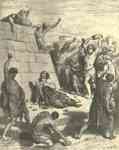
245 million Christians in the top 50 countries on Open Doors USA’s 2019 World Watch List experience high levels of persecution (i.e.: torture, rape, sex-slavery, for conversion to Christianity, murder and genocide), an increase of 14 percent from 2018. Sixty percent of those enduring persecution are children; women and girls are most violated. Release International, a UK-based human rights watchdog in operation for the past 50 years who partner with U.S.-based “Voice of the Martyrs” said they expect global anti-Christian persecution is set to rise ‘sharply’ in 2019. – (Read the report here). (End Commentary Break).

Philip in Samaria

Verse 4. Therefore, those who had been scattered went through places preaching the word. Verse 5. Philip went down to the city of Samaria and began proclaiming the Christ to them. Verse 6. The crowds were paying attention with one mind to what was being said by Philip, as they heard and saw the signs which he was performing. Verse 7. For in the case of many who had unclean spirits, they were coming out of them shouting with a loud voice; and many who had been paralyzed or limped on crutches were healed. Verse 8. So there was much rejoicing in that city.

Verse 9. Now a man named Simon had previously been practicing magic in the city and astonishing the people of Samaria, claiming to be someone great; verse 10, and all the people, from small to great, were paying attention to him, saying, “This man is the Power of God that is called Great.” Verse 11. And they were paying attention to him because for a long time he had astounded them with his magic arts. Verse 12. But when they believed Philip as he was preaching the good news about the kingdom of God and the name of Jesus Christ, both men and women were being baptized. Verse 13. Now even Simon himself believed; and after being baptized, he continued on with Philip, and as he observed signs and great miracles taking place, he was repeatedly amazed.

Verse 14. Now when the apostles in Jerusalem heard that Samaria had received the word of God, they sent them Peter and John, verse 15, who came down and prayed for them that they would receive the Holy Spirit. Verse 16. (For He had not yet fallen upon any of them; they had simply been baptized in the name of the Lord Jesus.) Verse 17. Then they began laying their hands on them, and they were receiving the Holy Spirit.

(Commentary Break): For He (The Holy Spirit) had not fallen upon those in Samaria, but they had simply been baptized in the name of the Lord Jesus”. It is with great reluctance that I ask if these verses 14 through 17 are saying that there is a baptism by water which is a confession and a personal identifying with Jesus in His death burial and resurrection, (an outward sign of an ‘inward’ decision), but a separate event from the indwelling of the Holy Spirit? And is “the laying on of hands” some sort of smind, soul and spirit transference” or is this just a ritual?

Do I dare suggest that the evidence of the indwelling and embodiment of the Holy Spirit is commensurate with the deep seated faith and resultant commitment to “doing the works of Jesus and even Greater Works, because He has gone to the Father”, or was this and these works granted only to the Apostles?

The name “Apostle” was first used in about A.D. 49 by the Apostle Paul. The word is defined as a messenger, envoy, delegate, one commissioned by another to represent him in some way, especially a man sent out by Jesus Christ Himself to preach the Gospel; an apostle.

The cultural and historical background in the Greco-Roman world for the term apostle (Apostolos in the Greek language), was used to describe a messenger or envoy sent with authority to represent someone else. In the context of the New Testament, apostles were seen as authoritative representatives of Jesus Christ, entrusted with spreading His teachings and establishing His Church. The role of an apostle was foundational in the early Church, as they were responsible for teaching, guiding, and maintaining the doctrinal purity of the Christian faith.

Jesus commissioned His original disciples (minus Judas Iscariot) to “Go and make disciples”. If this commandment had been exclusive only to those original eleven, then the commissioning and command to make and send disciples would have ended with those eleven men. The evangelization of the world would have also ended there. But that is not the case.

 PLEASE NOTE: These words of Jesus were spoken specifically in the Aorist tense. The Aorist tense represents the concept in which a verb is considered without regard for past, present, or future time. It is a continuous action. The past, present and future are considered as one-and-the-same. In other words, “what was, what is, and what forevermore shall be” , until Jesus consummates this age.

 So, at risk of ‘flying in the face of tradition’ the definition, the meaning, and the historical Biblical use of this word Apostle, tells us that Jesus commanded His disciples to make disciples, whom, by the very definition are also to be considered as messengers or envoys sent with authority to represent Jesus.

Additionally, Jesus has clearly said that He has “prepared (these) good works ahead of time so that we would walk in them”. And there is ample scriptural evidence that Jesus meant for every believer or disciple to “do the works that He has done, and even greater works for He has gone to the Father”.

So, even though some false teachers or false prophets have claimed and misused that name, it is no excuse for the true disciple of Jesus to shy from the word, the function, the duties or the responsibilities of the name of Apostle – a messenger or an envoy sent with authority to represent someone else –  and in this case, to represent Jesus.

To wit: “And Jesus came up and spoke to them, saying, “All authority in heaven and on earth has been given to Me. Go, therefore, and make disciples of all the nations, baptizing them in the name of the Father and the Son and the Holy Spirit, teaching them to follow all that I commanded you; and behold, I am with you always, to the end of the age.”  (End Commentary Break).

Verse 18. Now when Simon saw that the Spirit was given through the laying on of the apostles’ hands, he offered them money, verse 19, saying, “Give this authority to me as well, so that everyone on whom I lay my hands may receive the Holy Spirit.” Verse 20. But Peter said to him, “May your silver perish with you, because you thought you could acquire the gift of God with money! Verse 21. You have no part or share in this matter, for your heart is not right before God. Verse 22. Therefore, repent of this wickedness of yours, and pray to the Lord that, if possible, the intention of your heart will be forgiven you. Verse 23. For I see that you are provoked by bitterness and in the bondage of sin.” Verse 24. But Simon answered and said, “Pray to the Lord for me yourselves, so that nothing of what you have said may come upon me.”

(Commentary Break): Little more needs to be said in comparing this man, Simon, to the modern-day so-called evangelists and “miracle workers” who do their magic and ask their audience for money? Cannot they and should they not be compared to the Simon the magician, in the same way Peter dealt with Simon?

Secondly, the word “authority” appears here, once again. Simon asks the Apostles for the authority to perform miracles, but clearly the authority granted to an Apostle was not for just the authority to perform miracles, but was for making disciples of all the nations, baptizing them in the name of the Father and the Son and the Holy Spirit, teaching them to follow all that Jesus commanded.

Dear fellow Christians, please, be diligent. Be discerning. Be wise. (End Commentary Break).

An Ethiopian Receives Christ

Verse 25. So, when they had solemnly testified and spoken the word of the Lord, they started back to Jerusalem, and were preaching the gospel to many villages of the Samaritans.

Verse 26. But an angel of the Lord spoke to Philip, saying, “Get ready and go south to the road that descends from Jerusalem to Gaza.” (This is a desert road.) Verse 27. So he got ready and went; and there was an Ethiopian eunuch, a court official of Candace, queen of the Ethiopians, who was in charge of all her treasure; and he had come to Jerusalem to worship, verse 28, and he was returning and sitting in his chariot, and was reading Isaiah the prophet. Verse 29. Then the Spirit said to Philip, “Go up and join this chariot.” Verse 30. Philip ran up and heard him reading Isaiah the prophet, and said, “Do you understand what you are reading?” Verse 31. And he said, “Well, how could I, unless someone guides me?” And he invited Philip to come up and sit with him. Verse 32. Now the passage of Scripture which he was reading was this:

“HE WAS LED LIKE A SHEEP TO SLAUGHTER;

AND LIKE A LAMB THAT IS SILENT BEFORE ITS SHEARER,

SO HE DOES NOT OPEN HIS MOUTH.

Verse 33. “IN HUMILIATION HIS JUSTICE WAS TAKEN AWAY;

WHO WILL DESCRIBE HIS GENERATION?

FOR HIS LIFE IS TAKEN AWAY FROM THE EARTH.” Verse 34. The eunuch answered Philip and said, “Please tell me, of whom does the prophet say this? Of himself, or of someone else?” Verse 35. Then Philip opened his mouth, and beginning from this Scripture he preached Jesus to him. Verse 36. As they went along the road they came to some water; and the eunuch *said, “Look! Water! What prevents me from being baptized?” Verse 38. And he ordered that the chariot stop; and they both went down into the water, Philip as well as the eunuch, and he baptized him. Verse 39. When they came up out of the water, the Spirit of the Lord snatched Philip away; and the eunuch no longer saw him, but went on his way rejoicing. Verse 40. But Philip found himself at Azotus, and as he passed through he kept preaching the gospel to all the cities, until he came to Caesarea. (End Chapter 8 text).

Please read these scriptures from Jesus’ perspective and through His eyes. Stand there in your mind’s eye, watch and hear these events as if you are present and first hand. Meditate on them. Learn from them. Pray fervently about them. Then go and do the Acts of the Apostles.

Your Brother and Friend,

Mike Young.

PREVIOUSLY: THE BOOK OF ACTS – Chapter 7, Stephen’s Defense, Stephen’s Death.

NEXT:  THE BOOK OF ACTS – Chapter 9, The Conversion of Saul, Paul Preaches Christ, Peter’s Ministry.

(Please bookmark this page or subscribe for future episodes).

THE BOOK OF ACTS – Chapter 7, Stephen’s Defense, Stephen’s Death


THE BOOK OF ACTS – Chapter 7,

Stephen’s Defense, Stephen’s Death

 Remember, these are the acts of the Apostles. Please also remember that this series is not intended to be a traditional commentary books of the Bible. Nor is it intended to be a narrative about the books of the Bible. It is intended to be “a look behind the scenes”, so to speak. This is about God’s coming to know, understand and to follow God’s primary plan and purpose for His creation and His created ones. This is intended to help us find application of His Grand Plan and Purpose, #1, for our individual lives, #2, for our corporate lives as His Church, and #3, to find and apply His wisdom, His authority and the power that emanates from the Holy Spirit and flows into our lives as we move and exist in His presence.

In the previous chapter, Stephen, full of grace and power, was performing great wonders and signs among the people. The Synagogue of the Freedmen, argued with Stephen, unable to cope with his wisdom and the Spirit by whom he was speaking, they stirred up the people, the elders, and the scribes, and they came up to him and dragged him before the Council. They put forward false witnesses who said, “This man does not stop speaking against this holy place and the Law.

(Commentary Break): In the following verses, Stephen presents a “history lesson” of Israel and how they rejected the Chief Cornerstone, the Messiah, and murdered Him out of their arrogance. He rightly accuses them saying their priests demand others keep their Law, but they fail to keep their Law for themselves.

I believe God has provided us with this account so we, like Stephen, would vigorously defend the Gospel Message, and when necessary, holding those calling themselves “leaders in the Church” to account,  even to our own peril. Otherwise, this chapter in the Book of Acts is little more than just a ‘bible story’ . (End Commentary Break).

Stephen’s Defense

Acts 7:1, Now the high priest said, “Are these things so?” Verse 2. And Stephen said, “Listen to me, brothers and fathers! The God of glory appeared to our father Abraham when he was in Mesopotamia, before he lived in Haran, verse 3, and He said to him, ‘GO FROM YOUR COUNTRY AND YOUR RELATIVES, AND COME TO THE LAND WHICH I WILL SHOW YOU.’ Verse 4. Then he left the land of the Chaldeans and settled in Haran. And from there, after his father died, God had him move to this country in which you are now living. Verse 5. But He gave him no inheritance in it, not even a foot of ground, and yet, He promised that He would give it to him as a possession, and to his descendants after him, even though he had no child. Verse 6. But God spoke to this effect, that his DESCENDANTS WOULD BE STRANGERS IN A LAND THAT WAS NOT THEIRS, AND THEY WOULD ENSLAVE AND MISTREAT THEM FOR FOUR HUNDRED YEARS. Verse 7. ‘AND WHATEVER NATION TO WHICH THEY ARE ENSLAVED I MYSELF WILL JUDGE,’ said God, ‘AND AFTER THAT THEY WILL COME OUT AND SERVE ME IN THIS PLACE.’ Verse 8. And He gave him the covenant of circumcision; and so Abraham fathered Isaac, and circumcised him on the eighth day; and Isaac fathered Jacob, and Jacob, the twelve patriarchs.

Verse 9. “The patriarchs became jealous of Joseph and sold him into Egypt. Yet God was with him, verse 10, and rescued him from all his afflictions, and granted him favor and wisdom in the sight of Pharaoh, king of Egypt, and he made him governor over Egypt and his entire household.

Verse 11. “Now a famine came over all Egypt and Canaan, and great affliction with it, and our fathers could find no food. Verse 12. But when Jacob heard that there was grain in Egypt, he sent our fathers there the first time. Verse 13. And on the second visit, Joseph made himself known to his brothers, and Joseph’s family was revealed to Pharaoh. Verse 14. Then Joseph sent word and invited his father Jacob and all his relatives to come to him, seventy-five people in all. Verse 15And Jacob went down to Egypt, and he and our fathers died there. Verse 16. And they were brought back from there to Shechem and laid in the tomb which Abraham had purchased for a sum of money from the sons of Hamor in Shechem.

Verse 17. “But as the time of the promise which God had assured to Abraham was approaching, the people increased and multiplied in Egypt, verse 18, until ANOTHER KING AROSE OVER EGYPT WHO DID NOT KNOW JOSEPH. Verse 19. It was he who shrewdly took advantage of our nation and mistreated our fathers in order that they would abandon their infants in the Nile, so that they would not survive. Verse 20. At this time Moses was born; and he was beautiful to God. He was nurtured for three months in his father’s home. Verse 21. And after he had been put outside, Pharaoh’s daughter took him away and nurtured him as her own son. Verse 22. Moses was educated in all the wisdom of the Egyptians, and he was proficient in speaking and action. Verse 23. But when he was approaching the age of forty, it entered his mind to visit his countrymen, the sons of Israel. Verse 24. And when he saw one of them being treated unjustly, he defended and took vengeance for the oppressed man by fatally striking the Egyptian. Verse 25. And he thought that his brothers understood that God was granting them deliverance through him; but they did not understand. Verse 26. And on the following day he appeared to them as they were fighting each other, and he tried to reconcile them to peace, by saying, ‘Men, you are brothers, why are you injuring each other?’ Verse 27. But the one who was injuring his neighbor pushed him away, saying, ‘WHO MADE YOU A RULER AND JUDGE OVER US? Verse 28. YOU DO NOT INTEND TO KILL ME AS YOU KILLED THE EGYPTIAN YESTERDAY, DO YOU?’ Verse 29. At this remark, MOSES FLED AND BECAME A STRANGER IN THE LAND OF MIDIAN, where he fathered two sons.

Verse 30. “After forty years had passed, an angel appeared to him in the wilderness of Mount Sinai, in the flame of a burning thorn bush. Verse 31. When Moses saw it, he was astonished at the sight; and as he approached to look more closely, the voice of the Lord came: Verse 32. ‘I AM THE GOD OF YOUR FATHERS, THE GOD OF ABRAHAM, AND ISAAC, AND JACOB.’ Moses shook with fear and did not dare to look closely. Verse 33. But the LORD said to him, ‘REMOVE YOUR SANDALS FROM YOUR FEET, FOR THE PLACE ON WHICH YOU ARE STANDING IS HOLY GROUND. Verse 34. I HAVE CERTAINLY SEEN THE OPPRESSION OF MY PEOPLE WHO ARE IN EGYPT, AND HAVE HEARD THEIR GROANING, AND I HAVE COME DOWN TO RESCUE THEM; AND NOW COME, I WILL SEND YOU TO EGYPT.’

Verse 35. “This Moses whom they disowned, saying, ‘WHO MADE YOU A RULER AND A JUDGE?’ is the one whom God sent to be both a ruler and a deliverer with the help of the angel who appeared to him in the thorn bush. Verse 36. This man led them out, performing wonders and signs in the land of Egypt and in the Red Sea, and in the wilderness for forty years. Verse 37. This is the Moses who said to the sons of Israel, ‘GOD WILL RAISE UP FOR YOU A PROPHET LIKE ME FROM YOUR COUNTRYMEN.’ Verse 38. This is the one who was in the assembly in the wilderness together with the angel who spoke to him at length on Mount Sinai, and who was with our fathers; and he received living words to pass on to you. Verse 39. Our fathers were unwilling to be obedient to him; on the contrary they rejected him and turned back to Egypt in their hearts, verse 40, saying to Aaron, ‘MAKE US A GOD WHO WILL GO BEFORE US; FOR THIS MOSES WHO LED US OUT OF THE LAND OF EGYPT — WE DO NOT KNOW WHAT HAPPENED TO HIM.’ Verse 41. At that time they made a calf and brought a sacrifice to the idol, an d were rejoicing in the works of their hands. Verse 42. But God turned away and gave them over to serve the heavenly lights; as it is written in the book of the prophets: ‘YOU DID NOT OFFER ME VICTIMS AND SACRIFICES FOR FORTY YEARS IN THE WILDERNESS, DID YOU, HOUSE OF ISRAEL? Verse 43. YOU ALSO TOOK ALONG THE TABERNACLE OF MOLOCH AND THE STAR OF YOUR GOD ROMPHA, THE IMAGES WHICH YOU MADE TO WORSHIP. I ALSO WILL DEPORT YOU BEYOND BABYLON.’

Verse 44. “Our fathers had the tabernacle of testimony in the wilderness, just as He who spoke to Moses directed him to make it according to the pattern which he had seen. Verse 45. Our fathers in turn received it, and they also brought it in with Joshua upon dispossessing the nations that God drove out from our fathers, until the time of David. Verse 46. David found favor in God’s sight, and asked that he might find a dwelling place for the house of Jacob. Verse 47. But it was Solomon who built a house for Him. Verse 48. However, the Most High does not dwell in houses made by human hands; as the prophet says:

Verse 49. ‘HEAVEN IS MY THRONE,

AND THE EARTH IS THE FOOTSTOOL OF MY FEET;

WHAT KIND OF HOUSE WILL YOU BUILD FOR ME?’ says the Lord,

‘OR WHAT PLACE IS THERE FOR MY REST?

Verse 50. ‘WAS IT NOT MY HAND THAT MADE ALL THESE THINGS?’

Verse 51. “You men who are stiff-necked and uncircumcised in heart and ears are always resisting the Holy Spirit; you are doing just as your fathers did. Verse 52. Which one of the prophets did your fathers not persecute? They killed those who had previously announced the coming of the Righteous One, and you have now become betrayers and murderers of Him; verse 53. you who received the Law as ordained by angels, and yet did not keep it.”

(Commentary Break): I encourage you, brothers and sisters, followers of Jesus, with great caution in my soul,  to carefully study these words of Stephen, as well as the rest of the scriptures, in order to be encouraged and to be made able to preserve the truth and the sanctity of the mission and message of Jesus. Study Jesus. Pray and submit yourself to Him entirely.

Throughout history, the True Church has been the beacon of salvation, self-sacrifice and service in the Name and the Ways of Jesus, even unto death. This is our model and our calling.

But, be wary of the “wolfves in sheep’s clothing” which can appear as an angel dressed in light, but are in fact an agents of this present darkness. Avoid churches and church leaders that present the Gospel cloaked in unnecessary emotionalism and fanfare but deny the power therein.

Be part the Army of God. Join the resistance. Maintain your strength in the Lord and in the strength of His might. Put on the full armor of God and stand firm against the schemes of the devil, against the ruler and powers against the world forces of this darkness, against the forces of wickedness in the heavenly places. Speak boldly as you ought to speak.

Now, peace be to you, brothers and sisters in Christ Jesus, Grace be to all of you who love our Lord Jesus with an incorruptible love!  (End Commentary Break).

Stephen Put to Death

Verse 54. Now when they heard this, they were infuriated, and they began gnashing their teeth at him. Verse 55. But he, being full of the Holy Spirit, looked intently into heaven and saw the glory of God, and Jesus standing at the right hand of God; verse 56, and he said, “Behold, I see the heavens opened and the Son of Man standing at the right hand of God.” Verse 57. But they shouted with loud voices, and covered their ears and rushed at him with one mind. Verse 58. When they had driven him out of the city, they began stoning him; and the witnesses laid aside their cloaks at the feet of a young man named Saul. Verse 59. They went on stoning Stephen as he called on the Lord and said, “Lord Jesus, receive my spirit!” Verse 60. Then he fell on his knees and cried out with a loud voice, “Lord, do not hold this sin against them!” Having said this, he fell asleep. (End text for Chapter 7).

These final verses, 54 through 60, give us a clear and frightening “behind the scenes look” that which is being manifested before our eyes, that which comes from the dark spiritual realms. But we have no need to fear. He has ordained that we will overcome the accuser by the blood of the Lamb and because of the word of our testimony and that we do not love our life even when faced with death (see Revelation 12:10-11). Amen and amen!

Now, let’s do everything from a kind heart but with a resolute mind in serving our Lord and the Gospel.

Your Brother and Friend,

Mike Young.

PREVIOUSLY: THE BOOK OF ACTS – Chapter 6, Choosing the Seven

NEXT:  THE BOOK OF ACTS – Chapter 8, Saul Persecutes the Church, Philip in Samaria, An Ethiopian Receives Christs

(Please bookmark this page or subscribe for future episodes).

THE BOOK OF ACTS – Chapter 6, Choosing The Seven


THE BOOK OF ACTS – Chapter 6,


Choosing the Seven

 These are the works of the Apostles.

Acts 6:1, Now at this time, as the disciples were increasing in number, a complaint developed on the part of the Hellenistic Jews against the native Hebrews, because their widows were being overlooked in the daily serving of food. Verse 2. So the twelve summoned the congregation of the disciples and said, “It is not desirable for us to neglect the word of God in order to serve tables. Verse 3. Instead, brothers and sisters, select from among you seven men of good reputation, full of the Spirit and of wisdom, whom we may put in charge of this task. Verse 4. But we will devote ourselves to prayer and to the ministry of the word.” Verse 5. The announcement found approval with the whole congregation; and they chose Stephen, a man full of faith and of the Holy Spirit, and Philip, Prochorus, Nicanor, Timon, Parmenas, and Nicolas, a proselyte from Antioch. Verse 6. And they brought these men before the apostles; and after praying, they laid their hands on them.

(Commentary Break): This chapter begins with these important words: “Now at this time, as the disciples were increasing in number”. Too often, the idea of being a disciple of Jesus is disassociated from the idea of becoming a Christian. But they are one-and-the-same. Every new believer is to become a disciple. The Greek term, “mathétés”, refers to a disciple or follower, someone who learns from a teacher. In the New Testament, it is used to describe the followers of Jesus Christ, who were committed to learning from His teachings and emulating His life. Jesus, in Matthew 4:19, calls His first disciples, saying, “Follow me and I will make you fishers of men”. The word, “follow” in the Greek language, is “deute”, and is an imperative command and not just an invitation. It is a call to draw near to the teacher; to look over His shoulder in order to closely observer the teacher’s ways and forever to be identified with that Teacher, and in this case, Jesus.

 I am emphasizing the point because the vast majority of current-day Christian disciples only identify with Jesus using the moniker of Christian and avoid the responsibilities as His disciple. Jesus, in this same chapter of Matthew, verse 23, “went about in all of Galilee, teaching in the synagogues and proclaiming the Gospel of the Kingdom, healing every disease and every sickness among the people”. This is repeated throughout His ministry, particularly in Matthew chapter 10 when He said to His disciples, “preach, saying the kingdom of heaven is at hand. Heal the sick, raise the dead, cleanse those with leprosy, cast out demons. Freely you received, freely give. Do not acquire gold, silver or copper for your money belts.” Tell me of just one true disciple, follower of Jesus who does this. We have created a professional clergy that in so many ways are prouder, more arrogant and slothful, and some are even more wicked than the Pharisees of Jesus’ ministry. This must change before He returns. His remnant is coming. Be His remnant from where you stand this moment!

Secondly, we should be astonished that some Jews, who had come to confess Jesus as Lord and Savior, would engage in disputes and arguments with their brethren about the polity of the Church. This is especially astonishing considering that Jesus has only recently ascended and already disputes have begun. This is the beginning of what Jesus prophetically spoke about when He said there would be divisions and dissensions within His Church, which would eventually lead to widespread deception, delusions and apostasy (falling away from the faith).

 This can be seen in the prophesied Birth Pains of the Fifth Seal of the Tribulation period. And, we are indeed seeing the amplification and intensification of apostasy in our Churches today, as we draw nearer to the End of The Age. (Also see The False Church Emerges).

 We are seeing the first appointment of men into the office of deacon to serve the people in the Church so the Apostles and teachers could continue to minister the word. (End Commentary Break).

Verse 7. The word of God kept spreading; and the number of the disciples continued to increase greatly in Jerusalem, and a great many of the priests were becoming obedient to the faith.

Verse 8. And Stephen, full of grace and power, was performing great wonders and signs among the people. Verse 9. But some men from what was called the Synagogue of the Freedmen, including both Cyrenians and Alexandrians, and some from Cilicia and Asia, rose up and argued with Stephen. Verse 10. But they were unable to cope with his wisdom and the Spirit by whom he was speaking. Verse 11. Then they secretly induced men to say, “We have heard him speak blasphemous words against Moses and God.” Verse 12. And they stirred up the people, the elders, and the scribes, and they came up to him and dragged him away, and brought him before the Council. Verse 13. They put forward false witnesses who said, “This man does not stop speaking against this holy place and the Law; verse 14, for we have heard him say that this Nazarene, Jesus, will destroy this place and change the customs which Moses handed down to us.”

(Commentary Break): First, Key Points: Despite the stresses and divisions within His Church, the Word of God kept spreading; the number of disciples kept increasing; the priests were becoming obedient to the word.

Then there were the ‘gatekeepers of the law and tradition’. The Synagogue of the Freedmen. They had correctly heard Stephen and Jesus but decided that this was a threat to their small grip on power. They would not accept the truth. So, like so many ‘leaders’, even in our churches today, they conspire to twist the truth to fit their narrative and will deny the Gospel at any cost. (End Commentary Break).

Verse 15. And all who were sitting in the Council stared at him, and they saw his face, which was like the face of an angel. (End chapter 6).

Little about men and women has changed, even to this day. There are local church leaders and so-called pastors, today, where you live, who will defend their own twisted version of Christianity and attempt to tighten their flimsy grip on power, craving recognition for themselves at the expense of the Gospel and the true disciples.  They are selfish and arrogant. They destroy instead of building up. They claim to have the anointing of God, but they do not. They marginalize, taunt, deceive, bully and abuse the flock of God. The Apostle Paul says we are to expose them, avoid them and run from them!

We will see in the next chapter that the Pharisaical spirit is alive and well in the fledgling church, killing, stealing and destroying. So it is today.

But greater is He Who is in you, than he who is in the world!

Your Brother and Friend,

Mike Young.

PREVIOUSLY: THE BOOK OF ACTS – Chapter 5, Ananias and Sapphira, Imprisonment and Release, Gamaliel’s Counsel.

NEXT: (coming soon). THE BOOK OF ACTS – Chapter 7, Stephen’s Defense, Stephen’s Death.

(Please bookmark this page or subscribe for future episodes).

THE BOOK OF ACTS – Chapter 5,Ananias and Sapphira, Imprisonment and Release, Gamaliel’s Counsel


THE BOOK OF ACTS – Chapter 5,

Ananias and Sapphira, Imprisonment and Release, Gamaliel’s Counsel

This account in the early church is as frightening as it can be confounding. I have read commentaries on this chapter by several highly regarded Bible teachers and theologians and I found each to be rife with conjecture and supposition. There is a lot that can be said after studying this chapter, but I will focus on just three matters:

(#1). Why was God’s chosen punishment of Ananias and Sapphira so severe? Yes, they were deceitful, liars, and hypocrites. And, according to other commentaries, they were most likely seeking undeserved respect and admiration for their feigned generosity. But was a death sentence warranted? What was really at work here? (Theologians offer many ‘guesses’).

(#2). The authority granted the Apostles, for the first time, seems to mirror the works and acts of Jesus. Did this level of authority and responsibility end with the Apostles?

(#3). Fear spread throughout the Christian community (the Church) as a result of these matters. Is this kind of fear of God the proper motivator in the Church?

Fate of Ananias and Sapphira

Acts 5:1, But a man named Ananias, with his wife Sapphira, sold a piece of property, verse 2, and kept back some of the proceeds for himself, with his wife’s full knowledge, and bringing a portion of it, he laid it at the apostles’ feet. Verse 3. But Peter said, “Ananias, why has Satan filled your heart to lie to the Holy Spirit and to keep back some of the proceeds of the land? Verse 4. While it remained unsold, did it not remain your own? And after it was sold, was it not under your control? Why is it that you have conceived this deed in your heart? You have not lied to men, but to God.” Verse 5. And as he heard these words, Ananias collapsed and died; and great fear came over all who heard about it. Verse 6. The young men got up and covered him up, and after carrying him out, they buried him.

(Commentary Break): Let the words of the first six verses speak for themselves. Peter, according to these verses, had no prior knowledge of Ananias’ planned deceitfulness. You can guess at how Peter gained this knowledge, but the word does not say and neither should we. What we do know is that Peter, an Apostle of Jesus, knew.

Secondly, Ananias died. We do not know the cause of death, just that he died and “great fear came over all who heard about it”.

If there is a lesson here it is that God knows the heart and intentions of every man and woman, and when it comes to His Church, we, His Body, should keep this event in mind. No one will escape the watchful Eye of God.

So, will a kind and loving God execute such harsh punishment on every Christian who commits the sin of deceit, lying and hypocrisy? Obviously not in the same fashion as with Ananias. But you will not escape the judgment of God. And when it comes to purifying His Church, do not be mistaken in this matter. It is the Body of Christ, the Son of God. And if God would sacrifice His only Son for the sanctifying of His Church, how do you think you might escape His judgment?

Our service, fealty and obedience is owed to God, alone. There may be times when the leaders of a church are as guilty as Ananias, but this does not relieve you or me of our duty and obligations to God. God will deal with His appointed pastors and teachers according to their responsibilities. This kind of fear before God is righteous fear, and is a healthy fear, indeed:

Hebrews 12:4-13, tells us, “You have not yet resisted to the point of shedding blood in your striving against sin; and you have forgotten the exhortation which is addressed to you as sons,

“MY SON, DO NOT REGARD LIGHTLY THE DISCIPLINE OF THE LORD,

NOR FAINT WHEN YOU ARE PUNISHED BY HIM;

FOR WHOM THE LORD LOVES HE DISCIPLINES,

AND HE PUNISHES EVERY SON WHOM HE ACCEPTS.” It is for discipline that you endure; God deals with you as with sons; for what son is there whom his father does not discipline? But if you are without discipline, of which all have become partakers, then you are illegitimate children and not sons. Furthermore, we had earthly fathers to discipline us, and we respected them; shall we not much more be subject to the Father of spirits, and live? For they disciplined us for a short time as seemed best to them, but He disciplines us for our good, so that we may share His holiness. For the moment, all discipline seems not to be pleasant, but painful; yet to those who have been trained by it, afterward it yields the peaceful fruit of righteousness.

Therefore, strengthen the hands that are weak and the knees that are feeble, and make straight paths for your feet, so that the limb which is impaired may not be dislocated, but rather be healed. (End Commentary Break).

Verse 7. Now an interval of about three hours elapsed, and his wife came in, not knowing what had happened. Verse 8. And Peter responded to her, “Tell me whether you sold the land for this price?” And she said, “Yes, for that price.” Verse 9. Then Peter said to her, “Why is it that you have agreed together to put the Spirit of the Lord to the test? Behold, the feet of those who have buried your husband are at the door, and they will carry you out as well.” Verse 10. And immediately she collapsed at his feet and died; and the young men came in and found her dead, and they carried her out and buried her beside her husband. Verse 11. And great fear came over the whole church, and over all who heard about these things.

(Commentary Break): We have been warned that in these last days “evil people and imposters will go from bad to worse, deceiving and being deceived. But that you are to continue in the things that you have learned, giving you wisdom that leads to your salvation through faith which is in Christ Jesus”. (see 2 Timothy 3:13-15). Jesus also warned that there would be an escalation of lawlessness and that most people’s love will grow cold. But that it is the one who endures to the end that will be saved. (see Matthew 24:12-13).

We may not get to personally see God’s judgment on the errant, and it is not our business. It is the business of God. But there should be no doubt that God will purify His Church, whether you see it or not. Keep yourself unstained when dealing with God so that you are not dealt with in such a manner. However, when you do fail, run to Him quickly, confess your sins, fall before Him and seek His mercy. He is faithful and righteous, and He will forgive your sins and cleanse you from all unrighteousness (see 1 John 1:9). (End Commentary Break).

Verse 12. At the hands of the apostles many signs and wonders were taking place among the people; and they were all together in Solomon’s portico. Verse 13. But none of the rest dared to associate with them; however, the people held them in high esteem. Verse 14. And increasingly believers in the Lord, large numbers of men and women, were being added to their number, verse 15, to such an extent that they even carried the sick out into the streets and laid them on cots and pallets, so that when Peter came by at least his shadow might fall on any of them. Verse 16. The people from the cities in the vicinity of Jerusalem were coming together as well, bringing people who were sick or tormented with unclean spirits, and they were all being healed.

(Commentary Break): These are the most amazing scriptures and events regarding the disciples and Apostles of Jesus. Finally, we see the authority and the works of Jesus through His disciples, just as He said.

The question that arises is “have these works ceased?” Some say yes, others say no. What we can know is that there a very few, if any, who have committed their lives in service to God at a level such as the Apostles. Jesus taught that, “to everyone who has, more shall be given, and he will have an abundance; but from the one who does not have, even what he does have shall be taken away”. (see. Matthew 13:12, and Matthew 25:29). (End Commentary Break).

Imprisonment and Release

Verse 17. But the high priest stood up, along with all his associates (that is the sect of the Sadducees), and they were filled with jealousy. Verse 18. They laid hands on the apostles and put them in a public prison. Verse 19. But during the night an angel of the Lord opened the gates of the prison, and leading them out, he said, verse 20, “Go, stand and speak to the people in the temple area the whole message of this Life.” Verse 21. Upon hearing this, they entered into the temple area about daybreak and began to teach.

Now when the high priest and his associates came, they called the Council together, that is, all the Senate of the sons of Israel, and sent orders to the prison for them to be brought. Verse 22. But the officers who came did not find them in the prison; and they returned and reported, verse 23, saying, “We found the prison locked quite securely and the guards standing at the doors; but when we opened them, we found no one inside.” Verse 24. Now when the captain of the temple guard and the chief priests heard these words, they were greatly perplexed about them as to what would come of this. Verse 25. But someone came and reported to them, “The men whom you put in prison are standing in the temple area and teaching the people!” Verse 26. Then the captain went along with the officers and proceeded to bring them back without violence (for they were afraid of the people, that they might be stoned).

Verse 27. When they had brought them, they had them stand before the Council. The high priest interrogated them, verse 28, saying, “We gave you strict orders not to continue teaching in this name, and yet, you have filled Jerusalem with your teaching and intend to bring this Man’s blood upon us.” Verse 29. But Peter and the apostles answered, “We must obey God rather than men. Verse 30. The God of our fathers raised up Jesus, whom you put to death by hanging Him on a cross. Verse 31. He is the one whom God exalted to His right hand as a Prince and a Savior, to grant repentance to Israel, and forgiveness of sins. Verse 32. And we are witnesses of these things; and so is the Holy Spirit, whom God has given to those who obey Him.”

Gamaliel’s Counsel

Verse 33. But when they heard this, they became infuriated and nearly decided to execute them. Verse 34. But a Pharisee named Gamaliel, a teacher of the Law, respected by all the people, stood up in the Council and gave orders to put the men outside for a short time. Verse 35. And he said to them, “Men of Israel, be careful as to what you are about to do with these men. Verse 36. For, some time ago Theudas appeared, claiming to be somebody, and a group of about four hundred men joined him. But he was killed, and all who followed him were dispersed and came to nothing. Verse 37. After this man, Judas of Galilee appeared in the days of the census and drew away some people after him; he also perished, and all those who followed him were scattered. Verse 38. And so in the present case, I say to you, stay away from these men and leave them alone, for if the source of this plan or movement is men, it will be overthrown; verse 39, but if the source is God, you will not be able to overthrow them; or else you may even be found fighting against God.”

Verse 40. They followed his advice; and after calling the apostles in, they flogged them and ordered them not to speak in the name of Jesus, and then released them. Verse 41. So they went on their way from the presence of the Council, rejoicing that they had been considered worthy to suffer shame for His name. Verse 42. And every day, in the temple and from house to house, they did not stop teaching and preaching the good news of Jesus as the Christ. (End chapter 5).

Is it any wonder why the early Church experienced such exponential growth, even under such severe persecution? The signs and wonders of God were evident. The love of people for one another within the Church was real. The level of commitment of those in the Church to one another and to the Church was unparalleled in Roman or Jewish societies. This was indeed a time when God had come down to earth. His Name is Jesus.

I hear Christians say they have a deep longing to return to the model and the ways of the early Church. And we shall return. We will return to similar circumstances as the early Church, as these Last Days, the Birth Pains of the tribulation begin to intensify and draw to a close. God has said that He will purge, cleanse, and refine His Church”, the bride of Christ, in preparation for the wedding feast. Then we will see. We will see who are the sheep of God and who are the goats. He will separate the wheat from the tares.

Dear friends, let’s commit ourselves to be found on the Right hand of God and not on the left. Let us all endure to the end.

Your Brother and Friend,

Mike Young.

PREVIOUSLY: THE BOOK OF ACTS – Chapter 4, Peter and John Arrested and Released, Sharing among Believers.

NEXT: THE BOOK OF ACTS – Chapter 6, Choosing the Seven.

(Please bookmark this page or subscribe for future episodes).

THE BOOK OF ACTS – Chapter 4, Peter and John Arrested and Released, Sharing among Believers


THE BOOK OF ACTS – Chapter 4

Peter and John Arrested and Released, Sharing among Believers.

You are about to read about the ongoing establishment and the earliest practices of the Church. There was no written manual for the Apostles or the early Church to follow. The Apostles would take the teachings and examples of Jesus and live them out. They would go out and make disciples of all the nations, baptizing them in the name of the Father, and the Son and the Holy Spirit, teaching them to follow all that Jesus had commanded them.

You and I should have received these same teachings and practices to obey and do. If your understanding or your application of these teachings and practices is anything other than what the Bible presents, beware. Some contemporary teachers, preachers and pastors will say, “times, technologies and methods have improved  and therefore some of our practices and ways of “doing Church” and presenting the Gospel have been modified to fit our current day”. Whether by design, out of arrogance or out of ignorance, these are false teachers. Jesus warned of this and tells us to avoid them, call them to account and follow only Jesus.

Peter and John Arrested

Acts 1:1, As they were speaking to the people, the priests and the captain of the temple guard and the Sadducees came up to them, verse 2, being greatly disturbed because they were teaching the people and proclaiming in Jesus the resurrection from the dead. Verse 3. And they laid hands on them and put them in prison until the next day, for it was already evening. Verse 4. But many of those who had heard the message believed; and the number of the men came to be about five thousand.

(Commentary Break): There is a lot of detail regarding the priests, the captain of the temple guard and the Sadducees, and the resurrection from the dead, which I will leave to you, the reader, to discover on your own (or use this link). Our focus  in this commentary is on the fact that they apprehended Peter and John and put them in a prison cell for what singularly appears to be for proclaiming in Jesus the resurrection of the dead. But you can be certain it had a lot to do with the fact that about five thousand men came to believe. This was alarming to the static religious establishment and a threat to their grip on the hearts and minds of the people, to their status in the community and their livelihood. But this is just the first of many teachings and signs of a new way of life with God that is shaking the Jewish Empire and soon, the entire world.

How are these things with you, your church, and your walk with Jesus? Is there a chance that we have drifted too far from the conditions and the commitment of these early Christians? Is it possible that we are not willing to upset our status quo, just like the priests, the captain of the temple guard and the Sadducees? Is this the reason for our meager results when we preach the Gospel and proclaim in Jesus the resurrection of the dead? (End Commentary Break).

Verse 5. On the next day, their rulers and elders and scribes were gathered together in Jerusalem; verse 6, and Annas the high priest was there, and Caiaphas, John, and Alexander, and all who were of high-priestly descent. Verse 7. When they had placed them in the center, they began to inquire, “By what power, or in what name, have you done this?” Verse 8. Then Peter, filled with the Holy Spirit, said to them, “Rulers and elders of the people, verse 9. if we are on trial today for a benefit done to a sick man, as to how this man has been made well, verse 10, let it be known to all of you and to all the people of Israel, that by the name of Jesus Christ the Nazarene, whom you crucified, whom God raised from the dead, by this name this man stands here before you in good health. Verse 11. He is the STONE WHICH WAS REJECTED by you, THE BUILDERS, but WHICH BECAME THE CHIEF CORNERSTONE. Verse 12. And there is salvation in no one else; for there is no other name under heaven that has been given among mankind by which we must be saved.”

(Commentary Break): These verses speak for themselves. Verse eleven which speaks of the cornerstone is drawn from Psalm 118:22 and Isaiah 28:16, where it is used to describe the Messiah. This cornerstone is not just foundational but also unifying, bringing together Jews and Gentiles into one spiritual house. The use of this metaphor underscores the essential role of Christ in God’s redemptive plan and the futility of any spiritual edifice not built upon Him. Then Peter goes on to simply and powerfully proclaim Jesus as Savior, the Messiah. This is our truth and our example. (End Commentary Break).

Threat and Release

Verse 13. Now as they observed the confidence of Peter and John and understood that they were uneducated and untrained men, they were amazed, and began to recognize them as having been with Jesus. Verse 14. And seeing the man who had been healed standing with them, they had nothing to say in reply.

(Commentary Break): Please take notice. The rulers and elders and scribes along with Annas the high priest, Caiaphas, John, and Alexander, and all whom were of high-priestly descent, observed that Peter and John were uneducated and untrained men, but were amazed because they recognized that their confidence and miracle working power came from having been with Jesus! They were left speechless.

Now-a-day, in the twenty first century, if you aren’t highly educated and trained in one prestigious seminary or another and don’t have a master’s degree or a doctorate in some ministry field, you are marginalized or ignored by most church organziations. Having walked with Jesus your entire life is secondary. (End Commentary Break).

Verse 15. But when they had ordered them to leave the Council, they began to confer with one another, verse 16, saying, “What are we to do with these men? For the fact that a noteworthy miracle has taken place through them is apparent to all who live in Jerusalem, and we cannot deny it. Verse 17. But so that it will not spread any further among the people, let’s warn them not to speak any longer to any person in this name.” Verse 18. And when they had summoned them, they commanded them not to speak or teach at all in the name of Jesus.

(Commentary Break): Even when faced with the truth, the rulers, elders,  scribes and the high priests moved to silence their opposition. Ritual and tradition given priority over the Word and Works of God. Today, there is a global effort through false religions and the world Marxists-Globalist movement to do the same: They command us not to speak or teach at all in the Name of Jesus!

(Many are being threatened in churches even in America today, that if you ever preach salvation through Jesus, alone, or If you preach the Gospel of Jesus in those churches, you will never preach in them again. They have turned away from the Word of God. I know from firsthand experience. I continued to preach sin and salvation, Jesus and the Cross, until I was expelled). (End Commentary Break).

Verse 19. But Peter and John answered and said to them, “Whether it is right in the sight of God to listen to you rather than to God, make your own judgment; verse 20, for we cannot stop speaking about what we have seen and heard.” Verse 21. When they had threatened them further, they let them go (finding no basis on which to punish them) on account of the people, because they were all glorifying God for what had happened; verse 22, for the man on whom this miracle of healing had been performed was more than forty years old. Verse 23. When they had been released, they went to their own companions and reported everything that the chief priests and the elders had said to them. Verse 24. And when they heard this, they raised their voices to God with one mind and said, “Lord, it is You who MADE THE HEAVEN AND THE EARTH AND THE SEA, AND EVERYTHING THAT IS IN THEM, verse 25, who by the Holy Spirit, through the mouth of our father David Your servant, said,

‘WHY WERE THE NATIONS INSOLENT,

AND THE PEOPLES PLOTTING IN VAIN?

Verse 26. ‘THE KINGS OF THE EARTH TOOK THEIR STAND,

AND THE RULERS WERE GATHERED TOGETHER

AGAINST THE LORD AND AGAINST HIS CHRIST.’

Verse 27. For truly in this city there were gathered together against Your holy servant Jesus, whom You anointed, both Herod and Pontius Pilate, along with the Gentiles and the peoples of Israel, verse 28, to do whatever Your hand and purpose predestined to occur. Verse 29. And now, Lord, look at their threats, and grant it to Your bond-servants to speak Your word with all confidence, verse 30, while You extend Your hand to heal, and signs and wonders take place through the name of Your holy servant Jesus.” Verse 31. And when they had prayed, the place where they had gathered together was shaken, and they were all filled with the Holy Spirit and began to speak the word of God with boldness.

Sharing among Believers

Verse 32. And the congregation of those who believed were of one heart and soul; and not one of them claimed that anything belonging to him was his own, but all things were common property to them. Verse 33. And with great power the apostles were giving testimony to the resurrection of the Lord Jesus, and abundant grace was upon them all. Verse 34. For there was not a needy person among them, for all who were owners of land or houses would sell them and bring the proceeds of the sales verse 35, and lay them at the apostles’ feet, and they would be distributed to each to the extent that any had need.

Verse 36. Now Joseph, a Levite of Cyprian birth, who was also called Barnabas by the apostles (which translated means Son of Encouragement), verse 37, owned a tract of land. So he sold it, and brought the money and laid it at the apostles’ feet.

(Commentary Break): Verses 19 through 37 speak for themselves. (You can click here for commentaries. To review all the verses, just scroll verse to verse). But the pattern had been established. The preaching of the Gospel and the unity within the Church, created unparalleled and exponential growth, despite the severe and deadly persecution that followed. (End Commentary Break).

It is very apparent that the Church in the twenty first century is sorely divided, even fractured. But this is part of the Plan of God to perfect His Creation and prepare The Bride of Christ for His return. Like in the early days of the Church, in these Last Days, God will once again allow His Church to go through a period of deception and severe persecution as found in Daniel 12:10, when Many will be purged, cleansed, and refined, but the wicked will act wickedly; and none of the wicked will understand, but those who have insight will understand”. This is being  and will continue to be accomplished through the increasing intensity of Tribulation Seals ONE through FIVE, (also known as the Birth Pains of the tribulation; see Matthew 24:8), which were inaugurated at or around the time of the Birth of Jesus.

Please pay close attention to what has occurred and will soon occur through the Acts of the Apostles as the demonstrate our way to unity and safety in Christ Jesus!

Your Brother and Friend,

Mike Young

PREVIOUSLY: THE BOOK OF ACTS – Chapter 3, Healing the Beggar, Peter’s Second Sermon.

NEXT: (coming soon). THE BOOK OF ACTS – Chapter 5, Ananias and Sapphira, Imprisonment and Release, Gamaliel’s Counsel.

(Please bookmark this page or subscribe for future episodes).

THE BOOK OF ACTS – Chapter 3, Healing the Beggar, Peter’s Second Sermon


THE BOOK OF ACTS – Chapter 3,

Healing the Beggar, Peter’s Second Sermon

These are the Acts of the Apostles. Let’s learn from them and be blessed.

Healing the Beggar

Acts 3:1, Now Peter and John were going up to the temple at the ninth hour, the hour of prayer. Verse 2. And a man who had been unable to walk from birth was being carried, whom they used to set down every day at the gate of the temple which is called Beautiful, in order for him to beg for charitable gifts from those entering the temple grounds. Verse 3. When he saw Peter and John about to go into the temple grounds, he began asking to receive a charitable gift. Verse 4. But Peter, along with John, looked at him intently and said, “Look at us!” Verse 5. And he gave them his attention, expecting to receive something from them. Verse 6. But Peter said, “I do not have silver and gold, but what I do have I give to you: In the name of Jesus Christ the Nazarene, walk!” Verse 7. And grasping him by the right hand, he raised him up; and immediately his feet and his ankles were strengthened. Verse 8. And leaping up, he stood and began to walk; and he entered the temple with them, walking and leaping and praising God. Verse 9. And all the people saw him walking and praising God; verse 10, and they recognized him as being the very one who used to sit at the Beautiful Gate of the temple to beg for charitable gifts, and they were filled with wonder and amazement at what had happened to him.

(Commentary Break: The words of this event have to speak for themselves. I find it interesting, however, that the man who had been unable to walk from birth” was being carried and is referred to as a beggar. This tells me that this poor man was barely capable of helping himself, so others had to help him get to the place where he could help himself, by begging. But it appears that Peter was having none of it. He calls out to the man, “look at us!” And Peter proceeds to move past the physical and onto the spiritual, saying, “I do not have silver and gold, but what I do have I give to you: In the name of Jesus Christ the Nazarene, walk!”

You see, instead of satisfying the temporal, Peter has taken Jesus at His Word and believes, yes, in fact knows, that he has the authority under Jesus to give permanent restoration, so the man would no longer be a beggar but could fulfill his life’s role, being healed, made healthy, safe and whole – the very definition of being saved – sozo! This is our calling and our example.

I would like to ask, how many times have you encountered a person in physical distress or need, and you called to them and commanded “in the name of Jesus Christ the Nazarene, walk!”, or “in the name of Jesus Christ the Nazarene, receive your sight”?

I humbly submit that I have failed to do this very thing. Once I encounter a blind man and sensed God telling me to call to him, but I resisted. Another time, coincidentally, while telling about my encounter with the blind man, a man in a wheelchair rolled into the classroom where I was teaching and asked what we were talking about. I froze, again.

Finally, on another occasion, I found the courage to act. I approached a man on crutches who had his leg in a cast and asked him what had happened to his leg. He explained he had fallen off a roof. I asked if I could pray for his healing. He smiled and approved. I prayed, “Jesus, I ask you to heal this man”. The man put weight on his foot, smiled, and nodded in the negative. So I asked if I could try again. He approved. I asked the man if he wanted Jesus to heal him, and he nodded, yes. So I put my hands on his leg and prayed again. Still no healing. So I remarked, with a sheepish smile, “Well, sorry. But that’s all I have!” At first, the man laughed and smiled, but then his eyes filled with tears. I was slightly alarmed and asked if I had hurt his leg or offended him? He said he was okay. It was just that his priest had never shown any concern for him like this, and that he was grateful and touched that I would take the time to care about him and at least try. I was speechless.

The point I came away with is that it is Jesus who heals and not me. Jesus does what He chooses as He wishes. We are simply his servant and his vessel. He has told us to obey Him and act on His Word, and to leave the results to Him. (End Commentary Break).

Peter’s Second Sermon

Verse 11. While he was clinging to Peter and John, all the people ran together to them at the portico named Solomon’s, completely astonished. Verse 12But when Peter saw this, he replied to the people, “Men of Israel, why are you amazed at this, or why are you staring at us, as though by our own power or godliness we had made him walk? Verse 13. The God of Abraham, Isaac, and Jacob, the God of our fathers, has glorified His servant Jesus, the one whom you handed over and disowned in the presence of Pilate, when he had decided to release Him. Verse 14. But you disowned the Holy and Righteous One, and asked for a murderer to be granted to you, verse 15, but put to death the Prince of life, whom God raised from the dead, a fact to which we are witnesses. Verse 16. And on the basis of faith in His name, it is the name of Jesus which has strengthened this man whom you see and know; and the faith which comes through Him has given him this perfect health in the presence of you all.

(Commentary Break): Peter, brash as always, is obviously filled with excitement and conviction. He boldly proclaims an eternal truth, “on the basis of faith in His name, it is the name of Jesus which has strengthened this man whom you see and know; and the faith which comes through Him has given him this perfect health in the presence of you all”.

Rather than assuming the outcome of the Works of God, we should be obedient to His Word and leave the outcome to Him. These things should increase our faith and our conviction. In the end, always giving Him thanks, adoration and worship for what He has done. (End Commentary Break).

Verse 17. “And now, brothers, I know that you acted in ignorance, just as your rulers also did. Verse 18. But the things which God previously announced by the mouths of all the prophets, that His Christ would suffer, He has fulfilled in this way. Verse 19. Therefore, repent and return, so that your sins may be wiped away, in order that times of refreshing may come from the presence of the Lord; verse 20, and that He may send Jesus, the Christ appointed for you, verse 21, whom heaven must receive until the period of restoration of all things, about which God spoke by the mouths of His holy prophets from ancient times. Verse 22. Moses said, ‘THE LORD GOD WILL RAISE UP FOR YOU A PROPHET LIKE ME FROM YOUR COUNTRYMEN; TO HIM YOU SHALL LISTEN regarding everything He says to you. Verse 23. And it shall be that every soul that does not listen to that prophet shall be utterly destroyed from among the people.’ Verse 24. And likewise, all the prophets who have spoken from Samuel and his successors onward, have also announced these days. Verse 25. It is you who are the sons of the prophets and of the covenant which God ordained with your fathers, saying to Abraham, ‘AND IN YOUR SEED ALL THE FAMILIES OF THE EARTH SHALL BE BLESSED.’ Verse 26. God raised up His Servant for you first, and sent Him to bless you by turning every one of you from your wicked ways.” (End of Chapter three).

I believe that as we are distressed by various trials in these last days, (these days of birth pains which Jesus said are already at hand), we must exercise His authority over matters, and employ the spiritual gifts He has bestowed on us, thereby we prepare for the greater spiritual battles that looming and are coming to pass. Please, dear friends, let’s not shrink back. That day is near.

Your Brother and Friend,

Mike Young

PREVIOUSLY: THE BOOK OF ACTS – Chapter 2, Healing the Beggar, Peter’s Second Sermon.

NEXT:  THE BOOK OF ACTS – Chapter 4, Peter and John Arrested and Released, Sharing Among Believers.

(Please bookmark this page or subscribe for future episodes).