The New Testament Book of John – With Application, 2026 edition
IN DIGITAL BOOK FORMAT
https://www.ourboox.com/bp/1723812/
Also,
The New Testament Book of John – With Application, 2026 edition
IN PDF BOOK FORMAT
Devotional, Devotion, Prophecy, Bible Study, Bible discussion, End of Days, End Times, Enter Ministry, Underground Church, Church, Fellowship, Tribulation, Salvation, Ordained, Love, Heaven, Miracles
The New Testament Book of John – With Application, 2026 edition
IN DIGITAL BOOK FORMAT
https://www.ourboox.com/bp/1723812/
Also,
The New Testament Book of John – With Application, 2026 edition
IN PDF BOOK FORMAT
THE BOOK OF JOHN, Chapter 21
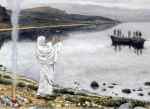
Jesus Appears at the Sea of Galilee, Jesus Provides, The Love Question, Our Times are in His Hand.
It would seem that Jesus’ earthly ministry is coming to a close, but in reality, it is just beginning. The disciples have been taught in the ways of the Master and soon they will be sent to perpetuate the work of the Father, at the command and under the unction of the Son. They will be instructed to make disciples by the authority of Jesus Christ and through the filling of the Holy Spirit the entire world will experience the explosion of the Gospel across the globe – and nothing will ever be the same.
You don’t want to miss this, and you don’t want to miss out on this. Listen. Become a follower of Jesus and experience the most meaningful and amazing adventure of your life. There will be no spectators in heaven – only the participants will rise with Him in the end.
Jesus Appears at the Sea of Galilee
John 21:1, After these things Jesus revealed Himself again to the disciples at the Sea of Tiberias, and He revealed Himself in this way: verse 2, Simon Peter, Thomas who was called Didymus, Nathanael of Cana in Galilee, the sons of Zebedee, and two others of His disciples were together. Verse 3. Simon Peter said to them, “I am going fishing.” They said to him, “We are also coming with you.” They went out and got into the boat; and that night they caught nothing.
Verse 4. But when the day was now breaking, Jesus stood on the beach; yet the disciples did not know that it was Jesus. Verse 5. So, Jesus said to them, “Children, you do not have any fish to eat, do you?” They answered Him, “No.” Verse 6. And He said to them, “Cast the net on the right-hand side of the boat, and you will find the fish.” So, they cast it, and then they were not able to haul it in because of the great quantity of fish. Verse 7. Therefore, that disciple whom Jesus loved said to Peter, “It is the Lord!” So, when Simon Peter heard that it was the Lord, he put on his outer garment (for he was stripped for work), and threw himself into the sea. Verse 8. But the other disciples came in the little boat, for they were not far from the land, but about one hundred yards away, dragging the net full of fish.
(Commentary Break): The personalities and the souls – the heartfelt emotional state of these disciples – is on full display here. It would seem that Peter, in resignation or just simple emotional exhaustion, decides to return to his former occupation of fishing. “I am going fishing.” The others with him said, ‘We are also coming with you.’ They went out and got into the boat; and that night they caught nothing.” You should be able to feel the forlorn resignation and the sense of failure, “and that night they caught nothing. But then – the day was now breaking – Jesus was standing.” Listen dear friends, it is not a stretch to say that when things are the darkest and all seems to have ended in failure, with Jesus the dawn is always breaking!
“So, Jesus said to them, ‘Children, you do not have any fish to eat, do you?’” It is so telling that Jesus calls these men, “children” (or “paidion” in the Greek). Jesus is referring to them as “half grown boys”, which they were by age, and “immature Christians”, which was also true. Such a sight that the Lord would endear Himself to these boys-soon-to-be-men in such a way.
Jesus states the obvious “you do not have any fish to eat, to you?” And instructs them to cast the net on the right-hand side of the boat, saying, “and you will find the fish.” So, they did as He said, and then they were not able to haul it in because of the great quantity of fish. Therefore, that disciple whom Jesus loved said to Peter, “It is the Lord!” And in the same way that Mary Magdalene did not immediately recognize the risen Christ, now they knew. And Peter, impetuous Peter, dives into the water and swims to the beach while the other bring the boat, dragging their haul of fish with them.
Such a picture of the soon-to-be Church. (End Commentary Break).
Verse 9. So, when they got out on the land, they saw a charcoal fire already made and fish placed on it, and bread. Verse 10. Jesus said to them, “Bring some of the fish which you have now caught.” Verse 11. So, Simon Peter went up and hauled the net to land, full of large fish, and although there were so many, the net was not torn.
Jesus Provides
Verse 12. Jesus said to them, “Come and have breakfast.” None of the disciples ventured to inquire of Him, “Who are You?” knowing that it was the Lord. Verse 13. Jesus came and took the bread and gave it to them, and the fish likewise. Verse 14. This was now the third time that Jesus revealed Himself to the disciples, after He was raised from the dead.
(Commentary Break): Jesus, the Lord, Priest, King and provider. All things were already set in place – a charcoal fire already made and fish placed on it, and bread – a foreshadowing of the things to come – “Go, therefore, and make disciples of all the nations, baptizing them in the name of the Father and the Son and the Holy Spirit, teaching them to follow all that I commanded you; and behold, I am with you always, to the end of the age.” (see Matthew 28:19-20) Please, dear friends, hold onto these things as you go and do these works that He has prepared ahead of time for you to walk in. He has all authority and He is always with you. (End Commentary Break).
The Love Question
Verse 15. Now when they had finished breakfast, Jesus said to Simon Peter, “Simon, son of John, do you love Me more than these?” He said to Him, “Yes, Lord; You know that I love You.” He said to him, “Tend My lambs.” Verse 16. He said to him again, a second time, “Simon, son of John, do you love Me?” He said to Him, “Yes, Lord; You know that I love You.” He said to him, “Shepherd My sheep.” Verse 17. He said to him the third time, “Simon, son of John, do you love Me?” Peter was hurt because He said to him the third time, “Do you love Me?” And he said to Him, “Lord, You know all things; You know that I love You.” Jesus said to him, “Tend My sheep.
(Commentary Break): This account of Jesus questioning Peter’s love is not just for our reading pleasure or for our entertainment. It is not idle information.
Jesus addresses Peter directly, indicating a personal and intimate conversation. This is significant as Peter had previously denied Jesus three times. The use of Peter’s original name, Simon, may suggest a return to foundational identity and calling.
Just days earlier, Peter had denied Jesus three times. Now, after the resurrection, Jesus publicly restores him. Three times Jesus asks, “Do you love Me?” Three times Peter answers, “Yes, Lord, You know that I love You.”
Three times Jesus responds with a commission: “Feed My lambs”, “Tend My sheep”, “Feed My sheep.” The threefold questioning mirrors Peter’s three denials — this is deliberate and deeply symbolic.
In Greek, two different words for love are used: Agapē / agapaō – sacrificial, unconditional love; Phileō – brotherly affection, friendship love.
The pattern: The first time Jesus asks: “Do you agapāō Me?”. Peter replies “I phileō You.” The second time Jesus asks, “Do you agapāō Me?”; and the second time Peter replies “I phileō You.”
So, the third time Jesus changes the wording to reflect Peter’s response, “Do you phileō Me?”; and Peter says, “Lord, You know everything; You know that I phileō You.”
Many interpreters see this as Jesus calling Peter to the highest form of love and Peter responding humbly, aware of his recent failure. So, Jesus meets Peter where he is on the third question.
It is with all of us, as it was with Peter, Jesus meets us where we are, even in our deepest moments. He reveals to us and causes us to see our true intentions.
None-the-less, each affirmation of love is followed by responsibility: “Feed My lambs”, “Tend My sheep”, and, “Feed My sheep”. This passage restores to Biblical servanthood and prepares for future roles in His church.
(Please note: This is meant for each and every Christian and not just for those we incorrectly and errantly call “leaders”. Each of us have a role, a calling, gifts of service, and besides, Jesus said, “do not be called ‘leaders’ for only One is your leader, that is Christ” (see Matthew 23:10).
No matter what your calling, gifting or office in service to Jesus and His Church, His question and His command remains the same: “Do you agapāō Me?” “Feed and tend My sheep”. Ours is to love one another and it is through this that the world will know that we are His disciples – through our service of teaching, protecting, guiding, nourishing and loving one another.
Peter denied Jesus publicly. We all run risk of denying Jesus in many ways.
Jesus will restore the repentant – publicly. Failure is not final when there is repentance.
Jesus does not ask, “Are you brave?, are you loyal, or are you gifted?” He asks: “Do you love Me?” Love for Christ is the qualification for serving Him, His Church and for shepherding His people.
John 21:15–17 teaches:
(End Commentary Break).
Our Times Are in His Hand
Verse 18. Truly, truly I tell you, when you were younger, you used to put on your belt and walk wherever you wanted; but when you grow old, you will stretch out your hands and someone else will put your belt on you, and bring you where you do not want to go.” Verse 19. Now He said this, indicating by what kind of death he would glorify God. And when He had said this, He said to him, “Follow Me!”
(Commentary Break): The phrase “stretch out your hands” is often interpreted as a metaphor for crucifixion, a form of execution that was common in the Roman Empire. This imagery foreshadows Peter’s martyrdom, as tradition holds that he was crucified in Rome.
Jesus has told us that we must ‘crucify the flesh’ and ‘die to self’ in order to follow Him. The stretching out of hands can also symbolize submission and vulnerability. Theologically, it reflects the cost of discipleship and the ultimate surrender to God’s will, even unto death. This prophecy is fulfilled in the tradition that Peter was martyred for his faith, highlighting the theme of sacrifice and commitment in following Christ. (End Commentary Break).
Verse 20. Peter turned around and saw the disciple whom Jesus loved following them—the one who also had leaned back on His chest at the supper and said, “Lord, who is the one who is betraying You?” Verse 21. So, Peter, upon seeing him, said to Jesus, “Lord, and what about this man?” Verse 22. Jesus said to him, “If I want him to remain until I come, what is that to you? You follow Me!” Verse 23. Therefore, this account went out among the brothers, that that disciple would not die; yet Jesus did not say to him that he would not die, but only, “If I want him to remain until I come, what is that to you?”
(Commentary Break): The question “what about him?” suggests Peter’s curios interest in the fate of John, possibly in light of Jesus’ earlier prophecy about Peter’s own future martyrdom. This moment emphasizes the theme of individual callings and destinies within the Christian faith, as Jesus’ response will focus on the importance of following Him regardless of others’ paths. This interaction also serves as a reminder of the unique roles each disciple plays in the unfolding of God’s plan, echoing the diverse gifts and callings mentioned in 1 Corinthians 12. (End Commentary Break).
Verse 24. This is the disciple who is testifying about these things and wrote these things, and we know that his testimony is true.
Verse 25. But there are also many other things which Jesus did, which, if they were written in detail, I expect that even the world itself would not contain the books that would be written. (End Chapter 21 – End the Book of John).
John aptly closes this writing saying, “This is the disciple who is testifying about these things and wrote these things, and we know that his testimony is true”. This is not hearsay, but a first-hand account of these matters.
Jesus’ earthly ministry is coming to a close. Luke 24:50-53 and Acts 1:9-11, give us the primary account of Jesus’ ascension and what follows, Jesus says, “Truly, truly I say to you, the one who believes in Me, the works that I do, he will do also; and greater works than these he will do; because I am going to the Father”. (see John 14:12). So, it begins – the greater works of Christ – the world turned upside down – the beginning of the End is at hand.
Your Brother and Friend,
Mike Young
THE BOOK OF JOHN, Chapter 20
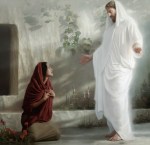
The Empty Tomb, Jesus Among His Disciples, Why This Gospel Was Written
The accounts recorded in this chapter, specifically the resurrection of Jesus from the dead, have been called the most pivotally important event in all of Christianity. Without it, Christianity collapses; with it everything stands.
Paul makes this explicit in 1 Corinthians 15:7, “If Christ is not risen, your faith is futile; you are still in your sins.”
If Jesus did not rise: The cross failed, sin is not conquered, death still reigns, there is no justification. Christianity would not just be weakened — it would be false.
The resurrection is God’s public declaration that the sacrifice of Jesus was accepted, the cost of sin was paid in full and death was defeated.
With the resurrection, the cross becomes victory. It is the first fruits of the coming resurrection of all believers. (1 Corinthians 15:20).
As Jesus Christ rose bodily, so believers will rise bodily. No resurrection, no rapture. No resurrection, no kingdom. No resurrection, no new creation.
Christianity does not stand primarily on ethics. It does not stand primarily on teachings. It does not stand primarily on prophecy. It stands on an empty tomb.
If Christ is risen, everything changes. If Christ is not risen, nothing else matters.
The Empty Tomb
John 20:1, Now on the first day of the week Mary Magdalene came early to the tomb, while it was still dark, and saw the stone already removed from the tomb. Verse 2. So she ran and came to Simon Peter and to the other disciple whom Jesus loved, and said to them, “They have taken the Lord from the tomb, and we do not know where they have put Him.” Verse 3. So, Peter and the other disciple left, and they were going to the tomb. Verse 4. The two were running together; and the other disciple ran ahead, faster than Peter, and came to the tomb first; verse 5, and he stooped to look in, and saw the linen wrappings lying there; however he did not go in. Verse 6. So Simon Peter also came, following him, and he entered the tomb; and he looked at the linen wrappings lying there, verse 7, and the face-cloth which had been on His head, not lying with the linen wrappings but folded up in a place by itself. Verse 8. So the other disciple who had first come to the tomb also entered then, and he saw and believed. Verse 9. For they did not yet understand the Scripture, that He must rise from the dead. Verse 10. So the disciples went away again to their own homes.
(Commentary Break): If the Apostle John is writing this account of events, the perhaps the question comes up as to how does he know the specifics surrounding and following Jesus’ resurrection if he arrived at the tomb after Mary Magdalene and leaves for his home shortly after seeing the empty tomb? It is reasonable to assume that John gathered the information from others present at the scene and those who saw Jesus after He left the tomb. Secondly, these events display and confirm what Jesus has been telling His disciples would happen. Nonetheless, these events are so fantastic, so stupendous, as to be almost unbelievable even to the most dedicated and ardent follower of Jesus – even to this day. Yet, these events are no less important than the virgin birth of Jesus as the Christ. On these events hang the proving and the veracity of your faith. (End Commentary Break).
Verse 11. But Mary was standing outside the tomb, weeping; so, as she wept, she stooped to look into the tomb; verse 12, and she saw two angels in white sitting, one at the head and one at the feet, where the body of Jesus had been lying. Verse 13. And they said to her, “Woman, why are you weeping?” She said to them, “Because they have taken away my Lord, and I do not know where they put Him.” Verse 14. When she had said this, she turned around and saw Jesus standing there, and yet she did not know that it was Jesus. Verse 15. Jesus said to her, “Woman, why are you weeping? Whom are you seeking?” Thinking that He was the gardener, she said to Him, “Sir, if you have carried Him away, tell me where you put Him, and I will take Him away.” Verse 16. Jesus said to her, “Mary!” She turned and said to Him in Hebrew, “Rabboni!” (which means, Teacher). Verse 17. Jesus said to her, “Stop clinging to Me, for I have not yet ascended to the Father; but go to My brothers and say to them, ‘I am ascending to My Father and your Father, and My God and your God.’” Verse 18. Mary Magdalene came and announced to the disciples, “I have seen the Lord,” and that He had said these things to her.
(Commentary Break): Verses 11 through 18 are easy enough to read but far from easy to understand their meaning, implication and application. Remember that the Words of Scriptures are the Breathed Words of God – breathed into men by way of the Holy Spirit so as to inspire them to record them as the inerrant Truth of God. (2 Timothy 3:16).
First Mary encounters two angels, messengers of God, at a very emotionally intense moment. Then, suddenly she is face-to-face with Jesus “and yet she did not know that it was Jesus”. How could this have been? Many commentaries speculate that it may have been her emotional state, or perhaps she could not see Him clearly because of the early morning light, or perhaps a divine veiling of her perception. However, if we look deeper at the deeper meaning of the Greek language used here we see: (1), “she turned around and saw Jesus standing there” – “theóreó”, means she could see as a “spectator” or look on in order to try to speculate or to discern. Simply, her “mind’s eye” saw Him but did not recognize Him as Who He was in His Glorified Body.
(2), After Jesus identified Himself, she went and found the disciples and exclaimed to them, “I have seen the Lord” – “horaó”, meaning to perceive, to discern clearly, physically and mentally. Interestingly, this is spoken in the Aorist tense, which means she now sees Him as He was, as He is now and will always – for all times – see Him for Who He Is!
(3), Once the “eyes of our heart are enlightened” as it was with Mary, “you (and I) will know Him, and we will come to know what is the hope of His calling and what are the riches of His glory”. (Ephesians 1:18).
At first, Mary was an emotionally distraught spectator of life – distraught by what might have been – just as we all are or have been. Then she is confronted with the message of God, the Good News, which is truly being confronted with the Living Christ. This, too, is our opportunity; to go from being a spectator to being confronted with the Good News of God and by the Only One True and Living God. She then believed. She believed in the Risen Christ and ran to tell others of her great discovery and of this exceedingly Good News – which is what each and every true believer in Jesus will do. This is the initial sign of having been saved by God’s grace through our faith in Christ Jesus and His completed work on the cross. (End Commentary Break).
Jesus among His Disciples
Verse 19. Now when it was evening on that day, the first day of the week, and when the doors were shut where the disciples were together due to fear of the Jews, Jesus came and stood in their midst, and said to them, “Peace be to you.” Verse 20. And when He had said this, He showed them both His hands and His side. The disciples then rejoiced when they saw the Lord. Verse 21. So, Jesus said to them again, “Peace be to you; just as the Father has sent Me, I also send you.” Verse 22. And when He had said this, He breathed on them and said to them, “Receive the Holy Spirit. Verse 23. If you forgive the sins of any, their sins have been forgiven them; if you retain the sins of any, they have been retained.”
(Commentary Break): The drama of this moment is heightened as the doors were shut and the disciples were gathered together in fear of the Jews – huddled together, full of fear, (phobos – dread, exceeding terror) wondering, doubting and withdrawn from the world around them. The, suddenly in their midst stands Jesus speaking as He had spoken to the waves of the tumultuous and threatening seas, “Peace to you”. And just as the seas heard His Command and obeyed, the disciples, too, would soon be transformed by these words from frightened boy into galvanized warriors of the Cross!
Then He, Jesus, breathed on them and said “Receive the Holy Spirit” and with this act they were being filled with courage, the Word of God, the gifts of the Spirit of God and the power to go and make disciples. There are teachings going about that say being filled by and with the Holy Spirit is a “separate act of grace”, or a “second act of grace” or that you receive the Holy Spirit at salvation and the gifts and power of the Holy Spirit later. That might appear the case to some. But these very verses, when read at face-value and in context of the rest of scriptures, you see that when you come to Jesus. submit to Him and follow Him in faithful obedience, He will breathe the Holy Spirit into your life also. There is no such thing as a true believer and disciple of Jesus who is not filled with the Holy Spirit of God, and all of this comes at the moment you are saved and only when you give your life away, as did the disciples, and follow Him in faith. (You will be sharpened in your faith and the application of the gifts of the Spirit.
Verses like 2 Timothy 1:6 remind us to “fan into flame the gift of God,” while Romans 12:6-8 emphasizes using our different gifts according to the grace given to us, showing that growth and service are integral to our faith journey, and Proverbs 27:17 reminds us that “as iron sharpens iron, so one man sharpens another”. But always, it is Jesus Who does His works through us.“
Verse 24. But Thomas, one of the twelve, who was called Didymus, was not with them when Jesus came. Verse 25. So the other disciples were saying to him, “We have seen the Lord!” But he said to them, “Unless I see in His hands the imprint of the nails, and put my finger into the place of the nails, and put my hand into His side, I will not believe.”
Verse 26. Eight days later His disciples were again inside, and Thomas was with them. Jesus came, the doors having been shut, and stood in their midst and said, “Peace be to you.” Verse 27. Then He said to Thomas, “Place your finger here, and see My hands; and take your hand and put it into My side; and do not continue in disbelief, but be a believer.” Verse 28. Thomas answered and said to Him, “My Lord and my God!” Verse 29. Jesus said to him, “Because you have seen Me, have you now believed? Blessed are they who did not see, and yet believed.”
(Commentary Break): Jesus had appeared to the other disciples and breathed on them. Now, Jesus the patient Shepherd, comes back for one of His sheep who was wandering in disbelief. Thomas proclaims, “My Lord and my God!”, and Jesus reminds all of us, “Blessed are they who did not see me and yet believed.” I suppose we could read all sorts of things into His statement. First,ß Since Thomas was not present when Jesus had breathed on the other disciples, had he received the Holy Spirit? Considering that after the resurrection and ascension, the disciples (now including Thomas) were gathered together in Acts of the Apostles 1–2. At Acts of the Apostles 2:1–4, the Holy Spirit came powerfully at Pentecost: “They were all filled with the Holy Spirit”, and since
Thomas is listed among the apostles in Acts 1:13, meaning he was present when the Spirit was poured out, the answer is yes. Secondly, Thomas’s belief is based on physical evidence, as he had insisted on seeing and touching Jesus’ wounds to believe in His resurrection. This reflects a common human tendency to rely on empirical evidence. The statement underscores the importance of faith, contrasting belief based on sight with belief based on trust in Jesus’ words and promises. This pronouncement extends beyond Thomas to future generations of believers who would come to faith without physical evidence of Jesus’ resurrection. It emphasizes the blessedness of faith that does not rely on sight, aligning with Hebrews 11:1, which defines faith as confidence in what we hope for and assurance about what we do not see. This blessing is a promise of spiritual reward and assurance for believers throughout history. It seems, Thomas was used as an example for future believers. (End Commentary Break).
Why This Gospel Was Written
Verse 30. So then, many other signs Jesus also performed in the presence of the disciples, which are not written in this book; verse 31, but these have been written so that you may believe that Jesus is the Christ, the Son of God; and that by believing you may have life in His name. (End Chapter 20).
Jesus was fully man and fully God and the final verses of chapter 20 says as much. What was recorded by the disciples and the Apostles and is now canonized as our Bible, apparently were just a sampling, albeit among the most important and most salient signs and works of Jesus, “but these have been written so that you may believe that Jesus is the Christ, the Son of God (verse 31); and we will see in the next chapter that “there are also many other things which Jesus did, which, if they were written in detail, I suspect that even the world itself would not contain the books that would be written”.
Let’s believe that we may have the abundant life on found in Jesus; vibrant, effervescent, full of purpose and promise; a life worth living!
Your Brother and Friend,
Mike Young
PREVIOUS: THE BOOK OF JOHN, Chapter 19, The Crown of Thorns, The Crucifixion.
(Please bookmark this page for future episodes).
THE BOOK OF JOHN, Chapter 19

The Crown of Thorns, The Crucifixion
Humankind, from their first appearance in the Bible, have sinned from their fallen nature. They have always been savage-minded, undisciplined and selfish, from the Garden of Eden through the creation of the Jewish nation until this day.
Scriptures warn us that “sin is crouching at your door and its desire is to have you”, and for us to “Be of sober spirit, be on the alert. Your adversary, the devil, prowls around like a roaring lion, seeking someone to devour.”
We will see (and experience) in this book and chapter the inherent evil of humankind. Mankind putting his himself and his self-centered thoughts and desires above the Thoughts, Plans and Desires of the One True and Good God.
(If this book and chapter was subject to modern book and movie rating warnings, it would be classified as “M.A.”, mature audiences only, due to its graphic nature of violence.)
All of that said, and despite the insanely cruel violence, God had decreed that these things must come to pass in order to redeem humankind from their wild barbarism and self-destruction, to tame them and reconcile them to Himself.
God has provided for mankind even in his and her rebellion toward Him, from the beginning. And each time there has been a price to pay in blood. God provided clothing for Adam and Eve when they were sent out of the Garden of Eden, and animals had to die to provide that clothing. The Jewish laws provided that justice was found through “an eye for an eye, tooth for tooth, hand for hand, foot for foot”, even a death for a death, as a means of proportional justice, meaning that the punishment should match the offense – and was often exacted in blood the resulted in conflict, wars and death. As a result the Jewish law provided a way to soothe the conscience of the consequential sense of guilt and shame by the sacrificial blood of bulls and goats. This would temporarily assuage and relieve the conscience (i.e., sins were covered), but needed to be repeated.
Finally, God provided an end to blood sacrifices by supreme sacrifice of His Son to permanently wipe away the stain and negate the power and penalty of sin. Here is that cosmic event:
The Crown of Thorns
John 18:1, So Pilate then took Jesus and had Him flogged. Verse 2. And the soldiers twisted together a crown of thorns and placed it on His head, and put a purple cloak on Him; verse 3, and they repeatedly came up to Him and said, “Hail, King of the Jews!” and slapped Him in the face again and again. Verse 4. And then Pilate came out again and said to them, “See, I am bringing Him out to you so that you will know that I find no grounds at all for charges in His case.” Verse 5. Jesus then came out, wearing the crown of thorns and the purple robe. And Pilate said to them, “Behold, the Man!” Verse 6. So when the chief priests and the officers saw Him, they shouted, saying, “Crucify, crucify!” Pilate said to them, “Take Him yourselves and crucify Him; for I find no grounds for charges in His case!” Verse 7. The Jews answered him, “We have a law, and by that law He ought to die, because He made Himself out to be the Son of God!”
Verse 8. Therefore when Pilate heard this statement, he was even more afraid; verse 9, and he entered the Praetorium again and said to Jesus, “Where are You from?” But Jesus gave him no answer. Verse 10. So Pilate said to Him, “Are you not speaking to me? Do You not know that I have authority to release You, and I have authority to crucify You?” Verse 11. Jesus answered him, “You would have no authority over Me at all, if it had not been given to you from above; for this reason the one who handed Me over to you has the greater sin.” Verse 12. As a result of this, Pilate made efforts to release Him; but the Jews shouted, saying, “If you release this Man, you are not a friend of Caesar; everyone who makes himself out to be a king opposes Caesar!”
Verse 13. Therefore when Pilate heard these words, he brought Jesus out, and sat down on the judgment seat at a place called The Pavement—but in Hebrew, Gabbatha. Verse 14. Now it was the day of preparation for the Passover; it was about the sixth hour. And he said to the Jews, “Look, your King!” Verse 15. So they shouted, “Away with Him, away with Him, crucify Him!” Pilate said to them, “Shall I crucify your King?” The chief priests answered, “We have no king except Caesar.”
The Crucifixion
Verse 16. So he then handed Him over to them to be crucified. Verse 17. They took Jesus, therefore, and He went out, carrying His own cross, to the place called the Place of a Skull, which in Hebrew is called, Golgotha. Verse 18. There they crucified Him, and with Him two other men, one on either side, and Jesus in between. Verse 19. Now Pilate also wrote an inscription and put it on the cross. It was written: “JESUS THE NAZARENE, THE KING OF THE JEWS.” Verse 20. Therefore many of the Jews read this inscription, because the place where Jesus was crucified was near the city; and it was written in Hebrew, Latin, and in Greek. Verse 21. So the chief priests of the Jews were saying to Pilate, “Do not write, ‘The King of the Jews’; rather, write that He said, ‘I am King of the Jews.’” Verse 22. Pilate answered, “What I have written, I have written.”
Verse 23. Then the soldiers, when they had crucified Jesus, took His outer garments and made four parts: a part to each soldier, and the tunic also; but the tunic was seamless, woven in one piece. Verse 24. So they said to one another, “Let’s not tear it, but cast lots for it, to decide whose it shall be.” This happened so that the Scripture would be fulfilled: “THEY DIVIDED MY GARMENTS AMONG THEMSELVES, AND THEY CAST LOTS FOR MY CLOTHING.” Therefore the soldiers did these things.
Verse 25. Now beside the cross of Jesus stood His mother, His mother’s sister, Mary the wife of Clopas, and Mary Magdalene. Verse 26. So when Jesus saw His mother, and the disciple whom He loved standing nearby, He said to His mother, “Woman, behold, your son!” Verse 27. Then He said to the disciple, “Behold, your mother!” And from that hour the disciple took her into his own household.
Verse 28. After this, Jesus, knowing that all things had already been accomplished, in order that the Scripture would be fulfilled, said, “I am thirsty.” Verse 29. A jar full of sour wine was standing there; so they put a sponge full of the sour wine on a branch of hyssop and brought it up to His mouth. Verse 30. Therefore when Jesus had received the sour wine, He said, “It is finished!” And He bowed His head and gave up His spirit.
Care of the Body of Jesus
Verse 31. Now then, since it was the day of preparation, to prevent the bodies from remaining on the cross on the Sabbath (for that Sabbath was a high day), the Jews requested of Pilate that their legs be broken, and the bodies be taken away. Verse 32. So the soldiers came and broke the legs of the first man, and of the other who was crucified with Him; Verse 33. but after they came to Jesus, when they saw that He was already dead, they did not break His legs. Verse 34. Yet one of the soldiers pierced His side with a spear, and immediately blood and water came out. Verse 35. And he who has seen has testified, and his testimony is true; and he knows that he is telling the truth, so that you also may believe. Verse 36. For these things took place so that the Scripture would be fulfilled: “NOT A BONE OF HIM SHALL BE BROKEN.” Verse 37. And again another Scripture says, “THEY WILL LOOK AT HIM WHOM THEY PIERCED.”
(Commentary Break): It is one thing to get an account of an event or of events from hearsay or third-party accounts, but this is a first-hand, eyewitness account of these events. So, the Apostle John gives his oath as to the truth and accuracy of these events – “so you also may believe”. (End Commentary Break).
Verse 38. Now after these things Joseph of Arimathea, being a disciple of Jesus, but a secret one for fear of the Jews, requested of Pilate that he might take away the body of Jesus; and Pilate granted permission. So he came and took away His body. Verse 39. Nicodemus, who had first come to Him by night, also came, bringing a mixture of myrrh and aloes, about a hundred litras weight.
(Commentary Break): It seems odd to this author to be named as a “secret disciple” such as Joseph of Arimathea, or as one “who had first come to Jesus by night” (out of fear for loss of position, reputation or status. And like so many other names who might appear once in the Bible, are not heard from again. Their moment was fleeting. But the question remains, were they saved? Did a simple encounter with Jesus result in their salvation, or were they like the “moth would fly around a flame”- and in this case, the Light of God. Drawn but never committed? Rather than have to speculate, it is best to be certain, “for men.(and women) will come to Him in that day and say, ‘did I not prophesy in Your Name and in Your name cast out demons, and in Your Name perform many miracles?’ And then I will declare to them, ‘I never knew you; depart from Me, you who practice lawlessness’”. We must, as Jesus commanded, pick up our cross and follow Him. (End Commentary Break).
Verse 40. So they took the body of Jesus and bound it in linen wrappings with the spices, as is the burial custom of the Jews. Verse 41. Now in the place where He was crucified there was a garden, and in the garden was a new tomb in which no one had yet been laid. Verse 42. Therefore because of the Jewish day of preparation, since the tomb was nearby, they laid Jesus there. (End of chapter 19).
Following Jesus means will draw close to Him, as to be looking over His shoulder, watching His every move so we can be like Him. And we will be seen with Him and will be identified with Him. People will likely know that you have been with Him. So, when we follow Jesus we may and most certainly will encounter criticisms, persecutions, trials, stresses and tribulations. We may suffer losses in this world from being His disciple. But in those costs, we will gain an unspeakable joy, an unconditional love and a peace that will surpass this world’s understanding. We will have gained an eternal safety, and a spiritual health that cannot be diminished or taken from us. We will be made whole and into the perfect image of Christ, living in His presence for all eternity. Yes. It is worth the cost a thousand times over!
Your Brother and Friend,
Mike Young
(Please bookmark this page for future episodes).
PS: As I have said on many occasions, the “Commentary Breaks” on these pages and on most of the commentary-oriented studies I write, are not always designed as nor are they meant to be just an exegetical analysis or a critical explanation of the text, for I provide links to sources such as GotQuestions.Org and BibleHub.com. These pages and “Commentary Breaks” are meant to ask the questions “what does it say; why was it said or done; what does it mean; and what does it mean to me – i.e., what am I to do in response?” This is an inductive study method, which focuses on observation, interpretation, and application of Scripture. This approach encourages readers to engage deeply with the text, allowing it to reveal its own meaning through careful analysis and personal reflection.
THE BOOK OF JOHN, Chapter 18
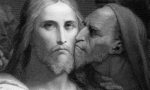
Judas Betrays Jesus, Jesus Before the Priests, Peter’s Denial of Jesus, Jesus Before Pilate
Matters concerning Jesus and His Mission on earth are coming to a crescendo. We can read, in Matthew chapter 26 that Jesus had told His disciples, that the Passover would take place in two days, and at that time the Son of Man will be handed over to be crucified. It was at this point the chief priests and the leaders of the people gathered in the palace of the chief priest Caiaphas and made plans to arrest Jesus in an underhanded way and to kill him. Then Judas Iscariot, (one of the 12 disciples) went to the chief priests and asked what they would pay him if he handed Jesus over to them. They offered him 30 silver coins. From then on, Judas looked for a chance to betray Jesus. During this time, Jesus revealed to His disciples that He knew that one of them would betray Him and Peter says that even if everyone abandoned Jesus, he would not. But Jesus rebukes Peter, telling him he would deny Him three times before a rooster crowed.
Jesus then went to the garden of Gethsemane and prayed, awaiting His arrest, mock trial, crucifixion and death.
As you read the following words, as best you can, walk with Jesus and visualize these events and watch with your mind’s eye the confidence shown by Jesus in the face of this episode of betrayal, false accusations and mistreatment. Jesus knew this appointment was ordained by His Father and was just one more step toward the grand finale in the defeat of sin and death and the evil one for all time. (Jesus’ victory over sin and death is highlighted in several Bible verses, such as Romans 6:23, which states, “For the wages of sin is death, but the free gift of God is eternal life in Christ Jesus our Lord.” Additionally, 1 Corinthians 15:55 proclaims, “O death, where is your victory? O death, where is your sting?” These verses emphasize the hope and assurance believers have through Jesus’ sacrifice and resurrection. This is not only our hope but the example set before us as our day of trial and testing comes upon us, also.
Judas Betrays Jesus
John 18:1, When Jesus had spoken these words, He went away with His disciples across the ravine of the Kidron, where there was a garden which He entered with His disciples. Verse 2. Now Judas, who was betraying Him, also knew the place, because Jesus had often met there with His disciples. Verse 3. So Judas, having obtained the Roman cohort and officers from the chief priests and the Pharisees, came there with lanterns, torches, and weapons. Verse 4. Jesus therefore, knowing all the things that were coming upon Him, came out into the open and said to them, “Whom are you seeking?” Verse 5. They answered Him, “Jesus the Nazarene.” He said to them, “I am He.” And Judas also, who was betraying Him, was standing with them. Verse 6. Now then, when He said to them, “I am He,” they drew back and fell to the ground. Verse 7. He then asked them again, “Whom are you seeking?” And they said, “Jesus the Nazarene.” Verse 8. Jesus answered, “I told you that I am He; so if you are seeking Me, let these men go on their way.” Verse 9. This took place so that the word which He spoke would be fulfilled: “Of those whom You have given Me I lost not one.”
(Commentary Break): Jesus is confronted by Judas, the Pharisees and a Roman cohort which was a standard tactical military unit of a Roman legion which was generally composed of 480 soldiers – considered to be the equivalent of a modern military battalion – carrying lanterns, torches and weapons! Imagine the sight of these hundreds of armed militia coming to arrest one man. And when they see Him, “they drew back and fell to the ground”!
Many commentaries overstate or dramatize this moment saying these men and the Roman Cohort were overcome when recognizing Jesus’ divine authority. However, if that were the case, they would not have recovered so quickly as to arrest Him. It is more likely This involuntary response underscores the authority of Jesus’ Words and His (supernatural spiritual) control over the situation, even as He submits to arrest. (It also fulfills the prophecy of Isaiah 53:7, where the Messiah is described as being led like a lamb to the slaughter, yet with divine authority.) At any rate, this is not something can be understood or explained by mere words. It is a supernatural work of the divine. (End Commentary Break).
Verse 10. Then Simon Peter, since he had a sword, drew it and struck the high priest’s slave, and cut off his right ear; and the slave’s name was Malchus. Verse 11. So Jesus said to Peter, “Put the sword into the sheath; the cup which the Father has given Me, am I not to drink it?”
(Commentary Break): This is an important event with subtle but profound implications. Peter responds emotionally, as many of us might. This addresses the question, “can and should a follower of Jesus, (a Christian), defend themselves using aggressive or violent means? Malchus was the servant of Caiaphas, the Jewish High Priest. During the arrest of Jesus in the Garden of Gethsemane, Simon Peter cut off Malchus’s right ear with a sword in an attempt to defend Jesus. (This event is recorded in all four Gospels, but only the Gospel of John names Malchus specifically).
After Peter’s action, Jesus intervened. He told Peter to put away his sword and then healed Malchus by touching his ear. (This act of healing is noted in the Gospel of Luke, which states, “But Jesus answered, ‘No more of this!’ And he touched the man’s ear and healed him.”) Several commentaries contend with the idea that “the healing of Malchus’s ear illustrates Jesus’s compassion and his commitment to peace, even in the face of violence. It also serves as a reminder of the importance of mercy and reconciliation”. But there are two valid perspectives at play here. (1). Jesus completes his remark to Peter saying, “the cup which the Father has given Me, am I not to drink it?” This seems to be less about “compassion and commitment to peace” than Jesus saying that Peter’s action is not just an improper response, it is a diversion and potentially an interruption to God’s Plan, Purpose and Mission for Jesus. And, (2). If we were to allow the opponents or adversaries of Jesus kill and maim all Christians at will, where would that leave us? There is a time for appropriate responses such as not escalating a situation out of emotions, or removing oneself from harm’s way; of responding with no more aggression than necessary to preserve life. In certain circumstances there may not be an easy way out. But we should always remember that we too, are on the same Mission as Christ Jesus. And overcoming our enemies and threats of violence with maiming and killing will accomplish little-to-nothing in our cause. (Like a quip from a war movie parody, “you can’t save them if you are killing them”). Let’s remember that the Roman cohort fell back and to the ground reassuring us that Jesus is in control at all times. Submit yourself to Him and not to the dreads you are facing. “For so the Lord spoke to me with mighty power and instructed me not to walk in the way of this people, saying, “You are not to say, ‘It is a conspiracy!’ regarding everything that this people call a conspiracy; and you are not to fear what they fear or be in dread of it. It is the Lord of armies whom you are to regard as holy. And He shall be your fear, And He shall be your dread. Then He will become a sanctuary.” (Isaiah 8:11-14). (End Commentary Break).
Jesus before the Priests
Verse 12. So the Roman cohort, the commander, and the officers of the Jews arrested Jesus and bound Him, verse 13, and brought Him to Annas first; for he was the father-in-law of Caiaphas, who was high priest that year. Verse 14. Now Caiaphas was the one who had advised the Jews that it was in their best interest for one man to die in behalf of the people.
(Commentary Break): The irony and prophetic nature of Verse 14 is so obvious as not to need additional comment. (End Commentary Break).
Verse 15. Simon Peter was following Jesus, and so was another disciple. Now that disciple was known to the high priest, and he entered with Jesus into the courtyard of the high priest, verse 16, but Peter was standing at the door outside. So the other disciple, who was known to the high priest, went out and spoke to the doorkeeper, and brought Peter in. Verse 17. Then the slave woman who was the doorkeeper said to Peter, “You are not also one of this Man’s disciples, are you?” He said, “I am not.” Verse 18. Now the slaves and the officers were standing there, having made a charcoal fire, for it was cold and they were warming themselves; and Peter was also with them, standing and warming himself.
Verse 19. The high priest then questioned Jesus about His disciples, and about His teaching. Verse 20. Jesus answered him, “I have spoken openly to the world; I always taught in synagogues and in the temple area, where all the Jews congregate; and I said nothing in secret. Verse 21. Why are you asking Me? Ask those who have heard what I spoke to them. Look: these people know what I said.” Verse 22. But when He said this, one of the officers, who was standing nearby, struck Jesus, saying, “Is that the way You answer the high priest?” Verse 23. Jesus answered him, “If I have spoken wrongly, testify of the wrong; but if rightly, why do you strike Me?” Verse 24. So Annas sent Him bound to Caiaphas the high priest.
Peter’s Denial of Jesus
Verse 25. Now Simon Peter was still standing and warming himself. So they said to him, “You are not one of His disciples as well, are you?” He denied it, and said, “I am not.” Verse 26. One of the slaves of the high priest, who was related to the one whose ear Peter cut off, said, “Did I not see you in the garden with Him?” Verse 27. Peter then denied it again, and immediately a rooster crowed.
(Commentary Break): Peter had loudly proclaimed (see chapter 13, verse 38) that he would never deny Jesus, whereupon Jesus replied, “Will you lay down your life for Me? Truly, truly I say to you, a rooster will not crow until you deny Me three times. Scriptures instruct us not to make rash vows, but simply make your yes, yes and your no, no – “anything more is evil”. (see Matthew 5:33-37). (End Commentary Break).
Jesus before Pilate
Verse 28. Then they brought Jesus from Caiaphas into the Praetorium, and it was early; and they themselves did not enter the Praetorium, so that they would not be defiled, but might eat the Passover. Verse 29. Therefore Pilate came out to them and said, “What accusation are you bringing against this Man?” Verse 30. They answered and said to him, “If this Man were not a criminal, we would not have handed Him over to you.” Verse 31. So Pilate said to them, “Take Him yourselves, and judge Him according to your law.” The Jews said to him, “We are not permitted to put anyone to death.” Verse 32. This happened so that the word of Jesus which He said, indicating what kind of death He was going to die, would be fulfilled.
Verse 33. Therefore Pilate entered the Praetorium again, and summoned Jesus and said to Him, “You are the King of the Jews?” Verse 34. Jesus answered, “Are you saying this on your own, or did others tell you about Me?” Verse 35. Pilate answered, “I am not a Jew, am I? Your own nation and the chief priests handed You over to me; what have You done?” Verse 36. Jesus answered, “My kingdom is not of this world. If My kingdom were of this world, My servants would be fighting so that I would not be handed over to the Jews; but as it is, My kingdom is not of this realm.” Verse 37. Therefore Pilate said to Him, “So You are a king?” Jesus answered, “You say correctly that I am a king. For this purpose I have been born, and for this I have come into the world: to testify to the truth. Everyone who is of the truth listens to My voice.” Verse 38. Pilate said to Him, “What is truth?” And after saying this, he came out again to the Jews and said to them, “I find no grounds at all for charges in His case.”
(Commentary Break): This dialogue is revealing and further study would be helpful (see BibleHub.Org), but I would focus on the fact that Pilate is speaking from a human perspective and Jesus is speaking from a spiritual perspective, which, to Pilate, is foolishness. But we should pay close attention: For this purpose I have been born, and for this I have come into the world: to testify to the truth. Everyone who is of the truth listens to My voice.” Every word and action of Jesus points to His deity, His union with the Father, His Mission to seek and save the lost by His Own Sacrifice, and to reconcile the faithful with the Father – and that is the truth. And ironically, Pilate asks, “What is truth?” while all this time he is looking at the Truth, and the Truth is, a Person. The Person of Jesus. The profundity of these remarks cannot be overstated. If you or I are ever in the need of knowing the Truth on any matter, look to Jesus. (End Commentary Break).
Verse 39. However, you have a custom that I release one prisoner for you at the Passover; therefore do you wish that I release for you the King of the Jews?” Verse 40. So they shouted again, saying, “Not this Man, but Barabbas.” Now Barabbas was a rebel. (End Chapter 18).
Has Pilate seen the Truth? He finds no grounds of wrongdoing and declines to bring charges against Jesus and in his proclamation he addresses Jesus as the King of the Jews! But the crowd of Jews sought to release one more like them – Barabbas – a rebel.
These are defining moments. A clear distinction between good and evil. Right and wrong. The way of the cross or the way of the world. This crowd made its choice and you and I will have to make ours. And in the final analysis, words alone will not suffice. God “will repay each person according to his (or her) deeds”. (see Romans 2:6).
Your Brother and Friend,
Mike Young
NEXT: THE BOOK OF JOHN, Chapter 19, The Crown of Thorns, The Crucifixion.
(Please bookmark this page for future episodes).
THE BOOK OF JOHN, Chapter 17

The High Priestly Prayer, The Disciples in the World, Disciples Future Glory
If ever there were mystery in the Bible, this chapter and these Words of Jesus would rank highly as the greatest of Mustérion – something made known only because God reveals it.
Jesus refers to God’s glory eight times in these twenty-six verses; He mentions that God gave Him these disciples out of the world three times; He repeatedly prays and reminds us that He is not of this world and now we do not belong to this world; He is One with God and that we are One with Him, therefore we are now One with them so the world will know and glorify Him.
Now the question is “what does all of this mean to us and for us? And what does this have to do with us?” It may be greater than we think.
The High Priestly Prayer
John 17:1, Jesus spoke these things; and raising His eyes to heaven, He said, “Father, the hour has come; glorify Your Son, so that the Son may glorify You, verse 2, just as You gave Him authority over all mankind, so that to all whom You have given Him, He may give eternal life.
(Commentary Break): Jesus’ own family, at one point came to take Him home, saying they believed He has lost His senses and the scribes were saying Jesus was possessed by the devil (Luke 3:7-22).. I can only imagine what these same people would have thought if they had heard Him praying this prayer. Jesus is claiming to be in unity with God. He is claiming to have authority over all humankind and the authority to give eternal life. What would you have thought? What do you think now? What does this mean to you and for you? (End Commentary Break).
Verse 3. And this is eternal life, that they may know You, the only true God, and Jesus Christ whom You have sent. Verse 4. I glorified You on the earth by accomplishing the work which You have given Me to do. Verse 5. And now You, Father, glorify Me together with Yourself, with the glory which I had with You before the world existed.
(Commentary Break): Now Jesus defines and explains the meaning of eternal life: “That they may know (ginóskó) You, the only true God and Jesus Christ whom You have sent”. It is important to understand the meaning of the word “know” (from the Greek word ginóskó) in this case. It is the most intimate and closely held spiritual, mental and personal relationships. It is to be so thoroughly familiar with as to be infilled by that you self-identify with that person. Jesus is saying, “He is in you and you are in Him” and you will become indistinguishable from Him”. It is on this occasion that “you will ask Him anything and He will do it” (see John 14:12-14). And on another occasion, “If you abide in Me and My words abide in you, ask whatever you will and it shall be done for you”. (John 15:7)
And in regards to the Works of God (which He has now accomplished), when He said, “This is the work of God, that you believe in Him whom He has sent.” Then they said to him, “What must we do, to be doing the works of God?” Jesus answered them, “This is the work of God, that you believe (pisteuó – a confident expectation) in Him whom He has sent.” (see John6:28).
Please note that in both of these instances, it not first about an act or a deed but it is about a Person or “Persons”. The Person and Persons of the Godhead. Eternal life is about knowing (ginosko) Him. Doing the works of God is about believing (pisteuó) in Him!
How can this be? It is because by knowing and believing Him in this way, you become His doulos, a voluntary bond-slave or servant – It is then that He can do His works through you as you “remain in and believe Him”. (End Commentary Break).
Verse 6. “I have revealed Your name to the men whom You gave Me out of the world; they were Yours and You gave them to Me, and they have followed Your word.
(Commentary Break): Verse six reveals that God has chosen these men ahead of time, just as He will choose all that will believe in and on Him (Unconditionally and irresistibly). If He has called you and you have responded, then proceed with full confidence that He will accomplish the very thing He has begun in you. You will indeed “follow His Word”. (End Commentary Break).
Verse 7. Now they have come to know that everything which You have given Me is from You; verse 8, for the words which You gave Me I have given to them; and they received them and truly understood that I came forth from You, and they believed that You sent Me.
(Commentary Break): These verses outline the characteristics of a true believer in Christ – a true Christian. (1). They have come to know that everything in Jesus is from God the Father – so it must be with us. (2). We know, possess and speak His Words. (3). We truly understand that Jesus has come from The Father and believe – without doubt – that God the Father has sent Jesus. This is our commitment as Christians, to know about Jesus, to actually know Him and that He is from the Father and to know His Words. It may take time, but it is an essential. Anything less is telling. (And if anyone thinks this is too ‘legalistic’, then you don’t truly know Him). ( (End Commentary Break).
Verse 9. I ask on their behalf; I do not ask on behalf of the world, but on the behalf of those whom You have given Me, because they are Yours; verse 10, and all things that are Mine are Yours, and Yours are Mine; and I have been glorified in them. Verse 11. I am no longer going to be in the world; and yet they themselves are in the world, and I am coming to You. Holy Father, keep them in Your name, the name which You have given Me, so that they may be one just as We are. Verse 12. While I was with them, I was keeping them in Your name, which You have given Me; and I guarded them, and not one of them perished except the son of destruction, so that the Scripture would be fulfilled.
The Disciples in the World
Verse 13. But now I am coming to You; and these things I speak in the world so that they may have My joy made full in themselves. Verse 14. I have given them Your word; and the world has hated them because they are not of the world, just as I am not of the world. Verse 15. I am not asking You to take them out of the world, but to keep them away from the evil one. Verse 16. They are not of the world, just as I am not of the world. Verse 17. Sanctify them in the truth; Your word is truth. Verse 18. Just as You sent Me into the world, I also sent them into the world. Verse 19. And for their sakes I sanctify Myself, so that they themselves also may be sanctified in truth.
(Commentary Break): The words of Jesus, in this prayer, are prophetic in nature. He is not only stating the truth, He is proclaiming what forever shall be – we belong to God, we are kept by God, we are One with God, we are kept safe from judgment in Him. We can take comfort in this even in times of tribulation, tests and trials. (End Commentary Break).
Verse 20. “I am not asking on behalf of these alone, but also for those who believe in Me through their word, verse 21, that they may all be one; just as You, Father, are in Me and I in You, that they also may be in Us, so that the world may believe that You sent Me.
Disciples’ Future Glory
Verse 22. The glory which You have given Me I also have given to them, so that they may be one, just as We are one; verse 23, I in them and You in Me, that they may be perfected in unity, so that the world may know that You sent Me, and You loved them, just as You loved Me. Verse 24. Father, I desire that they also, whom You have given Me, be with Me where I am, so that they may see My glory which You have given Me, for You loved Me before the foundation of the world.
Verse 25. “Righteous Father, although the world has not known You, yet I have known You; and these have known that You sent Me; verse 26, and I have made Your name known to them, and will make it known, so that the love with which You loved Me may be in them, and I in them.”
(Commentary Break): This is the unity of the Body as the Church. Just like the Godhead is God the Father, God the Son, and God the Holy Spirit – One God in three Persons – we are many people but we are to be one as the Body of Christ. Philippians 2:2 encourages believers to be “like-minded, having the same love, being one in spirit and purpose.” This unity is characterized by humility, selflessness, and a focus on the mission of the church. (End Commentary Break).
(End Chapter 17).
The concept of unity in purpose also extends to the use of spiritual gifts. In 1 Corinthians 12:12-14 , Paul compares the church to a body, with many parts working together for a common purpose. Each member has a unique role, but all are essential for the health and function of the body.
Unity in purpose is a vital aspect of the Christian faith, reflecting the oneness of God and His desire for His people to work together in fulfilling His mission on earth. Through the power of the Holy Spirit, believers are called to live in harmony, striving together for the advancement of the Kingdom of God.
Despite its importance, unity in purpose can be challenged by divisions, disagreements, and personal agendas. The New Testament addresses these issues, urging believers to resolve conflicts and maintain harmony. In 1 Corinthians 1:10 , Paul appeals to the church, “I urge you, brothers, in the name of our Lord Jesus Christ, that all of you agree together, so that there may be no divisions among you and that you may be united in mind and conviction.”
Your Brother and Friend,
Mike Young
(Please bookmark this page for future episodes).
PS: A personal note: Unity within a church Body can sometimes be a difficult, challenging and deeply troubling matter. No matter which side of any disagreement or dispute you find yourself, if you find yourself at odds within your Church, and you find yourself in the minority, it is incumbent on you to either find unity or to move on. Either you have become inconsolable or the church has drifted from its mission or has even been corrupted. In any case, as a true believer, you must find peace in unity because you are to be – and in fact are – the visible witness of Christ.
And as a reminder: This study and commentary is not meant to be an exhaustive study or commentary on the historicity, linguistics, social, political, geographical or doctrinal fine points of the Bible – although it may express some of the characteristics. It is meant to be and so designed to lead to an application of The Word of God in the life of a believer. For an in depth comprehensive study, I strongly recommend BibleHub.Org.
THE BOOK OF JOHN, Chapter 16

Jesus’ Warning, The Holy Spirit Promised, Jesus’ Death and Resurrection Foretold, Prayer Promises
This chapter is a continuation of the previous chapter. So, let’s recap some of the key verses from chapter 15: “I Am The Vine”, “My Father is the Vinedresser”, “you are the branches”, “every branch that does not bear fruit, He takes away and it is burned up”, “You must abide in Me to bear fruit”, “The Father will prune you so you will bear much fruit”, “Remain in Me and My Words in you and whatever you ask shall be done for you”, “keep my commandments and you will remain in Me”; “love one another”, “there is no greater love than to lay down your life for your brother”, “you are my friends if you do what I commanded you”; “the world will hate you because they hate Me”, “I will send you The Helper”.
The Word of God does not disconnect from verse to verse or chapter to chapter. All the subject matter of scriptures, from verse to verse and chapter is directly connected and related – “precept upon precept, line upon line” – from the beginning, so it is and so it always shall be.
Jesus’ Warning
John 16:1, “These things I have spoken to you so that you will not be led into sin.
(Commentary Break): What are “these things” that He spoke to “you” so that you will not be led into sin?
First of all, the Word of God does not disconnect from verse to verse or chapter to chapter. All the subject matter from verse to verse and chapter is directly connected and related – “precept upon precept, line upon line” – from the beginning, so it is and so it always shall be.
Secondly, it is important to recognize and accept that Jesus’ Words, are the Word of God, (see John 1:1-3). The Bible is “God Breathed” into and inspired men to write those Words to and for all the people – the children – of God, of all times. (You may hear that some words in the Bible were written “for you” and other words were written “to you”. That is a misconception, and a lie. The Bible is not meant to be a historical account of the Jewish nation and religion nor an historical account of Christianity – not even of Jesus. The Bible is God’s Word and is in fact God’s Word breathed out. (see 2 Timothy 3:16). It is without error. It is creative, instructional, prophetic and causative.
Now, and with that said, “these things that He spoke to you”, (verse 1), were being spoken to Jesus’ disciples as well as to all disciples who would follow, even until the consummation of the age. (You must, please, get this). These words were not random or temporary. They are eternal. (see Matthew 5:18). He is speaking to you and to me – today!
Finally, Jesus has said and is still saying:
… so that you will not be led into sin.
If you are struggling with sin or a particular sin, start with the Words of John 16:1.
(Let me tell you however, you can be saved and not be immediately “delivered” from the effects of sin. Both salvation and deliverance are a work of God’s Grace. Both require an obedient response by the recipient.
FYI: The verb translated “deliver” or “rescue” is used in the New Testament for every sphere in which God intervenes to save—spiritual, physical, temporal, and eschatological. Whether on the lips of the Lord Jesus, in apostolic testimony, or in prophetic hymn, the word consistently sets God (or His Messiah) as the active subject and His people as the grateful recipients. Although a Greek verb, the concept stands in direct continuity with Hebrew expressions for divine rescue (“natsal,” “chalats,” “palat”). By employing this word, New Testament writers consciously connect the saving acts of God in Israel’s account (Exodus, Judges, Psalms, Prophets) with the decisive saving act in Jesus Christ.
Deliverance is Grounded in the Person and Work of Christ:
So, I say gain, If you are struggling with sin or a particular sin, start with the Words of John 16:1. (If you have remaining questions, please contact me through the reply section below this post). (End Commentary Break).
Verse 2. They will ban you from the synagogue, yet an hour is coming for everyone who kills you to think that he is offering a service to God. Verse 3. These things they will do because they have not known the Father nor Me. Verse 4. But these things I have spoken to you, so that when their hour comes, you may remember that I told you of them. However, I did not say these things to you at the beginning, because I was with you.
(Commentary Break): Once again, I remind us that these words are spoken to all of God’s people throughout all the ages. Times of persecution have come and gone, and they will come again. When these things come upon you do not be taken off guard. (Also see Ephesians 6:10-18). (End Commentary Break).
The Holy Spirit Promised
Verse 5. “But now I am going to Him who sent Me; and none of you asks Me, ‘Where are You going?’ Verse 6. But because I have said these things to you, grief has filled your heart. Verse 7. But I tell you the truth: it is to your advantage that I am leaving; for if I do not leave, the Helper will not come to you; but if I go, I will send Him to you. Verse 8. And He, when He comes, will convict the world regarding sin, and righteousness, and judgment: verse 9, regarding sin, because they do not believe in Me; verse 10, and regarding righteousness, because I am going to the Father and you no longer are going to see Me; verse 11, and regarding judgment, because the ruler of this world has been judged.
(Commentary Break): This highlights the disciples’ lack of understanding and their focus on their immediate concerns rather than the larger divine plan. Earlier, Peter had asked a similar question in John 13:36, but here, Jesus points out that they are not truly grasping the significance of His departure. The disciples are troubled by the thought of losing Jesus’ physical presence, which reflects their human perspective and emotional response. This moment underscores the need for the coming of the Holy Spirit, who will guide them into all truth (John 16:13) and help them understand the spiritual implications of Jesus’ return to the Father. This is still true, for us, today.
Jesus briefly explains the mission of the Helper (the Holy Spirit) as He, when He comes, will convict the world regarding sin, and righteousness, and judgment because the ruler of this world has been judged. This reveals one of the primary reasons the world hates Jesus so vehemently and will hate each and every Jew and every Christian. They are judged and they hate it and they will hate you for adhering to this truth. The world wants to do only as each of them sees fit and they do not want to be judged or held accountable. (When you hear a Christian say, teach or preach that “no one should judge another person”, they are treading on the treacherous grounds of sinking sand. While we, as Christians are not to judge others unfairly, we are to make judgments about sinful behavior, attitudes and thoughts. For example, Matthew 7:1 says, “Do not judge (your brother) so that you will not be judged”. The word “judge” translate from the Greek to “avenge, condemn, decree or to sentence”, and is referring to a “brother or sister in the faith”. I.e., “do not judge a brother or sister in order to avenge, condemn, decree or to sentence”. This word goes on to include the idea to “hold in esteem”. This means we are to esteem them, treat them with respect, set a positive value on them, and to appreciate them first. Then address them as “we”, as one of the Body of Christ before making a judgment. Additionally, 1 John 5:14-16 reminds us, “This is the confidence which we have before Him, that, if we ask anything according to His will, He hears us. And if we know that He hears us in whatever we ask, we know that we have the requests which we have asked from Him. (Therefore) If anyone sees his brother or sister committing a sin not leading to death, he shall ask and God will, for him, give life to those who commit sin not leading to death.” (End Commentary Break).
Verse 12. “I have many more things to say to you, but you cannot bear them at the present time. Verse 13. But when He, the Spirit of truth, comes, He will guide you into all the truth; for He will not speak on His own, but whatever He hears, He will speak; and He will disclose to you what is to come. Verse 14. He will glorify Me, for He will take from Mine and will disclose it to you. Verse 15. All things that the Father has are Mine; this is why I said that He takes from Mine and will disclose it to you.
Jesus’ Death and Resurrection Foretold
Verse 16. “A little while, and you no longer are going to see Me; and again a little while, and you will see Me.” Verse 17. So some of His disciples said to one another, “What is this that He is telling us, ‘A little while, and you are not going to see Me; and again a little while, and you will see Me’; and, ‘because I am going to the Father’?” Verse 18. So they were saying, “What is this that He says, ‘A little while’? We do not know what He is talking about.” Verse 19. Jesus knew that they wanted to question Him, and He said to them, “Are you deliberating together about this, that I said, ‘A little while, and you are not going to see Me, and again a little while, and you will see Me’? Verse 20. Truly, truly I say to you that you will weep and mourn, but the world will rejoice; you will grieve, but your grief will be turned into joy! Verse 21. Whenever a woman is in labor she has pain, because her hour has come; but when she gives birth to the child, she no longer remembers the anguish because of the joy that a child has been born into the world. Verse 22. Therefore you too have grief now; but I will see you again, and your heart will rejoice, and no one is going to take your joy away from you.
Prayer Promises
Verse 23. And on that day you will not question Me about anything. Truly, truly I say to you, if you ask the Father for anything in My name, He will give it to you. Verse 24. Until now you have asked for nothing in My name; ask and you will receive, so that your joy may be made full.
Verse 25. “These things I have spoken to you in figures of speech; an hour is coming when I will no longer speak to you in figures of speech, but will tell you plainly about the Father. Verse 26. On that day you will ask in My name, and I am not saying to you that I will request of the Father on your behalf; verse 27, for the Father Himself loves you, because you have loved Me and have believed that I came forth from the Father. Verse 28. I came forth from the Father and have come into the world; again, I am leaving the world and going to the Father.”
Verse 29. His disciples said, “See, now You are speaking plainly and are not using any figure of speech. Verse 30. Now we know that You know all things, and that You have no need for anyone to question You; this is why we believe that You came forth from God.” Verse 31. Jesus replied to them, “Do you now believe? Verse 32. Behold, an hour is coming, and has already come, for you to be scattered, each to his own home, and to leave Me alone; and yet I am not alone, because the Father is with Me. Verse 33. These things I have spoken to you so that in Me you may have peace. In the world you have tribulation, but take courage; I have overcome the world.” (End Chapter 16).
(Commentary Break): What a grand day that we, too, can come to the disciples conclusion in verses 29-30, “Now we know that You know all things, and that You have no need for anyone to question You; this is why we believe that You came forth from God.”
The Jesus replies saying that “These things I have spoken to you so that in Me you may have peace. In the world you have tribulation, but take courage; I have overcome the world.”
The word used here for tribulation is “thlipsis”. It is not, and I repeat, it is not referring just to persecution. It is the same word used in each and every instance the Bible refers to the Tribulation, as well as the Great Tribulation. Here in verse 33, the tribulation Jesus is referring to describes both the mounting pressures, trials, troubles, and yes, persecutions Christians have been facing since the time of the birth of Christ and will continue to face in this world. (These are the early stages of the tribulation period, also known as tribulation seals 1 through 5, which are overlapping and increasing in intensity. Then will come the Great Tribulation, beginning with the breaking of the Sixth Tribulation seal (see Matthew 24:29-31 and Revelation 6:12-17, Revelation 7:1-17) which will last for 7 years, which is divided by 2, three and one half periods – known as The Great Tribulation and the Wrath of the Lamb.
Though the Bible never uses the word “phases”, I will use it here only to assist in defining periods, and for clarity, the tribulation is referred to in the Bible in three “phases”.
Phase one is the “Birth Pains” of the tribulation, (see Matthew 24:3-14; deceptions, wars, rumors of war, famines and earthquakes, the same tribulation Seals as enumerated in Revelation 6:1-11.)
The “Second Phase” of the Tribulation is known as the Great Tribulation (see Matthew 24:29-31, 21), will commence with the Sixth Tribulation Seal and continue through the Sixth Trumpet Judgment. (see Revelation chapters 6 through 9).
The “Third Phase” of the Tribulation is known as the Wrath of the Lamb (and as The Great and Terrible Day of The Lord – see Revelation 11:15 through Revelation 16:17), after which Jesus appears in the heavens with His army to exact His final judgments (see Revelation 19). (End Commentary Break).
The days of “tribulation” (see verse 33) were indeed upon them and are also upon us now. (for details on this statement, please review “Did Jesus and His Apostles really say this?” and “When does the 7 years really begin?”)
Do not be deceived by some contemporary teaching saying that the birth pains of the tribulation have not begun. That kind of thinking will lull you into a false sense of security and a state of unreadiness.
Let’s be ready. Be found doing what He has commanded, when He returns.
Your Brother and Friend,
Mike Young
PREVIOUS: THE BOOK OF JOHN, Chapter 15, Jesus is the Vine, Disciple’s Relationships
(Please bookmark this page for future episodes).
THE BOOK OF JOHN, Chapter 15

Jesus is the Vine, Disciple’s Relationships
This book of John should be required reading for every Christian and perhaps even those who would consider following Jesus. If there were levels of Jesus’ teachings, like in institutions of higher learning, this would be among the most advanced. Jesus has opened the doorway, the portal, to the Kingdom of God for everyone who believes and follows Him. He explains our relationships with Him, the Father, one another and the world, which you will see, when kept in context, empowers the believer with and unleashes the power and authority of God into the believer and onto this world – and nothing is impossible for those who believe, in the calling, cause and mission of God.
Jesus Is the Vine—Followers Are Branches
John 15:1, I am the true vine, and My Father is the vinedresser. Verse 2. Every branch in Me that does not bear fruit, He takes away; and every branch that bears fruit, He prunes it so that it may bear more fruit.
(Commentary Break): How does The Creator explain the highest of Spiritual Truths and give instructions in its use in the lowly language of the created?
I am the vine is another way of saying ‘I am your source, and your supply for all that you will need; I am the giver of life to all living creatures, and I am your way and life and the support system that will hold you up in your mission.
My Father is the vinedresser is saying that He is The Supreme Creator, The Orchestrator of all things. This also establishes the Grand Order, from higher to lower. Your willing submission to Him and His Authority will allow you to receive authority from above.
Every Branch describes our place in this order of things. God is the giver of all things we receive from Him.
These are metaphors and similes revealing some of the deepest and most profound hidden oracles of God meant for the believer. You are a weak, impotent shell of what God intends without these truths in your heart, mind, soul and spirit and being manifest in your natural body. (End Commentary Break):
Verse 3. You are already clean because of the word which I have spoken to you.
(Commentary Break): Such is the mystery! This is revealed in the Greek language it was written. The word ‘clean’ from the Greek language is the word ‘katharos’ which more literally means to be made clean, pure and clear having been purified by fire. I.e., your soul has been cauterized by the Word (Logos – the Word of God; the Living Word; the indwelling Christ), which Jesus has ‘spoken’ (laleo), as The Creative Word into you. When you receive this Word, the old dross within you is burned out of you and you are transformed by fire into a new creature being made into His image, to do His Work to bring Him honor and glory.
There is simply no way to overstate the magnificence and importance of this. (End Commentary Break).
Verse 4. Remain in Me, and I in you. Just as the branch cannot bear fruit of itself but must remain in the vine, so neither can you unless you remain in Me. Verse 5. I am the vine, you are the branches; the one who remains in Me, and I in him bears much fruit, for apart from Me you can do nothing.
(Commentary Break): Jesus is cautioning us, His followers and believers that we are to abide, that is we must continue to tarry, to endure and to be ever present in Him in order to bear His fruit, both spiritual fruit (love, joy, peace, kindness, goodness, patience, faithfulness, gentlene3ss and self-control), and the natural fruit of His Works, Otherwise it is not possible for us to bear His fruit and we become weak and will suffer from our own efforts.
Once again Jesus reminds us that He is the vine: our source, our supply for all that we will need; He is the giver of life and the way to an abundant life and He is our support system that will hold you up in your mission and safe from the adversary.
Apart from Him, you and I can do nothing. (End Commentary Break).
Verse 6. If anyone does not remain in Me, he is thrown away like a branch and dries up; and they gather them and throw them into the fire, and they are burned. Verse 7. If you remain in Me, and My words remain in you, ask whatever you wish, and it will be done for you.
(Commentary Break): These two verses can be controversial in religious academic circles arguing matters of eternal security. But considering the example of Judas Iscariot, “one who was named among the twelve” and followed Jesus who betrayed Jesus, was found out to be traitor of the faith and was condemned to eternal judgment, the meaning is clear.
If you do not remain in Him, if you turn back (see Luke 9:62, Jesus said to him, “No one who puts his hand to the plow and looks back is fit for the kingdom of God.”), you are in grave danger of being thrown away (ballo exo), cast out, into the fire (pyr), the destructive fire of judgement to be burned (kaio) up (destroyed).
By great contrast, Jesus says, “If, ( however), you remain in Me, and My words remain in you, ask whatever you wish, and it will be done for you. (There are those who foolishly believe and teach that you might use this promise and authority to ‘spend it on your own flesh’, do not be deceived.) All of this is intended, of course, within the context of The Greatest of Commandments, the Great Commission and the teaching of Jesus. (End Commentary Break).
Verse 8. My Father is glorified by this, that you bear much fruit, and so prove to be My disciples. Verse 9. Just as the Father has loved Me, I also have loved you; remain in My love. Verse 10. If you keep My commandments, you will remain in My love; just as I have kept My Father’s commandments and remain in His love. Verse 11. These things I have spoken to you so that My joy may be in you, and that your joy may be made full.
(Commentary Break): Herein lie the steps in the pathway to God and into His eternal presence.
(1). The Purpose: My Father is glorified by this, (2), that you bear much fruit, and so (3), prove to be My disciples.
How is this to happen? (1), If you keep My, (Jesus’), commandments, (2), you will remain in My love; just as I have kept My Father’s commandments and remain in His love.
You and I will manage to obey His commandments (ONLY) if we remain in His Love. I.e., abide, live moment-by-moment, tarry in continually. (This is no easy task. It is an act, a demonstration and the proof of our love for Him). He is saying that we can have the same relationship with Jesus as Jesus has with God the Father. (Let that and all it means sink into you mind, heart and soul). In this your joy is made full – just as it is written: “THINGS WHICH EYE HAS NOT SEEN AND EAR HAS NOT HEARD, AND WHICH HAVE NOT ENTERED THE HUMAN HEART, ALL THAT GOD HAS PREPARED FOR THOSE WHO LOVE HIM.” This phrase is a biblical reference from 1 Corinthians 2:9, which expresses that the wonderful things God has prepared for those who love Him are beyond human understanding or imagination. It emphasizes the greatness of God’s plans for believers. (End Commentary Break).
Disciples’ Relation to Each Other
Verse 12. “This is My commandment, that you love one another, just as I have loved you. Verse 13. Greater love has no one than this, that a person will lay down his life for his friends. Verse 14. You are My friends if you do what I command you. Verse 15. No longer do I call you slaves, for the slave does not know what his master is doing; but I have called you friends, because all things that I have heard from My Father I have made known to you.
(Commentary Break): This is neither a suggestion nor a law that can be abrogated with the consequence of estrangement – a loss of relationship. We are to love one another, as Christians, the same way (attitude, speech, behavior and acts of charity) – even to the point of laying down our lives for one another, as Christ Jesus has done for us.
Tragically, this is hardly the example we see within the walls of the contemporary church. But, this is nothing new: See 2 Timothy 3:1, which was written in or around A.D. 64 to A.D. 63, “But realize this, that in the last days difficult times will come. For people will be lovers of self, lovers of money, boastful, arrogant, slanderers, disobedient to parents, ungrateful, unholy, unloving, irreconcilable, malicious gossips, without self-control, brutal, haters of good, treacherous, reckless, conceited, lovers of pleasure rather than lovers of God, holding to a form of godliness although they have denied its power; avoid such people as these. (For among them are those who slip into households and captivate weak women weighed down with sins, led on by various impulses (the very description and prophetic warning of the global feminist movement which has done more harm than can be enumerated here), always learning and never able to come to the knowledge of the truth”.
Here we learn (1), the tares and goats in the church resemble. Avoid them. (2), We also see that the “Last Days” or the “birth pains” of the Tribulation (the first 5 Tribulation Seals) began at or around the time of the birth of Jesus.
Finally, Jesus is pointing out that although we have been known as ‘slaves’, first to sin the as ‘servants’ (doulos – a voluntary, fully devoted bond-servant) to Christ, He is keeping no secrets from us. We are now friends and Jesus shares even the deepest and most important matters of the Father’s busines with us, Therefore, we are to grow in our faith, no longer as babes desiring the milk of the word, remaining childish in our thinking and ignorant about righteousness, but we should be as adults, desiring the solid food of the Word which is for those who have their powers of discernment trained by constant practice to distinguish good from evil. (End Commentary Break).
Verse 16. You did not choose Me but I chose you, and appointed you that you would go and bear fruit, and that your fruit would remain, so that whatever you ask of the Father in My name He may give to you. Verse 17. This I command you, that you love one another.
(Commentary Break): These verses, sixteen and seventeen, are written to every Christian but particularly to the mature man or woman in Christ. Too many Christians who become pastors, teachers or church leaders in almost any capacity, begin to assume they are fully matured in the ways of the Word of God and foolishly forget they did not have the authority and not even the good sense to choose Christ. And no church board or group of church leaders appointed you. Jesus alone chose you and appointed you and your mission, your task is to bear the fruit of the Spirit and the fruit of righteousness that is permanent. Again, anything you ask Jesus for, regarding these things, the Father will give you. But, the entry way, the key to this door is that you love God, and you love one another above all else which proves your righteousness and validates your fruit. (End Commentary Break).
Disciples’ Relation to the World
Verse 18. “If the world hates you, you know that it has hated Me before it hated you. Verse 19. If you were of the world, the world would love you as its own; but because you are not of the world, but I chose you out of the world, because of this the world hates you. Verse 20. Remember the word that I said to you, ‘A slave is not greater than his master.’ If they persecuted Me, they will persecute you as well; if they followed My word, they will follow yours also. Verse 21. But all these things they will do to you on account of My name, because they do not know the One who sent Me. Verse 22. If I had not come and spoken to them, they would not have sin; but now they have no excuse for their sin. Verse 23. The one who hates Me hates My Father also. Verse 24. If I had not done among them the works which no one else did, they would not have sin; but now they have both seen and hated Me and My Father as well. Verse 25. But this has happened so that the word that is written in their Law will be fulfilled: ‘THEY HATED ME FOR NO REASON.’
Verse 26. “When the Helper comes, whom I will send to you from the Father, namely, the Spirit of truth who comes from the Father, He will testify about Me, verse 27, and you are testifying as well, because you have been with Me from the beginning. (End Chapter 15).
(Commentary Break): Why would Jesus offer these words, both an instruction and a warning? Wouldn’t you think this would discourage people from following Him?
First of all, Jesus not addressing the world in these verses. He is addressing His disciples, current and future. These words are meant to encourage and prepare the disciple of Jesus. So, yes, do not be surprised or discouraged when trials of persecution and hatred come. Remember, He Who is in you is greater than he who is in the world and He has overcome this world and you too will overcome by word of your testimony and by the Blood of the Lamb. (End Commentary Break).
There have been periods of intense hatred for and persecution of Christians throughout history, and there is but one reason: They hate Jesus even though they do not know Him; and will they hate you even though they do not know you. It is and is not personal. It is personal because their murderous hate is directed at you. But it is not just you they hate. They hate the Message that Light has come into the world, and people whose deeds are evil loved darkness instead of Light. God is the light and now you too are the light of the world. And those who practice evil hate the Light for it exposes their sins
They also hate that there is only one way to God and that is by following the Light, Jesus Christ.
They hate that He has defeated sin and death and that they cannot enter the kingdom of heaven for their deeds are evil and dark. Therefore they are doomed to the darkness they love so much. They are doomed to an eternal lake of fire and darkness where is wailing and gnashing of teeth, and they will hate you for this.
But they are making their choice. They love the darkness and darkness they will inherit.
When Jesus walked the earth, He called all unto Himself. He told everyone who would hear that God the Father had sent His only Son, that whoever would believe on Him would not perish (into an eternal darkness and fire), but would have eternal life with Him in a heavenly home.
But not everyone would come to Him, so He said to “shake the dust from your sandals” and move on, and we must.
Yes, we are to tell of God’s goodness and tell the Gospel Message, but everyone will make their own choice. You cannot make decisions for them, and must not linger, for the fields are now white for harvest (which refers to the biblical teaching from Jesus in John 4:35, where He encourages His disciples to recognize that the time for spiritual harvest is now, indicating that many people are ready to receive the message of God. It symbolizes the urgency of sharing faith and reaching out to those who are spiritually seeking Him. We must reach them all, before the End of the Age and His return to claim some His Own and take us to our eternal home and others cast into the darkness they so love, for all eternity.
Your Brother and Friend,
Mike Young
PREVIOUS: THE BOOK OF JOHN, Chapter 14, Jesus comforts His disciples, One with the Father, The Holy Spirit.
(Please bookmark this page for future episodes).
THE BOOK OF JOHN, Chapter 14

Jesus comforts His disciples, One with the Father, The Holy Spirit.
Jesus is making final preparations for His physical departure by comforting and reassuring His disciples that all is going according to plan. Jesus is using human terminology to explain the spiritual and the supernatural or the metaphysical world. There is just no other way for these men, or for us to grasp the deep mysteries or what is about to take place. (It is interesting that science, in the twenty-first century, is just now beginning to imagine similar principles of the things Jesus is telling His disciples. The studies of quantum physics submit some bizarre and astounding theories that might just be a peek into the realm and activities of the kingdom of heaven. But scientist readily admit, it is still far beyond their understanding. Perhaps science is just catching up with what the Bible has been saying for centuries?).
Jesus Comforts His Disciples
John 14:1, “Do not let your heart be troubled; believe in God, believe also in Me. Verse 2. In My Father’s house are many rooms (or mansions); if that were not so, I would have told you, because I am going there to prepare a place for you. Verse 3. And if I go and prepare a place for you, I am coming again and will take you to Myself, so that where I am, there you also will be. Verse 4. And you know the way where I am going.”
(Commentary Break): Jesus has informed His disciples that He is going to be betrayed and that He is going away. They have seen that He is troubled and is raising a deep concern among them. Jesus words, now, are meant to comfort His disciples. They communicate both a familial relationship with Him and with God The Father and gives them the security of being at one’s home. Jesus is telling them that He is going away but will personally prepare a room or a dwelling place for them so they may be reunited with Him. He is also speaking to you today as His brother or sister. However, this astounding reality simply cannot be related by human thoughts and words. Jesus is speaking of a new reality, a spiritual reality that transcends the abilities of the natural mind. And He reminds them that they know the way to this heavenly home and destination. (End Commentary Break).
Verse 5. Thomas said to Him, “Lord, we do not know where You are going; how do we know the way?” Verse 6. Jesus said to him, “I am the way, and the truth, and the life; no one comes to the Father except through Me.
(Commentary Break): Thomas, still thinking of these matters from a strictly human perspective, is speaking on behalf of the disciples when he laments “we do not know where You are going; how do we know the way?” And Jesus gives him a direct but perplexing answer, “I am the way”. He then goes further to say “(I am also) the truth, and the life; no one comes to the Father except through Me.” This is a staggering idea and a profound truth that has never before been revealed. But for those who can hear, Jesus is saying that He is not only the lone mediator but also the sole access between humankind and God. (It would be easiest to frame this in metaphorical terms or as a tenant of Christian doctrine – which it is – but this is a reality, a fact.
(Please note that the antithesis is not the way – it is being lost in a wilderness of the deepest of darkness and consuming fire. It is a place that, you don’t believe it exists, you have bought the lies of the evil one. It is a place of a spiritual death that never ends).
Somehow, this Jesus, Who is God with us, God in the flesh, is describing our true nature which is spiritual. We come from the dust of the earth, are temporarily housed in decaying bodies which are the temples of the Holy Spirit, being prepared to be raised up in glorified bodies. Our mortal human bodies are described in 1 Corinthians 15:42–53 as perishable, dishonorable, and weak, all due to sin. Our immortal glorified bodies will be imperishable, honorable, and powerful. Our new bodies will no longer be “natural” bodies, subject to decay and death; we will live in “victory over sin and death,” won by Christ on our behalf (1 Corinthians 15:57, NLT). Our glorified bodies will be empowered by the Spirit who owns us, and weakness will be no more. And will live with Him, in the presence of God, eternally.
This is where He is going. This is what He has prepared for us who believe Him and follow Him. This is what we will be transformed into. This will be our transfiguration in Christ. (End Commentary Break).
Oneness with the Father
Verse 7. If you had known Me, you would have known My Father also; from now on you know Him, and have seen Him.” Verse 8. Philip said to Him, “Lord, show us the Father, and it is enough for us.” Verse 9. Jesus said to him, “Have I been with you for so long a time, and yet you have not come to know Me, Philip? The one who has seen Me has seen the Father; how can you say, ‘Show us the Father’? Verse 10. Do you not believe that I am in the Father, and the Father is in Me? The words that I say to you I do not speak on My own, but the Father, as He remains in Me, does His works. Verse 11. Believe Me that I am in the Father and the Father is in Me; otherwise believe because of the works themselves. Verse 12. Truly, truly I say to you, the one who believes in Me, the works that I do, he will do also; and greater works than these he will do; because I am going to the Father. Verse 13. And whatever you ask in My name, this I will do, so that the Father may be glorified in the Son. Verse 14. If you ask Me anything in My name, I will do it.
(Commentary Break): Please get the tone of this breathtaking exchange between Phillip and Jesus. Jesus has just explained that He is the way, the truth and the life and that there is no way to God the Father except through Him. Yet Phillip replies with, ““Lord, show us the Father, and it is enough for us”! The sense of Jesus’ amazement at Phillip’s remark is almost palpable. “Have I been with you for so long a time, and yet you have not come to know Me, Philip? The one who has seen Me has seen the Father; how can you say, ‘Show us the Father’? Of course this is expected since these are thoughts too high and too wonderful for Phillip and the rest of the disciples. So, Jesus goes on to explain the length, width and depth of the transformation which will take place because Jesus is going to be with The Father:
“The Father, as He remains in Me, does His works. Believe Me that I am in the Father and the Father is in Me; otherwise believe because of the works themselves. Truly, truly I say to you, the one who believes in Me, the works that I do, he will do also; and greater works than these he will do; because I am going to the Father. And whatever you ask in My name, this I will do, so that the Father may be glorified in the Son. If you ask Me anything in My name, I will do it.”
As we believe, surrender and submit ourselves wholly to God, He will do His works – any and all things concerning His Works – through us. (End Commentary Break).
Verse 15. “If you love Me, you will keep My commandments.
(Commentary Break): Verse 15 communicates an eternal truth, clothed in the beauty and warmth of God our Father. I will retranslate this verse from the Greek language in the context it is given.
If you love Me (agapáō) as you live through Christ, with an unconditional, volitional, covenant-loyal love that seeks the true good regardless of merit or cost, and which is rooted in God’s own character, you will keep (tēreō), which is also often translated into the word “obey”. Here is where it gets interesting. There are five different Greek words that can mean “to keep” or to “obey”:
| Greek Word | Transliteration | Part of Speech | Definition |
| ὑπακούω | hupakouó | Verb | To listen attentively, to heed or conform to a command or authority. |
| ὑπακοή | hupakoé | Noun | Obedience; compliance or submission to authority after hearing its word. |
| πειθαρχέω | peitharcheó | Verb | To obey authority; to be persuaded by a ruler. |
| ὑποτάσσω | hupotassó | Verb | To place or rank under; to subject oneself, implying voluntary submission. |
But the context of this verse is strictly the Greek word for “to keep” is τηρέω (transliterated as téreó).
| Meaning | Description | |
| To guard | Protecting something from loss or injury. | |
| To observe | Noting or fulfilling a command or prophecy. | |
| To maintain | Keeping something in a particular state or condition. | |
| To detain | Holding someone or something in custody. | |
| To reserve | Keeping something for a specific purpose or time. | |
Biblical Context
The word tēreō, keep, appears frequently in the New Testament, often in contexts such as:
This word emphasizes the act of careful attention and responsibility in maintaining or observing something important; my commandments, entolé, which are instructions, orders, requirements, an authoritative prescription by focusing on the end result.
Here is the picture:
A mother keeps watch over her infant child; cradling him or her in her arms; observing their expressions, watching the child sleep; gazing into one another’s eyes; and the baby, the child gazes and stares at the mother. Attached emotionally, dependent physically. Taking on the very expressions of the mother. Each becoming unconditionally attached to the other. And as time goes by, the child learns and adopts the behaviors, the attitudes and the mindset of the mother. They become one.
The Bible tells us that to attain to this level of consciousness in God, to have this kind of faith, we must observe Him, watch Him closely; think on, meditate on, focus on, dwell on Him and His Word. Then something marvelous occurs, The peace of God that passes all understanding will guard you heart and mind in Christ Jesus. (see Philippians 4:7). For then you will make your way prosperous and you will have good success, for the Lord you God will be with you wherever you go! (see Joshua 1:8-9)
This is how we are to obey or to keep His commandment, through our mental, emotional, physical and spiritual unconditional love for Him. (End Commentary Break).
The Holy Spirit
Verse 16. I will ask the Father, and He will give you another Helper, so that He may be with you forever; verse 17, the Helper is the Spirit of truth, whom the world cannot receive, because it does not see Him or know Him; but you know Him because He remains with you and will be in you.
Verse 18. “I will not leave you as orphans; I am coming to you. Verse 19. After a little while, the world no longer is going to see Me, but you are going to see Me; because I live, you also will live. Verse 20. On that day you will know that I am in My Father, and you are in Me, and I in you. Verse 21. The one who has My commandments and keeps them is the one who loves Me; and the one who loves Me will be loved by My Father, and I will love him and will reveal Myself to him.” Verse 22. Judas (not Iscariot) said to Him, “Lord, what has happened that You are going to reveal Yourself to us and not to the world?” Verse 23. Jesus answered and said to him, “If anyone loves Me, he will follow My word; and My Father will love him, and We will come to him and make Our dwelling with him. Verse 24. The one who does not love Me does not follow My words; and the word which you hear is not Mine, but the Father’s, who sent Me.
Verse 25. “These things I have spoken to you while remaining with you. Verse 26. But the Helper, the Holy Spirit whom the Father will send in My name, He will teach you all things, and remind you of all that I said to you. Verse 27. Peace I leave you, My peace I give you; not as the world gives, do I give to you. Do not let your hearts be troubled, nor fearful. Verse 28. You heard that I said to you, ‘I am going away, and I am coming to you.’ If you loved Me, you would have rejoiced because I am going to the Father, for the Father is greater than I. Verse 29.And now I have told you before it happens, so that when it happens, you may believe. Verse 30. I will not speak much more with you, for the ruler of the world is coming, and he has nothing in regard to Me, verse 31, but so that the world may know that I love the Father, I do exactly as the Father commanded Me. Get up, let’s go from here. (End Chapter 14).
This chapter could be considered as instructions leading to one of the gateways to the portals of the kingdom of God.
We, Christians, are more like the early disciples than we realize or will admit. We are untrained and uneducated in the Ways of Jesus. Even the most diligent of us are weak in our understanding, sloppy in our preparation, lazy in our prayers and supplications. We are doubtful, fearful, unfocused, selfish, fleshly and desirous of the things and comforts of this world. So we suffer and ask but do not receive the things we desire.
We must seek first and only, His kingdom and His righteousness, and pray fervently, just as the deer seeks water for life, then we will receive.
Please. Let’s pray for one another. Please pray right now. “Lord, we admit we are weak in your sight. But we pray, ask and seek, in your Name and by the power of the Holy Spirit, that you enlighten the eyes of our heart so that we will know the riches in glory for all who seek you. That we will know and realize the Hope of our calling which are the riches of the glory of Your gift to us and of our inheritance from you. Amen.”
Your Brother and Friend,
Mike Young
NEXT: THE BOOK OF JOHN, Chaptr3e 15, Jesus in the Vine, Disciple’s Relationships
THE BOOK OF JOHN, Chapter 13

The Lord’s Supper, Jesus Washes the Disciple’s feet, Jesus Predicts His Betrayal
There is no coincidence in the timing of these events taking place just before the Feast of the Passover – a significant Jewish festival commemorating the Israelites’ deliverance from Egyptian slavery, as described in Exodus 12. This event is central to Jewish identity and religious practice, involving the sacrifice of a lamb and the eating of unleavened bread. This highlights the connection between Jesus as the Lamb of God and the sacrificial lamb of Passover. The setting underscores the impending sacrifice of Jesus, aligning with the prophetic symbolism of the Passover lamb.
It is sad to say, but as twenty-first century believers, having read and heard the words of this chapter preached so often that we can lose our amazement and wonder that the One Who is calling Himself the Messiah, the Christ, having performed so many miracles and having fulfilled so many of the Messianic prophesies to this point, is now explaining that He is set to step out of this natural realm, and into the wonders and powers of the Kingdom of Heaven and to be seated at the Right Hand of the Father! Put another way, if Jesus time and activities on this earth were not enough to convince even the hardest of hearts, He will now do something that has never even entered the mind of any person. He is saying that He will be crucified and die for the sins of this world; be buried and lie in the grave for three days; He will come back to life and, once again, walk among the living and then will rise from the earth, into the heavens in the sight of many. (see Acts 1:1-5, 9-11).
Let’s read, meditate, pray and be amazed once again!
The Lord’s Supper
John 13:1, Now before the Feast of the Passover, Jesus, knowing that His hour had come that He would depart from this world to the Father, having loved His own who were in the world, He loved them to the end.
(Commentary Break): The final sacrifice for sins is now forecast by the Sacrificial Lamb Himself. Imagine, if you can, that Jesus knows that He is going to suffer crucifixion as a man and that all the sins of the entire world will be put on him; as God, that He will ascend from and transcend this natural world and return to a reality not made or created but on which is eternally pre-existent, the Kingdom of Heaven; and that He will be seated at the Right Hand of God the Father, interceding for us until He brings us to the home He has prepared for us.
Secondly, the phrase “having loved His own who were in the world, He loved them to the end” should give us pause. This is the same love that He commanded us to show our Christian brothers and sisters, and I would hope it would provoke us to spend time in prayer and study at how Jesus interacted with and treated His disciples. We may then stop being confused by the world’s definition of “love” will then come to know what true love looks like – a balance between an unconditional selfless, and sacrificial love. (agape), and a love that is met with loving reverential obedience (see John 14;15). (End Commentary Break).
Verse 2. And during supper, the devil having already put into the heart of Judas Iscariot, the son of Simon, to betray Him, verse 3, Jesus, knowing that the Father had handed all things over to Him, and that He had come forth from God and was going back to God, verse 4, got up from supper and laid His outer garments aside; and He took a towel and tied it around Himself.
Jesus Washes the Disciples’ Feet
Verse 5. Then He poured water into the basin, and began washing the disciples’ feet and wiping them with the towel which He had tied around Himself. Verse 6. So He came to Simon Peter. He said to Him, “Lord, You are washing my feet?” Verse 7. Jesus answered and said to him, “What I am doing, you do not realize right now, but you will understand later.” Verse 8. Peter said to Him, “Never shall You wash my feet!” Jesus answered him, “If I do not wash you, you have no place with Me.” Verse 9. Simon Peter said to Him, “Lord, then wash not only my feet, but also my hands and my head!” Verse 10. Jesus said to him, “He who has bathed needs only to wash his feet; otherwise he is completely clean. And you are clean — but not all of you.” Verse 11. For He knew the one who was betraying Him; it was for this reason that He said, “Not all of you are clean.”
Verse 12. Then, when He had washed their feet, and taken His garments and reclined at the table again, He said to them, “Do you know what I have done for you? Verse 13. You call Me ‘Teacher’ and ‘Lord’; and you are correct, for so I am. Verse 14. So if I, the Lord and the Teacher, washed your feet, you also ought to wash one another’s feet. Verse 15. For I gave you an example, so that you also would do just as I did for you. Verse 16. Truly, truly I say to you, a slave is not greater than his master, nor is one who is sent greater than the one who sent him. Verse 17. If you know these things, you are blessed if you do them.
(Commentary Break): The washing of feet in the postmodern church is widely misunderstood and misrepresented – and is often used as a means of manipulation.
Biblically, it symbolizes purification and the need for spiritual cleansing, pointing to the greater cleansing that Jesus would accomplish through His death and resurrection. This act also prefigures the humility and sacrifice that Jesus would demonstrate on the cross. Peter’s reaction is a reminder of the human tendency to resist divine plans that challenge our expectations.
Jesus, the Master and Teacher, models humility by performing a servant’s task. As followers of Christ, we are called to lead by serving others, regardless of our position.
Peter’s initial resistance to Jesus washing his feet reflects a common struggle to understand God’s ways. We must trust in Jesus’ actions and teachings, even when they challenge our expectations.
The act of foot washing symbolizes the need for spiritual cleansing. As believers, we must regularly seek forgiveness and purification from sin.
Jesus’ example calls us to embrace servanthood in our daily lives, serving others with love and humility as an expression of our faith.
Peter’s interaction with Jesus teaches us to be open to correction and growth in our spiritual journey, allowing Jesus to transform our understanding and actions. (End Commentary Break).
Verse 18. I am not speaking about all of you. I know the ones whom I have chosen; but this is happening so that the Scripture may be fulfilled, ‘HE WHO EATS MY BREAD HAS LIFTED UP HIS HEEL AGAINST ME.’ Verse 19. From now on I am telling you before it happens, so that when it does happen, you may believe that I am He. Verse 20. Truly, truly I say to you, the one who receives anyone I send, receives Me; and the one who receives Me receives Him who sent Me.”
(Commentary Break): Here, Jesus asserts His divine knowledge and authority in choosing His disciples. This choice is not merely about selection for ministry but also encompasses the foreknowledge of their actions and destinies. Theologically, this reflects the doctrine of divine election, where God’s choices are purposeful and sovereign. It also reassures the faithful disciples of their secure place in His plan.
This is a direct reference to Psalm 41:9, where David laments betrayal by a close friend. In the cultural context, sharing bread was a sign of fellowship and trust, making the act of betrayal even more poignant. The phrase “lifted up his heel” suggests an act of treachery and hostility. By applying this scripture to Judas, Jesus identifies Himself with the suffering servant motif and foreshadows His impending betrayal, linking His experience to the broader narrative of redemptive history.
We should be mindful that receiving Jesus’ messengers is equated with receiving Jesus Himself. This reflects the intimate connection between Christ and His followers, as well as the unity of the body of Christ. It underscores the idea that the acceptance of the gospel message is tantamount to accepting Christ personally, a theme echoed in Matthew 10:40.
This reinforces the personal relationship between the believer and Jesus. It suggests that faith in Christ is not merely an intellectual assent but involves a personal acceptance and relationship. This is consistent with the emphasis on abiding in Christ (see John 15:4-5). This also emphasizes and establishes the direct link between the acceptance of Jesus and the acceptance of God, highlighting the unity of the Father and the Son and those whom He has called. This connection is central to understanding the nature of Jesus’ ministry and the divine plan of salvation. (End Commentary Break).
Jesus Predicts His Betrayal
Verse 21. When Jesus had said these things, He became troubled in spirit, and testified and said, “Truly, truly I say to you that one of you will betray Me.”
(Commentary Break): It is interesting that although Jesus is fully aware of the coming events, “He became troubled in spirit” as he testified “Truly, truly I say to you that one of you will betray Me.” The phrase indicates Jesus’ deep emotional distress. This mirrors other moments in the Gospels where Jesus experiences human emotions, such as in the Garden of Gethsemane. Whether His distress emanates from disappointment of betrayal by a trusted disciple, or from the coming suffering and death He will face, it highlights His dual nature as fully God and fully man. The Greek word used here, “tarassō,” conveys a sense of agitation and turmoil, emphasizing the weight of the impending betrayal. A similar distress is often felt by those serving God and even for the same or similar events, but we can take some measure of comfort by rejecting the shame of failure see that our Lord has walked this path before us. (End Commentary Break).
Verse 22. The disciples began looking at one another, at a loss to know of which one He was speaking. Verse 23. Lying back on Jesus’ chest was one of His disciples, whom Jesus loved. Verse 24. So Simon Peter nodded to this disciple and said to him, “Tell us who it is of whom He is speaking.” Verse 25. He then simply leaned back on Jesus’ chest and said to Him, “Lord, who is it?” Verse 26. Jesus then answered, “That man is the one for whom I shall dip the piece of bread and give it to him.” So when He had dipped the piece of bread, He took and gave it to Judas, the son of Simon Iscariot. Verse 27. After this, Satan then entered him. Therefore Jesus said to him, “What you are doing, do it quickly.” Verse 28. Now none of those reclining at the table knew for what purpose He had said this to him. Verse 29. For some were assuming, since Judas kept the money box, that Jesus was saying to him, “Buy the things we need for the feast”; or else, that he was to give something to the poor. Verse 30. So after receiving the piece of bread, he left immediately; and it was night.
(Commentary Break): These verses speak for themselves. They are reminiscent of a modern mystery novel, but this is no novel and it certainly is not fiction. It does tell us however, that even some of those who are seen as walking with Jesus, spending their time with His disciples, may not be one of His. In these Last Days, we are told that there will be a rise of false teachers and false prophets, an increase in deception and great apostasy. We may not always be able to tell who is a true follower and disciple of Jesus except perhaps by their fruit. Even in cases that require church discipline, we are to approach the matter with caution and great patience. And when uncertain, we are told to keep our eyes and hearts fixed on Jesus, and to leave it to the Lord to sort out the wheat from the tares. (End Commentary Break).
Verse 31. Therefore when he had left, Jesus said, “Now is the Son of Man glorified, and God is glorified in Him; verse 32, if God is glorified in Him, God will also glorify Him in Himself, and will glorify Him immediately. Verse 33. Little children, I am still with you a little longer. You will look for Me; and just as I said to the Jews, now I also say to you: ‘Where I am going, you cannot come.’ Verse 34. I am giving you a new commandment, that you love one another; just as I have loved you, that you also love one another. Verse 35. By this all people will know that you are My disciples: if you have love for one another.”
(Commentary Break): Again, this requires a good understanding of what true gapáō love means. It is “to prefer, to love; for the believer, preferring to “live through Christ” (1 John 4:9,10), i.e. embracing God’s Will, choosing His choices and obeying them through His power. Agapáō preeminently refers to what God prefers as He “is love” (1 John 4:8,16). (See agapē).
With the believer, agapáō, (to love), means actively doing what the Lord prefers, with Him and by His power and direction). True agapáō, (“loving”), is always defined by God. It is a “discriminating affection which involves choice and selection” (1 John 4:8,16,17), it is Christ living His life through the believer. (End Commentary Break).
Verse 36. Simon Peter said to Him, “Lord, where are You going?” Jesus answered, “Where I am going, you cannot follow Me now; but you will follow later.” Verse 37. Peter said to Him, “Lord, why can I not follow You right now? I will lay down my life for You.” Verse 38. Jesus replied, “Will you lay down your life for Me? Truly, truly I say to you, a rooster will not crow until you deny Me three times. (End Chapter 13).
It is as Jesus has said, all true believers and followers of Jesus will follow Him later. We must stay on the alert and be on guard that we do not become complacent or arrogant saying “I will lay my life down for you, Jesus”, for I do not know if my testing may cause me to deny Him at some point. But I do know that if I continue to follow Him, doing the very things He has commanded us to be doing, I will be kept humbled and dependent on Him and in His strength and not dependent on my own ways.
Your Brother and Friend,
Mike Young
NEXT: (coming soon), THE BOOK OF JOHN, Chapter 14, Jesus comforts His disciples, One with the Father, The Holy Spirit.
(Please bookmark this page or subscribe for future episodes).
THE BOOK OF JOHN, Chapter 12

Mary anoints Jesus, Triumphal entry, Part 1.
Focused. Through the unfolding events leading up to Jesus arrest and crucifixion, Jesus is ever focused on His Mission. Every step, every twist and turn always brings us back to His Purpose. He has not come to judge the world (at this time), but He has come to save it. He is clear that a day of judgment is coming and it will be through the Word that He is speaking. If any willfully deviates from His Word, they will be judged on the Last Day.
NOTE TO THEOLOGIANS, PASTORS, BIBLE TEACHERS, CHURCH LEADERS – those who carry influence within the church: If you continue to change, as you have been doing, even the smallest letter or stroke of a letter from the Law, or nullify one of the least of the commandments until all is accomplished, and teaches others to do the same, they shall be called least in the kingdom of heaven. And to everyone who hears the words of the prophecy of this book: if anyone adds to them, God will add to him the plagues that are written in this book; and if anyone takes away from the words of the book of this prophecy, God will take away his part from the tree of life and from the holy city, which are written in this book. It is written.
Mary Anoints Jesus
John 12:1, Therefore, six days before the Passover, Jesus came to Bethany where Lazarus was, whom Jesus had raised from the dead.
(Commentary Break): This phrase situates the events in a specific timeframe, just before the Jewish festival of Passover, which commemorates the Israelites’ exodus from Egypt. The timing is significant as it marks the beginning of the final week of Jesus’ earthly ministry, leading to His crucifixion. Passover is a time of pilgrimage to Jerusalem, and many Jews would be traveling to the city, heightening the anticipation and tension surrounding Jesus’ actions and teachings. The Passover lamb, central to the festival, is a type of Christ, the Lamb of God, who would soon be sacrificed for the sins of the world. (End Commentary Break).
Verse 2. So they made Him a dinner there, and Martha was serving; and Lazarus was one of those reclining at the table with Him. Verse 3. Mary then took a pound of very expensive perfume of pure nard, and anointed the feet of Jesus and wiped His feet with her hair; and the house was filled with the fragrance of the perfume. Verse 4. But Judas Iscariot, one of His disciples, the one who intended to betray Him, said, verse 5, “Why was this perfume not sold for three hundred denarii and the proceeds given to poor people?” Verse 6. Now he said this, not because he cared about the poor, but because he was a thief, and as he kept the money box, he used to steal from what was put into it. Verse 7. Therefore Jesus said, “Leave her alone, so that she may keep it for the day of My burial. Verse 8. For you always have the poor with you, but you do not always have Me.”
(Commentary Break): This could be the profile for all the “Judas’s” among us. Self-centered, vocal, money-oriented, false compassion, manipulative and a thief, (and please notice scriptures do not say “Judas stole” – it says he is a thief! Unfortunately, this kind of person usually believes they are “basically good people” and have even convinced themselves that they mean to do good. They can be charismatic and persuasive and with the right educational background or credentials they find their way into leadership roles within the church. But their core is rotten. They are predisposed to lie, cheat, steal and kill. The lesson here? Ask the right questions beforehand. Watch the behavior. Be discerning and don’t doubt that uneasy feeling they leave you with. And finally, pray and check yourself while you are at it. The Church deserves humility and devoted holiness of its servants.
All this said and in this particular instance, Jesus knew about Judas’ character and what he would do, ahead of time. Judas was allowed, by God to execute his nefarious plan of deceit and complicity in murder. It was written. (End Commentary Break).
Verse 9. The large crowd of the Jews then learned that He was there; and they came, not on account of Jesus only, but so that they might also see Lazarus, whom He raised from the dead. Verse 10. But the chief priests planned to put Lazarus to death also, verse 11, because on account of him many of the Jews were going away and were believing in Jesus.
(Commentary Break): “He came but to steal, kill and destroy”, found in John 10:10, is the description of Satan and his minions. This is their mission. So when Jesus refers to the Pharisees and chief priests as hypocrites, fools, blind guides, robbers, self-indulgent, whitewashed tombs, lawless, snakes, vipers (see Matthew 23), He is identifying them with Satan. Again in John 8:44, Jesus says to them, “Your father is the devil, and you want to do the desires of your father. He as a murderer from the beginning, and does not stand in the truth because there is no truth in him. Whenever he tells a lie, he speaks from his own nature, because he is a liar and the father of lies”.
Let me say that anyone and everyone who practices these things are of the devil and no amount of good works or excellent oratory, (including sermons), will change that fact. You will know them by their fruits. You can see them in government, politics and they are in the church. And as pleasing as they may act, do not be fooled. Purge them out. (End Commentary Break).
The Triumphal Entry
Verse 12. On the next day, when the large crowd that had come to the feast heard that Jesus was coming to Jerusalem, verse 13, they took the branches of the palm trees and went out to meet Him, and began shouting, “Hosanna! BLESSED IS HE WHO COMES IN THE NAME OF THE LORD, indeed, the King of Israel!” Verse 14. Jesus, finding a young donkey, sat on it; as it is written: verse 15, “DO NOT FEAR, DAUGHTER OF ZION; BEHOLD, YOUR KING IS COMING, SEATED ON A DONKEY’S COLT.” Verse 16. These things His disciples did not understand at the first; but when Jesus was glorified, then they remembered that these things were written of Him, and that they had done these things for Him. Verse 17. So the people, who were with Him when He called Lazarus out of the tomb and raised him from the dead, continued to testify about Him. Verse 18. For this reason also the people went to meet Him, because they heard that He had performed this sign. Verse 19. So the Pharisees said to one another, “You see that you are not accomplishing anything; look, the world has gone after Him!”
(Commentary Break): Jesus’ message was clear and His actions were uncompromising. This instilled confidence and boldness in His disciples and stoke the flames of faith within them. When the people saw this fulfillment of prophecy being fearlessly played out before them, they went after Him. So it should me – must be – with us in these last days!
See these 2 video clips:
(End Commentary Break).
PART 2.
Greeks Seek Jesus
Verse 20. Now there were some Greeks among those who were going up to worship at the feast; verse 21, these people then came to Philip, who was from Bethsaida of Galilee, and were making a request of him, saying, “Sir, we wish to see Jesus.” Verse 22. Philip came and told Andrew; then Andrew and Philip came and told Jesus. Verse 23. But Jesus answered them by saying, “The hour has come for the Son of Man to be glorified. Verse 24. Truly, truly I say to you, unless a grain of wheat falls into the earth and dies, it remains alone; but if it dies, it bears much fruit. Verse 25. The one who loves his life loses it, and the one who hates his life in this world will keep it to eternal life. Verse 26. If anyone serves Me, he must follow Me; and where I am, there My servant will be also; if anyone serves Me, the Father will honor him.
(Commentary Break): These verses carry four major turns of events: (1). The Greeks (Gentiles) were taking notice of Jesus and want to know more about Him. (2). Jesus is reminding His disciples that He came specifically for the House of Israel – the Jews. Jesus knows that Paul will come later as a messenger to the Gentiles. Therefore they cannot know enough about Him at this point, but they will after Jesus is glorified (crucified, buried, raised again to life and ascended). (3). Jesus is the “grain of wheat” that will bear much fruit – as will those who follow Him. There will be a great spreading of the Gospel and a multiplication of believers to come. (4). There is the promise for those who follow Him in life and in death, that they will be with Him (again) and the Father will honor them.
We, Christians throughout the ages and particularly in our day, must know that we too are that grain of wheat which must fall into the earth and so our life in Christ will bear much fruit. If you or I love our life and loses it, if we hate our life in this world then you and I will keep it to eternal life. Only if we serve Him, and follow Him – in our life and our death, will we be where He is; and in this way we can be said to have served Him, and the Father will honor us.
Just going to church and calling ourselves Christians and participating in programs, yet sitting idly by watching the sky for His return will not do it. We must actually follow Him, doing as He as done. There is no other way. (I admit that I am humbled and broken and troubled as I write this). (End Commentary Break).
Jesus Foretells His Death
Verse 27. “Now My soul has become troubled; and what am I to say? ‘Father, save Me from this hour’? But for this purpose I came to this hour. Verse 28. Father, glorify Your name.” Then a voice came out of heaven: “I have both glorified it, and will glorify it again.” Verse 29. So the crowd who stood by and heard it were saying that it had thundered; others were saying, “An angel has spoken to Him!”
(Commentary Break): Jesus soul is troubled? Yes. The word here for troubled is ‘tarassó’, meaning stirred, disturbed, terrified. It carries the idea of inner turmoil or outward commotion – a sudden shock that rattles the emotions. But He does not shrink back (see Hebrews 10:39). And in the face of this ‘tarassó’, Jesus prays, “what am I to say? ‘Father, save Me from this hour’? But for this purpose I came to this hour”. Father, glorify Your name.” God responded to the Son and He will respond to you as you take this step as you follow Jesus. (End Commentary Break).
Verse 30. Jesus responded and said, “This voice has not come for My sake, but for yours. Verse 31. Now judgment is upon this world; now the ruler of this world will be cast out. Verse 32. And I, if I am lifted up from the earth, will draw all people to Myself.” Verse 33. Now He was saying this to indicate what kind of death He was going to die.
(Commentary Break): Jesus, through these few words, gives us a synopsis, a brief summary of what is to come: The Judgment; The defeat of Satan, the antichrist and their forces; the salvation and rapture of the saints of God.
Verse 34. The crowd then answered Him, “We have heard from the Law that the Christ is to remain forever; and how is it that You say, ‘The Son of Man must be lifted up’? Who is this Son of Man?” Verse 35. So Jesus said to them, “For a little while longer the Light is among you. Walk while you have the Light, so that darkness will not overtake you; also, the one who walks in the darkness does not know where he is going. Verse 36. While you have the Light, believe in the Light, so that you may become sons of Light.”
These things Jesus proclaimed, and He went away and hid Himself from them. Verse 37. But though He had performed so many signs in their sight, they still were not believing in Him. Verse 38. This happened so that the word of Isaiah the prophet which he spoke would be fulfilled: “LORD, WHO HAS BELIEVED OUR REPORT? AND TO WHOM HAS THE ARM OF THE LORD BEEN REVEALED?” Verse 39. For this reason they could not believe, for Isaiah said again, Verse 40. “HE HAS BLINDED THEIR EYES AND HE HARDENED THEIR HEART, SO THAT THEY WILL NOT SEE WITH THEIR EYES AND UNDERSTAND WITH THEIR HEART, AND BE CONVERTED, AND SO I WILL NOT HEAL THEM.” Verse 41. These things Isaiah said because he saw His glory, and he spoke about Him. Verse 42. Nevertheless many, even of the rulers, believed in Him, but because of the Pharisees they were not confessing Him, so that they would not be excommunicated from the synagogue; verse 43, for they loved the approval of people rather than the approval of God.
Verse 44. Now Jesus cried out and said, “The one who believes in Me, does not believe only in Me, but also in Him who sent Me. Verse 45. And the one who sees Me sees Him who sent Me. Verse 46. I have come as Light into the world, so that no one who believes in Me will remain in darkness. Verse 47. If anyone hears My teachings and does not keep them, I do not judge him; for I did not come to judge the world, but to save the world. Verse 48. The one who rejects Me and does not accept My teachings has one who judges him: the word which I spoke. That will judge him on the last day. Verse 49. For I did not speak on My own, but the Father Himself who sent Me has given Me a commandment as to what to say and what to speak. Verse 50. And I know that His commandment is eternal life; therefore the things I speak, I speak just as the Father has told Me.” (End chapter 12 text).
Jesus has come to save the world. It is the person who does not believe Him are judged already because of their own unbelief. If you have any misgivings or doubts that lead to unbelief, then pray for help. If you have confusion about scriptures, just decided to believe even if you do not see. “Blessed is the one who has not seen but believes” (John 20:24-29).
Your Brother and Friend,
Mike Young
PREVIOUS: THE BOOK OF JOHN, Chapter 11, The Death and Resurrection of Lazarus, The Conspiracy to Kill Jesus.
(Please bookmark this page or subscribe for future episodes).
THE BOOK OF JOHN, Chapter 11
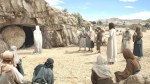
The death and resurrection of Lazarus, The conspiracy to kill Jesus
Reading this just as a ‘story’ may well just leave you with idle information. Although informative, instructional and emotionally provocative, one must grasp the foreshadowing prophetic nature, and the inherent spiritual conflict and the tenacity, the driving force and power of God, in these events. We must learn that even in the most trying and challenging circumstances the nature of God, His goodness, His mercy and His redemptive power is always triumphant and that we are called and made in that image of Him. Above all, however, remember that this is not a “story” at all. This is the truth of real events!
Additionally, throughout this chapter Jesus is teaching and demonstrating that He was (and is) sent by the Father with a three-fold purpose: (1) To do the Will of the Father, (2) to seek and save the lost, and to reconcile people with God, (3) to pay the ‘sin penalty’ of death by His own death, for those who would believe and follow Him. Everything else, everything He said, taught and did, exemplified and magnified His purpose. We, as Christians, are called to follow His example and purpose exactly as He commanded. (Any variation, deviation or improvisation from Jesus’ model is a fraud. Thinking you can make your life better now, enriching yourself in this world, using the Gospel as your method or excuse makes you a wolf among the sheep. We find peace in Christ, knowing we are to be witnesses (see Acts 1:8) which literally translates to the word ‘martyrs’ for Jesus. We are to do the Will of the Father; we are to seek the lost and bring them to The Savior; we are too, in a very real way, pay the sin penalty of death, by dying to self – crucifying our flesh – and walk in a new life with Christ Jesus).
The Death and Resurrection of Lazarus
John 11:1,.Now a certain man was sick: Lazarus of Bethany, the village of Mary and her sister Martha. Verse 2. And it was the Mary who anointed the Lord with ointment, and wiped His feet with her hair, whose brother Lazarus was sick.
(Commentary Break): These opening verses give us a location, identifies several of the main characters and lays out the plot.
Lazarus is a central figure in this chapter, and his name means “God has helped.” Lazarus can be considered a type and condition of every-man and every-woman. We all are in need of God’s help and of His intervention in our lives.
Mary and Martha are well-known figures in the Gospels, particularly for their interactions with Jesus. Mary is often associated with devotion and worship, as seen in her anointing of Jesus’ feet (John 12:3), while Martha is known for her service and hospitality (Luke 10:38-42). Their relationship with Jesus is intimate and personal, highlighting the human aspect of His ministry and the importance of faith and relationship with Him. Again, one might see the necessity of our own “devotion and worship“ and “service and hospitality” as a follower of Jesus. This is no mistake or coincidence in scriptures. It is a model and a pattern for us to follow. This is simply another way to say that we are always to ‘read ourselves into the scriptures’. (End Commentary Break)
Verse 3. So the sisters sent word to Him, saying, “Lord, behold, he whom You love is sick.” Verse 4. But when Jesus heard this, He said, “This sickness is not meant for death, but is for the glory of God, so that the Son of God may be glorified by it.” Verse 5. (Now Jesus loved Martha and her sister, and Lazarus.) Verse 6. So when He heard that he was sick, He then stayed two days longer in the place where He was. Verse 7. Then after this He said to the disciples, “Let’s go to Judea again.” Verse 8. The disciples said to Him, “Rabbi, the Jews were just now seeking to stone You, and yet You are going there again?” Verse 9. Jesus replied, “Are there not twelve hours in the day? If anyone walks during the day, he does not stumble, because he sees the light of this world. Verse 10. But if anyone walks during the night, he stumbles, because the light is not in him.”
(Commentary Break): “So the sisters sent word to Him, saying, “Lord, behold, the one whom you love is sick”; the word love here, is ‘phileó’, From philos; to be a friend to (fond of an individual or an object), i.e. Have affection for (denoting personal attachment, as a matter of sentiment or feeling. This is the same word used in John 5:20, “For the Father loves (‘phileó’) the Son and shows Him all things that He Himself is doing.” The term signals intimate delight, assuring readers that redemptive revelation flows from a Father who cherishes His Son. The risen Christ affirms the same reality to you, His disciple: “For the Father Himself loves you, because you have loved Me and have believed that I came from God” (Biblehub) (John 16:27). Jesus has said in John 15:15 that He considers you His friend, emphasizing our close personal relationship – and yes, as the song reminds us, what a friend we have in Jesus.
Jesus reminds the sisters that Lazarus’ sickness is not meant for death, but is for the glory of God, so that the Son of God may be glorified by it.
The disciples became alarmed that they and Jesus would dare go back to Judea because the Jews there were seeking to kill Him.
It is at this point that Jesus uses a complex metaphor saying “Are there not twelve hours in the day?”, contrasting light and darkness, daytime and nighttime, while at the same time comparing walking in the Light of God which gives insight, wisdom and discernment versus walking in the darkness of evil which cause one to stumble and fall in defeat from ignorance.
He is also pointing out that you must act at the precise moment in time, and the time Jesus would have referred to, from an ancient Greek word ‘kairos’, meaning “the right or critical moment”, which signifies a qualitative time for action, contrasted with ‘chronos’, which refers to chronological or sequential time. Kairos is a frame of time which is passing, and the window of opportunity will last only for a specified period. You must ‘go through that window of time when it is presented, or the opportunity is lost.
(This is important to know because Jesus always refers us to the correct time for you to act – for example, when He refers to the ‘end of the age’ in the Gospels, Jesus speaks primarily in the future tense; but when He refers to these very same days in the book of The Revelation, He speaks in the aorist tense, which is saying “what was, is now and shall be in the future”. It is a continuous action which will be fulfilled only when Jesus culminates the age.
Another example is found in 2 Corinthians 6:2 when the Apostle Paul says, “Today is the day of your salvation”, he emphasized the urgency and the immediacy of God’s grace for your salvation. (End Commentary Break).
Verse 11. This He said, and after this He said to them, “Our friend Lazarus has fallen asleep; but I am going so that I may awaken him from sleep.” Verse 12. The disciples then said to Him, “Lord, if he has fallen asleep, he will come out of it.” Verse 13. Now Jesus had spoken of his death, but they thought that He was speaking about actual sleep. Verse 14. So Jesus then said to them plainly, “Lazarus died, verse 15, and I am glad for your sakes that I was not there, so that you may believe; but let’s go to him.” Verse 16. Therefore Thomas, who was called Didymus, said to his fellow disciples, “Let’s also go, so that we may die with Him!”
(Commentary Break): It is clear now that Jesus has chosen the “Kairos” moment, “the right or critical moment”, which signifies a qualitative time for action. Why does this matter in general? Because all of us, as Christians, need to seek God and know our “Kairos moments”, whether as a witness of Jesus, a Warrior of the Cross, in serving, testifying, pulling down strongholds, defending the faith or any calling or mission from God. When we act in concert with God’s voice and according to His timing and see His Hand move, we too will believe!
(Just as a matter of interest, Thomas remarks “Let’s also go, (with Jesus to Judea) so that we may die with Him!” Some commentators will say this shows Thomas’ willingness to die with Jesus. But, considering Thomas’ doubting nature (see John 20:24-29) perhaps he was sarcastically lamenting the wisdom of going to Judea? If so, Thomas was missing the “Kairos moment”. Once again, this should serve as a caution to all of us who are following Jesus to get ready and stay ready. (End Commentary Break).
Verse 17. So when Jesus came, He found that he had already been in the tomb four days. Verse 18. Now Bethany was near Jerusalem, about fifteen stadia (about 2 miles) away; verse 19, and many of the Jews had come to Martha and Mary, to console them about their brother. Verse 20. So then Martha, when she heard that Jesus was coming, went to meet Him, but Mary stayed in the house. Verse 21. Martha then said to Jesus, “Lord, if You had been here, my brother would not have died. Verse 22. Even now I know that whatever You ask of God, God will give You.” Verse 23. Jesus said to her, “Your brother will rise from the dead.” Verse 24. Martha said to Him, “I know that he will rise in the resurrection on the last day.” Verse 25. Jesus said to her, “I am the resurrection and the life; the one who believes in Me will live, even if he dies, verse26, and everyone who lives and believes in Me will never die. Do you believe this?” Verse 27. She said to Him, “Yes, Lord; I have come to believe that You are the Christ, the Son of God, and He who comes into the world.”
(Commentary Break): I suggest reading the 10 preceding verses again and give consideration to what you are ‘hearing’. Martha sounds accusatory, confused and her statements are contradictory. It is as if she is saying, “Jesus, I believe in you and I believe you, but…”. This reminds me of how so many people view God. “I believe in you, but, why aren’t things going my way – the way I imagined they should go so I could be pleased with the chain of events and their outcome – implying that we know better than God. And unfortunately, so many people get angry with God when things don’t go their way or if they have to face a tragedy or a difficulty. This reveals our lack of understanding about our relationship with God, His plan and purpose for us, our lack of faith in God and our complete failure to understand the sovereignty of God. This is a serious condition for any believer. However, rather than impatience, Jesus explains to Martha the purpose of the events of this moment.
(What follows is very technical and is spoken from God’s perspective of and reality in time. He sees the past, present and future as one entire whole – it is all occurring at the same instance with God. And since our perspective of time is linear, we often have trouble grasping these amazing realities of God).
“Verse 23. Jesus said to her, “Your brother will rise from the dead.” (This spoken in the present tense. However, Martha misunderstands Jesus and says to Him), “I know that he will rise in the resurrection on the last day. (spoken in the future tense).” Verse 25. But Jesus says (in the aorist tense, indicating to her that what He is saying is continuously true, has already occurred, is presently occurring and will continue to occur into the future) , “I am (spoken in the present tense) the resurrection (anastasis), meaning “a standing up again”, i.e. literally a resurrection from death, now, standing before you. I.e., death has no dominion and no place in me nor in my presence. (I am) the life; (This is simply a staggering truth) and the one who believes (present tense) in Me will live, even if he dies (aorist tense), verse 26, and everyone who lives and believes in Me will never die. Do you believe this?” This is the eternal truth. If we will not or cannot accept this, then there is a great chance that we can never fully understand or trust God, His ways or His plans for our lives. Sadly, we will live in the middle ground of doubt, worry and fear. Just know that God loves us so much that He gave His only Son for us, that we should not perish. Therefore all things are always working for our good – that is for those who love God and are called according to His purpose. And the PURPOSE of God’s plan is found in Daniel 9:24:
1) “to finish transgression,” (that is, to end man’s rebellion toward God),
2) “to put an end to sin,” (that is, to bring an end to sin),
3) “to atone for wickedness,” (that is, to make amends or reparation for wickedness),
4) “to bring in everlasting righteousness,” (that is, the quality of being morally right or justifiable),
5) “to seal up vision and prophecy,” and (that is, to confirm these prophetic visions),
6) “to anoint the most holy.” (that is, to anoint, or to confer divine or holy office upon; in this case the Holy One, Jesus.).
We are included in God’s PURPOSE. His METHOD as found in Daniel 12 which is that,
1) Many will be cleansed,
2) Many will be purified,
3) They will be made spotless and,
4) They will be refined.
5) Will live eternally with God.
(also see Romans 8:28). (End Commentary Break).
Verse 28. When she had said this, she left and called Mary her sister, saying secretly, “The Teacher is here and is calling for you.” Verse 29. And when she heard this, she got up quickly and came to Him.
Verse 30. Now Jesus had not yet come into the village, but was still at the place where Martha met Him. Verse 31. Then the Jews who were with her in the house and were consoling her, when they saw that Mary had gotten up quickly and left, they followed her, thinking that she was going to the tomb to weep there. Verse 32. So when Mary came to the place where Jesus was, she saw Him and fell at His feet, saying to Him, “Lord, if You had been here, my brother would not have died.” Verse 33. Therefore when Jesus saw her weeping, and the Jews who came with her also weeping, He was deeply moved in spirit and was troubled, verse 34, and He said, “Where have you laid him?” They said to Him, “Lord, come and see.” Verse 35. Jesus wept. Verse 36. So the Jews were saying, “See how He loved him!” Verse 37. But some of them said, “Could this man, who opened the eyes of the man who was blind, not have also kept this man from dying?”
(Commentary Break): It is widely known and repeated that the shortest verse in the Bible is verse 35, “Jesus wept”, and it is the most misunderstood and misinterpreted. Most every commentary will tell you that Jesus was mournful, sorrowful and sad over Lazarus’ death. Please, dear friend, Jesus has just explained to Martha and now to Mary, in length, that Lazarus is not dead, but just sleeping, a figure of speech to say that it is temporary and he will shortly ‘awaken’. He has explained that Lazarus will live again, now and not just in the resurrection. So why would Jesus mourn Lazarus’ death? He would not and He did not. This word carries with it a guttural sorrow and mourning.
(The word ‘troubled’ in the phrase in verse 33, “He was deeply moved in spirit and was troubled, comes from the Greek word, ‘tarassó’ , meaning ‘He was agitated, roiled , as making water turbulent or muddy, by stirring up sediment).
Jesus wept because of the lack of their faith and the inability of His followers to understand what Jesus is saying and doing. They fail to see that He is indeed the Son of God in the flesh.
If we find ourselves in the same situation, bearing all our burdens and grief without complete faith in Him, is something to be mourned about, indeed. (End Commentary Break).
Verse 38. So Jesus, again being deeply moved within, came to the tomb. Now it was a cave, and a stone was lying against it. Verse 39. Jesus said, “Remove the stone.” Martha, the sister of the deceased, said to Him, “Lord, by this time there will be a stench, for he has been dead four days.” Verse 40. Jesus said to her, “Did I not say to you that if you believe, you will see the glory of God?” Verse 41. So they removed the stone. And Jesus raised His eyes, and said, “Father, I thank You that You have heard Me. Verse 42. But I knew that You always hear Me; nevertheless, because of the people standing around I said it, so that they may believe that You sent Me.” Verse 43. And when He had said these things, He cried out with a loud voice, “Lazarus, come out!” Verse 44. Out came the man who had died, bound hand and foot with wrappings, and his face was wrapped around with a cloth. Jesus said to them, “Unbind him, and let him go.”
Verse 45. Therefore many of the Jews who came to Mary, and saw what He had done, believed in Him. Verse 46. But some of them went to the Pharisees and told them the things which Jesus had done.
(Commentary Break). These foregoing verses speak for themselves on this matter. “Therefore many of the Jews who came to Mary, and saw what He had done, believed in Him.” But please do not miss the lurking evil, the darkened and selfish hearts that run to the Pharisees. (End Commentary Break).
Conspiracy to Kill Jesus.
Verse 47. Therefore the chief priests and the Pharisees convened a council meeting, and they were saying, “What are we doing in regard to the fact that this man is performing many signs? Verse 48. If we let Him go on like this, all the people will believe in Him, and the Romans will come and take over both our place and our nation.” Verse 49. But one of them, Caiaphas, who was high priest that year, said to them, “You know nothing at all, verse 50, nor are you taking into account that it is in your best interest that one man die for the people, and that the whole nation not perish instead.” Verse 51. Now he did not say this on his own, but as he was high priest that year, he prophesied that Jesus was going to die for the nation; verse 52, and not for the nation only, but in order that He might also gather together into one, the children of God, who are scattered abroad. Verse 53. So from that day on they planned together to kill Him.
(Commentary Break). These verses reveal a complex social, religious, governmental and military matter. From BibleHub.com commentary we read, that “the religious leaders are expressing concern over Jesus’ growing influence. This phrase highlights their fear of losing control and authority. The miracles and teachings of Jesus were drawing large crowds, which threatened the established religious order. The leaders were worried that Jesus’ popularity would undermine their power and influence over the people.
The leaders acknowledge the compelling nature of Jesus’ works and words. This phrase indicates their awareness of the potential for widespread belief in Jesus as the Messiah. It reflects their fear that Jesus’ message could lead to a mass movement that would challenge their authority. The leaders’ concern was not just theological but also political, as they feared the implications of a large following.
The Roman Empire had control over Judea, and the Jewish leaders were concerned about maintaining peace and order to avoid Roman intervention. This phrase reflects their fear that a messianic movement could be seen as a rebellion against Roman rule, prompting a military response. The leaders were trying to prevent any action that might provoke the Romans and lead to the loss of their limited autonomy.
The leaders feared that Roman intervention could lead to the destruction of the Temple, as had happened in the past. The Temple was not only a religious center but also a source of power and prestige for the Jewish leaders, making its preservation crucial to them.
The leaders were concerned about the survival of the Jewish nation under Roman rule. They feared that any unrest could lead to severe repercussions, including the loss of their national identity and autonomy. This phrase underscores the political and nationalistic concerns of the leaders, who were trying to balance their religious authority with the practical realities of Roman occupation. Their fear was ultimately realized in 70 A.D. when the Romans destroyed Jerusalem and the Temple, fulfilling Jesus’ prophecy in Matthew 24:2. It is indeed interesting how, despite their strongly held belief of a coming Messiah is obscured by their earthly possessions of their religious order, the national state of Israel, their power, wealth and influence.
So it is for us in our day. Please, dear friends, let’s learn from this and relinquish our grip on our natural lives so God can release us from the grip the world has on our futures. (End Commentary Break).
Verse 54. Therefore Jesus no longer continued to walk publicly among the Jews, but went away from there to the region near the wilderness, into a city called Ephraim (double ash heap / I shall be fruitful); and there He stayed with the disciples.
Verse 55. Now the Passover of the Jews was near, and many went up to Jerusalem from the country prior to the Passover, in order to purify themselves. Verse 56. So they were looking for Jesus, and saying to one another as they stood in the temple area, “What do you think; that He will not come to the feast at all?” Verse 57. Now the chief priests and the Pharisees had given orders that if anyone knew where He was, he was to report it, so that they might arrest Him. (End text for Chapter 11).
We can see many examples throughout history, and even in our own day, where good men are murdered and assassinated for no other reason than their goodness. They stand as an obstacle of and in the face evil and selfish people, and they hate it, just as John 3:19-20 states, “The Light, (Jesus), has come into the world, and people loved the darkness rather than the Light ; for their deed were evil. For everyone who does evil, hates the Light, and does not come to the Light, so that their deeds will not be exposed”.
But our calling and purpose is found in John 3:21, “But the one, (those of us) who practice the truth come to the Light, so that his deeds will be revealed as having been performed in God.”
Jesus said to them, “My food is to do the will of Him who sent Me, and to accomplish His work.” (John 4:34). Jesus’ earthly ministry is complete. Let’s call that stage 1.
Stage 2, This is our ministry. Jesus said, “I sent you to reap that for which you have not labored; others have labored, and you have come into their labor.” (John 4:38). We are to be found doing this work when Jesus returns to claim His own from this harvest. “Therefore be on the alert, for you do not know which day your Lord is coming. But [ai]be sure of this, that if the head of the house had known at what time of the night the thief was coming, he would have been on the alert and would not have allowed his house to be broken into. For this reason you must be ready as well; for the Son of Man is coming at an hour when you do not think He will.
“Who then is the faithful and sensible slave whom his master put in charge of his household slaves, to give them their food at the proper time? Blessed is that slave whom his master finds so doing when he comes”. (Matthew 24:42-46).
Stage 3. Then comes the Lord. The beginning of the End. Stage 3 is found in Matthew 24:29-31. “But immediately after the tribulation of those days THE SUN WILL BE DARKENED, AND THE MOON WILL NOT GIVE ITS LIGHT, AND THE STARS WILL FALL from the sky, and the powers of the heavens will be shaken. And then the sign of the Son of Man will appear in the sky, and then all the tribes of the earth will mourn, and they will see the SON OF MAN COMING ON THE CLOUDS OF THE SKY with power and great glory. And He will send forth His angels with A GREAT TRUMPET BLAST, and THEY WILL GATHER TOGETHER His elect from the four winds, from one end of the sky to the other.”
We are near the end of stage 2, the Birth Pains (Matthew 24:8) of the tribulation period (seals 1 through 5). Then comes the rapture. Be found doing what He has commanded. Be ready or be left behind.
Your Brother and Friend,
Mike Young
PREVIOUS: THE BOOK OF JOHN, Chapter 10, The Parable of The Good Shepherd, Jesus Asserts His Deity
(Please bookmark this page or subscribe for future episodes).
THE BOOK OF JOHN, Chapter 10

The Parable of The Good Shepherd, Jesus Asserts His Deity
It is easier for a contemporary Christian to read these words from John chapter ten as simply a narrative about Jesus claiming to be The Good Shepherd (The Lord) of God’s people, than it is to understand the astounding-to-unbelievable claims Jesus is making. And to the Jew, the nature of Jesus remarks are both astounding and outrageous. Jesus opens the doors of a spiritual reality, revealing the truth of a relationship to God through His Son, (the Messiah). He explains this in ways that are unmistakable to the Jew. (And this same truth, later, is to be applied to all people claiming the name of Christian).
Each person who reads this should be asking, at the least, these two questions: “Am I hearing the voice of God through the one I am following?”, and, “Does the one appointed over me for my spiritual safety, hear and follow the voice of Christ?”.
Be reminded these words are inspired by God, have been recorded and preserved and are meant for our instruction, our rebuke and correction for our training in righteousness.
Parable of the Good Shepherd
Verse 1.“Truly, truly I say to you, the one who does not enter by the door into the fold of the sheep, but climbs up some other way, he is a thief and a robber. Verse 2. But the one who enters by the door is a shepherd of the sheep. Verse 3. To him the doorkeeper opens, and the sheep listen to his voice, and he calls his own sheep by name and leads them out.
(Commentary Break): These metaphors are laden and rich both with spiritual truth that leads to life and warnings against deceit.
The “door of the sheepfold” is God’s Word. (John 1:1-3, 14, tells us that “In the beginning was the Word, and the Word was with God, and the Word was God. He was in the beginning with God. And the Word became flesh, and dwelt among us; and we saw His glory, glory as of the only Son from the Father, full of grace and truth.”) “The sheepfold” is God’s protective enclosure of safety for His sheep, His redeemed followers.
When anyone claiming to be a leader or a protector of His sheep who “does not enter by the door into the fold of the sheep” – in other words, He does not adhere strictly to the Word of God, he innovates, violates or abrogates God’s clear instructions, “he is a thief and a robber”. There is no room for error here. Ignorance of God’s Word is no excuse – it is one of many clear violations that disqualifies a person from representing Christ as a leader, pastor, teacher or prophet.
“But the one who enters by the door is a shepherd of the sheep. To him the doorkeeper opens, and the sheep listen to his voice, and he calls his own sheep by name and leads them out.” The doorkeeper (gatekeeper) represents the Holy Spirit who opens the door for the Good Shepherd and for those who represent Him today. Do not be deceived. I am heartbroken and alarmed that so many churches are being led by thieves and robbers. They excuse embracing homosexuality in leadership; turn a blind eye to sexual deviancy and promiscuity; they allow women to preach and rule over the men; they raid the treasury for their own profits; they seek success, fame, glory and admiration. You know them – you see them – avoid them. Flee from them or you are complicit in their evil and wicked deeds and you will share in paying the consequences. (End Commentary Break).
Verse 4. When he puts all his own sheep outside, he goes ahead of them, and the sheep follow him because they know his voice. Verse 5. However, a stranger they simply will not follow, but will flee from him, because they do not know the voice of strangers.” Verse 6. Jesus told them this figure of speech, but they did not understand what the things which He was saying to them meant.
(Commentary Break): The true sheep of God willingly follow the Shepherd – in other words they hear the Word of God and practice that Word by following it. But if you hear strange teachings, this is the voice of a stranger. Flee and call to the other sheep to flee. Do not be like those who heard these words from Jesus and did not understand what the things which He was saying to them meant. Know the Word of God and follow it. (End Commentary Break)
Verse 7. So Jesus said to them again, “Truly, truly I say to you, I am the door of the sheep. Verse 8. All those who came before Me are thieves and robbers, but the sheep did not listen to them. Verse 9. I am the door; if anyone enters through Me, he will be saved, and will go in and out and find pasture. Verse 10. The thief comes only to steal and kill and destroy; I came so that they would have life, and have it abundantly.
Verse 11. “I am the good shepherd; the good shepherd lays down His life for the sheep. Verse 12. He who is a hired hand, and not a shepherd, who is not the owner of the sheep, sees the wolf coming, and leaves the sheep and flees; and the wolf snatches them and scatters the flock. Verse 13. He flees because he is a hired hand and does not care about the sheep.
(Commentary Break): Verses seven through thirteen are clear and plain language. Jesus makes clear the choice and the consequences at stake. “I am the door; if anyone enters through Me, he will be saved, and will go in and out and find pasture. The thief comes only to steal and kill and destroy; I came so that they would have life, and have it abundantly.” You can attend a church all of your life and still find that you will have been robbed of life, killed in your soul and you will be destroyed. We must put our own selfish desires to death and be born again and follow the True Shepherd.
Listen, please. If you are attending a church or following a man (or, God forbid, a woman) who puts themselves forward as a representative of Christ, and who has a cloud of suspicion hanging over them – flee. The man of God appointed to pastor God’s sheep will lead a holy and humble life, blameless and will live his life above reproach – and he will know the Word of God and be able to correctly preach and practice that word. A “hired hand” is not like this. He is there for the paycheck, the recognition, for what he can get for himself. These kind are usually cowardly in the face of opposition, controlling, unrelenting in disputes, and spiritually abusive. (End Commentary Break).
Verse 14. I am the good shepherd, and I know My own, and My own know Me, verse 15, just as the Father knows Me and I know the Father; and I lay down My life for the sheep. Verse 16. And I have other sheep that are not of this fold; I must bring them also, and they will listen to My voice; and they will become one flock, with one shepherd. Verse 17. For this reason the Father loves Me, because I lay down My life so that I may take it back. Verse 18. No one has taken it away from Me, but I lay it down on My own. I have authority to lay it down, and I have authority to take it back. This commandment I received from My Father.”
(Commentary Break): It is noteworthy that Jesus is forecasting His coming death as the substitutionary sacrifice for the sins of many. And that He now comments that He has other sheep – Gentile sheep – that are not of this (Jewish) fold; He says He must bring them also, and that they will listen to His voice; and that they will become one flock, with one shepherd. Obviously, this would have been a mystery at this point in time. Jesus is speaking a prophetic truth which is, as is always the case, coming to pass. It is just not possible to over-emphasize the importance of what Jesus is saying in this chapter and in these verses and is still true and applicable today. (End Commentary Break).
Verse 19. Dissension occurred again among the Jews because of these words. Verse 20. Many of them were saying, “He has a demon and is insane. Why do you listen to Him?” Verse 21. Others were saying, “These are not the words of one who is demon-possessed. A demon cannot open the eyes of those who are blind, can it?”
Jesus Asserts His Deity
Verse 22. At that time the Feast of the Dedication (Now known as Hanukkah, also known as the Feast of Lights) took place in Jerusalem; verse 23, it was winter, and Jesus was walking in the temple area, in the portico of Solomon. Verse 24. The Jews then surrounded Him and began saying to Him, “How long will You keep us in suspense? If You are the Christ, tell us plainly.” Verse 25. Jesus answered them, “I told you, and you do not believe; the works that I do in My Father’s name, these testify of Me. Verse 26. But you do not believe, because you are not of My sheep. Verse 27. My sheep listen to My voice, and I know them, and they follow Me; verse 28, and I give them eternal life, and they will never perish; and no one will snatch them out of My hand. Verse 29. My Father, who has given them to Me, is greater than all; and no one is able to snatch them out of the Father’s hand. Verse 30. I and the Father are one.”
(Commentary Break): Rather than comment here, I ask you to imagine. Imagine walking with Jesus and asking Him “are you the Christ” and His response is “I told you, and you do not believe; the works that I do in My Father’s name, these testify of Me. But you do not believe, because you are not of My sheep.” This is still the litmus test today. You can be walking with Him and ask (through prayer), “are you the Christ?”. Don’t be afraid to ask. The Apostle John asked this very question as he was facing his death, (see Luke 7:18-23). You see, we are redeemed by Christ and saved from the coming Messianic judgments by God’s grace, through our faith in Christ Jesus. It is not of ourselves, It is a gift of God. So, yes. Ask in faith. Seek and knock and He will give all these things to you! (End Commentary Break).
Verse 31. The Jews picked up stones again to stone Him. Verse 32. Jesus replied to them, “I showed you many good works from the Father; for which of them are you stoning Me?” Verse 33. The Jews answered Him, “We are not stoning You for a good work, but for blasphemy; and because You, being a man, make Yourself out to be God.” Verse 34. Jesus answered them, “Has it not been written in your Law: ‘I SAID, YOU ARE GODS’? Verse 35. If he called them gods, to whom the word of God came (and the Scripture cannot be nullified), verse 36, are you saying of Him whom the Father sanctified and sent into the world, ‘You are blaspheming,’ because I said, ‘I am the Son of God’? Verse 37. If I do not do the works of My Father, do not believe Me; verse 38, but if I do them, even though you do not believe Me, believe the works, so that you may know and understand that the Father is in Me, and I in the Father.” Verse 39. Therefore they were seeking again to arrest Him, and He eluded their grasp.
(Commentary Break): (From BibleHub.com bible study), This phrase, : ‘I SAID, YOU ARE GODS’?, is a direct quotation from Psalm 82:6, where God addresses the judges of Israel, calling them “gods” because of their role as representatives of divine justice. In the cultural and historical context, judges and leaders were seen as God’s agents on earth, tasked with upholding His laws and justice. Jesus uses this reference to argue that if human judges can be called “gods” in the Scriptures, then it is not blasphemous for Him, the Son of God, to claim a unique relationship with the Father. This argument underscores Jesus’ divinity and His fulfillment of Old Testament types and prophecies concerning the Messiah. (End Commentary Break).
Verse 40. And He went away again beyond the Jordan to the place where John was first baptizing, and He stayed there. Verse 41. Many came to Him and were saying, “While John performed no sign, yet everything John said about this man was true.” Verse 42. And many believed in Him there. (End Chapter 10 text).
It should seem incredible, then and now, that even after His testimony, His amazing works (miracles), that there continue to be dissension and divisions. But these same dissensions and divisions concerning Jesus continue to this day – and in fact, the religious and doctrinal fractures outside and inside the church have become chasms. It would appear that the church in 2025 is divided against itself. But that is not the case.
It is true that the enemy has invaded the church in a last ditch effort to thwart and pervert the Gospel Message and the mission and cause of Jesus as the Christ. God has addressed the shortcomings of the Church in a message to the seven churches in Revelation chapters 2 and 3. But for now, God has said we are to tend to the “wheat” (the true believers) in the church and that He will remove the tares (the weeds or the non-believers) from our midst in the final harvest (see Matthew 13:30).
So, what may appear to be an errant or deliberately rebellious church is actually a counterfeit of Jesus’ Church, the Body of Christ. (The term “counterfeit church of Satan” often refers to groups or organizations that mimic true Christian teachings but promote false doctrines, misleading followers away from genuine faith. These groups are seen as deceptive, using tactics similar to those of Satan to lead people astray from the truth of the gospel. The term “Counterfeit Church of Satan” refers to religious groups or movements that mimic true Christian teachings but distort them to promote false doctrines. These groups often present themselves as legitimate expressions of faith while leading followers away from the core truths of Christianity.
| Attribute | Description |
| Deceptive Teachings |
They often teach doctrines that sound similar to biblical truths but are misleading. |
| Charismatic Leadership | Leaders may use flattery and persuasive speech to
attract and retain followers. |
| False Miracles |
Some may claim to perform miracles or signs that are not genuine, aiming to deceive. |
|
Focus on Emotional Experience |
Emphasis on feelings over scriptural truth can lead to a shallow understanding of faith. |
The Bible warns against such counterfeits. For instance, the Apostle Paul cautioned that Satan disguises himself as an “angel of light” (2 Corinthians 11:14), indicating that false teachings can appear attractive and convincing.
Recognizing the counterfeit church involves understanding the core tenets of true Christianity and being vigilant against teachings that deviate from biblical principles. Engaging with scripture and seeking genuine spiritual guidance are essential steps in avoiding deception.
You will know them by their fruit. (see Spiritual Counterfeit by Tim Challies and GotQuestions.Org).
We must be Berean, diligent in examining the Scriptures, as exemplified by the Bereans in Acts 17:10-12, who carefully checked the teachings of Paul and Silas against the Old Testament to verify their truth. This approach emphasizes the importance of seeking truth through prayer and personal study of the Bible.
Your Brother and Friend,
Mike Young.
NEXT: (coming soon), THE BOOK OF JOHN, Chapter 11, The Death and Resurrection of Lazarus, The Conspiracy to Kill Jesus.
(Please bookmark this page or subscribe for future episodes).
THE BOOK OF JOHN, Chapter 9

Healing the Man Born Blind, Controversy Over The Man, Jesus Affirms His Deity
If you did not know better, you might suppose this chapter was a playscript written ahead of time. It plays out so perfectly, that the events which unfold in this chapter lead to one predetermined conclusion: Jesus is the Son of God, The Living Word, God in the flesh who dwelt among us. This is a truth the religious were either incapable of seeing or unwilling to see, and for that Jesus declares them as being blind to the truth, blind toward God, and that they remain blinded by their self-righteousness.
This is both a narrative of Jesus mission as the Christ, and a warning to us in this day and time., that we do not follow the failures of the Pharisees’ persistent unbelief and rejection of Jesus’ message because of our self-righteousness, leaving us in a state of condemnation.
As you read this chapter, please recognize the irony and keep in mind that The Eternal and Almighty God is standing before His creation, explaining to them that He has come to redeem them from their sins and from destruction and they reject Him, and argue with Him, saying they know more than Him, calling Him sinful.
Healing the Man Born Blind
John 9:1, As Jesus passed by, He saw a man who had been blind from birth. Verse 2. And His disciples asked Him, “Rabbi, who sinned, this man or his parents, that he would be born blind?” Verse 3. Jesus answered, “It was neither that this man sinned, nor his parents; but it was so that the works of God might be displayed in him.
(Commentary Break): The stage is set. This man had been blind from birth in preparation for this moment – so that the works of God might be displayed in him. I can hear the objections now. ‘Could God be that cruel for His own purposes?’ If you or someone you know or have heard about, has suffered or is suffering a malady, ask yourself “is it an unfortunate happenstance, a sad coincidence, or could it be so the works of God might be displayed?” This is a question only you can ask of yourself, because only you can answer such a question for yourself. But if you truly believe that God is omniscient, omnipresent and omnipotent, you must believe these two things: (1) Nothing happens by accident. Like it or not, everything has a purpose. (2). God causes all things to work together for the good of those who love Him and are of those who are called according to His purpose! This is a profound truth for those who can see. (End Commentary Break).
Verse 4. We must carry out the works of Him who sent Me as long as it is day; night is coming, when no one can work. Verse 5. While I am in the world, I am the Light of the world.”
(Commentary Break): Once again, the mysterion of the Word of God. This is an example of Jesus speaking in terms and language of the Kingdom of God which is being manifest in the natural realm of His creation. Jesus is revealing that He is indeed on mission from His Father and that the time allotted for His works is limited. He has clearly included you, His followers, in these Works. (We must carry out the works of Him who sent Me). He is saying that a time is coming when His Work is finished and there will be no help for those who have failed to respond to Him. He emphasizes this saying “While I am in the world, I am the Light of the world”, because there is a moral, spiritual and physical darkness coming, a time of judgement, that no one can escape. (End Commentary Break).
Verse 6. When He had said this, He spit on the ground, and made mud from the saliva, and applied the mud to his eyes, verse 7, and said to him, “Go, wash in the pool of Siloam” (which is translated, Sent). So he left and washed, and came back seeing. Verse 8. So the neighbors, and those who previously saw him as a beggar, were saying, “Is this not the one who used to sit and beg?” Verse 9. Others were saying, “This is he,” still others were saying, “No, but he is like him.” The man himself kept saying, “I am the one.” Verse 10. So they were saying to him, “How then were your eyes opened?” Verse 11. He answered, “The man who is called Jesus made mud, and spread it on my eyes, and said to me, ‘Go to Siloam and wash’; so I went away and washed, and I received sight.” Verse 12. And they said to him, “Where is He?” He said, “I do not know.”
Controversy over the Man
Verse 13. They brought the man who was previously blind to the Pharisees. Verse 14. Now it was a Sabbath on the day that Jesus made the mud and opened his eyes. Verse 15. Then the Pharisees also were asking him again how he received his sight. And he said to them, “He applied mud to my eyes, and I washed, and I see.” Verse 16. Therefore some of the Pharisees were saying, “This man is not from God, because He does not keep the Sabbath.” But others were saying, “How can a man who is a sinner perform such signs?” And there was dissension among them. Verse 17. So they said again to the man who was blind, “What do you say about Him, since He opened your eyes?” And he said, “He is a prophet.”
Verse 18. The Jews then did not believe it about him, that he had been blind and had received sight, until they called the parents of the very one who had received his sight, verse 19, and they questioned them, saying, “Is this your son, who you say was born blind? Then how does he now see?” Verse 20. His parents then answered and said, “We know that this is our son, and that he was born blind; verse 21, but how he now sees, we do not know; or who opened his eyes, we do not know. Ask him; he is of age, he will speak for himself.” Verse 22. His parents said this because they were afraid of the Jewish leaders; for the Jews had already reached the decision that if anyone confessed Him to be Christ, he was to be excommunicated from the synagogue. Verse 23. It was for this reason that his parents said, “He is of age; ask him.”
(Commentary Break): “The Jews had already reached the decision that if anyone confessed Him to be Christ, he was to be excommunicated from the synagogue.” Their minds were made up ahead of time. This is the condition of many in our day and time and their fate will be the same as the Jews. (End Commentary Break).
Verse 24. So for a second time they summoned the man who had been blind, and said to him, “Give glory to God; we know that this man is a sinner.” Verse 25. He then answered, “Whether He is a sinner, I do not know; one thing I do know, that though I was blind, now I see.” Verse 26. So they said to him, “What did He do to you? How did He open your eyes?” Verse 27. He answered them, “I told you already and you did not listen; why do you want to hear it again? You do not want to become His disciples too, do you?” Verse 28. They spoke abusively to him and said, “You are His disciple, but we are disciples of Moses. Verse 29. We know that God has spoken to Moses, but as for this man, we do not know where He is from.”
(Commentary Break): Jesus heals the man blind from his birth and there were witnesses. The Jews interrogated the man and his parents. The Jewish leader interrogate the man a second time. The evidence is gathered, but “The Jews had already reached their decision.” (End Commentary Break).
Verse 30. The man answered and said to them, “Well, here is the amazing thing, that you do not know where He is from, and yet He opened my eyes! Verse 31. We know that God does not listen to sinners; but if someone is God-fearing and does His will, He listens to him. Verse 32. Since the beginning of time it has never been heard that anyone opened the eyes of a person born blind. Verse 33. If this man were not from God, He could do nothing.” Verse 34. They answered him, “You were born entirely in sins, and yet you are teaching us?” So they put him out.
(Commentary Break): Here is the simple but sound logic of the man
(1). “Well, here is the amazing thing, that you do not know where He is from, and yet,
(2). He opened my eyes! The man is saying that where Jesus is from is irrelevant to him!
(3). We know that God does not listen to sinners; but if someone is God-fearing and does His will, He listens to him.
(4). Since the beginning of time it has never been heard that anyone opened the eyes of a person born blind.
(5). If this man were not from God, He could do nothing.”
(6). The Jews answered him saying, “You were born entirely in sins, and yet you are teaching us?”
(7). So the Jewish leaders put the man who had been blind out of their presence. (End Commentary Break).
Jesus Affirms His Deity
Verse 35. Jesus heard that they had put him out, and upon finding him, He said, “Do you believe in the Son of Man?” Verse 36. He answered by saying, “And who is He, Sir, that I may believe in Him?” Verse 37. Jesus said to him, “You have both seen Him, and He is the one who is talking with you.” Verse 38. And he said, “I believe, Lord.” And he worshiped Him. Verse 39. And Jesus said, “For judgment I came into this world, so that those who do not see may see, and those who see may become blind.”
(Commentary Break): The man who had been blind from birth has received both his natural and his spiritual sight – and now he is being saved! (End Commentary Break).
Verse 40. Those who were with Him from the Pharisees heard these things and said to Him, “We are not blind too, are we?” Verse 41. Jesus said to them, “If you were blind, you would have no sin; but now that you maintain, ‘We see,’ your sin remains.
(Commentary Break): In this context, Jesus is speaking to the Pharisees, who were religious leaders in Israel. The term “blind” here is metaphorical, referring to spiritual blindness or ignorance. In biblical times, blindness was often seen as a physical ailment that rendered a person helpless, symbolizing a lack of understanding or insight. Jesus uses this metaphor to address the Pharisees’ inability to recognize Him as the Messiah. This echoes Isaiah 42:7, where the Messiah is prophesied to open the eyes of the blind, both physically and spiritually.
Here, Jesus suggests that if the Pharisees were truly ignorant of their spiritual state, they would not be held accountable for their sin. This reflects a biblical principle found in Leviticus 5:17, where unintentional sin is treated differently from willful disobedience. The concept of accountability is central in Scripture, as seen in James 4:17, which states that knowing the right thing to do and failing to do it is sin.
The Pharisees prided themselves on their knowledge of the Law and their spiritual insight. Their claim to “see” indicates their self-righteousness and confidence in their own understanding. This is reminiscent of Proverbs 26:12, which warns about the danger of being wise in one’s own eyes. The Pharisees’ claim contrasts with the humility required to truly understand spiritual truths, as seen in Matthew 5:3, where Jesus blesses the poor in spirit.
Jesus concludes by stating that their guilt remains because they refuse to acknowledge their spiritual blindness. This is a direct indictment of their hypocrisy and rejection of Jesus as the Light of the World (John 8:12). The concept of remaining in guilt is tied to the idea of unrepentance and hardness of heart, as seen in Hebrews 3:12-13. The Pharisees’ persistent unbelief and rejection of Jesus’ message leave them in a state of condemnation, as highlighted in John 3:19-20, where people love darkness rather than light because their deeds are evil. (Note: the foregoing four paragraphs are taken from BibleHub.com Study Bible). (End Commentary Break).
It is glaringly obvious that we, the postmodern Church, are increasingly behaving like the Jewish religious leaders as cited in this chapter. We say we believe, but our beliefs are based on our church forerunner’s ideas, traditions, and upon our experiences. We do not follow Jesus, thinking as He thinks, acting as He acts and doing as He does. We have modified and even perverted His Word to satiate our own wants, thoughts, ideas, desires and demands. We have strayed far from what The Living Word says, demonstrated to us and warned that if we depart from His Ways we will perish. It is the one who “endures to the end, who will be saved”. We should repent quickly, for the Kingdom of Heaven is now at hand!
Your Brother and Friend,
Mike Young
NEXT: THE BOOK OF JOHN, Chapter 10, The Parable of The Good Shepherd, Jesus Asserts His Deity.
PREVIOUS: THE BOOK OF JOHN, Chapter 8, Part 3, The Truth Will Set You Free.
(Please bookmark this page or subscribe for future episodes).
THE BOOK OF JOHN, Chapter 8, Part 3

The Truth will Set You Free
It would be easy to read this chapter as if it were spoken to and meant for the Jews and the Pharisees in particular. But, as a reminder this chapter reveals the most profound truths of Jesus’ Mission, His Purpose, His Identity as the “son of man” and The Son of God and of our destiny as believers, both now and for all eternity.
John 8:26. I have many things to say and to judge regarding you, but He who sent Me is true; and the things which I heard from Him, these I say to the world.”
Verse 27. They did not realize that He was speaking to them about the Father. Verse 28. So Jesus said, “When you lift up the Son of Man, then you will know that I am, and I do nothing on My own, but I say these things as the Father instructed Me. Verse 29. And He who sent Me is with Me; He has not left Me alone, for I always do the things that are pleasing to Him.” Verse 30. As He said these things, many came to believe in Him.
(Commentary Break): These words of Jesus were a riddle to some, such as “When you lift up the Son of Man, then you will know that I Am.” This phrase introduces a direct statement from Jesus, emphasizing His role as a teacher and authority. In the Gospel of John, Jesus often uses direct speech to reveal deep spiritual truths and to clarify His identity and mission. This setting is part of a larger discourse where Jesus is addressing the Pharisees and the people in the temple courts.
The term “lifted up” is a reference to Jesus’ crucifixion. In the cultural and historical context, crucifixion was a Roman method of execution, symbolizing shame and suffering. However, Jesus uses it to signify His glorification and the fulfillment of His mission. The title “Son of Man” is a messianic term from Daniel 7:13-14, indicating both His humanity and divine authority. This phrase foreshadows the crucifixion as a pivotal event for revealing Jesus’ true identity.
“Then you will know that I am He”, points to the recognition of Jesus’ divine identity post-crucifixion. The phrase “I am He” echoes the divine name revealed to Moses in Exodus 3:14, suggesting Jesus’ unity with God. The crucifixion and subsequent resurrection serve as the ultimate revelation of Jesus as the Messiah and Son of God, fulfilling Old Testament prophecies and confirming His teachings.
Jesus says, “I do nothing on My own”, emphasizing His complete dependence on and unity with the Father. This reflects the consistent theme in John’s Gospel of Jesus’ submission to the Father’s will. It highlights the Trinitarian relationship and the divine mission of Jesus, who acts not independently but in perfect harmony with God’s plan.
Finally, Jesus says “I speak exactly what the Father has taught Me”, which underscores the divine origin of Jesus’ teachings. In the cultural context of first-century Judaism, a rabbi or teacher would often speak on their own authority or tradition. However, Jesus claims His teachings come directly from God the Father, affirming His role as the ultimate prophet and teacher. This aligns with Deuteronomy 18:18, where God promises to raise a prophet who will speak His words. Jesus’ teachings are thus presented as the ultimate revelation of God’s truth. (Green text is from Biblehub.com commentary).
Others recalled that what Jesus is saying was foretold in scriptures and came to believe. A good example for us. (End Commentary Break).
The Truth Will Set You Free
Verse 31. So Jesus was saying to those Jews who had believed Him, “If you continue in My word, then you are truly My disciples; verse 32, and you will know the truth, and the truth will set you free.” Verse 33. They answered Him, “We are Abraham’s descendants and have never been enslaved to anyone; how is it that You say, ‘You will become free’?”
(Commentary Break): “If you continue in My word, then you are truly My disciples; and you will know the truth, and the truth will set you free.” It is worth repeating. Jesus has said elsewhere that it is those who endure to the end who will be saved (Matthew 24:8). You will be made safe, whole, made well and you will be set free from the penalty the power and the curse of sin – which is death. (End Commentary Break).
Verse 34. Jesus answered them, “Truly, truly I say to you, everyone who commits sin is a slave of sin. Verse 35. Now the slave does not remain in the house forever; the Son does remain forever. Verse 36. So if the Son sets you free, you really will be free. Verse 37. I know that you are Abraham’s descendants; yet you are seeking to kill Me, because My word has no place in you. Verse 38. I speak of the things which I have seen with My Father; therefore you also do the things which you heard from your father.” Verse 39. They answered and said to Him, “Abraham is our father.” Jesus said to them, “If you are Abraham’s children, do the deeds of Abraham. Verse 40. But as it is, you are seeking to kill Me, a man who has told you the truth, which I heard from God; this Abraham did not do. Verse 41. You are doing the deeds of your father.” They said to Him, “We were not born as a result of sexual immorality; we have one Father: God.” Verse 42. Jesus said to them, “If God were your Father, you would love Me, for I came forth from God and am here; for I have not even come on My own, but He sent Me. Verse 43. Why do you not understand what I am saying? It is because you cannot listen to My word. Verse 44. You are of your father the devil, and you want to do the desires of your father. He was a murderer from the beginning, and does not stand in the truth because there is no truth in him. Whenever he tells a lie, he speaks from his own nature, because he is a liar and the father of lies. Verse 45. But because I say the truth, you do not believe Me. Verse 46. Which one of you convicts Me of sin? If I speak truth, why do you not believe Me? Verse 47. The one who is of God hears the words of God; for this reason you do not hear them, because you are not of God.”
(Commentary Break): These verses and the ones to follow give us deep insights into the true relationship with God through His Son, Jesus. They are both amazingly and frighteningly true beyond natural comprehension. Additionally, Jesus is addressing these Pharisees, Jews, and is speaking to them through their own historical, religious practices and cultural context. Jesus tells them they are slaves to sin, and that being a slave to sin means, (1), the person has no rights or permanent residence in the ‘household’ in which they claim to reside and (2), they have no control over their destiny. Their future is separate from the spiritual family of Abraham, with a lonely eternal death. However, Jesus tells them that if He sets you free, you are not only set free from the penalty and curse of sin, but He has removed the shackles of sin and you are free to become a child of God and a brother of Jesus, with full rights as a joint heir. But these Pharisees who claim descendancy of Abraham, fail to recognize that birth descendancy is insufficient to claim a permanent relationship with God; and secondly, they ignorantly and defiantly wish to kill Jesus, Who comes from the Father as the prophesied Messiah. If they were truly of Abraham then they would know He is Who He claims to be. But they do not know and cannot know because His words has not place in Him, and their true spiritual father is not Abraham, but is the devil. This should be a clear and stark warning to all of us, who presently claim the name of Christ, yet do not what He says. According to Hebrews 6:4-6, “It is impossible, in the case of those who have once been enlightened and have tasted of the heavenly gift and have been made partakers of the Holy Spirit, and have tasted the good word of God and the powers of the age to come, and then have fallen away, to restore them again to repentance, since they again crucify to themselves the Son of God and put Him to open shame.” (End Commentary Break).
Verse 48. The Jews answered and said to Him, “Do we not rightly say that You are a Samaritan, and You have a demon?” Verse 49. Jesus answered, “I do not have a demon; on the contrary, I honor My Father, and you dishonor Me. Verse 50. But I am not seeking My glory; there is One who seeks it, and judges. Verse 51. Truly, truly I say to you, if anyone follows My word, he will never see death.” Verse 52. The Jews said to Him, “Now we know that You have a demon. Abraham died, and the prophets as well; and yet You say, ‘If anyone follows My word, he will never taste of death.’ Verse 53. You are not greater than our father Abraham, who died, are You? The prophets died too. Whom do You make Yourself out to be?” Verse 54. Jesus answered, “If I glorify Myself, My glory is nothing; it is My Father who glorifies Me, of whom you say, ‘He is our God’; verse 55, and you have not come to know Him, but I know Him. And if I say that I do not know Him, I will be a liar like you; but I do know Him, and I follow His word. Verse 56. Your father Abraham was overjoyed that he would see My day, and he saw it and rejoiced.” Verse 57. So the Jews said to Him, “You are not yet fifty years old, and You have seen Abraham?” Verse 58. Jesus said to them, “Truly, truly I say to you, before Abraham was born, I am.” Verse 59. Therefore they picked up stones to throw at Him, but Jesus hid Himself and left the temple grounds. (End Chapter 8, part 3).
(Commentary Break): What we read and hear in verses 48 through 59 is a clear contrast between an earthly or natural physical perspective and understanding versus a heavenly and a Spiritual perspective view which gives wisdom. The former is of the flesh which leads to death, and the latter is of the Spirit which leads to life. (End Commentary Break).
Romans 8:5-9 tells us that “For those who are in accord with the flesh set their minds on the things of the flesh, but those who are in accord with the Spirit, the things of the Spirit. For the mind set on the flesh is death, but the mind set on the Spirit is life and peace, because the mind set on the flesh is hostile toward God; for it does not subject itself to the law of God, for it is not even able to do so, and those who are in the flesh cannot please God. However, you are not in the flesh but in the Spirit, if indeed the Spirit of God dwells in you. But if anyone does not have the Spirit of Christ, he does not belong to Him.” From the Greek language, to ‘set their mind on’ translates to mean to ‘frame up, to enter into and become captive to or imprisoned by one’s own continual thoughts’. If it is of the flesh, then it a death camp, a prison holding cell, where one is held until their sentence of death is executed. However if it is of the Spirit, it is a waiting room, so-to-speak, for heaven – which leads to life and peace.
This message from Jesus was not intended solely for the Pharisees of His day, but for anyone and everyone of a ‘Pharisaical spirit’ of all the ages.
(The adjective pharisaical literally means “similar to the Pharisees.” In common usage, though, the word pharisaical is employed to describe someone who is hypocritical and-or self-righteous, traits that the Pharisees in the New Testament were known for. The Pharisees elevated their own traditions to the level of Scripture. While not denying the value of some traditions, we should make sure we hold to our traditions lightly while we have an iron grip on God’s Word. The Pharisees pretended to be passionate for God while their hearts were far from Him. We should strive to obey the law of Christ and urge others to do the same, declaring God’s truth with compassionate love (Ephesians 4:15)).
Let’s set our minds on the Spirit and be set free!
Your Brother and Friend,
Mike Young
PREVIOUS: THE BOOK OF JOHN, Chapter 8, Part 2, Jesus is the Light of The World.
(Please bookmark this page or subscribe for future episodes).
