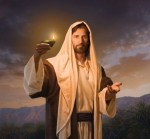
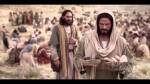
It is important that you and I be careful not to read these verses just as an observer of a past event, or we will have missed the profundity of these prophetic words. There are few places you will find Jesus explaining and claiming His Deity as the Son of God as He does here. It is best if, before you read further, to pray and ask God to enlighten the eyes of your heart and mind with the truth of His wisdom. Then, as you read, place yourself there, with Jesus, as He speaks these words of light and truth into the darkness of the world and to the darkened minds of the ruling religious elite of that day. (You and I must come away from this exchanged as a changed person, in light of Who Jesus truly is.)
John 8:12,Then Jesus again spoke to them, saying, “I am the Light of the world; the one who follows Me will not walk in the darkness, but will have the Light of life.”
(Commentary Break): Jesus begins with “I Am”. He uses the Koine Greek word, “egó” for “I”, which is only used or expressed when emphatic; juxtaposed with “am”, or “self-existent”. This clearly communicates that Jesus is claiming Deity. Even to His own disciples, this is an amazing, and to some, a shocking statement. Those of us who have been Christians for any time have heard that Jesus is God, so many times, that we have become far too accustomed to, and emotionally numbed to what should be a shocking, humbling and amazing reality. Additionally, Jesus speaks these words in the “aorist” tense, which combines past, present and future tenses in one – “I was, I am, and I forever shall be”. Jesus is saying He has always existed, is here now and shall be forevermore. Only God can make such a claim and Jesus puts an exclamation on this realty when He is crucified, is raised from the dead and then ascends into the heavens to sit at the Right Hand of The Father, forevermore.
Jesus flatly states that “I am the Light of the world; the one who follows Me will not walk in the darkness, but will have the Light of life.” Simply put, Light is life, darkness is death. Those who follow Jesus in the resurrection will abide with Him and, as He says in Revelation 22:5, “And the night will be no more. They will need no light of lamp or sun, for the Lord God will be their light, and they will reign forever and ever.” Otherwise, those who do not follow Him will be cast into an outer darkness where there is wailing and gnashing of teeth, into an eternal lake of fire (Matthew 13:41-43). (End Commentary Break).
Verse 13. So the Pharisees said to Him, “You are testifying about Yourself; Your testimony is not true.” Verse 14. Jesus answered and said to them, “Even if I am testifying about Myself, My testimony is true, because I know where I came from and where I am going; but you do not know where I come from or where I am going. Verse 15. You judge according to the flesh; I am not judging anyone. Verse 16. But even if I do judge, My judgment is true; for I am not alone in it, but I and the Father who sent Me. Verse 17. Even in your Law it has been written that the testimony of two people is true. Verse 18. I am He who testifies about Myself, and the Father who sent Me testifies about Me.” Verse 19. So they were saying to Him, “Where is Your Father?” Jesus answered, “You know neither Me nor My Father; if you knew Me, you would know My Father also.” Verse 20. These words He spoke in the treasury, as He taught in the temple area; and no one arrested Him, because His hour had not yet come.
(Commentary Break): The Son of God, being God Himself, speaking directly to God’s own chosen people, and they do not believe Him. The same can be said about our unbelieving world. So, if God Himself, comes to them and us, in the flesh, in the form of a man, cannot convince them of the truth, what does this say about our testimony and our ability to lead others to believe? It says that we cannot lead others to believe. However, Jesus says that “No one can come to Me unless the Father Who sent Me draws Him.” (John 6:44), but we are to “Go and make disciples” of those He draws.
(Concurrently, Jesus says that “And I, when I am lifted up from the earth, will draw all people unto Myself” Now, He was saying this to indicate what kind of death He was going to die.)
Again, it should be a shocking revelation that God’s own chosen race would reject Him as if they were not drawn by Him to Himself. Here is the seeming mystery that although God draws all people, the choice is still in their hands. And Jesus’ words are true for those who claim to know God but do not follow Him, “You know neither Me nor My Father; if you knew Me, you would know My Father also.” So, for all those who willingly and willfully ignore the Words and commandments of God while claiming to believe? (End Commentary Break).
Verse 21. Then He said again to them, “I am going away, and you will look for Me, and will die in your sin; where I am going, you cannot come.” Verse 22. So the Jews were saying, “Surely He will not kill Himself, will He, since He says, ‘Where I am going, you cannot come’?” Verse 23. And He was saying to them, “You are from below, I am from above; you are of this world, I am not of this world. Verse 24. Therefore, I said to you that you will die in your sins; for unless you believe that I am, you will die in your sins.”
(Commentary Break): What Jesus is saying to the Pharisees is applicable to anyone and everyone who does not believe and follow Jesus. When Jesus says “I am going away, and you will look for Me, and will die in your sin; where I am going, you cannot come. You are from below, I am from above; you are of this world, I am not of this world”, He is warning that when that day comes, when your physical body dies and you, at that point, look for Jesus to rescue you, it will be too late. You cannot come to Him nor with Him.
Jesus also explains the established order of “Higher and Lower”. It is not only God’s established order of authority, i.e., “as it is in heaven, so it shall be on the earth”. The things below the earth are temporal and bound for destruction, and the things from above are eternal. So, if you die in your sins (from the Greek word, ‘hamartia’, meaning “to miss the mark, and the ‘mark’ is being redeemed, saved by Jesus, and becoming a joint heir in the Kingdom of God) you miss all that God had planned for you, both now and eternally. “If you die in your sins” whether a Jew or a Gentile. (End Commentary Break).
Verse 25. Then they were saying to Him, “Who are You?” Jesus said to them, “What have I even been saying to you from the beginning?
(Commentary Break): It is as if Jesus is speaking to rebellious and truant children – and indeed He is. Ask yourself, “How would Jesus speak to me about this question?” (End Commentary Break – End Chapter 8, Part 2).
John chapter 8, verses 12 through 25 are among the most mysterious in the Bible. Jesus is speaking from a spiritual, heavenly perspective, words too deep for the natural mind to grasp. But it is now well known, even from a scientific perspective, that matter is never destroyed. It can change form, but it is eternal. Same with our bodies and minds. We die but we do not cease to exist. We simply change form from the natural man or woman, boy or girl, and continue in a spiritual state, and that spirit will either go to an eternal darkness or will live and abide in the Eternal Light and presence of God.
Jesus’ and His Words, in fact, lead to life. Follow Him.
This chapter reveals the most profound truths of Jesus’ Mission, His Purpose, His Identity as the “son of man” and The Son of God and of our destiny as believers, both now and for all eternity.
John 8:1, But Jesus went to the Mount of Olives. Verse 2. And early in the morning He came again into the temple area, and all the people were coming to Him; and He sat down and began teaching them. Verse 3. Now the scribes and the Pharisees brought a woman caught in the act of adultery, and after placing her in the center of the courtyard, verse 4, they said to Him, “Teacher, this woman has been caught in the very act of committing adultery. Verse 5. Now in the Law, Moses commanded us to stone such women; what then do You say?” Verse 6. Now they were saying this to test Him, so that they might have grounds for accusing Him. But Jesus stooped down and with His finger wrote on the ground.
(Commentary Break): There are at least four major takeaways from these verses. (1). Accusations of sin. (2). Sinners and sin. (3). The penalty of sin. (4). The deception of sin. This is always the pattern, is it not? We, or someone, sees or perceives sin, so they accuse, either through private judgment, gossip or a direct and public accusation. We brand others as sinful and deserving some kind of punishment, and in this case the scribes and the Pharisee’s edict or punishment for this sin is a physical death of the accused. Therein lies the deception, both in the life of the accused and of the accusers.
Oddly, however, at this point Jesus says nothing, but stoops down and writes on the ground with his finger. Perhaps He was just letting this scenario play out? No one can know what He was writing, but don’t get the idea that He was ‘doodling’ while He listened and pondered the matter. Jesus knew. He knew what the woman had done, how she felt, He knew her mindset, her remorse and her fears. He also knew the heart and the motive of the scribes and the Pharisees was to test and accuse Him and this woman was just a sinner worthy of collateral damage, as far as they were concerned. So, Jesus waited. (End Commentary Break)
Verse 7. When they persisted in asking Him, He straightened up and said to them, “He who is without sin among you, let him be the first to throw a stone at her.” Verse 8. And again He stooped down and wrote on the ground. Verse 9. Now when they heard this, they began leaving, one by one, beginning with the older ones, and He was left alone, and the woman where she was, in the center of the courtyard. Verse 10. And straightening up, Jesus said to her, “Woman, where are they? Did no one condemn you?” Verse 11. She said, “No one, Lord.” And Jesus said, “I do not condemn you, either. Go. From now on do not sin any longer.”
(Commentary Break): Now we see three more major takeaways in these verses. (1). Revelation. (2). Realization. (3). Redemption. Jesus stand straight up, faces the accusers and reveals what is hidden – no one, no not one, is without sin. All are guilty. The scribes and Pharisees realize they have been found out, so they leave, one by one, the older ones (perhaps signifying greater awareness) first. Then it is just Jesus and the sinner – the woman. And once again Jesus stands straight up, faces the woman, forgives her and sends her on her way reminding to sin no more. The Pharisees believed that only God can forgive, so this would have been a visual testimony to Jesus’ claim of Deity. (End Commentary Break).
These verses present us a pattern and an example for us to follow. When we hear an accusation of sin, like Jesus, it is wise to quietly and patiently consider the source of the accusation, the accuser, the sin, and the sinner, knowing that even now, the penalty of sin is death – even spiritual death. And where there is sin, deception abound. So, we are to stand up and face the accusations with patience and Godly wisdom, and allow God to reveal what is hidden, and realize that none of us are without sin, but there is forgiveness and redemption in Christ Jesus. This is our example.
One could say that Jesus, in this chapter and in these verses, is stating His case as the Son of God, the Messiah, the prophesied and the promised One. Some are believing, others are not believing.
And this is exactly what Jesus was talking about when He said, “For I came to turn a man against his father, and a daughter against her mother, and a daughter-in-law against her mother-in-law;and a person’s enemies will be the members of his household”, and “do not think I came to bring peace on the earth; I did not come to bring peace, but a sword”.
People then and people now decided who Jesus is by their opinions, religious law, tradition, and by physical and natural standards. But some will judge Who He is because God will draw them to Jesus. The end result will be life complete and eternal or eternal death and the horrors of an outer darkness.
John 7:25. So some of the people of Jerusalem were saying, “Is this man not the one whom they are seeking to kill? Verse 26. And yet look, He is speaking publicly, and they are saying nothing to Him. The rulers do not really know that this is the Christ, do they? Verse 27. However, we know where this man is from; but when the Christ comes, no one knows where He is from.”
Verse 28. Then Jesus cried out in the temple, teaching and saying, “You both know Me and you know where I am from; and I have not come of Myself, but He who sent Me is true, whom you do not know. Verse 29. I do know Him, because I am from Him, and He sent Me.” Verse 30. So they were seeking to arrest Him; and yet no one laid a hand on Him, because His hour had not yet come. Verse 31. But many of the crowd believed in Him; and they were saying, “When the Christ comes, He will not perform more signs than those which this man has done, will He?”
(Commentary Break): The wording in the preceding verses, from the NASB, could be a little confusing to understand without context. So, I will re-phrase, hopefully for clarity: Verse 25, So some of the people of Jerusalem were saying, “Isn’t this the man the Jewish authorities are trying to kill? But look at Him. Verse 26. Still, He is teaching out in the open where everyone can hear Him, and no one is trying to stop Him from His teaching. Have the authorities have decided that He really might be the Messiah, and that is why they are leaving Him alone? Verse 27. And besides, when the ‘real Messiah’ comes, no one will know where He comes from – He will just appear – and we know where this man’s hometown is. Verse 28. And while Jesus was still teaching in the Temple, He shouted out and said, “So you say you know Me and where I am from? Yes, but you know very little about that. Listen. I am here but not on my own volition; I am sent by One who is very Real, but you don’t know Him! Verse 29. But, I know Him because He is the One (speaking of God the Father) Who sent Me.
Still, there were many in the crowd that believed Him, saying that if He must be the Messiah based on the signs and miracles He has done – and even if there was another Messiah, how could He do more than Jesus has done?
Now to you and to me: Do you ever find yourself doubting about Jesus? After all, they said He was coming back, and now it’s been over 2,o00 years and still He has not arrived, and the world is getting darker, more chaotic and more dangerous by the day. Is it even true that He is alive and coming back to get us? It was hard for the people in His day to believe, so how much harder for us today? But, try to understand and accept that we really do not walk just by sight, but by faith. And, Jesus has told us that if you cannot believe just by the Words He spoke, then believe Him because of the Works He has done! (John 14:11).
Henry Blackaby, in his book and study, ‘Experiencing God’ speaks of ‘spiritual markers’. A spiritual marker identifies a time of decision when you clearly know that God guided you. Can you remember the moment you became a child of God? There were specific times when He called you to His ways of living? Point to times when He clearly guided you in a decision? Those times when He spoke powerfully to you about a commitment you should make? Keep track of these important moments! Regularly rehearse them and notice the steady progression in the way God has led you. This will help you understand God’s activity in your life now, and give you a sense of direction as you face future decisions. (End Commentary Break).
Verse 32. The Pharisees heard the crowd whispering these things about Him, and the chief priests and the Pharisees sent officers to arrest Him. Verse 33. Therefore, Jesus said, “For a little while longer I am going to be with you, and then I am going to Him who sent Me. Verse 34. You will seek Me, and will not find Me; and where I am, you cannot come.” Verse 35. The Jews then said to one another, “Where does this man intend to go that we will not find Him? He does not intend to go to the Dispersion among the Greeks, and teach the Greeks, does He? Verse 36. What is this statement that He said, ‘You will seek Me, and will not find Me; and where I am, you cannot come’?”
Verse 37. Now on the last day, the great day of the feast, Jesus stood and cried out, saying, “If anyone is thirsty, let him come to Me and drink. Verse 38. The one who believes in Me, as the Scripture said, ‘From his innermost being will flow rivers of living water.’” Verse 39. But this He said in reference to the Spirit, whom those who believed in Him were to receive; for the Spirit was not yet given, because Jesus was not yet glorified.
(Commentary Break): Jesus will explain these things several times before His crucifixion and resurrection to emphasize that once they see Him ascend to the Father, they will know where He has gone and that can know that He will come back to get them, just as He has said He would. Then, Jesus gives instructions on how they can follow Him once the Spirit is given, and He is glorified, both now and then in the Resurrection! “If anyone is thirsty, let him come to Me and drink. The one who believes in Me, as the Scripture said, ‘From his innermost being will flow rivers of living water.’” (End Commentary Break).
People’s Division over Jesus
Verse 40. Some of the people therefore, after they heard these words, were saying, “This truly is the Prophet.” Verse 41. Others were saying, “This is the Christ.” But others were saying, “Surely the Christ is not coming from Galilee, is He? Verse 42. Has the Scripture not said that the Christ comes from the descendants of David, and from Bethlehem, the village where David was?” Verse 43. So a dissension occurred in the crowd because of Him. Verse 44. And some of them wanted to arrest Him, but no one laid hands on Him.
Verse 45. The officers then came to the chief priests and Pharisees, and they said to them, “Why did you not bring Him?” Verse 46. The officers answered, “Never has a man spoken in this way!” Verse 47. The Pharisees then replied to them, “You have not been led astray too, have you? Verse 48. Not one of the rulers or Pharisees has believed in Him, has he? Verse 49. But this crowd that does not know the Law is accursed!” Verse 50. Nicodemus (the one who came to Him before, being one of them) *said to them, Verse 51. “Our Law does not judge the person unless it first hears from him and knows what he is doing, does it?” Verse 52. They answered and said to him, “You are not from Galilee as well, are you? Examine the Scriptures, and see that no prophet arises out of Galilee.” Verse 53. And everyone went to his home. (End Chapter 7).
This debate still rages today. Is Jesus the Messiah, the Savior of the world? Does He meet all the prophetic requirements of the Messiah? Is He really God or just a good man and a good teacher? Are our established religions and religious orders to be believed, or is what Jesus taught the truth? Is He really the only way to God the Father and into heaven and eternal life?
You have to decided. But be aware of this: It is not possible to believe if the Father has not first drawn you. Pray and ask so you may believe.
I want to remind myself and you, the reader, that the New Testament of the Bible, generally speaking, and chiefly the Book of John and specifically these verses, are not just a religious documentary or a simple narrative of “The Life and Times of Jesus”, but they are (1) the fulfillment of Biblical prophecy, (2) useful for our teaching, reproof, correction and training in righteousness, and (3) are the very breath, “the breathed out Word” of a Living God. (This is the potential of what you are holding when you hold a Bible in your hands. Think about it.)
It is as if Jesus is simultaneously living two realities for us to see and witness – because He IS simultaneously living two realities for us to see and witness. First, He is the only One True Living God, the living Word of God – The Son of God, the Second part of the Trinity of God; He is the Son of Man. Secondly, He is the Son of man, God made flesh, living among us, Emmanuel, God with us. So, what we see with our natural eyes is the manifestation of “God the Son” appearing to us as has pierced through time, space and reality. He has come to us from His Kingdom, as the scripture say, “Repent, for the Kingdom of God is at hand”, which is the Spiritual realm of God; and He has come to us, walking among us in the natural world. Put another way, we are seeing the manifestation of God’s Will within His created natural world: “His Kingdom come, His Will be done, on earth as it is in heaven”.
With these things in mind, don’t just read these words, but “eat them and drink them”, for they are His Flesh and His Blood which give life!
Jesus Teaches at the Feast
John 7:1,After these things Jesus was walking in Galilee, for He was unwilling to walk in Judea because the Jews were seeking to kill Him. Verse 2. Now the feast of the Jews, the Feast of Booths, was near. Verse 3. So His brothers said to Him, “Move on from here and go into Judea, so that Your disciples also may see Your works which You are doing. Verse 4. For no one does anything in secret when he himself is striving to be known publicly. If You are doing these things, show Yourself to the world.” Verse 5. For not even His brothers believed in Him. Verse 6. So Jesus said to them, “My time is not yet here, but your time is always ready. Verse 7. The world cannot hate you, but it hates Me because I testify about it, that its deeds are evil. Verse 8. Go up to the feast yourselves; I am not going up to this feast, because My time has not yet fully arrived.” Verse 9. Now having said these things to them, He stayed in Galilee.
(Commentary Break): ‘Jesus was walking in Galilee’ is significant by both definition and the tense of this verb. It is saying “He was continually walking, on purpose and with a purpose”. This was not a casual or curiosity stroll. Jesus is on mission. He is executing the Will and Plan of His Father. This is a clear mandate to any and all of His followers, including you and me. Every minute of every day we should be aware that we too are on mission for God, going about with His purpose on and in our mind, doing His Will.
It is also significant that this event in scriptures is taking place during the Feast of the Booths, or Feast of Tabernacles, also known as Sukkot, is a Torah-commanded Jewish holiday celebrated for seven days, beginning on the fifteenth day of the month of Tishrei. It is one of the Three Pilgrimage Festivals on which Israelites were commanded to be at a certain place at an appointed time – in this case, a pilgrimage to the Temple in Jerusalem. Biblically an autumn harvest festival and a commemoration of the Exodus from Egypt. We should realize that The Exodus, a freeing of the Jews from captivity, was a pattern, a foreshadowing of our being set free from our captivity to sin and death. THIS IS NOT A PHILOSPHY or a metaphor. It is a reality of what has already occurred in the Heavens and is now being manifest upon this earth. We are called, just like the Jews, at Sukkot, to be at a certain place at a certain time. More on this to follow.
Next, Jesus’ disciples begin to encourage Him to become more public so more people and especially His disciples would see His works and believe in Him. Jesus responds by contrasting His divine mission with the worldly perspective of His brothers. Their “time” refers to their freedom to act according to their own desires and schedules. This reflects our human tendency to operate independently of God’s timing and purpose. In a broader sense, it highlights the difference between human and divine perspectives on time and purpose. This is the lesson we should take from this.
Jesus’ remark that “My time has not yet come”, underscores Jesus’ awareness of His divine mission and the specific timing ordained by God. Throughout the Gospels, Jesus is conscious of the “hour” or “time” set by the Father for His actions, particularly His crucifixion and resurrection. This reflects the prophetic nature of His ministry, fulfilling Old Testament prophecies about the Messiah. It also emphasizes His obedience to the Father’s will, a key aspect of His role as the perfect servant and sacrifice. And, once again, this is the model for all of us, His disciples. (End Commentary Break).
Verse 10. But when His brothers had gone up to the feast, then He Himself also went up, not publicly, but as though in secret. Verse 11. So the Jews were looking for Him at the feast and saying, “Where is He?” Verse 12. And there was a great deal of talk about Him in secret among the crowds: some were saying, “He is a good man”; others were saying, “No, on the contrary, He is misleading the people.” Verse 13. However, no one was speaking openly about Him, for fear of the Jews.
Verse 14. But when it was now the middle of the feast, Jesus went up into the temple area, and began to teach.
(Commentary Break): The timing, “halfway through,” indicates that Jesus chose a moment when the city was bustling with activity and the religious atmosphere was heightened, allowing His message to reach a wide audience.
The temple courts were the outer areas of the Temple in Jerusalem, accessible to all people, including Gentiles. This setting was significant as it was a central place for teaching and discussion, where rabbis and teachers would often engage with the public. Jesus’ presence here underscores His role as a teacher and His willingness to engage with the religious leaders and the people in a public forum. The temple was the heart of Jewish religious life, making it a strategic location for Jesus to reveal His teachings. Dear friends, this is our pattern and model.
Jesus’ teaching in the temple courts highlights His authority and wisdom, which often astonished those who heard Him. Unlike the scribes and Pharisees, Jesus taught with direct authority, often challenging traditional interpretations and focusing on the heart of the Law. His teachings were rooted in the Hebrew Scriptures, fulfilling prophecies and revealing deeper truths about God’s kingdom. (the foregoing 2 paragraphs are taken from BibleHub.com bible study notes).
Verse 15. The Jews then were astonished, saying, “How has this man become learned, not having been educated?” Verse 16. So Jesus answered them and said, “My teaching is not My own, but His who sent Me. Verse 17. If anyone is willing to do His will, he will know about the teaching, whether it is of God, or I am speaking from Myself. Verse 18. The one who speaks from himself seeks his own glory; but He who is seeking the glory of the One who sent Him, He is true, and there is no unrighteousness in Him.
(Commentary Break): Now, please pay careful attention. Jesus is not only fulfilling prophetic scriptures, He is teaching and training His disciples for when their time comes. Jesus says, “My teaching is not My own, but His who sent Me. If anyone is willing to do His will, he will know about the teaching, whether it is of God, or I am speaking from Myself.” I hear so many Christians ask or pray saying, “if it be your will”, as if His Will is always an unknown and unknowable thing. Yet Jesus says that “if anyone is willing to do His will, he will know…”
Jesus is teaching that which is Right, what is Good and Acceptable and Perfect, to Abstain from evil and lust, and to Give Thanks in all things!
The frequency of the use of a word or phrase in the Bible potentially tells us the importance or uniqueness of that word or idea communicated by that word or phrase. But, regardless of the frequency of this phrase, I would say that the “Will of God” is a pretty important idea.
So, use the Bibleto decide what God says about GOD’S Will, and here are four instances of the twenty-five occurrences of the phrase “God’s Will” from the Bible, where the Bible clearly explains God’s Will:
1 Peter 2:15, “For such is the will of God, that by doing right you may silence the ignorance of foolish men.”
Romans 12:2, “And do not be conformed to this world, but be transformed by the renewing of your mind, that you may prove what the will of God is, that which is good and acceptable and perfect.”
1 Thessalonians 4:3, “For this is the will of God, your sanctification; that is, that you abstain from sexual immorality;”
1 Thessalonians 5:18, “in everything give thanks; for this is God’s will for you in Christ Jesus.”
Do you want to know about the teaching, whether it is of God? Then you must know and do the Will of God. Then you can see the power of God’s Word and His Spirit work for good in your life? Does using these four verses sound too simple? You can expand on these verses, but, just try these for a start.
DO RIGHT. (1 Peter 2:15),
RENEW YOUR MIND TO THAT WHICH IS GOOD AND ACCEPTABLE AND PERFECT. (Romans 12:2),
ABSTAIN FROM SEXUAL IMMORALITY. (1 Thessalonians 4:3),
IN EVERYTHING, GIVE THANKS. (1 Thessalonians 5:13).
Interesting, isn’t it? Knowing and doing God’s Will produces a life that is RIGHT, GOOD, ACCEPTABLE, PERFECT and produces THANKSGIVING. Isn’t that what you want for every circumstance in your life? Think about it. (End Commentary Break).
Verse 19. “Did Moses not give you the Law, and yet none of you carries out the Law? Why are you seeking to kill Me?” Verse 20. The crowd answered, “You have a demon! Who is seeking to kill You?” Verse 21. Jesus answered them, “I did one deed, and you all are astonished. Verse 22. For this reason Moses has given you circumcision (not that it is from Moses, but from the fathers), and even on a Sabbath you circumcise a man. Verse 23. If a man receives circumcision on a Sabbath so that the Law of Moses will not be broken, are you angry at Me because I made an entire man well on a Sabbath? Verse 24. Do not judge by the outward appearance, but judge with righteous judgment.”
(Commentary Break): Jesus points out that they seek to kill Him because the say He is deliberately breaking the Law of Moses. The crowd deflects and suggests that Jesus has a demon who is causing Him this strife.
Now Jesus points out their ignorance of the Law and of their hypocrisy. The Law of Moses made an exception in the Law for circumcision on the Sabbath, yet they hold Jesus as guilty of breaking the law if He would heal or make whole, the entire person on the Sabbath. He then tells them not to judge by outward appearances, i.e., by strict legalistic standards (by the letter of the Law), but look at the heart on the intentions of a person before you judge.
If there is one great failing in Christendom, this is the one. We are so quick to judge unfairly, but equally as quick to overcompensate and to overlook evil in the name of forgiveness. If you have ever been judged unfairly, you have felt the sting of legalism and injustice. But, then you see someone else deliberately sin and find forgiveness just because of who they are or who they know, you have to stomach they hypocrisy. This is the fall of the Church.
Brothers and Sisters, let’s do all we can, by the grace and power of God to not judge and criticize and condemn others unfairly with an attitude of self-righteous superiority as though assuming the office of a judge, so that you will not be judged unfairly. For just as you hypocritically judge others when you are sinful and unrepentant, so will you be judged; and in accordance with your standard of measure used to pass out judgment, judgment will be measured to you. Think about it, why do you look at the insignificant speck that is in your brother’s eye, but do not notice and acknowledge the similar egregious log that is in your own eye? Use godly wisdom, common sense, and moral courage together with God’s written word to discern right from wrong, to distinguish between morality and immorality, and to judge doctrinal truth. There are many judgments that are not only legitimate, but are commanded (John 7:24; 1 Corinthians 5:5, 12; Galatians 1:8, 9; 1; John 4:1-3; 2 John 10; however, do not judge another without carefully examining their intentions and without examining your own heart and actions. (End Commentary Break).
Jesus’ teaching is both revolutionary and counter-cultural and the path to life more abundant. But not as the world sees abundance. This is an abundance of life that is worth living. A life of peace, love, joy, kindness, goodness, faithfulness, gentleness, and self-control. A prosperity of the heart, mind and soul. It is a life that begins in the spirit and is then manifest in the world, “As it is in heaven, so it shall be on earth”.
Jesus Walks on Water, I Am The Bread of Life, The Words of Eternal Life.
Please pay particular attention to the fact that Jesus has performed miracles in the presence of the Jews and His disciples and they react with astonishment and say, “This is indeed the Prophet who is to come into the world”, and were about to come and take him by force to make him king, Then, almost inexplicably, because these same people do not hear or get what they want, they turn away from Jesus. Please pay attention that this is not true in your life. There are those who follow Jesus around for what they can get that pleases them, and there are followers of Jesus. There is a difference and the outcomes are vastly different. One leads to life, the other will perish into the outer darkness.
Jesus Walks on Water.
John 6:16, When evening came, his disciples went down to the sea, verse 17, got into a boat, and started across the sea to Capernaum. It was now dark, and Jesus had not yet come to them. Verse 18. The sea became rough because a strong wind was blowing. Verse 19. When they had rowed about three or four miles, they saw Jesus walking on the sea and coming near the boat, and they were frightened. Verse 20. But he said to them, “It is I; do not be afraid.” Verse 21. Then they were glad to take him into the boat, and immediately the boat was at the land to which they were going.
(Commentary Break): Remember the details of this event. It was dark, stormy, and they were three or four miles from land and they see Jesus walking on water. He enters the boat and suddenly they were at the land. This is both unforgettable and undeniable by those disciples. Now the stage is set, so to speak, for what is to come. This is important for you and me to understand so we can apply it to our lives daily, so we do not fear, or fail to trust Jesus.
Faith may be a malleable thing. One day we say we believe, but with enough pressure we can begin to doubt. A helpful remedy is to remember God’s purpose and plan for all our lives is perfecting us to the image and likeness of Jesus and to prepare us for an eternity with one another as believers in His perfect presence. This process of being sanctified and ever present and never ending, until we are finally with Him.
“For by a single offering he has perfected for all time those who are being sanctified. Hebrews 10:14. (End Commentary Break).
I Am the Bread of Life.
Verse 22. On the next day the crowd that remained on the other side of the sea saw that there had been only one boat there, and that Jesus had not entered the boat with his disciples, but that his disciples had gone away alone.
Verse 23. Other boats from Tiberias came near the place where they had eaten the bread after the Lord had given thanks. Verse 24. So when the crowd saw that Jesus was not there, nor his disciples, they themselves got into the boats and went to Capernaum, seeking Jesus.
Verse 25. When they found him on the other side of the sea, they said to him, “Rabbi, when did you come here?”
(Commentary Break): Please do not miss the point here, that the crowd confirms that Jesus has miraculously appeared on the other side of the lake without the evidence of travelling with the disciples.
But Jesus will seemingly ignore their question about His whereabouts and will turn their minds and attention to the point all of these events have been leading to. (End Commentary Break).
Verse 26. Jesus answered them, “Truly, truly, I say to you, you are seeking me, not because you saw signs, but because you ate your fill of the loaves. Verse 27. Do not work for the food that perishes, but for the food that endures to eternal life, which the Son of Man will give to you. For on him God the Father has set his seal.”
(Commentary Break): Once again, this will reveal the true intent of those who claim to be following Jesus; “you are seeking me, not because you saw signs, but because you ate your fill”. So, let me ask, why are you following Jesus? Is it because you want to satisfy your own desires and physical needs, or is it to repent and to find forgiveness of your sins – to be set right with God? This is important for your eternal future.
Jesus instructs the Jews and His disciples to not work for the food that perishes but food that endures to eternal life (now talking about the things that satisfies the spirit and not the body), which only Jesus can provide. (End Commentary Break).
Verse 28. Then they said to him, “What must we do, to be doing the works of God?” Verse 29. Jesus answered them, “This is the work of God, that you believe in Him whom He has sent.”
Verse 30. So they said to him, “Then what sign do you do, that we may see and believe you? What work do you perform? Verse 31. Our fathers ate the manna in the wilderness; as it is written, ‘He gave them bread from heaven to eat.’” Verse 32. Jesus then said to them, “Truly, truly, I say to you, it was not Moses who gave you the bread from heaven, but my Father gives you the true bread from heaven. Verse 33. For the bread of God is he who comes down from heaven and gives life to the world.” Verse 34. They said to him, “Sir, give us this bread always.”
(Commentary Break): Appearing to understand what Jesus is saying, they ask, “What must we do, to be doing the works of God?” But, Jesus stays on point, “This is the work of God: that you believe in Him (The Son of Man – Jesus) whom He (God the Father) has sent.” This would go against the teachings of the Pharisees and Sadducees. So the crowd of Jews ask for further proof. The crowd asks for again for a sign or a miracle so they can believe. Instead, Jesus quotes the Word of God and the crowd exclaims “Sir, give us this bread always.” (End Commentary Break).
Verse 35. Jesus said to them, “I am the bread of life; whoever comes to me shall not hunger, and whoever believes in me shall never thirst. Verse 36. But I said to you that you have seen me and yet do not believe. Verse 37. All that the Father gives me will come to me, and whoever comes to me I will never cast out. Verse 38. For I have come down from heaven, not to do my own will but the will of him who sent me. Verse 39. And this is the will of him who sent me, that I should lose nothing of all that he has given me, but raise it up on the last day. Verse 40. For this is the will of my Father, that everyone who looks on the Son and believes in him should have eternal life, and I will raise him up on the last day.”
(Commentary Break): Now Jesus make clearer Who He is, “I am the bread of life that came down from heaven”, a direct reference to the manna that God miraculously to the Israelites during their wandering in the wilderness. Furthermore, Jesus say He has come down from heaven to do the will of God, and lays claim to be the Son of God with the authority to raise people up on the last day, to eternal life.
Now, I am asking you to imagine standing before a man today who would making such a claim. How would that affect you and what would you think? This is exactly what you must do, although not seeing Him but hearing His words through this account. (End Commentary Break).
Verse 41. So the Jews grumbled about him, because he said, “I am the bread that came down from heaven.” Verse 42. They said, “Is not this Jesus, the son of Joseph, whose father and mother we know? How does he now say, ‘I have come down from heaven’?” Verse 43. Jesus answered them, “Do not grumble among yourselves. Verse 44. No one can come to me unless the Father who sent me draws him. And I will raise him up on the last day. Verse 45. It is written in the Prophets, ‘And they will all be taught by God.’ Everyone who has heard and learned from the Father comes to me— verse 46, not that anyone has seen the Father except he who is from God; He has seen the Father. Verse 47. Truly, truly, I say to you, whoever believes has eternal life. Verse 48. I am the bread of life. Verse 49. Your fathers ate the manna in the wilderness, and they died. Verse 50. This is the bread that comes down from heaven, so that one may eat of it and not die. Verse 51. I am the living bread that came down from heaven. If anyone eats of this bread, he will live forever. And the bread that I will give for the life of the world is my flesh.”
(Commentary Break): “So the Jews grumbled” (gogguzó). This is more than just dismissive grumbling. This is an onomatopoetic term that shows a smoldering discontent. Notice how these Jews went from calling Jesus the Christ and wanting to make Him their king, to utter disdain.
Jesus then ‘doubles down’ so-to-speak, and says that if anyone eats of this bread, they will live forever because this bread is His flesh. He then informs them that only those who are drawn by God can come to Him, so they are trapped in a manner of speaking. If they feel repelled by Jesus, then He is saying they God is rejecting them and they have no life with God.But if they are drawn to Him, they must live with the confusion, doubt and disgust they feel. It all is so unacceptably incongruous to them. (End Commentary Break).
Verse 52. The Jews then disputed among themselves, saying, “How can this man give us his flesh to eat?” Verse 53. So Jesus said to them, “Truly, truly, I say to you, unless you eat the flesh of the Son of Man and drink his blood, you have no life in you. Verse 54. Whoever feeds on my flesh and drinks my blood has eternal life, and I will raise him up on the last day. Verse 55. For my flesh is true food, and my blood is true drink. Verse 56. Whoever feeds on my flesh and drinks my blood abides in me, and I in him. Verse 57. As the living Father sent me, and I live because of the Father, so whoever feeds on me, he also will live because of me. Verse 58. This is the bread that came down from heaven, not like the bread the fathers ate, and died. Whoever feeds on this bread will live forever.” Verse 59. Jesus said these things in the synagogue, as he taught at Capernaum.
(Commentary Break): Leviticus 17:11 says, “For the life of the flesh is in the blood, and I have given it for you on the altar to make atonement for your souls, for it is the blood that makes atonement by the life.” But drinking blood was strictly forbidden in Jewish law (Leviticus 17:10-14), making this statement particularly shocking to the Jew. (It signifies the new covenant in Jesus’ blood, which is essential for eternal life. This anticipates the sacrificial death of Christ and the shedding of His blood for the forgiveness of sins.)
Additionally, we are told that Jesus is the Word of God. So, metaphorically speaking, eating His flesh is tantamount to getting your spiritual nourishment from The Word of God. (End Commentary Break).
The Words of Eternal Life.
Verse 60. When many of his disciples heard it, they said, “This is a hard saying; who can listen to it?” Verse 61. But Jesus, knowing in Himself that his disciples were grumbling about this, said to them, “Do you take offense at this? Verse 62. Then what if you were to see the Son of Man ascending to where he was before? Verse 63. It is the Spirit who gives life; the flesh is no help at all. The words that I have spoken to you are spirit and life. Verse 64. But there are some of you who do not believe.” (For Jesus knew from the beginning who those were who did not believe, and who it was who would betray him.) Verse 65. And he said, “This is why I told you that no one can come to me unless it is granted him by the Father.”
Verse 66. After this many of his disciples turned back and no longer walked with him. Verse 67. So Jesus said to the twelve, “Do you want to go away as well?” Verse 68. Simon Peter answered him, “Lord, to whom shall we go? You have the words of eternal life, verse 69, and we have believed, and have come to know, that you are the Holy One of God.” Verse 70. Jesus answered them, “Did I not choose you, the twelve? And yet one of you is a devil.” Verse 71. He spoke of Judas the son of Simon Iscariot, for he, one of the twelve, was going to betray him.
(Commentary Break): A man once told me, after hearing a teaching from the Bible, that it was that kind of absolutism that would turn people away from Jesus. But clearly, our own words do not have the power to draw or repel people from Jesus. It is the Father alone who has that power. These words alone were not what drove many away from Jesus. These Jews were simply never drawn to Him by God. They were just following Him around for what they could get for themselves, such as the miracles.
Finally, Jesus turns His attention to His twelve disciples and asks, “Do you want to go away as well?” And from this we know that at least Peter knew the truth and was a true follower of Jesus, but that Judas was only following Jesus around, but that he was not a follower of Jesus! (End Commentary Break – End of Chapter 6).
Many churches and church leaders today have made the sad mistake of teaching that it is you and your words or your behaviors and your lifestyle that will draw others to Jesus or will drive them away. For example, one church in Winter Springs, Florida advertises itself as The F.. (full name hidden) …y– A Better You, A Better World. They say, “We believe God is working in you to create a better you and through you to create a better world. Come join us in reclaiming God’s intended reality!”
Another well-known preacher emphasizes the positive attributes of men and women while minimizing the effects of sin and the reality of hell. He has written several wildly popular books, such as “Your Best Life Now”, “Be Your Best You, Now”, “Empty out the Negative” and “Speak the Blessing”. While all these titles might represent some good ideas, they have absolutely nothing to do with being a disciple of Jesus, follow Him, being saved by Him or serving God. They are all about YOU!
Dear friends, following Jesus and being a Christian is a wonderful but a deadly serious matter. You can ‘live your best life now’ but spend eternity in an outer darkness “where there is wailing and gnashing of teeth”, condemned to the deadly fires of hell. Or you can live your life for Jesus now, and live with Him in heaven for all of eternity. The choice is yours to make. But, please, don’t make “the careless choice” of rebelliousness and recklessness toward God and thereby teach the same to others through your attitudes and actions. For “whoever nullifies even the least of the least of these commandments and teaches others to do the same will be called least in the kingdom of heaven, but whoever does them and teaches them will be called great in the kingdom of heaven. For I tell you, unless your righteousness exceeds that of the scribes and Pharisees, you will never enter the kingdom of heaven.”(see Matthew 5:19-20).
These verses tell of 5,000 men, and Matthew 14:21 says they numbered about five thousand men, besides women and children. So they numbered well over 10,000 men, women and children. Please ask yourself ‘what is the importance of a narrative of Jesus feeding a crowd of people numbering in the thousands’? Would it be to increase your faith, or to create a curiosity? Is it to further aggrandize the Name and Person of Jesus? Let’s look deeper into the words of these verses and see if we can discover the nuance, the symbolism, the meaning, the teaching of a profound truth and the application for our lives – God’s Word.
Jesus Feeds the Five Thousand
John 6:1, After this Jesus went away to the other side of the Sea of Galilee, which is the Sea of Tiberias. Verse 2. And a large crowd was following him, because they saw the signs that he was doing on the sick.
(Commentary Break): Note that this chapter begins with the words, “After this”. We need to remember that Jesus has just healed a man at the pool of Bethsaida and a crowd of Jews were accusing Jesus of unlawfully healing a man on the Sabbath. Therefore they were seeking to were seeking to kill him, because not only was he breaking the Sabbath, but they said that he was even calling God his own Father, making himself equal with God. Jesus finished testifying to His authority as the Son of God and His mission. And still a large crowd follows Him because of the miracles He has performed with the sick. If there is anything to gather here it would be that even those who are healed from physically illnesses will die one day. We should seek Jesus, not just for our physical needs, but for the healing that leads to eternal life.
Finally, one might assume Jesus that was escaping to the other side of the Sea of Galilee to find respite. But, Jesus is aware that His time is short and there is much to be done. Please read on. (End Commentary Break).
Verse 3. Jesus went up on the mountain, and there he sat down with his disciples. Verse 4. Now the Passover, the feast of the Jews, was at hand.
(Commentary Break): It is beyond simply interesting that whenever you read that Jesus “goes upon the mountain”, [and please notice that it is called “THE mountain, and not “A mountain” – an unnamed mountain, which is indicative of symbolism], that He is going there to pray, to draw near to His Father, and a teaching, is about to follow, usually accompanied by or followed by miracles: For examples, see Matthew 5;1, Matthew 14:23, Matthew 15:29, Mark 3:13, Mark 6:46, Luke 9:28, John 6:3.
It is significant that the Passover, the feast of the Jews, was at hand. The Hebrew word for “feasts” (moadim) literally means “appointed times.” God has carefully planned and orchestrated the timing and sequence of each of these seven feasts to reveal to us a special story. The seven annual feasts of Israel were spread over seven months of the Jewish calendar, at set times appointed by God. They are still celebrated by observant Jews today. But for both Jews and non-Jews who have placed their faith in Jesus, the Jewish Messiah, these special days demonstrate the work of redemption through God’s Son.
The Passover was an annual Jewish festival commemorating the Israelites’ deliverance from slavery in Egypt, and it holds significant meaning within biblical history. The Passover Jesus portrays redemption through the sacrifice of the “Lamb of God.” When John the Baptist saw Jesus, he declared: “Look, the Lamb of God, who takes away the sin of the world!” (John 1:29). This label directly connected Jesus to the Passover lamb-offered at the first sign of national deliverance for Israel. The New Testament writers consistently link Jesus’ atoning work with that of the sacrificial lamb demanded by God’s justice.
The Passover (Leviticus 23:5), pointed to the Messiah as our Passover lamb (1 Corinthians 5:7) whose blood would be shed for our sins. Jesus was crucified during the time that the Passover was observed (Mark 14:12). Christ is a “lamb without blemish or defect” (1 Peter 1:19) because His life was completely free from sin (Hebrews 4:15). As the first Passover marked the Hebrews’ release from Egyptian slavery, so the death of Christ marks our release from the slavery of sin (Romans 8:2). (End Commentary Break).
Verse 5. Lifting up his eyes, then, and seeing that a large crowd was coming toward him, Jesus said to Philip, “Where are we to buy bread, so that these people may eat?” Verse 6. He said this to test him, for he himself knew what he would do. Verse 7. Philip answered him, “Two hundred denarii (the equivalent of a day’s wages for a laborer) worth of bread would not be enough for each of them to get a little.” Verse 8. One of his disciples, Andrew, Simon Peter’s brother, said to him, Verse 9. “There is a boy here who has five barley loaves and two fish, but what are they for so many?” Verse 10. Jesus said, “Have the people sit down.” Now there was much grass in the place. So the men sat down, about five thousand in number. Verse 11. Jesus then took the loaves, and when he had given thanks, he distributed them to those who were seated. So also the fish, as much as they wanted.
(Commentary Break): Then, as suspected, a large crowd came toward Jesus. And right on cue, Phillip, again as Jesus suspected, was seeing through a human perspective, worries, “Where are we to buy bread, so that these people may eat?”
Please consider here, that we are seeing a microcosm of how God orchestrates our lives. Phillip, in this case, represents everyman and everywoman. Phillip is worrying about the cares of life and calculating his own solutions for this ‘God sized problem’. And although God is standing right at his side, Phillip neglects to turn to Him for answers – and Jesus was aware that he would do this.
Then Andrew joins the chorus and offers his idea: “There is a boy here who has five barley loaves and two fish, but what are they for so many?”
Then Jesus steps in and instructs the people to sit down. [This is symbolically significant]. Then Jesus takes the loaves, gives thanks, and distributes them to those who were seated, and they ate as much as they wanted, until they were filled.
(Please notice that He distributes them to those who were seated! This is significant if one assumes that others did not sit down, perhaps not committed to stay and listen. But those who sat down, were there to hear and see Jesus.)
Please also consider the magnitude of this situation. The setting is in a rural mountain region, in a open field, and were likely over 10,000 in attendance, considering around 5,000 men and women with children (see Matthew 14:21). And yes, the miracle is beyond astounding. But the miracle is not the main point.
The main point is the contrast between the lack of faith – not the smallness of their faith, but the absence of the disciples faith – and the willingness of God to provide.
Please hear me. This is not an isolated incident. This is not just a ‘teaching moment’ or an exception to God’s nature to provide. This is the very nature of God for those who will follow Him and obey His voice!
When we find ourselves in the remoteness of life, finding ourselves stranded on a faraway hillside with no or only meek provisions, even when we are following God, we must not worry or doubt. God always provides – always. We must find a means to deny our flesh, our own intellect and cunning and turn to God. “Ask and He will answer. Seek and you will find. Knock and the door will be opened to you. For how much more will your Father Who is in heaven give good gifts to those who ask Him?” (see Matthew 7:7-11). (End Commentary Break).
Verse 12. And when they had eaten their fill, he told his disciples, “Gather up the leftover fragments, that nothing may be lost.” Verse 13. So they gathered them up and filled twelve baskets with fragments from the five barley loaves left by those who had eaten.
(Commentary Break): “They had eaten their fill.” Their bellies were filled, so they were satisfied. (At least one half of the equation is satisfied).
Now, please consider each word here and see the symbolism and the main points of this narrative and Jesus’ prophetic intent:
Now Jesus instructed the disciples to “Gather up the leftoverfragments, that nothing may be lost (“For the Son of Man came to seek and save the lost.”) So they gathered them up and filled twelve (the 12 Tribes of Israel – completed), baskets with fragments (the scattered ones) from the fivebarley loaves(Barley loaves hold significant symbolic and practical importance in the biblical narrative, representing sustenance, provision, and divine intervention. Barley, a grain more affordable and accessible than wheat, was a staple food in ancient Israel and often associated with the common people and the poor. Its mention in the Bible underscores themes of humility, provision, and God’s care for His people.) left by those who had eaten.”
This prophetic word is still true for us. We are to gather up the leftover fragments of our family, friends, acquaintances and those nearby by who are in danger of being tossed aside, left behind and lost, for the Son of Man has come to seek and save those who are lost. We are to bring them the Good News of God’s sustenance, provision, and divine intervention to the spiritually humble and poor. (End Commentary Break).
Verse 14. When the people saw the sign that he had done, they said, “This is indeed the Prophet who is to come into the world!”
Verse 15. Perceiving then that they were about to come and take him by force to make him king, Jesus withdrew again to the mountain by himself.
The people still do not understand the spiritual significance of the miracle of the loaves and the fish as being a prophetic reminder of what was, what is and what is to come: The Savior of the World, a suffering servant and the Lamb of God.
Now, how about us? Are we seeing God for what He can do for us in this world, considering the saving of our soul and eternal life just as an added benefit? Beware if this might be the hidden case. Jesus has warned that you cannot serve God and mammon; for you will love one and despise the other.
Trust, follow and worship God for Who He is and give Him thanks for what He has done.
Two Resurrections – The Testimony of John the Baptist, The Testimony of Works, The Testimony of The Father, The Testimony of The Scriptures
Jesus has established His relationship with the Father and established the role and relationship of His disciples. Now He completes His proclamation as the Son of God and tells us of our eternal future. Just as the greatest commandments of the Bible, according to Jesus, are “to love the Lord your God with all your heart, and with all your soul, and with all your mind. And the second is like it: Love your neighbor as yourself”, I for one, would consider this chapter of John to be the greatest explanation of our future and the greatest proclamation about Christ, by Jesus, Himself.
Two Resurrections
John 5:25. Truly, truly, I say to you, a time is coming and even now has arrived, when the dead will hear the voice of the Son of God, and those who hear will live. Verse 26. For just as the Father has life in Himself, so He gave to the Son also to have life in Himself; verse 27, and He gave Him authority to execute judgment, because He is the Son of Man. Verse 28. Do not be amazed at this; for a time is coming when all who are in the tombs will hear His voice, verse 29, and will come out: those who did the good deeds to a resurrection of life, those who committed the bad deeds to a resurrection of judgment.
(Commentary Break): Jesus, in these verses, first, clearly spells out what happens after you die and how that happens; and, secondly, Jesus explains that He is the reason, the Life, and Judge. By the phrase, “Truly, truly, I say to you, a time is coming and even now has arrived”, Jesus is point to Himself and clearly saying the dead will hear His voice and will live! And at a future time He will be the Judge and those who committed bad deeds will experience the Wrath of the Lamb and the full fury of His judgment. What does this mean to you? (#1), Call on Jesus, follow Him in obedient surrender and live; Call on Jesus, now, and escape the coming judgment.
The Pharisees believed in a resurrection, and with Jesus claiming to be the raison d’être would certainly have put them into a rage, not unlike the atheists and deniers of our day. The Sadducees did not believer in a resurrection, so they had twice the reasons to hate Him. In both cases, they were condemning themselves to the judgment of the wicked. What does this have to do with you? Listen. There are modern-day Pharisees and Sadducees leading churches today, spreading lies and countering the Words of Christ. Jesus said they would come and they are here. Do not listen to them. Do not believe them. Run from them. There are others, in our church pulpits, ignoring these truths, and in effect negating their importance to you. They are liars by their silence!
Subscribe Here —->
Some Christians will say that they don’t see the necessity to tell others about Jesus because, even according to these verses, some will hear His voice and live and others will not hear Him and will be condemned. So what difference can we make. God, through His Word, has included us, as Christians, in His redemptive plan. Romans 10:14 asks, “How then are they to call on Him in whom they have not believed? How are they to believe in Him whom they have not heard?” So we, like John the Baptist, are a messenger, a voice calling out, catching their attention to hear His Voice. (End Commentary Break).
Verse 30. “I can do nothing on My own. As I hear, I judge; and My judgment is righteous, because I do not seek My own will but the will of Him who sent Me.
(Commentary Break): Jesus, through these amazing words, tells us about His relationship with The Father and thereby helps us understand our relationship with Him. We can do nothing on our own. As we hear Jesus, we judge; and our judgment will be righteous, because we do not seek our own will but the will of Jesus who sends us!” We do not claim to heal others. It is Jesus. We do not claim to save. It is Jesus. We do not have special revelations or new prophecies. It is Jesus. There is nothing new, only what has already been written in and by His Word. We take no credit and no glory. All credit and glory belongs to Jesus. Those who will claim all these things, even in His Name, are the false teachers, the false prophets, and liars Jesus warns about. (End Commentary Break).
Verse 31. “If I alone testify about Myself, My testimony is not true. Verse 32. There is another who testifies about Me, and I know that the testimony which He gives about Me is true.
(Commentary Break): Once again, Jesus points to the Father. Although He and the Father are One, Jesus is pointing out the order of “higher authority”. We would do well to remember that even Jesus submits to the Father, even though He and the Father are One. (End Commentary Break).
Testimony of John the Baptist
Verse 33. You have sent messengers to John, and he has testified to the truth. Verse 34. But the testimony I receive is not from man, but I say these things so that you may be saved. Verse 35. He was the lamp that was burning and shining, and you were willing to rejoice for a while in his light.
Testimony of Works
Verse 36. But the testimony I have is greater than the testimony of John; for the works which the Father has given Me to accomplish—the very works that I do—testify about Me, that the Father has sent Me.
Testimony of the Father
Verse 37. And the Father who sent Me, He has testified about Me. You have neither heard His voice at any time, nor seen His form. Verse 38. Also you do not have His word remaining in you, because you do not believe Him whom He sent.
Testimony of the Scripture
Verse 39. You examine the Scriptures because you think that in them you have eternal life; and it is those very Scriptures that testify about Me; verse 40, and yet you are unwilling to come to Me so that you may have life. Verse 41. I do not receive glory from people; verse 42. But I know you, that you do not have the love of God in yourselves. Verse 43. I have come in My Father’s name, and you do not receive Me; if another comes in his own name, you will receive him. Verse 44. How can you believe, when you accept glory from one another and you do not seek the glory that is from the One and only God? Verse 45. Do not think that I will accuse you before the Father; the one who accuses you is Moses, in whom you have put your hope. Verse 46. For if you believed Moses, you would believe Me; for he wrote about Me. Verse 47. But if you do not believe his writings, how will you believe My words?”
(Commentary Break): These final verses are directed at the Pharisees, but they could be directed at so many today. The false teachers, false prophets and wolves in sheep’s clothing that reside in our churches today. Jesus is matter-of-factly stating their doom. Do not play around with the fire of this judgment. The Wrath of the Lamb is coming soon enough. (End Commentary Break).
Jesus, in these chapters, has put the world on notice. His message is that He is sent by the Father. He has come to save, not to judge. In Him is Life. Those who do not believe are already judged, will die and will perish. He has come to do the will of the Father and as such, all things are subject to Him. The greatest announcement the world has ever heard, You are to “repent, for the Kingdom of God is now at hand” and that “God so loves the world that He has sent His only Son, and those who believe in Him will not perish but will have everlasting life”.
Dear friends, brothers and sisters, please know that this cannot be taken lightly. We are called, and we are sent in His Cause. Preachers and pastors also. The burden is on you as well, if not even more so. You are the tip of this spear. Get out from behind the pulpit, out of your committee meetings and conferences, and go. Go and make disciples, teaching them all that God has commanded you, The time is short and Jesus is waiting.
The Healing at Bethesda – Jesus’ Equality With God
The words and the events of this chapter are so astounding, so revealing, and so important for the believer and to the watching world, that I will break this chapter into 2 parts so we do not hurry through and fail to absorb this enriched spiritual bread for the nourishment of our souls.
This testifies to the power, the presence the nature and the purpose of the One and Only Living God, Immanuel. Please read slowly and carefully, believe and receive.
The Healing at Bethesda
John 5:1,After these things there was a feast of the Jews, and Jesus went up to Jerusalem.
(Commentary Break): After the conclusion of the great events of the Feast of Trumpets, the commemoration of the Creation and the Law giving in chapter four, Jesus went to Jerusalem. Now, the coming events will c0rrespond with that theme. Furthermore, the fact that this particular miracle on the sabbath would be referred to a few months later in Jerusalem, on Christ’s third appearance there, is no coincidence. Bear in mind that Judaean emissaries in Galilee had been bitterly assailing Jesus, on the ground of his persistent determination to heal sickness and hopeless maladies on the sabbath day. (End Commentary Break).
Verse 2. Now in Jerusalem, by the Sheep Gate, there is a pool which in Hebrew is called Bethesda, having five porticoes.
(Commentary Break): The Encyclopedia from BibleHub.com, tells us that “The symbolism of the Sheep Gate takes on a deep meaning with the advent of Jesus Christ, the “Lamb of God, who takes away the sin of the world” (John 1:29). The Sheep Gate can be seen as a foreshadowing of Christ’s sacrificial death. Just as sheep entered through this gate for sacrifice, Jesus entered Jerusalem, ultimately to be sacrificed for the sins of humanity. This connection highlights the fulfillment of the Old Testament sacrificial system in the person and work of Christ.”
“Furthermore, in John 10:7, Jesus refers to Himself as the “gate for the sheep”: “So He said to them again, ‘Truly, truly, I tell you, I am the gate for the sheep.'” Here, Jesus identifies Himself as the entry point to salvation, emphasizing that through Him alone can one enter into a relationship with God. This metaphorical use of the gate imagery reinforces the idea that Jesus is the ultimate means of access to spiritual safety and eternal life.”
Subscribe Here —->
“In a broader theological context, the Sheep Gate also symbolizes the believer’s journey. Just as sheep entered through the gate to be consecrated for sacrifice, believers are called to enter through Christ, the gate, to offer themselves as living sacrifices, holy and pleasing to God (Romans 12:1). This act of spiritual worship is a response to the grace and mercy received through Christ’s sacrifice.”
“The Sheep Gate, therefore, is rich in symbolism, pointing to the central themes of sacrifice, atonement, and access to God. It serves as a reminder of the continuity and fulfillment of God’s redemptive plan through Jesus Christ, the ultimate Lamb and the true gate for the sheep.”
Please put yourself into this event. You are one of the sheep, waiting for your Shepherd at the gate. Good News for you is now at hand! (End Commentary Break).
Verse 3. In these porticoes lay a multitude of those who were sick, blind, limping, or paralyzed. Verse 5. Now a man was there who had been ill for thirty-eight years. Verse 6. Jesus, upon seeing this man lying there and knowing that he had already been in that condition for a long time, said to him, “Do you want to get well?” Verse 7. The sick man answered Him, “Sir, I have no man to put me into the pool when the water is stirred up, but while I am coming, another steps down before me.” Verse 8. Jesus said to him, “Get up, pick up your pallet and walk.” Verse 9. Immediately the man became well, and picked up his pallet and began to walk.
(Commentary Break): Once again, please continue to see yourself as the man who had been ill for 38 years. Or at the very least, put yourself there as a first hand witness to what is happening. Imagine, as far as you can see is the horrendous sight of a multitude of sick, blind, limping and paralyzed people. Jesus focuses in on this one man out of a multitude who was lying there.
How did this man care for himself? How did he manage to get there? One can only guess his appearance was pitiful or appalling. His odor was probably repelling. Why did Jesus choose this one?
Jesus, then comes straight to the point, as He always does, and asks the man, “Do you want to get well?”
Take note of the man’s excuse in place of an answer, “Sir, I have no man to put me into the pool when the water is stirred up, but while I am coming, another steps down before me.” Some might say that his answer is as pathetic is his condition. You or I might ask, “Why didn’t he just say ‘yes’?!
But, after 38 years of lying in his sickness and filth, helpless and hopeless, who can blame him for his hopeless reply? What would you have done after 38 years of unrequited prayers and efforts?
Matthew 5:3 says, “Blessed are the poor in spirit, for theirs is the kingdom of heaven.”Being made “poor in spirit” literally translates to be crushed in your spirit; to be pinched by toil, hopelessness and extreme poverty; A beggar with no hope of rescue on the verge of death and perishing, helpless and powerless to accomplish an end; destitute of wealth, influence and honor; destitute of Christian virtue;destitute of the wealth of learning and intellectual culture which the schools afford.
It should cause one to wonder, how could they possibly be considered “Blessed” if they are made “poor in spirit”.
It is, however, because people of this class are the ones most ready to give themselves up to Christ’s teaching and proved themselves fitted to lay hold of the heavenly treasure.
It is when life deals you crushing blows, which seem to be your end with no way of escape, that this marvelous work of salvation, redemption and sanctification can begin; and not before.
We hear it said “you must come to the end of yourself to enter the Kingdom of God” which is true enough, but none of us have the will power to bring ourselves to such a desperate state. It is God, alone, who will allow or bring crushing circumstances to bear on our lives which will cause us to turn to God for help. And only God can save us from such desperate circumstances, redeem us to a state of wholeness, health and safety which is His Sanctification (holiness) of our lives.
Then, when all is said and done, Jesus tells him,“Get up, pick up your pallet and walk.” And, IMMEDIATLEY the man became well, and picked up his pallet and began to walk.
This is for you and for me today! (End Commentary Break).
Now it was a Sabbath on that day. Verse 10. So the Jews were saying to the man who was cured, “It is a Sabbath, and it is not permissible for you to carry your pallet.” Verse 11. But he answered them, “He who made me well was the one who said to me, ‘Pick up your pallet and walk.’” Verse 12. They asked him, “Who is the man who said to you, ‘Pick it up and walk’?” Verse 13. But the man who was healed did not know who it was, for Jesus had slipped away while there was a crowd in that place. Verse 14. Afterward, Jesus found him in the temple and said to him, “Behold, you have become well; do not sin anymore, so that nothing worse happens to you.” Verse 15. The man went away, and informed the Jews that it was Jesus who had made him well. Verse 16. For this reason the Jews were persecuting Jesus, because He was doing these things on a Sabbath. Verse 17. But He answered them, “My Father is working until now, and I Myself am working.”
(Commentary Break): Most of these verse simply and powerfully speak for themselves. But I would like to focus our attention of verses 14 through 17. Verse 14: Please pay close attention to Jesus’ instruction “Behold, you have become well; do not sin anymore, so that nothing worse happens to you.” The word ‘sin’ or from the Greek language, ‘harmartano’, translates literally as “to miss the mark of God’s intentions, plans and purpose for you and to miss out on what He has planned for you; to lose your share in the prize and a joint heir of Jesus”. Being saved by Jesus means you are being made well, made safe, made whole, given a life of purpose and this manifests from the Spiritual into the natural or physical world – i.e., it is manifested in your life. What worse could have happened to this man that being lame and disable for 38 years? It would be to lose one’s soul to hell. One cannot imagine.
Verse 17: But He answered them, “My Father is working until now, and I Myself am working.” Jesus is saying God is always at work, and His care and provision for us are constant and unlimited. We are to recognize that His sovereignty and power to act is outside of human limitations and constraints.
The Sabbath is the symbolism of the rest we find in Christ. We are to find our true rest in Jesus and not in religious legalistic observances.
Jesus is saying, in essence, that God desires mercy instead of sacrifice.
He is inviting us to join Him in what He is already doing, not in creating solutions in our own imagination.
The main lesson for us here is to always and simply say “Yes” to Jesus! (End Commentary Break).
Jesus’ Equality with God
Verse 18. For this reason therefore the Jews were seeking all the more to kill Him, because He not only was breaking the Sabbath, but also was calling God His own Father, making Himself equal with God.
(Commentary Break): Verse eighteen clearly and concisely describes the heart of the Religious Jewish mindset which is rigid, legalistic and deadly. On the one hand it might be admirable that the Jews are so profoundly committed to their belief system if it were not, on the other hand, so unforgiving and fatal.
(I have personally experienced the wrath of legalism when it comes to the various doctrines of eschatology, the matters of the rapture and the tribulation. Although eschatological matters have little effect on one’s salvation, I have seen hate-filled schisms in the Body of Christ over these matters and the selfishness of the ego.)
Nonetheless, the final conflict for the hearts, souls and minds of people is under way and Jesus is showing us the way to safety. (End Commentary Break).
Verse 19. Therefore Jesus answered and was saying to them, “Truly, truly, I say to you, the Son can do nothing of Himself, unless it is something He sees the Father doing; for whatever the Father does, these things the Son also does in the same way. Verse 20. For the Father loves the Son and shows Him all things that He Himself is doing; and the Father will show Him greater works than these, so that you will be amazed. Verse 21. For just as the Father raises the dead and gives them life, so the Son also gives life to whom He wishes. Verse 22. For not even the Father judges anyone, but He has given all judgment to the Son, verse 23, so that all will honor the Son just as they honor the Father. The one who does not honor the Son does not honor the Father who sent Him. Verse 24. “Truly, truly, I say to you, the one who hears My word, and believes Him who sent Me, has eternal life, and does not come into judgment, but has passed out of death into life.
(Commentary Break): Jesus, in these verses, forcefully and powerfully declares His unity with God the Father as His Son. A unity that makes them indistinguishable except by Jesus’ own words. It is incumbent on every Christ follower to understand the profundity and the gravity of these words, to accept them as truth and to embrace them as the only way through death, unto life eternal and the Father. These are the Hallmarks of a true believer, a true Christian. (End Commentary Break).
(End Part 1, Chapter 5).
The word ‘disciple’ from the Greek, ‘mathētḗs’ (math = the “mental effort needed to think something through”) + a learner; a disciple, a follower of Christ who learns the doctrines of Scripture and the lifestyle they require; someone catechized with proper instruction from the Bible with its necessary follow-through of life-applications.
The term ‘disciple’ is a central concept in the New Testament, reflecting the relationship between Jesus and His followers. It signifies more than just a student; it implies a committed follower who seeks to emulate the teacher’s life and teachings. In the Gospels, the twelve disciples are often referred to as His disciples, highlighting their role as Jesus’ closest followers who were chosen to learn directly from Him and to carry on His mission.
The role of a disciple involves both learning and living out the teachings of the master. In Matthew 28:19, Jesus commands His disciples to “go and make disciples of all nations,”indicating that the process of discipleship involves both teaching and baptizing new believers into the faith. This underscores the transformative aspect of being a disciple as it requires a change in both understanding and lifestyle.
Therefore, we can safely and accurately say that this chapter of John is part of the bedrock of our faith as disciples of Christ, just as Matthew chapters four through ten are the detailed instructions for every disciple of Jesus.
Jesus, in part 2 of Chapter 5, completes His proclamation as the Son of God and tells us of our eternal future. Just as the greatest commandments of the Bible, according to Jesus, are “to love the Lord your God with all your heart, and with all your soul, and with all your mind. And the second is like it: Love your neighbor as yourself”, I for one, would consider this chapter of John to be the greatest explanation of our future and the greatest proclamation about Christ, by Jesus, Himself.
Let’s study it; Meditate on it; Believe it; Do it.
Jesus goes to Galilee, The Woman of Samaria, Samaritans, Healing of an official’s son.
A gentle reminder, or two: I encourage you to please, do not read these verses with a contemporary eye. In other words, it is very important to understand that these events were spoken and written in the culture of that day. So, it is not completely helpful to attempt to understand them through a contemporary lens. Secondly, as I have said before, my commentaries are not meant to be comprehensive in language nuances, politics, social customs or mores, religious traditions, habits and rituals, and so forth, although I may touch on them from time to time. My commentary breaks are for our application. Please ask yourself, when there is so much God could have recorded in His Word, why He would emphasize what seems to be incidental events? Is it for our casual reading or for our temporary interests? It is because we are to learn from them so we can fix our mind on the Ways and Methods of God and to do them – inculcate them into our mind, heart and soul. It is part of the process preparing us for the sanctifying work God is doing in our lives. Do the Works He has prepared for us, ahead of time, to walk in, and as preparation for an eternity with Him.
Now, I encourage you to gird up the loins of your mind for action!
Jesus Goes to Galilee
John 4:1, So then, when the Lord knew that the Pharisees had heard that He was making and baptizing more disciples than John, verse 2, (although Jesus Himself was not baptizing; rather, His disciples were), verse 3, He left Judea and went away again to Galilee. Verse 4. And He had to pass through Samaria. Verse 5. So He came to a city of Samaria called Sychar, near the parcel of land that Jacob gave to his son Joseph; verse 6, and Jacob’s well was there. So Jesus, tired from His journey, was just sitting by the well. It was about the sixth hour.
(Commentary Break): Jesus is headed back to Galilee, which by the way can be translated as ‘circle of Gentiles’, which is no coincidence, but a harbinger of things to come, and has been referred to at times as Jesus’ hometown.
It is also no coincidence that He would pass through Samaria and to Jacob’s well. Jesus will be speaking their language and not just linguistics or in the words of their known language. He will begin the conversation speaking to this woman in the context of her culture, history, belief systems and of her religious attitudes. This exactly how He speaks to us. Learn from this. The stage is set. (Commentary Break).
The Woman of Samaria
Verse 7. A woman of Samaria came to draw water. Jesus said to her, “Give Me a drink.” Verse 8. For His disciples had gone away to the city to buy food. Verse 9. So the Samaritan woman said to Him, “How is it that You, though You are a Jew, are asking me for a drink, though I am a Samaritan woman?” (For Jews do not associate with Samaritans.) Verse 10. Jesus replied to her, “If you knew the gift of God, and who it is who is saying to you, ‘Give Me a drink,’ you would have asked Him, and He would have given you living water.”
(Commentary Break): Again, notice that Jesus begins the conversation speaking to this woman in the context of her culture, history, belief systems and of her religious attitudes.
The woman replies to let Jesus know that she is aware of the rules of her society and religious beliefs. But, once she responds in the context of the cultural norms, she is hooked like a fish and her mind is now prepped to hear. And it is at this point that Jesus turns the dialog from the ‘natural’ to the ‘spiritual’. “
First, Jesus dispels here supposed knowledge, saying, “If you knew”, because she does not know. And we do not know as Jesus knows. Then Jesus utters these four prophetic words of God’s Plan, Purpose, Method and Way: “The Gift of God”. One could shorten John 3:16-18 to these four words, and John 1:1 into the 6 words, “He would have given you living water”. Jesus has presented the Gospel Message to a ready, willing and listening world, in just 10 words! (End Commentary Break).
Verse 11. She said to Him, “Sir, You have no bucket and the well is deep; where then do You get this living water? Verse 12. You are not greater than our father Jacob, are You, who gave us the well and drank of it himself, and his sons and his cattle?” Verse 13. Jesus answered and said to her, “Everyone who drinks of this water will be thirsty again; verse 14, but whoever drinks of the water that I will give him shall never be thirsty; but the water that I will give him will become in him a fountain of water springing up to eternal life.”
(Commentary Break): The woman weakly deflects Jesus’ remarks to her saying something about a ‘deep well’, but return quickly to the matter of living water! Then her challenge to Jesus is, in actuality, a plea for clarification. It as if she wants to believe. And Jesus does not leave her wondering. Dispatching of former beliefs in her legacy, Jesus returns her to “water springing up to eternal life.” Please remember, this woman represents EVERY MAN, WOMAN BOY AND GIRL and how Jesus is calling to them. (End Commentary Break).
Verse 15. The woman said to Him, “Sir, give me this water so that I will not be thirsty, nor come all the way here to draw water.”
(Commentary Break): Now, like so many of us today, she still mixes her newfound salvation with the ways of the world. She is asking for what she can get to make her life easier, neglecting the fact that Jesus is offering a way to permanently quench all the thirsts of her life, not just in a physical sense, but in a spiritual and eternal sense.
There a major denominations and movements that offer these same things. It is called “syncretism”. It is like ‘having your cake and eating it too’. They make offers of both fame, success, power and riches in this natural world and eternal life with God. But Jesus is clear. You cannot serve two masters – the natural world (mammon) and God – you will come to hate one and love the other, or you will be devoted to one and despise the other. You cannot serve God and wealth.
Please dear friend, do not fall for the foolishness of this world. If you or I find wealth or success, remember if you can, it is from God and you may enjoy the fruits of wealth, but it is to be used in service to Him. Wealth is fleeting. Learn to live without it, first; then perhaps you can learn to live with it. (End Commentary Break).
Verse 16. He said to her, “Go, call your husband and come here.” Verse 17. The woman answered and said to Him, “I have no husband.” Jesus said to her, “You have correctly said, ‘I have no husband’; verse 18, for you have had five husbands, and the one whom you now have is not your husband; this which you have said is true.” Verse 19. The woman said to Him, “Sir, I perceive that You are a prophet. Verse 20. Our fathers worshiped on this mountain, and yet you Jews say that in Jerusalem is the place where one must worship.”
(Commentary Break): Now Jesus pulls the covers back, so to speak. He reveals what is hidden, as He always does. And please remember the same is true in your life and in my life. There is nothing hidden that will not be revealed by the Lord. You can choose to deny it or accept it and repent. This woman admits the truth, in part, then continues to deflect, challenging Jesus about where one must worship.
Please dear friend. Look to see yourselves here. We confess our sins but continue to argue with God about how or where we must worship Him? Such foolishness! True repentance requires true surrender. We must crucify our flesh in order to hear and to follow Jesus. (End Commentary Break).
Verse 21. Jesus said to her, “Believe Me, woman, that a time is coming when you will worship the Father neither on this mountain nor in Jerusalem. Verse 22. You Samaritans worship what you do not know; we worship what we do know, because salvation is from the Jews. Verse 23. But a time is coming, and even now has arrived, when the true worshipers will worship the Father in spirit and truth; for such people the Father seeks to be His worshipers. Verse 24. God is spirit, and those who worship Him must worship in spirit and truth.”
(Commentary Break): Now Jesus reveals the truth and she is almost ready to hear. It would be wise for us to memorize this method and these words of Jesus as we encounter our ‘woman (or man) at the well’. (End Commentary Break).
Verse 25. The woman said to Him, “I know that Messiah is coming (He who is called Christ); when that One comes, He will declare all things to us.” Verse 26. Jesus said to her, “I am He, the One speaking to you.”
(Commentary Break): She has heard from the Living Water, the Christ, the Messiah and now she recalls. And Jesus drives the ‘final nail home’. (End Commentary Break).
Verse 27. And at this point His disciples came, and they were amazed that He had been speaking with a woman, yet no one said, “What are You seeking?” or, “Why are You speaking with her?”
(Commentary Break): I could say too much, here, about how we followers of Christ Jesus, will still challenge His Methods and Ways when they do not fit our idea of righteousness. In this case, the disciples question goes unanswered. They are left to figure this out own their own or at another time. (End Commentary Break).
Verse 28. So the woman left her waterpot and went into the city, and *said to the people, verse 29, “Come, see a man who told me all the things that I have done; this is not the Christ, is He?” Verse 30. They left the city and were coming to Him.
(Commentary Break): Has this woman at the well now become a disciple, witnessing to others about the Christ? And, how about you? (End Commentary Break).
Verse 31. Meanwhile the disciples were urging Him, saying, “Rabbi, eat something.” Verse 32. But He said to them, “I have food to eat that you do not know about.” Verse 33. So the disciples were saying to one another, “No one brought Him anything to eat, did he?” Verse 34. Jesus said to them, “My food is to do the will of Him who sent Me, and to accomplish His work. Verse 35. Do you not say, ‘There are still four months, and then comes the harvest’? Behold, I tell you, raise your eyes and observe the fields, that they are white for harvest. Verse 36. Already the one who reaps is receiving wages and is gathering fruit for eternal life, so that the one who sows and the one who reaps may rejoice together. Verse 37. For in this case the saying is true: ‘One sows and another reaps.’ Verse 38. I sent you to reap that for which you have not labored; others have labored, and you have come into their labor.”
(Commentary Break): Having opened this woman’s eyes, Jesus now teaches His disciples deeper truths contrasting ‘earthly matters’ such as sowing, reaping, food, hunger, sowing, reaping and harvesting. This is meant for ALL of Jesus’ disciples for all the ages. This is for me and for you: “Your food is to do the will of Him who sent Jesus, and to accomplish His work. Do you not say, ‘There are still four months, and then comes the harvest’? Behold, I tell you, raise your eyes and observe the fields, that they are white for harvest. Already the one who reaps is receiving spiritual wages and is gathering fruit for eternal life, so that the one of us who sows and the one of us who reaps NOW, in this day and time, may rejoice together. Jesus sent you and me to reap that for which we have not labored; others have labored, and you and I have come into their labor.” THUS SAYS THE LORD TO US! (End Commentary Break).
The Samaritans
Verse 39. Now from that city many of the Samaritans believed in Him because of the word of the woman who testified, “He told me all the things that I have done.” Verse 40. So when the Samaritans came to Jesus, they were asking Him to stay with them; and He stayed there two days. Verse 41. Many more believed because of His word; verse 42, and they were saying to the woman, “It is no longer because of what you said that we believe, for we have heard for ourselves and know that this One truly is the Savior of the world.”
(Commentary Break): Please read and hear verses 39 through 42 again. And Jesus told them, “Behold, the sower went out to sow. And some seed fell on good soil and yielded a crop, some a hundred, some sixty, and some thirty times as much.” The ones who have ears, let them hear. (End Commentary Break):
Verse 43. And after the two days, He departed from there for Galilee. Verse 44. For Jesus Himself testified that a prophet has no honor in his own country. Verse 45. So when He came to Galilee, the Galileans received Him, only because they had seen all the things that He did in Jerusalem at the feast; for they themselves also went to the feast.
(Commentary Break): It is true that a prophet has no honor in his own country, as it is true that Jesus could not do many miracles in His hometown, Nazareth of Galilee. (see Matthew 13:53-58). This should serve as a caution and a warning to us about familiarity as Christians and the dangers of becoming lethargic and routine in our faith. We must not mistake God’s mercy, goodness, grace and abundance for us as license as so many do. (End Commentary Break).
Healing an Official’s Son
Verse 46. Therefore He came again to Cana of Galilee, where He had made the water into wine. And there was a royal official whose son was sick at Capernaum. Verse 47. When he heard that Jesus had come from Judea into Galilee, he went to Him and began asking Him to come down and heal his son; for he was at the point of death. Verse 48. Then Jesus said to him, “Unless you people see signs and wonders, you simply will not believe.” Verse 49. The royal official said to Him, “Sir, come down before my child dies.” Verse 50. Jesus said to him, “Go; your son is alive.” The man believed the word that Jesus spoke to him and went home. Verse 51. And as he was now going down, his slaves met him, saying that his son was alive. Verse 52. So he inquired of them the hour when he began to get better. Then they said to him, “Yesterday at the seventh hour the fever left him.” Verse 53. So the father knew that it was at that hour in which Jesus said to him, “Your son is alive”; and he himself believed, and his entire household. Verse 54. This is again a second sign that Jesus performed when He had come from Judea into Galilee.
(Commentary Break): Time and again Jesus observed and commented about people’s lack of faith. Even His own disciples were recalcitrant in their belief at times. Still, Jesus gave freely, out of mercy, withholding nothing so that many would believe. (End Commentary Break).
Matthew 4:23-25 gives us an overview of “Jesus going about in all of Galilee, teaching in their synagogues and proclaiming the gospel of the kingdom, and healing every disease and every sickness among the people.
And the news about Him spread throughout Syria; and they brought to Him all who were ill those suffering with various diseases and severe pain, demon-possessed, people with epilepsy, and people who were paralyzed; and He healed them. Large crowds followed Him from Galilee and the Decapolis, and Jerusalem, and Judea, and from beyond the Jordan.
The Book of John gives us a closeup view of Jesus’ ministry and Him doing the Work of His Father. And because very little is left undisclosed, this is an excellent book for our training in becoming His disciple. Jesus’ attitude, motives and methods are clear. The Works of the Last Days have begun. Now, He says we are to join Him in doing the Father’s work.
Chapter 3 moves away from an introduction of Jesus and His first miracle to a serious introduction of Jesus’ mission, plan, purpose and method. This chapter contains some of the most amazing revelations of the foundational principles of Christianity, heaven, salvation, and judgement. Each and every one of us as Christians, should not attempt to move any farther in our faith nor stake our claim a Christians (‘Christianos’, a follower of Christ), until we have completed and mastered these fundamentals.
The New Birth
John 3:1, Now there was a man of the Pharisees, named Nicodemus, a ruler of the Jews; verse 2, this man came to Jesus at night and said to Him, “Rabbi, we know that You have come from God as a teacher; for no one can do these signs that You do unless God is with him.” Verse 3. Jesus responded and said to him, “Truly, truly, I say to you, unless someone is born again he cannot see the kingdom of God.”
(Commentary Break): Here is an irony. Nicodemus is a ‘ruler of the Jews’ a ‘teacher of Israel’ and his name, Nicodemus translates as ‘conqueror’, yet he skulks around in the dark as a coward or as a thief in order to talk with Jesus. To his credit, Nicodemus address Jesus as “Rabbi”, (‘my great one, my honorable sir’), humbling himself before Jesus.
Then, without further introduction, Jesus responds by pointing out Nicodemus’ one greatest need, “unless someone is born again he cannot see the kingdom of God.” Without this, Nicodemus cannot see nor understand heavenly matters, true nature of God and at this point his life is fatally flawed and condemned to destruction.
But just knowing about this encounter or just knowing about these principles does no good unless they are acted upon. This is the lesson for us to learn, “can you see the kingdom of God?” (End Commentary Break).
Verse 4. Nicodemus said to Him, “How can a person be born when he is old? He cannot enter his mother’s womb a second time and be born, can he?” Verse 5. Jesus answered, “Truly, truly, I say to you, unless someone is born of water and the Spirit, he cannot enter the kingdom of God. Verse 6. That which has been born of the flesh is flesh, and that which has been born of the Spirit is spirit. Verse 7. Do not be amazed that I said to you, ‘You must be born again.’ Verse 8. The wind blows where it wishes, and you hear the sound of it, but you do not know where it is coming from and where it is going; so is everyone who has been born of the Spirit.”
Verse 9. Nicodemus responded and said to Him, “How can these things be?”
(Commentary Break): Again, to his credit, Nicodemus humbles himself and admits he does not understand what Jesus has said. His answer sounds foolish, even mocking, but in reality this is the depth of the blindness and ignorance of a great teacher and ruler of Israel.
Jesus patiently explains this principal using a metaphor, comparing the movement of the Spirit of God to the wind.
Once again, let’s please be careful not to read this just as a narrative about Jesus and Nicodemus. This is meant for you and me to see and understand. (End Commentary Break).
Verse 10. Jesus answered and said to him, “You are the teacher of Israel, and yet you do not understand these things? Verse 11. Truly, truly, I say to you, we speak of what we know and testify of what we have seen, and you people do not accept our testimony. Verse 12. If I told you earthly things and you do not believe, how will you believe if I tell you heavenly things?
(Commentary Break): These verses 10 through 15 may be some of the most insightful and important fundamental teachings of Jesus. Let’s break it down into its component parts, then reassemble them into a practical and powerful application.
(1). Jesus uses the first person personal pronoun (I) in verses 11 and 12 to contrast and compare what he teaches about heavenly things versus earthly things. Then He shifts to a collective pronoun (we), “we speak of what we know and testify of what we have seen” then Jesus refers to “you people do not accept our testimony”, referring to the elite ruling religious class in Israel.
But who are the “We” Jesus identifies with? It is the Trinity? It cannot be the Holy Spirit because He has not yet been sent. Is it Jesus and the Father? This is a possibility. Or, is it Jesus and His disciples? This is possible because of their testimony.
This is important because “this phrase encapsulates the importance of speaking truth based on genuine, firsthand knowledge-especially knowledge of spiritual matters. In Scripture, “speaking what we know” is not limited to objective or intellectual information but encompasses personal experience (1 John 1:1), communal testimony (Acts 4:20), and divinely revealed truth (2 Timothy 3:16).
Across biblical narratives, believers are urged to boldly share truth they have come to know: God’s power, character, and redemptive works. The question can also be applied more broadly to any believer who is called to testify about spiritual realities. This entry will explore the concept through multiple lenses, highlighting why it is vital to speak from genuine knowledge, how that knowledge is shaped by Scripture and personal experience, and how archaeological, historical, and experiential evidence further affirms it.” (see Biblehub.com).
Although the disciples have only seen a small portion of what is yet to come their firsthand testimony based on their faith in Jesus is all that is required. The same is true for you and for me. We may not have seen it all or know it all, and seminary degree might indicate we have ‘book learning’ but do people identify you as having spent time with Jesus?
Jesus continues, asking “If I told you earthly things and you do not believe, how will you believe if I tell you heavenly things?” This too is important for us to remember because this truth of the Christ is only revealed to those whom the Holy Spirit draws. Ours is to testify, His is to do the Work of the Father. (End Commentary Break).
Verse 13. No one has ascended into heaven, except He who descended from heaven: the Son of Man. Verse 14. And just as Moses lifted up the serpent in the wilderness, so must the Son of Man be lifted up, verse 15. so that everyone who believes will have eternal life in Him.
(Commentary Break): Jesus speaks a profound Truth. A reality. There is only One Who is, when He is lifted up, will draw all men unto Himself. What a lesson for Nicodemus around A.D. 30, and what a lesson in truth for us in the twenty-first century! (End Commentary Break).
Verse 16. “For God so loved the world, that He gave His only Son, so that everyone who believes in Him will not perish, but have eternal life. Verse 17. For God did not send the Son into the world to judge the world, but so that the world might be saved through Him. Verse 18. The one who believes in Him is not judged; the one who does not believe has been judged already, because he has not believed in the name of the only Son of God. Verse 19. And this is the judgment, that the Light has come into the world, and people loved the darkness rather than the Light; for their deeds were evil. Verse 20. For everyone who does evil hates the Light, and does not come to the Light, so that his deeds will not be exposed. Verse 21. But the one who practices the truth comes to the Light, so that his deeds will be revealed as having been performed in God.”
(Commentary Break): Verses 16 through 21 encapsulate the truth of the Gospel message, the effects of the Gospel which is the power of God for salvation to everyone who believes, the consequences for those who do not believe and the rewards of those who do believe. This is the prophetic truth of the great divide: light and darkness, truth and lies, salvation and destruction, heaven and hell, eternal life in the presence of God or eternal death in darkness and fire.
Only the Chosen will understand, but to everyone else, it is folly. Pray for wisdom and pray for the lost. (End Commentary Break).
John the Baptist’s Last Testimony
Verse 22. After these things Jesus and His disciples came into the land of Judea; and there He was spending time with them and baptizing. Verse 23. Now John also was baptizing in Aenon, near Salim, because there was an abundance of water there; and people were coming and being baptized, verse 24, for John had not yet been thrown into prison.
Verse 25. Then a matter of dispute developed on the part of John’s disciples with a Jew about purification. Verse 26. And they came to John and said to him, “Rabbi, He who was with you beyond the Jordan, to whom you have testified, behold, He is baptizing and all the people are coming to Him.” Verse 27. John replied, “A person can receive not even one thing unless it has been given to him from heaven.
(Commentary Break): “A person can receive not even one thing unless it has been given to him from heaven.” If there are things such as “predestination”, or “foreknowledge”, verse 27 would make that case. But personally, I gravitate to 1 Peter 1:1-5 when he says, “To those who reside as strangers, scattered throughout Pontus, Galatia, Cappadocia, Asia, and Bithynia, who are chosen according to the foreknowledge of God the Father, by the sanctifying work of the Spirit, to obey Jesus Christ and be sprinkled with His blood: May grace and peace be multiplied to you.
Blessed be the God and Father of our Lord Jesus Christ, who according to His great mercy has caused us to be born again to a living hope through the resurrection of Jesus Christ from the dead,to obtain an inheritance which is imperishable, undefiled, and will not fade away, reserved in heaven for you, who are protected by the power of God through faith for a salvation ready to be revealed in the last time”.
Corporately, as the Church, this gives us insights and discernment. If a pastor is unable or unwilling to teach and preach the Word of God according to the Word of God, instead of using personal illustrations and examples or contemporary examples including stories, books, movies and songs to make his points about the Word of God, you can then know, “That person cannot and has not received even one thing from heaven”and someone needs to be gone. (End Commentary Break).
Verse 28. You yourselves are my witnesses that I said, ‘I am not the Christ,’ but, ‘I have been sent ahead of Him.’ Verse 29. He who has the bride is the groom; but the friend of the groom, who stands and listens to him, rejoices greatly because of the groom’s voice. So this joy of mine has been made full. Verse 30. He must increase, but I must decrease.
(Commentary Break): John has set the example for all who follow after him when he says, ‘I am not the Christ,’ but, ‘I have been sent ahead of Him.’ (Additionally, Jesus warns that in the Last Days, many will come IN HIS NAME saying, “I am the Christ”, and they would mislead many people. Whether they are foolish enough to use His Name, or they are using the authority of His Name, do not believe them! (see Matthew 24:4-6). Jesus goes on to inform us that “My sheep listen to my voice, and I know them (also), and they follow Me.” (see John 10:27). This is our example to follow. (End Commentary Break).
Verse 31. “He who comes from above is above all; the one who is only from the earth is of the earth and speaks of the earth. He who comes from heaven is above all. Verse 32. What He has seen and heard, of this He testifies; and no one accepts His testimony. Verse 33. The one who has accepted His testimony has certified that God is true. Verse 34. For He whom God sent speaks the words of God; for He does not give the Spirit sparingly. Verse 35. The Father loves the Son and has entrusted all things to His hand. Verse 36. The one who believes in the Son has eternal life; but the one who does not obey the Son will not see life, but the wrath of God remains on him.” (End chapter 3).
Here for us are the foundations, taught through simple contrasts and distinctions:
Earthly things versus Heavenly things.
Born of water versus Born of the Spirit.
He who descended from heaven is the One who ascended to heaven.
Jesus came to save, not to judge.
If you believe you are not judged; if you do not believe you are already judged.
Light versus Darkness.
Eternal Life versus The Wrath of God.
Being a religious person, an educated church leader, a pastor, teacher, or a theologian does not make you able to see the kingdom of God. You must be born again to bear that fruit.
“You will know them by their fruits. Grapes are not gathered from thorn bushes, nor figs from thistles, are they? (see Matthew 7:16).
“And, if it yields thorns and thistles, it is worthless and close to being cursed, and it ends up being burned.” (see Hebrews 6:8).
The Miracle at Cana, The First Passover, Cleansing the Temple
I will reiterate that although I offer remarks as a “Commentary Break”, this is not meant to be a comprehensive commentary. (I would, however, recommend BibleHub.com Pulpit commentary for a comprehensive and in depth commentary).
This is a commentary on the application of what we read and those things we come to understand. It is not enough to know about the Bible or to know about Jesus. We must know His Words and know Him personally, and still that is not sufficient. It is what we do with what we know that makes the difference. And that is what this is about.
Miracle at Cana
John 2:1,On the third day there was a wedding in Cana of Galilee, and the mother of Jesus was there; Verse 2, and both Jesus and His disciples were invited to the wedding. Verse 3. When the wine ran out, the mother of Jesus said to Him, “They have no wine.” Verse 4. And Jesus said to her, “What business do you have with Me, woman? My hour has not yet come.”
(Commentary Break): It is interesting that this chapter and verse begins with the phrase “on the third day”. The “third day” is often associated with divine intervention and new beginnings in Scripture. God brings transformation in our lives at unexpected times. (This phrase may also indicate a specific time frame, likely referring to the third day after Jesus called Philip and Nathanael as disciples. The “third day”, in addition to symbolizing divine intervention, can also symbolize completeness, as seen in the resurrection of Jesus on the third day.)
We know from these verses that both Mary, the mother of Jesus, Jesus and His disciples were present. Then, when the wine ran out, Mary calls on Jesus. His response, at first, sounds like a harsh rebuke. The text reads, “what business do you have with me woman” could be translated as “what business is serving the wine have to do with Me”? And finally, addressing his mother as “woman” sounds distant or disrespectful, but In the cultural context of the time, addressing someone as “woman” was not disrespectful. It was a common and polite form of address, similar to “ma’am” today. Jesus uses this term elsewhere, such as when speaking to the Samaritan woman at the well (John 4:21) and to Mary Magdalene after His resurrection (John 20:15). This indicates a respectful yet formal tone.
Finally, He is reminding Her that although He can solve this problem, “His time to be revealed as the miracle working Messiah” had not yet arrived.
As we go about our daily lives, we must be aware that God is directing our lives and the circumstances of our lives – and not the other way around. Our requests and prayers to Jesus are not so much to get God to understand our immediate needs – He has known since before time began. But our prayers and requests should bring us to understand His methods, purposes and plans for us and for our lives.
“Ask and you shall receive. Seek and you shall find, Knock and the door shall be opened to you…how much more will your Father in heaven give good things to those who ask Him”? (Matthew 7:7-11).
“Seek first His kingdom and His righteousness, and all these things will be provided to you”. (Matthew 6:33). (End Commentary Break).
Verse 5. His mother said to the servants, “Whatever He tells you, do it.”
(Commentary Break): Such confidence as Mary expresses in verse five is reflective of her relationship with her Son. An attribute all of us should strive to attain. (End Commentary Break).
Verse 6. Now there were six stone water pots standing there for the Jewish custom of purification, containing two or three measures each. Verse 7. Jesus said to them, “Fill the water pots with water.” So they filled them up to the brim. Verse 8. And He said to them, “Draw some out now and take it to the headwaiter.” And they took it to him.Verse 9. Now when the headwaiter tasted the water which had become wine, and did not know where it came from (but the servants who had drawn the water knew), the headwaiter called the groom, verse 10, and said to him, “Every man serves the good wine first, and when the guests are drunk, then he serves the poorer wine; but you have kept the good wine until now.” Verse 11. This beginning of His signs, Jesus did in Cana of Galilee, and revealed His glory; and His disciples believed in Him.
Verse 12. After this He went down to Capernaum, He and His mother, and His brothers and His disciples; and they stayed there a few days.
(Commentary Break): These verses speak for themselves as they reveal the magnitude of this miracle. This should encourage and inform each of us that Jesus never slights in or on His works. We can be absolutely certain that when we ask anything according to His Will, he hears us. And if we know He hears us in whatever we ask, we can know that we will have the requests which we have asked Him! (see 1 John 5:14-15). Count on it! (End Commentary Break).
First Passover—Cleansing the Temple
Verse 13. The Passover of the Jews was near, and Jesus went up to Jerusalem. Verse 14. And within the temple grounds He found those who were selling oxen, sheep, and doves, and the money changers seated at their tables.Verse 15. And He made a whip of cords, and drove them all out of the temple area, with the sheep and the oxen; and He poured out the coins of the money changers and overturned their tables; verse 16, and to those who were selling the doves He said, “Take these things away from here; stop making My Father’s house a place of business!” Verse 17. His disciples remembered that it was written: “ZEAL FOR YOUR HOUSE WILL CONSUME ME.”
(Commentary Break): I am saddened – I am aghast, as you should also be – to see so many churches that have come to resemble a marketplace or an entertainment center. You can buy ‘favors’, charms and false holy relics, prayer hankies, invest in ‘church bonds’, use an ATM and buy any one of scores of items of religious clothing, jewelry, books, or concert tickets IN THE SANCTUARY, or for the more ‘discriminating’, in the Church lobby. Do you not know the shame and the curse you are bringing on yourselves? Jesus warned that you must repent, for the kingdom of heaven is at hand!! (End Commentary Break).
Verse 18. The Jews then said to Him, “What sign do You show us as your authority for doing these things?”
(Commentary Break): Verse 18 is perfectly representative of the arrogance of so many pastors and church leaders today when they are confronted with their rebellious, self-centered attitudes. They will invariably say, “Who gives you authority over us?” (End Commentary Break).
Verse 19. Jesus answered them, “Destroy this temple, and in three days I will raise it up.” Verse 20. The Jews then said, “It took forty-six years to build this temple, and yet You will raise it up in three days?” Verse 21. But He was speaking about the temple of His body. Verse 22. So when He was raised from the dead, His disciples remembered that He said this; and they believed the Scripture and the word which Jesus had spoken.
(Commentary Break): Jesus prophecies to them, and their ears are dead to His Words. These church authorities, although steeped in the Torah, only understand the words of this world. They are ignorant to the Word of God. (It would be wise at this point to be reminded that Jesus spoke these same words to His disciples in Matthew 24, which are pregnant with prophetic warnings.) (End Commentary Break).
Verse 23. Now when He was in Jerusalem at the Passover, during the feast, many believed in His name as they observed His signs which He was doing. Verse 24. But Jesus, on His part, was not entrusting Himself to them, because He knew all people, verse 25, and because He did not need anyone to testify about mankind, for He Himself knew what was in mankind.
(Commentary Break): What a fitting end to this chapter and fitting advice to us, as believers. Many may believe IN HIS NAME because they observed His signs. But Jesus was not entrusting HIMSELF to them.
Many may pursue God for what they can get from Him, so they say that they believe IN HIM, but they show by their speech and behaviors that they DO NOT BELIEVE HIM. Don’t entrust yourself to these kinds, especially those within the church. “Do not eat the bread of a selfish man, or desire his delicacies; For as he thinks in his heart, so is he [in behavior—one who manipulates]. He says to you, “Eat and drink,” but his heart is not with you [but it is begrudging the cost]. The “morsel of his compliments and advice” which you have eaten you will vomit up, And you will have wasted the compliments.” (see Proverbs 23:6-8) (End Commentary Break).
This was the beginning of thesigns and the miracles of Jesus, which revealed His glory; and the scriptures say that because of these signs His disciples believed in Him. But let’s not forget that just before His ascension to heaven, the eleven disciples proceeded to Galilee, to the mountain which Jesus had designated to them. And when they saw Him, they worshiped Him; but some were doubtful. (And He sent them out as His disciples and Apostles, anyway.)
It was only when they were faced with the greatest of trials that they not only believed in Him, but it was revealed that they believed Him. “In this you greatly rejoice, even though now for a little while, if necessary, you have been distressed by various trials, so that the proof of your faith, being more precious than gold which perishes though tested by fire, may be found to result in praise, glory, and honor at the revelation of Jesus Christ.” (1 Peter 1:6-7).
This Book and this chapter are not meant to be just a narration of the life and ministry of John the Baptist nor of Jesus’ Himself. It is meant to be an example and a pattern for our lives. It gives us a deeper understanding of the lives of Jesus, His disciples for application to our lives.
Please, as you read and listen to these verses, meditate on them as if you are there, participating. Absorb every word, action and thought. Then, go and do as He has done and what He has taught.
John 1:19. This is the testimony of John, when the Jews sent priests and Levites to him from Jerusalem to ask him, “Who are you?” Verse 20. And he confessed and did not deny; and this is what he confessed: “I am not the Christ.” Verse 21. And so they asked him, “What then? Are you Elijah?” And he said, “I am not.” “Are you the Prophet?” And he answered, “No.” Verse 22. Then they said to him, “Who are you? Tell us, so that we may give an answer to those who sent us. What do you say about yourself?” Verse 23. He said, “I am THE VOICE OF ONE CALLING OUT IN THE WILDERNESS, ‘MAKE THE WAY OF THE LORD STRAIGHT,’ as Isaiah the prophet said.”
Commentary Break: (It is striking how John (the author) refers to John the Baptist in this narration. It is also striking that he uses the phraseology “he confessed and did not deny” as both a first-hand witness and the interrogated. Here is the interrogation and his confession:
(#1). I am not the Christ (assuming he has been asked if he claims to be the One).
(#2). “Are you Elijah?” John’s answer is a simple and straight forward “I am not”.
And, considering that Elijah did not die, but was taken to heaven in a whirlwind as he rode in a chariot of fire (2 Kings 2:11), then, arguing for a reincarnation (or a resurrection) of Elijah would miss the point. If anything, the prophecy of the Elijah “to come” would have been viewed as Elijah’s physical return to earth from heaven. The Bible is quite clear that John the Baptist is called “Elijah” because he came in the “spirit and power of Elijah” (Luke 1:17), not because he was Elijah in a literal sense. John the Baptist is the New Testament forerunner who points the way to the arrival of the Lord, just as Elijah filled that role in the Old Testament (and might again in the future—see Revelation 11).
(#3). Next, they asked, “are you the prophet?”, to which John replies with a definitive, “no”. (This question either seems redundant, shows that the priests and Levites were ignorant or denying that Jesus and the prophet could be the same or more likely were pressing him on his answer as is shown when they say, “Who are you? Tell us, so that we may give an answer to those who sent us. What do you say about yourself?” To which John answers by quoting Isaiah 40:3-5, “I am THE VOICE OF ONE CALLING OUT IN THE WILDERNESS, ‘MAKE THE WAY OF THE LORD STRAIGHT,’ as Isaiah the prophet said.”
NOTE: This is the quintessential pattern for our testifying to Christ. John does not claim to be anything more than a messenger sent by God, in the pattern and likeness of Isaiah.
Likewise, we are sent by God as his witnesses: “You shall be my witnesses both in Jerusalem and in all Judea and Samaria and to the remotest part of the earth (see Acts 1:8).
We are not to make claims beyond those of John the Baptist nor claims beyond the scope and authority conferred by Christ Jesus, whether as an overzealous and overly ambitious Christian or as do so many cults. (see Christian cults).
We are to “go, and make disciples of all the nations, baptizing them in the name of the Father and the Son and the Holy Spirit, teaching them to follow all – and only – those things He has commanded”. (see Matthew 28:18-20). (End Commentary Break).
Verse 24. And the messengers had been sent from the Pharisees. Verse 25. They asked him, and said to him, “Why then are you baptizing, if you are not the Christ, nor Elijah, nor the Prophet?” Verse 26. John answered them, saying, “I baptize in water, but among you stands One whom you do not know. Verse 27. It is He who comes after me, of whom I am not worthy even to untie the strap of His sandal.” Verse 28. These things took place in Bethany beyond the Jordan, where John was baptizing people.
(Commentary Break: And these messengers asked, “Why then” now becomes the question. “Why then are you baptizing if you are not the Christ, nor Elijah, nor the Prophet?”
A Jewish man called “Yochanan”, (John from the Hebrew language), was baptizing people in the Jordan River in first century Israel, including his cousin who would later become world famous: “Yeshua of Nazareth”, (Jesus of Nazareth). Many Jewish people responded to the call of this Jewish man to immerse themselves in the river as a sign of repentance, and a desire to get right with God. Some of the Pharisees were also among them. Did Yochanan, (John), invent baptism at this time? Or was it part of Jewish tradition and practice before that? No he did not invent baptism, and yes it was part of Jewish tradition.
And the Hebrew word for an immersion pool built for this purpose, “mikveh”, also points us in the right direction in understanding deeper meaning in the practice. The Jewish laws which had been passed down orally from generation to generation had several things to say about the need for ritual washing, and the most desirable places to do it, and “living waters” (as found in natural lakes and rivers) which were considered to be the best possible situation. (see OneForIsrael.com).
Although the Jews held a misconception of John’s mission to baptize, there is unmistakable symbolism for the coming and prophesied Messiah. The Jews saw a need for ceremonial and ritual cleansing, but John is taking this matter to an entirely new level. Although John is baptizing for repentance and a ritual cleansing of sin, he is introducing One who will obliterate and replace the old understanding of ritual cleansing and baptism with a transformational Spiritual Truth – a Spiritual Baptism which is only possible by the grace of God through a newfound faith in Jesus, alone.
Let’s be clear. Salvation comes by way of God’s grace and one’s from faith in Christ, alone. Baptism does not save, but it is God’s Sign and Seal, “having been buried with Him in baptism, in which you were also raised with Him through faith in the working of God. (see Colossians 2:8-15).
This is a radical transformation of ourstanding before God for all eternity. It is important that we not only the nature of this covenant of this Baptism, but we understand its gravity and, with Whom we are making an irrevocable contract. Imagine the potential consequence of willingly receiving such gift as the salvation of your soul only to turn back on your promise?
(Dare I say, remember Judas? He was called by the name of Christ, and turned his back his promise. The Bible clearly indicates that Judas was not saved. Jesus Himself said of Judas, “The Son of Man will go just as it is written about him. But woe to that man who betrays the Son of Man! It would be better for him if he had not been born” (Matthew 26:24). Here is a clear picture of the sovereignty of God and the will of man working together. God had, from ages past, determined that Christ would be betrayed by Judas, die on the cross for our sins, and be resurrected. This is what Jesus meant when He said He would “go just as it is written about him.” Nothing would stop the plan of God to provide salvation for mankind. (see GotQuestions.Org). (End Commentary Break).
Verse 29. The next day he saw Jesus coming to him, and said, “Behold, the Lamb of God who takes away the sin of the world! Verse 30. This is He in behalf of whom I said, ‘After me is coming a Man who has proved to be my superior, because He existed before me.’ Verse 31. And I did not recognize Him, but so that He would be revealed to Israel, I came baptizing in water.” Verse 32. And John testified, saying, “I have seen the Spirit descending as a dove out of heaven, and He remained upon Him. Verse 33. And I did not recognize Him, but He who sent me to baptize in water said to me, ‘He upon whom you see the Spirit descending and remaining upon Him, this is the One who baptizes in the Holy Spirit.’ Verse 34. And I myself have seen, and have testified that this is the Son of God.”
(Commentary Break): Once again John keeps his testimony brief, to the point and focused on Jesus. This is our pattern for witnessing and testifying to the Christ. God reveals Himself only to those whom He knows, and they will hear His voice and they will follow Him. (End Commentary Break).
Jesus’ Public Ministry; First Converts
Verse 35. Again the next day John was standing with two of his disciples, Verse 36. and he looked at Jesus as He walked, and said, “Behold, the Lamb of God!” Verse 37. And the two disciples heard him speak, and they followed Jesus. Verse 38. And Jesus turned and saw them following, and said to them, “What are you seeking?” They said to Him, “Rabbi (which translated means Teacher), where are You staying?” Verse 39. He said to them, “Come, and you will see.” So they came and saw where He was staying, and they stayed with Him that day; it was about the tenth hour. Verse 40. One of the two who heard John speak, and followed Him, was Andrew, Simon Peter’s brother. Verse 41. He first found his own brother Simon and said to him, “We have found the Messiah” (which translated means Christ). Verse 42 He brought him to Jesus. Jesus looked at him and said, “You are Simon the son of John; you shall be called Cephas” (which is translated Peter).
Verse 43. The next day He decided to go to Galilee, and He found Philip. And Jesus said to him, “Follow Me.” Verse 44. Now Philip was from Bethsaida, the city of Andrew and Peter. Verse 45.Philip found Nathanael and said to him, “We have found Him of whom Moses wrote in the Law, and the prophets also wrote: Jesus the son of Joseph, from Nazareth!” Verse 46. Nathanael said to him, “Can anything good be from Nazareth?” Philip said to him, “Come and see.” Verse 47. Jesus saw Nathanael coming to Him, and said of him, “Here is truly an Israelite, in whom there is no deceit!” Verse 48. Nathanael said to Him, “How do You know me?” Jesus answered and said to him, “Before Philip called you, when you were under the fig tree, I saw you.” Verse 49. Nathanael answered Him, “Rabbi, You are the Son of God; You are the King of Israel!” Verse 50. Jesus answered and said to him, “Because I said to you that I saw you under the fig tree, do you believe? You will see greater things than these.” Verse 51. And He said to him, “Truly, truly, I say to you, you will see heaven opened and the angels of God ascending and descending on the Son of Man.”
First, it is Jesus Who calls us by name and it is His Spirit Who leads us to follow Him. No amount of convincing speech will do any more or any less. We give our testimony, as John, and that is sufficient.
Secondly, Jesus has seen us, even before we were aware of Him.
Finally, we should all pray that we too could see “the angels of God ascending and descending on the Son of Man”. None-the-less, those of us who are called, will see Him. Rest in that.
As mysterious as they seem, the first five verses of the book of John, established the origin the nature, the identification, the effect, the purpose and the creative power of The Word. The Word which was with God and is God. And, although John is a first-hand witness to these things, the first five verses come only by way of inspiration and revelation from God. What John has said, and you are reading, transcends the human capacity to fully understand. It is accepted by faith, and it is validated by the results which follow.
The Witness John the Baptist
John 1:6,A man came, one sent from God, and his name was John. Verse 7. He came as a witness, to testify about the Light, so that all might believe through him. Verse 8. He was not the Light, but he came to testify about the Light.
(Commentary Break): John is the forerunner and a model for all disciples who come after him regarding how we should identify ourselves as witnesses to the Light so that all might believe through us. We should never assume to be equal to that Light, but only to testify about the Light.
These matters are not just for our information. They are our model. (Information that is not applied is just idle information, good for very little.) When this Gospel Message is applied, it is the power of God unto salvation. Handle it accurately and with great care. (End Commentary Break).
Verse 9. This was the true Light that, coming into the world, enlightens every person. Verse 10. He was in the world, and the world came into being through Him, and yet the world did not know Him. Verse 11. He came to His own, and His own people did not accept Him. Verse 12. But as many as received Him, to them He gave the right to become children of God, to those who believe and trust in His name, verse 13, who were born, not of blood, nor of the will of the flesh, nor of the will of a man, but of God.
(Commentary Break): John, once again in these foregoing verses, is the conduit of the prophetic Voice of God. God, through John, is speaking of the mysteries and oracles of God. “He was in the world, and the world came into being through Him, and yet the world did not know Him”. Try as you might to imagine that The Word with God is God, was already in the world and the world came into being! And yet the world did not know Him? To the unregenerate and untrained mind, this must sound like complete foolishness or a madman’s prose. Yet this is Truth. It is The Prophetic Truth of God that continues to live and reverberate throughout time. It is The Word and Breath of God, and all who receive Him, He gives them the right to become the children of God. (Let that ring in your ears; Meditate on it. Let it sink deep into your mind, soul and heart.)
(Subscribe Here —>)
Finally, The Word, God’s creative Voice, Jesus, came into His own creation, and His created ones did not know Him. How could that have been? It was and is God’s Plan. God had planned from the beginning to perfect His creation into His image and likeness, giving His created a free-will in which they could choose life and life more abundant, now; and later, have eternal life with Him. Some will choose to reject Him and thus will never know Him. Those will perish in great darkness and eternal fire. Those who choose Him will know Him and will have their names written in the Lamb’s Book of life and will live eternally in the House of The Lord. (End Commentary Break).
The Word Made Flesh
Verse 14. And the Word became flesh, and dwelt among us; and we saw His glory, glory as of the only Son from the Father, full of grace and truth. Verse 15.
(Commentary Break): Again, John utters prophetic mysteries that have been manifested and have appeared in the physical world. The Word (Logos) became flesh (sarx). (“logos” is a multifaceted Greek word that encompasses a range of meanings including “word,” “speech,” “reason,” “doctrine,” and “account.” In the New Testament, “logos” is used to denote the spoken or written word, the message of the Gospel, and, most profoundly, as a title for Jesus Christ, emphasizing His role as the divine Word of God incarnate. Theologically, “logos” signifies the communication of God’s will and truth to humanity.
The Apostle John, in his Gospel, appropriates this term to articulate the preexistence and divinity of Christ, presenting Jesus as the ultimate revelation of God.
God in the flesh, with all the flaws and passion of the flesh, yet without sin. The greatest of all miracles, before our eyes. Yet, some will reject Him and upon them will rest the wrath of a Just God. (End Commentary Break).
Verse 15. John testified about Him and called out, saying, “This was He of whom I said, ‘He who is coming after me has proved to be my superior, because He existed before me.’” Verse 16. For of His fullness we have all received, and grace upon grace. Verse 17. For the Law was given through Moses; grace and truth were realized through Jesus Christ. Verse 18. No one has seen God at any time; God the only Son, who is in the arms of the Father, He has explained Him.
(Commentary Break): Rather than judgment, condemnation or wrath, Jesus had come to bring “grace upon grace”, the unmerited favor and kindness of God towards humanity compounded and poured out to you. It encompasses the idea of divine assistance given to humans for their salvation, transformation and sanctification.
This grace is deepened and transformed to express the profound and unconditional love of God towards humanity, which is not based on human merit but on God’s own character and purpose.
And now His overwhelming grace is compounded once again, this time with truth. The implication of these words are so staggering that the words themselves cannot do justice to their reality.
“NO EYE HAS SEEN AND NO EAR HAS HEARD, AND WHICH HAVE NOT ENTERED THE HUMAN HEART, ALL THAT GOD HAS PREPARED FOR THOSE WHO LOVE HIM.”(1 Corinthians 2:9). (End Commentary Break).
Beyond what is stated in the overview of this book, this commentary is meant to seek out the deeper spiritual significance and the application of that significance. Through this study we are to embrace Jesus as the eternal Word and center our life around His teachings; recognize Jesus as the Creator and honor Him; allow the light of Christ to illuminate areas of darkness in our life, leading to the transformation of our minds, proving that which is the good, acceptable and perfect will of God.
Prayerfully, our meditation on and study of this book will aid us in a transformation of our mind and our life which will be reflective of and the embodiment of Christ’s love and humility in our interactions with others; we will become a witness like John the Baptist, sharing the truth of Jesus with those around us, living in the grace and truth of Jesus, and extending that same grace to others while standing firm in His truth.
John 1:1, In the beginning was the Word, and the Word was with God, and the Word was God.
(Commentary Break): How is it possible that John can authoritatively speak the words found in John 1:1? How can he possibly know this to be true?
It is because the divine Word comes from the inner being of God, as He breathed it out. 2 Timothy 3:16 speaks to the product, and 2 Peter 1:21 speaks to the process.
“For no prophecy was ever produced by the will of man, but men spoke from God as they were carried along by the Holy Spirit.” A more exact rendering of the Greek form of the second clause would be, “but by the Holy Spirit being carried or led, men spoke from God.” In other words, the Holy Spirit was the divine Agent who carried or led or conducted the authors of Scripture so that what they were writing was God-breathed Scripture.
Secondly, Genesis 1 also tells us that it is the work of God, speaking of Himself in the plural, caused all things to come into existence.
Without going into linguistic details, John 1:1 makes one of the most astounding statements about God found in the Bible. The pre-existent God joined to His Creative Word, proclaiming the mystery of His deity. Thoughts that cause us to stand amazed, but too high for our own understanding. Such is the Almighty God. Our God. Omnipotent (all-powerful), omniscient (all-knowing), and omnipresent (everywhere present). The attributes of God’s supreme nature and His complete control over creation, knowledge of all things, and presence in every location. (End Commentary Break).
Verse 2. He was in the beginning with God. Verse 3. All things came into being through Him, and apart from Him not even one thing came into being that has come into being.
(Commentary Break): Again we are told that The Word was, in the beginning, with God (written in the aorist tense, which is without regard for linear time – the past, present and future are considered as one, continuous). Furthermore, He, The Word, created all things, past, present and future. Never be confused or deceived into thinking that science can explain these things, or that evolution is the creator. That leads only to confusion and despair. (End Commentary Break).
Verse 4. In Him was life, and the life was the Light of mankind. Verse 5. And the Light shines in the darkness, and the darkness did not grasp it.
(Commentary Break): We know from Genesis 2:7, that “The LORD God formed the man of the dust from the ground, and breathed into his nostrils the breath of life, and the man became a living person”. These words from the Hebrew language read as such (scripture in red, a literal translation is purple):
“Then the LORD Jehovah, the Self-Existent, Eternal God, formed, fashion, and framed, as maker and potter, with purpose, through the squeezing into shape the man, a ruddy a human being, into an individual or the species, mankind, a hypocrite, a common sort, a low man, of mean and of low degree, a person, of dust, ashes, earth, mortar, powder and rubbish from the ground soil, from its general redness, as husbandry-land, and breathed breath, giving up part of Himself, causing Himself to lose life, as seething, and snuffing into nostrils, and the face, by rapid breathing, in passion, ire, and anger, the breath, by an angry puff of vital breath, of divine inspiration and intellect, blasts of breaths of inspiration, soul and spirit, of life, hence, raw flesh came alive, with the appetites of a wild beast, lively; and the man, ruddy a human being, an individual of the species, mankind, became a breathing creature a living person, alive, living, hence, raw flesh.”
Recap of what we see:
God, has always existed and He is eternal.
He is the creator of life.
He creates with purpose and on purpose.
This creation has all the imagery of childbirth: ruddy, squeezed, passionate, violent, painful, raw and costly.
A being of passion with a wild nature and base appetites is created. Mankind is created with flaws, destined to fail, condemned to death and separation from God.
John the Baptist is one of the most significant and well-known figures in the Bible. While John was known as “the Baptist,” he was in fact the first prophet called by God since Malachi, some 400 years earlier. John’s coming was foretold over 700 years previously by another prophet: “A voice of one calling: ‘In the desert prepare the way for the LORD; make straight in the wilderness a highway for our God. Every valley shall be raised up, every mountain and hill made low; the rough ground shall become level, the rugged places a plain. And the glory of the LORD will be revealed, and all mankind together will see it. For the mouth of the LORD has spoken'” (Isaiah 40:3–5). This passage illustrates God’s master plan in action, as God selected John to be His special ambassador to proclaim His own coming. (from GotQuestions.Org).
John spells out the profound meaning of what Jesus had said and done. John’s book tells of the Eternal Word, Who became flesh and dwelt with humanity. The Gospel of John clearly spells out the basics of the Christian faith. Jesus proves who he is, diagnoses humanity’s problems, and bluntly describes what is necessary for conversion to everlasting life. (In a colloquial way of saying it, Jesus is saying, “Hey, everyone, listen to Me. The end of all things is coming. God the Father is coming to reclaim His land and His children, and then He will destroy this heaven and this earth and everything and everyone in them. He has sent me to save you. I know the way out of this mess you’ve gotten yourself into. Follow Me and be saved!” And if you follow this thread of the truth, you and I have also been called and sent to spread this Word, as His disciples – in the steps of Jesus and John the Baptist.)