Preparations for pre-launch are complete. Now comes the final testing. Once this testing is satisfactorily completed, we will be ready for launch. But first, Stage 3.
Examples of this, Stage 3, can be found in Matthew 4.
“Then Jesus was led up by the Spirit into the wilderness to be tempted by the devil. And after He had fasted forty days and forty nights, He then became hungry. And the tempter came.” Matthew 4:1-3
Jesus showed us how we would be tested if we choose to follow Him, that is, after becoming a Christian. He has shown us the way to resist the devil and to overcome his testing and temptations. There is nothing easy here.
The word “Temptation” as used here describes a ‘trial, and a testing; a proving trial’.
It is the trial of man’s fidelity, integrity, virtue, constancy; the enticement to sin, arising from personal desires or from the outward circumstances;
In this case, it is the temptation by which the devil sought to divert Jesus the Messiah from his divine errand; It is also the way the devil will attempt to divert you, and it IS NOT EASY!
It also shows the condition of a person, a mental state, by which we are enticed to sin, or to a lapse from the faith and holiness;
It comes from adversity, affliction, trouble, sent by God and serving to test or prove one’s character, faith, holiness.
Jesus set the example and showed us why God sends trials and temptations our way. He tested His own son to show us what to expect and how we are to react. Notice:
Then Jesus was led up by the Spirit – God initiates the trials.
Into the wilderness – No food, no water, no resources, no earthly help for 40 days.
To be tempted by the devil – In a weakened state, alone.
This part of the Judean desert or wilderness could be arid, fiercely hot and waterless. There were predatory animals prowling and roving bands of thieves. Imagine how the dangers of geography, climate and the barren landscape could affect and test your body, mind and spirit.
This actually happened. It also serves as a type of metaphor for you, today: There will be ‘predatory animals’ prowling and roving bands of thieves lying in wait for you. Imagine how the dangers of geography, climate and the barren landscape will affect and test your body, mind and spirit. IT IS NOT EASY, Brothers and Sisters!
Then, “after He had fasted forty days and forty nights, He then became hungry. And the tempter came” Matthew 4:1-3
This is the condition, and these are the type of circumstances which will truly prove a disciple. Jesus deliberately and willingly followed The Spirit into a hostile wasteland to be tested. This is also a choice you will have to make to follow Jesus.
In a desperate physical condition, Jesus was tempted by Satan, first with His physical need of food.
Next, His soul was tempted with pride of life.
Finally, His Spirit was tempted with glory and honor.
We would do well to study this and commit it to memory so that anytime you are tested and tempted you will say,
‘I SHALL NOT LIVE ON BREAD ALONE, BUT ON EVERY WORD THAT PROCEEDS OUT OF THE MOUTH OF GOD.’”
‘I SHALL NOT PUT THE LORD MY GOD TO THE TEST.’”
‘I SHALL WORSHIP THE LORD MY GOD, AND SERVE HIM ONLY.’
And then, and only then, the devil will leave you; and even the angels will come and minister to you. (Matthew 4:11).
If someone told you about an “easy salvation” or some kind of “cheap grace”, don’t believe it. This is tough. But, have you ever found anything in life that is cheap or easy that had any lasting value?
Are you getting the idea that being saved is not easy, and it is not supposed to be easy? Following Jesus is not easy, but there is no adventure like it. Rather than a temporary pleasure on earth, then an eternity in darkness and fire, you will find both purpose in life now and then eternal peace with God; things the eye has not seen, and the ear has not heard — the things God has prepared for those who love him!
Stage 3 is complete. Now, we are ready for launch – on to Stage 4.
STAGE 2 of becoming a Christian is no easier than step 1, but you may be better prepared having completed the first step.
Matthew 5:1, says, “When Jesus saw the crowds, He went up on the mountain; and after He sat down, His disciples came to Him. He opened His mouth and began to teach them, saying, ‘Blessed are the poor in spirit, for theirs is the kingdom of heaven'”.
This “Sermon on the Mount” starts by telling us that we are Blessed, when we are poor in spirit. We all have heard that this means we are “spiritually bankrupt”, and I suppose this can be one very basic and rudimentary meaning. Being “Poor in Spirit” however, means so much more:
“Poor in spirit” (from the Greek: ptochos), literally means to be reduced to beggary, begging, asking alms; destitute of wealth, influence, position, honor; lowly, afflicted, destitute of the Christian virtues and eternal riches; helpless, powerless to accomplish an end; poor, needy, lacking in anything as respects their spirit; destitute of wealth of learning and intellectual culture which the schools afford (men of this class most readily give themselves up to Christ’s teaching and proved themselves fitted to lay hold of the heavenly treasure). This comes from a root and alternate meaning “to be terrified”, “as a decaying corpse”.
It should cause us to wonder, how could we possibly be considered “Blessed” if we are truly “poor in spirit”.
“Poor in spirit” is, more literally, to be crushed in your spirit; to be pinched by toil, hopelessness and extreme poverty; A beggar with no hope of rescue on the verge of death and perishing.
It is when life deals you crushing blows, which seem to be your end with no way of escape, that this marvelous work of salvation, redemption and sanctification can begin; and not before.
We hear it said “you must come to the end of yourself to enter the Kingdom of God” which is true enough, but none of us have the will power to bring ourselves to such a desperate state. It is God, alone, who will allow or bring crushing circumstances to bear on our lives which will cause us to turn to God for help. And only God can save us from such desperate circumstances, redeem us to a state of wholeness, health and safety which is His Sanctification (holiness) of our lives.
Please read the following verses and take note of the process. Here, the Bible explain to us, ahead of time, what we must endure (yes, endure) in order to become a Christian and to “inherit the Kingdom of God”.
Verse 4. “Blessed are those who mourn, for they shall be comforted.”
“Mourning”. An understandable response upon finding yourself severely pinched by poverty, reduced to begging; destitute with no influence, no position; lowly, afflicted and helpless; powerless to change your circumstances for the better; lacking in anything and terrified.
Think with me. Have you ever endured an especially difficult time? Perhaps, as a child, you were punished for bad behavior? Besides receiving a scolding, you may have been spanked or had privileges taken from you? Or perhaps you endured a time of suffering and loss? “Mourning” was the natural response. What did you experience next?
Verse 5. “Blessed are the gentle, for they shall inherit the earth.”
Do you remember after enduring a time of suffering or loss and “mourning” your loss, having a good cry; how your emotions or spirit was quieted for a time? You may have now had time to reflect on what has happened, and you lapse into a time of quiet, gentle appearing reflection.
Verse 6. “Blessed are those who hunger and thirst for righteousness, for they shall be satisfied.”
Do you remember coming through a difficult time, having a good cry, either mentally or actually shedding tears, and then the ‘calm the followed the storm’ in your soul? Do you also remember that, for some reason, with the storm of your life behind you, you were actually hungry?
It is the same in our spirit. It is usually at this point that we begin to make life-decisions. We are either getting angry and defiant or we decide to do better and to “be better”.
For those being redeemed by the mercies of God, the process is to ‘hunger and thirst for right thinking and right living’: which is the very definition of Righteousness.
It is through this process that we gain new insights and understanding. How apt are scriptures to remind us in the next verse that
Verse 7. “Blessed are the merciful, for they shall receive mercy.”
The word ‘mercy’ in this verse literally means “kindness or good will towards the miserable and the afflicted, joined with a desire to help them; of men towards men: to exercise the virtue of mercy, show one’s self merciful
We are indeed being “Sanctified”: Being made holy and set apart for God’s use.
Verse 8. “Blessed are the pure in heart, for they shall see God.”
Our attitudes are changing. Showing mercy is a sign that our hearts are changing and become pure in the sight of God. We are being transformed in what we see and in how we see. We are beginning to see matters as God sees them.
Verse 9. “Blessed are the peacemakers, for they shall be called sons of God.”
A peace will begin to settle over the heart and mind of the redeemed and sanctified Believer. We, not only begin to experience ‘a peace that passes understanding’ from our deepening relationship with God, but we begin to demonstrate and practice that peace of God which earns us the title “sons (and daughters) of God”. We are being made into His image.
Verse 10. “Blessed are those who have been persecuted for the sake of righteousness, for theirs is the kingdom of heaven.”
The bible tells us, it is at this time, we inherit and possess the Kingdom of Heaven with all the rights, responsibilities and authority of a son of God, a joint heir with Jesus.
This statement is staggering, even for the fully devoted and fully surrendered follower of Jesus. And, it is too rich and too profound for the “casual Christian” or “casual Believer” to begin to understand.
The phrase “Kingdom of Heaven” means this:
Kingdom: (basileia from the Greek). The notion of a foundation of power; royal power, kingship, dominion, rule, not to be confused with an actual kingdom but rather the right or authority to rule over a kingdom; Of the royal power of Jesus as the triumphant Messiah; of the royal power and dignity conferred on Christians in the Messiah’s kingdom
(Note: This comes from a root word baino, “to walk”. The sole of the foot; a stepping, walking.)
This reminds us of the tremendous proclamation in Joshua 1:3 “Every place on which the sole of your foot treads, I have given it to you, just as I spoke to Moses.”
We are becoming and, in a real sense, we have already become, heirs of the Kingdom of God, the place of the foundation of all power.
(Ephesians 1:4, “But God, being rich in mercy, because of His great love with which He loved us, even when we were dead in our transgressions, made us alive together with Christ and raised us up with Him, and seated us with Him in the heavenly places in Christ Jesus,”)
A place of royal power, kingship, dominion and rule, not to be confused with an actual kingdom but rather the right or authority to rule over a kingdom, God’s Kingdom. It is of the royal power of Jesus as the triumphant Messiah. It is the Place of the royal power and dignity conferred on Christians in the Messiah’s kingdom. (From Strong’s concordance, definitions and translations of the Greek and Hebrew languages)
Verse 11. “Blessed are you when people insult you and persecute you, and falsely say all kinds of evil against you because of Me.”
Verse 12. “Rejoice and be glad, for your reward in heaven is great; for in the same way they persecuted the prophets who were before you.”
Verse 13. “You are the salt of the earth; but if the salt has become tasteless, how can it be made salty again? It is no longer good for anything, except to be thrown out and trampled under foot by men.”
Verse 14. “You are the light of the world. A city set on a hill cannot be hidden.”
Verse 15. “Nor does anyone light a lamp and put it under a basket, but on the lampstand, and it gives light to all who are in the house.”
Verse 16. “Let your light shine before men in such a way that they may see your good works, and glorify your Father who is in heaven.”
These verses are a description of entire sanctification, and they should leave the child of God breathless. In John 8:12 Jesus calls Himself, the Light of the World. Again, Jesus spoke to them, saying, “I am the light of the world. Whoever follows me will not walk in darkness, but will have the light of life.”
Again in John 9:5, “As long as I am in the world, I am the light of the world.” Jesus is now calling you by that name! Truly, in His Image.
If you can make this far, you can almost carry the name of Jesus as a Christian! There are only two more stages, and by this time you should be ready to resume.
STAGE 3.
Preparations for pre-launch are complete. Now comes the testing and countdown. Once testing is satisfactorily completed, we will be ready for countdown to launch. But first, Stage 3.
YOU WON’T BELIEVE WHAT I JUST GOOGLED – AND, OH MY!
About 106,000,000 results (0.54 seconds)
There seems to be a growing intolerance toward Christianity and toward Christians in America – bordering on downright hate! I am finding this in about every city, town and neighborhood I visit. I have given this considerable thought, but that cannot be right, can it?
Some of my Christian friends agree that Christianity is a turn-off to a lot of people, but most of them would argue that non-believers are just hostile toward the things and people of God.
So, I ‘Googled’ the phrase, “Why don’t people like Christians and Christianity?” Here is what I found:
About 106,000,000 results (0.54 seconds)
LinkedIn:
Good Reason: Your moral integrity annoys people.
Bad Reason: You’re judgmental.
Good Reason: Your contentment and confidence make people uneasy.
Bad Reason: You’re relatable. (Or just plain weird.)
Good Reason: You stand up for the weak and vulnerable.
Are you getting the idea? Whether these reasons right or wrong in your opinion – and I disagree with many of them as egocentric – it does not change how others are thinking and feeling.
But, I do I think I understand a little about why an increasing number of people don’t like Christians and Christianity, the foregoing reasons not withheld. I think the #1 reason is that we Christians aren’t “Christian” at all.
We like the idea of being saved from hell and to heaven.
We like the ‘promises’ made in the Bible.
We like the moniker of “Christian”.
But, most of us have tried to skip from ‘stage 1’ of becoming a Christian to the ‘gimme stage’.
There are several stages of acceptance, commitment, growth, maturation, and engagement that must take place if we are to call ourselves, ‘fully devoted followers of Christ’, let alone calling ourselves simply as Christian.
I will make note just FOUR probable steps or stages of becoming Christian, by comparing it to preparation to a rocket launch to the heavens.
Stage one – being saved and becoming a Christian, according to the Bible, is actually the hardest to accomplish, despite what the evangelist or preacher would tell you. They often say, it’s easy. “Just repeat this little prayer”, and bingo! You are saved and can now be a Christian. Come to church, give your money and act right! Woo Hoo! I call this “DRIVE-THROUGH SALVATION” & “SPIRITUAL FAST FOOD”?
But that is not what Jesus says, and it is not what the Bible says. Jesus and the Bible says that you must:
Acknowledge and confess with your mouth that Jesus is Lord, recognizing His sacrifice on your behalf, His power, authority, and majesty as God, and believe in your heart that God raised Him from the dead, you will be saved. (For, it is with the heart a person believes in Christ as Savior which results in your justification, that is, you being made righteous — being freed of the guilt of sin and made acceptable to God; and with the mouth acknowledge and confess openly that this is now your belief by faith, which results in and confirming your salvation.) (see Romans 10:9-13)
Jesus says, “If anyone wishes to follow Me as My disciple, he must deny himself, that is, set aside selfish interests, and takeup hiscross daily by expressing a willingness to endure whatever may come, and follow Me, believe Me, and conform to My example in living and, if need be, suffering or perhaps dying because of faith in Me. (see Luke 9:23).
Jesus says, “It is easier for a camel to go through the eye of a needle than for a rich person to enter the kingdom of God.” And the disciples were even more astonished, and said to Him, “Then who can be saved?” Looking at them, Jesus said, “With people it is impossible, but not with God; for all things are possible with God.” Peter began to say to Jesus, “Behold, we have left everything and have followed You.” Jesus said, “Truly I say to you, there is no one who has left house or brothers or sisters or mother or father or children or farms, for My sake and for the gospel’s sake, but that he will receive a hundred times as much now in the present age, houses and brothers and sisters and mothers and children and farms, along with persecutions; and in the age to come, eternal life. But many who are first will be last, and the last, first.” (see Mark 10:25-31).
Stage 2 of becoming a Christian is no easier than step 1, but you may be better prepared having completed the first step.
WHY DO SOME PEOPLE HAVE TO DIE ‘BEFORE THEIR TIME’?
Seat belts can prevent or reduce injury in case of an automobile mishap or a car accident.
Wearing your seatbelt as a front-seat passenger can limit your chances of moderate to fatal injury by 50% and of dying by 45%. (NHTSA).
Wearing your seatbelt in a light truck limits your risk of critical injury by 60%. (AAA).
Nationally, most (90.1%) of Americans use seat belts. (CDC).
On average, 47% of people who die in car accidents weren’t wearing their seatbelts. (IIHS).
15,000 lives are saved every year by wearing a seat belt. (NHTSA).
The evidence is in, and still about 10% of drivers do not always wear a seat belt. WHY, you may wonder? Poor judgment, ignorance of the law, ignorance of the statistics, stubborn, lazy, defiant, or a combination. Therefore, about 5% of all drivers are killed in motor vehicle accidents just because they were not wearing a seat beat.
Do you find that (#1) sad, or (#2) stupid, (#3) unnecessary, or (#4) that they had it coming?
(Still, this writer believes they are entitled to their choices and beliefs until and unless it endangers others.)
The sign says, “DANDER – RISK OF DEATH FROM FALLING – Do not climb or cross this fence – do not go past this point.”
Still, in 2019 three people fell within weeks of each other. Two involved losing their footing while taking photos and one from wandering to close to the edge and slipping to her death.
Park personnel, signage, literature, brochures warn of the dangers. Still, since the 1800s, about 250 people have died in the Grand Canyon from falling off ledges.
WHY, you may wonder? Poor judgment, ignorance or stupidity, stubbornness, defiant, adrenaline junkies taking unnecessary risks.
Do you find that (#1) sad, or (#2) stupid, (#3) unnecessary, or (#4) that they had it coming?
(As sad as it seems, this writer still believes people are entitled to their choices and beliefs, until and unless it endangers others.)
The same things might be said, to one degree or another, about alcoholism, drug addiction, poor dietary habits, poor health maintenance and more. WHY, you may wonder, do we kill ourselves before old age, in so many ways? Is it always poor judgment, ignorance or stupidity, stubbornness, taking unnecessary risks, thrill seeking, habits we form, addictions that trap us? I think the reasons are as various as the people who fall prey to an accidental or an unfortunate death.
I really wish that we, people, would make better decisions by being wise and careful, but that is not how humanity works. It is, well, crazy for the most part. We live then we die. How, when and why are the only remaining questions.
Two last things though.
My wife is wise and pragmatic, and she believes that no one dies before their time is up. But when they do die, it was their time, no matter how, when or why they died.
Secondly, and notwithstanding the wisdom of my wife’s belief on this matter, there is a way to perhaps mitigate or reduce the chance of an early and unnecessary demise – or at least an unnecessarily serious and lasting physical or emotional injury.
The Bible tells about the great benefits of knowing God, having faith in Jesus Christ, and the benefits of becoming a Christian and conforming your life to the standards and practices taught therein. It is like a shield against unnecessary trouble and a mighty spiritual strength to withstand those troubles that might beset you. It has been correctly said that the Bible and Christianity is not a set of rules which limit a person, but it is truth, a guidance which will set you free. It is not a barrier to keep you in, but a fence to give you protection.
For this and many other reasons, the Bible has been and continues to be the bestselling book of all times. It is impossible to know exactly how many copies have been printed in the roughly 1500 years since its contents were standardized, but research conducted by the British and Foreign Bible Society in 2021 suggests that the total number probably lies between 5 and 7 billion copies.
I could further my claim by referencing any of the thousands of theologians, pastors or Bible teachers who expertly teach that the Bible has done more to divert people from foolish and reckless behavior that leads to tragic deaths and widespread misery.
Instead, allow me to take an unconventional turn and introduce you to Dr. Jordan B. Peterson, author, psychologist, online educator, and Professor Emeritus at the University of Toronto.
He has written three books, Maps of Meaning, an academic work, presenting a new scientifically-grounded theory of religious and political belief, and the bestselling 12 Rules for Life, and Beyond Order, which have sold more than seven million copies.
Dr. Jordan has long extolled the benefits of the Bible and Christianity on western civilization, although he had not become a professing Christian until around 2017.
Still, despite the centuries and mountains of empirical evidence of lives changed for the better and the stability and strength imbued to entire nations which have, at some level, professed and practiced the teaching of the Bible, in 2021 only about 140 million adults, (42%), in the United States claimed to be practicing protestant Christians. Even with this many professing Christians, many do not practice the teachings and doctrines of this faith, exposing themselves to the dangers of errant thinking and dangerously risky behaviors.
If the Bible and Christianity truly leads to a more balanced, a safer, richer and a more protected way of life, WHY then, you may wonder, don’t more people seek the safety of becoming a Christian and practicing Christianity?
Is it poor judgment, misconception, ignorance, stubbornness, defiance, lack of belief or doubt, a need to fulfill the desires of passion and taking risks?
Do you find that (#1) sad, or (#2) confusing, (#3) unnecessary, or (#4) that they had it coming?
(As sad as it seems, this writer still believes people are entitled to their choices and beliefs, until and unless it endangers others.)
The Bible tells us that ‘there is nothing new under the sun’. People and things have always been as there are now. There may be new and better technologies that allow us to destroy ourselves and others more efficiently, but we are all simply prone to poor judgment – or as the Bible puts it, “we all sin and fall short of the glory of God”. (Romans 3:23).
Please don’t misunderstand, Christianity doesn’t make you impervious to dangers, harm and death. Even with the most ardent safeguards, Christians will encounter difficult and treacherous times in their lives, including death. Still, the Bible promises, “that even though there will be many tribulations for the righteous, God will rescue them”. (see Psalms 34:17-18). It is the mind and soul that is set on God (see Romans 8:6), trusting His promises, will find the strength and peace while enduring trials.
What is to follow, for those who believe, is an eternal home with God, in “a new heaven and a new earth,” for the first heaven and the first earth will have passed away, and there will no longer be any sea. This is God’s dwelling place among the people, and He will dwell with them. They will be his people, and God himself will be with them and be their God.
“He will wipe every tear from their eyes. There will be no more death or mourning or crying or pain, for the old order of things has passed away”.
God will say “It is done. I am the Alpha and the Omega, the Beginning and the End. To the thirsty, I will give water without cost from the spring of the water of life. Those who are victorious will inherit all this, and I will be their God, and they will be my children.
But the cowardly, the unbelieving, the vile, the murderers, the sexually immoral, those who practice magic arts, the idolaters and all liars — they will be consigned to the fiery lake of burning sulfur, which is the second death.”(see Revelation 21:1-8).
Please dear friend. Don’t take the poorest of risks. If you want adventure. If you need adrenaline, if you want risk that leads to life, choose God through faith in Jesus. Do it now!
THE DAY GOD GAVE UP ON THE WORLD – 2 THINGS WE CAN LEARN
The title of this piece, at first glance, should catch even the coldest unbeliever’s attention. But for a believer, this title should create not just curiosity but some ire. And for the newest believer, I hope it would create some alarm.
What would you say was God’s thought toward the world if I mention the Great Flood of Noah’s day? Did God give up on the world, then?
Here is the first thing we can learn, and here is what the Bible says:
Genesis 6:5-7, “Then the Lord saw that the wickedness of mankind was great on the earth, and that every intent of the thoughts of their hearts was only evil continually. So, the Lord wassorrythat He had made mankind on the earth, and He wasgrievedin Hisheart. Then the Lord said, “I will wipe out mankind whom I have created from the face of the land; mankind, and animals as well, and crawling things, and the birds of the sky. For I am sorry that I have made them.”
God decided to destroy every living thing. So, I ask again, had God given up on the world? Was God giving up on you and me?
The answer is no. God had not given up on the world. This was to be God’s Great Reset.
Genesis 6:8 says,“But Noah found favor in the eyes of the Lord.”
The floodwaters would destroy every living thing on the earth. But God would spare all those on the ark, including two of each kind of animal.
For 40 days the ‘fountains of the deep and the floodgates of the sky’, flooded the entire earth. Then, after 277 more days, the waters receded and the earth was dried.
Then God told Noah and his family to “bring out with you every living thing of all flesh that is with you, birds and animals and every crawling thing that crawls on the earth, that they may breed abundantly on the earth, and be fruitful and multiply on the earth.”
God never gives up on us, and God had not given up on the world. God had purged, cleansed and refined the world for a new beginning.
Interestingly, the Book of Daniel tells us another time is coming when God will destroy the heavens and the earth and all living things. Curiously, He uses language reminiscent of Noah’s day. But He will accomplish His Purposes by another method.
Daniel 12:10-13, says, “Many will be purged, cleansed, and refined, but the wicked will act wickedly; and none of the wicked will understand, but those who have insight will understand. And from the time that the regular sacrifice is abolished and the abomination of desolation is set up, there will be 1,290 days. Blessed is the one who is patient and attains to the 1,335 days! But as for you, go your way to the end; then you will rest and rise for your allotted portion at the end of the age.”
2 Peter 3:10-13, confirms that, “The day of the Lord will come like a thief, in which the heavens will pass away with a roar and the elements will be destroyed with intense heat, and the earth and its works will be discovered.”
“Since all these things are to be destroyed in this way, what sort of people ought you to be in holy conduct and godliness, looking for and hastening the coming of the day of God, because of which the heavens will be destroyed by burning, and the elements will melt with intense heat.”
God will, once again, destroy all living things, because the wickedness of mankind will have become great on the earth, and that every intent of the thoughts of their hearts was only evil continually. And once again, those who have hidden themselves in Christ Jesus will have God’s favor and will be spared.
God never gives up on us, and God will create a new heaven and a new earth, where we, who have found favor, will dwell with Him for eternity. God will purge, cleanse and refine the world for a new beginning.
The second important thing we learn is that God never gives up on us, and we should never give up on one another.
Jesus has told us to do all the things He has commanded us. Again, He tells us to do the works He has done and great works than those.
But the one thing Jesus has commanded us, which is paramount, is “I am giving you a new commandment, that you love one another; just as I have loved you, that you also love one another. By this, all people will know that you are My disciples: if you have love for one another.” (see John 13:34-35).
We, like Jesus, are to never give up on one another. From whatever position or from whatever location, you are never to give up on one another.
We are taught that we are to go even to this extreme: “Greater love has no one than this, that a person will lay down his life for his friends.” (see John 15:13).
In closing, let me ask you what if in your time of need, you pray to God, and He would say, “I would like to help you or rescue you, but I am really, really busy. I have my own life to live, and I have other responsibilities. Besides, you have become hard to deal with. I will think about you, but you need to get yourself straight before I can get involved. I don’t want to be an enabler! You know? And besides, I didn’t sign up for this.”
Just reading such a thing should strike terror and extreme sadness into the heart of any believer. Of course, God would never say that. God will never leave you nor forsake you. He will never give up on you. (I am sure He will not needlessly coddle you or pander to us, but He will never give up on us, even if it requires that God will purge, cleanse and refine us for our new beginning.)
So, why would we sometimes think we can receive merciful and great things from God, but that we could withhold them from others? We should not and cannot! We must never give up, on one another, either.
If we call ourselves by His Name and depend on His promises, we must do what He says and do as He does.
Please, please dear friends, bothers and sisters in the Lord, let’s pray for one another and live our lives in service and humble obedience to Him.
“I am the good shepherd, and know my sheep, and am known of mine.”
John 10:14
As the Day of the Lord draws near, part of our preparation is to know for certain that we, ourselves, are in the Ark of our Salvation, safe among the family of God. This includes knowing the difference between
the “Wheat” from the “Tares”,
the “The Good Shepherd” from the “Hireling” and
the “Gleaners” from the “Join-Heirs”.
Jesus said, see to it that no one misleads you. For many will come in My name, and will mislead many.
(A video wrap-up is at the end of this page)
THE GOOD SHEPHERD
John 10:7,So Jesus said to them again, “Truly, truly, I say to you, I am the door of the sheep. All who came before Me are thieves and robbers, but the sheep did not hear them. I am the door; if anyone enters through Me, he will be saved, and will go in and out and find pasture. The thief comes only to steal and kill and destroy; I came that they may have life, and have it abundantly. I am the good shepherd; the good shepherd lays down His life for the sheep.”
“HIRELINGS” AND “GLEANERS”
These terms, “hirelings” and “gleaners” are found only a few times in the Bible. These terms can be either good or bad. However, they are just word; adjectives.
Adjectives, however, are words or phrases naming an attribute. Words added to a noun to modify or describe it.
These terms are revealing.
HIRELING
The Old Testament describes a “hireling” simply as a hired laborer, perhaps a mercenary, or someone who hires oneself out to earn wages.
The New Testament, however, contrasts the “hireling” with the Shepherd. See John 10:11-13
“I am the good shepherd; the good shepherd lays down His life for the sheep. He who is a hired hand, and not a shepherd, who is not the owner of the sheep, sees the wolf coming, and leaves the sheep and flees, and the wolf snatches them and scatters them. He flees because he is a hired hand and is not concerned about the sheep.”
There are those who tend to the sheep for commercial purposes. Their intentions may be good and they offer a good service. But, they, too, are nothing more than “hirelings”.
Jesus says, in John 10:14 “I am the good shepherd, and know my sheep, and am known of mine.”
Jesus use of the word “shepherd” is used interchangeably for overseers, pastor, elders, and presbyters.
The tasks of a Near Eastern shepherd were to watch for enemies trying to attack the sheep to defend the sheep from attackers to heal the wounded and sick sheep to find and save lost or trapped sheep to love them, sharing their lives and so earning their trust.
During World War II, a shepherd was a pilot who guided another pilot whose plane was partially disabled back to the base or carrier by flying alongside him to maintain visual contact.
Many “hirelings” like to use the moniker of overseer, pastor, elder, and presbyter. Such titles may bring them status, respect, influence, income or even power over others. But, they are just “hirelings”. Beware, however, because wolves are also lurking under the cover of such names.
Remember, unlike a “hireling,” Jesus tell us He requires we complete His Works as His servant as the cost for being His disciple, among His sheepfold. Besides the benefits, there is a requirement.
Don’t be fooled, Jesus says, “I am the good shepherd, and know my sheep, and am known of mine.” Flee from the “hirelings”.
GLEANERS
Leviticus 19:10 says to the vineyard or landowner, “Nor shall you glean your vineyard, nor shall you gather the fallen fruit of your vineyard; you shall leave them for the needy and for the stranger. I am the LORD your God.”
We see that a “gleaner” is someone who picks up, or gathers or collects. The Bible describes them as the “needy and the stranger” and not part of the family of the landowner.
The book of Ruth tells us of an account of Ruth, a Moabite, the widowed daughter-in-law of the widow Naomi. To prevent starvation, Ruth gleaned the fields of Boaz: “And Ruth the Moabite said to Naomi, ‘Let me go to the fields and pick up the leftover grain behind anyone in whose eyes I find favor.’ Naomi said to her, ‘Go ahead, my daughter,’” (Ruth 2:2).
Ruth was a widow and had no husband to provide for her. She took the initiative and went out into the fields to take care of herself and Naomi. She made this effort as a foreigner among Naomi’s people.
In Chapter 4 of the book of Ruth, we read that Boaz takes Ruth as his wife. She is no longer a “gleaner” but is now part of the family, entitled to all Boaz has. The contrast between being a “gleaner” and a family member is stark.
The Bible says that you and I were once like the “gleaner”, not part of God’s family. Maybe “gleaning” what we could from generosity of others.
There are many people in the church and Christian organizations who are actually little more than “gleaners”. They are not like Ruth. Their mind is set to get what they can get from God and from others, whether it is material goods, money, recognition, status or influence.
GLEANERS ARE NOT GOD’S CALLED OUT ONES
You can tell the difference. “Gleaners” focus on themselves and their needs . They have little interest is actually humbling themselves before God or others. They aren’t sure how. Furthermore, they don’t consider “repentance” as an ongoing matter for their own lives, and they tend to pursue the “spiritual gifts” over spiritual disciplines. They usually don’t witness (tell or teach) the Gospel, and are usually unwilling servants.
They can act humble, but crave recognition and leadership roles. The tip-off is how they act if they cannot get what they want.
A Believer and Follower of Jesus can also be identified by their behavior. A disciple of Jesus is a son or daughter in the family of God, a brother, sister and friend of Jesus. A joint-heir, entitled to all God has for His own children.
Don’t be a “Hireling”. If you are going to serve God, feed His Sheep.
Be kind to “gleaners”, just don’t be a “gleaner”. If you are going to come near to the House of God, stop being needy and a stranger. Become a child of God and a Joint-Heir with Jesus Christ.
The Day of the Lord is close at hand. Listen for His Voice and follow Him to safety.
(I have set the video to start at the 8:00 minute mark. Listen to at least 11 minutes and 21 seconds – from 8:00 to 18:21, to get the heart of the message)
“The one who endures to the end, he will be saved.”
The Words of Jesus, Matthew 24:13
Are you ever puzzled by some things Jesus says?
He says it again, “You will be hated by all because of My name, but it is the one who has endured to the end who will be saved.” Jesus – Matthew 10:22
I have recently had some lively discussions about the meaning and implications of what JESUS said when telling His disciples about His coming and the end of the world. (Matthew 24)
Jesus tells His disciples they will face many trials, challenges, persecutions and even martyrdom. Many Christians will suffer tribulation just before His return and the end of the age.
He warns us that “it is the one who ENDURES TO THE END, is he who will be saved”.
Jesus’ plain words should be enough. So, why the puzzle? Why the controversy?
I believe there is controversy because many people, including many of my friends and acquaintances, jump to these conclusions:
1. Many jump to the conclusion that Jesus is NOT saying “You can lose your salvation” (And this can make them very angry because this view does not fit their religious doctrine of “eternal security) And, they are very adamant!
2. Many others jump to the conclusion that Jesus is saying that you CAN lose your salvation”. These folks say, “SEE, I TOLD YOU SO!!!” (And this view makes them resolute because this DOES fit their religious doctrine.) And, they are very adamant!
3. While some jump to the conclusion that Jesus is saying it’s all about maturing in your faith, probably an attempt to avoid controversy.
4. And yet, others say that they just don’t know what He means.
I have read many commentaries on these verses, and although these are studied opinions, most are a jumble of opinions based on denominational and religious doctrines.
Perhaps we are just asking the wrong questions?
Many theologians and bible teachers will hammer the pieces of this puzzle into place, to fit their religious doctrines, whether they fit or not.
These verses are very important to the believer. Ask yourself,
Does one perish if he or she does not “endure to the end”?
And, what is it we should ENDURE?
What END is it that I am to endure to?
What will I be SAVED to or from?
Why does it matter?
Believe me when I say that Jesus was clear. He has more to say on this matter in His discourse, found in Chapter 24 of Matthew. He gives grave warnings about enduring and being ready for His Return and the End of the Age.
The most important thing about correctly understanding scriptures and the Words of Jesus, is this:
Romans 1:16-17“The gospel, is the power of God for salvation to everyone who believes, to the Jew first and also to the Greek. For in it the righteousness of God is revealed from faith to faith; as it is written, “BUT THE RIGHTEOUS man SHALL LIVE BY FAITH.”
You cannot experience the power of God, and
You cannot experience the righteousness of God, and
You cannot LIVE BY FAITH, unless
You are in Him and His Words are in your, and
If must be indwelt by the Holy Spirit.
Want to know more? This is important because it affects how YOU respond to Jesus’ command. And, this is what it means to BE READY for “His coming, and of the end of the age”.
First, let’s get these verses in CONTEXT and then we will look at the exact meaning of the wording from the original language:
Matthew 24:3, As He (Jesus) was sitting on the Mount of Olives, the disciples came to Him privately, saying, “Tell us, when will these things happen, and what will be the sign of Your coming, and of the end of the age”?
Verse 4. “And Jesus answered and said to them, “See to it that no one misleads you.
Verse 5. “For many will come in My name, saying, ‘I am the Christ,’ and will mislead many.
Verse 6. “You will be hearing of wars and rumors of wars. See that you are not frightened, for those things must take place, but that is not yet the end.
Verse 7. “For nation will rise against nation, and kingdom against kingdom, and in various places there will be famines and earthquakes.
Verse 8. “But all these things are merely the beginning of birth pangs.
Verse 9. “Then they will deliver you to tribulation, and will kill you, and you will be hated by all nations because of My name.
Verse 10. “At that time many will fall away and will betray one another and hate one another.
Verse 11. “Many false prophets will arise and will mislead many.
Verse 12. “Because lawlessness is increased, most people’s love will grow cold.
Verse 13. “But the one who endures to the end, he will be saved.”
THE CONTEXT of the phrase, “the one who endures to the end, he will be saved” is: “the signs of Jesus’ coming, and of the end of the age”?
THE WORDS
Now, let’s take a closer look at the words Jesus used to tech His disciples:
The word Endures: from Strong’s concordance #5278, hupomeno (hoop-om-en’-o):
This word is used 17 times to mean ‘endure’; it means to remain; to tarry behind; to remain i.e. abide, not recede or flee; to preserve: under misfortunes and trials to hold fast to one’s faith in Christ; to endure, bear bravely and calmly: ill treatments.
The Tense: Aorist Strong’s concordance #5777, Active #5784, Participle #5796. The aorist tense is characterized by its emphasis on punctilliar action; that is, the concept of the verb is considered without regard for past, present, or future time.
The Greek participle corresponds for the most part to the English participle, reflecting “-ing” or “-ed” being suffixed to the basic verb form.
IN OTHER WORDS:“The one who HAS ENDURED, IS ENDURING and CONTINUES ENDURING to the end, he will be saved” in relation to “the sign of Jesus’ coming, and of the end of the age”
The word, End: Strong’s concordance #5056, telos (tel’-os), from a primary tello (to set out for a definite point or goal; used to mean, end;
1a) termination, the limit at which a thing ceases to be (always of the end of some act or state, but not of the end of a period of time); the end; the last in any succession or series; eternal; that by which a thing is finished, its close, issue; the end to which all things relate, the aim, purpose.
IN OTHER WORDS:“The one who has endured, is enduring and continues enduring TO THE END, of “the signs of Jesus’ coming, and of the end of the age”he will be saved”.
IN OTHER WORDS: “THE ONE who has endured, is enduring and continues enduring TO THE END, of “the signs of Jesus’ coming, and of the end of the age”.
The word SAVED: Strong concordance #4982, sozo (sode’-zo) can be used to mean to save, to make whole, to heal, to be made whole, to save, keep safe and sound; to rescue from danger or destruction or from injury or peril; to save a suffering one from perishing, i.e. one suffering from disease, to make well, heal, restore to health; to preserve one who is in danger of destruction, to save or rescue; to save in the technical biblical sense; to deliver from the penalties of the Messianic judgment; to save from the evils which obstruct the reception of the Messianic deliverance.
Tense-Future: The future tense corresponds to the English future, and indicates the contemplated or certain occurrence of an event which has not yet occurred. Used in the passive voice which represents the subject as being the recipient of the action. E.g., in the sentence, “The boy was hit by the ball,” the boy receives the action.
IN OTHER WORDS: “THE ONES who have ENDURED, are enduring and continue enduring TO THE END of “the signs of Jesus’ coming, and of the end of the age”, HE “THIS SAME ONE, THESE SAME ONES, BOTH MEN AND WOMEN, will BE SAVED, from perishing, saved in the biblical sense, delivered from the penalties of the Messianic judgment; saved from the evils which obstruct the reception of the Messianic deliverance”.
In JESUS’ Words: “The one who endures to the end, he will be saved” – PERIOD.
We must GET READY, BE READY and STAY READY and endure to the end.
Whether you believe
you can lose your salvation, or you believe
you cannot lose your salvation, or you believe that maybe
you were never saved in the first place, or you think this is about
you’re maturing in your faith or
you just don’t know
One thing you better know is that you must
1. Get Ready – Make Jesus your Lord and Savior.
2. You can only come to God and be saved by His Grace and by your faith, believing that
3. Jesus died for your sins and that
4. God raised Him up from the grave after three days in the tomb,
5. Jesus saves you from your sins and
6. Jesus saves you from perishing (going to eternal torment in hell)
7. Jesus has forgiven you and given you a new life of hope, promise
8. The one who endures to the end, he will be saved” – Jesus, Matthew 24:13
In support of enduring to the end,
The Apostle Paul said, “I have fought the good fight, I have finished the course, I have kept the faith; in the future there is laid up for me the crown of righteousness, which the Lord, the righteous Judge, will award to me on that day; and not only to me, but also to all who have loved His appearing.”2 Timothy 4:7 – 8
Let’s do likewise.
Let’s Walk by the Spirit.
Let’s not grow weary.
Let’s finish the race.
Let’s endure to the end.
No man or woman can determine your salvation in Christ. God, alone knows.
ENDURE TO THE END and you can know you will have finished the race and will be welcomed into His Waiting Arms.
Additionally, let’s come out of the ‘church buildings’ and be the Church on the move! Let’s go on the greatest adventure of our lives. Let’s JOIN in ministry as the Living Organic Church, on the move.
Your Brother and Sister in the Faith,
Mike & Betty Young
Galatians 6:10,“So then, while we have opportunity, let us do good to all people, and especially to those who are of the household of the faith.”
As a result, as a nation we are radically redrawing moral boundaries. For example, those surveyed were more likely to say it is morally unacceptable to renege on repaying a small debt to a relative than to have an abortion.
Less than half said it was morally unacceptable to tell a lie to protect their personal interest or reputation, with 27% saying it was morally acceptable or that it was not a moral issue at all.
Lying, stealing, killing, murdering, sexual perversion, alcoholism, drug addiction, and increasing violence of all kinds have been on the rise for decades.
When a society loses its ability to trust its institutions, its authority figures, its government, then it will cease to function which can lead to the kinds of societal chaos and anarchy we are now witnessing.
When members of society cannot trust or depend on one another it will descend into widespread violent discord, and eventually, it will cease to exist.
There are those who claim that statistics show that things are no worse today than they have ever been in America. But statistics can be subject to several variables. In this case, there are three standards of judgment.
(#1). Some are based on situational ethical standards, which are subject to the interpretation of the individual based on their personal view of the situation or circumstances at hand. This standard is highly subjective and is never static.
EXAMPLE: It is okay to steal food if you are hungry and cannot afford to pay for it. (If you were the victim of such a theft, how would you then feel?).
EXAMPLE: It is okay to lie if you don’t think it will hurt anyone, or if you think it will protect someone from a hurtful truth. (How would you feel, however, if you were the one being lied to?).
#2).Next are conditional ethics which are highly subjective to the desires, needs, wants and opinion of the those making the judgment. This standard is unreliable and subject to manipulation. It says “I will give you my approval if you give me what I want”.
EXAMPLE: It is okay to gossip and hurt the reputation of someone if they will not support you in a project or in your efforts; or to promote them above others who are less qualified, because they support you – even if your behavior, project or effort is questionable. A tit-for-tat ethos. (How would you feel if you were the victim of the gossip?).
(#3). Finally, a moral absolute – an absolute standard of truth. Coincidentally, the moral values and standards underpinning the foundations of the American Experiment, which sprang from a Judeo-Christian ethos, postulates a moral absolute – an absolute standard of truth. (This absolutism is stated in the second paragraph of our Declaration of Independence, “We hold these Truths to be self-evident…”).
EXAMPLE: You do the honest and the right thing simply because it is the right thing, regardless of how it benefits you – because the Bible says it is the only way. (How would you feel if someone treated you fairly at their own cost or peril?).
Now I ask, using one of the standards which are listed above, where do you stand? Please review the list below, of the TEN COMMANDMENTS which are taken from the Bible, and decide which of the three standards of ethics most closely defines your view of good morals and acceptable ethical standards. Put a check mark by your choice. Additionally, regardless of what you chose as your standard of ethics,choose a word from the two sets of what I will call motivations, from the ones in red text or the ones in blue text. Find the motivating word or the word that most closely describes how you feel about the 10 Commandments:
“You shall have no other gods before me.” God desires our complete loyalty and allegiance for our own benefit, not to forget His divine providence. This command forbids placing anyone or anything above God. (New Testament References: 1 Corinthians 8:6; 1 Timothy 2:5).
Situational – ‘It depends on the circumstances’
Conditional – ‘It depends on what I get in return’
Absolute – ‘There is no doubt about it’
Motivational or descriptive word from list below .
“You shall not make for yourself an idol in the form of anything in heaven above or on the earth beneath or in the waters below….” This command forbids the use of any man-made image for the purpose of worship. No human has the ability to create a piece of artwork or construct a statue that accurately represents God. He alone is worthy of worship. (New Testament References: 1 John 5:21, Galatians 4:8, Romans 1:21-23)
Situational – ‘It depends on the circumstances’
Conditional – ‘It depends on what I get in return’
Absolute – ‘There is no doubt about it’
Motivational or descriptive word from list below .
Don’t misuse God’s name—This command forbids mishandling, lightly using, or speaking in vain the name of God. (New Testament References: 1 Timothy 6:1, Matthew 5:33-37)
Situational – ‘It depends on the circumstances’
Conditional – ‘It depends on what I get in return’
Absolute – ‘There is no doubt about it’
Motivational or descriptive word from list below .
Remember the Sabbath day and keep it holy—This commandment required the Israelites to set aside a specific day of the week to dedicate as a day of rest to the Lord—the Sabbath. (New Testament References: Hebrews 4:1-11 tells us that Jesus fulfilled this law completely. Christians find their Sabbath rest in the person of Jesus Christ. Colossians 2:16 confirms that New Covenant Believers are no longer required to adhere to Sabbath laws.)
Situational – ‘It depends on the circumstances’
Conditional – ‘It depends on what I get in return’
Absolute – ‘There is no doubt about it’
Motivational or descriptive word from list below .
Honor your mother and father—This command requires that parents be shown honor and respect. It’s also the only command that comes with a promise. “so that you may live long in the land the LORD your God is giving you.” (New Testament References: Ephesians 6:1-2, Matthew 15:4-9)
Situational – ‘It depends on the circumstances’
Conditional – ‘It depends on what I get in return’
Absolute – ‘There is no doubt about it’
Motivational or descriptive word from list below .
Do not murder—This command forbids the premeditated killing of another human being. (New Testament References: Romans 13:9; 1 Peter 4:15)
Situational – ‘It depends on the circumstances’
Conditional – ‘It depends on what I get in return’
Absolute – ‘There is no doubt about it’
Motivational or descriptive word from list below .
Don’t commit adultery—This command forbids breaking the sacred marriage covenant by having sexual relations with anyone other than one’s spouse. (New Testament references: 1 Corinthians 6:9-10, John 8:1-20)
Situational – ‘It depends on the circumstances’
Conditional – ‘It depends on what I get in return’
Absolute – ‘There is no doubt about it’
Motivational or descriptive word from list below .
Don’t steal—This command forbids taking someone else’s possessions without permission. (New Testament References: Ephesians 4:28, Luke 19:8)
Situational – ‘It depends on the circumstances’
Conditional – ‘It depends on what I get in return’
Absolute – ‘There is no doubt about it’
Motivational or descriptive word from list below .
Don’t give false testimony against your neighbor—This command forbids testifying falsely against someone in court, but the context also implies that lying is forbidden. New Testament References: Revelation 21:8, John 8:44)
Situational – ‘It depends on the circumstances’
Conditional – ‘It depends on what I get in return’
Absolute – ‘There is no doubt about it’
Motivational or descriptive word from list below .
Don’t covet—This command forbids harboring a desire for someone else’s possessions, pouse, or property. (New Testament References: Colossians 3:5, Ephesians 5:3)
Situational – ‘It depends on the circumstances’
Conditional – ‘It depends on what I get in return’
Absolute – ‘There is no doubt about it’
Motivational or descriptive word from list below .
For example, “I shall have no other gods (other than the Christian God)”. This implies you must believe in God. Choose a word from either list that best describes how that statement make you feel.
(These lists are from the New Testament, Galatians chapter 5)
sexual immorality, impurity,
sensuality (total irresponsibility, lack of self-control),
idolatry, sorcery,
hostility, strife,
jealousy, fits of anger,
disputes, dissensions,
factions [that promote heresies], envy,
drunkenness, riotous behavior,
OR
love – unselfish concern for others, joy,
inner peace, patience
kindness, goodness,
faithfulness, gentleness,
self-control.
Two main points here are:
Point number 1.
(#1). If you lean toward ‘situational ethics’ you tend to be your own judge and jury and the judge and jury of others depending on how you view circumstances and situations.
(#2). If you lean toward ‘conditional ethics’ you tend to be self-centered. This one is hard to admit, but you know if you are. Your decisions and judgements based almost solely on how circumstances and situations affect you first and foremost, and what will benefit you most. I.e., what you will gain or get in return.
(#3). If you lean toward an ‘absolute standard of morals’ you can tend to be a rule keeper and you could be hard on yourself and harsh toward others at times, if you do not balance justice with mercy.
Point number 2.
Knowing the motivations for your ethical standard can help you better understand others response toward you. For example, if you are constantly in personal conflicts it may be because you think others are ‘out to get you’ or that you deserve better than others, so your decisions and ethical standards are geared to that motivation.
If you want a better life for yourself and for others your motivation may be to apply kindness, self-control, patience and a modicum of love when making judgments of circumstances, situations and of others.
You might make better decisions if you know your motivations.
A FINAL WORD – A NOTE TO (SELF) and to CHRISTIANS.
It can be easier to follow and keep the letter of the law, i.e., the rules. It can much more difficult to follow and keep the spirit of the law, i.e., make your ethical decisions from a motivation of love, joy, peace, patience, goodness, kindness, gentleness and self-control. Justice balanced by mercy. This is our calling and our responsibility.
A FINAL WORD – PERIOD.
Regarding the red text, the Bible says that if you use these standards, and other things like these. I warn you beforehand, just as I did previously, that those who practice such things will not inherit the kingdom of God.
The Bible says that the fruit of the Spirit is the result of God’s presence within us. “Walk habitually in the Holy Spirit, seek God and be responsive to His guidance, and then you will certainly not carry out the desire of the sinful nature which responds impulsively without regard for God and His precepts.”
“For the sinful nature has its desire which is opposedto the Spirit, and the desire of the Spiritopposesthe sinful nature”.
Your Brother and Friend,
Mike Young
PS: I will leave you with this video. I do this cautiously because it has political overtones and is strictly secular in its approach to morals and ethics. It is a TED talk on The moral roots of liberals and conservatives by Jonathan Haidt. But it makes some good points – although, beware of any form of seductive Hegalianism.
A PROPHETIC WORD FROM JESUS – Pearls Before Pigs – Part 27
Creative, Causative, Prophetic, Instructional
“Do not give dogs what is holy, and do not throw your pearls before pigs, because they will trample them underfoot and turn to attack you and tear you to pieces.” – The Words of Jesus, Matthew 7:6
Holy refers to that which is sacred, physically pure, morally blameless or religious, ceremonially, consecrated – most holy one or thing; A follower of Christ, The Word or deeds of God.
The “pearl” as mentioned here, comes from a proverb, meaning to thrust the most sacred and precious teachings of the gospel upon the most wicked and abandoned men, incompetent as they are, through their hostility to the gospel, to receive them, and thus to profane them.
A dog, universally despised in the East, comes from the Greek word ‘kyon‘ literally, a scavenging canine; figuratively, a spiritual predator who feeds off others. A loose dog was disdained in ancient times – viewed as a “mooch pooch” that ran about as a scavenger.
The swine was forbidden as food by the Levitical law, ( Leviticus 11:7 ; 14:8 ) the abhorrence which the Jews as a nation had of it may be inferred from (Isaiah 65:4). Swine were considered ceremonially unclean and naturally filthy animals.
They were also associated with demons (Mark 5:11-13), and another time swine and dogs are mentioned together (2 Pet. 2:22), they are associated with “false prophets”, who, like Balaam, knew the way of God but had “forsaken the right way”, men who had “known the way of righteousness”, but chose to “turn from the holy commandment delivered unto them”, showing they were Hebrews who were never saved (1 John 2:19).
This might raise questions. Why would Jesus, on the one hand, tell His disciples to “Go, therefore, and make disciples of all the nations, baptizing them in the name of the Father and the Son and the Holy Spirit, teaching them to follow all that I commanded you” and, on the other hand, “Do not give dogs what is holy, and do not throw your pearls before pigs”?
Is this a contradiction or a controversy, or is there a distinction? The answer to these questions must be found by considering ‘the dogs’ and ‘the swine’ as representing, not men and women as such, but the passions of this kind or that which make them brutish. So long as they identify themselves with those passions, we must deal cautiously and wisely with them, as one would with an aggressive dog or a swine.
The dogs and swine of these verses represent those people who are hardened and altogether incapable of receiving evangelic truth, and to whom that which is holy is utterly foreign and distasteful. The capacity to discern, distinguish, or to discriminate the source of a spiritual manifestation — whether it emanates from a good or evil spirit (i.e., a ‘dog’ or a ‘swine’), is the gift and ability of discerning of spirits which is bestowed by the Holy Spirit to Christian believer.
One certain way to discern a spirit is that “Anyone who confesses that Jesus is the Son of God, God abides in him, and he in God”. (1 John 4:15). Conversely, they do not know Him and are not from Him.
EXAMPLE: I became friendly with a man and his wife from our neighborhood. He was suffering from Parkinson’s disease. Having known them for several months, I asked him if he believed in God. He said He did. I then asked if I could pray for him. He assented. After praying, I told Him about having a saving relationship with Jesus. This man began to frown and became enraged. I asked him what I had said that made him so angry, and he told me to get away from him and stay away. (His wife, later, apologized, saying she had no idea why he was acting that way.)
EXAMPLE: I once counseled a man who claimed to be a Christian, who had been charged with acts of sexual deviancy. At one point in our discussions, he told me that God understood his weakness toward sexual matters, had forgiven him, and that he could now continue to behave in that manner with impunity from God.
I felt a degree of compassion toward this man, knowing that this behavior would make his life a living hell and would destroy his chances in life. So, I told this man that his attitude and behavior demonstrated a complete lack of understanding of salvation and a severe addiction that required extensive therapy, and that he most likely was not a Christian and was in rebellion toward God and His Word.
He became defiant and angry and hostile.
I ended our meeting. This rather obvious example led me to ‘discern’ that I was right to “not give dogs what is holy, and not to throw pearls before swine, because they will trample them underfoot and turn to attack me and tear me to pieces”.
Tragic? Yes. Difficult Yes. Necessary? Also, yes. The takeaway? “Do not give dogs what is holy, and do not throw your pearls before pigs, because they will trample them underfoot and turn to attack you and tear you to pieces.”
“Judge not, that you be not judged. For with the judgment you pronounce you will be judged, and with the measure you use it will be measured to you. Why do you see the speck that is in your brother’s eye, but do not notice the log that is in your own eye? Or how can you say to your brother, ‘Let me take the speck out of your eye,’ when there is the log in your own eye? You hypocrite, first take the log out of your own eye, and then you will see clearly to take the speck out of your brother’s eye.” – The Words of Jesus, Matthew 7:1-5
Jesus has been teaching us how we must begin to clear all the ‘interference’, that is, the sin, from our spirit, our soul and our body, so we can focus our hearts and our minds on the spiritual. He is starting with the basics of becoming ‘perfected’, teaching us to have a clear mental slate, so He can write His words upon our hearts and minds. This must happen before we can expect to receive from Him and to begin the transformation from the rebellious child to the mature disciple of Christ.
We have been told to lay up treasures in heaven, for where our treasure is, there our heart will be also, and it is from the heart that spring the issues of life. In other words, change our focus and our mindset from earthly and temporal to those things above, to the Kingdom of Heaven and of eternal things.
Next, Jesus has told us to guard what we set our sights on and to guard what comes into the focus of our eyes, as they are the ‘lamp to our bodies’.
Jesus has taught us about being single-minded. He is saying to clear away the clutter of double-mindedness. The Apostle James warns that the double minded person is unstable in all his or her ways and should not expect they will receive anything from the Lord. (James 1:5-8).
Lastly, in our previous episode, Jesus taught us that we are to focus on things of an eternal nature instead of the temporal; “Seek first the Kingdom of God and His Righteousness” and do not be distracted with worries about necessities of the world because God will provide.
Now, Jesus is warning – yes, warning us – once again about our focus. This time He is admonishing the believer not to be the judge or a judge, for only God is able to judge. When He says, “For with the judgment you pronounce”, He is using the Greek word, ‘kríno’which is a judgment emphasizing a result of everlasting damnation and torment for the unredeemed. This carries with it the action of condemnation with eternal results. Also note, that Jesus is referring to a brother in the faith, “Or how can you say to your brother”, and the eternal benefits that come from the Lord’s judgment is always in favor of the redeemed. We have read, in Matthew 5:21-22, Jesus said, in a like manner, “But I say to you that everyone who is angry with his brother (without cause) will be liable to judgment; whoever says ‘Raca’ to his brother will be liable to the council; and whoever says, ‘You fool!’ will be liable to the hell of fire.”
This admonition against making yourself a judge, is one of the most solemn indictments against the self-righteous, and one of the greatest obstacles to being a disciple of Jesus: You are in effect replacing God as the Judge and falsely making yourself decider of people’s eternal fate.
The answer to this error is to “first take the log out of your own eye, and then you will see clearly”.
Your Brother and Friend,
Mike Young
PS: Don’t be confused about ‘judging’. You are told to use discernment and to judge behaviors and intentions.“But realize this, that in the last days, difficult times will come. For people will be lovers of self, lovers of money, boastful, arrogant, slanderers, disobedient to parents, ungrateful, unholy, unloving, irreconcilable, malicious gossips, without self-control, brutal, haters of good, treacherous, reckless, conceited, lovers of pleasure rather than lovers of God, holding to a form of godliness, although they have denied its power; avoid such people as these.” (2 timothy 3)
I have been a youth soccer coach. One of my most interesting times was helping with a group of five-year-old girls. The trick when it came to teaching these little girls the game of soccer, as I learned, was to slip in some soccer tips between the flower picking, butterfly chasing and girl-chats.
If you are the type of coach who must have the player’s attention and demand they follow your instructions, this is not the team for you. These are little girls, first, and they are out there for a good time.
Don’t get me wrong. They like to kick the ball and run up and down the field, but they are easily distracted by the wonders around them. If you keep these things in mind, and enjoy the experience with these kids, you will go away with some great memories.
Things change as kids get older, though – or one might think. It is especially true when it comes to achievement and competition. The successful ones can be both competitive and achievement oriented, and somehow hang on to the gift of wonder.
Not everyone will agree with my previous statement, but later in life, when our bones, bodies and minds grow a little more brittle, and we are forced to slow things down, you will see what I mean.
There will come a time when you either lose interest or ability, and then all you have left is your memories. It is then that you will either have the ability to enjoy the remaining wonders of life, or you will just wonder – you will wonder what just happened!
I see it every day. The ‘great divide’ between those who have lived a long life and are still able to enjoy their remaining years, enjoying the remaining wonders of life; and those who have become old, resentful and cranky about, well, about just about everything. They are especially cranky about their loss. They will have lost the only thing they ever had – the ability to achieve and compete.
If you are a young adult or middle-aged, you still have time to adjust your course if needed. I won’t go through some serendipitous, feel-good list of things you can do, like ‘stop and smell the flowers’ or ‘watch a beautiful sunset with someone you love’. I will leave that to you.
But what I will suggest is just one of the principles which will lead you to a new world of wonder and reward.
Give that which you want to receive. The secret here is to give freely. In other words, you cannot get the benefits of giving if you are expecting something in return.
Give unconditional kindness.
Give unconditional goodness.
Give unconditional respect.
Give honor without conditions.
Give your love without conditions.
Give your time.
There is an ancient and proven saying that advises, “Give, and it will be given to you. Give and others will pour into your lap a good measure; it will be pressed down, shaken together, and running over, until there is no space left for more. It is by the standard of measurement you use when you do good to others, that it will be measured to you in return.” (See Luke 6:38)
This is not a magic formula. It is more like a seed. A seed you are patiently and carefully planting. Sometimes the ground will be hard and rocky and dry. But you plant anyway. Carefully, deliberately and patiently. You turn the soil. Water and fertilize the planting. Then one day you will stand in wonder and amazement as your giving begins to yield its fruit. Some a hundred times what you have sown; some sixty time and some thirty. (See Matthew 13:8).
There may be times that you want to doubt. But stay with it. It will bear fruit in its season. Believe me. (Or believe the thousands upon thousands who have discovered this secret of secrets to be true and have lived their lives out in the satisfaction of wonder and true success.)
And, believe me, the benefits will far outweigh your efforts.
Your Brother and Friend,
Mike Young.
(who is still in the process of trying to get this right).
It is interesting and telling that the Bible mentions the word CROWD or CROWDS, in relation to Jesus, 143 times in the New Testament (NASB version).
THE CROWDS GREW and followed Jesus everywhere. Here are just a few examples from the 143 mentions of crowds following Jesus:
“Large crowds followed Him from Galilee and the Decapolis and Jerusalem and Judea, and from beyond the Jordan.” Matthew 4:25.
“When Jesus saw the crowds, He went up on the mountain; and after He sat down, His disciples came to Him.” Matthew 5:1.
“When Jesus had finished these words, the crowds were amazed at His teaching;” Matthew 7:28.
“When Jesus came down from the mountain, large crowds followed Him.” Matthew 8:1.
“But when the crowds saw this, they were awestruck, and glorified God, who had given such authority to men.” Matthew 9:8.
“After the demon was cast out, the mute man spoke; and the crowds were amazed, and were saying, “Nothing like this has ever been seen in Israel.” Matthew 9:33.
“And large crowds gathered to Him, so He got into a boat and sat down, and the whole crowd was standing on the beach.” Matthew 13:2.
THE DYNAMICS OF THE CROWDS
The second thing interesting and telling about the crowds that followed Jesus is the dynamics.
There are 16,435 sermons on the subject of CROWDS at sermon central. One message struck a chord with me. The speaker described crowds, to include gangs. He spoke of why and how crowds form, the intentions of crowds, the makeup of crowds, the psychology of crowds, the effect of crowds and the different types of crowds.
Toward the end of the message, the speaker remarked, “And Christianity is one of the largest CROWDS in the world. In fact, it is almost like a “GANG”.
You see, “GANG members” have their own titles, their own logos and symbols they wear. They have their own music style, their way of dressing and acting. And, sometimes, GANG members can be intimidating, just like Christians.
“But, Christians have even more. They have their own buildings, artwork, radio and televisions and broadcast stations and satellite networks. They have their own banking systems, clothing lines, banks and religious centers.”
INTERESTING AND TELLING
After I read these passages, I wondered. “HAVE I BECOME A GANG MEMBER? Or part of the CROWD?”
After you read this letter, I’ll ask you, also, “Have you become a gang member? Or part of a crowd?
Watch carefully as the Crowds in the Bible, who followed Jesus around, go from
Inquisitive to
Amazement and
Adoration, and then become
Angry – every time. Every time.
THE THING ABOUT CROWDS
I am giving just a few examples here, how crowds acted and reacted to Jesus following the pattern of Inquisitive to Amazement & Adoration, to and then Angry:
INQUISITIVE
Matthew 4:23, “Jesus was going throughout all Galilee, teaching in their synagogues and proclaiming the gospel of the kingdom, and healing every kind of disease and every kind of sickness among the people. (v24) The news about Him spread throughout all Syria; and they brought to Him all who were ill, those suffering with various diseases and pains, demoniacs, epileptics, paralytics; and He healed them. Verse 25. Large CROWDS followed Him from Galilee and the Decapolis and Jerusalem and Judea, and from beyond the Jordan.
AMAZED.
Matthew 7:28,“When Jesus had finished these words, the CROWDS were amazed at His teaching;
Matthew 8:1,“When Jesus came down from the mountain, large CROWDS followed Him.
Matthew 9:8, “But when the CROWDS saw this, they were awestruck, and glorified God, who had given such authority to men.
Matthew 14:19, “Ordering the people to sit down on the grass, He took the five loaves and the two fish, and looking up toward heaven, He blessed the food, and breaking the loaves He gave them to the disciples, and the disciples gave them to the CROWDS, verse 20, and they all ate and were satisfied. They picked up what was left over of the broken pieces, twelve full baskets.
Verse 21. “There were about five thousand men who ate, besides women and children.
ADORED.
Matthew 21:9, “The CROWDS going ahead of Him, and those who followed, were shouting, “Hosanna to the Son of David; BLESSED IS HE WHO COMES IN THE NAME OF THE LORD; Hosanna in the highest!”
ANGRY.
John 6:24 So when the CROWD saw that Jesus was not there, nor His disciples, they themselves got into the small boats, and came to Capernaum seeking Jesus.
Verse 51. “I am the living bread that came down out of heaven; if anyone eats of this bread, he will live forever; and the bread also which I will give for the life of the world is My flesh.”
Verse 53. “So, Jesus said to them, “Truly, truly, I say to you, unless you eat the flesh of the Son of Man and drink His blood, you have no life in yourselves.
Verse 54. “He who eats My flesh and drinks My blood has eternal life, and I will raise him up on the last day.
Verse 55. “For My flesh is true food, and My blood is true drink.
Verse 66. ” As a result of this, many of His disciples withdrew and were not walking with Him anymore.
Matthew 26:55, “At that time Jesus said to the CROWDS, “Have you come out with swords and clubs to arrest Me as you would against a robber? Every day I used to sit in the temple teaching and you did not seize Me.
Matthew 27:20, “But the chief priests and the elders persuaded the crowds to ask for Barabbas and to put Jesus to death.
What has been your pattern while following Jesus, so far?
Were you, initially, INQUISITIVE?
Have you come to be AMAZED by Him?
Do you ADORE Him?
BEWARE: The next step in this pattern is ANGER. It doesn’t flare up all-at-once. It is gradual and progressive. As long as you think you are getting what you expected, you are full of wonder and amazement, showing adoration for God.
But then, perhaps the music at church, has become less than what you expect, and you become annoyed. Maybe the sermons aren’t ‘feeding you’ just right, so you have become dissatisfied. Maybe the sermons are too ‘hard’ or about Bible subjects you don’t like, such as sin or hell, and they bother you so you miss a Sunday here and there. And maybe, on one of those missed Sundays, nobody from the church called to see about you, and you feel neglected or ignored, so you get angry. Yep. ANGER sets in and the patter is complete.
Now, you should ask yourself, are you following Jesus as His disciple? Or, are you just following Him around – as part of the CROWD?
This is what can happen when you become part of the CHURCH CROWD.
Jesus did not call us to be THE CROWD. He called us to BE THE CHURCH and to BE HIS DISCIPLES who go and make other disciples.
We are NOT to be part of the church gang, following after the conferences, the church programs and becoming just a weekly attendee of the religious services (aka, worship services).
Finally, regarding the dynamics of these crowds of people who were following Jesus is that when Jesus began to make clear that there is a difference between just following Him around and actually FOLLOWING HIM – the crowds began to thin.
And He said to them, “Follow Me, and I will make you fishers of people.” Matthew 4:19.
“And another of the disciples said to Him, “Lord, allow me first to go and bury my father.” But Jesus said to him, “Follow Me, and let the dead bury their own dead.” Matthew 8:21-22.
“And the one who does not take his cross and follow after Me is not worthy of Me.” Matthew 10:38.
Then Jesus said to His disciples, “If anyone wants to come after Me, he must deny himself, take up his cross, and follow Me.” Matthew 16:24.
Jesus said to him, “If you want to be complete, go and sell your possessions and give to the poor, and you will have treasure in heaven; and come, follow Me.” Matthew 19:21.
And He summoned the crowd together with His disciples, and said to them, “If anyone wants to come after Me, he must deny himself, take up his cross, and follow Me”.Mark 1:17.
“Another also said, “I will follow You, Lord; but first permit me to say goodbye to those at my home.” But Jesus said to him, “No one, after putting his hand to the plow and looking back, is fit for the kingdom of God.” Luke 9:61-62.
It was becoming clear, to many, that there is a cost associated with following Jesus as a disciple – the crowds began to thin.
And in the end, when the pressure to follow Jesus in any circumstance, it came down to one:
Matthew 14:22, “Immediately afterward He compelled the (twelve)disciples to get into the boat and to go ahead of Him to the other side, while He sent the crowds away. Verse 23. After He had sent the crowds away, He went up on the mountain by Himself to pray; and when it was evening, He was there alone. Verse 24. But the boat was already a long distance from the land, battered by the waves; for the wind was contrary. Verse 25. And in the fourth watch of the night, He came to them, walking on the sea. Verse 26. When the disciples saw Him walking on the sea, they were terrified, and said, “It is a ghost!” And they cried out in fear. Verse 27. But immediately Jesus spoke to them, saying, “Take courage, it is I; do not be afraid.”
Verse 28. “Peter responded and said to Him, “Lord, if it is You, command me to come to You on the water.” Verse 29. And He said, “Come!” And Peter got out of the boat and walked on the water, and came toward Jesus.
Matthew 14:29 “And He said, “Come!” And Peter got out of the boat, and walked on the water and came toward Jesus.”
After all the crowds of people saw Jesus and saw the miracles, only ONE believed enough to take the risk and get out of the boat!
I ask one last time: “What has been your pattern while following Jesus, so far?”
Were you, initially, INQUISITIVE?
Have you come to be AMAZED by Him?
Do you ADORE Him?
Do you believe Him?
Will you actually follow Him?
BE the ONE and answer His call. Turn this world BACK upside down in Jesus Name! BE THE ONE – Now, go and rescue just ONE.
Luke Chapter Nine – Ministry of the Twelve Disciples of Jesus.
Luke 9:1, Now He called the twelve (disciples) together and gave them power and authority over all the demons, and the power to heal diseases. Verse 2. And He sent them out to proclaim the kingdom of God and to perform healing. Verse 3. And He said to them, “Take nothing for your journey, neither a staff, nor a bag, nor bread, nor money; and do not even have two tunics. Verse 4. And whatever house you enter, stay there until you leave that city. Verse 5. And as for all who do not receive you, when you leave that city, shake the dust off your feet as a testimony against them.” Verse 6. And as they were leaving, they began going throughout the villages, preaching the gospel and healing everywhere.
Luke Chapter 10 – The Seventy (two) Sent Out by Jesus.
Luke 10:1, Now after this the Lord appointed seventy-two others, and sent them in pairs ahead of Him to every city and place where He Himself was going to come. Verse 2. And He was saying to them, “The harvest is plentiful, but the laborers are few; therefore, plead with the Lord of the harvest to send out laborers into His harvest. Verse 3. Go; behold, I am sending you out like lambs in the midst of wolves. Verse 4. Carry no money belt, no bag, no sandals, and greet no one along the way. Verse 5. And whatever house you enter, first say, ‘Peace be to this house.’ Verse 6. And if a man of peace is there, your peace will rest upon him; but if not, it will return to you. Verse 7. Stay in that house, eating and drinking what they provide; for the laborer is deserving of his wages. Do not move from house to house. Verse 8. Whatever city you enter and they receive you, eat what is served to you; Verse 9, and heal those in it who are sick, and say to them, ‘The kingdom of God has come near to you.’ Verse 10. But whatever city you enter and they do not receive you, go out into its streets and say, Verse 11, ‘Even the dust of your city which clings to our feet we wipe off in protest against you; yet be sure of this, that the kingdom of God has come near.’ Verse 12. I say to you, it will be more tolerable on that day for Sodom than for that city.
The Joyful Results
Luke 10:17, Now the seventy-two returned with joy, saying, “Lord, even the demons are subject to us in Your name!” Verse 18. And He said to them, “I watched Satan fall from heaven like lightning. 19Behold, I have given you authority to walk on snakes and scorpions, and authority over all the power of the enemy, and nothing will injure you. Verse 20. Nevertheless, do not rejoice in this, that the spirits are subject to you, but rejoice that your names are recorded in heaven.”
Matthew Chapter 10 – The Twelve Disciples; Instructions for Service
Matthew 10:1, Jesus summoned His twelve disciples and gave them authority over unclean spirits, to cast them out, and to heal every disease and every sickness.
Verse 2. Now the names of the twelve apostles are these: The first, Simon, who is called Peter, and his brother Andrew; and James the son of Zebedee, and his brother John; Verse 3, Philip and Bartholomew; Thomas and Matthew the tax collector; James the son of Alphaeus, and Thaddaeus; Verse 4. Simon the Zealot, and Judas Iscariot, the one who also betrayed Him.
Verse 5. These twelve Jesus sent out after instructing them, saying, “Do not go on a road to Gentiles, and do not enter a city of Samaritans; Verse 6, but rather go to the lost sheep of the house of Israel. Verse 7. And as you go, preach, saying, ‘The kingdom of heaven has come near.’ Verse 8. Heal the sick, raise the dead, cleanse those with leprosy, cast out demons. Freely you received, freely give. Verse 9. Do not acquire gold, or silver, or copper for your money belts, Verse 10, or a bag for your journey, or even two tunics, or sandals, or a staff; for the worker is deserving of his support. Verse 11. And whatever city or village you enter, inquire who is worthy in it, and stay at his house until you leave that city.
There have been and there are influential and powerful people in the Church who have said and will say that what Jesus did as it is recorded in Matthew chapters ten and eleven and in Luke chapters nine and ten was NOT a model for future missionary evangelism. They say it was just a record of Jesus sending His disciples and followers to the Jew only; or they say it was simply Jesus laying the groundwork for future missionary and evangelistic efforts, which, by necessity, would change and evolve with the changes in technology, social norms and advances in education.
To these ideas I say, nonsense!
WHY, OH WHY?
Why would God record ‘temporary and unimportant information or events’ in His Word (The Bible) – which is meant to be eternal? Are we just being entertained?
No. He would not, He did not and He does not.
Every word in the Bible,all scripture is God-breathed, given by divine inspiration, and is profitable for instruction, for conviction of sin, for correction of error and restoration to obedience, for training in righteousness, that is for learning to live in conformity to God’s will, both publicly and privately—behaving honorably with personal integrity and moral courage; so that the man (or woman) of God may be complete and proficient, outfitted and thoroughly equipped for every good work. (see 2 Timothy 3:16-17).
I am a simple thinker; possibly hampered, being a linear thinker, for the most part. But I also consider myself a critical thinker. I like to try, when reading credible sources which suggest they offer insight to truth into our ever devolving world, first, to take what I read at face value wherever and whenever possible. I then try analyze available facts, evidence, observations, and arguments in order to form a judgement by the application of rational, skeptical, analyses and evaluation.
Please note, I am telling you these things about me because I am not alone. Everyone has a standard – a believability plumbline – by which they measure and observe the things they see, hear and read for its veracity. So, everyone will be biased in some fashion to some degree. It is unavoidable if one is to form and draw their own conclusions. Therefore, some might say that I am biased because I filter all that I read and consider through the lenses of the Bible – on of the oldest and most carefully studied, critiqued and guarded documents in existence. The Bible is a record of history and of faith, which has shaped our world. I, by no means, discount secular world history, but it has been written, debated and disputed by brilliant minds who regularly disagree on many issues and points, depending on the points of view taken. Mine is the Bible.
Therefore, I refuse to stray too far from the obvious when it is framed within the context of the whole. And the obvious face value reading of Matthew chapters ten and eleven and Luke chapters nine and ten, say that Jesus called the twelve (disciples) together and gave them power and authority over all the demons, and the power to heal diseases. and to proclaim the kingdom of God and to perform healing. He told them to take nothing for their journey, (neither a staff, nor a bag, nor bread, nor money; and do not even have two tunics), and whatever house they would enter, they were to stay there until they left that city.
THE EARLY CHRISTIAN CHURCH
“The early Christians believed that Jesus is the very presence of God. They believed that the body of Christ, the church, constitutes a temple. When the Lord Jesus was on earth, He made some radically negative statements about the Jewish Temple.’
“The one that angered many Jews most was His announcement that if the Temple was destroyed, He would build a new one in three days! (See John 2:19-21.)
“Though Jesus was referring to the Temple that existed in the architectural sense, He was really speaking of His body. Jesus said that after this temple was destroyed, He would raise it up in three days.
“He was referring to the real temple—the Ekklesia—which He raised up in Himself on the third day (Ephesians 2:6).
“Since Christ has risen, we Christians have become the temple of God.
“At His resurrection, Christ became a “life-giving spirit” (1 Corinthians 15:45). Therefore, He could take up residence in the believers, thus making them His Temple, His house. It is for this reason that the New Testament always reserves the word church (ekklesia) for the people of God. It never uses this word to refer to a building of any sort.” (Excerpts within quotation marks are from Frank Viola & George Barna’s book, “Pagan Christianity”, Tyndale Publishing, 2002, 2008)
“When Christianity was born, it was the only religion on the planet that had no sacred objects, no sacred persons, and no sacred spaces.
“Although surrounded by Jewish synagogues and pagan temples, the early Christians were the only religious people on earth who did not erect sacred buildings for their worship. The Christian faith was born in homes, out in courtyards, and along roadsides. For the first three centuries, the Christians did not have any special buildings!
“As one scholar put it, “The Christianity that conquered the Roman Empire was essentially a home-centered movement.”
“Meeting in homes was a conscious choice of the early Christians.” It was a coming together in a more intimate setting, a ones’ home. Very little could be hidden in such an environment.
THE DRIFT BEGINS – 391 A.D.
The Church was barely out of its infancy when the religious spirit of innovation appeared, in the late second and third centuries, and a shift occurred.
“Christians not only adopted sacred spaces, they also had created sacred objects. (They would soon develop a sacred priesthood.) It might seem they had forgotten Moses and the golden calf.
“In all of this, the second and third century Christians began to assimilate the magical mind-set that characterized existent pagan thinking.
“These factors made the Christian terrain ready for the man who would be responsible for creating church buildings. In AD 327, Constantine began erecting the first church buildings throughout the Roman Empire, some at public expense.’ In so doing, he followed the path of the pagans in constructing temples to honor God. Augustine of Hippo (later, sainted by the Catholic church), began his work of making the Christian Movement ‘legitimate’ by government and Catholic standards.
“Interestingly, he named his church buildings after saints — just as the pagans named their temples after gods. Constantine built his first church buildings upon the cemeteries where the Christians held meals for the dead saints. (I ask, WHAT WOULD YOU CALL AN ACT LIKE THAT?)
“Constantine brought peace for all Christians.'” Under his reign, the Christian faith had become legitimate. In fact, it had risen to a status greater than Judaism and paganism.
“For these reasons, the Christians saw Constantine’s rise to emperor as an act of God. Here was God’s instrument who had come to their rescue.
“Christianity and Roman culture were now melded together.” (Again I ask, WHAT WOULD YOU CALL THAT?)
“The Christian building demonstrates that the church, whether she wanted it or not, had entered into a close alliance with pagan culture.’ As Will Durant, author of The Story of Civilization (a sweeping, eleven-volume work on world history that earned him a Pulitzer Prize), put it, “Pagan isles remained in the spreading Christian sea.”
“As one historian put it, “Church buildings took the place of temples; church endowments replaced temple lands and funds.”
“Under Constantine, tax-exempt status was granted for all church property.
“Consequently, the story of the church building is the sad saga of Christianity borrowing from heathen culture and radically transforming the face of our faith.
“To put it bluntly, the church buildings of the Constantinian and post-Constantinian era essentially became holy shrines. The Christians embraced the concept of the physical temple. They imbibed the pagan idea that there exists a special place where God dwells in a special way. And that place is made “with hands.”‘ (Once again, I ask, WHAT WOULD YOU CALL AN ACT LIKE THAT?)
“As with other pagan customs that were absorbed into the Christian faith (such as the liturgy, the sermon, clerical vestments, and hierarchical leadership structure), third- and fourth-century Christians incorrectly attributed the origin of the church building to the Old Testament. But this was misguided thinking.”
“Most Americans are struggling to clarify their identity. They tend to see themselves as unique individuals, Americans, members of their family, occupational professionals, consumers, and then as followers of Christ — in that order of priority.
“In the minds and hearts of most Americans — even those whose beliefs classify them as “born-again Christians”— their identity as a follower of Christ pales in importance in comparison to the other roles they embrace. (WHAT WOULD YOU CALL THAT MINDSET?)
“Oddly, most of the born again Christians consider themselves to be servants of God and to have been transformed by their faith in Christ.
“Clearly, there are some missing connections in this self-evaluation. Perhaps the confusion is due to the enormous number of inter-actions and responsibilities that people take on each day.
“Maybe it has to do with the disjointed, topical teaching that most of us receive from our churches. It may even be attributable to the lure of competing perspectives and images bombarding us from the ever-present media.
“The bottom line is really quite simple: You are a priest of God, a minister of the Lord Jesus Christ, and a member of His glorious body. Through your declaration of allegiance to Jesus and your stated desire to live with Him forever, you have a responsibility to be a functioning priest, minister, and member of the Body .
“The organized church has moved down a winding path over the past two thousand years. The only way to get it back on track is for each of us to begin prayerfully exploring the original plan that God had for His people, and then to be willing to respond faithfully to that plan. (Excerpts from Frank Viola & George Barna’s book, “Pagan Christianity”, Tyndale Publishing, 2002, 2008).
I say, “enough of this dangerous game of creative re-imaginative religious realignment.
I would like to suggest that we break the current man-made rigid religious molds. That we break these chains of manmade traditions that are binding us. I suggest that we go back to the beginning. The beginning of what Jesus taught and modeled and re-learn something old, making it new.
It is time we stopped ‘going to church’ to be served (i.e., to get what we want), and start assembling as the Church in order to serve God by finding OUR PURPOSE AS THE CHURCHby doing the works of Jesus!
Click the following link, and begin to pray for God’s Wisdom and discernment. An invitation.
I humbly offer this after fifteen years of prayer, study, seeking God, asking for His Wisdom to know and follow His Call. I sincerely and prayerfully urge you to do the same.
Your Brother and Friend,
Mike Young
“I assure you and most solemnly say to you, unless you repent, that is, change your inner self–your old way of thinking, live changed lives and become like children trusting, humble, and forgiving, you will never enter the kingdom of heaven. Therefore, whoever humbles himself like this child is greatest in the kingdom of heaven. Whoever receives and welcomes one child like this in My name receives Me.”
We may be ‘in this world’ but we should not be a part of this world and it’s cares.
The Bible says that the mind that is set on the Spirit is life and peace. It’s not just a philosophy or a feel good teaching. This is the Truth, but it takes work and discipline.
Here’s the guarantee: If you will separate yourself (your mind, will and emotions) from the cares, worries and attractions of this world, and set your mind on the Spirit of God, you will not only have LIFE and PEACE, you will find success and will prosper even as your soul will prosper!
Here is how: Take one of these verses each few days, memorize it, visualize it, speak it, and do it. This, the Word of God, will literally change your life.
Verse 2.
“Finally, brothers, whatever is true, whatever is honorable, whatever is just, whatever is pure, whatever is lovely, whatever is commendable, if there is any excellence, if there is anything worthy of praise, think about these things.” (Philippians 4:8)
Recap:
Whatever is true,
Whatever is honorable,
Whatever is pure,
Whatever is lovely,
Whatever is commendable,
If there is any excellence,
If there is anything worthy of praise,
THINK on these things.
There is another verse in the Bible that says, “As a man thinks in his heart, so is he.” (Proverbs 23:7). If you train your mind, soul and spirit (heart), so you will be, also.
The fruit of the Spirit, the result of His presence within us, is love, unselfish concern for others, joy, inner peace, patience – not the ability to wait, but how we act while waiting, kindness, goodness, faithfulness, gentleness, and self-control.
Positive, happy, healthy, encouraging and respectful people are like honey to bees. If you want friends, peace and life and would like to be respected, practice these things.
I will be posting a verse every few days. Let’s do this together – in His Name!
Your Brother and Friend,
Mike Young
PREVIOUS: “Rejoice always, pray without ceasing, give thanks in all circumstances; for this is the will of God in Christ Jesus for you.”(1 Thessalonians 5:16-18.)














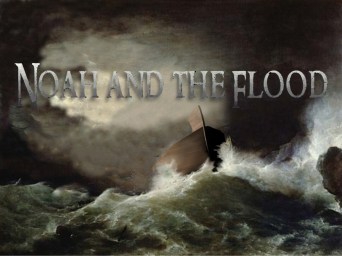










 Situational – ‘It depends on the circumstances’