THE BOOK OF MATTHEW – Chapter 15, Inner Purity, Faith of a Gentile, Jesus Heals, Jesus Feeds 4,000


THE BOOK OF MATTHEW Chapter 15

Inner Purity, Faith of a Gentile, Jesus Heals, Jesus Feeds 4,000

The language and style of Jesus’ teaching and remarks in this chapter are striking. He is direct and does not dull His points with apologies nor does He sidestep the issues He faces. One might even ask if His speech is perhaps unnecessarily harsh? The answer is NO. His speech and demeanor are on target. Time is short and there is much work to be accomplished. There is no time for long accommodating oratories or pathetically compromised teachings to convince the rebellious. Jesus is here to call the children of Israel to repentance. His speech is sharp to the hard of hearing and gentle to the willing, whether He is speaking to the Pharisees, His disciples, the Jews or a gentile woman.

Please pay attention and learn. This is our model. The time is short. There is much work yet to be done.

Tradition and Commandment

Matthew 15:1, Then some Pharisees and scribes came to Jesus from Jerusalem and said, verse 2, “Why do Your disciples break the tradition of the elders? For they do not wash their hands when they eat bread.” Verse 3. And He answered and said to them, “Why do you yourselves also break the commandment of God for the sake of your tradition? Verse 4. For God said, ‘HONOR YOUR FATHER AND MOTHER,’ and, ‘THE ONE WHO SPEAKS EVIL OF FATHER OR MOTHER IS TO BE PUT TO DEATH.’ Verse 5. But you say, ‘Whoever says to his father or mother, “Whatever I have that would help you has been given to God, verse 6, he is not to honor his father or mother.’ And by this you have invalidated the word of God for the sake of your tradition. Verse 7. You hypocrites, rightly did Isaiah prophesy about you, by saying:

Verse 8, ‘THIS PEOPLE HONORS ME WITH THEIR LIPS,

BUT THEIR HEART IS FAR AWAY FROM ME.

Verse 9. ‘AND IN VAIN DO THEY WORSHIP ME,

TEACHING AS DOCTRINES THE COMMANDMENTS OF MEN.’”

(Commentary Break): Jesus is being challenged by the Pharisees about their tradition of washing one’s hands before eating bread. This tradition, known as netilat yadayim required that Jews wash their hands and say a blessing before eating any meal that includes bread or matzah. This ritual, although instituted by the religious establishment of priests and not found in the Talmud, it was a serious matter to the Jew and it was to be followed and obeyed or suffer imposed consequences (see myjewishlearning for more detail).

 Jesus call the Pharisees to account on this man-instituted ritual, comparing and contrasting their ritual demands to an actual requirement of the Torah, (the Jewish ‘bible’), one of the ten commandments, that of honoring father and mother. The Jews would find ways to side-step helping a parent in need by claiming all their excess of available finances or goods had had already been given to God. Jesus called these Pharisees, hypocrites, and quoted the commandment that such as these should be put to death. Jesus, thereby, invalidates their ritual and calls out their hypocrisy. Jesus continues to quote from Isaiah 29:13-14, saying, “This people honors Me with their lips, but their heart is far away from me. In vain do they worship Me, teaching as doctrines the rituals of men.”

 This is not just to explain the context and the meaning of these verses, but to warn present and future generations of Christians against abrogating God’s law with the traditions of people. It leads to death, and a great majority of churches around the world are doing just that: replacing the plain teachings and commandments of God with what pleases men and women. Take note. Time is short. Jesus says we are to repent, today, and follow Him! (End Commentary Break).

Verse 10. After Jesus called the crowd to Him, He said to them, “Hear and understand! Verse 11. It is not what enters the mouth that defiles the person, but what comes out of the mouth, this defiles the person.”

Verse 12. Then the disciples came and said to Him, “Do You know that the Pharisees were offended when they heard this statement?” Verse 13. But He answered and said, “Every plant which My heavenly Father did not plant will be uprooted. Verse 14. Leave them alone; they are blind guides of blind people. And if a person who is blind guides another who is blind, both will fall into a pit.”

(Commentary Break): Jesus says, “Hear and understand”. These Words are very important and specific.

The word “Hear” is from the Greek word ‘akoúō, which means to hear God’s voice which prompts Him to birth faith within the listener!

The word, “understand” from the Greek word, ‘syníēmi, means to ‘put the facts together’ to arrive at a final conclusion, complete with life-applications. This ideas is closely connected with discerning and doing the preferred will of God.

 Once again referring to Jewish teachings about rituals concerning dietary purity, Jesus explains that the Pharisees have it wrong again. They are seeing the outer laws but Jesus is and is explaining the indwelling law, the law that is to be written on our hearts. He says, it is what comes out of the mouth that defiles; for from the mouth spring issues of the heart. (see Proverbs 4:23).

Nowadays, it seems, that we don’t worry too much about silly, frivolous or profane speech, if it is all in fun, even in the church. And we establish many rituals, practices, habits or ‘legacies’ of our own and impose the on our Churches.

Jesus warns that those who practice such things are blind guides leading the blind, and they both will fall into a pit! (End Commentary Break).

The Heart of Man

Verse 15. Peter said to Him, “Explain the parable to us.” Verse 16. Jesus said, “Are you also still lacking in understanding? Verse 17. Do you not understand that everything that goes into the mouth passes into the stomach, and is eliminated? Verse 18. But the things that come out of the mouth come from the heart, and those things defile the person. Verse 19. For out of the heart come evil thoughts, murders, acts of adultery, other immoral sexual acts, thefts, false testimonies, and slanderous statements. Verse 20. These are the things that defile the person; but to eat with unwashed hands does not defile the person.”

The Faith of a Canaanite Woman

Verse 21. Jesus went away from there, and withdrew into the region of Tyre and Sidon. Verse 22. And a Canaanite woman from that region came out and began to cry out, saying, “Have mercy on me, Lord, Son of David; my daughter is severely demon-possessed.” Verse 23. But He did not answer her with even a word. And His disciples came up and urged Him, saying, “Send her away, because she keeps shouting at us!” Verse 24. But He answered and said, “I was sent only to the lost sheep of the house of Israel.” Verse 25. But she came and began to bow down before Him, saying, “Lord, help me!” Verse 26. Yet He answered and said, “It is not good to take the children’s bread and throw it to the dogs.” Verse 27. And she said, “Yes, Lord; but please help, for even the dogs feed on the crumbs that fall from their masters’ table.” Verse 28. Then Jesus said to her, “O woman, your faith is great; it shall be done for you as you desire.” And her daughter was healed at once.

(Commentary Break): Once again, the language Jesus uses here seems stark and harsh.

A Canaanite woman pleads with Jesus to help here demon possessed daughter, and she apparently knew about Jesus, as she called Him “Lord, Son of David”. But Jesus seems to ignore her. Even the disciples urged Jesus to dispatch her.

Finally, Jesus answers and refers to her a ‘dog’ and says He has come only to the lost sheep of Israel.  But she would not relent nor would she be denied, so she pleads further, “Lord, help me!”

Jesus refers to her as a ‘dog’ again, but it is interesting to know that Greek word Jesus uses for ‘dog’ is more like a ‘puppy’ or a house pet, not a mongrel. Jesus is showing compassion while speaking in the local vernacular.

The woman continues to plead with Jesus and He says to her, “Woman, your faith is great; it shall be done for you as you desire.” And her daughter was healed at once! Demanding things or matters of Jesus only leads to silence, but Jesus shows grace, mercy and favor to the meek, the humble, the needy, and to those who believe. So, when you pray, take note of this teaching. Hear and understand. (End Commentary Break).

Healing Crowds

Verse 29. Departing from there, Jesus went along the Sea of Galilee, and after going up on the mountain, He was sitting there. Verse 30. And large crowds came to Him bringing with them those who were limping, had impaired limbs, were blind, or were unable to speak, and many others, and they laid them down at His feet; and He healed them. Verse 31. So the crowd was astonished as they saw those who were unable to speak talking, those with impaired limbs restored, those who were limping walking around, and those who were blind seeing; and they glorified the God of Israel.

Four Thousand Men Fed

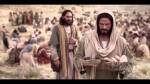
Verse 32. Now Jesus called His disciples to Him and said, “I feel compassion for the people, because they have remained with Me now for three days and have nothing to eat; and I do not want to send them away hungry, for they might faint on the way.” Verse 33. The disciples said to Him, “Where would we get so many loaves in this desolate place to satisfy such a large crowd?” Verse 34. And Jesus said to them, “How many loaves do you have?” And they said, “Seven, and a few small fish.” Verse 35. And He directed the people to sit down on the ground; verse 36, and He took the seven loaves and the fish; and after giving thanks, He broke them and started giving them to the disciples, and the disciples gave them to the crowds. Verse 37. And they all ate and were satisfied, and they picked up what was left over of the broken pieces, seven large baskets full. Verse 38. And those who ate were four thousand men, besides women and children.

(Commentary Break): Verses 29 through 38, although bear great symbolism, are self-explanatory. What I would point out is that “Jesus felt compassion” for those who are following Him, and He did something about it.

Let me make that personal: “Jesus feels compassion for those who follow Him, and for those in need, He does something about it.” (End Commentary Break).

Verse 39. And sending away the crowds, Jesus got into the boat and came to the region of Magadan.

(Commentary Break): Magadan is locality on the western shore of the Sea of Galilee to which Jesus came after feeding the 4,000. Magadan was identical with, or at least included in, Magdala, the home of Mary Magdalene. Khirbet Mejdel, three miles N.W. of Tiberias is believed to stand on the site of Magdala today. (End Commentary Break).

Embracing Movement and Change

Jesus’ journey to Magadan underscores the importance of movement and change in the life of a believer. Just as Jesus traveled from place to place to fulfill His mission, modern Christians are called to embrace change and be willing to move wherever God leads them. This might mean physical relocation, changes in vocation, or shifts in ministry focus. The key lesson is to remain flexible and obedient to God’s direction.

The Power of Miracles

The mention of Magadan follows the miracle of feeding the four thousand. This event reminds Christians of the power of Jesus’ miracles and His ability to provide abundantly. Modern believers are encouraged to trust in Jesus’ power to meet their needs, both physical and spiritual. Miracles, both great and small, continue to testify to God’s active presence in the world.

Faithful Witness

The account of Jesus’ travels and the inclusion of places like Magadan serve as a reminder of the importance of being a faithful witness. Just as Jesus reached out to different regions, Christians are called to be witnesses of His love and truth in diverse settings. This involves sharing the gospel, serving others, and living out one’s faith authentically in various contexts.

Connection to a Loving God – God’s Care for All People

Jesus’ movement to regions like Magadan reflects God’s care for all people. Jesus did not limit His ministry to one place or one group of people. Instead, He demonstrated God’s love and compassion by reaching out to different communities. This underscores the inclusive nature of God’s love, reminding believers that God’s care extends to everyone, regardless of their location or background.

God’s Guidance in Transitions

The transitions in Jesus’ ministry, including His journey to Magadan, illustrate God’s guidance in times of change. Just as Jesus was guided by the Father in His earthly ministry, modern Christians can trust in God’s guidance during their own transitions. Whether facing personal, professional, or spiritual changes, believers can rely on God’s wisdom and direction.

Connection to Jesus Christ – Jesus as the Good Shepherd

Jesus’ movement to Magadan and other regions showcases Him as the Good Shepherd who goes after His flock, seeking to save and serve. This reflects His heart for the lost and His dedication to bringing God’s message to all. For modern Christians, this connection emphasizes the need to follow Jesus’ example in seeking out and ministering to those in need.

The Bread of Life

The miracle preceding Jesus’ departure to Magadan, where He fed the four thousand, highlights Jesus as the Bread of Life. This miracle symbolizes Jesus’ ability to satisfy the deepest needs of humanity. Christians are reminded that true fulfillment and sustenance come from Christ alone, who provides both physical and spiritual nourishment.

Conclusion

For modern Christians, this provides valuable lessons about embracing change, witnessing faithfully, and trusting in God’s provision and guidance. Understanding Magadan’s place in biblical history connects believers to the broader narrative of God’s redemptive plan, ultimately fulfilled in Jesus Christ, who continues to guide, provide, and care for His people. (the preceding 8 paragraphs are from videobible.com).

There is a lot to be considered in this chapter. I would caution us to remember, first, that Jesus is Lord and that we are His servants. We do not supersede Him, and that it is He who does His works through us.

Secondly, straight talk, delivered in love with the intention of drawing all people to Christ. We should remember to season our speech with the power and fire of the

Gospel of Jesus, but to temper it with the love and compassion shown by Christ our Lord.

Your Brother and Friend,

Mike Young.

NEXT:THE BOOK OF MATTHEW Chapter 16, Pharisee and Sadducees Challenge Jesus, Peter’s Confession, Jesus Foretells His Death, Discipleship is Costly.

PREVIOUS:  THE BOOK OF MATTHEW Chapter 14, John Beheaded, Jesus feeds the Five Thousand, Jesus Walks on The Water.

A PROPHETIC WORD FROM JESUS – “Whoever Loves Father and Mother More Than Me”, Part 48

A PROPHETIC WORD FROM OF JESUS

Creative, Causative, Prophetic, Instructional – Part 48

“Whoever loves father or mother more than me”

“Whoever loves father or mother more than me is not worthy of me, and whoever loves son or daughter more than me is not worthy of me. And whoever does not take his cross and follow me is not worthy of me. Whoever finds his life will lose it, and whoever loses his life for my sake will find it.” – The Words of Jesus, Matthew 10:37-39.

A simple face value reading should leave the reader with questions, such as, ‘What kind of God would demand such absolute attention and control over someone’s life’, and WHY?

Here is the Amplified Bible version:

He who loves father or mother more than Me is not worthy of Me;

 “and he who loves son or daughter more than Me is not worthy of Me.

 “And he who does not take his cross [expressing a willingness to endure whatever may come] and follow Me [believing in Me, conforming to My example in living and, if need be, suffering or perhaps dying because of faith in Me] is not worthy of Me.

“Whoever finds his life [in this world] will [eventually] lose it [through death],

“and whoever loses his life [in this world] for My sake will find it [that is, life with Me for all eternity].”

Once you give your life over to Jesus to this degree, He directs you to love your wife, the same way He loves the Church and gave His life for her. He tells you to love and honor your father and mother and your children with His love.

We could encapsulate or summarize verses 37 – 39, by saying that following Jesus means you are “ALL IN or NOT IN AT ALL”.

It means you are desiring and willing to allow God to fill you with His Spirit, with His desires and His ways. You are willing to become, and you are becoming:

Humble                                Meek                          Joyful

Generous                            Loving                        Responsible

Self-Controlled                  Truthful                     Deferential

Creative                               Sincere                       Faithful

Thrifty                                 Took Initiative          Discrete

Resourceful                        Sensitive to others  Decisive

Alert                                     Compassionate        Wise

Bold                                      Attentive                    Obedient

Reverent                             Virtuous                    Determined

Tolerant                              Just                             Content

Forgiving                            Loyal                          Available

Persuasive                          Patient                      Hospitable

Gracious                             Grateful                      Enthusiastic

Gentle                                  Punctual                    Thorough

Secure                                  Diligent                      Enduring

Dependable                         Cautious                    Orderly

At the same time, your life will exhibit:

love [unselfish concern for others]

joy,

[inner] peace,

patience [not the ability to wait, but how we act while waiting],

kindness,

goodness,

faithfulness,

gentleness,

self-control.

And still, just as Jesus came to do these things, you will follow Him, likewise:

 1. TESTIFY TO THE TRUTH

John 18:37 Therefore Pilate said to Him, “So You are a king?” Jesus answered, “You say correctly that I am a king. For this purpose I have been born, and for this I have come into the world: to testify to the truth. Everyone who is of the truth listens to My voice.”  

 2. BRING A SWORD

Matthew 10:34“Do not think that I came to bring peace on the earth; I did not come to bring peace, but a sword. Verse 35, For I came to TURN A MAN AGAINST HIS FATHER, AND A DAUGHTER AGAINST HER MOTHER, AND A DAUGHTER-IN-LAW AGAINST HER MOTHER-IN-LAW; verse 36, and A PERSON’S ENEMIES WILL BE THE MEMBERS OF HIS HOUSEHOLD.”

 3. FULFILL THE LAW

Matthew 5:17 Do not presume that I came to abolish the Law or the Prophets; I did not come to abolish, but to fulfill the Law and the Prophets.”  

 4. CALL SINNERS

Mark 2:17 “And hearing this, Jesus *said to them, “It is not those who are healthy who need a physician, but those who are sick; I did not come to call the righteous, but sinners.” 

 5. TELL ABOUT JESUS WHO SAVES THE WORLD

John 12:47If anyone hears My teachings and does not keep them, I do not judge him; for I did not come to judge the world, but to save the world.”

 6. CAST FIRE & BRING DIVISION UPON THE EARTH

Luke 12:49 I have come to cast fire upon the earth; and how I wish it were already kindled! Verse 50, But I have a baptism to undergo, and how distressed I am until it is accomplished! Verse 51, Do you think that I came to provide peace on earth? No, I tell you, but rather to create division; “

The Point here, is that as followers and disciples of Jesus, the attitude, methods and ways of Jesus are to be our calling, our attitude and our methods and ways, also.

So, what makes you ‘worthy’ of Him?

“You shall love the LORD your God with all your heart and mind and with all your soul and with all your strength [your entire being].” (Deuteronomy 6:5).

And, how shall you attain to this?

“These words, which I am commanding you today, shall be [written] on your heart and mind. You shall teach them diligently to your children [impressing God’s precepts on their minds and penetrating their hearts with His truths] and shall speak of them when you sit in your house and when you walk on the road and when you lie down and when you get up. And you shall bind them as a sign on your hand (forearm), and they shall be used as bands (frontals, frontlets) on your forehead. You shall write them on the doorposts of your house and on your gates. (Deuteronomy 6:6-9).

We will find satisfaction and joy everlasting through these things. But make no mistake, this is hard work. It is hard work following Jesus, but it is the only way to life.

Your Brother and Friend,

Mike Young

NEXT: A PROPHETIC WORD FROM OF JESUS – “Whoever receives you, receives Me”, Part 49.

PREVIOUS:  A PROPHETIC WORD FROM JESUS – “Not Peace But a Sword”, Part 47

(Please bookmark this page or subscribe for future episodes).

JOY – Episode 5 – They Left the Tomb with Great Joy


JOY – Episode 5 – They Left the Tomb with Great Joy

But the fruit of the Spirit is love, JOY, peace, forbearance, kindness, goodness, faithfulness, gentleness, and self-control. (Galatians 5:22-23).

It is at least interesting that the fruit of the Spirit of Joy is positioned between Love and Peace. Could it be coincidental that we must find love which comes before joy in order to find peace in our lives?

When and from what sources do you find Joy? Is it in a job well done? From your career, hobby, family, possessions or good fortune?

This word, JOY, in the Bible and from the Greek language in which it was written, is ‘chara’,  (pronounced, ‘khar-ah’), means joy, delight, gladness, a source of joy. The picture is “to extend favor, lean towards, be favorably disposed”. More properly, it means the awareness of God’s grace and favor. Joy is found when God’s grace is recognized.

Read with me over the coming episodes, examples of what the scriptures say about JOY.

And they left the tomb quickly with fear and GREAT JOY, and ran to report to His disciples. (Matthew 28:8)

Following the burial of Jesus, Mary Magdalene and the other Mary went to the tomb where Jesus had been buried, and a spectacle occurred. First an earthquake, an angel of the Lord descended from heaven and rolled away the stone that seal the tomb. The tomb’s guards froze in place from fear, but the angel told the women not to be afraid. He told them that Jesus has risen, just as He said He would, and they would find Him in Galilee! So, the women left the tomb quickly with fear and GREAT JOY, and ran to report to His disciples.

It would be easy to turn this into a story, albeit true, still a story is just a report of a past event which may give the reader good information and perhaps even a short-lived dose of excitement. But it still fades with time into just another Bible story. Let’s not allow that to happen. This event echoes and reverberates in time. Jesus foretold this would happen, and it happened! It is the miracle of miracles. It was and is a prophecy which has come to pass, and you should know by now, prophecies are rarely one-and-done. They tell the truth to you and through you, and will continue to do so until Jesus comes again for His own.

So please, read these verses again, and hear them as if they were written specifically to you – because they are written to you – and all of His disciples. Gain wisdom and understanding from these Words of Jesus.

What was the source of their Joy? Was it the empty tomb? Was it the radiance of the angel? It was neither of those things. The source of their Joy was that Jesus had risen from the dead, just as He said. The source of their Joy was that He has gone ahead of them, and they would see Him again!

Jesus has told us, ahead of time, that He would be crucified and buried, and that He would rise to life on the third day.  He has told us that He has gone ahead of us and that we will see Him again! The source of our Joy is that Jesus has risen from the dead, just as He said. The source of our Joy is that He has gone ahead of us, and we will see Him again!

Now, you also, are to leave that tomb quickly, with Great Joy, and do not be afraid, but go to your ‘Galilee’, which is the world around you, and report to everyone that He has gone ahead of us and that you will see Him again! Go and tell that He has risen from the dead as He said He would!

Allow these prophetic words to be fulfilled within you and to come alive in your life! And you will find the source of your Joy when you go and tell others He is risen, and we will see Him again!

Your Brother and Friend,

Mike Young

PREVIOUS: JOY – Episode 4 – The Joy of The Master

NEXT:  Joy – Episode 6 – Joy and Gladness Over His Birth

(Please bookmark this page or subscribe for future episodes).

JOY – Episode 4 – The Joy of The Master


JOY – Episode 4 – The Joy of The Master

But the fruit of the Spirit is love, JOY, peace, forbearance, kindness, goodness, faithfulness, gentleness, and self-control. (Galatians 5:22-23).

It is at least interesting that the fruit of the Spirit of Joy is positioned between Love and Peace. Could it be coincidental that we must find love which comes before joy in order to find peace in our lives?

When and from what sources do you find joy? Is it in a job well done? From your career, hobby, family, possessions or good fortune?

This word, JOY, in the Bible and from the Greek language in which it was written, is ‘chara’,  (pronounced, khar-ah’), means  joy, delight, gladness, a source of joy. The picture is “to extend favor, lean towards, be favorably disposed”. More properly, it means the awareness of God’s grace and favor. Joy is found when God’s grace is recognized.

Read with me over the coming episodes, examples of what the scriptures say about JOY.

“His master said to him, ‘Well done, good and faithful slave. You were faithful with a few things, so I will put you in charge of many things; enter the joy of your master.’ (Matthew 25:21).

It seems odd, in our day and time, to call someone a slave. But in the day and in the culture which this was written, it was a common practice. However, there were many instances where a slave was a member of the household of the slave-owner, and were properly cared for and treated very well. But, the slave was expected to perform his or her duties as instructed by the owner.

Furthermore, this word, slave, comes from the Greek word, doúlos, which properly means someone who belongs to another; a bond-slave, without any ownership rights of their own. Ironically, is used with the highest dignity in the New Testament, namely, of believers who willingly live under Christ’s authority as His devoted followers. This is the case, here. A mutually beneficial relationship.

This verse is actually a simile from a parable, offered as a teaching. The context of this parable is found in the preceding verses, Matthew 25, verses 14 through 20:

For it is just like a man about to go on a journey, who called his own slaves and entrusted his possessions to them. To one, he gave five talents (see footnote ‘c’), to another, two, and to another, one, each according to his own ability; and he went on his journey. The one who had received the five talents immediately went and did business with them, and earned five more talents. In the same way, the one who had received the two talents earned two more. But he who received the one talent went away and dug a hole in the ground, and hid his master’s money.

 “Now after a long time, the master of those slaves came and settled accounts with them. The one who had received the five talents came up and brought five more talents, saying, ‘Master, you entrusted five talents to me. See, I have earned five more talents.’ His master said to him, Well done, good and faithful slave. You were faithful with a few things, I will put you in charge of many things; enter the joy of your master (see footnote ‘e’).’

This relationship is further defined when the doúlo-slave is found to be trusted with such a large sum of the master’s money. It is a relationship built on trust and interdependency.

The master is pleased, in this case, with the performance of his slave. But more importantly, the master is filled with joy, ‘chara’. He is delighted, filled with gladness, the relationship of trustworthiness is the source of his joy. The master ‘extends his favor, as he lean toward and is favorably disposed’ toward his servant. And the servant is made aware of the master’s grace and favor.

“For it is just like a man about to go on a journey, who called his own slaves and entrusted his possessions to them”, is a simile within a parable and is one secret, hidden in the oracles of God, about having, holding and enjoying joy in your own life.

Make this joy your own by remembering that True Joy is found when you are found to be trustworthy.

Make this joy your own by remembering that True Joy is found when God’s grace is recognized. Accept God’s grace and extend it to others!

Your Brother and Friend,

Mike Young

PREVIOUS:  Joy, Episode 3 – The Hidden Treasure.

 NEXT:  Joy – Episode 5 – They Left the Tomb with Great Joy.

(Please bookmark this page or subscribe for future episodes).

THE BOOK OF MATTHEW – Chapter 14, John Beheaded, Jesus feeds the Five Thousand, Jesus Walks on The Water


THE BOOK OF MATTHEW Chapter 14

John Beheaded, Jesus feeds the Five Thousand, Jesus Walks on The Water

The Bible is separated into books, chapters and verses, so it is easy to consider what came in the previous book or chapter is disconnected with what came in a previous book or chapter. It is like thinking that chapter has ended and now here is something new in another chapter or book. But, the Bible is the breathed out Word of God. It is the longest, continuous love letter spoken by God to His created. It has been written down by men under the direction of the Holy Spirit of God for us to read in this day. Furthermore, the Gospels were written by first hand witnesses, often corroborating one another’s accounts.

So, as we continue with Matthew chapter 14, keep in mind that what you are reading is connected to the narration of the entire Bible. In other words, it is your next step in the journey from Genesis through the Revelation. It is a progressive teaching and training for the disciple of Jesus, both then and now. Reading and absorbing these words and teachings, you, like a living stone, are being built up into a spiritual house for a holy and dedicated priesthood, to offer spiritual sacrifices that are acceptable and pleasing to God through Jesus Christ. (see 1 Peter 2:5).

John the Baptist Beheaded

Matthew 14:1, At that time Herod the tetrarch heard the news about Jesus, verse 2, and said to his servants, “This is John the Baptist; he himself has been raised from the dead, and that is why miraculous powers are at work in him.”

Verse 3. For when Herod had John arrested, he bound him and put him in prison because of Herodias, the wife of his brother Philip. Verse 4. For John had been saying to him, “It is not lawful for you to have her.” Verse 5. Although Herod wanted to put him to death, he feared the crowd, because they regarded John as a prophet.

Verse 6. But when Herod’s birthday came, the daughter of Herodias danced before them and pleased Herod, verse 7, so much that he promised with an oath to give her whatevershe asked. Verse 8. And after being prompted by her mother, she said, “Give me the head of John the Baptist here on a platter.” Verse 9. And although he was grieved, the king commanded it to be given because of his oaths and his dinner guests. Verse 10. He sent word and had John beheaded in the prison. Verse 11. And his head was brought on a platter and given to the girl, and she brought it to her mother. Verse 12. John’s disciples came and took away the body and buried it; and they went and reported to Jesus.

(Commentary Break): Excluding the crucifixion of Jesus, this account of the beheading of John the Baptist is one of the most macabre events recorded in the New Testament. If there was any doubt the Herod was a beast of a man, this erases that doubt. His family was equally degenerate and evil.

John was beheaded to satisfy the grisly and debased desires of a perverse, immoral and debauched woman.

This is representative of the challenges you may face, whether greater or less, as you fulfill your calling and mission with Jesus. Jesus warned, in Matthew 5, verse 12 and 13, that “Blessed are you when people insult you and persecute you, and falsely say all kinds of evil against you because of Me. Rejoice and be glad, for your reward in heaven is great; for in this same way they persecuted the prophets who were before you.”

This also tells us that despite the horror and depravity of this event, it was foreordained. It was part of God’s plan, and John did not shrink back from destruction, but he had the faith that preserves the soul (see Hebrews 10:39). He was called and faithfully completed his mission.

This may be hard for some to accept, but becoming a Christian and following Jesus, may require more than you have been told to this point. So I am telling you now, the cost of being a disciple requires all you have and all you are. And be aware that God takes no pleasure in those who shrink back! Therefore, do not throw away your confidence when trials come, for it has a great reward. You may need the endurance that comes from confidence, so that when you have done the will of God, you may receive what is promised. (see Hebrew 10:35).

Finally, and on bit of a lesser note, there is ongoing speculation about why Herod said, “This is John the Baptist; he himself has been raised from the dead, and that is why miraculous powers are at work in him.” Bible commentators and teachers widely speculate that Herod was imagining these things or that he mistakenly identified John with Jesus. This is all nonsense. Jesus said, in Matthew 11:11-15, “Truly, I say to you, among those born of women there has arisen no one greater than John the Baptist. Yet the one who is least in the kingdom of heaven is greater than he. From the days of John the Baptist until now the kingdom of heaven has suffered violence, and the violent take it by force. For all the Prophets and the Law prophesied until John, and if you are willing to accept it, he is Elijah who is to come. He who has ears to hear, let him hear.”

The Bible is quite clear that John the Baptist is called “Elijah” because he came in the “spirit and power of Elijah” (Luke 1:17), not because he was Elijah in a literal sense. John the Baptist is the New Testament forerunner who points the way to the arrival of the Lord, just as Elijah filled that role in the Old Testament. John did for Jesus what Elijah was to have done for the coming of the Lord. The point of this is the fulfillment of prophecy. It has come to pass, just as the Bible said. You can depend on and have confidence in the Word of God to accomplish all that it says. Now, go! Complete your mission and calling! (End Commentary Break).

Five Thousand Men Fed

Verse 13. Now when Jesus heard about John, He withdrew from there in a boat to a secluded place by Himself; and when the people heard about this, they followed Him on foot from the cities. Verse 14. When He came ashore, He saw a large crowd, and felt compassion for them and healed their sick.

Verse 15. Now when it was evening, the disciples came to Him and said, “This place is secluded and the hour is already past to eat; send the crowds away, so that they may go into the villages and buy food for themselves.” Verse 16. But Jesus said to them, “They do not need to go; you give them something to eat!” Verse 17. They said to Him, “We have nothing here except five loaves and two fish.” Verse 18. And He said, “Bring them here to Me.” Verse 19. And ordering the crowds to sit down on the grass, He took the five loaves and the two fish, and looked up toward heaven. He blessed the food and breaking the loaves, He gave them to the disciples, and the disciples gave them to the crowds. Verse 20. And they all ate and were satisfied, and they picked up what was left over of the broken pieces: twelve full baskets. Verse 21. There were about five thousand men who ate, besides women and children.

(Commentary Break): Try to see with me that with the death of John the Baptist still fresh on Jesus’ mind, Jesus enters a boat and withdraws to a secluded place. The Bible doesn’t say why Jesus seeks solitude, but it does say that the crowds chased Him down and met at the shoreline even before He could get out of His boat or find rest. And Jesus saw the crowd and felt compassion. Please note, if you are a devoted follower of Christ on His mission, especially if you claim the title of pastor, this is the response of the Shepherd. He did not moan and lament, ‘how do I get away from these people and find rest’. He felt compassion. As it should be with anyone so called. This is our example.

I will not speak to this miraculous feeding of the 5,000. It is self-explanatory. But I will call notice to the symbolism of the ‘broken bread loaves’ as Jesus’ body, and the significance ‘leftover broken pieces’ and the 12 full baskets. The ‘broken pieces’ are significant that He is broken for us.

The meaning of the number 12 is completeness. The number 12 in Hebrew signifies perfect government, God’s government, divine order. Perhaps this is why we see:

God chose 12 tribes of Israel.

He ordained 24, (12 x 2), priestly divisions.

The 12 gates and foundations of the New Jerusalem point to His reign.

The 12 disciples chosen by Christ reveal the rule and authority of Jesus.

The context of 12 symbolizes the completeness of the nation of Israel. This stands for the completeness of His governing authority.

So, what do we do with this knowledge? What do we learn from the fact that numbers hold meaning in God’s Word and that the number 12 signifies God’s control and reign? Perhaps the most significant thing we can take away from this knowledge is nothing in Scripture is random or incomplete. God is a God of details, all pointing to His wisdom and power.

The meaning of 12 symbolizes His government and authority and should encourage us as the world seems spinning out of control. Though we’re living in the middle of the now and not yet, the New Jerusalem not on this earth with its twelve foundations and twelve gates, we know God is not finished. (End Commentary Break).

Jesus Walks on the Water

Verse 22. Immediately afterward He compelled the disciples to get into the boat and to go ahead of Him to the other side, while He sent the crowds away. Verse 23. After He had sent the crowds away, He went up on the mountain by Himself to pray; and when it was evening, He was there alone. Verse 24. But the boat was already a long distance from the land, battered by the waves; for the wind was contrary. Verse 25. And in the fourth watch of the night, (about 3 a.m.), He came to them, walking on the sea. Verse 26. When the disciples saw Him walking on the sea, they were terrified, and said, “It is a ghost!” And they cried out in fear. Verse 27. But immediately Jesus spoke to them, saying, “Take courage, it is I; do not be afraid.”

Verse 28. Peter responded and said to Him, “Lord, if it is You, command me to come to You on the water.” Verse 29. And He said, “Come!” And Peter got out of the boat and walked on the water, and came toward Jesus. Verse 30. But seeing the wind, he became frightened, and when he began to sink, he cried out, saying, “Lord, save me!” Verse 31. Immediately Jesus reached out with His hand and took hold of him, and said to him, “You of little faith, why did you doubt?” Verse 32. When they got into the boat, the wind stopped. Verse 33. And those who were in the boat worshiped Him, saying, “You are truly God’s Son!”

(Commentary Break): Verses 22 through 33 are rich with teachings and matters of curiosity, courage and faith. I suggest you read these verses over, several times and meditate on them, visualize them, to get a clear picture in your mind.

Now, review them again, and first, place yourself as getting into the boat with the other disciples. Close your natural eyes and see it with spiritual eyes. Think it. Feel it.

Now, place yourself in the boat, a long distance from land. It is 3 a.m. It is deathly dark, and a storm comes up and your boat is driven by a fierce wind and large waves are crashing over the bow and battering your boat. You are soaked from the rain and waves and hanging on for your life. Close your natural eyes and see. Think it. Feel it.

Suddenly, you and the other disciples see the figure of a man walking on the water, in the face of the wind and among the waves, and you are terrified. You cry out if fear, “It is a ghost!” Close your natural eyes and see.  Think it. Feel it.

Then Jesus speaks to your and the others, saying, “Take courage, it is I; do not be afraid.”

Now put yourself in the place of Peter, as if you are Peter. Being true to your character, as Peter, you dare to ask Jesus if you can join Him in the tempest and on the wave. Jesus says, “Come”, and you step out of the boat. Close your natural eyes and see. Think it. Feel it.

Seeing the wind, you become frightened, and you began to sink, crying out, “Lord, save me!” Immediately Jesus reaches out with His hand and takes hold your hand, and says, “You of little faith, whydid you doubt?” Close your natural eyes and see. Think it. Feel it.

When Jesus and you get back into the boat, you are sitting the in the boat, exhilarated, exhausted and wet. The wind stops. Close your natural eyes and see. Think it. Feel it.

As you sit in the boat, what do you say?  Say it. (End Commentary Break).

Verse 34. When they had crossed over, they came to land at Gennesaret. Verse 35. And when the men of that place recognized Him, they sent word into all that surrounding region and brought to Him all who were sick; verse 36, and they pleaded with Him that they might just touch the border of His cloak; and all who touched it were cured.

The men of that place recognized Him. If you do, indeed, recognize Him, what will you do?

Your Brother and Friend,

Mike Young.

NEXT: THE BOOK OF MATTHEW Chapter 15, Inner Purity, Faith of a Gentile, Jesus Heals, Jesus Feeds 4,000.

PREVIOUS:  THE BOOK OF MATTHEW Chapter 13, Jesus Teaches Parables

(Please bookmark this page or subscribe for future episodes).

THE CHURCH – The Edifice – That which is Good, Acceptable and Perfect.


THE CHURCH – The Edifice

That which is Good, Acceptable and Perfect

It could be said that the forerunner of the Christian church was the Tabernacle also known as the Tent of the Congregation or the Tent of the Meeting. It was the portable earthly dwelling of God used by the Israelites from the Exodus until the conquest of Canaan. Moses was instructed at Mount Sinai to construct and transport the tabernacle with the Israelites on their journey through the wilderness and their subsequent conquest of the Promised Land. After 440 years, Solomon’s Temple in Jerusalem superseded it as the dwelling-place of God (also see The Tabernacle, Learn Religions).

The Tabernacle was an outward expression of an inward confession and conviction. The Lord spoke to Moses and to Aaron after the Israelite fled captivity in Egypt, and gave them explicit instructions on setting up their wilderness camp. Numbers 2 consists entirely of God giving commandments as to how the Israelite camp should be arranged. From the NASB:

On the east, toward the sunrise, the divisions of the camp of Judah are to encamp under their standard. The tribe of Issachar will camp next to them. The tribe of Zebulun will be next. All the men assigned to the camp of Judah, according to their divisions, number 186,400. They will set out first. (The rest of the tribes are described).

So the Israelites did everything the Lord commanded Moses; that is the way they encamped under their standards, and that is the way they set out, each of them with their clan and family.

If you want to read more about the significance and the symbolism of the Tabernacle and the of Holies, click here: The Tabernacle, or here, Explore the Tabernacle.

Why does the Bible record all the things that happened during those 40 years? The Scripture tells us it was for an example, a foreshadowing. These things happened to them for our admonition. Paul makes a point in 1 Corinthians 10:11 that everything written then is for our application now. Every one of the events in Numbers has a lesson for us. And that’s why it is so important to study this book in detail.

The word ”example” in Greek is ‘tupos’, which is ”a figure, an image, a pattern, a pre-figuring.” That’s where we get the term ”type,” or model. Engineers speak of a prototype, which is from the same root. Types are common in the Bible, where some event, some object, or some situation is a lesson, in advance, of what’s coming. Once again, the Tabernacle and the wilderness camp was an outward expression of an inward conviction and confession.

The center of the Tabernacle was the Holy of Holies, the Holy Place, the outer chamber, which was surrounded first by priests of the tribe of Levi, then by the clan or tribes of Israel, the warriors and their families. It is easy to imagine the layers of protection provided from the outer to the innermost, the Holy of Holies. Possibly a pattern for the Christian’s human psyche and even the intent for the Christian church. But with the coming of Christ, the outermost is the Church Body or the Body of Christ. The courtyard resembles the priestly duties of spiritual gifts at work of each and every Christian. The Holy are of the Tabernacle is accessible by those who are fully dedicated in prayer and service to God through Christ Jesus and the Holy of Holies is the presence of God within each believer.

Should we, today, model our churches in such a fashion? Probably not. Jesus removed the barriers and indwells the believer. We are one with Him.

However, it is worthy to note that shortly after the establishment of the Christian Church, Sacred Christian architecture in the West, in particular Western Europe, has been influenced by a variety of architectural styles that initially derived from Roman pagan designs to new forms that attempted to break away from Roman influences. Christian church architecture indicates the cultural influences on Christianity but also reflected the spiritual ideas dominant in the period churches were built.

After 313 AD, as Christianity became accepted by the Roman government under Constantine the Great, early churches were beginning to be established in Western Europe and the Roman Empire. By this point, churches had already existed throughout the Sassanian Empire and Armenia, but had yet to be established, at least formally, in the Roman Empire. Initially, late Roman Empire churches often utilized converted pagan temples, as these were readily available structures that could accommodate many people. It was also convenient to use existing worship areas for the masses that had converted – this too, was and is an outward expression of an inward belief and conviction and confession. The drift to apostasy had begun!

There are many today that will say that the style, appearance or type of building is irrelevant. A building is just a tool for ministry. And, I agree. I am not referring to architecture. I am referring to intent. Is it our intention to follow the teachings and of Jesus and the Bible and to pay close attention to the significance of the meanings contained in the symbolism of the Tabernacle and of the Temple, or are we willing to go our own way in order to draw a crowd? Well, it isn’t working for the ‘mainline’ protestant churches. For examples: (click images for links to webpages).


The mainline tradition’s share of the Protestant population has declined along with its share of the overall population. Today, 32% of Protestants identify with denominations in the mainline tradition, down from 35% in 2007. Evangelicals now constitute a clear majority of all Protestants in the U.S., with their share of the Protestant population having risen from 51% in 2007 to 55% in 2014.

“So what?” you might ask? Is the departure from the Tabernacle-to-Christ-to-Postmodernism-evolution related to the statistics of church attendance decline and to the emergent apostasy?

For further examples, scores of protestant denominations and hundreds of thousands of churches, over time, have abandoned the clear mandates, doctrines and teachings of the Bible.

AD 1 The Church of Jesus Christ, The Body of Christ, had no buildings, little money and no wealth. The Church was a Movement.

Jesus said to make disciples; collect no money except to make your journey.

The penalty for becoming a Christian was often death.

The Church grew exponentially.

AD 49 The Church expanded into Greece. The Church became a philosophy to many. The Church grew and size and influence.

AD 313 The Church expanded into Rome and it gained recognition. It grew in power and popularity. It obtained wealth, buildings, property and influence. It became an institution.

AD 380 The Church expanded into Europe. It was becoming a worldwide phenomenon. It grew in wealth, stature, power and influence. It had become a culture.

AD 1607 The Church reaches America.

AD 1681 The Church became corporate. It had become a business and incorporated. It became regulated by the government.

The Corporate Church grew. It needed money to support growth and expansion, which meant the Corporate Church needed more people.

AD 1777 The state of Virginia granted tax exemption to houses of worship.

AD 1894 The corporate church was granted tax exemptions by the Federal Government.

AD 1954 The Federal Government regulated what a church could and could not say in order to retain tax-exempt status.

The church continued to grow, and in order to attract more people the Corporate Church lowered its membership and doctrinal standards. More people became ‘members’ and gave more money to support more growth.

The Church corporation is complete with leaders, boards and membership and a business model.

Local churches compete against one another for members (customers). The church is selling itself in “three line slogans”.

The Church members now have choices and have become religious consumers. Church people can shop around for the religious brand and standards that best suits them. (2 Timothy 3)

The Leadership (pastors and preachers) have become CEOs, disciples have become church leaders, growing their 501(c)(3) business models.

Record numbers of pastors quitting because of stress, burnout or are being fired by their congregations (some stats say 1500 – 1700 leave “the ministry” each month).

Church debt in America soars; church foreclosures soar.

AD 1968 The church ordains homosexuals as clergy.

AD 1972 The United church of Christ ordains homosexual clergy

AD 2010 The Lutheran church ordains homosexual clergy

AD 2012 The Presbyterian church USA ordains homosexual clergy (not to be confused with the Presbyterian church PCA).

The Episcopal Church in the United States and the Christian Church (Disciples of Christ) have also allowed ordination of openly gay and lesbian candidates for ministry for some years.

Internationally, churches that have ordained openly lesbian or gay clergy include the Church of Scotland, the Church of England, the Church in Wales, the Church of Sweden, the Church of Norway, the Church of Denmark, the Church of Iceland, the Evangelical Lutheran Church of Finland, the Evangelical Church in Germany, the Methodist Church in Britain, the Protestant Church in the Netherlands, the United Protestant Church in Belgium, the Swiss Reformed Church, the United Protestant Church of France, the Evangelical Lutheran Church in Canada, Anglican Church in Canada, the Old Catholic Church, the Czechoslovak Hussite Church and the United Church of Christ in Japan.

AD 2024 The church is losing and has lost influence. The church in 2020 is losing members.

AD 2024 Much of the church is teaching and living a different Gospel than that of the Apostles.

The Age of Apostasy is well under way.

SO, WHAT TO DO?

Let me begin by saying that I know very few will have read this. I also know that I have little to no influence on the church or on those who lead and formulate policy for the church. So, why bother? Am I just ranting? Perhaps. But like the man who would stroll the beach after the tides would recede, picking up starfish, one at a time, tossing them back into the water. When asked why he would bother since thousands and thousands are stranded, dying on the beach, he picked up one more and said, it means something to this one. So it is with me.

We need to let our faith in Christ, and our understanding and belief in The Word, be expressed – pressed out – our expression, conviction and confession.

The Holy of Holies in the Tabernacle, should be expressed by how we speak, how we deport ourselves, how we live and how we treat others. It is Christ in us, our hope of glory, on display.

The Holy place in the Tabernacle is where we prepare ourselves as a living and holy sacrifice, acceptable to God, which is our spiritual service of worship, through words and deeds of love, joy, peace, patience, kindness, goodness, faithfulness, gentleness, and self-control.

Our ‘Camp of Israel’ is where we stand firm against the schemes of the devil.  Our struggle is not against flesh and blood, but against the rulers, against the powers, against the world forces of this darkness, against the spiritual forces of wickedness in the heavenly places. Therefore, we take up the full armor of God, and resist.

The inner courts, are where we congregate and express our Spiritual Gifts in service to God and to one another.

The outer courts and where we invite and receive those who are drawn to Christ, where we proclaim the Gospel message and make disciples. This work takes place both outside and inside the Temple.

CHRIST DWELLS WITHIN – YOU ARE NOW THE EDIFICE

Although the architecture of modern-day church buildings may differ from the Tabernacle and the Temple, and the spiritual significance and symbolisms have been fulfilled with the coming of the Christ Jesus. It remains true that our beliefs and faith are expressed within the Church – be it a building, a program or a person. All of these things should not conform to the world, but must be transformed by the renewing of our minds so the we may prove what is the will of God, that which is good, acceptable and perfect! Or do you not know that your body is a temple of the Holy Spirit within you?

In conclusion, we should allow the Holy of Holies to influence, guide, direct and establish our ways. It should be ‘from the inside to the outside’. Every act and service of our worship is a result of our focus on the Holy of Holies, from the Holy places, to our priesthood as believers, to our encampment around our Tabernacles, through our inner courts, outer courts and into this world. Anything and everything else, is just a sideshow.

Your Brother and Friend,

Mike Young

PS: Examples of sideshows: Easter bunnies and egg hunts at church. Halloween at church disguised as Fall festivals. Christmas parties at church focused on materialism. There are times for these things, but not in the sanctuary, remembering, the Church is an Expression of what you really and truly believe.

GOD HAS A PLAN FOR YOUR LIFE?


GOD HAS A PLAN

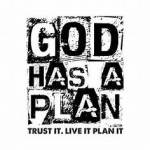
Have you heard that “God has a plan for your life”? The implication, often, is that God has a tailor-made plan just for you and you alone. It is as if God has planned His entire creation around your time on this earth. Wow. Unfortunately, not only is this kind of thinking incredibly myopic and shortsighted, it is misinformed and will inevitably lead you down the wrong path. A dead end.

Now, I can almost hear many people say, “but Jeremiah 29:11-13 says that God has a plan for your life”. As an example, I hear many Christians, preachers, pastors and theologians included, suggest that God’s plan for your life and that it can be found in scriptures like, Jeremiah 29:11-13. To wit: For I know the plans that I have for you,’ declares the LORD, ‘plans for welfare and not for calamity to give you a future and a hope. Then you will call upon Me and come and pray to Me, and I will listen to you. You will seek Me and find Me when you search for Me with all your heart.”

Jeremiah 29 verses 11 through 13 are widely read, widely quoted and very popular verses.  I know many people ‘claim’ these verses as a promise from God to bless their life with a future and a hope. But this is just one example of how people will misunderstand God’s Plan by using a egocentric view of life. I.e., it’s all about ‘me’.

However, if you look at the context of these verses, you can see how many folks sadly take these verses out of context. Read what comes just before and after these verses.

Jeremiah 29:8, “For thus says the LORD of hosts, the God of Israel, ‘Do not let your prophets who are in your midst and your diviners deceive you, and do not listen to the dreams which they dream.

Verse 9. ‘For they prophesy falsely to you in My name; I have not sent them,’ declares the LORD.

Verse 10. “For thus says the LORD, ‘When seventy years have been completed for Babylon, I will visit you and fulfill My good word to you, to bring you back to this place.

Verse 11. ‘For I know the plans that I have for you,’ declares the LORD, ‘plans for welfare and not for calamity to give you a future and a hope.

Verse 12. ‘Then you will call upon Me and come and pray to Me, and I will listen to you.

Verse 13.You will seek Me and find Me when you search for Me with all your heart.

Verse 14. ‘I will be found by you,’ declares the LORD, ‘and I will restore your fortunes and will gather you from all the nations and from all the places where I have driven you,’ declares the LORD, ‘and I will bring you back to the place from where I sent you into exile.

Jeremiah chapter 29 is an historical account of the Israelites in exile, as punishment from God for their disobedience.  The prophet Jeremiah confronts the false prophet, Hananiah, who had boldly proclaimed that God was going to free Israel from Babylon in two years.

So, if you don’t know this historical account, and most people don’t, are you certain you want God to ‘bless’ you with punishment and exile in order to bring you back to Himself?


However, God does have a plan. The Bible tells us that God has a plan. In fact, the Bible shows us His Master Plan, and you can see and learn about His plan if you are willing to take the time to study and search. And, I will suggest that God’s plan is much bigger than you or me. His plan is about the entire human race, the earth, the sun, the stars and the entire cosmos. And, His Plan is revealed in the first words in the book of Genesis and continues through the last words in Revelation.

Now, don’t get me wrong. You and I are included in His plan, and we are destined to navigate His plan. But we cannot do that correctly or effectively unless WE KNOW THE WAY AND THE PURPOSE of His Plan.

Once again, from an egocentric perspective, His Plan may seem like a maze to us. His plan is full of opportunities and obstacles. You must constantly be asking yourself which path to take to reach the goal? And this becomes increasingly impossible unless you know His Ultimate Goal. And, because God has designed this maze for your life, you are simply the sojourner, trying to find your way.

Jesus knows the way. In fact, Jesus is the way! He can and will lead you to safety. But you must follow Him.

This entire matter could be compared to the age old philosophical question, “why am I here, and what is the purpose of my life?” Well, if you are willing, we can answer that question:

You are here because God put you here, or more accurately, God created a man and a woman, (Adam and Eve), who, over time, put you here. That is the “how” of why you are here.

You are here because God put you here to test you. Yes, to test you, (see 1st Peter 1:3-7), and for those who ‘endure to the end’ of this testing, they will be ‘saved’, (see Matthew 24:13). That is the ‘why’ of why you are here.

God is testing you to prove you. Yes, to prove you. God’s intention is that you be saved and transformed into the image of Christ Jesus. (See Romans 12:2 and 2 Corinthians 3:18).

The purpose of God’s plan is ‘perfection’. Yes, perfection. In the beginning, God said His creation was ‘good and very good’ (see Genesis 1, verses 10, 12, 18, 21, ,25 31, and Genesis 3:6).

God was creating the Masterpiece, first in the heavens and then on the earth. His work completed in just seven days, He would allow His Masterpiece to mature for millenniums, until it became His Perfection. (See Matthew 5:48, John 17:23, Romans 12:2, 1 Corinthians 13:10, Philippians 3:12, Hebrews 2:10, Hebrews 9:9, Hebrews 10:14, Hebrews 12:2, James 1:4, 1 Peter 5:10, 1 John 2:5).

For us, this is a journey of discovery and revelation of God’s Grand Plan and Design, from creation through the End of the Age, then into a New Heaven and a New Earth.


This will lead to the reasons for WHAT God is doing in these Last Days and WHY He is doing it this way. My prayer is that, after reading this, everything you may have wondered regarding the reasoning behind God’s Plan for the world and your life, will fall into place.

In order to know God’s plan for your life – and the entirety of the cosmos, you must know the entire plan. Knowing is just the beginning, because once you know The Plan then you will know that you have to choose to join HIM in what HE is doing or go your own way. Okay?

So, let’s look at exactly what is God’s Plan for everyone and everything? What is His purpose? Let me put it as succinctly and briefly as possible:

If you will come to understand this, then all your successes and failures, all the pleasantries and the tragedies, all the good and all of the bad things of life, even death and eternity, will begin to make perfect sense.

Notice that I do not say it will be easy. It will not and is not easy. It is hard. But, if you look hard enough, you can come to see the purpose in every circumstance, the pleasant and the unpleasant, the good and the bad. You will see the outcome as the proving of your faith, even if you have to wait years after these events that come upon you to see the results (see 1st Peter 1:3-7).

I will present, first, a very brief and a very simple overview of a biblical time line to help you understand. I will begin with the Creation of the heavens and the earth, and take you on a journey through time, until the destruction, and the creation of a New Heaven and a new earth. We will see the complete Plan of God, as found in the Bible(And, don’t worry. It will be an abbreviated history of how God has created the world, dealt with the people He created, and why the world has gone the way it has gone and how it will conclude.)

One last note. This is not designed to please everyone, and it will not fit every different denominational doctrine. Instead, this is meant to

  • Inform you, to
  • Inspire you, and to
  • Ignite you to move toward the One Living God and to join Him in what He is doing!

I hope that my Christian friends, and others who read this, don’t find it objectionable solely because I have omitted certain events. However, it is my intention to inform and inspire, NOT overwhelm the reader with volumes of information.

PERFECTION – In the beginning, God created.

He began with the imperfect and created the Masterpiece, first in the heavens and then on the earth. His work completed in just seven days; He would allow His Masterpiece to mature for a millennium until it became His Perfection.

This is a journey of discovery and revelation of God’s Grand Plan and Design, from creation through the End of the Age, then into a New Heaven and a New Earth.

This is an introductory study and an explanation on the reasons for WHAT God is doing in these Last Days and WHY He is doing it this way. My prayer is that, after reading this, everything you may have wondered regarding the reasoning behind God’s Plan for the world and your life, will fall into place.

This will take you on a journey into the reasons for WHAT God is doing in these Last Days and WHY He is doing it this way, and it will reveal His PURPOSE.

My prayer is that, after reading this, everything you may have wondered regarding the reasoning behind God’s Plan for the world and your life, will fall into place. God’s plan is unfolding exactly as He purposed; from

  1. The Creation, through
  2. The Garden of Eden, and
  3. The Fall of Man to,
  4. The Great Flood,
  5. The Tower of Babel,
  6. The Exodus from Egypt,
  7. The possessing of The Promised Land,
  8. The Destruction of the First Temple, and
  9. The Jewish Captivity in Babylon,
  10. The birth of Jesus,
  11. The death, burial and resurrection of Jesus,
  12. The Destruction of the Second Temple,

Our steady march through time has been exactly as Bible prophecy has foretold.  We have entered an era leading to the destruction and, eventually, a rebirth of the heavens and the earth.

The world has entered the final epoch of time, known by various names, such as, “The Last Days”, “The End The of Age” the “Latter Days” and “The Tribulation Period”, which was marked by the birth of Jesus.  There are reportedly visible and observable signs and ancient writings to help you, if you believe in such things. However, most people either don’t recognize the signs or writings or don’t believe. Even among those who believe these prophecies are coming to pass and see the signs, few know what they are seeing, where they are leading or what to do in response.

Daniel 12:1, “Now at that time Michael, the great prince who stands guard over the sons of your people, will arise. And there will be a time of distress such as never occurred since there was a nation until that time; and at that time your people, everyone who is found written in the book, will be rescued. Verse 2. And many of those who sleep in the dust of the ground will awake, these to everlasting life, but the others to disgrace and everlasting contempt. Verse 3. And those who have insight will shine like the glow of the expanse of heaven, and those who lead the many to righteousness, like the stars forever and ever. Verse 4. But as for you, Daniel, keep these words secret and seal up the book until the end of time; many will roam about, and knowledge will increase.”

Verse 5. Then I, Daniel, looked, and behold, two others were standing, one on this bank of the stream and the other on that bank of the stream. Verse 6. And someone said to the man dressed in linen, who was above the waters of the stream, “How long will it be until the end of these wonders?” Verse 7. And I heard the man dressed in linen, who was above the waters of the stream, as he raised his right hand and his left toward heaven, and swore by Him who lives forever that it would be for a time, times, and half a time; and as soon as they finish smashing the power of the holy people, all these events will be completed. Verse 8. But as for me, I heard but did not understand; so I said, “My lord, what will be the outcome of these events?”  Verse 9. And he said, “Go your way, Daniel, for these words will be kept secret and sealed up until the end time. Verse 10. Many will be purged, cleansed, and refined, but the wicked will act wickedly; and none of the wicked will understand, but  those who have insight will understand. Verse 11. And from the time that the regular sacrifice is abolished and the abomination of desolation is set up, there will be 1,290 days. Verse 12. Blessed is the one who is patient and attains to the 1,335 days! Verse 13. But as for you, go your way to the end; then you will rest and rise for your allotted portion at the end of the age.”

RECAP of Daniel 12:1-13 :

  1. And there will be a time of such as never occurred since there was a nation until that time; and at that time your people, (These words are repeated by Jesus in Matthew 24:21), and,
  2. everyone who is found written in the book, will be rescued. Verse 2. And many of those who sleep in the dust of the ground will awake, these to everlasting life, but the others to disgrace and everlasting contempt. Verse
  3. Verse 3. And those who have insight will shine like the glow of the expanse of heaven,
  4. and those who lead the many to righteousness, like the stars forever and ever. Verse 4. But as for you, Daniel, keep these words secret and seal up the book until the end of time; many will roam about, and knowledge will increase.” Verse 5. Then I, Daniel, looked, and behold, two others were standing, one on this bank of the stream and the other on that bank of the stream. Verse 6. And someone said to the man dressed in linen, who was above the waters of the stream,
  5. “How long will it be until the end of these wonders?” Verse 7. And I heard the man dressed in linen, who was above the waters of the stream, as he raised his right hand and his left toward heaven, and swore by Him who lives forever that

(a)  it would be for a time, times, and half a time; and as soon as they finish smashing the power of the holy people, all these events will be completed.  Verse 8. But as for me, I heard but did not understand; so, I said, “My lord, what will be the outcome of these events?”  Verse 9. And he said, “Go your way, Daniel, for these words will be kept secret and sealed up until the end time.

  1. Verse 10. Many will be purged, cleansed, and refined, but the wicked will act wickedly; and none of the wicked will understand, but  those who have insight will understand.
  2. Verse 11. And from the time that the regular sacrifice is abolished and the abomination of desolation is set up, there will be 1,290 days. Verse 12.

(a)  Blessed is the one who is patient and attains to the 1,335 days! Verse 13. But as for you, go your way to the end; then you will rest and rise for your allotted portion at the end of the age.”

Not surprisingly, the main interest in this subject continues to be in the sensationalism of the matter; and sadly, both fictional and religious writers are profiteering and capitalizing on the subject financially.  All-the-while, assuming these things are true, they are grossly ignoring the urgency and the catastrophic ramifications which are being played out.

This subject is classified as “Eschatology”, which is the study of final events of history, or the ultimate destiny of humanity. The word comes from the Greek word, éschatos, meaning “last” and ‘logy’ meaning “the study of”.  Most of the major religious denominations which teach this doctrine believe it will come on the world suddenly, with an increasing intensity and will last for just seven years. This view is a myopic view of the Bible’s history time line, but a careful study of the Bible tells a much different version of these events.

A study of the ‘long view’ of the Bible on this subject, will show that the End of This Age was  planned before creation. God, indeed “has a plan for your life” as He has had a plan for the entire world, but it is not the “Sunday school version” you heard about. This is real, dangerous, exciting and both deadly and life-giving.

It has taken many millenniums for this travail to unfold, and we may still have many years to go.  But I suppose that when you are dealing with an Eternal God who has no beginning and no end, time is not a factor. God can take all the ‘time’ He wants to execute His plan. Please come with me and let’s continue to explore God’s Plan for you and me and the entire cosmos.

WHERE ARE WE IN GOD’S TIMELINE?

The time is near. Could it possibly be that we are already in the Last Days? If so, when did they begin?

Let’s take a look at what Jesus and His first disciples had to say about the Last Days, the End of Days, the End of the Age

Matthew 24:4-31, Jesus describes a panorama of the tribulation and the Last Days. Jesus was sitting on the Mount of Olives, the disciples came to Him privately, saying, “Tell us, when will these things happen, and what will be the sign of Your coming, and of the end of the age?” And Jesus answered and said to them, (see Matthew 24:3-4),

(1). In the Last Days, there will be a rise of false Christs and false prophets. (This was an ongoing problem since as early as A.D. 35. See Matthew 24:4-5).

(2). In the Last Days, there will be famines and earthquakes. (This has been a regular occurrence since as early as A.D. 35 or earlier. See Matthew 24:7 and the 4th Tribulation Seal, found in Revelation 6:5-8).

(3). In the Last Days, there are wars and rumors of wars. (Wars and rumors of war have been occurring since as early as A.D. 35 or earlier. See Matthew 24:6 and the 2nd Tribulation Seal, found in Revelation 6:3-4).

(4). In the Last Days, there will be a persecution and martyrdom of Christians. (This has been an ongoing problem since as early as A.D. 35. See Matthew 24:9 and the 5th tribulation Seal, found in Revelation 6:9-11).

(5). In the Last Days, there will be a falling away from the faith. (This has been an ongoing problem since as early as A.D. 35, and has been increasing to this very day. See Matthew 24:10).

These things, false Christs, wars and rumors of war, famines, earthquakes and plagues, persecutions, martyrs, which Jesus calls the ‘Birth Pangs’ of the tribulation, are nothing new; and from these cited verses, we can plainly see that the first 5 tribulation Seals have been broken, and the effects had begun between the time of the birth of Jesus and A.D 95, and have been overlapping and increasing in their intensity since those early days.

Jesus calls the 1st phase of the tribulation the ‘Birth Pangs’ (Matthew 24:8). Jesus then calls the 2nd phase of the tribulation, the Great Tribulation (Matthew 24:21), also known as the 6th Tribulation Seal (Revelation 6:12-14), and the Great and Terrible Day of the Lord (Joel 2:31), and the Wrath of the Lamb (Revelation 6:16).. (Please click these links for verification and understanding). Now, what do you think?

Acts 2:14-17, the Apostle Peter says, “let this be known to you, and give ear to my words. For these people are not drunk, as you suppose, since it is only the third hour of the day. But this is what was uttered through the prophet Joel:And in the last days it shall be… (Spoken and written in or around A.D. 30 to A.D. 60).

1 Peter 1:20, (the Apostle Peter), saying, “He, (Jesus), was foreknown before the foundation of the world, but was made manifest in the last times for the sake of you.” (Spoken and written in or around A.D. 30 to A.D. 60).

 1 Peter 4:7, (the Apostle Peter), saying, “The end of all things is at hand.” (Spoken and written in or around A.D. 30 to A.D. 60).

 2 Peter 3:3. (the Apostle Peter), saying, “knowing this first of all, that scoffers will come in the last days.” (Spoken and written in or around A.D. 30 to A.D. 60).

If these verses say all these things began occurring in or around A.D. 30 to A.D. 60, and Peter called those days the LAST TIMES, THE LAST DAYS, and it is THE END OF ALL THINGS. Now, what do you think?

1 Corinthians 10:11, the Apostle Paul says, “Now these things happened to them as an example and warning [to us]; they were written for our instruction [to admonish and equip us], upon whom the ends of the ages have come.” (Spoken and written in or around A.D. 30 to A.D. 60).

Hebrews 1:2, (the Apostle Paul), saying, “but in these last days he has spoken to us by his Son.” (Spoken and written in or around A.D. 30 to A.D. 60).

Hebrews 9:26, (the Apostle Paul), saying, “But as it is, Jesus has appeared once for all at the end of the ages to put away sin by the sacrifice of himself.” (Spoken and written in or around A.D. 30 to A.D. 60).

If these verses say all these things began occurring in the LAST TIMES, THE DAYS, and it is THE END OF ALL THINGS. Now, what do you think?

 2 Timothy 3:1, Timothy says, “But understand this, that in the last days there will come times of difficulty.” (Spoken and written in or around A.D. 30 to A.D. 60).

If these verses say all these things began occurring in the LAST TIMES, THE DAYS, and it is THE END OF ALL THINGS. Now, what do you think?

 1 John 2:18, the Apostle John says, “Children, it is the last hour, and as you have heard that antichrist is coming, so now many antichrists have come. Therefore, we know that it is the last hour.” (Spoken and written in or around A.D. 30 to A.D. 60).

 Revelation 1:9, (The Apostle John), saying, “I, John, your brother and fellow participant in the tribulation.” (Spoken and written in or around A.D. 95 to A.D. 100).

If these verses say that John was a fellow participant IN THE TRIBULATION in the year A.D. 95. What do you think now?

 These testimonies clearly tell us that the Last Days, also known as The End of All Things, The End of the Ages, The Last Hour, The Last Times and the tribulation, began at or around the time of the birth of Christ; and these mark the first 5 tribulation Seals being broken. They have been ongoing, overlapping and intensifying since those days. (We are still awaiting the breaking of the 6th tribulation seal, also known as the Great and Terrible Day of The Lord, the Wrath of the Lamb and the Great Tribulation).

WHAT DOS THIS MEAN TO US?

THIS IS IMPORTANT TO UNDERSTAND BECAUSE THE CONCLUSION OF THESE THINGS WILL HAPPEN IN A MOMENT AND THERE WILL BE NO SECOND-CHANCES. THE TIME IS UPON US.

The word “flood” is used about 28 times in the Bible. It is used eleven times in the Book of Genesis and refers to God’s Judgment on the world for sin by way of the Great Flood.

The word “flood” is used either in general terms or symbolically, twice in Job, five times in Psalms, once in Proverbs, Isaiah and Nahum, once in Luke.

It is used in reference to God’s Judgments, once in Daniel, twice in Matthew, once in Luke once in 2 Peter and once in Revelation. All of these references are related to the End of Days in some way, except for 2 Peter.

The Bible mentions a flood in conjunction with God’s Judgment and the “End of Days” as mentioned, in Daniel 9, Matthew 24 and Revelation 12.

Let’s focus on the narrative of a flood in Matthew 24:37 which speaks specifically about the “Flood”, comparing what is past and what coming.

The flood in Matthew 24:37 is a direct reference to the Great Flood of Noah’s day, which “took them all away” who were not safe in the Ark.

Matthew uses the same wording and warnings as found in the Genesis Flood account:

Matthew 24:39, tells us, “And, they did not understand until the flood came and took them all away; so, will the coming of the Son of Man be.

Verse 40. “Then there will be two men in the field; one will be taken and one will be left.

Verse 41. “Two women will be grinding at the mill; one will be taken and one will be left.

Verse 42. “Therefore, be on the alert, for you do not know which day your Lord is coming.

Verse 43. “But be sure of this, that if the head of the house had known at what time of the night the thief was coming, he would have been on the alert and would not have allowed his house to be broken into.

Verse 44. “For this reason, you also must be ready; for the Son of Man is coming at an hour when you do not think He will.

Verse 45. “Who then is the faithful and sensible slave whom his master put in charge of his household to give them their food at the proper time?

Verse 46. “Blessed is that slave whom his master finds so doing when he comes.”

Here is the “takeaway” and what we are to be so doing when he comes“.

  1. In Noah’s day, although Noah warned them, they did not understand until the flood came and took them all away.
  2. So, it will be with the coming of “The Son of Man, which is Jesus. But now we understand the warnings and will have no excuse. Still, if you do not heed the warnings, you will be taken away.
  3. The warning is, “those who are not ready will be left”. They will be left. No excuses and no second chances, not even during the Tribulation.
  4. “Blessed is that slave whom his master finds so doing when he comes:
    • Be on the alert; he would have been on the alert and would not have allowed his house to be broken into
    • Be the faithful and sensible slave whom his master put in charge of his household to give them their food at the proper time.

This is to be our response. Get Ready and Stay Ready!

WHAT DOES IT MEAN TO BE ON THE ALERT AND TO BE READY?

  1. Repent of your sin and fully trust in Jesus alone as the payment for your sin. Believe in Him, and you will not perish (John 3:16). The Lord knows who are His, and He will leave none of them behind (John 10:14).
  2. Be found living your life as Jesus has modeled and taught. This is only possible if you are guided by the Holy Spirit, Who empowers you with His gifts, Guidance and the Fruits of love, joy, peace, patience, kindness, goodness, faithfulness, gentleness and self-control.
  3. Be found telling about and demonstrating the Good News of Jesus; making disciples, baptizing them in the name of the Father, the Son and the Holy Spirit, teaching them to do all that Jesus has commanded.

I realize this is just a synopsis of all that the Bible teaches. But it is a starting point. Now it is up to you and to me to continue to pray and study about God’s Plan and our part in His Plan.

Let me conclude by saying that everything that occurs in these Last Days is part of God’s Plan. You don’t really have to fully understand each and every event or occurrence and how they fit into this Plan. You just have to know, by faith, that God is sovereign and that His thoughts are higher than our thoughts and His ways are higher that our ways. His word which goes out of His mouth will not return to Him empty, but will accomplish exactly what He has planned. It will succeed in the Purpose for which He has sent it. Therefore, your and I can go out with joy and be led in peace. This is what God says, “Guard justice and do righteousness, for My salvation is about to come and My righteousness is to be revealed. Blessed is a man or woman who does this, and who takes hold of it; Who keeps from profaning the Sabbath, and keeps his hand from doing any evil. I will give you an everlasting name which will not be eliminated.”

Your Brother and Friend,

Mike Young

For further reading and a complete teaching go to “The Journey to Perfection” on this website, or you can view it in digital book format at “The Journey to Perfection – digital”.

THE BOOK OF MATTHEW – Chapter 13, Jesus Teaches Parables


THE BOOK OF MATTHEW Chapter 13

Jesus Teaches Parables

“To you it has been granted to know the mysteries of the kingdom of heaven, but to them it has not been granted.”

Here, in this chapter, are the mysteries of the kingdom of heaven, hidden since the foundations of the world. There are many prophets, righteous people and even angels who long to see these things.

These things are written solely for the Christian and disciple of Jesus. Please, dear brothers and sisters in Christ, pay close attention, for this is the way.

Jesus Teaches in Parables

Matthew 13:1, On that day Jesus had gone out of the house and was sitting by the sea. Verse 2. And large crowds gathered to Him, so He got into a boat and sat down, and the whole crowd was standing on the beach.

Verse 3. And He told them many things in parables, saying, “Behold, the sower went out to sow; verse 4, and as he sowed, some seeds fell beside the road, and the birds came and ate them up. Verse 5. Others fell on the rocky places, where they did not have much soil; and they sprang up immediately, because they had no depth of soil. Verse 6. But after the sun rose, they were scorched; and because they had no root, they withered away. Verse 7. Others fell among the thorns, and the thorns came up and choked them out. Verse 8. But others fell on the good soil and yielded a crop, some a hundred, some sixty, and some thirty times as much. Verse 9. The one who has ears, let him hear.”

An Explanation for Parables

Verse 10. And the disciples came up and said to Him, “Why do You speak to them in parables?” Verse 11. And Jesus answered them, “To you it has been granted to know the mysteries of the kingdom of heaven, but to them, (that is, those who do not believe in the Christ, who do not follow Jesus, those outside the family of the One True Living God), it has not been granted. Verse 12. For whoever has, to him more shall be given, and he will have an abundance; but whoever does not have, even what he has shall be taken away from him. Verse 13. Therefore I speak to them in parables; because while seeing they do not see, and while hearing they do not hear, nor do they understand. Verse 14. And in their case the prophecy of Isaiah is being fulfilled, which says,

‘FOR THEM, THEY SHALL KEEP ON LISTENING, BUT SHALL NOT UNDERSTAND;  AND THEY SHALL KEEP ON LOOKING, BUT SHALL NOT PERCEIVE; Verse 15. FOR THE HEART OF THIS PEOPLE HAS BECOME DULL, WITH THEIR EARS THEY SCARCELY HEAR, AND THEY HAVE CLOSED THEIR EYES, OTHERWISE THEY MIGHT SEE WITH THEIR EYES, HEAR WITH THEIR EARS, UNDERSTAND WITH THEIR HEART, AND RETURN, AND I WOULD HEAL THEM.’

Verse 16. But blessed are your eyes, because they see; and your ears, because they hear. Verse 17. For truly I say to you that many prophets and righteous people longed to see what you see, and did not see it, and to hear what you hear, and did not hear it.

The Sower Explained

Verse 18. “Listen then to the parable of the sower. Verse 19. When anyone hears the message of the kingdom and does not understand it, the evil one comes and snatches away what has been sown in his heart. This is the one sown with seed beside the road.

Verse 20. The one sown with seed on the rocky places, this is the one who hears the word and immediately receives it with joy; verse 21, yet he has no firm root in himself, but is only temporary, and when affliction or persecution occurs because of the message word, immediately he falls away from the faith.

Verse 22. And the one sown with seed among the thorns, this is the one who hears the word, and the anxiety of the age of this world and the deceitfulness of wealth choke the word, and it proves to be unfruitful. Verse 23. But the one sown with seed on the good soil, this is the one who hears the word and understands it, who indeed bears fruit and produces, some a hundred, some sixty, and some thirty times as much.”

Weeds among Wheat

Verse 24. Jesus presented another parable to them, saying, “The kingdom of heaven is like a man who sowed good seed in his field. Verse 25. But while his men were sleeping, his enemy came and sowed weeds that resemble wheat among the wheat, and left. Verse 26. And when the wheat sprouted and produced grain, then the weeds also became evident. Verse 27. And the slaves of the landowner came and said to him, ‘Sir, did you not sow good seed in your field? How then does it have weeds?’ Verse 28. And he said to them, ‘An enemy, a hostile person has done this!’ The slaves said to him, ‘Do you want us, then, to go and gather them up?’ Verse 29. But he said, ‘No; while you are gathering up the weeds, you may uproot the wheat with them. Verse 30. Allow both to grow together until the harvest; and at the time of the harvest I will say to the reapers, “First gather up the weeds and bind them in bundles to burn them; but gather the wheat into my barn.”’”

(Commentary Break: This is the parable: The sower sows the word of God, which the good news regarding the way of salvation. These in the first group are the ones along the road where the word is sown; but when they hear, Satan immediately comes and takes away the word which has been sown in them. 

In a similar way these [in the second group are the ones on whom seed was sown on rocky ground, who, when they hear the word, immediately receive it with joy, but accept it only superficially, and they have no real root in themselves, so they endure only for a little while; then, when trouble or persecution comes because of the word, immediately they are offended and displeased at being associated with Me and stumble and fall away.

 And the others are the ones on whom seed was sown among the thorns; these are the ones who have heard the word, but the worries and cares of the world the distractions of this age with its worldly pleasures, and the deceitfulness [and the false security or glamour of wealth or fame, and the passionate desires for all the other things creep in and choke out the word, and it becomes unfruitful. 

And those [in the last group] are the ones on whom seed was sown on the good soil; and they hear the word of God, the good news regarding the way of salvation and accept it and bear fruit, thirty, sixty, and a hundred times as much as was sown.”

 The question remains, ‘who is saved’? All three groups hear the word but only the third group, those in the good soil, accept the word of God, the good news regarding the way of salvation, and bear fruit.

 Good fruit is that which is produced by the Holy Spirit. Galatians 5:22-23 gives us a starting place: the fruit of His Spirit is love, joy, peace, patience, kindness, goodness, faithfulness, gentleness, and self-control. The more we allow the Holy Spirit free rein in our lives, the more this fruit is evident (Galatians 5:16, and verse 25). Jesus told His followers, “I chose you and appointed you so that you might go and bear fruit—fruit that will last” (John 15:16). Righteous fruit has eternal benefit.

 There is a counterfeit to bearing good fruit is pretense. We can, either deliberately or ignorantly, become experts at routines that resemble good fruit; the lingo, and “acting Christian,” while experiencing no real power and bearing no eternal fruit. Our hearts remain self-centered, angry, and joyless even while we go through the motions of serving God. This can be either through deliberate deceit or an inadvertent misunderstanding of what it means and what it takes to become a true follower of Christ Jesus. The latter is tragic and fatal and can easily slip into the sin of the Pharisees of Jesus’ day in judging ourselves by how we think we appear to others and neglecting that secret place of the heart where all good fruit germinates. When we love, desire, pursue, and fear the same things that the rest of the world does, we are not abiding in Christ, even though our lives may be filled with church-related activity. And, often, we don’t realize that we are living fruitless lives (1 John 2:15–17). These are the tares, the weeds growing alongside the wheat in the church. Check yourself and call on God as you work out your own salvation with fear and trembling! (End Commentary Break).

The Mustard Seed

Verse 31. He presented another parable to them, saying, “The kingdom of heaven is like a mustard seed, which a person took and sowed in his field; verse 32, and this is smaller than all the other seeds, but when it is fully grown, it is larger than the garden plants and becomes a tree, so that THE BIRDS OF THE SKY come and NEST IN ITS BRANCHES.”

(Commentary Break): Remember that we are hearing a simile, comparing a spiritual truth to a natural (earthly) example. ‘A person’, as spoken of in these verses, is you. If you take a mustard seed and sow it you’re your field, which is your heart and your life, then this smallest of all seeds, which is humble and insignificant in its appearance and origins, grows and matures until ‘is fully grown’; This seed, which is sown in your heart, mind, soul and life, is like the Kingdom of Heaven, and becomes a tree, but not just any tree. This tree becomes mightier than the cedar in Lebanon, as described in Ezekiel 31:

“A tree ‘whose tops is among the clouds, The waters made it grow, the deep made it high, with its rivers it continually extended all around its planting place, and sent out its channels to all the trees of the field. ‘Therefore its height was loftier than all the trees of the field and its boughs became many and its branches long because of many waters as it spread them out. And, all the birds of the sky nested in its twigs. And under its branches all the animals of the field gave birth, and all great nations lived under its shade. ‘So it was beautiful in its greatness, in the length of its branches; For its roots extended to many waters.”

This is what becomes of your life. But you must believe it, accept it by faith and act upon it. (End Commentary Break).


The Leaven

Verse 33. He spoke another parable to them: “The kingdom of heaven is like yeast or fermented dough, which a woman took and hid it in three measures of flour (which is about forty-eight pounds of flour) until it was all leavened.”

(Commentary Break): What is the kingdom of heaven like? It is like yeast, when hidden within ‘flour’ (which represents your heart, mind and soul, and your life), its cells begin to multiply and to expand.

Interestingly, the fermentation process produces different flavors, which contribute to the unique and delicious taste of bread and other fermented products. Yeast is a natural ingredient that has played an important role in the human diet for thousands of years. Yeast, as an active living microorganism, can provide probiotic benefits. proteins which contain all nine essential amino acids needed by humans; it also provides dietary fibers and several vitamins like thiamine, (B1), riboflavin, (B2), niacin, (B3), Pyridoxine, (B6), and folic acid (B9).  Additionally, nutritional yeast is low in sodium (the constituent of salt) and free from cholesterol and lipids.

All of this is more than an apt description for what the Kingdom of Heaven represents in your life. (End Commentary Break).

Verse 34. All these things Jesus spoke to the crowds in parables, and He did not speak anything to them without a parable. Verse 35. This was so that what was spoken through the prophet would be fulfilled:

“I WILL OPEN MY MOUTH IN PARABLES; I WILL PROCLAIM THINGS HIDDEN SINCE THE FOUNDATION OF THE WORLD.”

The Weeds Explained

Verse 36. Then He left the crowds and went into the house. And His disciples came to Him and said, “Explain to us the parable of the weeds resembling wheat of the field.”

Verse 37. And He said, “The one who sows the good seed is the Son of Man,

Verse 38. and the field is the world; and as for the good seed, these are the sons of the kingdom; and the weeds are the sons of the evil one;

verse 39, and the enemy who sowed them is the devil,

and the harvest is the end of the age; and the reapers are angels.

Verse 40. So just as the weeds are gathered up and burned with fire, so shall it be at the end of the age.

Verse 41. The Son of Man will send forth His angels, and they will gather out of His kingdom all stumbling blocks and everything that is offensive, and those who commit lawlessness, verse 42, and they will throw them into the furnace of fire; in that place there will be weeping and gnashing of teeth. Verse 43. Then THE RIGHTEOUS WILL SHINE FORTH LIKE THE SUN in the kingdom of their Father. The one who has ears, let him hear.

Hidden Treasure

Verse 44. “The kingdom of heaven is like a treasure hidden in the field, which a man found and hid again; and from joy over it he goes and sells everything that he has, and buys that field.

A Costly Pearl

Verse 45. “Again, the kingdom of heaven is like a merchant seeking fine pearls, verse 46, and upon finding one pearl of great value, he went and sold everything that he had and bought it.

(Commentary Break): What kind of treasure could cause you to sell everything that you have in order to buy a parcel of land in order to obtain what is buried there or to purchase one pearl? And what is the source of joy, found here? Is it earthly riches of great material wealth? Or is it something greater – much greater?

Keep in mind that this is a simile, comparing two things. In this case, the Kingdom of Heaven compared to a treasure hidden in a field. One is from the spiritual realm, the unseen world; and the other is from the natural world, the seen world.

It is also important to recognize that the kingdom of heaven, the spiritual realm, where all things originate; the natural world is where they manifest. The spiritual realm is the beginning of all things, and the natural world is the end of all things, where dust returns to dust’.

This parable is telling us that there is a treasure of unimaginable value, which is hidden from the natural mind and therefore, out of view of the natural eye.

Understanding that the natural mind cannot understand or fathom what is hidden, then you must know that this man, ‘who found the treasure and hid it again had gained the ability to see and understand what he had found. How is this possible? 1 Corinthians 2:14-15, tells us that

“The natural person does not accept the things of the Spirit of God, for they are foolishness to him; and he cannot understand them, because they are spiritually discerned.  But the one who is spiritual discerns all things, yet he himself is discerned by no one”.

This man had gained a spiritual mind. John 14:16-17 tells us the secret. Jesus has said that, “I will ask the Father, and He will give you a Helper, so that He may be with you forever; the Helper is the Spirit of truth, whom the world cannot receive, because it does not see Him or know Him; but you know Him because He remains with you and will be in you.”  By this you are born again, and the Spirit of God dwells within you, giving you the eyes to see and ears to hear about the kingdom of God! (End Commentary Break).

A Dragnet

Verse 47. “Again, the kingdom of heaven is like a dragnet that was cast into the sea and gathered fish of every kind; verse 48, and when it was filled, they pulled it up on the beach; and they sat down and gathered the good fish into containers, but the bad they threw away. Verse 49. So it will be at the end of the age: the angels will come forth and remove the wicked from among the righteous, verse 50, and they will throw them into the furnace of fire; in that place there will be weeping and gnashing of teeth.

Verse 51. “Have you understood all these things?” They said to Him, “Yes.” Verse 52. And Jesus said to them, “Therefore every scribe who has become a disciple of the kingdom of heaven is like a head of a household, who brings out of his treasure new things and old.”

(Commentary Break): Jesus concludes this teaching making a covenant with His disciples. It is as if they have heard the teachings and are now being asked, ‘do you solemnly swear’? Where upon they affirm, “Yes’. With that, Jesus proclaims the prophetic words in verse 52, which stated another way, says, “Therefore, as a result of your profession of understanding, I affirm that you, now a teacher of these mysteries and truths, having been discipled in the principles of the kingdom of heaven, are now a an owner and caretaker of these things for My household, and you will bring forth from this, your treasure, the new and glorious things I have revealed to you and the precious things and teachings from ancients days of My Father.”

These words were spoken then to those disciples and have continued to resonate throughout time, to this day, in your hearing and in your sight.

Jesus is now asking you, ”Do you now understand these things? If you say ‘yes’, then you are now a householder you are now an owner of these oracles of God. You are the scribe who has become a disciple of the kingdom of heaven, and you will now bring out of your treasure, both new and old. (End Commentary Break).

Jesus Revisits Nazareth

Verse 53. When Jesus had finished these parables, He departed from there. Verse 54. And He came to His hometown and began teaching them in their synagogue, with the result that they were astonished, and said, “Where did this man acquire this wisdom and these miraculous powers? Verse 55. Is this not the carpenter’s son? Is His mother not called Mary, and His brothers, James, Joseph, Simon, and Judas? Verse 56. And His sisters, are they not all with us? Where then did this man acquire all these things?” Verse 57. And they took offense at Him. But Jesus said to them, “A prophet is not dishonored except in his hometown and in his own household.” Verse 58. And He did not do many miracles or works of power there because of their unbelief. (End of Chapter 13).

Verses 53 through 58 give us a clear example and a picture of how you should be viewed from this time forward:

  • You will, henceforth, go to your hometown a teach with the result that they will be astonished. And,


  • People will ask “Where did this man or woman acquire this wisdom and these powers?


  • People will ask, “Is this not the ordinary person I know? Where did he or she acquire these things?”


  • And many will take offense at you. And you will not do many miracles or works of power because of their unbelief!

My prayer is that you and I can truly see, hear and believe the prophetic truth of the words we have just read, so we can go and do as Jesus has said.

This is our calling and our mission. This is the way!

Your Brother and Friend,

Mike Young

NEXT: THE BOOK OF MATTHEW Chapter 14, John Beheaded, Jesus feeds the Five Thousand, Jesus Walks on The Water

PREVIOUS:  THE BOOK OF MATTHEW Chapter 12, Verses 30 – 50, The Unpardonable Sin, Words, Signs, Relationships.

(Please bookmark this page or subscribe for future episodes).

JOY – Episode 3 – The Hidden Treasure


JOY – Episode 3 – The Hidden Treasure

But the fruit of the Spirit is love, JOY, peace, forbearance, kindness, goodness, faithfulness, gentleness, and self-control. (Galatians 5:22-23).

It is at least interesting that the fruit of the Spirit of Joy is positioned between Love and Peace. Could it be coincidental that we must find love which comes before joy in order to find peace in our lives?

When and from what sources do you find joy? Is it in a job well done? From your career, hobby, family, possessions or good fortune?

This word, JOY, in the Bible and from the Greek language in which it was written, is ‘chara’,  (pronounced, khar-ah’), means  joy, delight, gladness, a source of joy. The picture is “to extend favor, lean towards, be favorably disposed”. More properly, it means the awareness of God’s grace and favor. Joy is found when God’s grace is recognized.

Read with me over the coming episodes, examples of what the scriptures say about JOY.

“The kingdom of heaven is like a treasure hidden in the field, which a man found and hid again; and from joy over it he goes and sells everything that he has, and buys that field.” (Matthew 13:44)

What kind of treasure could cause you to sell everything that you have in order to buy a parcel of land in order to obtain what is buried there? And what is the source of joy, found here? Is it earthly riches of great material wealth? Or is it something greater – much greater?

Keep in mind that this is a simile, comparing two things. In this case, the Kingdom of Heaven compared to a treasure hidden in a field. One is from the spiritual realm, the unseen world; and the other is from the natural world, the seen world.

It is also important to recognize that the kingdom of heaven, the spiritual realm, where all things originate; the natural world is where they manifest. The spiritual realm is the beginning of all things, and the natural world is the end of all things, where ‘dust returns to dust’.

This parable is telling us that there is something in this natural world, a treasure of unimaginable value, which is hidden from the natural mind and therefore, out of view of the natural eye.

Understanding that the natural mind cannot understand or fathom what is hidden, then you must know that this ‘man who found it and hid it again’ had gained the ability to see and understand what he had found. How is this possible? 1 Corinthians 2:14-15, tells us that

“The natural person does not accept the things of the Spirit of God, for they are foolishness to him; and he cannot understand them, because they are spiritually discerned.  But the one who is spiritual discerns all things, yet he himself is discerned by no one”.

This man had gained a spiritual mind.

John 14:16-17 tells us the secret. Jesus has said that

“I will ask the Father, and He will give you a Helper, so that He may be with you forever; the Helper is the Spirit of truth, whom the world cannot receive, because it does not see Him or know Him; but you know Him because He remains with you and will be in you.” 

By this you are born again, and the Spirit of God dwells within you, giving you the eyes to see and ears to hear!

Still, what is this treasure of great value? Here is an answer taken from Got Questions.Org:

The unparalleled importance and power of God’s Word in the life of those who love, honor, and obey it is the theme of Psalm 119. In verse 11, the psalmist acknowledges, “I have hidden your word in my heart that I might not sin against you,” stressing the purifying quality of the Word of God to keep believers from straying into sin. Outward obedience comes from having the Scriptures buried deep within our hearts like a priceless treasure.

How can we have God’s Word hidden in our hearts? Let’s start by gaining a better understanding of what the psalmist is saying. The word for “hidden” in the original Hebrew means “to treasure, to regard as highly valued, to hide, keep, save up, store.” Translations range from “I have treasured your word in my heart”, to “I have stored up your word in my heart”, to “I’ve banked your promises in the vault of my heart”.

God’s Word is the agent of His Spirit used to cleanse the hearts of all who believe in Christ and are saved (Ephesians 5:25-27). And it is through keeping God’s Word securely planted in our hearts and living according to what it says that believers continue to walk in holiness (Psalm 37:31; and Psalm 119:9).

The Lord commanded Israel, “Fix these words of mine in your hearts and minds; tie them as symbols on your hands and bind them on your foreheads. Teach them to your children, talking about them when you sit at home and when you walk along the road, when you lie down and when you get up. Write them on the doorframes of your houses and on your gates” (Deuteronomy 11:18-20). This passage mentions several of the ways we can hide, treasure, and store up God’s Word in our hearts. Let’s explore these in detail.

Read

One of the first steps in hiding God’s Word in our hearts is reading the Bible. We get to know God and understand His plan for our lives through the Scriptures (2 Timothy 3:16; Hebrews 4:12; and Psalm 119:105). Every Christian ought to pursue a consistent method of reading through the Bible.

Listen

Proverbs 2:1-5 conveys the benefits of listening to the Word of God: “My child, listen to what I say, and treasure my commands. Tune your ears to wisdom, and concentrate on understanding. Search for them as you would for silver; seek them like hidden treasures. Then you will understand what it means to fear the LORD, and you will gain knowledge of God”.

Romans 10:17 says, “So faith comes from hearing, that is, hearing the Good News about Christ”. The spoken Word of Christ, the peaching of the gospel message, has the power to produce faith and reveal Christ. In Jesus Christ’s day, Scripture was read aloud in the synagogues and recited in households. When we listen to the Scriptures, either in music or read out loud, we reinforce God’s Word in our hearts.

Write

Proverbs 7:1-3 states, “My son, keep my words and store up my commands within you. Keep my commands, and you will live; guard my teachings as the apple of your eye. Bind them on your fingers; write them on the tablet of your heart.” Writing down our thoughts as we read and listen to the Bible will help clarify and strengthen those biblical truths in our hearts, (Exodus 34:27; Deuteronomy 6:6, and verses 8-9; and Habakkuk 2:2).

Talk About

Discussing God’s Word with our children, spouse, friends, and small group members will further strengthen, illuminate, and solidify its teachings in our hearts and minds (Deuteronomy 6:7).

Study

The Bible urges us to study the Scriptures for greater understanding (Acts 17:11). The apostle Paul told Timothy, “Do your best to present yourself to God as one approved, a worker who does not need to be ashamed and who correctly handles the word of truth” (2 Timothy 2:15). Use a study Bible and other resources to help you accurately apprehend what Scripture is saying, not superficially, but historically and in the proper context.

Meditate

The Bible also encourages us to “delight in the law of the LORD, meditating on it day and night” (Psalm 1:2). We are to think about God’s instructions and promises all day and night long (Psalm 119:97 and verse 148). As we ponder God’s Word continually, treasuring, storing, and hiding it in our hearts, it will literally transform how we think and behave (Romans 12:2). (end excerpt).

Believe

If you have faith the size of a mustard seed, you will say to this mountain, ‘Move from here to there’, and it will move; and nothing will be impossible for you.” (Matthew 17:20-b)

Where does this joy come from? It is hidden deep within you, knowing that through Christ Jesus, you are now eternally safe, secure, made whole, your life filled with purpose and all things are now possible for you!

Let’s enter into this joy!

Your Brother and Friend,

Mike Young

PREVIOUS:  Joy, Episode 2 – The Rocky Place.

NEXT:  Joy, Episode 4 – Enter the Joy of Your Master.

(Please bookmark this page or subscribe for future episodes).

TWO KINGDOMS


The Kingdom of Heaven vs The Kingdom of This World

Jesus answered and said, “My kingdom is not of this world. My kingdom is not of this realm.” (John 18:36).

Jesus said to them, “You are from below, I am from above; you are of this world, I am not of this world.” (John 18:23).

Jesus said, “you are not of the world, [you no longer belong to it], but I have chosen you out of the world. And because of this, the world hates you.” (John 15:19).

“Our struggle is not against flesh and blood, but against the rulers, against the powers, against the world forces of this darkness, against the spiritual forces of wickedness in the heavenly places.” (The Apostle Paul, Ephesians 6:12).

Despite these clear words from the Bible, and for some strange reason, it seems many Christians, including pastors, theologians, and the like, seem to think that we are warring with people who hold certain political, social and religious views. They seem to think that we are in a war of worldviews and a war of words.

It is in one of these worlds, the weapons of warfare are crafted by the minds and hands of men and women. They range from words of deceit, lies, anger, spite, hate and division to knives, guns, bombs, beatings, torture, imprisonment, and death. These are of the passions of the flesh.

In the Other of these worlds, the weapons of warfare are truth, freedom, righteousness, the Gospel of peace, faith, salvation and the sword of the Spirit which is the Word of God.

One brings death and defeat; the Other brings in peace and life.

I hear pastors and Christian apologists use phrases like, “the only thing necessary for evil to triumph is for good men to say nothing” as a defense for using political and social means to wage war against forces that are antithetical to the Gospel of Christ.

The Word of God is both our defense and our offense. It is our full armor against the weapons of darkness and our sword in battle.

How is this so? This is the mystery: Everything that is seen comes from that which is unseen. Every thought and idea originates from the unseen world, whether of darkness or of light, and is manifest in this natural world.

The natural ‘seen world’ is simply the ashes of creation. Fighting in the natural is swinging at shadows of the past. It is fruitless and has no lasting effect.

But engaging the enemy of the kingdom of this world in the Spiritual realm of the Kingdom of Heaven, puts an end to evil at its root.

Therefore, we must take up the full armor of God, so that we will be able to resist on the evil day, and having done everything, we must stand firm. We must belt our waist with truth, and put on the breastplate of righteousness, and strap on our feet the preparation of the gospel of peace; in addition to all this, we must take up the shield of faith with which we will are able to extinguish all the flaming arrows of the evil one. And take the helmet of salvation and the sword of the Spirit, which is the word of God. (See Ephesians 6).

We must pray at all times in the Spirit, and with every prayer and request, we must stay alert with all perseverance and every request for all the saints.

This is the way.

Your Brother and Friend,

Mike Young

A PROPHETIC WORD FROM JESUS – “Not Peace but a Sword”, Part 47

A PROPHETIC WORD FROM JESUS – “Not Peace but a Sword”, Part 47

Creative, Causative, Prophetic, Instructional

“Not Peace, but a Sword”

“Do not think that I have come to bring peace to the earth. I have not come to bring peace, but a sword.

For I have come to set a man against his father, and a daughter against her mother, and a daughter-in-law against her mother-in-law. And a person’s enemies will be those of his own household.

 The Words of Jesus, Matthew 10:34-36

This hardly sounds like the Jesus we were taught about in Sunday school. Jesus has said things like, Peace I leave with you; my peace I give to you. Not as the world gives do I give to you. Let not your hearts be troubled, neither let them be afraid”. (John 14:27); and the word peace is used and talked about over ninety times in the New Testament. Yet here we have it straight from the mouth of Jesus, “Do not think that I have come to bring peace to the earth. I have not come to bring peace, but a sword.”

These words are not spoken in anger.  Jesus did not come into this world to condemn, but to save. It is because of their unbelief that some are already condemned.

We know that Jesus is our Great Shepherd, and that He cares for and protects His sheep (His followers). But to those who reject Him, He is an obstacle and a stumbling block, creating division between the righteous and the unrighteous, believers and the rebellious, dividing households and even families.

This is the ‘great divide’ (my term). We hear that at the End of the Age, God will divide the ‘wheat from the tares’, and the ‘sheep from the goats’, and those whose names are written in the Books – the  ‘Book of Life’ and those whose names are not found in that book – some to everlasting glory with God, and some to eternal torment in the lake of fire.

We (Christians – disciples of Jesus) are to follow Him in His methods and His ways. We are to be gentle as doves, yet wise as a serpent. Filled with the fruit of the Spirit, (the result of His presence within us), resulting in love, unselfish concern for others, joy, inner peace, patience, not the ability to wait, but how we act while waiting, kindness, goodness, faithfulness, gentleness, self-control. Lifting the name of Jesus, so He will draw many to Himself through our lives.

Still, the Apostle Paul reminds us that, “There are many, of whom I have often told you, and now tell you even with tears, who live as enemies of the cross of Christ [rejecting and opposing His way of salvation], whose fate is destruction, whose god is their belly [their worldly appetite, their sensuality, their vanity], and whose glory is in their shame–who focus their mind on earthly and temporal things. “But [we are different, because] our citizenship is in heaven.” (Philippians 3)

Your Brother and Friend,

Mike Young

Here is further reading on these matters that may be of help. Be blessed as you serve Him.

NEXT:  PROPHETIC WORD FROM JESUS – “Whoever love father and mother more than me Is not worthy of me”, Part 48.

PREVIOUS:   A PROPHETIC WORD FROM JESUS – “Everyone who acknowledges me before men”, Part 46

(Please bookmark this page or subscribe for future episodes).

JOY – Episode 2 – The Rocky Place


Episode 2

The Rocky Place

It is at least interesting that the fruit of the Spirit of Joy is positioned between Love and Peace. Could it be coincidental that we must find love which comes before joy in order to find peace in our lives?

When and from what sources do you find joy? Is it in a job well done? From your career, hobby, family, possessions or good fortune?

This word, JOY, in the Bible and from the Greek language in which it was written, is ‘chara’,  (pronounced, khar-ah’), means joy, delight, gladness, a source of joy. The picture is “to extend favor, lean towards, be favorably disposed”. More properly, it means the awareness of God’s grace and favor. Joy is found when God’s grace is recognized.

Read with me over the coming episodes, examples of what the scriptures say about JOY.

“The one sown with seed on the rocky places, this is the one who hears the word and immediately receives it with joy”. (Matthew 13:20).

What is the source of joy in this one? So we can get a better understanding of this verse, let’s look at the complete parable of the sower:

“Listen then to the parable of the sower. When anyone hears the word of the kingdom and does not understand it, the evil one comes and snatches away what has been sown in his heart. This is the one sown with seed beside the road.  The one sown with seed on the rocky places, this is the one who hears the word and immediately receives it with joy; yet he has no firm root in himself, but is only temporary, and when affliction or persecution occurs because of the word, immediately he falls away. And the one sown with seed among the thorns, this is the one who hears the word, and the anxiety of the world and the deceitfulness of wealth choke the word, and it becomes unfruitful. But the one sown with seed on the good soil, this is the one who hears the word and understands it, who indeed bears fruit and produces, some a hundred, some sixty, and some thirty times as much.” (Matthew 13:18-23)

The source of joy in this one is the hearing of the word of the kingdom!

The gospel is the “good news” because it contains the exceedingly wonderful message of God’s redemption of sinful humanity through the death and resurrection of His Son, Jesus Christ. The gospel is the heart, the central core of Christian preaching.

The gospel is good news because in it we find God’s promise of forgiveness from sin. John testified that Jesus is “the Lamb of God, who takes away the sins of the world!” (John 1:29; see also Luke 24:46–47; Isaiah 53:4–6; Acts 13:38; Hebrews 9:28). Through the gospel, we receive God’s power to live a new life in the righteousness of Jesus Christ.

The gospel is good news because “to all who did receive him, to those who believed in his name, he gave the right to become children of God, children born not of natural descent, nor of human decision or a husband’s will, but born of God” (John 1:12–13).

Everyone who believes in the gospel and submits to its demands receives new life in Jesus Christ. We are adopted into God’s family (Romans 8:14–17; Galatians 3:26). We are “born of the Spirit” (John 3:5–8) and receive the “gift of the Holy Spirit” (Acts 2:38; see also John 7:37–39), who guarantees our heavenly inheritance (Ephesians 1:13–14).

The gospel is the greatest love story ever told (John 15:13). What could be more excellent news than its promise of eternal life in Jesus Christ?: “For God so loved the world that he gave his one and only Son, that whoever believes in him shall not perish, but have eternal life.”

There are many who hear the Gospel and initially are filled with joy over this Good News. But because they do not understand it, the evil one is able to come and snatch away what has been sown in his or her heart.

It is because a person has no firm root in themselves that when affliction or persecution occur, as they will come, the joy of the word will immediately fall away.

But if you hold firm to this Good News, take it into in your heart, your mind and incorporate it into your life, it will produce the fruit of righteousness in your life. You will be made into a new creation and your life will begin to produce the fruit of the Spirit of God which is love, joy, peace, patience, kindness, goodness, faithfulness, gentleness, and self-control. You will find yourself in right standing with God and with others.

You can hear the word of the kingdom and take it casually, and it will fade away, and your life will resume its dreadful trek. Or you can engage the word of the kingdom and find a new life, full of purpose, meaning and hope!

It is your choice. Begin to pray and read and study the word. Make it your own. Become a child of God.

Choose wisely and prosper!

Your Brother and Friend,

Mike Young

PREVIOUS:  Joy, Episode 1 – The Maji and The Christ Child.

NEXT:  Joy, Episode 3 – A Hidden Treasure.

(Please bookmark this page or subscribe for future episodes).

MORALITY? How do you define it?


MORALITY?

A Gallup Poll from June 2023 states:

54% say the state of moral values in U.S. is poor; 33% only fair.

83% think U.S. moral values are getting worse.

74% of Republicans say moral values are poor; 97% think they are worsening.

Dr. Tracy Munsil, Executive Director of the Cultural Research Center at Arizona Christian University says that our nation is facing a potential moral freefall unthinkable to earlier generations – with a majority of Americans today no longer embracing values of honesty, respect for the rule of law, the sanctity of life, and traditional sexual morality when facing moral issues.

As a result, as a nation we are radically redrawing moral boundaries. For example, those surveyed were more likely to say it is morally unacceptable to renege on repaying a small debt to a relative than to have an abortion.

Less than half said it was morally unacceptable to tell a lie to protect their personal interest or reputation, with 27% saying it was morally acceptable or that it was not a moral issue at all.

Lying, stealing, killing, murdering, sexual perversion, alcoholism, drug addiction, and increasing violence of all kinds have been on the rise for decades.

When a society loses its ability to trust its institutions, its authority figures, its government, then it will cease to function which can lead to the kinds societal chaos and anarchy we are now witnessing.

When members of society cannot trust or depend on one another it will descend into widespread violent discord, and eventually, it will cease to exist.

There are those who claim that statistics show that things are no worse today than they have ever been in America. But statistics can be subject to several variables. In this case, there are three standards of judgment.

(#1). Some are based on situational ethical standards, which are subject to the interpretation of the individual based on their personal view of the situation or circumstances at hand. This standard is highly subjective and is never static.

EXAMPLE: It is okay to steal food if you are hungry and cannot afford to pay for it.

EXAMPLE: It is okay to lie if you don’t think it will hurt anyone or if you think it will protect someone from a hurtful truth.

#2).  Next are conditional ethics which highly subjective to the desires, needs, wants and opinion of the those making the judgment. This standard is unreliable and subject to manipulation. It says “I will give you my approval if you give me what I want”.

EXAMPLE: It is okay to gossip and hurt the reputation of someone if they will not support you in a project or in your efforts; or to promote them above others who are less qualified, because they support you – even if your behavior, project or effort is questionable. A tit-for-tat ethos.

(#3). Finally, a moral absolute – an absolute standard of truth. Coincidentally, the moral values and standards underpinning the foundations of the American Experiment, which sprang from a Judeo-Christian ethos, postulates a moral absolute – an absolute standard of truth. (This absolutism is stated in the second paragraph of our Declaration of Independence, “We hold these Truths to be self-evident”).

EXAMPLE: You do the honest and the right thing simply because it is the right thing, regardless of how it benefits you – because the Bible says it is the only way.

Now I ask, using one of the standards are listed above, where do you stand? Please review the list below, of the TEN COMMANDMENTS which are taken from the Bible, and decide which of the three standards of ethics most closely defines your view of good morals and acceptable ethical standards. (at the end of each choice you received a score of 1, 2 or 3. Keep your score and total it when completed):

  1. “You shall have no other gods before me.” God desires our complete loyalty and allegiance for our own benefit, not to forget His divine providence. This command forbids placing anyone or anything above God. (New Testament References: 1 Corinthians 8:6; 1 Timothy 2:5).

Situational – ‘It depends on the circumstances.’  (score 1 point).

Conditional – ‘It depends on what I get in return.’  (score 2 points).

Absolute – ‘There is no doubt about it.’  (score 3 points).’

  1. “You shall not make for yourself an idol in the form of anything in heaven above or on the earth beneath or in the waters below….”  This command forbids the use of any man-made image for the purpose of worship. No human has the ability to create a piece of artwork or construct a statue that accurately represents God. He alone is worthy of worship. (New Testament References:

1 John 5:21, Galatians 4:8, Romans 1:21-23)

Situational – ‘It depends on the circumstances.’  (score 1 point).’

Conditional – ‘It depends on what I get in return.’  (score 2 points).’

Absolute – ‘There is no doubt about it.’  (score 3 points).’

  1. Don’t misuse God’s name—This command forbids mishandling, lightly using, or speaking in vain the name of God. (New Testament References: 1 Timothy 6:1, Matthew 5:33-37)

Situational – ‘It depends on the circumstances.’  (score 1 point).’

Conditional – ‘It depends on what I get in return.’  (score 2 points).’

Absolute – ‘There is no doubt about it.’  (score 3 points).’

  1. Remember the Sabbath day and keep it holy—This commandment required the Israelites to set aside a specific day of the week to dedicate as a day of rest to the Lord—the Sabbath. (New Testament References: Hebrews 4:1-11 tells us that Jesus fulfilled this law completely. Christians find their Sabbath rest in the person of Jesus Christ. Colossians 2:16 confirms that New Covenant Believers are no longer required to adhere to Sabbath laws.)

Situational – ‘It depends on the circumstances.’  (score 1 point).’

Conditional – ‘It depends on what I get in return.’  (score 2 points).’

Absolute – ‘There is no doubt about it.’  (score 3 points).’

  1. Honor your mother and father—This command requires that parents be shown honor and respect. It’s also the only command that comes with a promise. “so that you may live long in the land the LORD your God is giving you.” (New Testament References: Ephesians 6:1-2, Matthew 15:4-9)

Situational – ‘It depends on the circumstances.’  (score 1 point).

Conditional – ‘It depends on what I get in return.’  (score 2 points).’

Absolute – ‘There is no doubt about it.’  (score 3 points).’

  1. Do not murder—This command forbids the premeditated killing of another human being. (New Testament References: Romans 13:9; 1 Peter 4:15)

Situational – ‘It depends on the circumstances.’  (score 1 point).’

Conditional – ‘It depends on what I get in return.’  (score 2 points).’

Absolute – ‘There is no doubt about it.’  (score 3 points).’

  1. Don’t commit adultery—This command forbids breaking the sacred marriage covenant by having sexual relations with anyone other than one’s spouse. (New Testament references: 1 Corinthians 6:9-10, John 8:1-20)

Situational – ‘It depends on the circumstances.’  (score 1 point).’

Conditional – ‘It depends on what I get in return.’  (score 2 points).’

Absolute – ‘There is no doubt about it.’  (score 3 points).’

  1. Don’t steal—This command forbids taking someone else’s possessions without permission. (New Testament References: Ephesians 4:28, Luke 19:8)

Situational – ‘It depends on the circumstances.’  (score 1 point).’

Conditional – ‘It depends on what I get in return.’  (score 2 points).’

Absolute – ‘There is no doubt about it.’  (score 3 points).’

  1. Don’t give false testimony against your neighbor—This command forbids testifying falsely against someone in court, but the context also implies that lying is forbidden. New Testament References: Revelation 21:8, John 8:44)

   Situational – ‘It depends on the circumstances.’  (score 1 point).’

Conditional – ‘It depends on what I get in return.’  (score 2 points).’

Absolute – ‘There is no doubt about it.’  (score 3 points).’

  1. Don’t covet—This command forbids harboring a desire for someone else’s possessions, spouse, or property. (New Testament References: Colossians 3:5, Ephesians 5:3)

  Situational – ‘It depends on the circumstances.’  (score 1 point).’

  Conditional – ‘It depends on what I get in return.’  (score 2 points).’

  Absolute – ‘There is no doubt about it.’  (score 3 points).’

Now, total your score.

(1). If you scored between 10 and 15 points, you lean toward situational ethics. You tend to be your own judge and jury and the judge and jury of others depending on how you view circumstances and situations. (You can be what some consider as a nice, caring person, and tend to take up matters of perceived social injustice with a driving passion, but often times your passions can cloud your judgment and will polarize people against you. Your circle of friends tends to be small and highly opinionated. You would be considered, by many, as a social and political liberal or a progressive.

(2). If you scored between 16 and 25 points, you lean toward conditional ethics. You tend to be self-centered. This one is hard to admit, but you know if you are. Your decisions and judgements based almost solely on how  circumstances and situations affect you first and foremost, and what will benefit you most. I.e., what you will gain or get in return. You are probably a thoughtful person and a deep thinker. You might be considered as a social or political moderate, with friends on both the social and political right and left. Some people may consider you non-committal and undecided on many issues and would have a hard time trusting your views or opinions.

(3). If you scored between 25 and 30 points, you may lean toward an absolute standard of morals. You can tend to be a rule keeper and you could be hard on yourself and harsh toward others at times, unless you balance justice with mercy. You may tend to be more closeminded on issues as you have your mind settled on matters. You are probably a very transparent and dependable person and many will call on you for help. You would probably be considered a social and political conservative by most and far right by the progressive-left.

Next, regardless of what you chose as your standard of ethics, choose a word from these two sets of motivations, from the ones in red text or the ones in blue text. Find the motivating word or the word that most closely describes how you feel about the foregoing list of the Ten Commandments:

For example, “I shall have no other gods,(other than the God of Abraham, Jacob and Isaac)”. This implies you must believe absolutely, in the One True God of the Bible. You do not give room for other religious beliefs systems or other religion’s gods.  Choose a word from either the red letter list or the blue letter list that best describes the most likely outcome of having the ‘only the One True Living God in your life’:

I DISAGREE that having OTHER gods in my life will result in :

sexual immorality,                                                               impurity,

sensuality (total irresponsibility,                                      lack of self-control),

idolatry,                                                                                 sorcery,

hostility,                                                                                strife,

jealousy,                                                                                fits of anger,

disputes,                                                                                dissensions,

factions [that promote heresies],                                      envy,

drunkenness,                                                                        riotous behavior,

OR

I AGREE that having OTHER gods in my life will result in :

love – unselfish concern for others,                                joy,

inner peace,                                                                          patience

kindness,                                                                              goodness,

faithfulness,                                                                         gentleness,

self-control.

The main points here are:

Point number 1.

(a). If you lean toward ‘situational ethics’ you tend to be your own judge and jury and the judge and jury of others depending on how you view circumstances and situations.

(b). If you lean toward ‘conditional ethics’ you tend to be self-centered. This one is hard to admit, but you know if you are. Your decisions and judgements based almost solely on how  circumstances and situations affect you first and foremost, and what will benefit you most. I.e., what you will gain or get in return.

(c). If you lean toward an ‘absolute standard of morals’ you can tend to be a rule keeper and you could be hard on yourself and harsh toward others at times, unless you balance justice with mercy.

Point number 2.

Knowing the motivations for your ethical standard can help you better understand others response toward you. For example, if you are constantly in personal conflicts it may be because you think others are ‘out to get you’ or that you deserve better than others, so your decisions and ethical standards are geared to that motivation.

If you want a better life for yourself and for others your motivation may be to apply kindness, self-control, patience and a modicum of love when making judgments of circumstances, situations and of others.

You might make better decisions if you know your motivations.

Point number 3.

(a). The social and political liberal-progressive left tends to adhere to the red letter list, above. They not only adhere to such thinking and behaviors, they promote and defend it and excuse or define the outcomes as ‘freedom’, i.e., being free to do as you choose despite the natural outcomes and consequences of hostility, selfishness, strife, jealousy, fits of anger, disputes, dissensions, factions, envy, riotous behavior, disease, sickness, mental illness, poverty, divorce, broken relationships, broken families and premature death.

(b). The social and political moderate or libertarian may appear to straddle the fence on many of the issues found in both the red letter and the blue letter lists. They usually seem to be neither hot nor cold on many issues but tend to be lukewarm on most issues. They seem to adopt a ‘live and let live’ or that ‘everyone is entitle to their own view’ attitude toward life. I say ‘they seem to’ but they really to hold fast to their centrist views. I would dare to guess that this might define a majority the middle class.

(c). The social and political conservative and Christian right tends to adhere to the blue letter list, above. They not only adhere to such thinking and behaviors, they promote and defend it and define the outcomes and benefits as ‘freedom’, i.e., being free to do as God has directed and chosen for you, with the natural outcomes of love, (the unselfish concern for others), joy, inner peace, patience, kindness, goodness, faithfulness, gentleness, self-control, right thinking, strong mental health, prosperity in your soul, mind and body, fewer diseases, less sickness, strong marriages, families and relationships and a longer healthier life.

NOTE TO SELF

It can be easier to follow and keep the letter of the law, i.e., keeping rules. It can much more difficult to follow and keep the spirit of the law, i.e., make your ethical decisions from a motivation of love, joy, peace, patience, goodness, kindness, gentleness and self-control. Justice balanced by mercy.

A FINAL WORD

Regarding the red text, the Bible says that if you use these standards, and other things like these. I warn you beforehand, just as I did previously, that those who practice such things will not inherit the kingdom of God.

The Bible says that the fruit of the Spirit is the result of God’s presence within us. Walk habitually in the Holy Spirit, seek God and be responsive to His guidance, and then you will certainly not carry out the desire of the sinful nature which responds impulsively without regard for God and His precepts.”

“For the sinful nature has its desire which is opposed to the Spirit, and the desire of the Spirit opposes the sinful nature”.

Your Brother and Friend,

Mike Young

PS:  I will leave you with this video. I do this cautiously because it has political overtones and is strictly secular in its approach to morals and ethics. It is a TED talk on The moral roots of liberals and conservatives by Jonathan Haidt. But it makes some good points.

JOY – Episode 1


JOY – Episode 1 – The Maji and The Christ Child

“But the fruit of the Spirit is love, joy, peace, forbearance, kindness, goodness, faithfulness, gentleness, and self-control. (Galatians 5:22-23).

It is at least interesting that the fruit of the Spirit of Joy is positioned between Love and Peace. Could it be coincidental that we must find love which comes before joy in order to find peace in our lives?

When and from what sources do you find joy? Is it in a job well done? From your career, hobby, family, possessions or good fortune?

This word, JOY, in the Bible and from the Greek language in which it was written, is ‘chara’,  (pronounced, ‘khar-ah’), means joy, delight, gladness, a source of joy. The picture is “to extend favor, lean towards, be favorably disposed”. More properly, it means the awareness of God’s grace and favor. Joy is found when God’s grace is recognized.

Read with me, over the coming episodes, examples of what the scriptures say about JOY.

“After hearing the king, the maji went on their way; and behold, the star, which they had seen in the east, went on ahead of them until it came to a stop over the place where the Child was to be found.

“When the maji saw the star, they rejoiced exceedingly with great joy.

 “And after they came into the house, they saw the Child with His mother Mary; and they fell down and worshiped Him. Then they opened their treasures and presented to Him gifts of gold, frankincense, and myrrh”. (Matthew 2:10-11).

What was the source of JOY for these maji? Was it the star? Was it where the star came to a stop? Or was it because of the Christ Child?

When the maji saw the star, they knew. They knew the prophecy was true. These magi came from the east, and when they had arrived in Jerusalem they said, “Where is He who has been born King of the Jews? For we saw His star in the east and have come to worship Him.”

They were filled with ‘chara’. The grace of God was being manifest through the birth of His Son, the promised savior of the world! God was extending His favor, leaning toward the earth, as He was favorably disposed to extend His grace to all humankind. And as the maji recognized and became aware of God’s grace and favor, they were filled with an inexpressible joy!

Where do you find joy? Is it in a job well done? From your career, hobby, family, possessions or good fortune? Or is it through recognizing and becoming aware of God’s grace toward you, having granted you a savior?

May we fall down and worship Him as we find joy, today!

Your Brother and Friend,

Mike Young

NEXT: JOY – Episode 2 – Matthew 13:20 – “The one sown with seed on the rocky places, this is the one who hears the word and immediately receives it with joy”.

(Please bookmark or subscribe for future episodes).

THE BOOK OF MATTHEW – Chapter 12, Verses 1 – 29, The Sabbath, The Lord of the Sabbath, The Pharisees Rebuked


THE BOOK OF MATTHEW Chapter 12, Verses 1 – 29

The Sabbath & The Lord of the Sabbath, The Pharisees Rebuked

Jesus continues His mission and journey, teaching His disciples by example as they encounter various circumstances in life. These circumstances, though they may seem random, they are not. They are foreknown by Jesus, and His responses are both calculated teaching moments to prepare His disciples to carry His work forward. They are also examples of Jesus fulfillment of the Jewish Law, the Torah (see Matthew 5:17-18). The Old Covenant has passed and the New Covenant has come, and the religious establishment is enraged.

This is also an opportunity for us, the contemporary Christian, to discard personal religious biases, views, habits and rituals that do not conform to Jesus’ person, character and teachings, and to follow Him, only.

(Just as an observation: I believe it is doubtful that Jesus would be a welcomed guest in most of the postmodern church – the Church which He built. Please, think about that as you read. If Jesus said these same things and did these same miracles, what would the reaction be within the church, today?)

Sabbath Questions

Matthew 12:1-29, At that time Jesus went through the grainfields on the Sabbath, and His disciples became hungry and began to pick the heads of grain and eat. Verse 2. Now when the Pharisees saw this, they said to Him, “Look, Your disciples are doing what is not lawful to do on a Sabbath!” Verse 3. But He said to them, “Have you not read what David did when he became hungry, he and his companions, verse 4, how he entered the house of God, and they ate the consecrated bread, which was not lawful for him to eat nor for those with him, but for the priests alone? Verse 5. Or have you not read in the Law that on the Sabbath the priests in the temple violate the Sabbath, and yet are innocent? Verse 6. But I say to you that something greater than the temple is here. Verse 7. But if you had known what this means: ‘I DESIRE COMPASSION, RATHER THAN SACRIFICE,’ you would not have condemned those who are the innocent.

Lord of the Sabbath

Verse 8. For the Son of Man is Lord of the Sabbath.”

(Commentary Break: First, let’s put this in contemporary terms. Suppose you, as a local religious or civic leader, see a man and his friends trespassing in a grain field which they do not own, stripping off the heads of grain and eating them, on a Sunday morning. What is your initial reaction?

 In this case, a group of Pharisees, went to Jesus and complained, not about trespassing or eating another man’s grain, but that the religious law forbade any work on a Sabbath day, in this case, picking or harvesting grain.

 Jesus’ response is to point out the hypocrisy of the practitioners of the Law and to remind them that the Law actually says that God DESIRES COMPASSION, RATHER THAN SACRIFICE. In other words, people come before the restrictive nature of a religious and ritual Law; people come before programs and that the Law of God is meant for our good and not for our condemnation. These verses define the failure of the Pharisees, the scribes and the Sanhedrin, and the failure of many postmodern churches.

Jesus then ‘doubles down’ as they say, and proclaims Himself as Lord of the Sabbath! I.e., He is greater than the and above the laws of the Mosaic Covenant, and as Creator, He is the original Lord of the Sabbath, and as Lord of the Sabbath, He had the right, power and authority to dispense it any way He chose. Is there little doubt why He enraged the religious Jews? Imagine he would walk, unannounced, into your church and said the same thing? (End Commentary Break).

Verse 9. Departing from there, He went into their synagogue. Verse 10. And a man was there whose hand was withered. And they questioned Jesus, asking, “Is it lawful to heal on the Sabbath?”, so that they might bring charges against Him. Verse 11. But He said to them, “What man is there among you who has a sheep, and if it falls into a pit on the Sabbath, will he not take hold of it and lift it out? Verse 12. How much more valuable is a person than a sheep! So then, it is lawful to do good on the Sabbath.” Verse 13. Then He said to the man, “Stretch out your hand!” He stretched it out, and it was restored to normal, like the other. Verse 14. But the Pharisees went out and conspired against Him, as to how they might destroy Him.

Verse 15. But Jesus, aware of this, withdrew from there. Many followed Him, and He healed them all, verse 16, and warned them not to tell who He was. Verse 17. This happened so that what was spoken through Isaiah the prophet would be fulfilled:

Verse 18, “BEHOLD, MY SERVANT WHOM I HAVE CHOSEN; MY BELOVED IN WHOM MY SOUL DELIGHTS; I WILL PUT MY SPIRIT UPON HIM, AND HE WILL PROCLAIM JUSTICE TO THE GENTILES.

Verse 19. “HE WILL NOT QUARREL, NOR CRY OUT; NOR WILL ANYONE HEAR HIS VOICE IN THE STREETS.

Verse 20. “A BENT REED HE WILL NOT BREAK OFF, AND A DIMLY BURNING WICK HE WILL NOT EXTINGUISH, UNTIL HE LEADS JUSTICE TO VICTORY.

Verse 21. “AND IN HIS NAME THE GENTILES WILL HOPE.”

(Commentary Break: The Pharisees are now attempting to ‘set Jesus up’ for an arrest. Instead, Jesus turns the table on the Pharisees with a simple question with a conclusive statement, and proceeds to heal a man. The Pharisees then conspire to destroy Jesus, and being aware of their plot, Jesus withdraws from that area but does not withdraw from His mission. Many follow Him and He heals them all!

Would you say Jesus is deliberately behaving like a radical, or is He obeying His Father and staying true to His Mission? The next verse clearly says, “This happened so that what was spoken through Isaiah the prophet would be fulfilled”: HE WILL NOT EXTINGUISH, UNTIL HE LEADS JUSTICE TO VICTORY. “AND IN HIS NAME THE GENTILES WILL HOPE.”

We are to follow Jesus and His example, so, it is important to ask how you would react to the current religious establishment if you were truly serving God but perceived to be transgressing a local church rule. (End Commentary Break).

The Pharisees Rebuked

Verse 22. Then a demon-possessed man who was blind and unable to speak was brought to Jesus, and He healed him so that the man who was unable to speak talked and could see. Verse 23. And all the crowds were amazed and were saying, “This man cannot be the Son of David, can he?” Verse 24. But when the Pharisees heard this, they said, “This man casts out demons only by Beelzebul the ruler of the demons.”

Verse 25. And knowing their thoughts, Jesus said to them, “Every kingdom divided against itself is laid waste; and no city or house divided against itself will stand. Verse 26. And if Satan is casting out Satan, he has become divided against himself; how then will his kingdom stand? Verse 27. And if by Beelzebul I cast out the demons, by whom do your sons cast them out? Therefore, they will be your judges. Verse 28. But if I cast out the demons by the Spirit of God, then the kingdom of God has come upon you. Verse 29. Or, how can anyone enter the strong man’s house and carry off his property, unless he first ties up the strong man? And then he will plunder his house.

(Commentary Break): Verses 22 through 29 should be enshrined over the door of every church sanctuary and emblazoned of every hymnal and church program handout as a reminder and a warning against becoming apostate or joining the apostasy, and blaspheming the Holy Spirit, and as a reminder of the resultant disaster for those who are part of that rebellion.

To repeat, “And all the crowds were amazed and were saying, “This man cannot be the Son of David, can he?”. Can you hear this question?

But when the Pharisees heard this, they said, “This man casts out demons only by Beelzebul the ruler of the demons. Do you hear the blasphemy?

Every kingdom divided against itself is laid waste; and no city or house divided against itself will stand. And if Satan is casting out Satan, he has become divided against himself; how then will his kingdom stand? And if by Beelzebul I cast out the demons, by whom do your sons cast them out? Therefore, they will be your judges.

But if I cast out the demons by the Spirit of God, then the kingdom of God has come upon you.

Or, how can anyone enter the strong man’s house and carry off his property, unless he first ties up the strong man? And then he will plunder his house.

This is the warning to all of His church throughout all of the ages! (End Commentary Break).

 Jesus is ‘the Strongman’ referred to in these foregoing verses, Who is being tied up in the hearts and minds of these religious Jews. How can anyone be surprised at the flames of tribulation that have engulfed Israel since these deeply prophetic words were spoken by Jesus in or around A.D 30? Can anyone be surprised at the trouble besetting the United States and the world? They, and we, were warned. We must turn to Jesus for our salvation.

A Special Note: Jesus warned that the great apostasy within the church would occur. His words of warning are found in Chapter 24 of the book of Matthew, and the results of those who stay faithful are found in Chapter 6 of The Book of The Revelation. What we are seeing here in Matthew chapter 12 are the seeds of the breaking of the 5th Tribulation Seal, which has been overlapping and is intensifying with the previously broken tribulation seals one through four. Jesus calls these seals and this phase of the tribulation period “the beginning of the Birth Pangs”. (see Matthew 24:9)

Your Brother and Friend,

Mike Young

PREVIOUS: THE BOOK OF MATTHEW Chapter 11:20-30, Unrepenting Cities, Come to Me.

NEXT: THE BOOK OF MATTHEW Chapter 12, Verses 30 – 50. The Unpardonable Sin, Words, Signs, Relationships

(Please bookmark this page or subscribe for future episodes).