THE WORDS OF JESUS – What Are You To Do With Them? Part 18

THE WORDS OF JESUS

Creative, Causative, Prophetic, Instructional – Part 18

“And when you pray, you must not be like the hypocrites. For they love to stand and pray in the synagogues and at the street corners, that they may be seen by others. Truly, I say to you, they have received their reward. But when you pray, go into your room and shut the door and pray to your Father, who is in secret. And your Father who sees in secret will reward you.” –

The Words of Jesus, Matthew 6:5-6

PRACTICAL, POSITIONAL, TRANSCENDING?

We have been trying to answer the question, “what if we have been reading and misunderstanding the entirety of what Jesus meant by, and the intentions of, His Words? What if we have, even slightly, been misapplying what He taught? If so, could this be one of the main reasons our faith has grown weak and our works have faded?”

Many times, a simple face-value reading of Jesus’ Words and a careful study of the results of His spoken Word, will either

Completely confound you,

Thoroughly convince you that ‘He meant what He said and said exactly what he meant’ , or

Will cause you to search the depth and breadth of His Words on your natural world.

When it comes to prayer, Jesus used the word ‘pray’ or referred to ‘prayer’, just twenty-one times (in the book of Matthew, English Standard version).

Since the time of Jesus’ earthly ministry, men and women have written uncounted hundreds-of-thousands, if not millions, of books and articles about prayer and about ‘how-to-pray’. But Jesus taught on it in detail, only once.

Perhaps prayer was so widely understood and practiced in Jewish life, that Jesus did not see a necessity to teach on prayer in detail beyond the one time found in Matthew 6:5-14. This, of course, would be an incorrect assumption since Jesus’ life was a constant demonstration of active prayer – and one would know that if one correctly understood the idea and meaning of prayer.

Here is exactly what Jesus taught and practiced about prayer:

“And when you pray”, Matthew 6:5, as defined in Strong’s Bible concordance, #4336: proseúxomai, comes from two root words,

#4314 /pros), which means, “towards, exchange” and

#2172, euxomai, which means, “to wish, pray”,

Which more properly means to ‘exchange wishes (or ideas)’;

Pray – literally means, to interact with the Lord by switching human wishes (ideas) for His wishes (ideas) as He imparts faith (“divine persuasion“).

Accordingly, praying (#4336, proseuxomai), is closely interconnected with 4102 /pístis (“faith”).

Let’s recap. Jesus is saying, And when you pray it shall be an expression of your wishes, ideas, desires or thoughts, directed toward God in order to

(1), interact with Him,

(2), in order to switch or exchange your human ideas or wishes for His supreme ideas and wishes

(3) which will result in an importation of God’s divine persuasion through faith, from God to you.

Confusing? Let’s try to simplify.

Jesus is saying, “When you pray…”, come face-to-face with God directly. Do not be anxious about anything. Ask anything by way of prayer and petition, but do it with an attitude of thanksgiving. Let your requests be made known to God, then, having expressed your ‘wishes and ideas’, eagerly and willfully exchanged your ‘wishes and ideas’  for His wishes and ideas. Do not seek to find compromise. Do not add anything of your own out of doubt or impatience. Discard your own ideas and replace them with His. Then, wait expectantly.

If you approach God in prayer with any motives other than finding and receiving His wishes and ideas, you will in no way receive your reward.

Once you have heard God, believe in faith, and He will reward you openly.  This is the only way to receive your ‘reward’ of answered prayer from God.

This is both amazingly simple and enormously difficult, and to help us further, Jesus gives us a model for this kind of prayer when He says, “Pray then like this: “Our Father in heaven…”

Your Brother and Friend,

Mike Young

NEXT: THE WORDS OF JESUS – What Are You To Do With Them? Part 19, “Do not use vain repetitions when praying.”

PREVIOUS: THE WORDS OF JESUS – What Are You To Do With Them? Part 17 – Practicing your righteousness.

THE WORDS OF JESUS – What Are You To Do With Them? Part 17

THE WORDS OF JESUS

Creative, Causative, Prophetic, Instructional – Part 17

“Beware of practicing your righteousness before other people in order to be seen by them, for then you will have no reward from your Father who is in heaven.

“Thus, when you give to the needy, sound no trumpet before you, as the hypocrites do in the synagogues and in the streets, that they may be praised by others. Truly, I say to you, they have received their reward.

But when you give to the needy, do not let your left hand know what your right hand is doing, so that your giving may be in secret. And your Father who sees in secret will reward you.” – The Words of Jesus, Matthew 6:1-4.

THE ‘LITMUS’ TEST

It was in the 14th century that scientists discovered that litmus, a mixture of colored organic compounds obtained from lichen, turns red in acid solutions and blue in alkaline solutions and, thus, can be used as an acid-base indicator. Six centuries later, people began using litmus test figuratively. It can now refer to any single factor that establishes the true character of something or causes it to be assigned to one category or another. Often it refers to something (such as an opinion about a political or moral issue) that can be used to make a judgment about whether someone or something is authentic or not.

How can you, as a Christian, know if your motives are genuine? Matthew 6:1 is a sure-fire litmus test for authenticity. To wit:

“Beware of practicing your righteousness before other people in order to be seen by them, for then you will have no reward from your Father who is in heaven.”

Sometimes our true motives are hidden, even from ourselves, covered by layers of ‘good intentions’. When you perform an act of charity or a good deed, or as the Bible calls it, ‘your righteousness’, with either the express intention of assuring that someone else sees your ‘goodness’ or generosity, you have probably missed the mark. If it is done, so you can ‘get credit’, perhaps to build up your reputation as a good person in the eyes of others or in the Eye of God, you have missed the mark of righteousness. (Christian Righteousness is literally “the approval of God” which refers to what is deemed right by the Lord after His examination, i.e. what is approved in His eyes.)

It all comes down to motives. Only you can know your true intentions, and even that can be tricky at times. But here is a way to ‘check yourself’ as you go. Do good even when you don’t feel like. If you feel like doing good, then do it, but don’t talk about it afterwards.

Although applied to ‘slaves’ in the 1st century, Colossians 3:22-24 can also be applied to the ‘Bond Servants’ of Jesus, today:

In everything you do, do not with eye-service, that is with the intention of being seen, as people-pleasers, but do it with sincerity of heart, fearing the Lord. Whatever you do, do your work heartily, as for the Lord and not for people, knowing that it is from the Lord that you will receive the reward of the inheritance. It is the Lord Christ whom you serve.


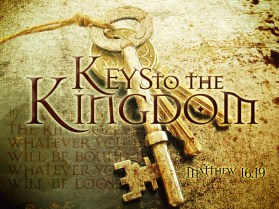
This, dear brothers and sisters, is another of the great Keys to the Kingdom of God. Treasure it and use it wisely.


Your Brother and Friend,

Mike Young

NEXT:  THE WORDS OF JESUS – What Are You To Do With Them? Part 18, The Lord’s Prayer.

PREVIOUS:  THE WORDS OF JESUS – What Are You To Do With Them? Part 16, Love your enemies.

A VERY BIG P.S.:

Strange as it may seem, if you get the ‘warm fuzzies’, probably caused by the release of endorphins, you may just be on the right track. Studies have shown that the sensation is known as ‘helper’s high’ and is produced when your brain releases endorphins, the feel-good chemicals of the brain. When you do something good for someone else, your brain’s pleasure centers light up, releasing endorphin and producing this high. Not to mention, doing good has also been known to generate feelings of satisfaction and gratitude, (see PsychologyToday.com).

According to a 2013 study examining the relationship between volunteering and hypertension, giving back can have a significant impact on blood pressure. Researchers found that adults over 50 who volunteered about four hours a week were 40 percent less likely than non-volunteers to have developed hypertension four years later.

Additionally, being generous can have the same effect, according to a 2010 study, which found that the less money people gave away, the higher their cortisol levels.

Doing good can also increase life expectancy. Researchers from the University of Buffalo found a link between giving, unselfishness and a lower risk of early death. The findings show that subjects who provided tangible assistance to friends or family members (running errands, helping with child care, etc.), reported less stressful events and, consequently, had reduced mortality. In other words, “helping others reduced mortality specifically by buffering the association between stress and mortality.”

According to a study from the University of Wisconsin-Madison, altruists in the office are more likely to be committed to their work and less likely to quit their jobs. The researchers also found that individuals in their mid-30s, who rated helping others in their work as important, reported they were happier with their life when surveyed 30 years later.

Overall, the study came to an important conclusion about office altruism: those who help others are happier at work than those who don’t prioritize helping others.

The results are in! After an extensive review of 40 studies on the effect of volunteering on general health and happiness, the BMC Public Health journal has concluded that volunteering is also good for mental health. The review found that – along with improved well-being and life satisfaction – volunteering is also linked to decreased depression.

People who engage in kind acts become happier over time.” It’s that simple, according to Sonja Lyubomirsky, Ph.D., a professor of psychology at the University of California, Riverside. Lyubomirsky, who has studied happiness for over 20 years, found that performing positive acts once a week led to the most happiness.

In addition, Researcher Stephen Post of Case Western Reserve University School of Medicine found that when we give of ourselves, everything from life satisfaction to self-realization and physical health is significantly improved.

A 2012 study published in Psychological Science found that thinking about times you’ve helped others will make you want to help others again. The research found that reflecting on your past good deeds makes you feel selfless and want to help more, as compared to reflecting on the times others have helped you. In other words, thinking about what you’ve given others – and not only what you’ve received – will motivate you to do good again and again. (The foregoing taken from Goodnet.org)

THE WORDS OF JESUS – What Are You To Do With Them? Part 16

THE WORDS OF JESUS

Creative, Causative, Prophetic, Instructional – Part 16

“You have heard that it was said, ‘You shall love your neighbor and hate your enemy.’ But I say to you, Love your enemies and pray for those who persecute you, so that you may be sons of your Father who is in heaven.

“For he makes his sun rise on the evil and on the good, and sends rain on the just and on the unjust.

“For if you love those who love you, what reward do you have? Do not even the tax collectors do the same? And if you greet only your brothers, what more are you doing than others? Do not even the Gentiles do the same?

“You therefore must be perfect, as your heavenly Father is perfect.” – The Words of Jesus, Matthew 5:43-48

This is one of the most counter-intuitive commands Jesus gives. It shows how hard it is to be a ‘fully devoted’ follower of Jesus.

Once again, Jesus begins with “You have heard that it was said, but I say to you…”, reminding us that He is the fulfillment of the Old Covenant and that you ‘cannot live by bread alone, but by every Word that proceeds from His mouth’.

He could not be any clearer than when He says, ”But I say to you, Love your enemies and pray for those who persecute you, so that you may be sons of your Father who is in heaven.”

I have prayed for my enemies and those who persecute me, as many of you have, by saying things like ‘make him or her a better person’ , or ‘make him or her a Christian’, with the unspoken thought, ‘so that they will quit being such a nuisance, a bother or a threat’. This is skirting Jesus’ teaching. He begins with ”But I say to you, Love your enemies” which precludes any preconditions, spoken or unspoken, I may add to my prayers.

The real question here is, ‘am I praying for my enemies and those who persecute me’ in order to obtain the keys to heaven, or can I truly ‘Love my enemies’? Because it is in ‘Loving my enemies and praying, in love, for those who persecute me’ that I find the keys to the Kingdom. This is very difficult. It is hard. It is impossible for some.

This should remind us of the time a wealthy young man came to Jesus and asked, “Teacher, what good thing shall I do so that I may obtain eternal life?” And, Jesus responded with, “If you want to be complete, go and sell your possessions and give to the poor, and you will have treasure in heaven; and come, follow Me.”

But when he heard these things, he became very sad and went away grieving, for he was extremely rich.

Then, Jesus said to his disciples, “How difficult it is for those who have wealth to enter the kingdom of God! For it is easier for a camel to go through the eye of a needle than for a rich person to enter the kingdom of God.”

When the disciples heard this, they were greatly astonished, saying, “Who then can be saved?” Jesus looked at them and said, “With man this is impossible, but with God all things are possible.”

Then Peter said in reply, “We have left our homes and followed you.” And Jesus said to him, “Truly, I say to you, there is no one who has left house or wife or brothers or parents or children, for the sake of the kingdom of God, who will not receive many times more in this time, and in the age to come eternal life.” (Taken from Luke 18:18-29)
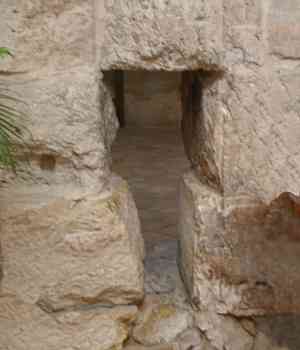
AN ASIDE and a NOTE: There has been a story circulating, albeit false, which purports that there is actually a gate somewhere in Jerusalem called the “eye of the needle”, through which a camel could not pass unless it stooped down and had all its baggage first removed. After dark, when the main gates were closed, travelers and merchants would have to use this smaller gate. Great sermon material, with illustrations about how we must humble ourselves and remove our baggage before entering the kingdom.

It would be quite convenient if this myth were true because it would legitimize people’s affinity for money and probably the prosperity gospel as well. If the passage is about baggage and humility and not actually about wealth, then the prosperity preachers can breathe a big sigh of relief. However, this myth has been propagated since the 11th century, and it is completely made up. There is zero evidence to show that this gate ever existed other than stories brought back from Jerusalem tours.

But what about the image, above, showing the eye of the needle? This wall passage did not exist when Jesus walked the earth, or anytime close to his generation. This wall was built hundreds of years after Jesus’ time. The gates of Jerusalem were destroyed in 70 A.D. and later rebuilt. Josephus, the 1st century Jewish historian, wrote about the wall in Jerusalem (excepting the western wall):

“All the rest of the wall [surrounding Jerusalem], it was so thoroughly laid even with the ground by those that dug it up to the foundation, that there was left nothing to make those that came thither believe it [Jerusalem] had ever been inhabited.”

So, the image above would not exist in Jesus’ time.

Furthermore, the passage states that is it easier for a camel to go through the eye of “a” needle, not “the” needle. “A needle” refers to any needle. “The needle” would refer to a specific needle. This is not a mistake. Greek is an incredibly precise language, and definite articles (the) are hard to confuse with an indefinite article (a).

Finally, I would point out that this type of hyperbole is common in Jewish literature and as well as other literature. Jesus, again, uses the term of a ‘narrow gate’ in Matthew 7:13-14)

Thus, it is not necessary to try to bend Jesus’ words to mean something other than what they actually meant. This is why the disciples replied with this phrase in astonishment:

When the disciples heard this, they were greatly astonished and asked, “Who then can be saved?” (Matthew 19:25)

Jesus was actually referring to a camel and an actual needle, and that the camel is a simile for ‘every man and women, boy and girl’ and the ‘eye of the needle’ is a simile for the gate to the Kingdom of Heaven.

So, everyone who is laden with ‘the baggage and possessions of pride, high self-esteem, education, personal achievements, wealth, pedigree, education and the like cannot enter the Kingdom. All of these things must first be put aside, discarded, before entering through the ‘narrow gate’.

Secondly, Jesus is equally clear that in order to become ‘a son of God’ you must first learn to “Love your enemies and pray for those who persecute you”. I can hear the echo of Peter’s words, “Who then can be saved?”

Christians are called the “sons” or “children” of God in several of these senses: as his offspring; as adopted; as his disciples; as imitators of Him. In this passage the word is applied to them because, in doing good to enemies, they resemble God. He makes His sun to rise upon the evil and good, and sends rain, without distinction, on the just and unjust. So, His people should show that they imitate or resemble Him, or that they possess His spirit, by doing good similarly.

Next, in what seems the closing of any possible ‘theological loopholes’, Jesus reminds us that taking the low road, the ordinary expected path which all others travel, yields no reward.  “If you love those who love you, what reward do you have? Do not even the tax collectors do the same? And if you greet only your brothers, what more are you doing than others? Do not even the Gentiles do the same? You must choose to travel the high road, the road less travelled, that is the narrow path in order to find your reward.

Finally, Jesus complete this teaching with the exclamatory words, “You therefore must be perfect, as your heavenly Father is perfect.” I have heard so many explanations of this idea of perfections and of those many who say, ‘this does not really mean perfect in the sense that God is perfect, instead it simply means ‘mature’”.

The word, “perfect”, here, does mean mature, but in the sense as consummated from going through the necessary stages to reach the endgoal of perfection in maturity. Mature in our labors, our spiritual growth, in our mental capacities and our moral character, as reflected by Jesus. Made into His image. (It is well-illustrated with the old pirate’s telescope, unfolding, extending out, one stage at a time to function perfectly, at full-strength and in full effectiveness).

It is when you reach this point of maturity that you are truly able to ”love your enemies and pray for those who persecute you, so that you may be sons of your Father who is in heaven” and you will hear the words, “‘Well done, good and faithful servant. You have been faithful over a little; I will set you over much. Enter into the joy of your master.’

(The Word of God truly means more than we could ever have imagined, and mastery of the Word of God in Its application requires subjugating ourselves to complete and utter surrender to God’s will and way. It involves becoming ‘poor (crushed) in our spirit’, in our mind and body, completely dead to our ‘old selves’. It is then and only then that God can begin to transform us from hopeless, destitute sinners into His child. It is then, and only then, that we, as joint heirs with Jesus, shall inherit the Kingdom of God. If you find the time, refer to a short series “It Ain’t Easy” which is about the difficulties you will face as Jesus devoted disciple and the unspeakable wonders of His rewards.)

Your Brother and Friend,

Mike Young

NEXT: THE WORDS OF JESUS – What Are You To Do With Them? Part 17, “Practicing your righteousness.”

PREVIOUS: THE WORDS OF JESUS – What Are You To Do With Them? Part 15, ‘Resist Not Evil’.

THE WORDS OF JESUS – What Are You To Do With Them? Part 15

THE WORDS OF JESUS


Creative, Causative, Prophetic, Instructional – Part 15

“You have heard that it was said, ‘An eye for an eye and a tooth for a tooth.’ But I say to you, Do not resist the one who is evil. But if anyone slaps you on the right cheek, turn to him the other also. And if anyone would sue you and take your tunic, let him have your cloak as well. And if anyone forces you to go one mile, go with him two miles. Give to the one who begs from you, and do not refuse the one who would borrow from you.” 

The Words of Jesus, Matthew 5:38-42.

Have you heard the term ‘counter-cultural’? I have heard it used to describe the attitude, actions and behavior of Jesus and His followers. But I believe it falls woefully short in its descriptive value, and is even more inadequate when applied to Jesus’ mission and intention.

This term, which came about in the mid-to-late 20th century, (around 1980), and it may be better used to describe many Christians of the postmodern world. Postmodern is a word used to describe major changes in the underlying ways people think — especially the way people view truth and reality.

Postmodernity, as discussed by Pastor Steve Cornell, founding and senior Pastor of Millersville Bible Church, Millersville, Pennsylvania, is a worldview which refuses to allow any single defining source for truth and reality. The new emphasis is on difference, plurality and selective forms of tolerance.

Postmodern thinking is full of absurdities and inconsistencies. It is, for example, the worldview that says no worldview exists. It is an anti-theory that uses theoretical tools to neutralize all theories. It demands an imposed uniformity in an effort to resist uniformity. It employs propositional statements to negate truth based on propositional statements.

Don’t misunderstand; God is warmly welcomed in the postmodern world, as long as he doesn’t try to play God. As one has written, “Postmodernity returns value to faith and affirms the nurturing of our spiritual being as vital to humankind. Unfortunately, with the loss of truth, people will now seek faith without boundaries, categories, or definition. The old parameters of belief do not exist. As a result, people will be increasingly open to knowing God, but on their own terms”. (See Summit Ministries)

Jesus, during His ministry, was described by His detractors and even His family crazy, ‘having a demon’, a lawbreaker, a radical, a troublemaker, a fraud and more.

If Jesus is compared to the prevailing mores and social norms of the 21st century, His teaching, His methods and His ways may seem to be counter-cultural indeed, at least too the uniformed casual eye. But to the informed, Jesus is better described as ”the radiance of the glory of God and the exact imprint of his nature.”

Jesus, in these verses, begins to explain the law of retaliation or retribution in a 1st century contemporary terms, saying, “You have heard that it was said, ‘An eye for an eye and a tooth for a tooth.’ I can only imagine the Pharisees, Sadducees and the scribes nodding in agreement at these words.

Then Jesus ‘drops the bombshell’ on , saying, “But I say to you, Do not resist the one who is evil. (that is, do not oppose, show resistance to, do not push back against or hold a contrary position against and evil person).

HOW CAN WE?

  • But if anyone slaps you on the right cheek, turn to him the other also.
  • And if anyone would sue you and take your tunic, let him have your cloak as well.
  • And if anyone forces you to go one mile, go with him two miles.
  • Give to the one who begs from you,
  • And do not refuse the one who would borrow from you.”

This was beyond radical to the Jewish mind. It was blasphemous. It was beyond ridiculous; it was insanity on display. They might ask, ‘Where was the balance between right and wrong in that thinking?’; ‘How could social order be maintained with such foolish thinking?’; Let evil thieves, evil and overbearing people have unrestrained rule over the good people?’

The greatest mistake the 1st century world made in response to Jesus’ teaching, and the greatest misunderstanding in our day, is they thought Jesus was talking to everyone and anyone. Although anyone and everyone would benefit from practicing what Jesus is teaching, This was not the case. Jesus was talking solely to His disciples and to those who would be His disciples, about His mission and His calling. He said, “I have come down from heaven, not to do my own will, but the will of him who sent me.” (John 6:38) Jesus goes on to say,  “I can do nothing on my own. As I hear, I judge, and my judgment is just, because I seek not my own will but the will of him who sent me. (John 5:30)

His mission was not to condemn the world, but that the world might be saved through Him. Whoever believes in Him is not condemned. But whoever does not believe in Him is condemned because he does not believe in Jesus. (John 3:17).

In fact, Then the disciples came and said to Jesus and asked, “Why do you speak to others in parables?” And he answered them, “To you, it has been given to know the secrets of the kingdom of heaven, but to them, it has not been given. For to the one who has, more will be given, and he will have an abundance, but from the one who has not, even what he has will be taken away.

This is why I speak to them in parables, because seeing they do not see, and hearing they do not hear, nor do they understand. Indeed, in their case the prophecy of Isaiah is fulfilled that says:

“‘“You will indeed hear, but never understand,
and you will indeed see, but never perceive.”
For this people’s heart has grown dull,
and with their ears, they can barely hear,
and their eyes they have closed,
lest they should see with their eyes
and hear with their ears
and understand with their heart
and turn, and I would heal them.’

But blessed are your eyes, for they see, and your ears, for they hear. For truly, I say to you, many prophets and righteous people longed to see what you see, and did not see it, and to hear what you hear, and did not hear it. – The Words of Jesus, Matthew 10:10-17. 

DESTINATION – THE KINGDOM OF HEAVEN

Jesus warns us that another of the greatest obstacles lying in wait to entangle you and keep you from the Kingdom of Heaven is the need for retaliation, vengeance or neglect. From the moment that you involve yourself with evil or selfishness, you find yourself snared and held captive, unable to take even one more step toward or within the Kingdom of God.

Jesus is saying to go on your way, do not ‘resist’ an evil person; in other words, ‘do not entangle yourself’ with the demands of evil. Follow Jesus, do not be distracted, do what is necessary to stay focused on Him and His calling to you. Bypass evil that so easily entangles. Your destination is the Kingdom of Heaven.

Your Brother and Friend,

Mike Young

“Be of sober spirit, be on the alert. Your adversary, the devil, prowls around like a roaring lion, seeking someone to devour.”

NEXT:  THE WORDS OF JESUS – What Are You To Do With Them? Part 16, Love your enemies.

PREVIOUS: THE WORDS OF JESUS – What Are You To Do With Them? Part , 14 , Oaths – you shall not swear falsely.

THE WORDS OF JESUS – What Are You To Do With Them? Part 14

THE WORDS OF JESUS

Creative, Causative, Prophetic, Instructional – Part 14

“Again, you have heard that it was said to those of old, ‘You shall not swear falsely, but shall perform to the Lord what you have sworn.’ But I say to you, Do not take an oath at all, either by heaven, for it is the throne of God, or by the earth, for it is his footstool, or by Jerusalem, for it is the city of the great King. And do not take an oath by your head, for you cannot make one hair white or black. Let what you say be simply ‘Yes’ or ‘No’; anything more than this comes from evil.” – The Words of Jesus, Matthew 5:33-37.

Remembering that the Word of God is Creative, Causative, Prophetic, Instructional and that we proceed with great caution and care when we speak and employ His Words in our life or for our use. What do you suppose Jesus meant by these words, and what are His intentions of this teaching? Misapplying what He has taught can carry dire consequences. (Jesus has always been concerned about our lack of understanding and ‘lack of faith’.)

By these words, Jesus is instructing about the power of His spoken Word and the seriousness of making oaths or covenantal contracts by or in His Name or the Name of The Father.

There is much that can be made of these verses and much that could be said about the Law, tradition, social constructs, etc. However, Jesus continues His teaching by simply comparing, contrasting and moving our attention from the Old Covenant to the New Covenant, saying, “Again, you have heard that it was said to those of old, ‘You shall not swear falsely, but shall perform to the Lord what you have sworn’.

The Jew of that day most likely had a basic understanding of the Law. Jesus is presenting what would have been considered a radical departure from the Law and the Prophets. He is teaching about the New Covenant written in His Blood and by His Flesh. It is indeed a  ‘Covenantal Bridge’, which leads to the Kingdom of Heaven. (Again, there is much more that could be said here – volumes more – but it would be superfluous.)

Once again, remember that we are You and I must see the simple and ‘narrow way’. It is always an alarm, like the sounding of the ancient Shofar when Jesus says, ‘But I say to you’. Remember that “the gate is narrow, and the way is hard that leads to life, and those who find it are few”.

You are privileged to be among the few and to hear His voice as He says, ‘Do not take an oath at all’. These few words summarize this urgent teaching, and we could stop here for all practical purposes.  But since Jesus continues, so shall we. He emphasizes, that we are not to make any oath at all, ‘either by heaven, for it is the throne of God, or by the earth, for it is his footstool, or by Jerusalem, for it is the city of the great King.’

It was common for men around Jesus’ time on earth, to add phrases to an oath or a proclamation like, ‘I swear to God; or, I swear by the heavens above; I swear on the earth or by Jerusalem’ as a means to add weight of solemnity or gravity of seriousness and inspiring the fear of God into their oath or statement. (See this commentary for extended commentaries.) This is slightly similar to what some will do in our day, saying, ‘I swear to God; Cross my heart and hope to die; I swear on my mother’s grave’, when trying to convince others of the truthfulness of what you are saying.

Jesus, however, is emphasizing that telling the truth, if that is what we are doing, is enough. Additionally, and most importantly, He is warning that we have no authority and no right to invoke the Name of God or anything under His dominion to support our statements or oaths.

Jesus warns against this type of ‘religious license and plagiarism’. Therefore whoever relaxes one of the least of these commandments and teaches others to do the same will be called least in the kingdom of heaven, but whoever does them and teaches them will be called great in the kingdom of heaven. For I tell you, unless your righteousness exceeds that of the scribes and Pharisees, you will never enter the kingdom of heaven. (Matthew 5:19-20).

Again, He cautions, I warn everyone who hears the words of the prophecy of this book: if anyone adds to them, God will add to him the plagues described in this book, and if anyone takes away from the words of the book of this prophecy, God will take away his share in the tree of life and in the holy city, which are described in this book.” (Revelation 22:28-19).

And, there has never been a clearer statement from our Lord regarding any ‘name it and claim it theology’ than when He says, “And do not take an oath by your head, for you cannot make one hair white or black.” Jesus is clear that you have neither the power nor the authority to change anything. It is God alone who creates and causes, gives and takes away, brings the rain and the sunshine. Long ago, at many times and in many ways, God spoke to our fathers by the prophets, but in these last days he has spoken to us by his Son, whom he appointed the heir of all things, through whom also he created the world. He is the radiance of the glory of God and the exact imprint of his nature, and He upholds the universe by the word of his power.” (Hebrews 1:1-3)

Instead of making any oath at all, Let what you say be simply ‘Yes’ or ‘No’; anything more than this comes from evil. Nothing more need be said. Nothing more can be said, than “anything more than this comes from evil.”

Anything more than this comes from evil. Evil, from the Greek word,ponērós’, meaning pain and laborious trouble – pain-ridden, emphasizing the inevitable agonies and misery that always go with evil.

Jesus is making a loving and concerned appeal against bringing pain, trouble and misery upon yourself and those around you from making oaths.

Let what you say be simply ‘Yes’ or ‘No’. Be completely dependent upon God and His Word, and live!

Your Brother and Friend,

Mike Young

If you abide in me, and my words abide in you, ask whatever you wish, and it will be done for you.” John 15:7

“It is written, “‘Man shall not live by bread alone, but by every word that comes from the mouth of God.’”  Matthew 4:4

NEXT:  THE WORDS OF JESUS – What Are You To Do With Them? Part 15, Retaliation.

PREVIOUS:  THE WORDS OF JESUS – What Are You To Do With Them? Part 13, Divorce.

THE WORDS OF JESUS – What Are You To Do With Them? Part 13

Creative, Causative, Prophetic, Instructional – Part 13

“It was also said, ‘Whoever divorces his wife, let him give her a certificate of divorce.’ But I say to you that everyone who divorces his wife, except on the ground of sexual immorality, makes her commit adultery, and whoever marries a divorced woman commits adultery.” – The Words of Jesus, Matthew 5:31-32

This may be one of the most difficult subject found in The Word of God. It is another of those subjects that are so painful, extraordinarily difficult to understand, hard to accept, and most difficult to do. Most people, when reading the Bible, will choose, at their own peril, to quickly scan through teachings like this and move on to more pleasant reading.

But Jesus has included the matter of divorce in His teachings on stumbling blocks, as obstacles to the Kingdom of Heaven.

Let me say that divorce is not a singular act in and of itself. Divorce is a deadly process. A breaking point, a severing of that which had been joined together in one body. Divorce is both the culmination of what God had joined together and the beginning of a curse that will ravage the body, soul, mind and spirit of many, even to the third and fourth generations.

Jesus is continuing to teach the fulfillment of the Old Covenant, which has set us free from the bondage of the Law, giving us the right to become the children of God, joint heirs with Christ Jesus, and to be clothed with power from on High! These are the privileges of the heirs of the Kingdom of Heaven.

The Word of God is no longer just written on ‘tablets of stone’ but it is written upon the hearts of those who believe and follow Him. Jesus has set us free and dwells within us. Amazingly, He has even given us His authority to accomplish His Works through us!

Unlike Jesus’ continuing teachings on salvation, the process of sanctification and entering the Kingdom of Heaven, (Matthew chapters 5 through 11), He does not offer a solution to this obstacle of the sin of divorce. Once a divorce is complete, there is no remedy for the pain and the damage that follows. Consequences will come. The best remedy is to marry right and never divorce.

If you have been through a divorce, just remember, God is merciful, abounding in loving kindness. There is hope for healing and restoration.  Although it is not always easy, it is always worth it.  What is done is done, and the future can be bright with opportunities and hope of peace, security and prosperity for your soul, in Christ!

Your Brother and Friend,

Mike Young

Here is important reading for Christians on the subject of Marriage and Divorce. Please do not move on without reading the referenced article.

NEXT:  THE WORDS OF JESUS – What Are You To Do With Them? Part 14, Again you have heard that it was said to those of old, ‘You shall not swear falsely, but shall perform to the Lord what you have sworn.’”

PREVIOUS: THE WORDS OF JESUS – What Are You To Do With Them? Part 12, “You have heard that it was said, ‘You shall not commit adultery.’ 

THE WORDS OF JESUS – What Are You To Do With Them? Part 12

THE WORDS OF JESUS

Creative, Causative, Prophetic, Instructional – Part 12

“You have heard that it was said, ‘You shall not commit adultery.’ But I say to you that everyone who looks at a woman with lustful intent has already committed adultery with her in his heart. If your right eye causes you to sin, tear it out and throw it away. For it is better that you lose one of your members than that your whole body be thrown into hell. And if your right hand causes you to sin, cut it off and throw it away. For it is better that you lose one of your members than that your whole body go into hell.”  –   The Words of Jesus, Matthew 5:27-30

The word of God is living and active, and sharper than any two-edged sword, even penetrating as far as the division of soul and spirit, of both joints and marrow, and able to judge the thoughts and intentions of the heart.

These teachings cut through all the devil’s obfuscation and philosophical conundrums surrounding the matters of sin and go to the heart of the matter. They are the basest teachings of life. They are extraordinarily difficult to understand, hard to accept, and most difficult to do. Most people, when reading the Bible, will choose, at their own peril, to scan through them quickly and move on to more pleasant reading.

Here, Jesus is quoting from the Law of the Old Testament found in the Ten Commandments, ‘You shall not commit adultery.’ Jesus is teaching that the fulfillment of this law begins, not with externals, but within ourselves; But I say to you that everyone who looks at a woman with lustful intent has already committed adultery with her in his heart.”

Jesus then seems to contradict Himself as He goes on to say, ” If your right eye causes you to sin, tear it out and throw it away. For it is better that you lose one of your members than that your whole body be thrown into hell. And if your right hand causes you to sin, cut it off and throw it away”. Is He now suggesting externals (the eye and the hand) are the cause of your sin? No, He is not.

There is no contradiction here. Jesus, once again, is building a bridge for us to cross. He is building a bridge from the natural world to the spiritual world of the Kingdom of Heaven. He is building a bridge from the Old Covenant to the New Covenant. He is not negating the Old Covenant. He is fulfilling it.

Jesus is the New Covenant, and He is teaching, (that is, The Word of God is teaching us), (1), how to understand The Word of God and find wisdom, (2), how to revere and to properly fear The Word of God, and (3), how to perform The Word of God in your own life.

I have a heard a myriad of sermons on these verses, and without exception, preachers, pastors and Bible teachers rightly add the remark that Jesus did not mean that you are to literally ‘tear out your eye’ or to ‘cut off your hand’ if they cause you to sin. Jesus often uses hyperbole or ‘reductio ad absurdum’ to emphasize the point of His teaching.

Or is He?

I have seen and read of those who have had a limb snared in an accident or a trapped by a building collapse, and the only means of escape and saving one’s life is to sever the limb from their body.

There are examples that a limb or a body part is so affected by decline or disease that it is causing nearby organs to fail; or that a cancer is spreading, endangering the life of the person and excision is the only way to save the patient’s life.

Jesus is emphasizing the immediate urgency and the critical nature of being snared by habits of sin. Persistent sin always brings death. James 1:15 tells us, When lust has conceived, it gives birth to sin; and sin, when it has run its course, brings forth death.”  This is the insidious nature of sin and in this case even “looking at a man or a woman with lustful intent” is the same as adultery, even if you don’t see the immediate connection.

Jesus is framing this dilemma using a ‘binary trap’ to make this point. It is ‘one or the other, but it cannot be both’. Choose life, or allow death to make the choice for you.

The bottom line here is, “It is better that you lose one of your ‘body parts’ than if your whole body be thrown into hell.”

It is easy to see that this is no casual or joking matter. Jesus has opened a window of sorts, a portal, so you and I can peer in the wondrous spiritual world of the Kingdom of Heaven to find our help.

(It is breaking my heart as I write this to know that some will dismiss the Word of God as mere fantasy or some religious-speak. Others will pick and choose as if choosing from a self-improvement list of classes, deciding which class it pleases them to attend. Let’s PLEASE, please, dear friend, do not make that mistake.)

The Word of God is powerful and accurate and without error, far beyond our ability to understand. The Gospel is the power unto salvation. It is prophetic by its very nature – it will tell the Truth to you and through you once you put it in your heart.

It requires faith, obedience and endurance. It will save your life, and it will give you a life worth living, both now and forever with God.

Your Brother and Friend,

Mike Young

PREVIOUS:  THE WORDS OF JESUS – What Are You To Do With Them? Part 11“You have heard that it was said to those of old, ‘You shall not murder.”

NEXT: THE WORDS OF JESUS – What Are You To Do With Them? Part 13 – “It was also said, ‘Whoever divorces his wife, let him give her a certificate of divorce.’ But I say to you…” Matthew 5:31-32.

THE WORDS OF JESUS – What Are You To Do With Them? Part 11

THE WORDS OF JESUS

Creative, Causative, Prophetic, Instructional – Part 11

“You have heard that it was said to those of old, ‘You shall not murder; and whoever murders will be liable to judgment.’ But I say to you that everyone who is angry with his brother shall be answerable to the court; and whoever says to his brother, ‘You good-for-nothing,’ shall be answerable to the supreme court; and whoever says, ‘You fool,’ shall be guilty enough to go into the fiery hell.” – The Words of Jesus, Matthew 5:21-22

Occasionally, I need to be reminded of what we are dealing with here. So, at the risk of sounding redundant, I ask once again, “What if The Word of God is true? I mean, what if His Words are literally true in ways we fail to recognize? People who personally encountered Jesus testified and reported on the Works He did, and this caused throngs to follow Him, stirred great controversies, created deadly conflicts and gave untold millions a greater hope for a new, vibrant, changed life, full of promise now and eternal hope of a home in heaven with God.

The Words Jesus spoke, and the Works Jesus did, changed the world.

I ask again, ‘what if we have been reading and misunderstanding what Jesus meant by His Words and the intentions of His Words? What if we have been misapplying what He taught? (Jesus was always concerned about His disciple’s lack of understanding and ‘lack of faith’.)

What if Jesus has been telling us how to actively engage His Word, so we could actually do His Works, and even greater works? (“Truly, truly, I say to you, whoever believes in me will also do the works that I do; and greater works than these will you do, because I am going to the Father.” John 14:12.)

I realize I am wading into a potentially controversial area, but I am not referring to some kind of religious mysticism or extra-Biblical teaching, heresy or religious nonsense. (I believe, practice and teach a reformed view of the Bible.) But I do believe a great majority of the church, the teaching and practices of the church and the results produced by the early church have waned if not disappeared completely.

Jesus is building a bridge for us to cross. He is building a bridge from the natural world to the spiritual world of the Kingdom of Heaven. He is building a bridge from the Old Covenant to the New Covenant. He is not negating the Old Covenant. He is fulfilling it. Jesus is the New Covenant, and He is teaching, that is, The Word of God is teaching us (1), how to understand The Word of God, (2), how to revere and to properly fear The Word of God, and (3), how to perform The Word of God.

What is the PURPOSE for this? First, specifically read Daniel 12:8-10 and all of chapter 12 for the prophetic meaning of Jesus’ words in Matthew 5 through Matthew 11. We are to be purged, purified, cleansed, refined and restored by His Word and made into His children and disciples, made ready for the Kingdom of God. (John 15:3. Tells us that “we are made clean by the Word He has spoken.”

Therefore, in Matthew 5:22, when Jesus says, ” Everyone who is angry (orgizó = be angry, as expressing a “fixed anger”. “Sinful (unnecessary) anger” focused on punishing the offender rather than the moral content of the offense. See 3709 (orgē),

with his brother (adelphos = a brother, member of the same religious community, especially a fellow-Christian.) will be liable to judgment;

And, whoever says “you good-for-nothing (rhaka = empty-headed. This term expressed contempt for a man’s head, viewing him as stupid), to his brother will be liable to the supreme court;

and whoever says, ‘You fool!’ (móros = a fool, a moron), to his brother, will be liable to the hell of fire.

Why is the offense of unrestrained, vengeful anger toward a brother or sister in Christ anger and resulting resentment, hate and denigration of a brother or sister in Christ so grievous to Jesus and the penalties so severe?

It is because this kind of anger is a great obstacle to entering the Kingdom of Heaven. Unless it is handled correctly, that is, the way Jesus teaches, your righteousness might not be ‘greater than that of the scribes and the Pharisees’. (“For I tell you, unless your righteousness exceeds that of the scribes and Pharisees, you will never enter the kingdom of heaven.” – The Words of Jesus from Matthew 5:20)

 Jesus gives the remedy which must be followed exactly if you are to escape the dreadful punishment that will inevitably follow:

“So, if you are offering your gift at the altar and there remember that your brother has something against you, leave your gift there before the altar and go. First be reconciled to your brother, and then come and offer your gift.” Matthew 5:23-24.

It is important to note that Jesus instructs us to consider not if we are offended, but if we have offended others, we are to leave our gift at the altar and make reconciliation.

This is the only way to remove the obstacle of anger and offense which will keep us from the Kingdom of Heaven! This is how we are made clean, purified of sin and restored in our relationship with God.

This is more than ‘right or wrong’, it is a matter of life and death! Spiritual life or spiritual death.

NOTE: Being ‘saved’ is not something we do. It is what God does for the sincere repentant man, women, boy or girl, who humbly repents from their former life and submits themselves to follow Jesus in His ways. What you DO after you are ‘saved’ reflects what God has DONE and is DOING in you now.

So, if you think you have been ‘saved’ by repeating a ‘sinner’s prayer’, but you have no desire to change your lifestyle and if in fact do not begin to change how you live which conforms to the life of Jesus, you probably are not saved and will never enter the Kingdom of Heaven.

Jesus completes His teaching on anger and reconciliation, once again with a strong warning of caution:

 “Come to terms quickly with your accuser while you are going with him to court, lest your accuser hand you over to the judge, and the judge to the guard, and you be put in prison. Truly, I say to you, you will never get out until you have paid the last penny.”

This is a metaphor, citing the process of a plaintiff, a judge and the courts. The accuser is a brother whom you have offended; the judge is God and your conscience; the courts are spiritual realms. But this metaphor contains the literal truth regarding a prison of your own making.

Hear the Word of God. Repent and be set free.

Your Brother and Friend,

Mike Young

NOTE:  God loves you, and He is endlessly merciful. He sent His Son, Jesus, to save you. Jesus has told us that He did not come to condemn us, but to save us. (Sadly, we are condemned by our own unbelief).

Do you find yourself saying, “I try to not sin, but I sin, anyway? And, the cycle of worry and doubt and fear starts over again? You are not alone, and there is a Hope that will save you!

I have met Christians who have serious challenges with alcoholism, drug addiction, sexual addiction, kleptomania, homosexuality, and other habits of thought, behavioral habits or addictions, and most will either say “the harder I try, the worse it gets” or “I am better, but…” or, they find themselves having to live in the torment. I had found myself in this dilemma, once in my life.

There are the few who say they have been delivered from this torment and have been set completely free. How do they do that? How can I do that?

Please read this page: “SEPARATED FROM GOD?”

NEXT:  THE WORDS OF JESUS – What Are You To Do With Them? Part 12 – (“You have heard that it was said, ‘You shall not commit adultery.’ But I say to you that everyone who looks at a woman with lustful intent has already committed adultery with her in his heart. If your right eye causes you to sin, tear it out and throw it away. ” MATTHEW 5:28-29)

PREVIOUS: THE WORDS OF JESUS – What Are You To Do With Them? – Part 10“For I tell you, unless your righteousness exceeds that of the scribes and Pharisees, you will never enter the kingdom of heaven.” – The Words of Jesus from Matthew 5:20

THE WORDS OF JESUS – What Are You To Do With Them? – Part 10

THE WORDS OF JESUS

Creative, Causative, Prophetic, Instructional – Pt 10

“For I tell you, unless your righteousness exceeds that of the scribes and Pharisees, you will never enter the kingdom of heaven.” – The Words of Jesus from Matthew 5:20

These words of Jesus are spoken in the context to say ‘I am putting an end to this matter’. It is another way of saying, “I am putting this matter to rest and this is the end of it.” So, pay close attention and take heed: ”Unless your righteousness far exceeds – super abounds – that of the scribes and Pharisees, you will never enter the kingdom of heaven”!

Righteousness, by definition, is ‘God’s judicial approval’. It is what the Lord deems is right after His examination, that is, what is approved in His eyes.

Previously, Jesus said If you decide not to follow His commandments / teachings as presented, or if you choose a different method and teach others likewise, you “will be called least in the kingdom of heaven, but whoever does them and teaches them will be called great in the kingdom of heaven”, at the very best.

Many Christians find other ways, more convenient ways, or methods that make one feel more comfortable. Then, these same people wonder why they cannot ‘do the Works that Jesus does, and certainly cannot do the greater works’ He commanded and promised.

Failure to obey or to follow these commandments / teachings does not mean you are no longer saved, far from it. But when Jesus says you “will be called least in the kingdom of heaven”  , He is telling you that you will be ‘weak’ and will be able to do ‘very little’.

By contrast, whoever does them and teaches them will be called great in the kingdom of heaven”. By this, Jesus is saying you will be able to do ‘very much’ in the kingdom of heaven.

Now, however, Jesus is warning, in the strongest terms, that unless your righteousness exceeds that of the scribes and Pharisees, you will never enter the kingdom of heaven!

So, just what is this ‘righteousness’ that puts the ‘professing Christian’ at such great risk?

A simple way of saying this is, “don’t be like the scribes and the Pharisees. Matthew 23 tells us, “Then Jesus said to the crowds and to his disciples, “The scribes and the Pharisees sit on Moses’ seat, so do and observe whatever they tell you, but not the works they do. For they preach, but do not practice. They tie up heavy burdens, hard to bear, and lay them on people’s shoulders, but they themselves are not willing to move them with their finger. They do all their deeds to be seen by others. For they make their phylacteries broad and their fringes long, and they love the place of honor at feasts and the best seats in the synagogues and greetings in the marketplaces and being called rabbi by others.”

A better way to understand what Jesus is saying, please take a close look at the context of this verse and the words that Jesus spoke before and after these words, for a complete understanding.

Jesus is demonstrating and teaching about His salvation and His method of sanctification to prepare you (to test you, try you and to prove you; to purge you, cleanse you, refine and restore you), making you into His disciple, His son or daughter and a joint heir with Jesus, preparing you for entrance to the Kingdom of Heaven.

Jesus next teaches and demonstrates to His disciples what Godly Righteousness is all about as He teaches on:

Anger, (Matthew 5:21-26).

Lust, (Matthew 5:27-30).

Divorce, (Matthew 5:31-32).

Oaths, (Matthew 5:33-37).

Retaliation, (Matthew 5:38-42).

Loving your enemies, (Matthew 5:43-48).

Jesus’ teaching on this matter continues through Matthew Chapter 11.

IMPORTANT NOTE: If you previously thought the process of becoming a ‘fully devoted follower of Jesus’, that is to say, becoming a Christian and a disciple of Jesus was going to be as easy as reciting or repeating a little prayer and ‘PRESTO’, you are saved, sanctified and ready for heaven, well, I pray you think again!

Philippians 2:12, says, “Therefore, my beloved, as you have always obeyed, so now, not only as in my presence, but much more in my absence, work out your own salvation with fear and trembling”. This should give new and additional meaning to what it means to become a Christian.

Let me close this Part 9 by saying, ‘do not despair’ at what I have written from the Word of God. These words are meant to prepare you, so you will not turn back or faint because of what comes upon you as Jesus readies you for The Kingdom of Heaven!

Remember, this is not a thing you can do on your own. There is nothing you can do that will ‘earn your salvation’. We are saved by grace through our faith in Jesus, alone; none of us are righteous on our own – no, not even one of us.

Our righteousness is a gift from God and is found in Jesus. We do not have a righteousness of our own (that comes from the law),but our righteousness is through faith in Christ—the righteousness that comes from God on the basis of faith.

 Again, we are filled with the fruit of righteousness that comes through Jesus Christ—to the glory and praise of God. It is because of God that you are in Christ Jesus, who has become for us wisdom from God—that is, our righteousness, holiness and redemption.

“Little children, let no one deceive you. Whoever practices righteousness is righteous, as he is righteous.” 1 John 3:7.

Your Brother and Friend,

Mike Young

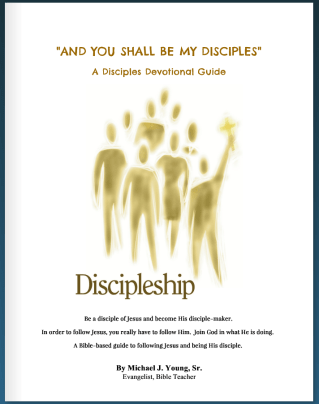
(Here is a Disciples Guide containing all these teachings of Jesus from Matthew chapter 4 through Matthew chapter 11.)

“And You Shall Be My Disciples – The Book”

NEXT: THE WORDS OF JESUS – What Are You To Do With Them? Part 11 – Matthew 5:21, “You have heard that it was said to those of old, ‘You shall not murder; and whoever murders will be liable to judgment.’ verse 22. But I say to you that everyone who is angry with his brother will be liable to judgment; whoever insults his brother will be liable to the council; and whoever says, ‘You fool!’ will be liable to the hell of fire.”

PREVIOUS: THE WORDS OF JESUS – What Are You To Do With Them? Part 9 – “Do not think that I have come to abolish the Law or the Prophets; I have not come to abolish them, but to fulfill them. For truly, I say to you, until heaven and earth pass away, not an iota, not a dot, will pass from the Law until all is accomplished. Therefore, whoever relaxes one of the least of these commandments and teaches others to do the same will be called least in the kingdom of heaven, but whoever does them and teaches them will be called great in the kingdom of heaven.” – The Words of Jesus as recorded in Matthew 5:17-19

THE WORDS OF JESUS – What Are You To Do With Them? Part 9

THE WORDS OF JESUS – Creative, Causative, Prophetic, Instructional

Creative, Causative, Prophetic, Instructional – Pt 9

“Do not think that I have come to abolish the Law or the Prophets; I have not come to abolish them, but to fulfill them. For truly, I say to you, until heaven and earth pass away, not an iota, not a dot, will pass from the Law until all is accomplished. Therefore, whoever relaxes one of the least of these commandments and teaches others to do the same will be called least in the kingdom of heaven, but whoever does them and teaches them will be called great in the kingdom of heaven.” –

The Words of Jesus as recorded in Matthew 5:17-19

These words and remarks of Jesus can seem to veer away from what He has been teaching in the preceding verses. However, we must consider the context of this teaching: It is a spiritual discourse and teaching about entering or inheriting the Kingdom of Heaven.

Jesus began His sermon and teaching with a new, radical sounding and revolutionary message on salvation and sanctification. The first time, ever in scriptures, salvation is no longer based on ‘keeping the law’, i.e., a ‘rule book’ of required practices, a book of ‘do’s and don’ts’. Instead, salvation is now based on God’s free gift of grace through your faith in Jesus.

Jesus, also for the first time, teaches about a process known as sanctification. This revolutionary teaching reveals the steps of the most difficult process of purging, cleansing, purifying by which each and every believer will restored to God as His child and son and prepared for the Kingdom of Heaven!

Jesus says, “Do not think that I have come to abolish the Law or the Prophets; I have not come to abolish them but to fulfill them”, so we can understand that He is not replacing the ‘old ways with something new and strange’, but that He is the living fulfillment and completion, of that which was incomplete, (the Law). The Apostle Paul reiterates this in Galatians 3:21-26:

“21 Is the law then contrary to the promises of God? Certainly not! For if a law had been given that could give life, then righteousness would indeed be by the law. 22 But the Scripture imprisoned everything under sin, so that the promise by faith in Jesus Christ might be given to those who believe.

23 Now before faith came, we were held captive under the law, imprisoned until the coming faith would be revealed. 24 So then, the law was our guardian until Christ came, in order that we might be justified by faith. 25 But now that faith has come, we are no longer under a guardian, 26 for in Christ Jesus you are all sons of God, through faith.”

Jesus is making clear that the Law is now completed by Him, through Him and in Him! Jesus has set us free from the impossible requirements, restrictions and bondage of the Law.

The New Covenant is alive and active and its name is JESUS! It is and sharper than any two-edged sword, penetrating as far as the division of soul and spirit, of both joints and marrow, and its name is JESUS!

It is able to judge the thoughts and intentions of the heart, and its name is JESUS!

And the Word became flesh and dwelt among us. Now, He dwells within us!


Next, in order to emphasize His teaching that the Law is not abolished, but is alive, He says, “For truly, I say to you, until heaven and earth pass away, not an iota, not a dot, will pass from the Law until all is accomplished.”

Finally, speaking directly to His disciples both then and now, Jesus warns, “Therefore, whoever relaxes one of the least of these commandments and teaches others to do the same will be called least in the kingdom of heaven, but whoever does them and teaches them will be called great in the kingdom of heaven.” Keeping the context of this teaching in mind, ‘these commandments’, or teachings to which Jesus is referring, begin in Matthew 5:1 and continue through Matthew 10:41.

I say again, Jesus is teaching, first about your salvation and explaining the process of your sanctification.  He then follows up (in subsequent chapters and verses), with examples and details of His commandments and teaching on this Truth.

NOTE: This is IMPORTANT. If you decide not to follow His commandments / teachings as presented, or if you choose a different method, you “will be called least in the kingdom of heaven, but whoever does them and teaches them will be called great in the kingdom of heaven”, at the very best.

Many Christians find other ways, more convenient ways, or methods that make one feel more comfortable. Then, these same people wonder why they cannot ‘do the Works that Jesus does, and certainly cannot do the greater works’ He commanded and promised.

Failure to obey or to follow these commandments / teachings does not mean you are no longer saved, far from it. But when Jesus says you “will be called least in the kingdom of heaven”  , He is telling you that you will be ‘weak’ and will be able to do ‘very little’.

By contrast, ”whoever does them and teaches them will be called great in the kingdom of heaven”. By this, Jesus is saying you will be able to do ‘very much’ in the kingdom of heaven.

Jesus has told us that The Kingdom is within you now, and after your earthly life, you will dwell with Him in His Kingdom.

What are you to do with these words? For me? I am serious about studying them, meditating on them so I can do them by way of the Holy Spirit Who lives within me.

I encourage you to do the same, and more. Jesus has told us, “Take my yoke upon you, and learn from me, for I am gentle and lowly in heart, and you will find rest for your souls. For my yoke is easy, and my burden is light.”

Your Brother and Friend,

Mike Young

NEXT: THE WORDS OF JESUS – What Are You To Do With Them? Part 10, For I tell you, unless your righteousness exceeds that of the scribes and Pharisees, you will never enter the kingdom of heaven.” Matthew 5:20.

PREVIOUS: THE WORDS OF JESUS – What Are You To Do With Them? Part 8, “Blessed are those who mourn, for they shall be comforted.” Matthew 5:4

THE WORDS OF JESUS – What Are You To Do With Them? Part 8

THE WORDS OF JESUS

Creative, Causative, Prophetic, Instructional – Pt 8

“Blessed are those who mourn, for they shall be comforted. Matthew 5:4

These words of Jesus are part of a larger discourse which should be read as a whole to get the correct meaning and progression of His teaching. Each verse, if taken individually or apart from the other related verses, will leave you will a partial understanding, which in this case is a failed understanding. Let me explain in natural terms:

Jesus’ teaching, which has become popularly known as “The Sermon on the Mount”, is a spiritual teaching, a spiritual discourse about entering or inheriting the Kingdom of Heaven, alternatively known as the Kingdom of God. Matthew 5:3, tells us, “Blessed are the poor in spirit, for theirs is the kingdom of heaven”, is discussed in the previous lesson, part 7.

The main theme, the guiding principle and the main objective, not just for Matthew chapter five, but for the entire ‘Sermon on the Mount’, chapters five through nine is:  How you shall enter or inherit the Kingdom of Heaven, how you become a ‘son of God’ doing the works of Jesus, and are made into the salt and light of this world.

Matthew chapter five, however, is specifically an outline for and a picture of God’s method of salvation and the process of sanctification. (Jesus modeled the testing the ‘Christ follower’ will face in a precursor event, when Jesus was led up by the Spirit into the wilderness to be tempted by the devil. Matthew 4:1-11.)

Jesus’ “Sermon on the Mount”, as it is called, can be viewed as a (1), human response to a spiritual phenomenon, (2) a description of the psychology of how your mind, will and emotions work, or (3) as the steps and stages of being transformed into a true disciple of Jesus through the renewing of your mind. In any case, the person who ‘endures to the end will be saved’, and

The Apostle Peter adjures us, in 1 Peter 1:6-7, “In this you rejoice, though now for a little while, if necessary, you have been grieved by various trials, so that the tested genuineness of your faith—more precious than gold that perishes though it is tested by fire—may be found to result in praise and glory and honor at the revelation of Jesus Christ.“

Although enormously difficult, bewildering at times and sometimes heartbreaking, this is what each and every believer in Christ must face:

You will be made poor in spirit, verse 3,

You will be made to mourn, verse 4,

You will be made meek, verse 5,

You will be made to hunger and thirst for righteousness, verse 6,

You will be made merciful, verse 7,

You will be made pure in heart, verse 8,

You will be made a peacemaker and a son of God, verse 9,

You will be persecuted, verse 10,

You will inherit the Kingdom of Heaven, verse 10,

You will be reviled, persecuted, falsely accused, verse 11,

You will gain a great reward in heaven, verse 12,

You will be made the salt of the earth, verse 13,

You will be made the light of the world, verse 14.

Put another way, that is in a simple, plain language of the human experience:

You will suffer testing, temptation and chastisement for the purpose of purging, cleansing and restoring your soul. This will come either by the Hand of God or will be allowed by God.

This normally will be followed by a ‘deep heartfelt cry’; an attitude of meek humility is the result, and it settles over your heart, body and soul. You will sense a desire for things to be made right in your life.

Instead of a critical spirit, you now will see through new eyes of mercy. You will now begin to be controlled by a pure heart. You will have an attitude of mercy toward others who are afflicted by sin, as you have been afflicted.

You will have been changed. Some family, old friends and acquaintances may tease or even ridicule your changed heart and attitude.

It is now that you have inherited the Kingdom of Heaven.

You will suffer false accusations and new persecutions. But your heavenly rewards will begin to shower upon you, both now and in the future, eternal rewards.

There is little doubt that you are becoming the salt of the earth by your life and your words. Your life will emanate the Light of Christ, and it will be visible to all.

Take heart as you endure these things, because, just like with Jesus, so it will be with you, when your testing is complete, Then the devil left him, and behold, angels came and were ministering to him.”

Your Brother and Friend,

Mike Young

NEXT: THE WORDS OF JESUS – What Are You To Do With Them? Part 9 – “Blessed are the meek, for they shall inherit the earth.”

PREVIOUS: THE WORDS OF JESUS – What Are You To Do With Them? Part 7 – “Blessed are the poor in spirit, for theirs is the kingdom of heaven.”  

THE WORDS OF JESUS – What Are You To Do With Them? Part 7

THE WORDS OF JESUS – Creative, Causative, Prophetic, Instructional

Creative, Causative, Prophetic, Instructional – Pt 7

“Blessed are the poor in spirit, for theirs is the kingdom of heaven.” 

Matthew 5:3

As a way of reminder, this series is saying that the Bible says that Jesus’ Words are creative, causative, prophetic and instructional; and asking the questions, “Can this really be true? WHAT IF WHAT THE BIBLE IS SAYING IS REALLY TRUE?”  I mean, not only without error, but literally true and factually accurate in ways we fail to recognize?”

Please remember, this is not just a study ‘about the Bible’ or ‘about Jesus’. This is not just a story.

The verses being studied are The Word of God (the Words of Jesus), being demonstrated in real life situations. These Words are for our learning, our rebuke, our correction and our training in righteousness, so that we may be thoroughly equipped for every good work. (2 Timothy 3:16-17).

I say again, the Word of God, is creative, causative, prophetic and instructional, to you, for you and ultimately, ‘through you’.

So, again I ask, “what do these Words mean? And, are they true”?

“Blessed are the poor in spirit”. Matthew 5:3 begins with the word ‘blessed’. This word is so vitally important both to what Jesus is saying and what it ultimately means to the believer that I encourage you to take careful notice.

This word, blessed, as it is used here, translates as, ‘supremely blessed and by extension means fortunate and well off’. It carries the idea of these blessings ‘being long and large’ specifically when God extends His benefits and the advantages He confers.

Being ‘blessed’ in these verses describe a believer in an enviable and fortunate position from receiving God’s provisions and His favor, which literally extend His grace to you. This happens with receiving (obeying) the Lord’s in-birthing of faith.

What makes Jesus’ statement about being blessed so remarkable is what comes next:  “are the poor in spirit”.

Being ‘poor in spirit’ literally means ‘one who crouches and cowers, hence beggarly, poor and destitute. Someone who is both spiritually poor, and materially destitute.

Read this extensive description of what Jesus is saying about being ‘poor in spirit’: to be thoroughly frightened, to cower down or hide oneself for fear; one who slinks and crouches, often involving the idea of roving about in wretchedness.

Destitute of the Christian virtues and the eternal riches, Revelation 3:17; equivalent to helpless, powerless to accomplish an end.

Lacking in anything, destitute of the wealth of learning and intellectual culture which the schools afford.

Can this be true? You are ‘supremely blessed and by extension means fortunate and well off’, when you are poor to the point of having become crushed in your spirit, cowering in fear, destitute in all manners and means and without hope?

If what Jesus has said to this point isn’t confusing enough, He completes His opening remarks to this most amazing sermon and teaching, saying, “for theirs is the kingdom of heaven”.

This kingdom of heaven (of God), is one of royal power, kingship, dominion and rule; not to be confused with an actual kingdom but rather the right or authority to rule over a kingdom. Jesus as the triumphant Messiah confers royal power and dignity on Christians in His Kingdom.

These final words are spoken in the present tense. This is not a future event, but is now, in the present. Many Bible versions will translate this to say that the Kingdom of God is ‘near’ or ‘in your midst’. But, the literal translation says, “within you”. (“Nor will they say, ‘See here!’ or ‘See there!’ For indeed, the kingdom of God is within you.” Luke 17:21). This is truly more accurate because once you surrender your life to Jesus, the Spirit of God comes into your mortal body, soul, mind and spirit and takes up residence within you! (“Or do you not know that your body is a temple of the Holy Spirit within you, whom you have from God? You are not your own, for you were bought with a price. So, glorify God in your body.” 1 Corinthians 6:19-20)

Astounding as it seems, Scriptures tell us that it is people of this class who most readily give themselves up to Christ’s teaching and prove themselves fitted to lay hold of the heavenly treasure!

Knowing these things is not enough. Words may lay idle until put to use. We must use these Words of Life. The Kingdom of God is within you, now.

Your Brother and Friend,

Mike Young

NEXT: THE WORDS OF JESUS – What Are You To Do With Them? Pt 8

PREVIOUS: THE WORDS OF JESUS – What Are You To Do With Them? Part 6

THE WORDS OF JESUS – What Are You To Do With Them? Part 6

THE WORDS OF JESUS

Creative, Causative, Prophetic, Instructional – Pt 6

 “Follow me, and I will make you fishers of men.” Matthew 4:19

Jesus’ words seem pretty straight forward, as He says, “Follow me”. But what if these words are profoundly, literally true, without any error and factually accurate in ways we fail to recognize? Without the proper understanding of what each word means, the context in which they are spoken and Jesus’ intent, we might fail to complete our mission as Christians and never reach the full potential that Jesus has for us! Now, that would be a real tragedy.

If we will look deeper into the language and look at the context of what Jesus is saying, we will find that He isn’t making a calm, polite request. His words are an interjection, and an emotional imperative command; “Come here now, and follow Me!”

Jesus is telling His disciples not to just follow Him, but to follow Him closely, as if to be leaning upon His back, peering over His shoulder, intently watching and learning. Ultimately, being closely identified with Him.

Jesus goes on to say, “I will make you fishers of men”. The word Jesus uses, “make”, (poieo), is rich and extensive in meaning. He is saying that He will fashion you, appoint you and ordain you into the very thing by which it is to be called. In this case, His disciple.

This complex word also has a dual or interchangeable use:  “To make into” and “To practice” (prasso). You will be made for a designated purpose for an intended, earnest and habitual, performance; and a definitely directed action to the scope and character of the result: Jesus’ disciple.

This cannot and should not be understated. Jesus is saying to His disciples, then and now, “Be aware. You are entering into an irreversible contract with God. You are to be refashioned and transformed into an object for My use.”

Imagine with me; Jesus looks at you and says your name, and says: “Come here                        ! Come and follow me, very closely. You will be become my disciple. Walk closely by Me. Watch my every move, practice what I do so you can do the same. I will fashion and transform you into my likeness as my disciple, and will make you a brother, a friend, and a child and son of God. You will perform and practice what I teach you, and there will be no turning back. What I make you into is permanent and eternal.”

How would you then feel? What would you then do?

He has called you. You have been transformed. It is urgent that you do not misunderstand these Words of God. Please know that you could likely be numbered among the Elect who will stand in the Gap, boldly proclaiming the Words of God, calling the lost and the straying, laying hands on the sick and the infirm, caring for the poor, the oppressed, the widows and the orphans and ‘Sounding the Shofar’ in the Last Days, if you will only follow Him.

May God keep and protect us as we work out this great and wonderful salvation!

Your Brother and Friend,

Mike Young

NEXT:  THE WORDS OF JESUS – What Are You To Do With Them? Part 7.

PREVIOUS:THE WORDS OF JESUS – What Are You To Do With Them? Part 5.

THE WORDS OF JESUS – What Are You To Do With Them? Part 5

THE WORDS OF JESUS

Creative, Causative, Prophetic, Instructional – Pt 5

“Repent, for the kingdom of heaven is at hand.” Matthew 4:17

This is one of the greatest pronouncements and calls to readiness for all Christians:  Repent, for the kingdom of heaven is at hand.”

Repent, in the Biblical sense, literally means, “To change one’s mind; reversing how you think, to change one’s mind for the better”. The word ‘repent’ comes from two root words which mean, “Hereafter, have this understanding or perception”.

Repenting is the act of changing your mind which means your mindset, your values, and your worldview is changed.  Some would say you then live by new standards.  But it is much greater than just living by new standards.

Again, I say, a person of sound mind cannot simultaneously think one thing and do another, repentance results in a complete change of mind and direction of one’s life.

Another way of saying this is, “As a man or woman thinks, so are they”.

This is not a metaphor.  It is not hyperbole.  It is the literal call from God through His Son, Repent, for the kingdom of heaven is at hand.”

BOTH A COMMAND AND A PROPHETIC WORD

Interestingly, Jesus, the Son of God, in fact God Himself, said these very words which are recorded in Matthew 4:17.  Remembering, this is both a Command and a prophetic Word from God.

Jesus said this is what we are to do – Repent – in order to become His disciple and to follow Him, and, this is what will happen is we repent.

The disciples echoed and repeated these very words as they continued to do the Works of God, This is His command and commission to us, as His disciples, in these last days. Let us, “Repent, for the Kingdom of Heaven is now at hand” and let’s go and tell others.

Jesus says for each of us to Repent as an act of our will and that Repentance will allow the Holy Spirit to come into our bodies, our minds and regenerate our spirits.  We will become One with Him.

Our fleshly desires begin to fade, and our new desires emanate from the Holy Spirit of God.  It is not us producing Spiritual Fruit, it is from The Holy Spirit, and it should pour out of us, liberally.

We begin to desire the Things of God.  We are made new, and we can now walk with certainty, with purpose and power in our New Life.

MANIFESTATION OF THE HOLY SPIRIT

Once we Repent, our new desires move us to a new way of living, new actions, which are the direct manifestation of the Holy Spirit.

Repentance means it is no longer you, or I who lives, but it is Christ, literally, living in us.

Galatians 2:20 “I have been crucified with Christ; and it is no longer I who live, but Christ lives in me.”

If you are living in the sin of doubt or fear,  “Repent, for the kingdom of heaven is at hand.”

If you are living under the oppression of poverty, sickness, lack or want, “Repent, for the kingdom of heaven is at hand.”

Rise up.  Proclaim the gospel of the kingdom, and healing every kind of disease and every kind of sickness, help all who are ill, those suffering with various diseases and pains, demoniacs, epileptics, paralytics; heal them all.  Matthew 4:24

Go and tell others this exceedingly Good News, and let us all, “Repent, for the kingdom of heaven is at hand.”

Let’s stop thinking as the world thinks and see things from a heavenly perspective (Colossians 3:2), let’s have the mind of Christ (Philippians 2:5), and begin to really live!

Your Brother and Friend,

Mike Young

NEXT:  THE WORDS OF JESUS – What Are You To Do With Them? Part 6, “Follow Me”, Matthew 4:19.

PREVIOUS: THE WORDS OF JESUS – What Are You To Do With Them? Part 4, “Begone Satan”, Matthew 4:10.

THE WORDS OF JESUS – What are you to do with them? Part 4

THE WORDS OF JESUS

Creative, Causative, Prophetic, Instructional – Pt 4

“Be gone, Satan! For it is written, “‘You shall worship the Lord your God.” Matthew 4:10

Outrageous, ingenuous and insane? Or The Omnipotent, Omniscient Omnipresent Son of God? It has been said that Jesus was either a demon possessed fraud, a liar and insane, or He truly is  the Son of God.

Jesus made statements that, for many, are hard to believe. For example, Jesus once said, “Truly, truly, I say to you, the one who believes has eternal life. I am the bread of life. Your fathers ate the manna in the wilderness, and they died. This is the bread that comes down out of heaven, so that anyone may eat from it and not die. I am the living bread that came down out of heaven; if anyone eats from this bread, he will live forever; and the bread which I will give for the life of the world also is My flesh.” (John 6:47-51)

Many of His disciples, when they heard this, said, “This is very unpleasant; who can listen to it?” As a result of this, many of His disciples left, and would no longer walk with Him.  (John 6:60, 66)

How can you tell which is true of Jesus?  Ask yourself, did Jesus do what He said could be done? A careful study will show the prophecies He fulfilled. Jesus, Himself, said, “even though you do not believe Me, believe the works, so that you may know and understand that the Father is in Me, and I in the Father.” (John 10:38).

A simple face value reading of Jesus’ Words and a careful study of the results, will either completely confound you or thoroughly convince you that He meant what He said and said exactly what he meant.

So, I ask, ‘what if we have been reading and misunderstanding what Jesus meant by and the intentions of His Words? What if we have been misapplying what He taught? Could this be one of the main reasons our faith has grown weak and our works have faded?

The full context of this verse begins with Verse 8, “Again, the devil took Jesus to a very high mountain and showed Him all the kingdoms of the world and their glory. Verse 9. And the devil said to Jesus, “All these I will give you, if you will fall down and worship me.” Verse 10. Then Jesus said to him, “Be gone, Satan! For it is written,

“‘You shall worship the Lord your God and him only shall you serve.’”

Remembering that Jesus’ Words are always creative, causative, prophetic and instructional, there is very much to learn from these few words:

First, Jesus is submitting Himself to this temptation and testing in order to teach and instruct. Jesus is showing those who would follow Him will also face temptations and testing by the devil. This is not a metaphor. It is a fact. You must be ready.

Speaking the Word of God is how we defeat the temptations and trials of the evil one. This is the first step and the only way!

For it is written, “‘You shall worship the Lord your God and him only shall you serve.’”

Secondly, we are to remember that the Word of God is creative and causative and that His Words “Accomplish the very thing which He purposes, and they shall succeed in the things for which He sent them”. (Isaiah 55:11).

Jesus is exercising the authority given Him by the Father, and He has told us He will be with us ‘until the end of the age’. Additionally, Jesus has conferred His authority to His disciples.

Jesus, is quoting Deuteronomy 6:13, the Jewish Bible (also called the Hebrew Bible or Tanakh), which Christians call the Old Testament, instructing us and demonstrating the creative, causative and prophetic power of God’s Word.

Next, when Jesus says, “For it is written, “‘You shall worship the Lord your God and him only shall you serve.’”, He is making a grand proclamation of truth and of finality. Spoken in the future tense, Jesus is literally saying ‘from this moment forward and for all time, hence’, you are to fully and meekly surrender yourself as a lowly and menial servant or slave to God, giving yourself to Him in the deepest admiration, love and dependence.

This is spoken within the context, For is it written (i.e., “It is written in The Word of God”). Jesus, once again, is speaking the Word of God from Deuteronomy 6:13-15, You shall fear only the Lord your God; and you shall worship Him and swear by His name.  You shall not follow other gods, any of the gods of the peoples who surround you, for the Lord your God who is in the midst of you is a jealous God; so follow Him, or else the anger of the Lord your God will be kindled against you, and He will wipe you off the face of the earth.”

In doing so, Jesus is both vanquishing the devil, (“Be gone, Satan”!) and is setting the example for His disciples to follow.

Finally, Jesus’ words address one audience: ‘‘You shall worship the Lord God and Him only shall you serve’., (meaning only the people of God, i.e., those who are called by His Name), Authority over the devil is granted only to the people of God.

If you know Him, you can’t help but worship and serve Him. He is your sanctuary.

If you don’t know Him, you have to admit, He is a pretty scary man! I beg you, lose your fear. Come to know Him. He has words of eternal life (John 6:68 ).

Know His Words. Speak His Words. Live His Words.

Your Brother and Friend,

Mike Young

NEXT:  THE WORDS OF JESUS – What Are You To Do With Them? Part 5, “Repent, for the Kingdom is at hand”, Matthew 4:17.

PREVIOUSLY: THE WORDS OF JESUS – What are you to do with them? Part 3.