WHAT IS THE PURPOSE OF CHURCH?
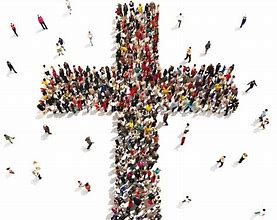
It is easier to define the word, “Church” and to cite scriptures that describe “Church”:
Church: The Greek word is “EKKLESIA”; EK = out of, or, out from; KALEO = called or summoned; “The Called-Out Ones”.
But defining the word Church does not give us the PURPOSE OF the Church.
Describing the PURPOSE OF the Church can be further confused by imposing a PURPOSE ONTO the Church as is the case by Pastor Rick Warren’s (founder of Saddleback church, California) extremely popular and successful book, “The Purpose Driven Church”. Warren, in his book proposes that in order for a church to be healthy it must become a purpose-driven church, built around the five New Testament purposes given to the church by Jesus.
- Worship – “love the Lord your God with all your heart, and with all your soul, and with all your mind” (Mt 22:37).
- Ministry – “love your neighbor as yourself” (Mt 22:39).
- Evangelism – “go therefore and make disciples” (Mt 28:19).
- Fellowship – “baptizing them” (Mt 28:19, identification with the Christian community).
- Discipleship – “teaching them to obey all that I command you” (Mt 28:20).
Warren’s primary thesis is that “what is needed today are churches that are driven by purpose instead of by other forces” (p80). His paradigm consists of a perspective that looks at everything through the five New Testament purposes of the church, and a process for fulfilling those purposes (p80). These five purposes, says Warren, are taken directly from the Great Commandment in Mt 22:37-40, and the Great Commission in Mt 28:18-20, and are therefore non-negotiable in the application of the model.
“The issue is church health, not church growth!” declares Warren. “If your church is healthy, growth will occur naturally. Healthy, consistent growth is the result of balancing the five biblical purposes of the church.”
The earliest examples of the rudimentary Church can be found in Matthew 11, when Jesus finishes instructing His first twelve disciples, and gives them authority over unclean spirits, to cast them out, and to heal every disease and every sickness.

Then, in Matthew 28:18-20, “Jesus came up and spoke to them, (His eleven disciples), saying, “All authority in heaven and on earth has been given to Me. Go, therefore, and make disciples of all the nations, baptizing them in the name of the Father and the Son and the Holy Spirit, teaching them to follow all that I commanded you; and behold, I am with you always, to the end of the age.”
We could say, that from these first two examples of Jesus’ instructions, that the earliest PURPOSE OF the Church was to
- Have authority over unclean spirits and to cast them out of the lives of the afflicted,
- To heal every disease and every sickness,
- Go and make disciples of all the nations,
- Baptizing them in the name of the Father, the Son and the Holy Spirit,
- Teaching them to follow all that Jesus commanded.
There are many tasks and attributes of the Church seen in scriptures. The church is to teach biblical doctrine, a place of fellowship, where Christians can be devoted to one another, to instruct one, to be kind and compassionate to one another, to encourage one another and most importantly, love one another. (see GotQuestions.Org)
The church is to be a place where believers can observe the Lord’s Supper, promoting fellowship and for prayer. Some final purposes of the church are to look after orphans and widows in their distress and to keep oneself from being polluted by the world. The church is to be about the business of ministering to those in need. This includes not only sharing the gospel, but also providing for physical needs (food, clothing, shelter) as necessary and appropriate. The church is also to equip believers in Christ with the tools they need to overcome sin and remain free from the pollution of the world.
However, the Apostle Paul gives what I consider as the prime example of the PURPOSE OF the Church when he taught that the Church is God’s hands, mouth, and feet in this world – the body of Christ (1 Corinthians 12:12-27). We are to be doing the things that Jesus Christ would do if He were here physically on the earth. The church is to be “Christian,” “Christ-like,” and Christ-following.

The rest of this article speaks to the direction and drift – or dare I say the ‘shipwreck’ – of the Church; how the church has been and is being reimagined and re-identified as a means to attract the world to its doors. This, I believe, in large part comes from men such as Rick Warren and Bill Hybels (Willow Creek, Chicago, IL). They identified key components of the true Church and adapted them to the current cultural mores, and their influence has been staggering. The results, however, has created and era of one of the biggest drifts of the Church from her foundation. (See “The Seeker-Friendly way of doing church”). Is this the Great Apostasy described in the Bible?
Let’s say you encounter a group of people – a large group of people – who are loving and who show unselfish concern for other; people who are joyful and show an inner peace; people who are patient, and show not only the ability to wait, they wait with kindness, people who are good, faithful, and gentle, showing great self-control. WHAT WOULD YOU CALL THAT?
What if these people show a loving attitude and behavior that allows them to endure with patience and serenity; a people showing a love that is kind and thoughtful, that is not jealous or envious; a people showing a kind of love does not brag and is not proud or arrogant. People who are not rude; not self-seeking, not provoked nor are overly sensitive and not easily angered; People with a loving attitude that does not take into account a wrong endured. They do not rejoice at injustice, but rejoice with the truth when right and truth prevail. WHAT WOULD YOU CALL THAT?
People with a love toward others that bears all things regardless of what comes upon them, believes all things, that is looking for the best in each person, hopes all things, remaining steadfast during difficult times, and endures all things without weakening. People with a love never fails, never fades and never ends. What would you think? What would you do? AND, YES, WHAT WOULD YOU CALL THAT?
THE CHURCH: INHERITING THE EDIFICE COMPLEX
“The idea, that the Christians in the apostolic age, erected special houses of worship is out of the question.
The Savior of the world was born in a stable, ascended to heaven from a mountain. His apostles and their successors down to the third century, preached in the streets, the markets, on mountains, in ships, sepulchers, eaves, and deserts, and in the homes of their converts.
“Thousands of costly churches and chapels have since been built and are constantly being built in all parts of the world to the honor of the crucified Redeemer – who in the days of his humiliation had no place of his own to rest his head!” — PHILIP SCHAFF, NINETEENTH-CENTURY AMERICAN CHURCH HISTORIAN AND THEOLOGIAN

“MANY CONTEMPORARY CHRISTIANS have a love affair with brick and mortar. The edifice complex is so ingrained in our thinking that if a group of believers begins to meet together, their first thoughts are toward securing a building. For how can a group of Christians rightfully claim to be a church without a building? (So the thinking goes.)
The “church” building is so connected with the idea of church that we unconsciously equate the two and it has caused Christians to disconnect the original meaning of “The Church” (Ekklesia) from the people of God, the disciples of Jesus, to the edifice or buildings which occasionally house the Body of Christ – His People.
Just listen to the vocabulary of the average Christian today:
“Wow, honey, did you see that beautiful church we just passed?”
“My goodness! That is the largest church I have ever seen! I wonder what the electric costs to keep it going?”
“Our church is too small. I’m developing claustrophobia. We need to extend the balcony.”
“The church is chilly today; I am freezing my buns off in here!”
“We have gone to church every Sunday this past year except for the Sunday when Aunt Mildred dropped the microwave oven on her toe.”
Or how about the vocabulary of the average pastor:
“Isn’t it wonderful to be in the house of God today?”
“We must show reverence when we come into the sanctuary of the Lord.”
“Or how about the mother who tells her happy child (in subdued tones), “Wipe that smile off your face; you’re in church now! We behave ourselves in the house of God!”
“To put it bluntly, none of these thoughts have anything to do with New Testament Christianity. Rather, they reflect the thinking of other religions—primarily Judaism and paganism.
FROM HOUSE CHURCHES TO HOLY CATHEDRALS

“The early Christians believed that Jesus is the very presence of God. They believed that the body of Christ, the church, constitutes a temple. When the Lord Jesus was on earth, He made some radically negative statements about the Jewish Temple.’
“The one that angered many Jews most was His announcement that if the Temple was destroyed, He would build a new one in three days! (See John 2:19-21.)
“Though Jesus was referring to the Temple that existed in the architectural sense, He was really speaking of His body. Jesus said that after this temple was destroyed, He would raise it up in three days.
“He was referring to the real temple—the Ekklesia—which He raised up in Himself on the third day (Ephesians 2:6).
“Since Christ has risen, we Christians have become the temple of God.
“At His resurrection, Christ became a “life-giving spirit” (1 Corinthians 15:45). Therefore, He could take up residence in the believers, thus making them His Temple, His house. It is for this reason that the New Testament always reserves the word church (ekklesia) for the people of God. It never uses this word to refer to a building of any sort.” (Excerpts from Frank Viola & George Barna’s book, “Pagan Christianity”, Tyndale Publishing, 2002, 2008)
“When Christianity was born, it was the only religion on the planet that had no sacred objects, no sacred persons, and no sacred spaces.
“Although surrounded by Jewish synagogues and pagan temples, the early Christians were the only religious people on earth who did not erect sacred buildings for their worship. The Christian faith was born in homes, out in courtyards, and along roadsides. For the first three centuries, the Christians did not have any special buildings!
“As one scholar put it, “The Christianity that conquered the Roman Empire was essentially a home-centered movement.”
“Meeting in homes was a conscious choice of the early Christians.” It was a coming together in a more intimate setting, a ones’ home. Very little could be hidden in such an environment.
“Then, in the late second and third centuries a shift occurred”
Christians not only had adopted sacred spaces, they also had created sacred objects. (They would soon develop a sacred priesthood.) It might seem they had forgotten Moses and the golden calf.
“In all of this, the second and third century Christians began to assimilate the magical mind-set that characterized existent pagan thinking.
“These factors made the Christian terrain ready for the man who would be responsible for creating church buildings. In AD 327, Constantine began erecting the first church buildings throughout the Roman Empire, some at public expense.’ In so doing, he followed the path of the pagans in constructing temples to honor God.
“Interestingly, he named his church buildings after saints — just as the pagans named their temples after gods. Constantine built his first church buildings upon the cemeteries where the Christians held meals for the dead saints. WHAT WOULD YOU CALL THAT?
“Constantine brought peace for all Christians.'” Under his reign, the Christian faith had become legitimate. In fact, it had risen to a status greater than Judaism and paganism.
“For these reasons, the Christians saw Constantine’s rise to emperor as an act of God. Here was God’s instrument who had come to their rescue.
“Christianity and Roman culture were now melded together.” WHAT WOULD YOU CALL THAT?
“The Christian building demonstrates that the church, whether she wanted it or not, had entered into a close alliance with pagan culture.’ As Will Durant, author of The Story of Civilization (a sweeping, eleven-volume work on world history that earned him a Pulitzer Prize), put it, “Pagan isles remained in the spreading Christian sea.”
“This was a tragic shift from the primitive simplicity that the church of Jesus Christ first knew. The first-century Christians were opposed to the world’s systems and avoided any contact with paganism. This all changed during the fourth century, when the church emerged as a public institution in the world and began to “absorb and Christianize pagan religious ideas and practices.
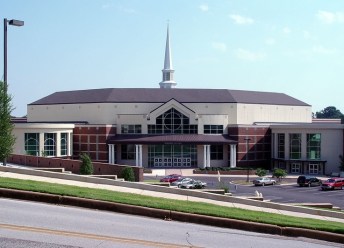
“As one historian put it, “Church buildings took the place of temples; church endowments replaced temple lands and funds.”
“Under Constantine, tax-exempt status was granted for all church property.
“Consequently, the story of the church building is the sad saga of Christianity borrowing from heathen culture and radically transforming the face of our faith.
“To put it bluntly, the church buildings of the Constantinian and post-Constantinian era essentially became holy shrines. The Christians embraced the concept of the physical temple. They imbibed the pagan idea that there exists a special place where God dwells in a special way. And that place is made “with hands.”‘ WHAT WOULD YOU CALL THAT?
“As with other pagan customs that were absorbed into the Christian faith (such as the liturgy, the sermon, clerical vestments, and hierarchical leadership structure), third- and fourth-century Christians incorrectly attributed the origin of the church building to the Old Testament. But this was misguided thinking.”
“Most Americans are struggling to clarify their identity. They tend to see themselves as unique individuals, Americans, members of their family, occupational professionals, consumers, and then as followers of Christ — in that order of priority.
“In the minds and hearts of most Americans — even those whose beliefs classify them as “born-again Christians”— their identity as a follower of Christ pales in importance in comparison to the other roles they embrace. WHAT WOULD YOU CALL THAT?
“Oddly, most of the born again Christians consider themselves to be servants of God and to have been transformed by their faith in Christ.
“Clearly, there are some missing connections in this self-evaluation. Perhaps the confusion is due to the enormous number of inter-actions and responsibilities that people take on each day.
“Maybe it has to do with the disjointed, topical teaching that most of us receive from our churches. It may even be attributable to the lure of competing perspectives and images bombarding us from the ever-present media.
“The bottom line is really quite simple: You are a priest of God, a minister of the Lord Jesus Christ, and a member of His glorious body. Through your declaration of allegiance to Jesus and your stated desire to live with Him forever, you have a responsibility to be a functioning priest, minister, and member of the Body .
“The organized church has moved down a winding path over the past two thousand years. The only way to get it back on track is for each of us to begin prayerfully exploring the original plan that God had for His people, and then to be willing to respond faithfully to that plan.
“In this way, the Revolution that has begun to take root in our day will spread far and wide. And God will get what He has always been after.” (Excerpts from Frank Viola & George Barna’s book, “Pagan Christianity”, Tyndale Publishing, 2002, 2008)

So, where do we go from here? Let me start with a story about a funny thing happened to a friend. He related how, while at a crowded football game, he stood in a very long line for to order some food at half-time. It was taking so much time to reach the concession stand that he remarked others in the line that this is the longest food line he has ever had to endure. Then to his astonishment several shouted back that this was the line to the restrooms!” Why would anyone stand in the wrong line for an hour? They wouldn’t – not on purpose anyway! But, in case you did, there is a very old saying you need to hear again, “what do you call it when you keep doing the same things, expecting different results?” Nuts!!
I would like to suggest that we break the current man-made rigid religious molds. That we break these chains of manmade traditions that are binding us. I suggest that we go back to the beginning. The beginning of what Jesus taught and modeled and re-learn something old, making it new.
It is time we stopped ‘going to church’ to be served (i.e., to get what we want), and start assembling as the Church in order to serve God by finding OUR PURPOSE AS THE CHURCH by doing the works of Jesus!
Click the following link, and begin to pray for God’s Wisdom and discernment. An invitation. 
I humbly offer this after fifteen years of prayer, study, seeking God, asking for His Wisdom to know and follow His Call. I sincerely and prayerfully urge you to do the same.
Your Brother and Friend,
Mike Young
What is God Saying to His Church – You and me
Discover more from Whitestone Fellowship
Subscribe to get the latest posts sent to your email.

