Devotional, Devotion, Prophecy, Bible Study, Bible discussion, End of Days, End Times, Enter Ministry, Underground Church, Church, Fellowship, Tribulation, Salvation, Ordained, Love, Heaven, Miracles
Author: Michael Young, Sr.
I am a practicing Christian, a disciple of Jesus, a husband of over 50 years, a father and a grandfather, a business man, a veteran and a friend to all who will have me.
I have served or am serving, at various times, as an Evangelist, a Pulpit fill pastor, an Associate Pastor of Evangelism and as Senior Pastor of a church plant. My passion is for practicing and teaching the Bible, building small groups, reaching the lost with the message of the Gospel of Jesus, recovering the straying Sheep of God and the gathering together the Called of God, in neighborhoods, business settings and in churches by equipping other Christians.
I have authored a few small books and I have a background in professional business management, finance and investments.
I am glad to meet you, even if it is virtually. Write me at any time and let's become friends.
If I were to recapitulate what has been said by outlining the chapters of Ephesians in the context of “A manual for strategic training and preparation for Spiritual Warfare”, here is how I would put it:
Chapter 1 – KNOWING YOUR SAVIOR AND YOUR POSITION IN HIM.We are redeemed, and seated with Christ at the Right Hand of the Father in the heavenly places and empowered with the greatness of His power for His purposes – the redemption of the lost, the reclamation of the earth and victory over Satan and hell.
Chapter 2 – KNOWING YOUR SAVIOR AND YOUR RELATIONSHIP IN HIM.We are made alive in Christ and are no longer strangers and foreigners, but you are fellow citizens with the saints, and are of God’s household, having been built on the foundation of the apostles and prophets, Christ Jesus Himself being the cornerstone, in whom the whole building, being fitted together, is growing into a holy temple in the Lord, in whom you also are being built together into a dwelling of God in the Spirit.
Chapter 3 – KNOWING HIS PURPOSE FOR YOU IN HIM. God’s Eternal purpose, which was carried out in Christ and is now entrusted to us to finish the Work which He has prepared ahead of time for us to walk in.
Chapter 4 – KNOWING HIS POWER IN AND THROUGH YOU.We have victory through Him as we unite ourselves in Him, as one. His power is released in and through our lives as we walk in the Spirit of God and deny ourselves every kind of impurity and greediness and rid ourselves of the “old self” and its lusts which are the obstacles to the wisdom, ability and strength of our calling.
Chapter 5 – KNOWING HIS IMAGE IMPRINTED IN YOU.We are to be imitators of Christ in our mind, attitude, heart, soul spirit and body, lest we fail to prevail.
Chapter 6 – KNOWING YOUR ABILITIES AND SPIRITUAL WEAPONRY IN HIM.Engaging the enemy of the world forces of darkness and the spiritual forces of wickedness in the heavenly places, with the spiritual weapons given us by God, and then standing fast!
It labors me to say that the church is, for the most part, not engaged in this Last Day scenario. We have drifted. We are “playing church”, entertaining ourselves, saying we are “doing the works of Christ”. But we have fallen under the trance of the evil one. We have succumbed to the great delusion God warned about.
In conclusion, the time is short, the enemy is inside our gates. This is becoming hand-to-hand combat, and the battlefield is being soaked with the blood of saint and sinner alike.
God will not endure the faint of heart, and He takes no pleasure in those who would shrink back. You and I must engage this fight today. The victory is won, the title is ours, but we must join fearlessly join Him today!
So, enough of the pandering! It is time to cast off the postmodern fashions of the harlot church, and by doing so, only those who remain will be considered the final and holy remnant.
THE LEAVEN of SIN and EVIL, or THE LEAVEN OF HEAVEN?
The Bible mentions leaven, or yeast, in several contexts. In some contexts, the reference to leaven is obviously literal; in other contexts, leaven takes on symbolic connotations.
I. In the Mosaic Law, leaven represents sin or corruption
II. Jesus, in the New Testament, compared the false teaching of the Pharisees and Sadducees and Herodians to leaven. The Pharisees had come to Jesus to test Him (verse 1), but Jesus perceived their true intent and the state of their hearts. He later warned His disciples against being taken in by their teachings (verse 12), which He compared to leaven. A small portion of the “leaven” of falsehood can permeate a person’s heart and mind. In Luke 12:1 Jesus specifies that the leaven of the Pharisees is “hypocrisy.” Having a show of piety, without true holiness, is like leaven in that it gradually increases and spreads corruption, puffing up a person with vanity. Lies and hypocrisy can poison one’s whole character.
In one of Jesus’ parables of the kingdom of heaven, He uses leaven in a different sense: “The kingdom of heaven is like yeast that a woman took and mixed into about sixty pounds of flour until it worked all through the dough” (Matthew 13:33). In this case, leaven is not used as a symbol of evil; rather, leaven is a symbol of the kingdom, which will gradually and secretly permeate society. Just as a woman uses the smallest bit of leaven in the dough, so the gospel starts with small beginnings. Just as the leaven quietly works its way through the whole batch, the gospel will have a profound impact on all sectors of society.
III. So, the bottom line is that yeast or leaven in the Bible, can be literal yeast for making bread or other edible products, or it can be symbolic of an idea, an ideology or a teaching that rises up from small beginnings and spread, affecting or infecting everything near it, whether for good or for evil.
The metaphor of yeast can also be seen as representative of the intentions of churches, church leaders, pastors, preachers, Bible teachers and theologians. Some infer, imply or teach that since we live in the ‘here-and-now’ that our focus should be, primarily, on the here-and-now. We should be the ‘best version of who we can be, now’ as they see it in scriptures. Not a bad idea, but that’s just half the ‘story’.
Others emphasize continuing the work of Jesus, spreading His teaching, modeling His behavior during our short time on earth, but emphasize the future, an eternity with God in heaven.
Then there are those who emphasize and promote a social gospel or an egocentric view of the Bible. They usually believe and teach that religion and most of the Bible is allegorical. It represents truth as seen through the eyes and mind of religious humanists or religious secularists. They postulate that good and evil, right and wrong, are inventions of the imagination of people and is based on their situation at the time. They do not see the Bible as literal nor do they consider it without error; they see truth as it is measured by conditional or situational ethics. So, truth or error is ever-changing and shifting with time. And, they see the Bible containing truth as they define it, but archaic and in need of modernization. Therefore, they consider it their responsibility to correct perceived errors in the Bible and go about correcting them and clarifying them and teaching them. These people may or may not believe in a literal God, in heaven, nor in an afterlife. They live for the moment – some adhere to some kind of religious system, some may be religious pagans, most can be hedonistic. (The Bible often calls these people as false teachers, false prophets, and wolves among the flock, and says to avoid them).
So, where is the truth and the balance? Well, the Bible says very clearly that the Truth is a person and His Name is Jesus. And balance? If you know Jesus, you know that you only find balance in its extreme form. It is Jesus, or nothing. That is His definition of balance.
Everything God has created, He created in a perfect balance. It is humankind’s rebellion toward God that has thrown his world out of balance. This could be why the disciples of Jesus were said to have turned the world upside down – they righted it. Only to have to it leavened by the evil one and thrown it out of balance, at least for now.
The Bible says that the kingdom of heaven is like yeast. And speaking of the kingdom of heaven, it is the rule of an eternal, sovereign God over all the universe. Jesus says, “the kingdom of heaven has come near” announcing His arrival on earth. And furthermore, it is only the “poor in spirit” and only those who do the will of The Father can inherit or enter this kingdom. And finally, the Message of the Gospel, the Good News of Jesus Christ is the entryway, for He says, “I am the door; if anyone enters through Me, he will be saved, and will go in and out and find pasture.”
Therefore, when we, as Christians, mix this yeast of the Gospel Message, through how we live and by our testimonies, into ‘the flour’ or the ingredients of this world’ it will work all through ‘the dough” (of this world) and will gradually and secretly permeate society. Just as a woman uses the smallest bit of leaven in the dough, so the gospel starts with small beginnings. Just as the leaven quietly works its way through the whole batch, the gospel will have a profound impact on all sectors of society.
And, it is not enough to just mix yeast of the kingdom of heaven into our world. We must first ingest and digest this yeast, this Message of the Gospel. It is then that we are transformed into the likeness and image of Christ, which will affect lasting change. It is then that we are considered able to effectively mix this yeast of the kingdom into the flour.
IV. Now finally, and please consider this carefully: Yes, we must live in-the-moment, in the here-and-now, but with your eyes heavenward, and by girding up the loins of your mind, being sober, and hoping to the end for the grace that is to be brought unto you at the revelation of Jesus Christ; preparing for a future with the Lord.
And yes, we must be ‘our best selves now’, but only if that self is dead, and we have been made alive in Christ. By this, people won’t see that old cadaver of self, but Christ Who dwells in us! We are made new in Him. Knowing that those of us who are being sanctified have been made perfect by that One Sacrifice! (Hebrews 10:14).
So, if you are a welder, work to be the BEST of all the welders. Not in just fitting joints, but in all things. If you are an accountant, work to be the BEST of all accountants. A homemaker, a salesperson, a teacher, a nurse, a doctor, a truck driver, a cook, an athlete or whatever you do. Work to be the best at who you are and at whatever you do as for the Lord and not for people, knowing that it is from the Lord that you will receive the reward of the inheritance. It is the Lord Christ whom you serve.
So, in this is perfect balance. To whom God would make known what is the riches of the glory of this mystery among the Gentiles; which is Christ in you, the hope of glory: Whom we preach, warning every man, and teaching every man in all wisdom; that we may present every man perfect in Christ Jesus: Colossians1:28-29.
Jesus Walks on Water, I Am The Bread of Life, The Words of Eternal Life.
Please pay particular attention to the fact that Jesus has performed miracles in the presence of the Jews and His disciples and they react with astonishment and say, “This is indeed the Prophet who is to come into the world”, and were about to come and take him by force to make him king, Then, almost inexplicably, because these same people do not hear or get what they want, they turn away from Jesus. Please pay attention that this is not true in your life. There are those who follow Jesus around for what they can get that pleases them, and there are followers of Jesus. There is a difference and the outcomes are vastly different. One leads to life, the other will perish into the outer darkness.
Jesus Walks on Water.
John 6:16, When evening came, his disciples went down to the sea, verse 17, got into a boat, and started across the sea to Capernaum. It was now dark, and Jesus had not yet come to them. Verse 18. The sea became rough because a strong wind was blowing. Verse 19. When they had rowed about three or four miles, they saw Jesus walking on the sea and coming near the boat, and they were frightened. Verse 20. But he said to them, “It is I; do not be afraid.” Verse 21. Then they were glad to take him into the boat, and immediately the boat was at the land to which they were going.
(Commentary Break): Remember the details of this event. It was dark, stormy, and they were three or four miles from land and they see Jesus walking on water. He enters the boat and suddenly they were at the land. This is both unforgettable and undeniable by those disciples. Now the stage is set, so to speak, for what is to come. This is important for you and me to understand so we can apply it to our lives daily, so we do not fear, or fail to trust Jesus.
Faith may be a malleable thing. One day we say we believe, but with enough pressure we can begin to doubt. A helpful remedy is to remember God’s purpose and plan for all our lives is perfecting us to the image and likeness of Jesus and to prepare us for an eternity with one another as believers in His perfect presence. This process of being sanctified and ever present and never ending, until we are finally with Him.
“For by a single offering he has perfected for all time those who are being sanctified. Hebrews 10:14. (End Commentary Break).
I Am the Bread of Life.
Verse 22. On the next day the crowd that remained on the other side of the sea saw that there had been only one boat there, and that Jesus had not entered the boat with his disciples, but that his disciples had gone away alone.
Verse 23. Other boats from Tiberias came near the place where they had eaten the bread after the Lord had given thanks. Verse 24. So when the crowd saw that Jesus was not there, nor his disciples, they themselves got into the boats and went to Capernaum, seeking Jesus.
Verse 25. When they found him on the other side of the sea, they said to him, “Rabbi, when did you come here?”
(Commentary Break): Please do not miss the point here, that the crowd confirms that Jesus has miraculously appeared on the other side of the lake without the evidence of travelling with the disciples.
But Jesus will seemingly ignore their question about His whereabouts and will turn their minds and attention to the point all of these events have been leading to. (End Commentary Break).
Verse 26. Jesus answered them, “Truly, truly, I say to you, you are seeking me, not because you saw signs, but because you ate your fill of the loaves. Verse 27. Do not work for the food that perishes, but for the food that endures to eternal life, which the Son of Man will give to you. For on him God the Father has set his seal.”
(Commentary Break): Once again, this will reveal the true intent of those who claim to be following Jesus; “you are seeking me, not because you saw signs, but because you ate your fill”. So, let me ask, why are you following Jesus? Is it because you want to satisfy your own desires and physical needs, or is it to repent and to find forgiveness of your sins – to be set right with God? This is important for your eternal future.
Jesus instructs the Jews and His disciples to not work for the food that perishes but food that endures to eternal life (now talking about the things that satisfies the spirit and not the body), which only Jesus can provide. (End Commentary Break).
Verse 28. Then they said to him, “What must we do, to be doing the works of God?” Verse 29. Jesus answered them, “This is the work of God, that you believe in Him whom He has sent.”
Verse 30. So they said to him, “Then what sign do you do, that we may see and believe you? What work do you perform? Verse 31. Our fathers ate the manna in the wilderness; as it is written, ‘He gave them bread from heaven to eat.’” Verse 32. Jesus then said to them, “Truly, truly, I say to you, it was not Moses who gave you the bread from heaven, but my Father gives you the true bread from heaven. Verse 33. For the bread of God is he who comes down from heaven and gives life to the world.” Verse 34. They said to him, “Sir, give us this bread always.”
(Commentary Break): Appearing to understand what Jesus is saying, they ask, “What must we do, to be doing the works of God?” But, Jesus stays on point, “This is the work of God: that you believe in Him (The Son of Man – Jesus) whom He (God the Father) has sent.” This would go against the teachings of the Pharisees and Sadducees. So the crowd of Jews ask for further proof. The crowd asks for again for a sign or a miracle so they can believe. Instead, Jesus quotes the Word of God and the crowd exclaims “Sir, give us this bread always.” (End Commentary Break).
Verse 35. Jesus said to them, “I am the bread of life; whoever comes to me shall not hunger, and whoever believes in me shall never thirst. Verse 36. But I said to you that you have seen me and yet do not believe. Verse 37. All that the Father gives me will come to me, and whoever comes to me I will never cast out. Verse 38. For I have come down from heaven, not to do my own will but the will of him who sent me. Verse 39. And this is the will of him who sent me, that I should lose nothing of all that he has given me, but raise it up on the last day. Verse 40. For this is the will of my Father, that everyone who looks on the Son and believes in him should have eternal life, and I will raise him up on the last day.”
(Commentary Break): Now Jesus make clearer Who He is, “I am the bread of life that came down from heaven”, a direct reference to the manna that God miraculously to the Israelites during their wandering in the wilderness. Furthermore, Jesus say He has come down from heaven to do the will of God, and lays claim to be the Son of God with the authority to raise people up on the last day, to eternal life.
Now, I am asking you to imagine standing before a man today who would making such a claim. How would that affect you and what would you think? This is exactly what you must do, although not seeing Him but hearing His words through this account. (End Commentary Break).
Verse 41. So the Jews grumbled about him, because he said, “I am the bread that came down from heaven.” Verse 42. They said, “Is not this Jesus, the son of Joseph, whose father and mother we know? How does he now say, ‘I have come down from heaven’?” Verse 43. Jesus answered them, “Do not grumble among yourselves. Verse 44. No one can come to me unless the Father who sent me draws him. And I will raise him up on the last day. Verse 45. It is written in the Prophets, ‘And they will all be taught by God.’ Everyone who has heard and learned from the Father comes to me— verse 46, not that anyone has seen the Father except he who is from God; He has seen the Father. Verse 47. Truly, truly, I say to you, whoever believes has eternal life. Verse 48. I am the bread of life. Verse 49. Your fathers ate the manna in the wilderness, and they died. Verse 50. This is the bread that comes down from heaven, so that one may eat of it and not die. Verse 51. I am the living bread that came down from heaven. If anyone eats of this bread, he will live forever. And the bread that I will give for the life of the world is my flesh.”
(Commentary Break): “So the Jews grumbled” (gogguzó). This is more than just dismissive grumbling. This is an onomatopoetic term that shows a smoldering discontent. Notice how these Jews went from calling Jesus the Christ and wanting to make Him their king, to utter disdain.
Jesus then ‘doubles down’ so-to-speak, and says that if anyone eats of this bread, they will live forever because this bread is His flesh. He then informs them that only those who are drawn by God can come to Him, so they are trapped in a manner of speaking. If they feel repelled by Jesus, then He is saying they God is rejecting them and they have no life with God.But if they are drawn to Him, they must live with the confusion, doubt and disgust they feel. It all is so unacceptably incongruous to them. (End Commentary Break).
Verse 52. The Jews then disputed among themselves, saying, “How can this man give us his flesh to eat?” Verse 53. So Jesus said to them, “Truly, truly, I say to you, unless you eat the flesh of the Son of Man and drink his blood, you have no life in you. Verse 54. Whoever feeds on my flesh and drinks my blood has eternal life, and I will raise him up on the last day. Verse 55. For my flesh is true food, and my blood is true drink. Verse 56. Whoever feeds on my flesh and drinks my blood abides in me, and I in him. Verse 57. As the living Father sent me, and I live because of the Father, so whoever feeds on me, he also will live because of me. Verse 58. This is the bread that came down from heaven, not like the bread the fathers ate, and died. Whoever feeds on this bread will live forever.” Verse 59. Jesus said these things in the synagogue, as he taught at Capernaum.
(Commentary Break): Leviticus 17:11 says, “For the life of the flesh is in the blood, and I have given it for you on the altar to make atonement for your souls, for it is the blood that makes atonement by the life.” But drinking blood was strictly forbidden in Jewish law (Leviticus 17:10-14), making this statement particularly shocking to the Jew. (It signifies the new covenant in Jesus’ blood, which is essential for eternal life. This anticipates the sacrificial death of Christ and the shedding of His blood for the forgiveness of sins.)
Additionally, we are told that Jesus is the Word of God. So, metaphorically speaking, eating His flesh is tantamount to getting your spiritual nourishment from The Word of God. (End Commentary Break).
The Words of Eternal Life.
Verse 60. When many of his disciples heard it, they said, “This is a hard saying; who can listen to it?” Verse 61. But Jesus, knowing in Himself that his disciples were grumbling about this, said to them, “Do you take offense at this? Verse 62. Then what if you were to see the Son of Man ascending to where he was before? Verse 63. It is the Spirit who gives life; the flesh is no help at all. The words that I have spoken to you are spirit and life. Verse 64. But there are some of you who do not believe.” (For Jesus knew from the beginning who those were who did not believe, and who it was who would betray him.) Verse 65. And he said, “This is why I told you that no one can come to me unless it is granted him by the Father.”
Verse 66. After this many of his disciples turned back and no longer walked with him. Verse 67. So Jesus said to the twelve, “Do you want to go away as well?” Verse 68. Simon Peter answered him, “Lord, to whom shall we go? You have the words of eternal life, verse 69, and we have believed, and have come to know, that you are the Holy One of God.” Verse 70. Jesus answered them, “Did I not choose you, the twelve? And yet one of you is a devil.” Verse 71. He spoke of Judas the son of Simon Iscariot, for he, one of the twelve, was going to betray him.
(Commentary Break): A man once told me, after hearing a teaching from the Bible, that it was that kind of absolutism that would turn people away from Jesus. But clearly, our own words do not have the power to draw or repel people from Jesus. It is the Father alone who has that power. These words alone were not what drove many away from Jesus. These Jews were simply never drawn to Him by God. They were just following Him around for what they could get for themselves, such as the miracles.
Finally, Jesus turns His attention to His twelve disciples and asks, “Do you want to go away as well?” And from this we know that at least Peter knew the truth and was a true follower of Jesus, but that Judas was only following Jesus around, but that he was not a follower of Jesus! (End Commentary Break – End of Chapter 6).
Many churches and church leaders today have made the sad mistake of teaching that it is you and your words or your behaviors and your lifestyle that will draw others to Jesus or will drive them away. For example, one church in Winter Springs, Florida advertises itself as The F.. (full name hidden) …y– A Better You, A Better World. They say, “We believe God is working in you to create a better you and through you to create a better world. Come join us in reclaiming God’s intended reality!”
Another well-known preacher emphasizes the positive attributes of men and women while minimizing the effects of sin and the reality of hell. He has written several wildly popular books, such as “Your Best Life Now”, “Be Your Best You, Now”, “Empty out the Negative” and “Speak the Blessing”. While all these titles might represent some good ideas, they have absolutely nothing to do with being a disciple of Jesus, follow Him, being saved by Him or serving God. They are all about YOU!
Dear friends, following Jesus and being a Christian is a wonderful but a deadly serious matter. You can ‘live your best life now’ but spend eternity in an outer darkness “where there is wailing and gnashing of teeth”, condemned to the deadly fires of hell. Or you can live your life for Jesus now, and live with Him in heaven for all of eternity. The choice is yours to make. But, please, don’t make “the careless choice” of rebelliousness and recklessness toward God and thereby teach the same to others through your attitudes and actions. For “whoever nullifies even the least of the least of these commandments and teaches others to do the same will be called least in the kingdom of heaven, but whoever does them and teaches them will be called great in the kingdom of heaven. For I tell you, unless your righteousness exceeds that of the scribes and Pharisees, you will never enter the kingdom of heaven.”(see Matthew 5:19-20).
Jesus never wrote a book. He never even made a list as far as we can tell. His teachings were from His heart, His mind by way of His Divine Nature. People learned what He was teaching and came to know Him by following Him around, listening to His Words and watching Him – then by doing what He had done and saying what He had said.
We, churches, pastors, preachers, theologians, and authors, in this twenty-first century, write and sell hundreds of thousands and even millions of religious books, commentaries, sermons series, and videos every year, totaling in the billions of dollars in sales.
But oddly enough, we are in such disagreement on the teachings of Jesus and in fact much of what is in the Bible that Christianity and its variants, have splintered into over 200 known denominations in America and over 33,000 denominations, worldwide – and many are outright hostile to one another. (Jesus warned that there would be a rise of false prophets, false teachers and false christs, and so it is.)
And speaking of simplicity being lost in the rush to find answers, here is a funny skit done by Bob Newhart, on his TV show by the same name, which may help make my point in an odd sort of way:
KATHERINE: Dr. Switzer?
SWITZER, (Bob Newhart): Yes, come in. I’m just washing my hands.
KATHERINE: I’m Katherine Bigmans. Janet Carlisle referred me.
SWITZER: Oh, yes. You dream about being buried alive in a box.
KATHERINE: Yes, that’s me. Should I lay down?
SWITZER: No, we don’t do that anymore. Just have a seat and let me tell you a bit about our billing. I charge five dollars for the first five minutes and then absolutely nothing after that. How does that sound?
KATHERINE: That sounds great. Too good to be true as a matter of fact.
SWITZER: Well, I can almost guarantee you that our session won’t last the full five minutes. Now, we don’t do any insurance billing, so you would either have to pay in cash or by check.
KATHERINE: Wow. Okay.
SWITZER: And I don’t make change.
KATHERINE: All right.
SWITZER: Go.
KATHERINE: Go?
SWITZER: Tell me about the problem that you wish to address.
KATHERINE: Oh, okay. Well, I have this fear of being buried alive in a box. I just start thinking about being buried alive and I begin to panic.
SWITZER: Has anyone ever tried to bury you alive in a box?
KATHERINE: No. No, but truly thinking about it does make my life horrible. I mean, I can’t go through tunnels or be in an elevator or in a house, anything boxy.
SWITZER: So, what you are saying is you are claustrophobic?
KATHERINE: Yes, yes, that’s it.
SWITZER: All right. Well, let’s go, Katherine. I’m going to saytwowordsto you right now. I want you to listen to them very, very carefully.Then I want you to take them out of the office with you and incorporate them into your life.
KATHERINE: Shall I writethemdown?
SWITZER: No. If it makes you comfortable. It’s just two words. We find most people can remember them.
KATHERINE: Okay.
SWITZER: You ready?
KATHERINE: Yes.
SWITZER: Okay. Here they are. Stopit!
KATHERINE: I’m sorry?
SWITZER: Stopit!
KATHERINE: Stopit?
SWITZER: Yes. S-T-O-P, new word, I-T.
KATHERINE: So, what are you saying?
SWITZER: You know, it’s funny, I say two simple words and I cannot tell you the amount of people who say exactly the same thing you are saying. I mean, you know, this is not Yiddish, Katherine. This is English. Stop it.
KATHERINE: So I should just stopit?
SWITZER: There you go. I mean, you don’t want to go through life being scared of being buried alive in a box, do you? I mean, that sounds frightening.
KATHERINE: It is.
SWITZER: Then stopit.
KATHERINE: I can’t. I mean it’s —
SWITZER: No, no, no. We don’t go there. Just stopit.
KATHERINE: So, I should just stop being afraid of being buried alive in a box?
SWITZER: You got it. Good girl. Well, it’s only been three minutes, so that will be three dollars.
KATHERINE: Actually, I only have five so —
SWITZER: Well, I don’t make change.
KATHERINE: Then I guess I’ll take the full five minutes.
SWITZER: Fine. All right. What other problems would you like to address?
KATHERINE: I’m bulimic. I stick my fingers down my throat.
SWITZER: Stopit! Are you a nut of some kind? Don’t do that.
KATHERINE: But I’m compelled to. My mom used to call —
SWITZER: No, no. We don’t go there.
KATHERINE: But I —
SWITZER: No, we don’t go there either.
KATHERINE: But my horoscope did say —
SWITZER: We definitely don’t go there. Just stop it. What else?
KATHERINE: Well, I have self-destructive relationships with men.
SWITZER: Stopit! You want to be with a man, don’t you?
KATHERINE: Mm-hmm. Mm-hmm, yes.
SWITZER: Well, then, stopit.Don’t be such a big baby.
KATHERINE: I wash my hands a lot.
SWITZER: That’s all right.
KATHERINE: It is?
SWITZER: I wash my hands all the time. There’s a lot of germs out there. Don’t worry about that one.
KATHERINE: I’m afraid to drive.
SWITZER: Well, stop it. How are you going to get around? Get in the car and drive you, you kook. Stopit.
KATHERINE: You stop it. You stop it.
SWITZER: What’s the problem, Katherine?
KATHERINE: I don’t like this. I don’t like this therapy at all. You are just telling me to stopit.
SWITZER: And you don’t like that?
KATHERINE: No, I don’t.
SWITZER: So you think we are moving too fast, is that it?
KATHERINE: Yes. Yes, I do.
SWITZER: All right. Then let me give you ten words that I think will clear everything up for you. You want to get a pad and a pencil for this one?
KATHERINE: All right.
SWITZER: Are you ready?
KATHERINE: Mm-hmm.
SWITZER: All right. Here are the ten words: Stop it, or I’ll bury you alive in a box!
So, it was just two words and Katherine wants to write them down? She wants to analyze it? She says she doesn’t like the simplicity of the advice. She says it’s all moving too fast. She won’t do it! So Dr. Switzer, (Bob Newhart) says to write it down. All ten words!
Coincidentally, Jesus’ first, most complete and shortest sermon ever was just nine words: “Repent, for the kingdom of heaven is at hand.” And sincere people, for various reasons, have written hundreds of thousands, even millions of commentaries on what we think He meant by those nine words.
By some credible accounts, there have been between 5 and 7 billion Bible sold, alone. And there is just no way to estimate the books written about the Bible, Jesus, God, etc.
That is quite a way from the Words of Jesus contained in about six chapters of the book of Matthew from the New Testament of the Bible. Today, there are over 450 known versions of the Bible translated into over 700 languages.
Okay. I know some will think or say have overstated my point. But I believe that I have oversimplified this matter. Of course, the disciples wanted to write it all down. They wrote it down because they were so-inspired by God through the Holy Spirit. And they wrote it down so they and future generations would not forget what had happened and how it all came about. Then as time went by, people like the Apostle Paul began stringing things together. The prophecies from the Torah, the Law and the events of the advent of Jesus and His miracles. And, even Paul, perhaps because he was highly educated and trained in the law, says some things that people still wrestle with the meaning of today. So much more it is with our present and past churches, pastors, preachers, theologians, and authors, in the fourth through twenty first centuries. And, the more time that passes, it seems the wider the division.
But, not so with Jesus. He said that what He said was intelligible and meant to be understood by His true followers.
He said what He meant and meant what He said. Even as He spoke in parables, used metaphors and similes, His message was and is clear “Repent for the kingdom of heaven is at hand.”
And yes, “For God so loved the world, that he gave his only Son, that whoever believes in him should not perish but have eternal life.”
Dear friends, we have entered the time known as the Great Apostasy (see 2 Thessalonians 2:3). Jesus spoke of this day as the coming Great Delusion. (see 2 Thessalonians 2:11). Let’s not be deceived. Call on the Name of Jesus. Pray for wisdom and understanding. Study to be approved. That day is ever so near.
Revelation 6:9tells us, “When the Lamb broke the fifth seal, I saw underneath the altar the souls of those who had been slain because of the word of God, and because of the testimony which they had maintained;
Verse 10. “and they cried out with a loud voice, saying, “How long, O Lord, holy and true, will You refrain from judging and avenging our blood on those who dwell on the earth?”
Verse 11. “And there was given to each of them a white robe; and they were told that they should rest for a little while longer, until the number of their fellow servants and their brethren who were to be killed even as they had been, would be completed also.”
I was having a conversation with a Christian friend and during our talk, he made these four points:
1. “I believe the return of Jesus is near”.
2. “I am looking forward to the rapture”.
Subscribe Here—>
3. “I believe the tribulation will begin as soon as the rapture happens”.
4. “The antichrist will appear after the rapture and give the Mark of the Beast”.
When I asked him to elaborate by telling me where he gets his information, he said, “From the Bible”.
So, I pressed him a little, and asked “where in the Bible”. And, he answers with “The Book of Revelation and elsewhere”.
I decided to go to the ‘full court press’ and asked, “Yes, but, exactly where? And why do you believe what you have said?”
A bit exasperated, he responded with, “This is what I have always heard. It’s what my pastor says. Read it for yourself”.
I have had this same conversation with scores of well-meaning Christians, and it always ends the same way, “Someone else told me” but they cannot find it in scriptures OR they find a reference and ‘interpolate’.
Well, I have read it for myself – over and over for the last 10 years – I have studied eschatological matters and re-studied them, and used “good Bible study techniques and methods”, and here is what I found (for the ‘umpteenth time’):
Now, finally, well-known and respected men and women like Pastor and teacher John Piper and missionary Corrie Ten Boom have come to this realization. Bible teacher and author and Biblical pioneer, Marvin Rosenthal, founder of Zion’s Hope Ministries, authored “The Pre-Wrath Rapture of the Church” revealing and promoting sound Biblical evidence overlooked by the bias of religious denominationalism.
I. WHEN DID”THE LAST DAYS” BEGIN? Look for and make note of ‘clues’ in the following verses:
Matthew 24:4-31, (Jesus), describing a panorama of the tribulation and the Last Days. Jesus was sitting on the Mount of Olives, the disciples came to Him privately, saying, “Tell us, when will these things happen, and what will be the sign of Your coming, and of the end of the age?” And Jesus answered and said to them, (see Matthew 24:3-4),
(1). Jesus warned that “In the Last Days, there will be a rise of false Christs and false prophets. (This was an ongoing problem since as early as A.D. 35. See Matthew 24:4-5). Do you see these things in our day? Is this a clue pointing to the “Last Days”?
(2). Jesus said, “In the Last Days, there will be famines and earthquakes”. (This has been a regular occurrence since as early as A.D. 35 or earlier. See Matthew 24:7 and the 4th Tribulation Seal, found in Revelation 6:5-8). Do you see these things happening in our day? If you aren’t ‘denominationally biased’ could this reasonably be a clue to the timing of the “Last Days”?
(5). Jesus said, “In the Last Days, there will be a falling away from the faith.” (This has been an ongoing problem since as early as A.D. 35, and has been increasing to this very day. See Matthew 24:10).
These things, false Christs, wars and rumors of war, famines, earthquakes and plagues, persecutions, martyrs, which Jesus calls the ‘Birth Pangs’ of the tribulation (see Matthew 24:8), are nothing new; and from these cited verses, we can plainly see that the first 5 tribulation Seals have been broken, and the effects had begun between the time of the birth of Jesus and A.D 95, and have been overlapping and increasing in their intensity since those early days.
Do you now see the clues to the timing of the first 5 tribulation seals?
Acts 2:14-17, (the Apostle Peter), saying, “let this be known to you, and give ear to my words. For these people are not drunk, as you suppose, since it is only the third hour of the day. But this is what was uttered through the prophet Joel: ‘And in the last daysit shall be…’ (Spoken and written in or around A.D. 30 to A.D. 60). Do you see this clue to the timing of the Last Days?
1 Peter 1:20, (the Apostle Peter), saying, “He, (Jesus), was foreknown before the foundation of the world, but was made manifest in the last times for the sake of you.”(Spoken and written in or around A.D. 30 to A.D. 60). Do you see this clue to the timing of the Last Days here?
1 Peter 4:7, (the Apostle Peter), saying, “The end of all things is at hand.” (Spoken and written in or around A.D. 30 to A.D. 60). A clue!
2 Peter 3:3. (the Apostle Peter), saying, “knowing this first of all, that scoffers will come in the last days.” (Spoken and written in or around A.D. 30 to A.D. 60). Is this true in our day, also?
If these verses say all these things began occurring in or around A.D. 30 to A.D. 60, and Peter called those days the LAST TIMES, THE LAST DAYS, and it is THE END OF ALL THINGS.
What would you think, now?
1 Corinthians 10:11, (the Apostle Paul), saying, “Now these things happened to them as an example and warning [to us]; they were written for our instruction [to admonish and equip us], upon whom the ends of the ages have come.” (Spoken and written in or around A.D. 30 to A.D. 60).
Hebrews 1:2, (the Apostle Paul), saying, “but in these last days he has spoken to us by his Son.” (Spoken and written in or around A.D. 30 to A.D. 60).
Hebrews 9:26, (the Apostle Paul), saying, “But as it is, Jesus has appeared once for all at the end of the ages to put away sin by the sacrifice of himself.” (Spoken and written in or around A.D. 30 to A.D. 60). Could it be any clearer? The Last days began at the appearance of Jesus!
If these verses say all these things began occurring in the LAST TIMES, THE LAST DAYS, and it is THE END OF ALL THINGS.
What would you think?
2 Timothy 3:1, (Timothy), saying, “But understand this, that in the last days there will come times of difficulty.” (Spoken and written in or around A.D. 30 to A.D. 60).
If these verses say all these things began occurring in the LAST TIMES, THE LAST DAYS, and it is THE END OF ALL THINGS.
Would you now think the Last Days began? Want more?
1 John 2:18. (the Apostle John), saying, “Children, it is the last hour, and as you have heard that antichrist is coming, so now many antichrists have come. Therefore, we know that it is the last hour.” (Spoken and written in or around A.D. 30 to A.D. 60).
Revelation 1:9, (The Apostle John), saying, “I, John, your brother and fellow participant in the tribulation.” (Spoken and written in or around A.D. 95 to A.D. 100).
According to the words and the testimonies of Jesus , His disciples and Apostles, the “LAST DAYS – THE LAST TIMES – THE END OF THE AGES – THE END OF ALL THINGS – THE BIRTH PAINS OF THE TRIBULATION” began with the Birth of Christ Jesus.
(The following in these parentheses is very detailed, technical and written language and context specific. But this is very important for a correct and complete understanding of these eschatological matters. It is probably best suited for the devoted follower of Jesus and the serious Bible student. And I am available via this website for discussion or to answer honest and serious questions.
I have been told by several ‘self- proclaimed bible experts’ that these things were only the times of persecution and not the tribulations of the Judgment Seals. Let me be Biblically clear: the use of the word ‘tribulation’ appears just 19 times in the English Standard Version of the Bible.
Sixteen of those instances are in the New Testament, and each instance, tribulation is translated from the Greek word ‘thlipsis’, whether referring to a time before or after the Sixth Tribulation Seal and the rapture.
Then in Matthew 13:21 we see, “yet he has no root in himself, but endures for a while, and when tribulation (thlipsis) or persecution (diogmos) arises on account of the word, immediately he falls away.” Each word is distinct in its meaning and in its context – tribulation versus persecution.
“For then(tote)there will be(eimi = future tense)great (megas) tribulation(thlipsis), such as has not been from the beginning of the world until now, no, and never will be.”
And again, in Matthew 24:29-31, Jesus makes a distinction between the Birth Pains phase of the tribulation (Seals 1 through 5), and the Great Tribulation (Seals 6 and 7, and the Trumpet and Bowl Judgments) when He says,
“Immediately (eutheōs)after (meta) the tribulation(thlipsis)of those days the sun will be darkened, and the moon will not give its light, and the stars will fall from heaven, and the powers of the heavens will be shaken.Then will appear in heaven the sign of the Son of Man, and then all the tribes of the earth will mourn, and they will see the Son of Man coming on the clouds of heaven with power and great glory.And he will send out his angels with a loud trumpet call, and they will gather his elect from the four winds, from one end of heaven to the other.”
Finally, these same experts will say that Matthew 24:29-31 is neither the rapture nor is it the second coming of Jesus. But the scripture says,
“Then will appear in heaven the sign of the Son of Man, and then all the tribes of the earth will mourn, and they will see the Son of Man coming on the clouds of heaven with power and great glory…and they will gather His elect from the four winds, from one end of heaven to the other.“
I looked, and behold, a great multitude which no one could count, from every nation and all the tribes, peoples, and languages, standing before the throne and before the Lamb, clothed in white robes, and palm branches were in their hands; and they cried out with a loud voice, saying,
“Salvation belongs to our God who sits on the throne, and to the Lamb.” And all the angels were standing around the throne and around the elders and the four living creatures; and they fell on their faces before the throne and worshiped God, saying,
“Amen, blessing, glory, wisdom, thanksgiving, honor, power, and might belong to our God forever and ever. Amen.”
In recapitulation, Jesus appears in the sky, the angels gather the elect and immediately, a number too great to be counted is standing before the Throne of God, giving praise! Don’t be misled. This is THE RAPTURE!!)
II. WHEN IS JESUS COMING BACK?
2 Thessalonians 2:1tells us, “Now concerning the coming of our Lord Jesus Christ and our being gathered together to him (i.e., “raptured”) we ask you, brothers,
Verse 2. “not to be quickly shaken in mind or alarmed, either by a spirit or a spoken word, or a letter seeming to be from us, to the effect that the day of the Lord has come.
Verse 3. “Let no one deceive you in any way. For that day will not come, until the rebellion comes first, and the man of lawlessness is revealed (i.e., the antichrist), the son of destruction,
Verse 4. “who opposes and exalts himself against every so-called god or object of worship, so that he takes his seat in the temple of God, proclaiming himself to be God.
Verse 5. “Do you not remember that when I was still with you, I told you these things?
Verse 6. “And you know what is restraining him now so that he may be revealed in his time.
Verse 7. “For the mystery of lawlessness is already at work. Only He who now restrains it will do so until he is out of the way.
Verse 8. “And then the lawless one will be revealed, whom the Lord Jesus will kill with the breath of his mouth and bring to nothing by the appearance of his coming.”
III. WHAT’S NEXT?
Every event and all the prophecies regarding Jesus’ 2nd Coming and the coming Great and Terrible Day of the Lord have been fulfilled up through the 5th tribulation seal – except for the revealing of the antichrist and the rapture of the saints, (which occurs at the 6th Tribulation Seal).
Revelation 7:13,“Then one of the elders addressed me, saying, “Who are these, clothed in white robes, and from where have they come?” verse 14. “I said to him, “Sir, you know.” And he said to me, “These are the ones coming out of the great tribulation. They have washed their robes and made them white in the blood of the Lamb.”
IV. WHAT AM I TO BE DOING?
1 Peter 4:7“The end of all things is near; therefore,
(1). Be of sound judgment and sober spirit for the purpose of prayer.
(2). verse 8.“Above all, keep fervent in your love for one another, because love covers a multitude of sins.
(3). verse 9. “Be hospitable to one another without complaint.
(4). verse 10. “As each one has received a special gift, employ it in serving one another as good stewards of the manifold grace of God.
(5). verse 11. “Whoever speaks, is to do so as one who is speaking the utterances of God;
(6). whoever serves is to do so as one who is serving by the strength which God supplies; so that in all things God may be glorified through Jesus Christ, to whom belongs the glory and dominion forever and ever. Amen.
(7). verse 10. “Finally, be strong in the Lord and in the strength of His might.
(8) verse 11. “Put on the full armor of God, so that you will be able to stand firm against the schemes of the devil. Verse 12. “For our struggle is not against flesh and blood, but against the rulers, against the powers, against the world forces of this darkness, against the spiritual forces of wickedness in the heavenly places.”
(9). verse 13. “Therefore, take up the full armor of God, so that you will be able to resist in the evil day, and having done everything, to stand firm.
(10). verse 14. “Stand firm therefore, HAVING GIRDED YOUR LOINS WITH TRUTH, and HAVING PUT ON THE BREASTPLATE OF RIGHTEOUSNESS, verse 15. “and having shod YOUR FEET WITH THE PREPARATION OF THE GOSPEL OF PEACE; verse 16. “in addition to all, taking up the shield of faith with which you will be able to extinguish all the flaming arrows of the evil one. verse 17. “And take THE HELMET OF SALVATION, and the sword of the Spirit, which is the word of God.
(12). verse 18.“With all prayer and petition pray at all times in the Spirit, and with this in view, be on the alert with all perseverance and petition for all the saints,
(13). Matthew 10:7, And as you go, preach, saying, ‘The kingdom of heaven is at hand.’
(14). verse 8. “Heal the sick, raise the dead, cleanse the lepers, cast out demons.
(15). verse 19.“Go therefore and make disciples of all the nations,
(16). baptizing them in the name of the Father and the Son and the Holy Spirit,
(17) verse 20. “teaching them to observe all that I commanded you; and lo, I am with you always, even to the end of the age.”
I have tried my best to make this simple and clear yet thorough: we are at the end of the age and at the precipice. Denominational bias and clutter have clouded these matters. But, now they are plain, and now several well known and credible Bible scholars, Bible teachers and pastors are shaking off the heavy cloak of denominationalism and coming to this revealed Truth.
I want to give special credit to Marvin Rosenthal who pioneered the uncovering of this Bible truth through his tireless and groundbreaking teaching on this matter and his book, “The Pre-Wrath Rapture of the Church“. Also, to his son, David Rosenthal and the entire staff – THANK YOU. An untold number have benefited and been saved by your hard, selfless and God-centered work.
Luke 21:25“There will be signs in the sun and moon and stars, and on the earth distress among nations, in perplexity at the roaring of the sea and the waves, verse 26, people fainting from fear and the expectation of the things that are coming upon the world; for the powers of the heavens will be shaken. Verse 27. And then they will see the Son of Man coming in a cloud with power and great glory.
Verse 28. But when these things begin to take place, straighten up and lift up your heads, because your redemption is drawing near.”
These verses tell of 5,000 men, and Matthew 14:21 says they numbered about five thousand men, besides women and children. So they numbered well over 10,000 men, women and children. Please ask yourself ‘what is the importance of a narrative of Jesus feeding a crowd of people numbering in the thousands’? Would it be to increase your faith, or to create a curiosity? Is it to further aggrandize the Name and Person of Jesus? Let’s look deeper into the words of these verses and see if we can discover the nuance, the symbolism, the meaning, the teaching of a profound truth and the application for our lives – God’s Word.
Jesus Feeds the Five Thousand
John 6:1, After this Jesus went away to the other side of the Sea of Galilee, which is the Sea of Tiberias. Verse 2. And a large crowd was following him, because they saw the signs that he was doing on the sick.
(Commentary Break): Note that this chapter begins with the words, “After this”. We need to remember that Jesus has just healed a man at the pool of Bethsaida and a crowd of Jews were accusing Jesus of unlawfully healing a man on the Sabbath. Therefore they were seeking to were seeking to kill him, because not only was he breaking the Sabbath, but they said that he was even calling God his own Father, making himself equal with God. Jesus finished testifying to His authority as the Son of God and His mission. And still a large crowd follows Him because of the miracles He has performed with the sick. If there is anything to gather here it would be that even those who are healed from physically illnesses will die one day. We should seek Jesus, not just for our physical needs, but for the healing that leads to eternal life.
Finally, one might assume Jesus that was escaping to the other side of the Sea of Galilee to find respite. But, Jesus is aware that His time is short and there is much to be done. Please read on. (End Commentary Break).
Verse 3. Jesus went up on the mountain, and there he sat down with his disciples. Verse 4. Now the Passover, the feast of the Jews, was at hand.
(Commentary Break): It is beyond simply interesting that whenever you read that Jesus “goes upon the mountain”, [and please notice that it is called “THE mountain, and not “A mountain” – an unnamed mountain, which is indicative of symbolism], that He is going there to pray, to draw near to His Father, and a teaching, is about to follow, usually accompanied by or followed by miracles: For examples, see Matthew 5;1, Matthew 14:23, Matthew 15:29, Mark 3:13, Mark 6:46, Luke 9:28, John 6:3.
It is significant that the Passover, the feast of the Jews, was at hand. The Hebrew word for “feasts” (moadim) literally means “appointed times.” God has carefully planned and orchestrated the timing and sequence of each of these seven feasts to reveal to us a special story. The seven annual feasts of Israel were spread over seven months of the Jewish calendar, at set times appointed by God. They are still celebrated by observant Jews today. But for both Jews and non-Jews who have placed their faith in Jesus, the Jewish Messiah, these special days demonstrate the work of redemption through God’s Son.
The Passover was an annual Jewish festival commemorating the Israelites’ deliverance from slavery in Egypt, and it holds significant meaning within biblical history. The Passover Jesus portrays redemption through the sacrifice of the “Lamb of God.” When John the Baptist saw Jesus, he declared: “Look, the Lamb of God, who takes away the sin of the world!” (John 1:29). This label directly connected Jesus to the Passover lamb-offered at the first sign of national deliverance for Israel. The New Testament writers consistently link Jesus’ atoning work with that of the sacrificial lamb demanded by God’s justice.
The Passover (Leviticus 23:5), pointed to the Messiah as our Passover lamb (1 Corinthians 5:7) whose blood would be shed for our sins. Jesus was crucified during the time that the Passover was observed (Mark 14:12). Christ is a “lamb without blemish or defect” (1 Peter 1:19) because His life was completely free from sin (Hebrews 4:15). As the first Passover marked the Hebrews’ release from Egyptian slavery, so the death of Christ marks our release from the slavery of sin (Romans 8:2). (End Commentary Break).
Verse 5. Lifting up his eyes, then, and seeing that a large crowd was coming toward him, Jesus said to Philip, “Where are we to buy bread, so that these people may eat?” Verse 6. He said this to test him, for he himself knew what he would do. Verse 7. Philip answered him, “Two hundred denarii (the equivalent of a day’s wages for a laborer) worth of bread would not be enough for each of them to get a little.” Verse 8. One of his disciples, Andrew, Simon Peter’s brother, said to him, Verse 9. “There is a boy here who has five barley loaves and two fish, but what are they for so many?” Verse 10. Jesus said, “Have the people sit down.” Now there was much grass in the place. So the men sat down, about five thousand in number. Verse 11. Jesus then took the loaves, and when he had given thanks, he distributed them to those who were seated. So also the fish, as much as they wanted.
(Commentary Break): Then, as suspected, a large crowd came toward Jesus. And right on cue, Phillip, again as Jesus suspected, was seeing through a human perspective, worries, “Where are we to buy bread, so that these people may eat?”
Please consider here, that we are seeing a microcosm of how God orchestrates our lives. Phillip, in this case, represents everyman and everywoman. Phillip is worrying about the cares of life and calculating his own solutions for this ‘God sized problem’. And although God is standing right at his side, Phillip neglects to turn to Him for answers – and Jesus was aware that he would do this.
Then Andrew joins the chorus and offers his idea: “There is a boy here who has five barley loaves and two fish, but what are they for so many?”
Then Jesus steps in and instructs the people to sit down. [This is symbolically significant]. Then Jesus takes the loaves, gives thanks, and distributes them to those who were seated, and they ate as much as they wanted, until they were filled.
(Please notice that He distributes them to those who were seated! This is significant if one assumes that others did not sit down, perhaps not committed to stay and listen. But those who sat down, were there to hear and see Jesus.)
Please also consider the magnitude of this situation. The setting is in a rural mountain region, in a open field, and were likely over 10,000 in attendance, considering around 5,000 men and women with children (see Matthew 14:21). And yes, the miracle is beyond astounding. But the miracle is not the main point.
The main point is the contrast between the lack of faith – not the smallness of their faith, but the absence of the disciples faith – and the willingness of God to provide.
Please hear me. This is not an isolated incident. This is not just a ‘teaching moment’ or an exception to God’s nature to provide. This is the very nature of God for those who will follow Him and obey His voice!
When we find ourselves in the remoteness of life, finding ourselves stranded on a faraway hillside with no or only meek provisions, even when we are following God, we must not worry or doubt. God always provides – always. We must find a means to deny our flesh, our own intellect and cunning and turn to God. “Ask and He will answer. Seek and you will find. Knock and the door will be opened to you. For how much more will your Father Who is in heaven give good gifts to those who ask Him?” (see Matthew 7:7-11). (End Commentary Break).
Verse 12. And when they had eaten their fill, he told his disciples, “Gather up the leftover fragments, that nothing may be lost.” Verse 13. So they gathered them up and filled twelve baskets with fragments from the five barley loaves left by those who had eaten.
(Commentary Break): “They had eaten their fill.” Their bellies were filled, so they were satisfied. (At least one half of the equation is satisfied).
Now, please consider each word here and see the symbolism and the main points of this narrative and Jesus’ prophetic intent:
Now Jesus instructed the disciples to “Gather up the leftoverfragments, that nothing may be lost (“For the Son of Man came to seek and save the lost.”) So they gathered them up and filled twelve (the 12 Tribes of Israel – completed), baskets with fragments (the scattered ones) from the fivebarley loaves(Barley loaves hold significant symbolic and practical importance in the biblical narrative, representing sustenance, provision, and divine intervention. Barley, a grain more affordable and accessible than wheat, was a staple food in ancient Israel and often associated with the common people and the poor. Its mention in the Bible underscores themes of humility, provision, and God’s care for His people.) left by those who had eaten.”
This prophetic word is still true for us. We are to gather up the leftover fragments of our family, friends, acquaintances and those nearby by who are in danger of being tossed aside, left behind and lost, for the Son of Man has come to seek and save those who are lost. We are to bring them the Good News of God’s sustenance, provision, and divine intervention to the spiritually humble and poor. (End Commentary Break).
Verse 14. When the people saw the sign that he had done, they said, “This is indeed the Prophet who is to come into the world!”
Verse 15. Perceiving then that they were about to come and take him by force to make him king, Jesus withdrew again to the mountain by himself.
The people still do not understand the spiritual significance of the miracle of the loaves and the fish as being a prophetic reminder of what was, what is and what is to come: The Savior of the World, a suffering servant and the Lamb of God.
Now, how about us? Are we seeing God for what He can do for us in this world, considering the saving of our soul and eternal life just as an added benefit? Beware if this might be the hidden case. Jesus has warned that you cannot serve God and mammon; for you will love one and despise the other.
Trust, follow and worship God for Who He is and give Him thanks for what He has done.
noun A brief gathering of a team’s players behind the line of scrimmage to receive instructions for the next play.
noun A small private conference or meeting.
intransitive verb To crowd together, as from cold or fear.
intransitive verb To draw or curl one’s limbs close to one’s body; crouch.
intransitive verb Informal To gather together for conference or consultation.
intransitive verb To cause to crowd together.
intransitive verb To draw (oneself) together in a crouch.
Holy Huddles
noun A densely packed religious group or crowd.
noun A brief gathering of a church or a religious group behind the line of scrimmage to receive instructions for the next play.
noun A small private religious conference or meeting.
intransitive verb To crowd together, as from cold or fear.
intransitive verb To draw or curl one’s limbs close to one’s body; crouch.
intransitive verb Informal To gather together for a religious conference or consultation.
intransitive verb To cause a religious group to crowd together.
intransitive verb To draw (oneself) together in a crouch.
Breaking the Huddle
Can you imagine if a football team, after huddling up, never came out of the huddle? The referees would certainly call a delay-of-game-foul, and assess a penalty. Right? And if the team refused to break the huddle a second time, a third time, etc., what would happen to the offending team? What would happen to the game?
A Holy Huddle is the place where believers join together to prepare to participate in the game called life. It is the gathering of followers of Christ to receive direction from the Lord through engagement with the Word of God. The huddle is the refuge from the world where the believer is surrounded by other Christians where encouragement and support occur. The holy huddle is the place in which believers gather for the purpose of preparing to play for the Kingdom of God.
The existence of the holy huddle is pushed along by a desire to be with other believers. It is driven by the passion to grow in one’s personal, intimate relationship with Jesus Christ; compelling believers to find their position in the Kingdom Work and their purpose on God’s team. The holy huddle lives because of the One who lives in believers.
Cautiously, Christians must understand the desire to huddle so they can guard against the hazards of huddling. If believers are not careful, the huddle will be overemphasized and as a result, the huddle never breaks. The huddle consists of great talks about the game and great conversations about the current situation going on in the game, but the huddle never disbands to engage in active participation in the game of life.
And what if the ‘quarterback’ (the pastor) calls plays that have little to do with the Coach’s (God’s) game plan (the Great Commission, etc.)? This would indicate that The Holy Huddle is stuck in a mindset of selfishness, where the existence of the Huddle becomes its own end to a means. In this case, the concern of the Huddle is not to receive the calling into the game, but would have become just a way to preserve itself. It is overly concerned with the form of the huddle than the situation in the game. COME GROW WITH US is the slogan!
In this metaphor, Christians are the so-called ‘team’, which is the local Body of Christ, the Church. The quarterback is the lead pastor. The referee is God The Father, Jesus The Son, and the Holy Spirit.) The ‘game’ is our lives. So, what would happen if a Church ‘team’ never came out of their huddle? Wouldn’t God just as certainly call a ‘delay of game foul’ so to speak, from His Word? Wouldn’t He and assess a spiritual penalty? And if the team refused to break the huddle a second time, a third time, etc., what would happen to this team? What would happen to the game?
Sound ridiculous?
Only 20% of Americans attend church every week (Gallup)
Just 41% of Americans are in monthly church attendance or more (Gallup)
57% of Americans are seldom or never in religious service attendance (Gallup)
Regular church attendance has steadily declined since the turn of the century
Not only are we not coming out of our Holy Huddles, people are leaving them. A study and survey by Pew research shows why people join the Huddles (the Church) in the first place:
To become closer to God. (81%)
So their children will have a moral foundation. (69%)
To become a better person. (68%)
For comfort in times of trouble or sorrow. (66%)
They find the sermons valuable. (59%)
To be part of a faith community. (57%)
To continue their family’s religious traditions. (37%)
They feel a necessary obligation to go. (31%)
To meet new people or socialize. (19%)
And, people leave the Huddle when these expectations are not met, and because
They do not feel included.
They do not feel appreciated, loved, liked or even recognized.
They do not feel useful to the Huddles.
No one, or at least very few people in the Huddle, even knows their name.
Thus, it is imperative that Christians defend themselves against the traps of simply huddling together, but keep in mind the greater task that calls them to break from the huddle and engage in the game.
The church must never become a stuck, stagnant holy huddle, but must break and engage in the work of the Kingdom. Believers must be compelled by obedience and faithfulness to the Lord’s commands to be His witnesses, to overcome the temptation to stay in holy huddles.
I could go on, but you get it, right? People, and especially Christians, are not cattle to be herded. They are God’s people, and they need to be heard. And here is what they are saying:
I want to get closer to God.
I want my children to have a moral foundation through my church and through bible study.
I want to become a better person, a better Christian.
I want comfort from my Christian friends and my church in times of trouble or sorrow.
I want to find valuable Bible Lessons to live by.
I want to be part of a loving, interactive Christian faith community.
I want to meet other Christians to socialize with.
I want to feel included, loved, cared for and useful.
I want to feel appreciated, or even just recognized.
I want to know and to be known.
I am fortunate enough to be part of a faith community that provides these things, I wish that for you. I pray for that for you.
Let’s break the Huddle, engage the game, and execute God’s Play Book.
Let’s all draw closer to God.
Let’s give our children to have a moral foundation through my church and through bible study.
Let’s become better people, better Christians, by doing as Jesus has taught and done.
Let’s make sure to comfort our Christian friends in our church in times of trouble or sorrow.
Let’s study and practice the valuable Bible Lessons to live by.
Let’s be a loving, interactive Christian faith community, on purpose!
Let’s come out of our Huddles and deliberately meet and spend time, socialize with other Christians in our Church.
Let’s include, love, and care for everyone around us, and make others feel useful in our lives.
Let’s recognize, show and express appreciation for those around us.
Let’s make a point to know all those around us and to let them know us.
Let’s Break the Holy Huddle and build His Kingdom!
The Thin Red Line – And They Crossed It – Will You?
Why was it that just after the time of Jesus earthly ministry the Apostles were working many signs and wonders, but as time passed those signs and wonders have seemed to slow to a crawl, or as some say, they have stopped altogether?
I still hear testimonies of God’s miracle working power among us, but why is it not creating the amazement and awe of those earlier days?
I once had a job working in a General Motors truck and coach manufacturing plant. When I started, I was given menial tasks such as sweeping floors and picking up trash along the assembly line, as I could not be trusted with the dangers associated with the assembly line. After some time, an opening came about to work on the assembly line. I still could only be trusted with the least dangerous jobs, such as driving bolts into the engine block.
Later, when management asked me to train for a more dangerous and important job. It was working with an “engine skyhook”. This was the process of dropping a 15,000 pound bus engine, suspended by a steel cable and hooks, from an upper floor level of the plant (about 50 feet in the air) into a bus frame as it moved along the assembly line on the main floor level of the plant. I held a control box that would move the suspended engine up or down, right or left, until it was seated into the bus frame. If it is not done expertly, the engine would begin to sway then swing wildly in the air and bringing it under control was very, very difficult.
But, after extensive training and practice, management felt I would be trusted for this important and dangerous work.
#2. Cost. Again, Jesus’ early disciples were not performing any miracles or works because they did not yet understand the cost to follow Him.
Jesus was making it clear, however. As the disciples followed Him, He repeatedly explained that the cost to follow Him was complete commitment. No holding back. Jesus says, “Therefore, any one of you who does not renounce all that he has cannot be My disciple.”Luke 14:33
Now, large crowds were going along with Him, and He turned and said to them, “If anyone comes to Me and does not hate his own father, mother, wife, children, brothers, sisters, yes, and even his own life, he cannot be My disciple. Whoever does not carry his own cross and come after Me cannot be My disciple. For which one of you, when he wants to build a tower, does not first sit down and calculate the cost, to see if he has enough to complete it? Otherwise, when he has laid a foundation and is not able to finish, all who are watching it will begin to ridicule him, saying, ‘This person began to build, and was not able to finish!’ Or what king, when he sets out to meet another king in battle, will not first sit down and consider whether he is strong enough with ten thousand men to face the one coming against him with twenty thousand? Otherwise, while the other is still far away, he sends a delegation and requests terms of peace. So then, none of you can be My disciple who does not give up all his own possessions.”(Luke 14:25-33).
#3. Commitment. When I was a young Christian, I was disturbed that so many in our otherwise good and faithful church, were not being or doing the things the Bible said we should be and do. So I asked an older couple, good and kind people, leaders in our Church and longtime Christians, how I could reconcile this perceived dilemma. The wife bluntly told me, “You are taking this way too seriously”. Now, 47 years later, those word still ring in my ears.
Jesus warned about the commitment necessary when He said, “You are the salt of the earth. But if the salt loses its saltiness, how can it be made salty again? It is no longer good for anything, except to be thrown out and trampled underfoot.” Is it possible that we, as Western world Christians, have lost our savor and have become useless?
You would have to commit to take up your cross daily, in other words, make the cause of Christ your cause, His cross is now your cross. You must be willing to die for His Cause. Luke 9:23
Jesus made clear that “No one who puts his hand to the plow,in other words, undertakes the Works of Jesus,and then looks back is fit for the kingdom of God.”Luke 9:62
Peter appealed to Jesus in saying, “Peter began to say to Him, Behold, we have left everything and have followed You.”
Jesus said, “Truly I say to you, there is no one who has left house or brothers or sisters or mother or father or children or farms, for My sake and for the gospel’s sake, but that he will receive a hundred times as much now in the present age, houses and brothers and sisters and mothers and children and farms, along with persecutions; and in the age to come, eternal life. But many who are first will be last, and the last, first.” (see Mark 10:28-31).
Finally, we can see that once the disciples were aware of the cost, were ready and trained and were able to make the commitment, Jesus called his twelve disciples to him and gave them authority to drive out impure spirits and to heal every disease and sickness.
These are the names of the twelve apostles: first, Simon (who is called Peter) and his brother Andrew; James son of Zebedee, and his brother John; Philip and Bartholomew; Thomas and Matthew the tax collector; James son of Alphaeus, and Thaddaeus; Simon the Zealot and Judas Iscariot, who betrayed him.
These twelve Jesus sent out with the following instructions: “Do not go among the Gentiles or enter any town of the Samaritans. Go rather to the lost sheep of Israel. As you go, proclaim this message: ‘The kingdom of heaven has come near.’ Heal the sick, raise the dead, cleanse those who have leprosy, drive out demons. Freely you have received; freely give.
“Do not get any gold or silver or copper to take with you in your belts, no bag for the journey or extra shirt or sandals or a staff, for the worker is worth his keep. Whatever town or village you enter, search there for some worthy person and stay at their house until you leave. As you enter the home, give it your greeting. If the home is deserving, let your peace rest on it; if it is not, let your peace return to you. If anyone will not welcome you or listen to your words, leave that home or town and shake the dust off your feet. Truly, I tell you, it will be more bearable for Sodom and Gomorrah on the day of judgment than for that town.
“I am sending you out like sheep among wolves. Therefore, be as shrewd as snakes and as innocent as doves. Be on your guard; you will be handed over to the local councils and be flogged in the synagogues. On my account you will be brought before governors and kings as witnesses to them and to the Gentiles. But when they arrest you, do not worry about what to say or how to say it. At that time you will be given what to say, for it will not be you speaking, but the Spirit of your Father speaking through you.
“Brother will betray brother to death, and a father his child; children will rebel against their parents and have them put to death. You will be hated by everyone because of me, but the one who stands firm to the end will be saved. When you are persecuted in one place, flee to another. Truly, I tell you, you will not finish going through the towns of Israel before the Son of Man comes. (see Matthew 10:1-23).
Are we not ready, as Jesus said, to be ready? Are we not able, not willing to pay the cost, or are we unaware of the cost? And are we, the “called out ones” unwilling or unable to make the commitment?
Be honest with yourself. Before He ascended to heaven, Jesus told His disciples to “go therefore”, He was not saying “go to church, therefore, and make disciples”. He was saying, “go out into all the world”. He was not just speaking to what we today call the “laymen” of the church. He was speaking to everyone who would dare to follow Him. He was particularly speaking to the pastors, preachers, teachers, deacons and elders in the church to go out and make disciples!
Jesus died for our sins and poured out His Blood on our behalf. The Bible also tells us that the gate is narrow and there are few who will find it. But, His Blood is the scarlet thread, the line of demarcation. It is also the trail we must follow and cross over. It satisfies the cost, the commitment and proves our readiness. It is once we step over the line drawn in His Blood that we are ready, have counted the cost and made the commitment and can be trusted with the authority. It is then that perhaps we will see the miracle working power of Jesus and the Apostles through our lives again.
Your Brother and Friend,
Mike Young
“Now the salvation, and the power, and the kingdom of our God and the authority of His Christ have come, for the accuser of our brothers and sisters has been thrown down, the one who accuses them before our God day and night. And they overcame the accuser because of the blood of the Lamb and because of the word of their testimony, and they did not love their life even when faced with death.”(Revelation 12:10-11).
Two Resurrections – The Testimony of John the Baptist, The Testimony of Works, The Testimony of The Father, The Testimony of The Scriptures
Jesus has established His relationship with the Father and established the role and relationship of His disciples. Now He completes His proclamation as the Son of God and tells us of our eternal future. Just as the greatest commandments of the Bible, according to Jesus, are “to love the Lord your God with all your heart, and with all your soul, and with all your mind. And the second is like it: Love your neighbor as yourself”, I for one, would consider this chapter of John to be the greatest explanation of our future and the greatest proclamation about Christ, by Jesus, Himself.
Two Resurrections
John 5:25. Truly, truly, I say to you, a time is coming and even now has arrived, when the dead will hear the voice of the Son of God, and those who hear will live. Verse 26. For just as the Father has life in Himself, so He gave to the Son also to have life in Himself; verse 27, and He gave Him authority to execute judgment, because He is the Son of Man. Verse 28. Do not be amazed at this; for a time is coming when all who are in the tombs will hear His voice, verse 29, and will come out: those who did the good deeds to a resurrection of life, those who committed the bad deeds to a resurrection of judgment.
(Commentary Break): Jesus, in these verses, first, clearly spells out what happens after you die and how that happens; and, secondly, Jesus explains that He is the reason, the Life, and Judge. By the phrase, “Truly, truly, I say to you, a time is coming and even now has arrived”, Jesus is point to Himself and clearly saying the dead will hear His voice and will live! And at a future time He will be the Judge and those who committed bad deeds will experience the Wrath of the Lamb and the full fury of His judgment. What does this mean to you? (#1), Call on Jesus, follow Him in obedient surrender and live; Call on Jesus, now, and escape the coming judgment.
The Pharisees believed in a resurrection, and with Jesus claiming to be the raison d’être would certainly have put them into a rage, not unlike the atheists and deniers of our day. The Sadducees did not believer in a resurrection, so they had twice the reasons to hate Him. In both cases, they were condemning themselves to the judgment of the wicked. What does this have to do with you? Listen. There are modern-day Pharisees and Sadducees leading churches today, spreading lies and countering the Words of Christ. Jesus said they would come and they are here. Do not listen to them. Do not believe them. Run from them. There are others, in our church pulpits, ignoring these truths, and in effect negating their importance to you. They are liars by their silence!
Subscribe Here —->
Some Christians will say that they don’t see the necessity to tell others about Jesus because, even according to these verses, some will hear His voice and live and others will not hear Him and will be condemned. So what difference can we make. God, through His Word, has included us, as Christians, in His redemptive plan. Romans 10:14 asks, “How then are they to call on Him in whom they have not believed? How are they to believe in Him whom they have not heard?” So we, like John the Baptist, are a messenger, a voice calling out, catching their attention to hear His Voice. (End Commentary Break).
Verse 30. “I can do nothing on My own. As I hear, I judge; and My judgment is righteous, because I do not seek My own will but the will of Him who sent Me.
(Commentary Break): Jesus, through these amazing words, tells us about His relationship with The Father and thereby helps us understand our relationship with Him. We can do nothing on our own. As we hear Jesus, we judge; and our judgment will be righteous, because we do not seek our own will but the will of Jesus who sends us!” We do not claim to heal others. It is Jesus. We do not claim to save. It is Jesus. We do not have special revelations or new prophecies. It is Jesus. There is nothing new, only what has already been written in and by His Word. We take no credit and no glory. All credit and glory belongs to Jesus. Those who will claim all these things, even in His Name, are the false teachers, the false prophets, and liars Jesus warns about. (End Commentary Break).
Verse 31. “If I alone testify about Myself, My testimony is not true. Verse 32. There is another who testifies about Me, and I know that the testimony which He gives about Me is true.
(Commentary Break): Once again, Jesus points to the Father. Although He and the Father are One, Jesus is pointing out the order of “higher authority”. We would do well to remember that even Jesus submits to the Father, even though He and the Father are One. (End Commentary Break).
Testimony of John the Baptist
Verse 33. You have sent messengers to John, and he has testified to the truth. Verse 34. But the testimony I receive is not from man, but I say these things so that you may be saved. Verse 35. He was the lamp that was burning and shining, and you were willing to rejoice for a while in his light.
Testimony of Works
Verse 36. But the testimony I have is greater than the testimony of John; for the works which the Father has given Me to accomplish—the very works that I do—testify about Me, that the Father has sent Me.
Testimony of the Father
Verse 37. And the Father who sent Me, He has testified about Me. You have neither heard His voice at any time, nor seen His form. Verse 38. Also you do not have His word remaining in you, because you do not believe Him whom He sent.
Testimony of the Scripture
Verse 39. You examine the Scriptures because you think that in them you have eternal life; and it is those very Scriptures that testify about Me; verse 40, and yet you are unwilling to come to Me so that you may have life. Verse 41. I do not receive glory from people; verse 42. But I know you, that you do not have the love of God in yourselves. Verse 43. I have come in My Father’s name, and you do not receive Me; if another comes in his own name, you will receive him. Verse 44. How can you believe, when you accept glory from one another and you do not seek the glory that is from the One and only God? Verse 45. Do not think that I will accuse you before the Father; the one who accuses you is Moses, in whom you have put your hope. Verse 46. For if you believed Moses, you would believe Me; for he wrote about Me. Verse 47. But if you do not believe his writings, how will you believe My words?”
(Commentary Break): These final verses are directed at the Pharisees, but they could be directed at so many today. The false teachers, false prophets and wolves in sheep’s clothing that reside in our churches today. Jesus is matter-of-factly stating their doom. Do not play around with the fire of this judgment. The Wrath of the Lamb is coming soon enough. (End Commentary Break).
Jesus, in these chapters, has put the world on notice. His message is that He is sent by the Father. He has come to save, not to judge. In Him is Life. Those who do not believe are already judged, will die and will perish. He has come to do the will of the Father and as such, all things are subject to Him. The greatest announcement the world has ever heard, You are to “repent, for the Kingdom of God is now at hand” and that “God so loves the world that He has sent His only Son, and those who believe in Him will not perish but will have everlasting life”.
Dear friends, brothers and sisters, please know that this cannot be taken lightly. We are called, and we are sent in His Cause. Preachers and pastors also. The burden is on you as well, if not even more so. You are the tip of this spear. Get out from behind the pulpit, out of your committee meetings and conferences, and go. Go and make disciples, teaching them all that God has commanded you, The time is short and Jesus is waiting.
The Healing at Bethesda – Jesus’ Equality With God
The words and the events of this chapter are so astounding, so revealing, and so important for the believer and to the watching world, that I will break this chapter into 2 parts so we do not hurry through and fail to absorb this enriched spiritual bread for the nourishment of our souls.
This testifies to the power, the presence the nature and the purpose of the One and Only Living God, Immanuel. Please read slowly and carefully, believe and receive.
The Healing at Bethesda
John 5:1,After these things there was a feast of the Jews, and Jesus went up to Jerusalem.
(Commentary Break): After the conclusion of the great events of the Feast of Trumpets, the commemoration of the Creation and the Law giving in chapter four, Jesus went to Jerusalem. Now, the coming events will c0rrespond with that theme. Furthermore, the fact that this particular miracle on the sabbath would be referred to a few months later in Jerusalem, on Christ’s third appearance there, is no coincidence. Bear in mind that Judaean emissaries in Galilee had been bitterly assailing Jesus, on the ground of his persistent determination to heal sickness and hopeless maladies on the sabbath day. (End Commentary Break).
Verse 2. Now in Jerusalem, by the Sheep Gate, there is a pool which in Hebrew is called Bethesda, having five porticoes.
(Commentary Break): The Encyclopedia from BibleHub.com, tells us that “The symbolism of the Sheep Gate takes on a deep meaning with the advent of Jesus Christ, the “Lamb of God, who takes away the sin of the world” (John 1:29). The Sheep Gate can be seen as a foreshadowing of Christ’s sacrificial death. Just as sheep entered through this gate for sacrifice, Jesus entered Jerusalem, ultimately to be sacrificed for the sins of humanity. This connection highlights the fulfillment of the Old Testament sacrificial system in the person and work of Christ.”
“Furthermore, in John 10:7, Jesus refers to Himself as the “gate for the sheep”: “So He said to them again, ‘Truly, truly, I tell you, I am the gate for the sheep.'” Here, Jesus identifies Himself as the entry point to salvation, emphasizing that through Him alone can one enter into a relationship with God. This metaphorical use of the gate imagery reinforces the idea that Jesus is the ultimate means of access to spiritual safety and eternal life.”
Subscribe Here —->
“In a broader theological context, the Sheep Gate also symbolizes the believer’s journey. Just as sheep entered through the gate to be consecrated for sacrifice, believers are called to enter through Christ, the gate, to offer themselves as living sacrifices, holy and pleasing to God (Romans 12:1). This act of spiritual worship is a response to the grace and mercy received through Christ’s sacrifice.”
“The Sheep Gate, therefore, is rich in symbolism, pointing to the central themes of sacrifice, atonement, and access to God. It serves as a reminder of the continuity and fulfillment of God’s redemptive plan through Jesus Christ, the ultimate Lamb and the true gate for the sheep.”
Please put yourself into this event. You are one of the sheep, waiting for your Shepherd at the gate. Good News for you is now at hand! (End Commentary Break).
Verse 3. In these porticoes lay a multitude of those who were sick, blind, limping, or paralyzed. Verse 5. Now a man was there who had been ill for thirty-eight years. Verse 6. Jesus, upon seeing this man lying there and knowing that he had already been in that condition for a long time, said to him, “Do you want to get well?” Verse 7. The sick man answered Him, “Sir, I have no man to put me into the pool when the water is stirred up, but while I am coming, another steps down before me.” Verse 8. Jesus said to him, “Get up, pick up your pallet and walk.” Verse 9. Immediately the man became well, and picked up his pallet and began to walk.
(Commentary Break): Once again, please continue to see yourself as the man who had been ill for 38 years. Or at the very least, put yourself there as a first hand witness to what is happening. Imagine, as far as you can see is the horrendous sight of a multitude of sick, blind, limping and paralyzed people. Jesus focuses in on this one man out of a multitude who was lying there.
How did this man care for himself? How did he manage to get there? One can only guess his appearance was pitiful or appalling. His odor was probably repelling. Why did Jesus choose this one?
Jesus, then comes straight to the point, as He always does, and asks the man, “Do you want to get well?”
Take note of the man’s excuse in place of an answer, “Sir, I have no man to put me into the pool when the water is stirred up, but while I am coming, another steps down before me.” Some might say that his answer is as pathetic is his condition. You or I might ask, “Why didn’t he just say ‘yes’?!
But, after 38 years of lying in his sickness and filth, helpless and hopeless, who can blame him for his hopeless reply? What would you have done after 38 years of unrequited prayers and efforts?
Matthew 5:3 says, “Blessed are the poor in spirit, for theirs is the kingdom of heaven.”Being made “poor in spirit” literally translates to be crushed in your spirit; to be pinched by toil, hopelessness and extreme poverty; A beggar with no hope of rescue on the verge of death and perishing, helpless and powerless to accomplish an end; destitute of wealth, influence and honor; destitute of Christian virtue;destitute of the wealth of learning and intellectual culture which the schools afford.
It should cause one to wonder, how could they possibly be considered “Blessed” if they are made “poor in spirit”.
It is, however, because people of this class are the ones most ready to give themselves up to Christ’s teaching and proved themselves fitted to lay hold of the heavenly treasure.
It is when life deals you crushing blows, which seem to be your end with no way of escape, that this marvelous work of salvation, redemption and sanctification can begin; and not before.
We hear it said “you must come to the end of yourself to enter the Kingdom of God” which is true enough, but none of us have the will power to bring ourselves to such a desperate state. It is God, alone, who will allow or bring crushing circumstances to bear on our lives which will cause us to turn to God for help. And only God can save us from such desperate circumstances, redeem us to a state of wholeness, health and safety which is His Sanctification (holiness) of our lives.
Then, when all is said and done, Jesus tells him,“Get up, pick up your pallet and walk.” And, IMMEDIATLEY the man became well, and picked up his pallet and began to walk.
This is for you and for me today! (End Commentary Break).
Now it was a Sabbath on that day. Verse 10. So the Jews were saying to the man who was cured, “It is a Sabbath, and it is not permissible for you to carry your pallet.” Verse 11. But he answered them, “He who made me well was the one who said to me, ‘Pick up your pallet and walk.’” Verse 12. They asked him, “Who is the man who said to you, ‘Pick it up and walk’?” Verse 13. But the man who was healed did not know who it was, for Jesus had slipped away while there was a crowd in that place. Verse 14. Afterward, Jesus found him in the temple and said to him, “Behold, you have become well; do not sin anymore, so that nothing worse happens to you.” Verse 15. The man went away, and informed the Jews that it was Jesus who had made him well. Verse 16. For this reason the Jews were persecuting Jesus, because He was doing these things on a Sabbath. Verse 17. But He answered them, “My Father is working until now, and I Myself am working.”
(Commentary Break): Most of these verse simply and powerfully speak for themselves. But I would like to focus our attention of verses 14 through 17. Verse 14: Please pay close attention to Jesus’ instruction “Behold, you have become well; do not sin anymore, so that nothing worse happens to you.” The word ‘sin’ or from the Greek language, ‘harmartano’, translates literally as “to miss the mark of God’s intentions, plans and purpose for you and to miss out on what He has planned for you; to lose your share in the prize and a joint heir of Jesus”. Being saved by Jesus means you are being made well, made safe, made whole, given a life of purpose and this manifests from the Spiritual into the natural or physical world – i.e., it is manifested in your life. What worse could have happened to this man that being lame and disable for 38 years? It would be to lose one’s soul to hell. One cannot imagine.
Verse 17: But He answered them, “My Father is working until now, and I Myself am working.” Jesus is saying God is always at work, and His care and provision for us are constant and unlimited. We are to recognize that His sovereignty and power to act is outside of human limitations and constraints.
The Sabbath is the symbolism of the rest we find in Christ. We are to find our true rest in Jesus and not in religious legalistic observances.
Jesus is saying, in essence, that God desires mercy instead of sacrifice.
He is inviting us to join Him in what He is already doing, not in creating solutions in our own imagination.
The main lesson for us here is to always and simply say “Yes” to Jesus! (End Commentary Break).
Jesus’ Equality with God
Verse 18. For this reason therefore the Jews were seeking all the more to kill Him, because He not only was breaking the Sabbath, but also was calling God His own Father, making Himself equal with God.
(Commentary Break): Verse eighteen clearly and concisely describes the heart of the Religious Jewish mindset which is rigid, legalistic and deadly. On the one hand it might be admirable that the Jews are so profoundly committed to their belief system if it were not, on the other hand, so unforgiving and fatal.
(I have personally experienced the wrath of legalism when it comes to the various doctrines of eschatology, the matters of the rapture and the tribulation. Although eschatological matters have little effect on one’s salvation, I have seen hate-filled schisms in the Body of Christ over these matters and the selfishness of the ego.)
Nonetheless, the final conflict for the hearts, souls and minds of people is under way and Jesus is showing us the way to safety. (End Commentary Break).
Verse 19. Therefore Jesus answered and was saying to them, “Truly, truly, I say to you, the Son can do nothing of Himself, unless it is something He sees the Father doing; for whatever the Father does, these things the Son also does in the same way. Verse 20. For the Father loves the Son and shows Him all things that He Himself is doing; and the Father will show Him greater works than these, so that you will be amazed. Verse 21. For just as the Father raises the dead and gives them life, so the Son also gives life to whom He wishes. Verse 22. For not even the Father judges anyone, but He has given all judgment to the Son, verse 23, so that all will honor the Son just as they honor the Father. The one who does not honor the Son does not honor the Father who sent Him. Verse 24. “Truly, truly, I say to you, the one who hears My word, and believes Him who sent Me, has eternal life, and does not come into judgment, but has passed out of death into life.
(Commentary Break): Jesus, in these verses, forcefully and powerfully declares His unity with God the Father as His Son. A unity that makes them indistinguishable except by Jesus’ own words. It is incumbent on every Christ follower to understand the profundity and the gravity of these words, to accept them as truth and to embrace them as the only way through death, unto life eternal and the Father. These are the Hallmarks of a true believer, a true Christian. (End Commentary Break).
(End Part 1, Chapter 5).
The word ‘disciple’ from the Greek, ‘mathētḗs’ (math = the “mental effort needed to think something through”) + a learner; a disciple, a follower of Christ who learns the doctrines of Scripture and the lifestyle they require; someone catechized with proper instruction from the Bible with its necessary follow-through of life-applications.
The term ‘disciple’ is a central concept in the New Testament, reflecting the relationship between Jesus and His followers. It signifies more than just a student; it implies a committed follower who seeks to emulate the teacher’s life and teachings. In the Gospels, the twelve disciples are often referred to as His disciples, highlighting their role as Jesus’ closest followers who were chosen to learn directly from Him and to carry on His mission.
The role of a disciple involves both learning and living out the teachings of the master. In Matthew 28:19, Jesus commands His disciples to “go and make disciples of all nations,”indicating that the process of discipleship involves both teaching and baptizing new believers into the faith. This underscores the transformative aspect of being a disciple as it requires a change in both understanding and lifestyle.
Therefore, we can safely and accurately say that this chapter of John is part of the bedrock of our faith as disciples of Christ, just as Matthew chapters four through ten are the detailed instructions for every disciple of Jesus.
Jesus, in part 2 of Chapter 5, completes His proclamation as the Son of God and tells us of our eternal future. Just as the greatest commandments of the Bible, according to Jesus, are “to love the Lord your God with all your heart, and with all your soul, and with all your mind. And the second is like it: Love your neighbor as yourself”, I for one, would consider this chapter of John to be the greatest explanation of our future and the greatest proclamation about Christ, by Jesus, Himself.
Let’s study it; Meditate on it; Believe it; Do it.
What do you call it when someone tries to focus on two separate and unrelated things at the same time? Syncretic? Double-minded? Indecisive? Undisciplined? Confused? Silly? Absurd? Idiotic? It depends. It depends on the context.
Cockeyed is properly defined, in the slang, as “foolish, ridiculous, absurd, askew or crooked”, as in “not aligned properly”.
It is, in actuality, a physical medical condition called strabismus, in which the eyes do not point in the same direction. It can also be referred to as a tropia or squint. And, although people may tease about it, it is anything but funny.
Strabismus can be caused by a defect in muscles or the part of the brain that controls eye movement. It is especially common in children who have brain tumors, cerebral palsy, Down syndrome, hydrocephalus, other disorders that affect the brain
Diseases that cause partial or total blindness can cause strabismus. So can extreme farsightedness, cataracts, eye injury, or having much better vision in one eye than the other.
In adults, strabismus is usually caused by diabetes, head trauma, stroke, brain tumor, other diseases affecting nerves that control eye muscles.
Now that we have the description and definition, let’s look at a particular application of the word, cockeyed, in the slang.
What would you call it if a theologian, preacher, pastor or anyone calling themselves a Christian, would deliberately redefine doctrines and teachings in the Bible from their commonly accepted and customary meanings, definitions and descriptions? (Before we answer that, let’s dig a little deeper).
For example, the Bible says, “But I say, walk by the Spirit, and you will not gratify the desires of the flesh. For the desires of the flesh are against the Spirit, and the desires of the Spirit are against the flesh, for these are opposed to each other, to keep you from doing the things you want to do. But if you are led by the Spirit, you are not under the law. Now the works of the flesh are evident:
sexual immorality, (i.e., loveless, cheap sex),
impurity, (i.e., a stinking accumulation of mental and emotional garbage),
sensuality, (i.e., frenzied and joyless grabs for happiness),
idolatry, (trinket gods, ugly parodies of community),
envy, (the vicious habit of depersonalizing everyone into a rival),
drunkenness, (uncontrolled and uncontrollable addictions),
orgies, (ugly parodies of community, and things like these).
I warn you, as I warned you before, that those who continue to do such things will not inherit the kingdom of God.” (see Galatians 5:16-21).
(This was written by Paul the Apostle to the churches in southern Galatia, and perhaps northern Galatia, founded by Paul during his missionary journey – in other words, it was written to Christians.)
So, let’s say someone, claiming to be a Christian were to believe that, despite what the Bible clearly teaches, they believe that sex outside of marriage is okay because we are weak and fallible and God must understand. So we confess our sin, or not, but continue to have sex outside of marriage – and using our own logic and reasoning, teach others likewise. What is that?
Or, consider the so-called churches that are ‘gay affirming’.
1 Corinthians 6:9 says, “Or do you not know that the unrighteous will not inherit the kingdom of God? Do not be deceived: neither the sexually immoral, nor idolaters, nor adulterers, nor men who practice homosexuality.”
Or any of the other things, the sins? It’s cockeyed! You think you will go to heaven, but, #1, you are not a Christian, according to the Biblical definition; or if somehow you are a Christian, then you will have “lost your salvation” (another can of manmade theological worms) and you certainly “will not inherit the kingdom of God”, i.e., you are not going to heaven. Your thinking and reasoning is cockeyed: “foolish, ridiculous, absurd, askew or crooked”, as in “not aligned properly”.
Look friends, I know that some who read this will say things like, “you are the one who is cockeyed”, but that is just lame.
Or perhaps you will say “I just can’t stop it. I cannot help it. I have tried over and over, only to fail. I guess I was just born this way”. To which I say, “I understand”.
I do understand! Listen. The Bible does say that sin can separate you from God? I have often heard this phrase, that my ‘sins’ separate me from God, and that sin even hinders or negates my prayers or that God won’t even hear me.
Those who say that sin separates us from God, usually quote verses like Isaiah 59:2“But your iniquities have made a separation between you and your God, And your sins have hidden His face from you so that He does not hear.”
Or, New Testament verses like Galatians 5:4 “You have been severed from Christ, you who are seeking to be justified by law; you have fallen from grace.”
Then, when I commit a sin, this phrase comes to my mind, and I begin to worry and doubt and fear that I have created a separation between me and my Eternal Hope.
I try to “not sin”, then I sin, anyway. And, the cycle of worry and doubt and fear starts over again.
I have met Christians who have serious challenges with alcoholism, drug addiction, sexual addiction, kleptomania, homosexuality, and other habits of thought, behavioral habits or addictions, and most will either say “the harder I try, the worse it gets” or “I am better, but…” or, they find themselves having to live in the torment. I had found myself in this dilemma, once in my life.
Then there are the few who say they have been delivered from this torment and have been set completely free. How do they do that?
I have read all the well-intended commentaries and the so-called Bible scholars on this matter, and you get answers that differ depending on denominational views.
WHAT A QUANDARY.
The Apostle Paul gives us a word of hope in Romans, chapter 7, speaking about the conflict of the two natures that dwell within us.
Romans 7:14-25, tells us,
“For we know that the Law is spiritual, but I am of flesh, sold into bondage to sin. For what I am doing, I do not understand; for I am not practicing what I would like to do, but I am doing the very thing I hate.
But if I do the very thing I do not want to do, I agree with the Law, confessing that the Law is good. So now, no longer am I the one doing it, but sin which dwells in me.
For I know that nothing good dwells in me, that is, in my flesh; for the willing is present in me, but the doing of the good is not.
For the good that I want, I do not do, but I practice the very evil that I do not want. But if I am doing the very thing I do not want, I am no longer the one doing it, but sin which dwells in me. I find then the principle that evil is present in me, the one who wants to do good.
For I joyfully concur with the law of God in the inner man, but I see a different law in the members of my body, waging war against the law of my mind and making me a prisoner of the law of sin which is in my members.
Wretched man that I am! Who will set me free from the body of this death?
Thanks be to God through Jesus Christ, our Lord! So then, on the one hand I myself with my mind I am serving the law of God, but on the other, with my flesh, the law of sin.”
But, there is good news because there is deliverance from this bondage. It is not easy and it is never quick. But, there is deliverance. Jesus meant it when He says, “It is the one who endures to the end who will be saved”!!
Jesus goes to Galilee, The Woman of Samaria, Samaritans, Healing of an official’s son.
A gentle reminder, or two: I encourage you to please, do not read these verses with a contemporary eye. In other words, it is very important to understand that these events were spoken and written in the culture of that day. So, it is not completely helpful to attempt to understand them through a contemporary lens. Secondly, as I have said before, my commentaries are not meant to be comprehensive in language nuances, politics, social customs or mores, religious traditions, habits and rituals, and so forth, although I may touch on them from time to time. My commentary breaks are for our application. Please ask yourself, when there is so much God could have recorded in His Word, why He would emphasize what seems to be incidental events? Is it for our casual reading or for our temporary interests? It is because we are to learn from them so we can fix our mind on the Ways and Methods of God and to do them – inculcate them into our mind, heart and soul. It is part of the process preparing us for the sanctifying work God is doing in our lives. Do the Works He has prepared for us, ahead of time, to walk in, and as preparation for an eternity with Him.
Now, I encourage you to gird up the loins of your mind for action!
Jesus Goes to Galilee
John 4:1, So then, when the Lord knew that the Pharisees had heard that He was making and baptizing more disciples than John, verse 2, (although Jesus Himself was not baptizing; rather, His disciples were), verse 3, He left Judea and went away again to Galilee. Verse 4. And He had to pass through Samaria. Verse 5. So He came to a city of Samaria called Sychar, near the parcel of land that Jacob gave to his son Joseph; verse 6, and Jacob’s well was there. So Jesus, tired from His journey, was just sitting by the well. It was about the sixth hour.
(Commentary Break): Jesus is headed back to Galilee, which by the way can be translated as ‘circle of Gentiles’, which is no coincidence, but a harbinger of things to come, and has been referred to at times as Jesus’ hometown.
It is also no coincidence that He would pass through Samaria and to Jacob’s well. Jesus will be speaking their language and not just linguistics or in the words of their known language. He will begin the conversation speaking to this woman in the context of her culture, history, belief systems and of her religious attitudes. This exactly how He speaks to us. Learn from this. The stage is set. (Commentary Break).
The Woman of Samaria
Verse 7. A woman of Samaria came to draw water. Jesus said to her, “Give Me a drink.” Verse 8. For His disciples had gone away to the city to buy food. Verse 9. So the Samaritan woman said to Him, “How is it that You, though You are a Jew, are asking me for a drink, though I am a Samaritan woman?” (For Jews do not associate with Samaritans.) Verse 10. Jesus replied to her, “If you knew the gift of God, and who it is who is saying to you, ‘Give Me a drink,’ you would have asked Him, and He would have given you living water.”
(Commentary Break): Again, notice that Jesus begins the conversation speaking to this woman in the context of her culture, history, belief systems and of her religious attitudes.
The woman replies to let Jesus know that she is aware of the rules of her society and religious beliefs. But, once she responds in the context of the cultural norms, she is hooked like a fish and her mind is now prepped to hear. And it is at this point that Jesus turns the dialog from the ‘natural’ to the ‘spiritual’. “
First, Jesus dispels here supposed knowledge, saying, “If you knew”, because she does not know. And we do not know as Jesus knows. Then Jesus utters these four prophetic words of God’s Plan, Purpose, Method and Way: “The Gift of God”. One could shorten John 3:16-18 to these four words, and John 1:1 into the 6 words, “He would have given you living water”. Jesus has presented the Gospel Message to a ready, willing and listening world, in just 10 words! (End Commentary Break).
Verse 11. She said to Him, “Sir, You have no bucket and the well is deep; where then do You get this living water? Verse 12. You are not greater than our father Jacob, are You, who gave us the well and drank of it himself, and his sons and his cattle?” Verse 13. Jesus answered and said to her, “Everyone who drinks of this water will be thirsty again; verse 14, but whoever drinks of the water that I will give him shall never be thirsty; but the water that I will give him will become in him a fountain of water springing up to eternal life.”
(Commentary Break): The woman weakly deflects Jesus’ remarks to her saying something about a ‘deep well’, but return quickly to the matter of living water! Then her challenge to Jesus is, in actuality, a plea for clarification. It as if she wants to believe. And Jesus does not leave her wondering. Dispatching of former beliefs in her legacy, Jesus returns her to “water springing up to eternal life.” Please remember, this woman represents EVERY MAN, WOMAN BOY AND GIRL and how Jesus is calling to them. (End Commentary Break).
Verse 15. The woman said to Him, “Sir, give me this water so that I will not be thirsty, nor come all the way here to draw water.”
(Commentary Break): Now, like so many of us today, she still mixes her newfound salvation with the ways of the world. She is asking for what she can get to make her life easier, neglecting the fact that Jesus is offering a way to permanently quench all the thirsts of her life, not just in a physical sense, but in a spiritual and eternal sense.
There a major denominations and movements that offer these same things. It is called “syncretism”. It is like ‘having your cake and eating it too’. They make offers of both fame, success, power and riches in this natural world and eternal life with God. But Jesus is clear. You cannot serve two masters – the natural world (mammon) and God – you will come to hate one and love the other, or you will be devoted to one and despise the other. You cannot serve God and wealth.
Please dear friend, do not fall for the foolishness of this world. If you or I find wealth or success, remember if you can, it is from God and you may enjoy the fruits of wealth, but it is to be used in service to Him. Wealth is fleeting. Learn to live without it, first; then perhaps you can learn to live with it. (End Commentary Break).
Verse 16. He said to her, “Go, call your husband and come here.” Verse 17. The woman answered and said to Him, “I have no husband.” Jesus said to her, “You have correctly said, ‘I have no husband’; verse 18, for you have had five husbands, and the one whom you now have is not your husband; this which you have said is true.” Verse 19. The woman said to Him, “Sir, I perceive that You are a prophet. Verse 20. Our fathers worshiped on this mountain, and yet you Jews say that in Jerusalem is the place where one must worship.”
(Commentary Break): Now Jesus pulls the covers back, so to speak. He reveals what is hidden, as He always does. And please remember the same is true in your life and in my life. There is nothing hidden that will not be revealed by the Lord. You can choose to deny it or accept it and repent. This woman admits the truth, in part, then continues to deflect, challenging Jesus about where one must worship.
Please dear friend. Look to see yourselves here. We confess our sins but continue to argue with God about how or where we must worship Him? Such foolishness! True repentance requires true surrender. We must crucify our flesh in order to hear and to follow Jesus. (End Commentary Break).
Verse 21. Jesus said to her, “Believe Me, woman, that a time is coming when you will worship the Father neither on this mountain nor in Jerusalem. Verse 22. You Samaritans worship what you do not know; we worship what we do know, because salvation is from the Jews. Verse 23. But a time is coming, and even now has arrived, when the true worshipers will worship the Father in spirit and truth; for such people the Father seeks to be His worshipers. Verse 24. God is spirit, and those who worship Him must worship in spirit and truth.”
(Commentary Break): Now Jesus reveals the truth and she is almost ready to hear. It would be wise for us to memorize this method and these words of Jesus as we encounter our ‘woman (or man) at the well’. (End Commentary Break).
Verse 25. The woman said to Him, “I know that Messiah is coming (He who is called Christ); when that One comes, He will declare all things to us.” Verse 26. Jesus said to her, “I am He, the One speaking to you.”
(Commentary Break): She has heard from the Living Water, the Christ, the Messiah and now she recalls. And Jesus drives the ‘final nail home’. (End Commentary Break).
Verse 27. And at this point His disciples came, and they were amazed that He had been speaking with a woman, yet no one said, “What are You seeking?” or, “Why are You speaking with her?”
(Commentary Break): I could say too much, here, about how we followers of Christ Jesus, will still challenge His Methods and Ways when they do not fit our idea of righteousness. In this case, the disciples question goes unanswered. They are left to figure this out own their own or at another time. (End Commentary Break).
Verse 28. So the woman left her waterpot and went into the city, and *said to the people, verse 29, “Come, see a man who told me all the things that I have done; this is not the Christ, is He?” Verse 30. They left the city and were coming to Him.
(Commentary Break): Has this woman at the well now become a disciple, witnessing to others about the Christ? And, how about you? (End Commentary Break).
Verse 31. Meanwhile the disciples were urging Him, saying, “Rabbi, eat something.” Verse 32. But He said to them, “I have food to eat that you do not know about.” Verse 33. So the disciples were saying to one another, “No one brought Him anything to eat, did he?” Verse 34. Jesus said to them, “My food is to do the will of Him who sent Me, and to accomplish His work. Verse 35. Do you not say, ‘There are still four months, and then comes the harvest’? Behold, I tell you, raise your eyes and observe the fields, that they are white for harvest. Verse 36. Already the one who reaps is receiving wages and is gathering fruit for eternal life, so that the one who sows and the one who reaps may rejoice together. Verse 37. For in this case the saying is true: ‘One sows and another reaps.’ Verse 38. I sent you to reap that for which you have not labored; others have labored, and you have come into their labor.”
(Commentary Break): Having opened this woman’s eyes, Jesus now teaches His disciples deeper truths contrasting ‘earthly matters’ such as sowing, reaping, food, hunger, sowing, reaping and harvesting. This is meant for ALL of Jesus’ disciples for all the ages. This is for me and for you: “Your food is to do the will of Him who sent Jesus, and to accomplish His work. Do you not say, ‘There are still four months, and then comes the harvest’? Behold, I tell you, raise your eyes and observe the fields, that they are white for harvest. Already the one who reaps is receiving spiritual wages and is gathering fruit for eternal life, so that the one of us who sows and the one of us who reaps NOW, in this day and time, may rejoice together. Jesus sent you and me to reap that for which we have not labored; others have labored, and you and I have come into their labor.” THUS SAYS THE LORD TO US! (End Commentary Break).
The Samaritans
Verse 39. Now from that city many of the Samaritans believed in Him because of the word of the woman who testified, “He told me all the things that I have done.” Verse 40. So when the Samaritans came to Jesus, they were asking Him to stay with them; and He stayed there two days. Verse 41. Many more believed because of His word; verse 42, and they were saying to the woman, “It is no longer because of what you said that we believe, for we have heard for ourselves and know that this One truly is the Savior of the world.”
(Commentary Break): Please read and hear verses 39 through 42 again. And Jesus told them, “Behold, the sower went out to sow. And some seed fell on good soil and yielded a crop, some a hundred, some sixty, and some thirty times as much.” The ones who have ears, let them hear. (End Commentary Break):
Verse 43. And after the two days, He departed from there for Galilee. Verse 44. For Jesus Himself testified that a prophet has no honor in his own country. Verse 45. So when He came to Galilee, the Galileans received Him, only because they had seen all the things that He did in Jerusalem at the feast; for they themselves also went to the feast.
(Commentary Break): It is true that a prophet has no honor in his own country, as it is true that Jesus could not do many miracles in His hometown, Nazareth of Galilee. (see Matthew 13:53-58). This should serve as a caution and a warning to us about familiarity as Christians and the dangers of becoming lethargic and routine in our faith. We must not mistake God’s mercy, goodness, grace and abundance for us as license as so many do. (End Commentary Break).
Healing an Official’s Son
Verse 46. Therefore He came again to Cana of Galilee, where He had made the water into wine. And there was a royal official whose son was sick at Capernaum. Verse 47. When he heard that Jesus had come from Judea into Galilee, he went to Him and began asking Him to come down and heal his son; for he was at the point of death. Verse 48. Then Jesus said to him, “Unless you people see signs and wonders, you simply will not believe.” Verse 49. The royal official said to Him, “Sir, come down before my child dies.” Verse 50. Jesus said to him, “Go; your son is alive.” The man believed the word that Jesus spoke to him and went home. Verse 51. And as he was now going down, his slaves met him, saying that his son was alive. Verse 52. So he inquired of them the hour when he began to get better. Then they said to him, “Yesterday at the seventh hour the fever left him.” Verse 53. So the father knew that it was at that hour in which Jesus said to him, “Your son is alive”; and he himself believed, and his entire household. Verse 54. This is again a second sign that Jesus performed when He had come from Judea into Galilee.
(Commentary Break): Time and again Jesus observed and commented about people’s lack of faith. Even His own disciples were recalcitrant in their belief at times. Still, Jesus gave freely, out of mercy, withholding nothing so that many would believe. (End Commentary Break).
Matthew 4:23-25 gives us an overview of “Jesus going about in all of Galilee, teaching in their synagogues and proclaiming the gospel of the kingdom, and healing every disease and every sickness among the people.
And the news about Him spread throughout Syria; and they brought to Him all who were ill those suffering with various diseases and severe pain, demon-possessed, people with epilepsy, and people who were paralyzed; and He healed them. Large crowds followed Him from Galilee and the Decapolis, and Jerusalem, and Judea, and from beyond the Jordan.
The Book of John gives us a closeup view of Jesus’ ministry and Him doing the Work of His Father. And because very little is left undisclosed, this is an excellent book for our training in becoming His disciple. Jesus’ attitude, motives and methods are clear. The Works of the Last Days have begun. Now, He says we are to join Him in doing the Father’s work.
Many if not most pastors and churches have decided, whether deliberately or ignorantly, to make themselves and the ‘church experience’ more relatable for the potential ‘seeker’ or casual church attender.
They say they try to look like and be more like the general public because coming to church can be an intimidating experience. You come into a place where you don’t know anyone, people behave differently and the service can be a little confusing.
Oh yeah? Well, these same people go to ball games where they don’t know anyone, people behave wildly different and getting into the stadium and finding your assigned seating can be a little confusing too. But they still go – by the thousands.
These same people go to movies, theaters, museums, restaurants, amusement parks, lectures, political gatherings, comedy clubs, and the likes, most of which can be an intimidating experience at first because you come into a place where they don’t know anyone, people behave differently and it can be a little confusing. But they still go – by the millions.
But, according to Jesus and according to the Bible, the primary aim of going to church should not be about being entertained or having ones’ adrenalin or dopamine flow increased.
According to GotQuestions.Org, coming to church is God’s will for believers. Hebrews 10:25 says we should “not be giving up meeting together, as some are in the habit of doing, but encouraging one another—and all the more as you see the Day approaching.” Even in the early church, some were falling into the bad habit of not meeting with other believers. The author of Hebrews says that’s not the way to go. We need the encouragement that church attendance affords. And the approach of the end times should prompt us to be even more devoted to going to church.
When a person trusts Jesus Christ for salvation, he or she is made a member of the body of Christ (1 Corinthians 12:27). For a church body to function properly, all of its “body parts” need to be present and working (1 Corinthians 12:14–20). We are not to attend church as if we are mere spectators. We are actually part of our church. Not only does our church help equip us for ministry, it is a place where we serve, using the spiritual gifts God has given us (Ephesians 4:11-13) A believer will never reach full spiritual maturity without having that outlet for his gifts, and we all need the assistance and encouragement of other believers (1 Corinthians 12:21–26). As we serve, worship, and live in community together, the body of Christ reflects who God is. Together, we are the light of the world (Matthew 5:14–16).
For these reasons and more, church attendance, participation, and fellowship should be regular aspects of a believer’s life. Weekly church attendance is in no sense “required” for believers, but someone who belongs to Christ should have a desire to worship God, receive His Word, and fellowship with other believers.
Jesus is the Cornerstone of the Church (1 Peter 2:6), and we are “like living stones . . . being built into a spiritual house to be a holy priesthood, offering spiritual sacrifices acceptable to God through Jesus Christ” (1 Peter 2:5). As the building materials of God’s “spiritual house,” we naturally have a connection with one another, and that connection is evident every time the Church “goes to church.”
And therein lies the problem. When the church organization becomes more like a 501-c-3 legal entity, and begins to adopt worldly attributes and begins to function as a corporate entity, many of God’s intentions and design for the church are either marginalized, obscured or relegated to the dustbin.
So, you enter many churches and you will be greeted by a coffee bar, prepared greeters and people milling around, chatting and ignoring all but their own little clutch. Almost like the lobby in a theatre. Relatable?
Then you enter an auditorium complete with padded seating, an elevated stage, stage lights, audio-visual effects. This used to be called the ‘sanctuary’, a place to reflect on God before the sermon. Now you read about upcoming events on a large screen while you uncomfortably avoid eye contact with others.
Then the show begins. A quality production and a mix of gospel music, religious rock-style music, accompanied by guitars, pianos, drummer’s rhythmic beats, and a ‘worship team’ of well-trained singer-actors.
I am not criticizing. I am critiquing. The fact is that all of this can be very entertaining and can get you in the mood. It elevates your mood and can put you on an emotional high, readying you for the final two acts – the offering (somebody has to pay for all this) and the sermon.
Now the unfortunate rub. One of the most frequent complaints you might hear from church seekers, visitors or casual attenders is that “it’s always about money”. (Jesus even dealt with this when When Jesus went into the temple of God and drove out all those who bought and sold in the temple, and overturned the tables of the money changers and the seats of those who sold doves. And He said to them, “It is written, ‘My house shall be called a house of prayer,’ but you have made it a ‘den of thieves.’ ” (see Matthew 21:12-13 and Mark 11:15-18)).
Perhaps all this is necessary in order to draw a crowd so they can hear the Gospel Message. Perhaps. But even that is dependent on two contributing factors. #1, will they hear a Gospel Truth? And, #2, if you build it, will they come?
A recent report from veteran researcher George Barna and the Cultural Research Center at Arizona Christian University showed that just 37% of Christian pastors have a biblical worldview, with the predominant worldview among pastors (62%) being syncretism, a hybrid mixture of disparate worldview elements blended into a customized philosophy of life. According to this latest report, the widespread absence of biblical worldview among American pastors is resulting in eroding beliefs in areas as basic as salvation through Jesus Christ, the nature of God, the sinful condition of human beings, and the existence of objective truth.
It can be a challenge to attract first time visitors to your church.
A study and survey by Pew research shows that people come to church for these top 9 reasons, or at least by those who attend religious services at least once a month. (For your information, respondents were allowed to give more than one reason.) The percentage refers to people who said this was a “very important” reason for their decision:
To become closer to God. (81%)
So their children will have a moral foundation. (69%)
To become a better person. (68%)
For comfort in times of trouble or sorrow. (66%)
They find the sermons valuable. (59%)
To be part of a faith community. (57%)
To continue their family’s religious traditions. (37%)
They feel a necessary obligation to go. (31%)
To meet new people or socialize. (19%)
They will also leave a church if these expectations are not met.
Counter Cultural?
I will offer a meek (and probably a weak) contrast and rebuttal to all these statistical analyses, as this comes from my personal experience as a church deacon, Sunday School teacher, guest speaker, itinerant preacher, evangelist and pastor. (In order to shorten an already too lengthy article, I will cite just a few examples).
EXAMPLE #1.
As a relatively new Christian, I was asked to start a young adults Sunday school class. After about six months of effort, we had just three attendees. Me, my wife and one other. Visitors would come and leave. As failure hung over my efforts and weighed on my mind, I decided that I had nothing to lose, so rather than offering the typical Sunday school lesson from a Baptist quarterly, I would take a risk. I would use the Bible to relate to our daily lives. We would study a book of the Bible and search for practical and spiritual guidance. (I had very little-to-no idea of how to teach the Bible). But we began, and after about six months we had over 100 people coming to this class.
We had some gifted Bible teachers in the class now, so I recruited them to co-teach and rotated the responsibility. This group grew to around 200 people, and from this group we established six home based bible based social ‘small groups’. (This was before the ‘small group’ concept was popular so the senior pastor panicked a little at first, wondering how such a thing could happened. Was it a revolt? A takeover? Not likely considering it was being led by an inexperienced and lowly ‘layman’.) None-the-less, he politely and lovingly suggested it be restructured and a ‘more experienced’ bible teacher was assigned to the class. The small groups were disbanded. The class shrunk down to about 25 people. Everyone else found a different bible study group or stopped coming to Sunday School. Many simply left the church in search of what they had experienced.
My point? People do come to church and Sunday school for these 8 reasons, and I would like to add one more observable reason:
To become closer to God. (81%)
So their children will have a moral foundation. (69%)
To become a better person. (68%)
For comfort in times of trouble or sorrow. (66%)
They find the Bible lesson valuable. (59%)
To be part of a faith community. (57%)
To meet new people or socialize. (19%)
To feel included, loved, cared for and useful (100%).
EXAMPLE #2.
I was a deacon in a medium sized Baptist church, but concerned that the Sunday School program was not well attended nor was it growing. So I asked the senior pastor if I could start a class. He said there was no class room space available. So, I asked if I could use the sanctuary space if we ended our class time early enough that we would not interrupt the main service. He told me to give it a try.
I began by calling everyone who had once attended or was on the membership role, but had stopped coming to church. I explained that we were going to try a new approach, reciting what I had discovered during my time at our previous church. Many of those I called came. The group had immediate growth. We had people from our ‘church leadership teams’ sneak in to see what we were doing to cause this growth and excitement, and there was concern. We were not using the Baptist quarterly and we were laughing and making too much noise.
The pastor came to me with the concerns of ‘those people’. He said they had emptied a storage room for us to use. The room was more like a closet – windowless and small. They had succeeded in keeping the status quo. The class disbanded.
What can we gather from that? I think you know. But as a P.S., we started a small group with many of these folks at our home on Friday evenings. Covered dish dinners, bible studies, games and the entire family was invited. We grew to over 50 coming until our home could not hold any more. So, we divided into other homes. We discovered that people love to come together in order….
To become closer to God. (81%)
So their children will have a moral foundation. (69%)
To become a better person. (68%)
For comfort in times of trouble or sorrow. (66%)
They find the Bible lesson valuable. (59%)
To be part of a faith community. (57%)
To meet new people or socialize. (19%)
To feel included, loved, cared for and useful (100%).
EXAMPLE #3.
We moved to another church and after some time had passed I was asked to be a Sunday School teacher. Several in the class agreed to have some ‘at home socials’. After a few social events which included meals, testimonies, singing, games and prayer, it was my wife and my turn to host. It would be on a Memorial Day weekend. I reasoned that most people would be away. So, reasoning that we should invite more than we could expect to come, I recruited a friend to help and we invited around 85 people to a cookout at our house. The response was immediate. We had 85 respond in the affirmative, but wanted to bring other family members or friends. We made the adjustment, added another grill for cooking and, wow, what a crowd. We sang together, laughed, played games, told testimonies and prayed together, late into the evening.
Soon afterwards, the executive pastor called me and asked how we had accomplished what we had done, and would we show him how to do it? I said yes, and we planned another get-together. He sat and listened to the invitation process. He attended the gathering. Again we had around 80 people show up. Same process, same results. Everyone wanted to know when we would meet again! (All these folks attended this church, but had been avoiding Sunday school).
The executive pastor asked if we would head up a ‘small groups ministry’. I explained this was not a project, it was friends making friends and ‘loving the stuffings out of it’ and out of one another. But, yes, I would do it. He then said, ‘let’s keep the groups to around 12 people per group’. I explained that friends do not like to be segregated. They do that on their own. So, no, I would not be able to continue with that limitation. So, he relented and watched as the ‘main group’ eventually led to smaller groups at others’ homes. And just as it should be, the effect flowed over to greater attendance in the church building and in Sunday School class attendance.
You know, it seems that the vast majority of our seminary trained church leaders, pastors, and teachers know so much ABOUT church, that they have neglected to actually get to know the Church – which is THE PEOPLE OF GOD – The Ekklesia!
Similarly Jesus once said something like, “You’re hopeless, you religion scholars and Pharisees! Frauds! You keep meticulous account books, tithing on every nickel and dime you get, but on the meat of God’s Law, things like fairness and compassion and commitment—the absolute basics!—you carelessly take it or leave it. Careful bookkeeping is commendable, but the basics are required. Do you have any idea how silly you look, writing a life story that’s wrong from start to finish, nitpicking over commas and semicolons?” (Too harsh a comparison?)
I could go on, but you get it, right? People, and especially Christians are not cattle to be herded. They are God’s people and they need to be heard. And here is what they are saying:
I want to get closer to God.
I want my children to have a moral foundation through my church and through bible study.
I want to become a better person, a better Christian.
I want comfort from my Christian friends and my church in times of trouble or sorrow.
I want to find valuable Bible Lessons to live by.
I want to be part of a loving, interactive Christian faith community.
I want to meet other Christians to socialize with.
I want to feel included, loved, cared for and useful.
I am fortunate enough to be part of a faith community that provides these things which helps me to achieve and to have these things. I wish that for you. I pray for that for you.
But I have this to say to the church as a 501-c-3 business organization. I know it’s a tough business. And therein lies the problem. IT IS NOT A BUSINESS and there should be no such overriding priority such as ‘the business of church’. It killed Jesus for One Reason, and it will kill you for a thousand other reasons!
The Church is the Body of Christ. Hear that again, and this time listen: The Church is the BODY OF CHRIST. All the Williams, Marys, Timothys, Susans, Howards, Cathys, Sarahs, Billys and millions of others. They, all of them, are the BODY OF JESUS.
You say you ‘know Jesus’ but you admit that you don’t know each and every person who is part of Jesus’ Church? Naw. You don’t KNOW ALL OF JESUS if that is the case. You only know about Him. (Too harsh a comparison?)
If this angers some of you who read this, guess why? Guess why you are angry? So were the Pharisees, the scribes and the Sadducees angered. And, why were they angry? (You know why, don’t you.)
Oh, and by the way. Jesus and His Church is counter-cultural.
A noun
A culture, with values or lifestyles in opposition to those of the established culture.
Any culture whose values and lifestyles are opposed to those of the establishedmainstream culture, especially to western
A culture with lifestyles and values opposed to those of the established culture.
So, what is the answer? Pray and read your Bible, Pray and understand what you read in the Bible. Pray and spend time with Jesus and His Body!
Now, let’s go and BE THE CHURCH and leave the ‘organizing’ to God’s people.
CHRISTIAN ETHOS IN ACTION – “If you instruct the brethren in these things, you will be a good minister of Jesus Christ, nourished in the words of faith and of the good doctrine which you have carefully followed.” – 1 Timothy 4:6.
The phrase “if you”, as it applies to you (and me) as a disciple of Jesus, appears one hundred twenty-four times in the English Standard Version (ESV) of the New Testament.
First, we will be confronted with various situations and circumstances from the Bible and, we will discover how we are to respond in these examples. Secondly, I have personalized (rephrased) our study verses for you to memorize. By this, we can bring the Gospel to life as we go and defeat sin along our way.
Today we, as Christians, are confronted with questions about how we should deal with matters such as:
“If you instruct the brethren in these things, you will be a good minister of Jesus Christ, nourished in the words of faith and of the good doctrine which you have carefully followed.” – 1 Timothy 4:6.
IN CONTEXT
1 Timothy 4:1, But the Spirit explicitly says that in later times some will fall away from the faith, paying attention to deceitful spirits and teachings of demons, verse 2, by means of the hypocrisy of liars seared in their own conscience as with a branding iron, verse 3, who forbid marriage and advocate abstaining from foods which God has created to be gratefully shared in by those who believe and know the truth. Verse 4. For everything created by God is good, and nothing is to be rejected if it is received with gratitude; Verse 5, for it is sanctified by means of the word of God and prayer.
Verse 6. If you instruct the brethren in these things, you will be a good minister of Jesus Christ, nourished in the words of faith and of the good doctrine which you have carefully followed.
Verse 7. But stay away from worthless stories that are typical of old women. Rather, discipline yourself for the purpose of godliness; Verse 8, for bodily training is just slightly beneficial, but godliness is beneficial for all things, since it holds promise for the present life and also for the life to come. Verse 9. It is a trustworthy statement deserving full acceptance. Verse 10. For it is for this we labor and strive, because we have set our hope on the living God, who is the Savior of all mankind, especially of believers.
Subscribe Here —->
Verse 11. Prescribe and teach these things. Verse 12. Let no one look down on your youthfulness, but rather in speech, conduct, love, faith, and purity, show yourself an example of those who believe. Verse 13. Until I come, give your attention to the public reading, to exhortation, and teaching. Verse 14. Do not neglect the spiritual gift within you, which was granted to you through words of prophecy with the laying on of hands by the council of elders. Verse 15. Take pains with these things; be absorbed in them, so that your progress will be evident to all. Verse 16. Pay close attention to yourself and to the teaching; persevere in these things, for as you do this you will save both yourself and those who hear you.”
REPHRASED and personalized to memorize:
“If Iinstruct the brethren in these things, I will be a good minister of Jesus Christ, nourished in the words of faith and of the good doctrine which you have carefully followed.” – 1 Timothy 4:6.
(MY COMMENTS)
We are being instructed and cautioned that in the later times which include the days in which we now live, some will fall away from the faith, paying attention to deceitful spirits and teachings of demons, and this will occur inside and outside the church. (It is easy to see that this has begun). The Apostle Paul calls them hypocrites and liars who have a seared conscience forbidding marriage and eating of certain foods. Paul says to stay away from people like this and ignore their stories. Particularly teachers and pastors who like to twist scriptures to stir up controversies or over things that are a matter of personal interpretation.
Instead, through the spiritual gift God has granted you through words of prophecy, you are to pay attention to the public reading, to exhortation, and teaching, and you are to persevere in these things, for as we do this we “will save both ourselves and those who hear us”.
Escaping Captivity – Through the Wilderness – Entering a New Land
God has a Master Plan for all His creation, which, of course, includes you and me. And, all of His teachings, commandments and examples are to show us how to avoid the obstacles and pitfalls along our way and to show us how to access His presence and His power to overcome the obstacles, endure and successfully arrive at His appointed destination and at the appointed time.
God’s plan is seen in a repeating pattern throughout the Bible, of God’s people entering into a captivity, escaping the captivity only to wander in a wilderness until God graciously shows them the way into a promised land – of sorts.
This pattern is seen from Genesis through the Exodus, repeating itself through the advent of Christ and up to this very day. And it is not over yet.
This has been God’s Pattern and His Plan since before time began, and it would appear that we Christians have, once again, just like the Israelites and the children of Israel, wandered off into a wilderness on our own. This can even been seen in our individual lives.
Perhaps if we really understood God’s Plan, Purpose, Methods and His Ways AND where all this is leading, and WHY it is this way, we could find the motivation and the strength to “endure to the end” and enter the final and permanent Promised Land.
To help us better understand this journey, I am offering this series “The Exodus Way”, presented by The Bible Project.
The Exodus Way – Summary.
In the story about God delivering Israelites from slavery in Egypt, a literary pattern emerges—an exodus pattern that authors repeat over and again throughout the biblical story. This pattern often involves God providing people with the way out of bondage or oppression, the way through a period of challenge or testing, and the way into new life.
The Exodus Way – What Is the Exodus Way?
The Big Picture – The Exodus Way Pattern.
The exodus story involves an epic showdown between Pharaoh and Moses that includes 10 intense plagues, a massive group of escaping slaves who safely walk through the Red Sea’s chaotic waters, and freedom for Israel on the other side. But the story continues well beyond the showdown and escape to establish a three-part pattern we discover in Scripture so often that it becomes thematic. We’re calling this theme the exodus way—it’s the way out of slavery, the way through a wilderness transformation, and the way into the abundant life God offers in the promised land.
The exodus story begins when Pharaoh, a harsh Egyptian dictator, crushes the Israelites under the weight of oppressive slavery. After hearing the cries of his people, God sends Moses to rescue them. So Moses commands Pharaoh to let God’s people go. After Pharaoh refuses, he watches his kingdom crumble as all of Egypt suffers from things like heaps of invasive frogs, incurable bursting boils, and crop-destroying hailstorms.
As the Israelites march out of a defeated Egypt, they stop at what seems like a dead end: the chaotic waters of the Red Sea. But God provides a way through, parting the waters so that the Israelites can pass through on dry ground. This moment illustrates a recurring pattern for the way out of slavery—God guides his people along paths that look like death but ultimately lead to life.
Now free, the people follow God through the wilderness, which provides an opportunity for them to learn to trust God for food, water, and protection. In a harsh and barren wasteland, it’s easy to despair at the first sign of hunger and thirst. But God supplies food from the sky and water from a rock. The way through the wilderness requires increased faith and reliance on God. As God leads people through this experience, he seeks to transform them.
On the far side of the wilderness journey, the Israelites encounter the way into the promised land—a land flowing with milk and honey. Here the former slaves can roam free and enjoy God’s goodness and provision. The wasteland gives way to abundant harvest, so that the people can spread God’s blessing to their neighbors and the world. The way out of slavery, through the wilderness, and into the promised land provides a three-part pattern that other key events in the biblical story will follow, like a repeated melody.
Out, Through, and In—Again and Again.
After settling in the promised land, the Israelites face a fresh crop of new Pharaohs, the rulers of neighboring nations, who oppress them. Again and again, God rescues them by sending Moses-like figures called judges. They also lead the people out of slavery and into freedom, while facing tests along the way. Like Moses and the Israelites, they are challenged to trust God to guide them through difficult situations. And when God brings them through the difficulties, he leads them into a time of peace in the land. We see the pattern on repeat, but then something shifts.
In a tragic reversal, Israel’s own kings begin to oppress their people. God has already warned them about the dire consequences sure to result from such rebellion, but his warnings are ignored as the oppression continues. So God allows a foreign enemy to remove Israel from the land. The king of Babylon—the greatest Pharaoh-like figure since the book of Exodus—conquers the Israelites and places the yoke of slavery back on their necks. He takes them on a backward journey along the exodus way: out of the good land, back through the wilderness, and into slavery once again.
Though exiled and oppressed, Israel still has reason to hope. Even in these bleak circumstances, God’s prophets imagine a way out of slavery. They speak of a new rescuer—a better Moses—who will again lead God’s people to freedom. Isaiah describes God leading his people out of exile on a highway through the wilderness, as he makes the dangerous wasteland a safe and fertile path. And on the other side of that wilderness is something greater than the original promised land of Canaan. This new rescuer will lead the whole world on the way into a freedom and abundance that lasts forever.
Jesus Is the Way.
The Israelites eventually return from exile to re-enter the promised land, but God’s promises of blessing and abundance have not yet been fully realized. So, clinging to the prophets’ words, the people continue to wait for a new Moses. Then, one day, this rescuer shows up in a surprising place, as a baby lying in a manger in the little town of Bethlehem.
People hope that Jesus will rescue them from their oppression under Rome and the corruption of their own religious leaders. But he has his sights set on a much bigger, far more deadly “Pharaoh”—a merciless slave master called sin and death that captures and ensnares all humanity. Instead of wielding a sword or leading an army, Jesus walks humbly into the chaotic waters of death and destroys this last and greatest enemy, making a path to true freedom for anyone who wants to follow.
The first people to walk that path with Jesus call themselves followers of “The Way.” They enter the waters of baptism as a sign that they are following Jesus out of slavery to death, through the transforming wilderness experience of learning to trust God amidst the fear and uncertainty of this dark world, and into the restful peace God has promised. That place of peace involves both a new way of life with him and an entirely renewed cosmos, one no longer suffering under any form of oppression.
Jesus’ followers still endure corruption and death as they continue on the path through the wilderness. But God ultimately provides everything they need for this difficult journey. And they can walk confidently, knowing that Jesus’ path will one day lead them into the reunion of Heaven and Earth, where love, joy, and peace saturate every relationship.
So as a patterned literary theme, the exodus way extends well beyond Moses and Israel, reaching its climax in the story of Jesus and his followers. Jesus is the way out, the way through, and the way in.
Mike YoungNEXT: You can follow a Biblical Historical Timeline from Creation (Genesis) and captivity to sin, through wanderings in the wilderness (Exodus), to the escape from the wilderness (The Gospels) and the Birth of the Christ, to entering the final promised land and the Re-Creation – a new heaven and a new earth. (The Book of the Revelation).
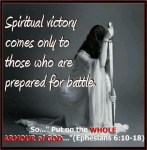




 Matthew 24:4-31,














 They say they try to look like and be more like the general public because coming to church can be an intimidating experience. You come into a place where you don’t know anyone, people behave differently and the service can be a little confusing.