CLAIMING THE PROMISES OF GOD?


“CLAIMING THE PROMISES OF GOD?”

Charles Stanley, R.C. Sproul, Rick Warren, Joel Osteen, Bill Johnson, etc., just a few of the  pastors from the wide spectrum of the religious landscape known for teaching on “claiming the promises of God”.

Generally, claiming the promises of God means believing and taking hold of the assurances He has made in Scripture, which can provide comfort and guidance in life. It involves understanding the context of these promises and recognizing that they are often conditional or specific to certain individuals or groups.

Claiming the promises of God means recognizing and accepting the assurances He has made in Scripture. These promises can provide comfort, guidance, and hope in various aspects of life.

Types of Promises:

Conditional Promises: These require certain actions or behaviors from us. For example, God’s promise to bless those who obey His commands.

Unconditional Promises: These are given without any conditions. An example is God’s promise of salvation to all who believe in Jesus.

Interestingly however, the Bible never uses the word or communicates the idea of an individual believer “claiming” the promises of God. Never.

So, what’s the deal?

Please read this excerpt from BibleHub.com on “claiming God’s promises”:

The concept of claiming God’s promises is deeply rooted in the Christian faith, emphasizing the believer’s trust in the faithfulness and reliability of God’s Word. Throughout the Bible, God makes numerous promises to His people, offering guidance, provision, protection, and eternal life. These promises are seen as assurances that believers can rely on, grounded in the character and sovereignty of God.

Biblical Foundation

The Bible is replete with promises from God, each reflecting His nature and His covenant relationship with humanity. In Genesis 12:2-3, God promises Abraham that He will make him a great nation and bless all the families of the earth through him. This promise is foundational, setting the stage for the unfolding of God’s redemptive plan.

In the New Testament, the promises of God are fulfilled and expanded through Jesus Christ. In 2 Corinthians 1:20 , Paul writes, “For all the promises of God are ‘Yes’ in Christ. And so through Him, our ‘Amen’ is spoken to the glory of God.” This verse underscores the belief that Jesus is the fulfillment of God’s promises, and through Him, believers can confidently claim these promises.

Faith and Obedience

Claiming God’s promises requires faith and obedience. Hebrews 11, often referred to as the “Faith Chapter,” highlights the importance of faith in receiving God’s promises. Hebrews 11:6 states, “And without faith, it is impossible to please God, because anyone who approaches Him must believe that He exists and that He rewards those who earnestly seek Him.”

Obedience is also crucial in the process of claiming God’s promises. In Deuteronomy 28, God outlines the blessings for obedience and the curses for disobedience. Verses 1-2 declare, “If you fully obey the LORD your God and carefully follow all His commands I give you today, the LORD your God will set you high above all the nations of the earth. And all these blessings will come upon you and overtake you, if you obey the LORD your God.”

Prayer and Confession

Prayer is a vital practice in claiming God’s promises. Believers are encouraged to pray with confidence, bringing God’s promises before Him. In Philippians 4:6-7 , Paul exhorts believers, “Be anxious for nothing, but in everything, by prayer and petition, with thanksgiving, present your requests to God. And the peace of God, which surpasses all understanding, will guard your hearts and your minds in Christ Jesus.”

Confession, or speaking God’s promises aloud, is another practice embraced by many believers. Proverbs 18:21 states, “Life and death are in the power of the tongue, and those who love it will eat its fruit.” By confessing God’s promises, believers align their words with God’s truth, reinforcing their faith and trust in His Word.

Examples of God’s Promises

1. Provision: Philippians 4:19 assures believers, “And my God will supply all your needs according to His glorious riches in Christ Jesus.”

2. Peace: Isaiah 26:3 promises, “You will keep in perfect peace the steadfast of mind, because he trusts in You.”

3. Strength: Isaiah 40:31 declares, “But those who wait upon the LORD will renew their strength; they will mount up with wings like eagles; they will run and not grow weary; they will walk and not faint.”

4. Eternal Life: John 3:16 offers the promise of eternal life, “For God so loved the world that He gave His one and only Son, that everyone who believes in Him shall not perish but have eternal life.”

Challenges and Misunderstandings

While claiming God’s promises is a source of hope and encouragement, it is not without challenges. Misinterpretations can arise when promises are taken out of context or when believers expect immediate fulfillment without considering God’s timing and will. It is essential to study Scripture diligently, seeking the guidance of the Holy Spirit to understand the context and application of God’s promises.

In summary, claiming God’s promises involves a dynamic relationship with God, characterized by faith, obedience, prayer, and confession. Believers are called to trust in the faithfulness of God, who is unchanging and true to His Word.

The problem that arises most often from claiming promises is that most Christians will pick and choose which promises the will claim and fail to recognize that just saying it or claiming it will not make it so – not even in the least. Then, when the ‘promise claimer’ doesn’t get what they wanted or claimed, often doubt creeps in and faith falters. Perhaps they assume God isn’t listening or it just doesn’t work, so they just forget it and move on? But they don’t just move on. They carry the doubt of failure with them. It affects their walk with God thereafter.

So where do we go from here?

God’s promises are real. They are found in His Word and in His Covenants. The Greek noun for covenant, “diathéké”, traces the unifying thread of God’s saving plan from Genesis to Revelation. It portrays a binding arrangement initiated by God, ratified by blood, confirmed by divine oath, and designed to secure the relationship between the Creator and His people.

Each biblical occurrence deepens the portrait of a God who commits Himself irrevocably to mercy and holiness, culminating in the crucifixion and resurrection of Jesus Christ.

But – and please hear me here – they are not ‘standalone’ Covenantal Promises. They are part of the entire Word of God. You cannot pick and choose in God’s Word. His Word is all inclusive. His Promises and His Commandments. His offerings and His Requirements. The Blessings and the Warnings.

God has made clear in His Word, even if you haven’t read all of it, that we will face good times and rough times in life. For he makes his sun rise on the evil and on the good, and sends rain on the just and on the unjust. It is through these times that God’s Promises sustain us. It is during trials, failures, sickness, loss and the like that ALL THINGS ARE WORKING TOGETHER FOR OUR GOOD, for those of us who love God and are called according to His purpose.

In order to achieve this end, which your sanctification which prepares you to be able to receive the Promises of God, comes only through being consecrated by God, which result in practical holiness of life. It embraces both the decisive setting you apart for God’s own use, that occurs at conversion and the ongoing transformation that conforms believers to the image of Christ.

Biblical consecration refers to the act of setting a person apart for sacred use or service to God. It signifies a commitment to holiness and devotion, often involving specific rituals or ceremonies to dedicate them to divine purposes. But it is not something we can do on our own or of ourself.

And please listen – the work of sanctification is not a simple process nor is it always a pleasant experience. It can be difficult, even painful and bewildering at times. But, as Daniel 12:10 states, through this process, “Many will be purged, cleansed, and refined.” The old ‘you’ will have to die a thousand deaths so you can be transformed – born again – made into a new creature, in His image.

One of the first examples of this process can be found in Matthew 4 :1-11. when Jesus is led by the Spirit into the wilderness to be tempted or tested and prooved. Jesus, of course, would pass the test, but it was done as example for all who would believe in and follow Him. Everyone who would follow Jesus, will be subjected to this same testing, tempting and proving. It is part of the entire process of God’s work of sanctifying and consecrating the believer and transforming them to the image of Christ. A radical transformation, a remaking of a person into a new creature – it is indeed being born again!

Read this one example of the process of sanctification from Matthew ch. 5:

Verse 1, Now when Jesus saw the crowds, He went up on the mountain; and after He sat down, His disciples came to Him. Verse 2. And He opened His mouth and began to teach them, saying,

Verse 3, “Blessed are the poor in spirit, for theirs is the kingdom of heaven. (“Poor in spirit”, ptóchos from the Greek, from the base word, ptosso, meaning to crouch; a beggar, as cringing, a pauper. Without any material, financial, social, mental, emotional resources for help; without hope.)

Verse 4. “Blessed are those who mourn, for they will be comforted. (Comfort from God is the promise of God. It need not be claimed, as one would consider ‘staking a claim’. Just know it and believe. And if saying it to oneself is helpful, then by all means say it. If saying it to oneself is to be considered as “claiming the promise” then so be it.)

Verse 5. “Blessed are the gentle, for they will inherit the earth. (This is both the result of being made “poor in spirit” and the promise of God that follows. It is a prophetic command that need not be “claimed”. It is a gift of God).

Verse 6. “Blessed are those who hunger and thirst for righteousness, for they will be satisfied. (Once again, both the result of being made “poor in spirit” and the promise of God that follows.)

Verse 7. “Blessed are the merciful, for they will receive mercy.

Verse 8. Blessed are the pure in heart, for they will see God.

Verse 9. “Blessed are the peacemakers, for they will be called sons of God.

Verse 10. “Blessed are those who have been persecuted for the sake of righteousness, for theirs is the kingdom of heaven. (the word ‘persecuted’ comes from two complementary currents, an energetic pursuit or a hunting down and hostile persecution.)

Verse 11. “Blessed are you when people insult you and persecute you, and falsely say all kinds of evil against you because of Me. Verse 12. Rejoice and be glad, for your reward in heaven is great; for in this same way they persecuted the prophets who were before you.” Once again, both the result of being made “poor in spirit” and the promise of God that follows.)

Furthermore, Romans 10:17 tells us – Promises us – that faith comes from hearing, and hearing by the word of God. So, if repeating the promises of God to yourself builds your faith that His promises are true and meant for you, then by all means repeat them, meditate on them, pray them, say them aloud. And if this, to you, is “claiming the promises of God”, then yes, claim them in this way!

But once again, just remember that receiving the Promises of God is not what we ‘do’. It is what God has already done as He prepares us to receive His promises by His sanctifying work.

Matthew 5:13-16 tells us – Promises us – “For you are the salt of the earth; but if the salt has become tasteless, how can it be made salty again? It is no longer good for anything, except to be thrown out and trampled underfoot by people.

“You are made the light of the world. A city set on a hill and you cannot be hidden; nor do people light a lamp and put it under a basket, but on the lampstand, and it gives light to all who are in the house. Your light – the promises God has granted you – must shine before people in such a way that they may see your good works, and glorify your Father who is in heaven.”

Now, let’s walk in His Promises,

Your Brother and Friend,

Mike Young

The COVENANTS of God – What are they? What do they mean to me?

(Also see 100 promises of God to you, the believer).

THE PURPOSES OF tribulation AND OF THE GREAT TRIBULATION


the day of the lord.jpg

THE PURPOSE, THE LENGTH AND THE OUTCOME OF THE TRIBULATION can be found in the book of  Daniel 12:1 “Now at that time Michael, the great prince who stands guard over the sons of your people, will arise.


And there will be a time of distress such as never occurred since there was a nation until that time;

(For Cross reference) also see the Words of Jesus, Matthew 24:21, “For then there will be a great tribulation, such as has not occurred since the beginning of the world until now, nor ever will again.”

Also see Joel 2:2, “A day of darkness and gloom, a day of clouds and blackness. Like the dawn overspreading the mountains a great and strong army appears, such as never was of old, nor will ever be in ages to come.”

Also see Jeremiah 30:7, “How awful that day will be! None will be like it! It is the time of Jacob’s distress, but he will be saved out of it.

Also see Revelation 16:18, “And there were flashes of lightning, rumblings, peals of thunder, and a great earthquake the likes of which had not occurred since men were upon the earth, so mighty was the great quake.”

Also see Isaiah 13:9-13, “Behold, the Day of the LORD is coming, cruel, with fury and burning anger—to make the earth a desolation and to destroy the sinners within it. / For the stars of heaven and their constellations will not give their light. The rising sun will be darkened, and the moon will not give its light. I will punish the world for its evil and the wicked for their iniquity. I will end the haughtiness of the arrogant and lay low the pride of the ruthless. …

Also see Zephaniah 1:15-18, “That day will be a day of wrath, a day of trouble and distress, a day of destruction and desolation, a day of darkness and gloom, a day of clouds and blackness, / a day of horn blast and battle cry against the fortified cities, and against the high corner towers. I will bring such distress on mankind that they will walk like the blind, because they have sinned against the LORD. Their blood will be poured out like dust and their flesh like dung.”

Also see Ezekiel 5:9, “Because of all your abominations, I will do to you what I have never done before and will never do again.”

and at that time your people, everyone who is found written in the book, will be rescued.

(For Cross reference) also see the Words of Jesus in Revelation 3:5, “The one who overcomes will be clothed the same way, in white garments; and I will not erase his name from the book of life, and I will confess his name before My Father and before His angels.”

Daniel 12 Verse 2. And many of those who sleep in the dust of the ground will awake, these to everlasting life,

(For Cross reference) see 1 Thessalonians 4:16-17, “For the Lord Himself will descend from heaven with a shout, with the voice of the archangel and with the trumpet of God, and the dead in Christ will rise first.Then we who are alive, who remain, will be caught up together with them in the clouds to meet the Lord in the air, and so we will always be with the Lord.

Also see 1 Corinthians 15:51-52, “Listen, I tell you a mystery: We will not all sleep, but we will all be changed in an instant, in the twinkling of an eye, at the last trumpet. For the trumpet will sound, the dead will be raised imperishable, and we will be changed.

Also see Revelation 7:14, “Sir,” I answered, “you know.” So he replied, “These are the ones who have come out of the great tribulation; they have washed their robes and made them white in the blood of the Lamb.”

Also see Revelation 7:14, “Sir,” I answered, “you know.” So he replied, “These are the ones who have come out of the great tribulation; they have washed their robes and made them white in the blood of the Lamb.

Also see Revelation 3:5, “Like them, he who overcomes will be dressed in white. And I will never blot out his name from the Book of Life, but I will confess his name before My Father and His angels.

(Daniel 12:2 cont’d.) but the others to disgrace and everlasting contempt.

(For Cross reference) also see Revelation 20:15, “And if anyone’s name was not found written in the book of life, he was thrown into the lake of fire.”

Also see John 5:28-29, “Do not be amazed at this, for the hour is coming when all who are in their graves will hear His voice / and come out—those who have done good to the resurrection of life, and those who have done evil to the resurrection of judgment.

Also see Matthew 25:46, “And they will go away into eternal punishment, but the righteous into eternal life.”

Also see Revelation 20:12-15, “And I saw the dead, great and small, standing before the throne. And books were opened, and one of them was the Book of Life. And the dead were judged according to their deeds, as recorded in the books. The sea gave up its dead, and Death and Hades gave up their dead, and each one was judged according to his deeds.Then Death and Hades were thrown into the lake of fire. This is the second death, the lake of fire. …

Daniel 12 Verse 3. And those who have insight will shine like the glow of the expanse of heaven, and those who lead the many to righteousness, like the stars forever and ever.

Verse 4. But as for you, Daniel, keep these words secret and seal up the book until the end of time; many will roam about, and knowledge will increase.”

Verse 5. Then I, Daniel, looked, and behold, two others were standing, one on this bank of the stream and the other on that bank of the stream. Verse 6. And someone said to the man dressed in linen, who was above the waters of the stream, “How long will it be until the end of these wonders?”

Daniel 12 Verse 7. And I heard the man dressed in linen, who was above the waters of the stream, as he raised his right hand and his left toward heaven, and swore by Him who lives forever that it would be for a time (one year), times (two years), and half a time (one-half a year); and as soon as they finish smashing the power of the holy people, all these events will be completed.

(For Cross reference) see Revelation 12:14, “But the two wings of the great eagle were given to the woman, so that she could fly into the wilderness to her place, where she *was nourished for a time, times, and half a time, away from the presence of the serpent.”

Also see Revelation 11:2-3, “But exclude the courtyard outside the temple. Do not measure it, because it has been given over to the nations, and they will trample the holy city for 42 months (3.5 years). And I will empower my two witnesses, and they will prophesy for 1,260 days, clothed in sackcloth.”

Also see Revelation 13:5, “The beast was given a mouth to speak arrogant and blasphemous words, and authority to act for 42 months (3.5 years).”

Daniel 12 Verse 8. But as for me, I heard but did not understand; so I said, “My lord, what will be the outcome of these events?”  Verse 9. And he said, “Go your way, Daniel, for these words will be kept secret and sealed up until the end time.

Daniel 12 Verse 10. Many will be purged, cleansed, and refined, but the wicked will act wickedly; and none of the wicked will understand, but  those who have insight will understand.

(For Cross reference) see 1 Peter 1:6-7, “In this you greatly rejoice, even though now for a little while, if necessary, you have been distressed by various trials, so that the proof of your faith, being more precious than gold which perishes though tested by fire, may be found to result in praise, glory, and honor at the revelation of Jesus Christ.”

Also see Revelation 22:11, “Let the unrighteous continue to be unrighteous, and the vile continue to be vile; let the righteous continue to practice righteousness, and the holy continue to be holy.”

Also see Matthew 13:41-43, “The Son of Man will send out His angels, and they will weed out of His kingdom every cause of sin and all who practice lawlessness. And they will throw them into the fiery furnace, where there will be weeping and gnashing of teeth. Then the righteous will shine like the sun in the kingdom of their Father. He who has ears, let him hear.”

Also see Zechariah 13:9, “This third I will bring through the fire; I will refine them like silver and test them like gold. They will call on My name, and I will answer them. I will say, ‘They are My people,’ and they will say, ‘The LORD is our God.’”

Daniel 12 Verse 11. And from the time that the regular sacrifice is abolished and the abomination of desolation is set up, there will be 1,290 days. Verse 12. Blessed is the one who is patient and attains to the 1,335 days! Verse 13. But as for you, go your way to the end; then you will rest and rise for your allotted portion at the end of the age.”

RECAP:

  1. Daniel 12:1, And there will be a time of distress such as never occurred since there was a nation until that time; and at that time your people,
  2. everyone who is found written in the book, will be rescued. Verse 2. And many of those who sleep in the dust of the ground will awake, these to everlasting life, but the others to disgrace and everlasting contempt. Verse
  3. Verse 3.. And those who have insight will shine like the glow of the expanse of heaven,
  4. and those who lead the many to righteousness, like the stars forever and ever. Verse 4. But as for you, Daniel, keep these words secret and seal up the book until the end of time; many will roam about, and knowledge will increase.”Verse 5. Then I, Daniel, looked, and behold, two others were standing, one on this bank of the stream and the other on that bank of the stream. Verse 6. And someone said to the man dressed in linen, who was above the waters of the stream,
  5. “How long will it be until the end of these wonders?” Verse 7. And I heard the man dressed in linen, who was above the waters of the stream, as he raised his right hand and his left toward heaven, and swore by Him who lives forever that
    1. it would be for a time, times, and half a time; and as soon as they finish smashing the power of the holy people, all these events will be completed. Verse 8. But as for me, I heard but did not understand; so I said, “My lord, what will be the outcome of these events?”  Verse 9. And he said, “Go your way, Daniel, for these words will be kept secret and sealed up until the end time.
  6. Verse 10. Many will be purged, cleansed, and refined, but the wicked will act wickedly; and none of the wicked will understand, but  those who have insight will understand.
  7. Verse 11. And from the time that the regular sacrifice is abolished and the abomination of desolation is set up, there will be 1,290 days. Verse 12.
    1. Blessed is the one who is patient and attains to the 1,335 days! Verse 13. But as for you, go your way to the end; then you will rest and rise for your allotted portion at the end of the age.”

I. Revelation 1:1. The Revelation of Jesus Christ, which God gave Jesus, shows His bond-servants the things which must soon take place.

(This Book of The Revelation was written in 96 AD, 26 years after the destruction of the 2nd Temple. The destruction of the 1st and 2nd Temples occurred and are a foreshadowing of what is yet to come.)

The things you read in the book of The Revelation have not yet been completed. Although the first five seals of the tribulation “birth pains” (see Matthew 24:8) were opened around A.D. 1 to A.D. 95, as witnessed by The Apostles Paul and Peter, the fifth Seal has been broken and is now playing out with the apostasy of the Church (the falling away from the faith), the persecution of the Church, we are awaiting the revealing of the “Man of Lawlessness”, (see 2 Thessalonians 2:3-4) which will be followed by cataclysmic astronomical disturbances, and the sign of the Son of Man appearing in the sky, when then all the tribes of the earth will mourn, and they will see the Son of Man coming on the clouds of the sky with power and great glory. And at that time, He will send forth His angels with a great trumpet blast, and they will gather together His elect, His chosen ones, from the four winds, from one end of the sky to the other, and the rapture will have occured.

Then comes The Great and Terrible day of the Lord, The Wrath of the Lamb, which will commence with the breaking of the 6th Tribulation Seal.)

Revelation 1:1-3, He sent and communicated it by His angel to His bond-servant, John, who testified to the word of God and to the testimony of Jesus Christ, and to all that he saw. Blessed is he who reads, and blessed are those who hear the words of this prophecy, and heed the things which are written in it; for the time is near.

Tribulation Judgments lead to the End of the Age

Here is a comparison of Jesus’ words about the End of The Age and His return, found both in Matthew chapter 24 and Reverlation chapters 6, 7, and 8. For now, please concern yourself with the first 6 Tribulation Seals:

Events found in Revelation Chaper 6Events found in Matthew Chapter 24.

The 1st Tribulation Seal   Global conquest and political intrigue.

The 2nd Tribulation SealWars and Rumors of War.

The 3rd Tribulation Seal  – Famines, earthquakes, pestilence.

The 4th Tribulation Seal  – Death.

The 5th Tribulation Seal  – Martyrdom, persecution, revealing of the                                                                           Antichrist, the great apostasy

II. Wars, famine, earthquakes, pestilence, death, martyrs, persecutions. I hear so many people ask, “If God is a loving God, how can He allow so much suffering in the world? Why do such bad things happen to good people?” And, we have heard all the answers, some even denying that it is God Who allows such bad things to happen..

There seems to be three main categories of thought about why God allows bad things to happen.

1. Satan’s domain is this fallen world, at least, for now. Satan is called the “prince of the power of the air” in Ephesians 2:2. He is the “ruler of this world” in John 12:31. These titles and many more signify Satan’s capabilities. It is Satan who brings trouble and suffering, even on the innocent.

2. This fallen world brings both good and evil. God has told us in Matthew5:44 that. “But I say to you, love your enemies and pray for those who persecute you, so that you may be sons of your Father who is in heaven; for He causes His sun to rise on the evil and the good, and sends rain on the righteous and the unrighteous.” Such is the natural fallen world.

3. God allows Tribulation as a means of executing His Righteous Judgment on evil and as a means to prepare us by to live in His Eternal Kingdom.

“Many will be purged, cleansed, and refined, and those who have insight will shine like the glow of the expanse of heaven, and those who lead the many to righteousness, like the stars forever and ever”

1 Peter 1:4-7, also tells us that “to obtain an inheritance which is imperishable and undefiled and will not fade away, reserved in heaven for you who are protected by the power of God through faith for a salvation ready to be revealed in the last time. You who are protected by the power of God through faith for a salvation ready to be revealed in the last time.. In this you greatly rejoice, even though now for a little while, if necessary, you have been distressed by various trials, so that the proof of your faith, being more precious than gold which perishes though tested by fire, may be found to result in praise, glory, and honor at the revelation of Jesus Christ; 

Psalms 34:17, The righteous cry, and the LORD hears
And delivers them out of all their troubles.

Verse 18 The LORD is near to the brokenhearted
And saves those who are crushed in spirit.

Verse 19 Many are the afflictions of the righteous,
But the LORD delivers him out of them all.

Verse 20 He keeps all his bones,
Not one of them is broken.

Verse 21 Evil shall slay the wicked,
And those who hate the righteous will be condemned.

Verse 22 The LORD redeems the soul of His servants,
And none of those who take refuge in Him will be condemned.

God says, “Many are the afflictions of the righteous, but the LORD delivers him out of them all.” We will suffer, but, God delivers us out of our afflictions.

How is this so? Why must we suffer only to be delivered? Psalms 34 verse 22 says “The LORD redeems the soul of His servants, And none of those who take refuge in Him will be condemned.”

This is not a simple act of deliverance from trouble. It is a Devine Deliverance, the Redemption of your soul.

It is a Divine Deliverance,

The Redemption of your Soul!

III. Daniel 12 tells us God’s purpose for suffering is so that “Many will be purged, purified and refined” Daniel 12:10 We are being prepared, as His Bride, to enter His Kingdom.

IV. Acts 14:22 tells us that “strengthening the souls of the disciples, encouraging them to continue in the faith, and saying, “Through many tribulations we must enter the kingdom of God.”

V. And, 1 Peter 1 says, “Blessed be the God and Father of our Lord Jesus Christ, who according to His great mercy has caused us to be born again to a living hope through the resurrection of Jesus Christ from the dead,

Verse 4 to obtain an inheritance which is imperishable and undefiled and will not fade away, reserved in heaven for you, 5who are protected by the power of God through faith for a salvation ready to be revealed in the last time.

Verse 6 In this you greatly rejoice, even though now for a little while, if necessary, you have been distressed by various trials, 7so that the proof of your faith, being more precious than gold which is perishable, even though tested by fire, may be found to result in praise and glory and honor at the revelation of Jesus Christ;

Verse 8 and though you have not seen Him, you love Him, and though you do not see Him now, but believe in Him, you greatly rejoice with joy inexpressible and full of glory,

Verse 9 obtaining as the outcome of your faith the salvation of your souls.

We must Endure to the End

Overcome Tribulation and Suffering

To enter His Eternal Presence.

VI. Finally, the Apostle Paul reminds us, “For I consider that the sufferings of this present time are not worthy to be compared with the glory that is to be revealed to us.” Romans8:18

I suspect, if we are at all alike, that we want to escape troubles, trials and tribulation, whenever possible. But, God’s Word says he will use these trials to “purge, purify and refine” us, for our preparation to live in His Eternal Kingdom. Daniel 12:10

Just know that Tribulation is coming, and is already upon us. It has been foretold.

  • For now is our great Journey to Perfection.
  • We must Get Ready,
  • Be Ready,
  • Stay Ready,
  • Overcome and
  • Endure to the End
  • And Be Saved.

Your Brother and Friend,

Mike Young

Next: When Does The 7 Years of The Great Tribulation, Also Known as “The Great And Terrible Day of The Lord / The Wrath of the Lamb” Begin?

THE BOOK OF JOHN, Chapter 9, Healing the Man Born Blind, Controversy, Jesus Affirms His Deity


THE BOOK OF JOHN, Chapter 9

Healing the Man Born Blind, Controversy Over The Man, Jesus Affirms His Deity

If you did not know better, you might suppose this chapter was a playscript written ahead of time. It plays out so perfectly, that the events which unfold in this chapter lead to one predetermined conclusion: Jesus is the Son of God, The Living Word, God in the flesh who dwelt among us. This is a truth the religious were either incapable of seeing or unwilling to see, and for that Jesus declares them as being blind to the truth, blind toward God, and that they remain blinded by their self-righteousness.

This is both a narrative of Jesus mission as the Christ, and a warning to us in this day and time., that we do not follow the failures of the  Pharisees’ persistent unbelief and rejection of Jesus’ message because of our self-righteousness, leaving us in a state of condemnation.

As you read this chapter, please recognize the irony and keep in mind that The Eternal and Almighty God is standing before His creation, explaining to them that He has come to redeem them from their sins and from destruction and they reject Him, and argue with Him, saying they know more than Him, calling Him sinful.

Healing the Man Born Blind

John 9:1, As Jesus passed by, He saw a man who had been blind from birth. Verse 2. And His disciples asked Him, “Rabbi, who sinned, this man or his parents, that he would be born blind?” Verse 3. Jesus answered, “It was neither that this man sinned, nor his parents; but it was so that the works of God might be displayed in him.

(Commentary Break): The stage is set. This man had been blind from birth in preparation for this moment – so that the works of God might be displayed in him. I can hear the objections now. ‘Could God be that cruel for His own purposes?’ If you or someone you know or have heard about, has suffered or is suffering a malady, ask yourself “is it an unfortunate happenstance, a sad coincidence, or could it be so the works of God might be displayed?” This is a question only you can ask of yourself, because only you can answer such a question for yourself. But if you truly believe that God is omniscient, omnipresent and omnipotent, you must believe these two things: (1) Nothing happens by accident. Like it or not, everything has a purpose. (2). God causes all things to work together for the good of those who love Him and are of those who are called according to His purpose! This is a profound truth for those who can see. (End Commentary Break).

Verse 4. We must carry out the works of Him who sent Me as long as it is day; night is coming, when no one can work. Verse 5. While I am in the world, I am the Light of the world.”

(Commentary Break): Once again, the mysterion of the Word of God. This is an example of Jesus speaking in terms and language of the Kingdom of God which is being manifest in the natural realm of His creation.  Jesus is revealing that He is indeed on mission from His Father and that the time allotted for His works is limited. He has clearly included you, His followers, in these Works. (We must carry out the works of Him who sent Me). He is saying that a time is coming when His Work is finished and there will be no help for those who have failed to respond to Him. He emphasizes this saying “While I am in the world, I am the Light of the world”, because there is a moral, spiritual and physical darkness coming, a time of judgement, that no one can escape. (End Commentary Break).

Verse 6. When He had said this, He spit on the ground, and made mud from the saliva, and applied the mud to his eyes, verse 7, and said to him, “Go, wash in the pool of Siloam” (which is translated, Sent). So he left and washed, and came back seeing. Verse 8. So the neighbors, and those who previously saw him as a beggar, were saying, “Is this not the one who used to sit and beg?” Verse 9. Others were saying, “This is he,” still others were saying, “No, but he is like him.” The man himself kept saying, “I am the one.” Verse 10. So they were saying to him, “How then were your eyes opened?” Verse 11. He answered, “The man who is called Jesus made mud, and spread it on my eyes, and said to me, ‘Go to Siloam and wash’; so I went away and washed, and I received sight.” Verse 12. And they said to him, “Where is He?” He said, “I do not know.”

Controversy over the Man

Verse 13. They brought the man who was previously blind to the Pharisees. Verse 14. Now it was a Sabbath on the day that Jesus made the mud and opened his eyes. Verse 15. Then the Pharisees also were asking him again how he received his sight. And he said to them, “He applied mud to my eyes, and I washed, and I see.” Verse 16. Therefore some of the Pharisees were saying, “This man is not from God, because He does not keep the Sabbath.” But others were saying, “How can a man who is a sinner perform such signs?” And there was dissension among them. Verse 17. So they said again to the man who was blind, “What do you say about Him, since He opened your eyes?” And he said, “He is a prophet.”

Verse 18. The Jews then did not believe it about him, that he had been blind and had received sight, until they called the parents of the very one who had received his sight, verse 19, and they questioned them, saying, “Is this your son, who you say was born blind? Then how does he now see?” Verse 20. His parents then answered and said, “We know that this is our son, and that he was born blind; verse 21, but how he now sees, we do not know; or who opened his eyes, we do not know. Ask him; he is of age, he will speak for himself.” Verse 22. His parents said this because they were afraid of the Jewish leaders; for the Jews had already reached the decision that if anyone confessed Him to be Christ, he was to be excommunicated from the synagogue. Verse 23. It was for this reason that his parents said, “He is of age; ask him.”

(Commentary Break): “The Jews had already reached the decision that if anyone confessed Him to be Christ, he was to be excommunicated from the synagogue.” Their minds were made up ahead of time. This is the condition of many in our day and time and their fate will be the same as the Jews. (End Commentary Break).

Verse 24. So for a second time they summoned the man who had been blind, and said to him, “Give glory to God; we know that this man is a sinner.” Verse 25. He then answered, “Whether He is a sinner, I do not know; one thing I do know, that though I was blind, now I see.” Verse 26. So they said to him, “What did He do to you? How did He open your eyes?” Verse 27. He answered them, “I told you already and you did not listen; why do you want to hear it again? You do not want to become His disciples too, do you?” Verse 28. They spoke abusively to him and said, “You are His disciple, but we are disciples of Moses. Verse 29. We know that God has spoken to Moses, but as for this man, we do not know where He is from.”

(Commentary Break): Jesus heals the man blind from his birth and there were witnesses. The Jews interrogated the man and his parents. The Jewish leader interrogate the man a second time. The evidence is gathered, but “The Jews had already reached their decision.” (End Commentary Break).

Verse 30. The man answered and said to them, “Well, here is the amazing thing, that you do not know where He is from, and yet He opened my eyes! Verse 31. We know that God does not listen to sinners; but if someone is God-fearing and does His will, He listens to him. Verse 32. Since the beginning of time it has never been heard that anyone opened the eyes of a person born blind. Verse 33. If this man were not from God, He could do nothing.” Verse 34. They answered him, “You were born entirely in sins, and yet you are teaching us?” So they put him out.

(Commentary Break): Here is the simple but sound logic of the man

(1). “Well, here is the amazing thing, that you do not know where He is from, and yet,

(2). He opened my eyes! The man is saying that where Jesus is from is irrelevant to him!

(3). We know that God does not listen to sinners; but if someone is God-fearing and does His will, He listens to him.

(4). Since the beginning of time it has never been heard that anyone opened the eyes of a person born blind.

(5). If this man were not from God, He could do nothing.”

(6). The Jews answered him saying, “You were born entirely in sins, and yet you are teaching us?”

(7). So the Jewish leaders put the man who had been blind out of their presence. (End Commentary Break).

Jesus Affirms His Deity

Verse 35. Jesus heard that they had put him out, and upon finding him, He said, “Do you believe in the Son of Man?” Verse 36. He answered by saying, “And who is He, Sir, that I may believe in Him?” Verse 37. Jesus said to him, “You have both seen Him, and He is the one who is talking with you.” Verse 38. And he said, “I believe, Lord.” And he worshiped Him. Verse 39. And Jesus said, “For judgment I came into this world, so that those who do not see may see, and those who see may become blind.”

(Commentary Break): The man who had been blind from birth has received both his natural and his spiritual sight – and now he is being saved! (End Commentary Break).

Verse 40. Those who were with Him from the Pharisees heard these things and said to Him, “We are not blind too, are we?” Verse 41. Jesus said to them, “If you were blind, you would have no sin; but now that you maintain, ‘We see,’ your sin remains.

(Commentary Break): In this context, Jesus is speaking to the Pharisees, who were religious leaders in Israel. The term “blind” here is metaphorical, referring to spiritual blindness or ignorance. In biblical times, blindness was often seen as a physical ailment that rendered a person helpless, symbolizing a lack of understanding or insight. Jesus uses this metaphor to address the Pharisees’ inability to recognize Him as the Messiah. This echoes Isaiah 42:7, where the Messiah is prophesied to open the eyes of the blind, both physically and spiritually.

Here, Jesus suggests that if the Pharisees were truly ignorant of their spiritual state, they would not be held accountable for their sin. This reflects a biblical principle found in Leviticus 5:17, where unintentional sin is treated differently from willful disobedience. The concept of accountability is central in Scripture, as seen in James 4:17, which states that knowing the right thing to do and failing to do it is sin.

The Pharisees prided themselves on their knowledge of the Law and their spiritual insight. Their claim to “see” indicates their self-righteousness and confidence in their own understanding. This is reminiscent of Proverbs 26:12, which warns about the danger of being wise in one’s own eyes. The Pharisees’ claim contrasts with the humility required to truly understand spiritual truths, as seen in Matthew 5:3, where Jesus blesses the poor in spirit.

Jesus concludes by stating that their guilt remains because they refuse to acknowledge their spiritual blindness. This is a direct indictment of their hypocrisy and rejection of Jesus as the Light of the World (John 8:12). The concept of remaining in guilt is tied to the idea of unrepentance and hardness of heart, as seen in Hebrews 3:12-13. The Pharisees’ persistent unbelief and rejection of Jesus’ message leave them in a state of condemnation, as highlighted in John 3:19-20, where people love darkness rather than light because their deeds are evil. (Note: the foregoing four paragraphs are taken from BibleHub.com Study Bible).  (End Commentary Break).

It is glaringly obvious that we, the postmodern Church, are increasingly behaving like the Jewish religious leaders as cited in this chapter. We say we believe, but our beliefs are based on our church forerunner’s ideas, traditions, and upon our experiences. We do not follow Jesus, thinking as He thinks, acting as He acts and doing as He does. We have modified and even perverted His Word to satiate our own wants, thoughts, ideas, desires and demands. We have strayed far from what The Living Word says, demonstrated to us and warned that if we depart from His Ways we will perish. It is the one who “endures to the end, who will be saved”. We should repent quickly, for the Kingdom of Heaven is now at hand!

Your Brother and Friend,

Mike Young

NEXT: THE BOOK OF JOHN, Chapter 10, The Parable of The Good Shepherd, Jesus Asserts His Deity.

PREVIOUS: THE BOOK OF JOHN, Chapter 8, Part 3, The Truth Will Set You Free.

(Please bookmark this page or subscribe for future episodes).

Nuts and Bolts of the Bible – or Just Nuts?!? UFOs and the Nephilim

“Nuts and Bolts” of the Bible – Or Just Plain Nuts?

UFOs and The Nephilim

Harvard physicist says massive interstellar object could be alien probe on ‘reconnaissance mission’

Genesis 6:1-4, Now it came about, when mankind began to multiply on the face of the land, and daughters were born to them, that the sons of God saw that the daughters of mankind were beautiful (or good); and they took wives for themselves, whomever they chose. Then the Lord said, “My Spirit will not remain with man forever (or rule in; or strive with), because he is also flesh (or, in his going astray, he is flesh); nevertheless (or, therefore) his days shall be 120 years.” The Nephilim (or, the fallen ones) were on the earth in those days, and also afterward, when the sons of God came in to the daughters of mankind, and they bore children to them. Those were the mighty men who were of old, men of renown.

Dr. Chuck Missler discusses the Nephilim as beings linked to UFO phenomena and explores their biblical significance, suggesting they may have a disturbing agenda for Earth. He emphasizes the relevance of these topics in contemporary discussions about extraterrestrial life and biblical prophecy.

By Chuck Missler, published by Koinonia House. (View in Store).

  • What’s behind the UFO’s?
  • Where are they from?
  • Are they the Nephilim of ages past?
  • What does the Bible say about them?
  • What’s their agenda for Planet Earth?

This subject has not gone away. On the contrary, much new evidence has surfaced with global implications. Chuck explores the Biblical relevance and disturbing agenda of the apparent extraterrestrial life forms that have been forcing themselves into our global consciousness, and reveals their most disturbing agenda.

“For there shall arise false Christs, and false prophets, and shall shew great signs and wonders; insomuch that, if it were possible, they shall deceive the very elect.” (Matthew 24:24)

THE RETURN OF THE NEPHILIM – Dr. Chuck Missler.

MORE teaching from Chuck Missler:  ARE THEY OUT THERE?


THE BOOK OF ACTS – Chapter 13, Part 2, Paul Turns to the Gentiles

THE BOOK OF ACTS – Chapter 13, Part 2

Paul Turns to the Gentiles

Paul first preaches to the Jews in this synagogue and gives a survey of Israel’s history. Paul notes important events such as the choosing of the patriarchs, the deliverance from Egypt, the time in the wilderness, the conquest of Canaan, the time of the Judges, the creation of a monarchy as it all leads up to Jesus. This sermon of Israel’s history demonstrates to the people that God has a plan for all of humankind, and we need to see the connection of that plan to our lives as Christians. Jesus is the centerpiece of all of history, and we are not just ‘in the flow’ of God’s great plan of redemption, but we are active participants and recipients. This also shows us that Christianity is not just a philosophy or a set of ethics, but that Christianity is a proclamation of facts that concern what God has done, is doing and shall be doing in this world and in our lives, and in the world to come. Then, when Paul turns to the Gentiles, the Jews become jealous and outraged, and things take a drastic turn.

Acts 13:13. Now Paul and his companions put out to sea from Paphos and came to Perga in Pamphylia; but John left them and returned to Jerusalem. Verse 14. But going on from Perga, they arrived at Pisidian Antioch, and on the Sabbath day they went into the synagogue and sat down. Verse 15. After the reading of the Law and the Prophets, the synagogue officials sent word to them, saying, “Brothers, if you have any word of exhortation for the people, say it.” Verse 16. Paul stood up, and motioning with his hand said, “Men of Israel, and you who fear God, listen: Verse 17. The God of this people Israel chose our fathers and made the people great during their stay in the land of Egypt, and with an uplifted arm He led them out from it. Verse 18. For a period of about forty years He put up with them in the wilderness. Verse 19. When He had destroyed seven nations in the land of Canaan. He distributed their land as an inheritance—all of which took about 450 years. Verse 20. After these things He gave them judges until Samuel the prophet. Verse 21. Then they asked for a king, and God gave them Saul the son of Kish, a man of the tribe of Benjamin, for forty years. Verse 22. After He had removed him, He raised up David to be their king, concerning whom He also testified and said, ‘I have found David, the son of Jesse, a man after My heart, who will do all My will.’ Verse 23. From the descendants of this man, according to promise, God has brought to Israel a Savior, Jesus, verse 24, after John had proclaimed, before His coming, a baptism of repentance to all the people of Israel. Verse 25. And while John was completing his course, he kept saying, ‘What do you suppose that I am? I am not He. But behold, one is coming after me, the sandals of whose feet I am not worthy to untie.’

Verse 26. “Brothers, sons of Abraham’s family, and those among you who fear God, to us the message of this salvation has been sent. Verse 27. For those who live in Jerusalem, and their rulers, recognizing neither Him nor the declarations of the prophets which are read every Sabbath, fulfilled these by condemning Him. Verse 28. And though they found no grounds for putting Him to death, they asked Pilate that He be executed. Verse 29. When they had carried out everything that was written concerning Him, they took Him down from the cross and laid Him in a tomb. Verse 30. But God raised Him from the dead; Verse 31, and for many days He appeared to those who came up with Him from Galilee to Jerusalem, the very ones who are now His witnesses to the people. Verse 32. And we preach to you the good news of the promise made to the fathers, verse 33, that God has fulfilled this promise to those of us who are the descendants by raising Jesus, as it is also written in the second Psalm: ‘YOU ARE MY SON; TODAY I HAVE FATHERED YOU.’ Verse 34. As for the fact that He raised Him from the dead, never again to return to decay, He has spoken in this way: ‘I WILL GIVE YOU THE HOLY AND FAITHFUL MERCIES OF DAVID.’ Verse 35. Therefore, He also says in another Psalm: ‘YOU WILL NOT ALLOW YOUR HOLY ONE TO UNDERGO DECAY.’ Verse 36. For David, after he had served God’s purpose in his own generation, fell asleep, and was buried among his fathers and underwent decay; Verse 37, but He whom God raised did not undergo decay. Verse 38. Therefore let it be known to you, brothers, that through Him forgiveness of sins is proclaimed to you, verse 39, and through Him everyone who believes is freed from all things, from which you could not be freed through the Law of Moses. Verse 40. Therefore, see that the thing spoken of in the Prophets does not come upon you:

Verse 41. ‘LOOK, YOU SCOFFERS, AND BE ASTONISHED, AND PERISH;

FOR I AM ACCOMPLISHING A WORK IN YOUR DAYS,

A WORK WHICH YOU WILL NEVER BELIEVE, THOUGH SOMEONE SHOULD DESCRIBE IT TO YOU.’”

(Commentary Break): This phrase is a direct quotation from Habakkuk 1:5, where the prophet warns the people of Judah about the impending Babylonian invasion. In Acts 13:41, Paul uses this Old Testament reference to address the Jewish audience in the synagogue at Pisidian Antioch. The term “scoffers” refers to those who mock or dismiss God’s message. Historically, scoffers were often those who rejected the prophets’ warnings, leading to their downfall. The call to “wonder and perish” serves as a stark warning that disbelief in God’s works leads to destruction. This reflects a common biblical theme where disbelief and rejection of God’s message result in judgment, as seen in the stories of Noah’s flood and Sodom and Gomorrah.

The verse is a direct appeal to the Jewish audience then, and to us today, to heed the warning and avoid the fate that befell those who ignored the prophets. It implies a personal responsibility to respond to God’s message. Historically, the Jewish people faced numerous consequences for not heeding prophetic warnings, such as the Babylonian exile. In the New Testament context, this serves as a caution against rejecting the gospel of Jesus Christ, which is seen as the ultimate fulfillment of prophetic revelation. (the foregoing from BibleHub.com Study Bible). (End Commentary Break).

Verse 42. As Paul and Barnabas were going out, the people repeatedly begged to have these things spoken to them the next Sabbath. Verse 43. Now when the meeting of the synagogue had broken up, many of the Jews and the God-fearing proselytes followed Paul and Barnabas, who were speaking to them and urging them to continue in the grace of God.

(Commentary Break): An irony will become apparent, momentarily. The people (the Jews) repeatedly begged to have these things spoken to them the next Sabbath… (End Commentary Break).

Paul Turns to the Gentiles

Verse 44. The next Sabbath nearly all the city assembled to hear the word of the Lord. Verse 45. But when the Jews saw the crowds, they were filled with jealousy and began contradicting the things spoken by Paul, and were blaspheming.

(Commentary Break): The jealousy of the Jews reveals the intention of their hearts. It seems, as Paul turn to the Gentiles, as if the Jews instantly turn from desiring and following the teaching of Paul and Barnabas to contradicting them and considering them blasphemy. But it is, in reality, showing what is hidden in hearts of the unbelieving. This serves as a caution to us, today.

I can hardly tell of the many churches have I visited or attended and seen the people agree heartily with the Gospel message preached, only to show jealousy of one another or of anyone desiring to take up their place in their assembly without the tacit approval of the established hierarchy of the laity and of the clergy. It reveals the hypocrisy of pride and self-righteousness, very much like what Paul encountered among the Jews.

‘LOOK, YOU SCOFFERS, AND BE ASTONISHED, AND PERISH;

FOR I AM ACCOMPLISHING A WORK IN YOUR DAYS,

A WORK WHICH YOU WILL NEVER BELIEVE, THOUGH SOMEONE SHOULD DESCRIBE IT TO YOU.’”  (End Commentary Break).

Verse 46. Paul and Barnabas spoke out boldly and said, “It was necessary that the word of God be spoken to you first. Since you repudiate it and consider yourselves unworthy of eternal life, behold, we are turning to the Gentiles. Verse 47. For so the Lord has commanded us,

‘I HAVE APPOINTED YOU AS A LIGHT TO THE GENTILES,

THAT YOU MAY BRING SALVATION TO THE END OF THE EARTH.’”

Verse 48. When the Gentiles heard this, they began rejoicing and glorifying the word of the Lord; and all who had been appointed to eternal life believed. Verse 49. And the word of the Lord was being spread through the whole region. Verse 50. But the Jews incited the devout women of prominence and the leading men of the city, and instigated a persecution against Paul and Barnabas, and drove them out of their region. Verse 51. But they shook off the dust from their feet in protest against them and went to Iconium. Verse 52. And the disciples were continually filled with joy and with the Holy Spirit. (End chapter 13).

What we are reading in chapter thirteen can be seen as part of the Spiritual battle that has raged since creation. The Gospel is being proclaimed, and the evil one is at work as well, not just proffering a counterfeit gospel, but infecting the minds and hearts of the recipients with pride, arrogance, and self-righteousness, so they hear the words but fail to understand. They receive the Gospel in their minds but their hearts remain hard and darkened by their passions and desires of the flesh.

Perhaps this is one of the reasons that, in the twenty-first century, there are over 200 different Christian denominations in the U.S., and over 45,000 Christian denominations worldwide, arising from various differences in beliefs, practices, and historical developments within Christianity.

But when Jesus returns, the Truth will be seen and known. It is up to each of us to read, study and meditate on His word and pray that we are able to dismiss the influences of our selfish passions and desires and of the world around us so we may know Him and His Words, the only True Source of Life.

Your Brother and Friend,

Mike Young

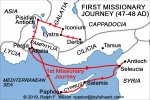
PREVIOUS: THE BOOK OF ACTS – Chapter 13, part 1, The First Missionary Journey.

NEXT: THE BOOK OF ACTS – Chapter 14, Acceptance and Opposition.

Please bookmark this page or subscribe for coming episodes.


EPIGENETICS – Every cell in your body is listening to what your mind is thinking

AS A MAN THINKS IN HIS “HEART”, SO IS HE?

IS SCIENCE FINALLY STARTING TO CATCH UP WITH WHAT GOD, THROUGH THE BIBLE, HAS BEEN SAYING FOR THOUSANDS OF YEARS?

What Is EPIGENETICS?

Epigenetics is one way that scientists learn how the things around us and the choices we make change the way our genes work. We often think of genes as factors we have no control over. After all, we inherit them from our biological parents. And from the moment we enter the world, those genes determine so much about us — from our eye color to our risk for certain diseases. Genes feel set in stone and predetermined. But what if we could change how those genes work in ways that improve our health?

Scientists have known for a while that our environment and individual attitudes and behaviors shape our health.

For example, the latest research shows epigenetic changes are involved in:

What can change the epigenome? Here are some examples:

  • Foods and nutrition,
  • trauma,
  • learning experiences and interactions,
  • exposure to toxins like diesel exhaust or cigarette smoke,
  • exposure to certain chemicals like plastics or lead,
  • certain prescription medications,
  • use of substances like alcohol, tobacco and recreational drugs,
  • your level of physical activity,
  • the level of stress in your daily life,
  • your relationships and social interactions, the community you live in, including your church, and the ways it supports (or doesn’t support) you.

Scientists are still investigating how these exposures and encounters translate to changes in your cells. In general, these factors create epigenetic marks on your DNA that affect how your cells work.

Can you positively influence your epigenome? Mayo Clinic says yes!

“Every cell in your body is listening to what your mind is thinking”

Epigenetics: (video, 2 mins, 3 secs)

Karan Kakkad, (video, 57 seconds)

References (for credibility):

Harvard Health https://www.health.harvard.edu/depression/how-genes-and-life-events-affect-mood-and-depression and,

Psychology Today https://www.psychologytoday.com/us/blog/your-genetic-destiny/201501/how-stress-changes-your-genes-0 and

Mayo Clinic https://my.clevelandclinic.org/health/articles/epigenetics

I ask again, “can you positively influence your epigenome?” Mayo Clinic says “yes”,  AND THE BIBLE TELLS YOU HOW!

To begin with, the Bible says that the wages (or payment) for sin is death. (see Romans 6:23).

Galatians 5:19-21 tells us, “Now the deeds of the flesh [the sinful nature] are evident, which are: sexual immorality, impurity, indecent behavior, idolatry, witchcraft, hostilities, strife, jealousy, outbursts of anger, selfish ambition, dissensions, factions, envy, drunkenness, carousing, and things like these, of which I forewarn you, just as I have forewarned you, that those who practice such things will not inherit the kingdom of God”.

(The “flesh” refers to the sinful nature inherent in humanity, a concept rooted in the fall of man (Genesis 3)).

Galatians 5:22-23, But the fruit of the Spirit is love, joy, peace, patience, kindness, goodness, faithfulness, gentleness, self-control; against such things there is no law. Those who belong to Christ Jesus crucified the flesh with its passions and desires.

(The term “fruit” signifies the natural result or product of the Holy Spirit’s presence and activity in a believer’s life. Fruit of the Spirit is in the singular, indicating a unified whole rather than separate attributes. This suggests that these qualities are interconnected and grow together as a result of the Spirit’s work.)

“For the mind set on [or governed by] the things of the flesh [the sinful nature of man] is death”(Romans 8:6 (a)).

HENCE – THE TYRANNY OF SIN

John 8:34, Jesus answered them, “Truly, truly I say to you, everyone who commits sin is a slave of sin.”

(Dr. Jordan Peterson on slaves and the promised land): https://www.facebook.com/reel/746953607730164

However, John 8:36, tells us that, “If the Son sets you free, you will be free indeed”.

How does this come about? The Bible says to MEDITATE, SET YOUR MIND ON, THINK ON THESE THINGS…

(FROM THE OLD TESTAMENT):

Example Verse: Joshua 1:8, “This Book of the Law shall not depart from your mouth, but you shall meditate on it day and night, so that you may be careful [i.e., observe] to do according to all that is written in it; for then you will make your way prosperous, and then you will achieve success [i.e., shall have insight]. NASB.

Meditate: Strong’s Hebrew #1897, ‘hagah‘, occurs twenty-five times, embracing a spectrum of sounds and intentions that range from quiet meditation on God’s instruction to the throaty growl of unrest or complaint. The varied settings show that what the lips utter and what the heart ponders are inseparably linked in biblical spirituality.

Joshua 1:8 inaugurates the covenant life of Israel in the land: “This Book of the Law must not depart from your mouth; you are to meditate on it day and night.” The verb, ‘meditate’, marks an audible, continual musing that shapes obedience and prosperity.

(Psalm 1:2 echoes the same rhythm of day-and-night devotion, portraying the blessed man whose inner dialogue is saturated with the Torah. The Psalter expands the theme: “When I remember You on my bed, I think of You through the watches of the night” (Psalm 63:6), and “I will meditate on all You have done and ponder Your mighty deeds” (Psalm 77:12)).

Meditation is thus an act of covenant loyalty, anchoring memory, identity, and hope.

Ministry Implications

  1. Discipleship: Biblical meditation is not silent daydreaming but voiced rehearsal of Scripture that renews the mind and readies obedience.
    2. Preaching and Teaching: Effective proclamation springs from patient, prayerful rumination; the pulpit should echo hours of scriptural pondering.
    3. Pastoral Care: The verb invites sufferers to articulate their pain before God, legitimizing sighs, groans, and honest lament within faith.
    4. Spiritual Warfare: Because ungodly schemes begin as whispered plots, guarding the heart’s meditations is crucial for personal and communal holiness.

(FROM THE NEW TESTAMENT):

Example Verse: Philippians 4:8, Finally, brethren, whatever things are true, whatever things are noble, whatever things are just, whatever things are pure, whatever things are lovely, whatever things are of good report, if there is any virtue and if there is anything praiseworthy—meditate on [i.e., think on] these things.

Meditate – think on: Strong’s Greek word #3049, ‘logizomai’, means To reckon, to consider, to account, to think, to impute. And its cognates describe the mental act of reckoning, calculating, counting something as true, or crediting something to an account. While the term can speak of simple arithmetic or deliberation, the New Testament frequently uses it for God’s gracious act of crediting righteousness and for the believer’s deliberate act of counting divine realities as present facts.

Summary: It is a good thing to memorized Philippians 4:8, but what it says  that we are to do is to THINK ON THE THINGS that are “pure, things are lovely, things that are of good report, virtuous things and anything that is praiseworthy”. (Try it).

Strong’s Greek word #3049, ‘logizomai’, THINK ON, portrays both God’s decisive action in salvation and the believer’s ongoing mental alignment with revealed truth. To “reckon” is to let God’s verdict in Christ define reality, shaping faith, ethics, and perseverance until glory.

Alternatives:

Example Verse: 1 Timothy 4:15, Meditate on these things [ESV puts it ‘practice these things,’ and the NASB puts it ‘take pains with these things’]; give yourself entirely to them, that your progress may be evident to all.

 Meditate / Pre-meditate / Devise with great pains: Strong’s Greek #3191, ‘meletaó.’ means to meditate, to care for, to practice, to study.

Strong’s Greek #3191, ‘meletaó.’ moves along two closely-related tracks: sustained inward contemplation and deliberate outward practice. As Scripture employs the verb, it gathers both strands into a single movement of the heart—what the mind settles on, the life works out.

Scripture never divorces meditation from revelation. The mind does not drift inward to find truth; it anchors itself in what God has spoken. Christian meditation is therefore verbal (rooted in the Word), intentional (repeated), and worshipful (directed to God).

Summary: Strong’s Greek #3191, ‘meletaó.’, meditate, binds thought and action. From the conspiratorial councils of Psalm 2 to the disciplined ministry of Timothy, Scripture shows that whatever the heart continually turns over will soon guide the hands. Christian meditation therefore refuses vain plotting and commits itself to the Word, confident that such focused practice will display tangible progress and advance the gospel.

Example Verse: Colossians 3:2, “Set your mind on things above, not on things on the earth.”

Set Your Mind On:  Strong’s Greek #5426, ‘phroneó’, appearing in varied forms twenty-six times, describes an interior posture that guides outward behavior. More than mere cognition, it involves the settled disposition of the will—what one “sets the heart on.” In Scripture, the verb often answers the question, “Where is your mind anchored?” and so serves as a diagnostic of spiritual health.

Summary

Strong’s #5426 ‘phroneó’, Set Your Mind On, spans intellect, emotion, and will. It calls believers to align every inner disposition with the character and purposes of God revealed in Jesus Christ, producing unified, humble, mission-focused communities whose outward life testifies to an inward mind set on things above.

“Our thoughts and emotions affect every cell in our biology. There is so much science and so much research in the last 20 years in mind-body connection, that is the science of epigenetics, that we know that the environment and emotions affect your genes. It is your emotions that can change your genes.”

“So what emotions are you living with? Anger, guilt, regret, fear, lack, unworthiness? That is just going to create more disease. But if you are living more in gratitude, love, joy, happiness, those emotions get conveyed by your nervous system into every cell of your body, and they turn on genes which created more health, they turn on genes with create more immunity in your system. The emotions we live with will ultimately decide our health and happiness.”

THE BOOK OF JOHN, Chapter 8, Part 3, The Truth Will Set You Free


THE BOOK OF JOHN, Chapter 8, Part 3

The Truth will Set You Free

It would be easy to read this chapter as if it were spoken to and meant for the Jews and the Pharisees in particular. But, as a reminder this chapter reveals the most profound truths of Jesus’ Mission, His Purpose, His Identity as the “son of man” and The Son of God and of our destiny as believers, both now and for all eternity.

John 8:26. I have many things to say and to judge regarding you, but He who sent Me is true; and the things which I heard from Him, these I say to the world.”

Verse 27. They did not realize that He was speaking to them about the Father. Verse 28. So Jesus said, “When you lift up the Son of Man, then you will know that I am, and I do nothing on My own, but I say these things as the Father instructed Me. Verse 29. And He who sent Me is with Me; He has not left Me alone, for I always do the things that are pleasing to Him.” Verse 30. As He said these things, many came to believe in Him.

(Commentary Break): These words of Jesus were a riddle to some, such as “When you lift up the Son of Man, then you will know that I Am.” This phrase introduces a direct statement from Jesus, emphasizing His role as a teacher and authority. In the Gospel of John, Jesus often uses direct speech to reveal deep spiritual truths and to clarify His identity and mission. This setting is part of a larger discourse where Jesus is addressing the Pharisees and the people in the temple courts.

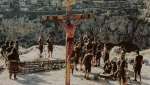
The term “lifted up” is a reference to Jesus’ crucifixion. In the cultural and historical context, crucifixion was a Roman method of execution, symbolizing shame and suffering. However, Jesus uses it to signify His glorification and the fulfillment of His mission. The title “Son of Man” is a messianic term from Daniel 7:13-14, indicating both His humanity and divine authority. This phrase foreshadows the crucifixion as a pivotal event for revealing Jesus’ true identity.

“Then you will know that I am He”, points to the recognition of Jesus’ divine identity post-crucifixion. The phrase “I am He” echoes the divine name revealed to Moses in Exodus 3:14, suggesting Jesus’ unity with God. The crucifixion and subsequent resurrection serve as the ultimate revelation of Jesus as the Messiah and Son of God, fulfilling Old Testament prophecies and confirming His teachings.

Jesus says, “I do nothing on My own”, emphasizing His complete dependence on and unity with the Father. This reflects the consistent theme in John’s Gospel of Jesus’ submission to the Father’s will. It highlights the Trinitarian relationship and the divine mission of Jesus, who acts not independently but in perfect harmony with God’s plan.

Finally, Jesus says “I speak exactly what the Father has taught Me”, which underscores the divine origin of Jesus’ teachings. In the cultural context of first-century Judaism, a rabbi or teacher would often speak on their own authority or tradition. However, Jesus claims His teachings come directly from God the Father, affirming His role as the ultimate prophet and teacher. This aligns with Deuteronomy 18:18, where God promises to raise a prophet who will speak His words. Jesus’ teachings are thus presented as the ultimate revelation of God’s truth. (Green text is from Biblehub.com commentary).

Others recalled that what Jesus is saying was foretold in scriptures and came to believe. A good example for us. (End Commentary Break).

The Truth Will Set You Free

Verse 31. So Jesus was saying to those Jews who had believed Him, “If you continue in My word, then you are truly My disciples; verse 32, and you will know the truth, and the truth will set you free.” Verse 33. They answered Him, “We are Abraham’s descendants and have never been enslaved to anyone; how is it that You say, ‘You will become free’?”

(Commentary Break): If you continue in My word, then you are truly My disciples; and you will know the truth, and the truth will set you free.” It is worth repeating. Jesus has said elsewhere that it is those who endure to the end who will be saved (Matthew 24:8). You will be made safe, whole, made well and you will be set free from the penalty the power and the curse of sin – which is death. (End Commentary Break).

Verse 34. Jesus answered them, “Truly, truly I say to you, everyone who commits sin is a slave of sin. Verse 35. Now the slave does not remain in the house forever; the Son does remain forever. Verse 36. So if the Son sets you free, you really will be free. Verse 37. I know that you are Abraham’s descendants; yet you are seeking to kill Me, because My word has no place in you. Verse 38. I speak of the things which I have seen with My Father; therefore you also do the things which you heard from your father.” Verse 39. They answered and said to Him, “Abraham is our father.” Jesus said to them, “If you are Abraham’s children, do the deeds of Abraham. Verse 40. But as it is, you are seeking to kill Me, a man who has told you the truth, which I heard from God; this Abraham did not do. Verse 41. You are doing the deeds of your father.” They said to Him, “We were not born as a result of sexual immorality; we have one Father: God.” Verse 42. Jesus said to them, “If God were your Father, you would love Me, for I came forth from God and am here; for I have not even come on My own, but He sent Me. Verse 43. Why do you not understand what I am saying? It is because you cannot listen to My word. Verse 44. You are of your father the devil, and you want to do the desires of your father. He was a murderer from the beginning, and does not stand in the truth because there is no truth in him. Whenever he tells a lie, he speaks from his own nature, because he is a liar and the father of lies. Verse 45. But because I say the truth, you do not believe Me. Verse 46. Which one of you convicts Me of sin? If I speak truth, why do you not believe Me? Verse 47. The one who is of God hears the words of God; for this reason you do not hear them, because you are not of God.”

(Commentary Break): These verses and the ones to follow give us deep insights into the true relationship with God through His Son, Jesus. They are both amazingly and frighteningly true beyond natural comprehension. Additionally, Jesus is addressing these Pharisees, Jews, and is speaking to them through their own historical, religious practices and cultural context. Jesus tells them they are slaves to sin, and that being a slave to sin means, (1), the person has no rights or permanent residence in the ‘household’ in which they claim to reside and (2), they have no control over their destiny. Their future is separate from the spiritual family of Abraham, with a lonely eternal death. However, Jesus tells them that if He sets you free, you are not only set free from the penalty and curse of sin, but He has removed the shackles of sin and you are free to become a child of God and a brother of Jesus, with full rights as a joint heir. But these Pharisees who claim descendancy of Abraham, fail to recognize that birth descendancy is insufficient to claim a permanent relationship with God; and secondly, they ignorantly and defiantly wish to kill Jesus, Who comes from the Father as the prophesied Messiah. If they were truly of Abraham then they would know He is Who He claims to be. But they do not know and cannot know because His words has not place in Him, and their true spiritual father is not Abraham, but is the devil. This should be a clear and stark warning to all of us, who presently claim the name of Christ, yet do not what He says. According to Hebrews 6:4-6, “It is impossible, in the case of those who have once been enlightened and have tasted of the heavenly gift and have been made partakers of the Holy Spirit, and have tasted the good word of God and the powers of the age to come, and then have fallen away, to restore them again to repentance, since they again crucify to themselves the Son of God and put Him to open shame.”  (End Commentary Break).

Verse 48. The Jews answered and said to Him, “Do we not rightly say that You are a Samaritan, and You have a demon?” Verse 49. Jesus answered, “I do not have a demon; on the contrary, I honor My Father, and you dishonor Me. Verse 50. But I am not seeking My glory; there is One who seeks it, and judges. Verse 51. Truly, truly I say to you, if anyone follows My word, he will never see death.” Verse 52. The Jews said to Him, “Now we know that You have a demon. Abraham died, and the prophets as well; and yet You say, ‘If anyone follows My word, he will never taste of death.’ Verse 53. You are not greater than our father Abraham, who died, are You? The prophets died too. Whom do You make Yourself out to be?” Verse 54. Jesus answered, “If I glorify Myself, My glory is nothing; it is My Father who glorifies Me, of whom you say, ‘He is our God’; verse 55, and you have not come to know Him, but I know Him. And if I say that I do not know Him, I will be a liar like you; but I do know Him, and I follow His word. Verse 56. Your father Abraham was overjoyed that he would see My day, and he saw it and rejoiced.” Verse 57. So the Jews said to Him, “You are not yet fifty years old, and You have seen Abraham?” Verse 58. Jesus said to them, “Truly, truly I say to you, before Abraham was born, I am.” Verse 59. Therefore they picked up stones to throw at Him, but Jesus hid Himself and left the temple grounds. (End Chapter 8, part 3).

(Commentary Break): What we read and hear in verses 48 through 59 is a clear contrast between an earthly or natural physical perspective and understanding versus a heavenly and a Spiritual perspective view which gives wisdom. The former is of the flesh which leads to death, and the latter is of the Spirit which leads to life. (End Commentary Break).

Romans 8:5-9 tells us that “For those who are in accord with the flesh set their minds on the things of the flesh, but those who are in accord with the Spirit, the things of the Spirit. For the mind set on the flesh is death, but the mind set on the Spirit is life and peace, because the mind set on the flesh is hostile toward God; for it does not subject itself to the law of God, for it is not even able to do so, and those who are in the flesh cannot please God. However, you are not in the flesh but in the Spirit, if indeed the Spirit of God dwells in you. But if anyone does not have the Spirit of Christ, he does not belong to Him.” From the Greek language, to ‘set their mind on’ translates to mean to ‘frame up, to enter into and become captive to or imprisoned by one’s own continual thoughts’. If it is of the flesh, then it a death camp, a prison holding cell, where one is held until their sentence of death is executed. However if it is of the Spirit, it is a waiting room, so-to-speak, for heaven – which leads to life and peace.

This message from Jesus was not intended solely for the Pharisees of His day, but for anyone and everyone of a ‘Pharisaical spirit’ of all the ages.

(The adjective pharisaical literally means “similar to the Pharisees.” In common usage, though, the word pharisaical is employed to describe someone who is hypocritical and-or self-righteous, traits that the Pharisees in the New Testament were known for. The Pharisees elevated their own traditions to the level of Scripture. While not denying the value of some traditions, we should make sure we hold to our traditions lightly while we have an iron grip on God’s Word. The Pharisees pretended to be passionate for God while their hearts were far from Him. We should strive to obey the law of Christ and urge others to do the same, declaring God’s truth with compassionate love (Ephesians 4:15)).

Let’s set our minds on the Spirit and be set free!

Your Brother and Friend,

Mike Young

NEXT: THE BOOK OF JOHN, Chapter 9, Healing the Man Born Blind, Controversy Over The Man, Jesus Affirms His Deity.

PREVIOUS: THE BOOK OF JOHN, Chapter 8, Part 2, Jesus is the Light of The World.

(Please bookmark this page or subscribe for future episodes).

EACH ACCORDING TO THEIR OWN SPIRITUAL GIFT


“Are you faithful witnessing Christ to others?” I have had this same or similar conversation dozens of times with other Christians, either personally, during small group bible studies or in congregational discussions,

The answers vary, but one of the most frequent and most troubling answers is, “No, I do not”, or, “Yes, but in my own way”.  The reasons people don’t witness or ‘share the Good News of the Gospel” range from “I am afraid”, to “I don’t like to do that”, “I don’t know how”, or most troubling, “that is not my spiritual gift”. What runs through my mind when I hear these things, are things like:

  1. “Fear is not of God”,
  2. “What does ‘like sharing the Gospel’ have to do with it when it comes to obeying God and His Word?”,
  3. “You can and must learn how”,
  4. “You really do not understand what the Bible requires of you, do you?”, and,
  5. “It is called THE GREAT COMISSION for a reason”.

I am certain that the majority of Christians have the wrong idea, an incorrect impression or understanding of what it means to be a witness for Christ or to “witness about Jesus”. I know in fact, that we, the Church, have been taught wrong – terribly wrong – and the results range from dismal to spiritually catastrophic both for the waiting and watching world and for the confused Christian.

For example, when it comes to ‘witnessing’ most people have the idea that they must recite a ‘script’ or hand out a track such as ‘the Roman Road’ or leave cards lying around that say, “Jesus Loves You” with John 3:16 printed on them. Some others have suffered the labor of knocking doors, handing out flyers and asking leading questions before being asked to leave. (For the few that have limited success in getting someone to pray the ‘sinner’s prayer’, follow-up is usually ineffective-to-non-existent.)

Acts 1:8 gives us one of the primary commands about witnessing: But you will receive power when the Holy Spirit has come upon you, and you will be my witnesses in Jerusalem and in all Judea and Samaria, and to the end of the earth.” Reading this carefully you will discover that it is nothing you do, on and of yourself:

(1). You will receive power,

(from the Greek word, lambánō, from the primitive root, lab-, meaning “actively lay hold of to take or receive,” – properly, to lay hold by aggressively (actively) accepting what is available (offered). Strong’s Concordance # 2983, lambánō, “accept with initiative“, emphasizes the volition, and assertiveness of the receiver.

(2). When the Holy Spirit has come upon you.

(3). And you will be my witnesses

To recap: Once the Holy Spirit comes upon you, then you will receive the power of the Spirit of God, and then you will be my witnesses. It seems to be saying that it is not something you simply choose to do or be, but you WILL BE.

If this is so, then how do we experience and apply this power? You just do it! And if you are still puzzled, know that in concert or in conjunction with this amazing movement of the Holy Spirit upon the believer, you will receive the Gift of the Holy Spirit (see Acts 2:38 ), and then you will receive The Gifts of the Holy Spirit. Spiritual gifts, (charismata) are an endowment or extraordinary powers given by the Holy Spirit.

These supernatural graces, are given to individual Christians by the Holy Spirit with the purpose of building up the Body of Christ which is The Church and are needed to fulfill the mission of the Church.  Spiritual Gifts enable Christians to serve the Lord and His Church.

Three important Truths have been lost over time, and this loss is rendering God’s Church as less effective in Her mission and, is in fact, soiling His Bride.

Truth #1.  Having become a Christian, a Christ Follower, we become visible witnesses of Jesus and The Gospel.

I have heard people say, “He, or she, is a good witness for Jesus” or “they are a bad witness”. Okay, Either way, you have become a witness. You can tell people ABOUT Jesus and the Gospel, but as the old saying goes, “they may not be able to hear you because your actions are speaking so loudly that they cannot hear your words”. But the good news is that you are being transformed into the likeness of Jesus. Just stay with it.

Truth #2.  Many in the Church have become grossly “self-serving”.

It is through Spiritual Gifts that God empowers and enables us to serve Him and to serve His Church, which is His Body.  We are, as Christians, to serve the Lord and His Church.

Jesus, Himself, said, “the Son of Man did not come to be served, but to serve.”

That is our calling also. ​We are not here “to be served”, we are here to serve.

Truth #3.  You and I are The Body of Christ, that is we are “The Church”. 

​We have become accustomed, over the last two millennium (beginning with Constantine) with the idea that we ‘go to church’ and invite others to come to church. But that is impossible in God’s Kingdom and in His economy because we are The Church. We are the visible witness and witnesses of Jesus and the Gospel of Christ.

Jesus created His Church, His Body, and made it so the whole Body fits together perfectly.  As each part does its own special work, it helps the other parts grow, so that the whole body is healthy and growing and full of love. This is our witnessing, and the world is watching.

The Holy Spirit guides us, convict us, defends us and empowers us.

Jesus transformed the practice and attitude of ‘going to church’. He also teaches about not allowing external things to convict or to defend us. We are to depend on and call upon the Holy Spirit for those things.  Jesus has told us that His laws are now written upon our hearts and in our consciences.

We must BE the Body of Christ, The Church, and behave as such, or we simply are not following Jesus.

​No matter what we believe or say or do, we are not a follower of Jesus and we should not call ourselves by His Holy Name, if we are not behaving as Jesus says.

​We are saved by God’s grace through faith in Jesus and called to serve. ​We are God’s church.

Here is a list of the Gifts which God gives you, His Body. See if you can find which gift or gifts are yours.  Can you imagine how different things would be in The Church and the world around us if we engaged and used these Gifts, daily?

 Romans 12             1 Corinthians 12       Corinthians 12       Ephesians 4

Prophecy               Word of wisdom            Apostle                   Apostle
Serving                  Word of knowledge       Prophet                  Prophet
Teaching                Faith                                Teacher                  Evangelist
Exhortation           Gifts of healing              Miracles                 Pastor
Giving                     Miracles                          Kinds of healing   Teacher
Overseer                Prophecy                         Helps
Mercy                     Distinguishing spirits   Administration
Tongues                 Tongues
Interpretation of tongues

​Sometimes, Spiritual Gifts are mistakenly considered to be a natural talent or a person’s proclivity, a natural inclination.  Natural talents can mimic Gifts of the Holy Spirit, but, they will never accomplish God’s purposes effectively.

Please remember, these are not natural talents.  These are supernatural Gifts of the Holy Spirit.

Here is a more detailed description and function of the Gifts.

Apostle:   The title apostle comes from the Greek word apostolos which means “a messenger, one sent forth with orders”.  It refers to one who has been delegated authority by another in a foreign land.  Apostles were the first leaders of the Church; they were commissioned by Jesus to initiate and direct the preaching of the gospel. (There is no passage in the Bible saying this gift was temporary nor that is has ceased)

Prophet: In the New Testament, the office of prophet is to equip the saints for the work of service through exhortation, edification, and consolation (1 Corinthians 12:28; 1 Corinthians 14:3 Ephesians 4:11).  The prophet’s corresponding gift is prophecy. Prophecy is “reporting something from God’s Word that God brings to your mind”.

Prophecy is addressed to the human understanding “he who prophesies speaks to men,” 1 Corinthians 14:1-25. The prophet “edifies the church” (1 Corinthians 14:4).

Evangelist:   An evangelist is one who devotes himself to preaching the gospel. In the New Testament, evangelists preached from city to city, church to church.

Pastor:   This term derives from a Greek word for “shepherd”.  Pastoral Gifts include integrity and compassion.

The term “poimén” primarily refers to a shepherd, one who tends, leads, and cares for a flock of sheep. In the New Testament, it is used both literally and metaphorically. Literally, it describes those who care for sheep, while metaphorically, it refers to leaders or pastors who guide and nurture a community of believers, akin to a shepherd with his flock.

The image of a shepherd was deeply embedded in the cultural and religious consciousness of the Israelites, often symbolizing leadership, provision, and protection. This imagery is prevalent throughout the Bible, where God is depicted as the ultimate Shepherd of His people, and leaders are often called to emulate this role.

(The tasks of a Near Eastern shepherd were to watch for enemies trying to attack the sheep to defend the sheep from attackers to heal the wounded and sick sheep to find and save lost or trapped sheep to love them, sharing their lives and so earning their trust.

During World War II, a shepherd was a pilot who guided another pilot whose plane was partially disabled back to the base or carrier by flying alongside him to maintain visual contact.)

Teacher:  Someone who devotes his or her life to preaching and teaching the Christian faith. When teaching is provided for the Church by God, two gifts are actually given—to the Church is given a teacher and along with the teacher comes a divine capacity to teach.

Service: The word translated as “ministry” is diakonia, which can also be translated “service”.  Since there are many types of ministries and service to the Church, this then describes a broad array of gifts rather than a single gift.

Exhortation: The ability to motivate Christians “to patient endurance, brotherly love, and good works”.

Giving: Those with this gift share their own possessions with others with extraordinary generosity. While all Christians should be givers, those possessing this gift will go beyond this normal giving.

Overseeing:  This gift speaks to the various roles found in the Church. While many think of roles such as administration, management of funds, strategy planning, etc. as functions outside of the supernatural realm, in reality individuals in these positions are just as in need of supernatural empowerment as are ministers of the gospel.  This is sometimes inappropriately called ‘leadership’.

Mercy:  Possibly identical to the gift of helps, the mercy-shower possesses a ministry of visitation, prayer, and compassion to the poor and sick.

Word of wisdom:   An utterance or message of wisdom supernaturally granted to an individual. For Paul, wisdom refers to “the knowledge of the great Christian mysteries: the Incarnation, Passion, and Resurrection of Christ, and the indwelling in the believer of the Spirit of God (1 Corinthians 2; Ephesians 1:17)”.

Word of knowledge: The knowledge referred to is often said to relate to understanding Christian doctrine or scriptural truth.  It is sometimes said to be connected with the ministry of teachers.

Faith:  This refers to that strong or special faith “which removes mountains, casts out devils (Matthew 17:19–20), and faces the most cruel martyrdom without flinching”.  It is distinguished from the “saving” and “normal” Christian faith.

Gifts of healing:  The ability to supernaturally minister healing to others. The plural indicates the variety of sickness healed and the many forms the gift takes, such as healing by anointing with oil, by the laying on of hands, by saying the name of Jesus or by the sign of the cross.

Working of miracles: The performance of deeds beyond ordinary human ability by the power of the Holy Spirit.

Visions. An outpouring of this gift is prophesied in Joel 2:28 and Acts 2:17 and is expected to increase and be of great value in the “last days”.

Discerning of spirits:  The capacity to discern, distinguish, or to discriminate the source of a spiritual manifestation—whether it emanates from a good or evil spirit. It seemed to have been particularly associated with prophecy as it would be necessary to know whether a prophetic utterance was truly inspired by God.

Tongues:  The supernatural ability of speaking an unlearned language.  Paul seems to have distinguished between the public use of the gift (which must always be interpreted) and the private use which was for the spiritual strengthening of oneself.

(Among Christians there is a discussion as to whether tongues were/are always xenoglossy, which is speaking an unlearned human language, or whether it also included/includes glossolalia, which is speaking an unlearned and allegedly non-human language of heavenly or angelic origin).

The Apostle Paul had a lot to say about tongues in the church. For example, in 1 Corinthians 14:23, Paul says, “Therefore if the whole church gathers together and all the people speak in tongues, and outsiders or unbelievers enter, will they not say that you are insane?” Paul encourages order, reason, and emphsizes the higher gifts of prophecy and teaching.

Interpretation of tongues:  This gift always follows the public exercise of the gift of tongues.

(In 1 Corinthians 14, the Apostle Paul required that all speech in Christian worship should be intelligible. This required that speech given in an unknown tongue be interpreted in the common language of the gathered Christians.)

Helps:  This gift has to do with service to the sick and the poor.   Possessor of this gift has a “spiritual burden and a God-given love for the needy and afflicted”.

Administration:   Also called the gift of governing, the Greek word translated “governments” is kubernesis, the verb form of which means “to steer” or “to be a helmsman”. This gift then refers to the God-given capacity to oversee or guide the Church through storms and difficult seas.

(NOTE:  Many versions of the Bible and many theologians and bible teachers say the word “leader” or “leadership” is a Spiritual gift.  That is a misunderstanding of the correct word and intention of the word “overseer”. )

I pray that you will consider the Gifts God has given you and how you can serve His Church and affect the world around you as we make ready for His return.

There are few things in the Christian life and walk that will make most people more uncomfortable than “witnessing the Gospel” to others when doing it by their own effort, in their own way and in their own power. Conversely, there is nothing more exhilarating or satisfying that being a witness for Jesus through the Gifts of the Holy Spirit. It becomes a natural, (make that a supernatural) thing.

There are many places you can find and take a Spiritual Gifts test for the purpose of applying what God has so graciously and generously given you.  Here are just two of such web sites:

Spiritual gifts test link to an external site

Or, you can click on this image to take a test and grade it yourself by clicking on this image.
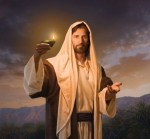
Your Brother and Friend,

Mike Young

THE BOOK OF JOHN, Chapter 8, Part 2, Jesus is the Light of the World.


THE BOOK OF JOHN, Chapter 8, Part 2

Jesus is the Light of the World.

It is important that you and I be careful not to read these verses just as an observer of a past event, or we will have missed the profundity of these prophetic words. There are few places you will find Jesus explaining and claiming His Deity as the Son of God as He does here. It is best if, before you read further, to pray and ask God to enlighten the eyes of your heart and mind with the truth of His wisdom. Then, as you read, place yourself there, with Jesus, as He speaks these words of light and truth into the darkness of the world and to the darkened minds of the ruling religious elite of that day. (You and I must come away from this exchanged as a changed person, in light of Who Jesus truly is.)

John 8:12, Then Jesus again spoke to them, saying, “I am the Light of the world; the one who follows Me will not walk in the darkness, but will have the Light of life.”

(Commentary Break): Jesus begins with “I Am”. He uses the Koine Greek word, “egó” for “I”, which is only used or expressed when emphatic; juxtaposed with “am”, or “self-existent”. This clearly communicates that Jesus is claiming Deity. Even to His own disciples, this is an amazing, and to some, a shocking statement. Those of us who have been Christians for any time have heard that Jesus is God, so many times, that we have become far too accustomed to, and emotionally numbed to what should be a shocking, humbling and amazing reality. Additionally, Jesus speaks these words in the “aorist” tense, which combines past, present and future tenses in one – “I was, I am, and I forever shall be”. Jesus is saying He has always existed, is here now and shall be forevermore. Only God can make such a claim and Jesus puts an exclamation on this realty when He is crucified, is raised from the dead and then ascends into the heavens to sit at the Right Hand of The Father, forevermore.

Jesus flatly states that “I am the Light of the world; the one who follows Me will not walk in the darkness, but will have the Light of life.” Simply put, Light is life, darkness is death. Those who follow Jesus in the resurrection will abide with Him and, as He says in Revelation 22:5, “And the night will be no more. They will need no light of lamp or sun, for the Lord God will be their light, and they will reign forever and ever.” Otherwise, those who do not follow Him will be cast into an outer darkness where there is wailing and gnashing of teeth, into an eternal lake of fire (Matthew 13:41-43). (End Commentary Break).

Verse 13. So the Pharisees said to Him, “You are testifying about Yourself; Your testimony is not true.” Verse 14. Jesus answered and said to them, “Even if I am testifying about Myself, My testimony is true, because I know where I came from and where I am going; but you do not know where I come from or where I am going. Verse 15. You judge according to the flesh; I am not judging anyone. Verse 16. But even if I do judge, My judgment is true; for I am not alone in it, but I and the Father who sent Me. Verse 17. Even in your Law it has been written that the testimony of two people is true. Verse 18. I am He who testifies about Myself, and the Father who sent Me testifies about Me.” Verse 19. So they were saying to Him, “Where is Your Father?” Jesus answered, “You know neither Me nor My Father; if you knew Me, you would know My Father also.” Verse 20. These words He spoke in the treasury, as He taught in the temple area; and no one arrested Him, because His hour had not yet come.

(Commentary Break): The Son of God, being God Himself, speaking directly to God’s own chosen people, and they do not believe Him. The same can be said about our unbelieving world. So, if God Himself, comes to them and us, in the flesh, in the form of a man, cannot convince them of the truth, what does this say about our testimony and our ability to lead others to believe? It says that we cannot lead others to believe. However, Jesus says that “No one can come to Me unless the Father Who sent Me draws Him.” (John 6:44), but we are to “Go and make disciples” of those He draws.

(Concurrently, Jesus says that “And I, when I am lifted up from the earth, will draw all people unto Myself” Now, He was saying this to indicate what kind of death He was going to die.)

Again, it should be a shocking revelation that God’s own chosen race would reject Him as if they were not drawn by Him to Himself. Here is the seeming mystery that although God draws all people, the choice is still in their hands. And Jesus’ words are true for those who claim to know God but do not follow Him, You know neither Me nor My Father; if you knew Me, you would know My Father also.” So, for all those who willingly and willfully ignore the Words and commandments of God while claiming to believe?  (End Commentary Break).

Verse 21. Then He said again to them, “I am going away, and you will look for Me, and will die in your sin; where I am going, you cannot come.” Verse 22. So the Jews were saying, “Surely He will not kill Himself, will He, since He says, ‘Where I am going, you cannot come’?” Verse 23. And He was saying to them, “You are from below, I am from above; you are of this world, I am not of this world. Verse 24. Therefore, I said to you that you will die in your sins; for unless you believe that I am, you will die in your sins.”

(Commentary Break): What Jesus is saying to the Pharisees is applicable to anyone and everyone who does not believe and follow Jesus. When Jesus says “I am going away, and you will look for Me, and will die in your sin; where I am going, you cannot come. You are from below, I am from above; you are of this world, I am not of this world”, He is warning that when that day comes, when your physical body dies and you, at that point, look for Jesus to rescue you, it will be too late. You cannot come to Him nor with Him.

Jesus also explains the established order of “Higher and Lower”. It is not only God’s established order of authority, i.e., “as it is in heaven, so it shall be on the earth”. The things below the earth are temporal and bound for destruction, and the things from above are eternal. So, if you die in your sins (from the Greek word, ‘hamartia’, meaning “to miss the mark, and the ‘mark’ is being redeemed, saved by Jesus, and becoming a joint heir in the Kingdom of God) you miss all that God had planned for you, both now and eternally. “If you die in your sins” whether a Jew or a Gentile. (End Commentary Break).

Verse 25. Then they were saying to Him, “Who are You?” Jesus said to them, “What have I even been saying to you from the beginning?

(Commentary Break): It is as if Jesus is speaking to rebellious and truant children – and indeed He is. Ask yourself, “How would Jesus speak to me about this question?” (End Commentary Break – End Chapter 8, Part 2).

John chapter 8, verses 12 through 25 are among the most mysterious in the Bible. Jesus is speaking from a spiritual, heavenly perspective, words too deep for the natural mind to grasp. But it is now well known, even from a scientific perspective, that matter is never destroyed. It can change form, but it is eternal. Same with our bodies and minds. We die but we do not cease to exist. We simply change form from the natural man or woman, boy or girl, and continue in a spiritual state, and that spirit will either go to an eternal darkness or will live and abide in the Eternal Light and presence of God.

Jesus’ and His Words, in fact, lead to life. Follow Him.

Your Brother and Friend,

Mike Young

NEXT: (coming soon), THE BOOK OF JOHN, Chapter 8, Part 3, The Truth will Set You Free

PREVIOUS: THE BOOK OF JOHN, Chapter 8, Part 2, The Adulterous Woman.

(Please bookmark this page or subscribe for future episodes).

THE BOOK OF JOHN, Chapter 8, Part 1, The Adulterous Woman


THE BOOK OF JOHN, Chapter 8, Part 1

The Adulterous Woman

This chapter reveals the most profound truths of Jesus’ Mission, His Purpose, His Identity as the “son of man” and The Son of God and of our destiny as believers, both now and for all eternity.

John 8:1, But Jesus went to the Mount of Olives. Verse 2. And early in the morning He came again into the temple area, and all the people were coming to Him; and He sat down and began teaching them. Verse 3. Now the scribes and the Pharisees brought a woman caught in the act of adultery, and after placing her in the center of the courtyard, verse 4, they said to Him, “Teacher, this woman has been caught in the very act of committing adultery. Verse 5. Now in the Law, Moses commanded us to stone such women; what then do You say?” Verse 6. Now they were saying this to test Him, so that they might have grounds for accusing Him. But Jesus stooped down and with His finger wrote on the ground.

(Commentary Break): There are at least four major takeaways from these verses. (1). Accusations of sin. (2). Sinners and sin. (3). The penalty of sin. (4). The deception of sin. This is always the pattern, is it not? We, or someone, sees or perceives sin, so they accuse, either through private judgment, gossip or a direct and public accusation. We brand others as sinful and deserving some kind of punishment, and in this case the scribes and the Pharisee’s edict or punishment for this sin is a physical death of the accused. Therein lies the deception, both in the life of the accused and of the accusers.

Oddly, however, at this point Jesus says nothing, but stoops down and writes on the ground with his finger. Perhaps He was just letting this scenario play out? No one can know what He was writing, but don’t get the idea that He was ‘doodling’ while He listened and pondered the matter. Jesus knew. He knew what the woman had done, how she felt, He knew her mindset, her remorse and her fears. He also knew the heart and the motive of the scribes and the Pharisees was to test and accuse Him and this woman was just a sinner worthy of collateral damage, as far as they were concerned. So, Jesus waited. (End Commentary Break)

Verse 7. When they persisted in asking Him, He straightened up and said to them, “He who is without sin among you, let him be the first to throw a stone at her.” Verse 8. And again He stooped down and wrote on the ground. Verse 9. Now when they heard this, they began leaving, one by one, beginning with the older ones, and He was left alone, and the woman where she was, in the center of the courtyard. Verse 10. And straightening up, Jesus said to her, “Woman, where are they? Did no one condemn you?” Verse 11. She said, “No one, Lord.” And Jesus said, “I do not condemn you, either. Go. From now on do not sin any longer.”

(Commentary Break): Now we see three more major takeaways in these verses. (1). Revelation. (2). Realization. (3). Redemption. Jesus stand straight up, faces the accusers and reveals what is hidden – no one, no not one, is without sin. All are guilty. The scribes and Pharisees realize they have been found out, so they leave, one by one, the older ones (perhaps signifying greater awareness) first. Then it is just Jesus and the sinner – the woman. And once again Jesus stands straight up, faces the woman, forgives her and sends her on her way reminding to sin no more. The Pharisees believed that only God can forgive, so this would have been a visual testimony to Jesus’ claim of Deity. (End Commentary Break).

These verses present us a pattern and an example for us to follow. When we hear an accusation of sin, like Jesus, it is wise to quietly and patiently consider the source of the accusation, the accuser, the sin, and the sinner, knowing that even now, the penalty of sin is death – even spiritual death. And where there is sin, deception abound. So, we are to stand up and face the accusations with patience and Godly wisdom, and allow God to reveal what is hidden, and realize that none of us are without sin, but there is forgiveness and redemption in Christ Jesus. This is our example.

Your Brother and Friend,

Mike Young

NEXT: (coming soon), THE BOOK OF JOHN, Chapter 8, Part 2, Jesus is the Light of the World, The Truth will Set You Free

PREVIOUS: THE BOOK OF JOHN, Chapter 7, Part 2, People Divided over Jesus.

(Please bookmark this page or subscribe for future episodes).

THE FLESH AND BLOOD OF JESUS


THE FLESH AND BLOOD OF JESUS

(It’s not what you learned in Sunday School)

In John 6:53–58, Jesus says, “Very truly I tell you, unless you eat the flesh of the Son of Man and drink his blood, you have no life in you. Whoever eats My flesh and drinks my blood has eternal life, and I will raise them up at the last day. For My flesh is real food and my blood is real drink. Whoever eats My flesh and drinks My blood remains in Me, and I in them. Just as the living Father sent Me and I live because of the Father, so the one who feeds on Me will live because of Me. This is the bread that came down from heaven. Your ancestors ate manna and died, but whoever feeds on this Bread will live forever.” Upon hearing these words, many of Jesus’ followers said, “This is a hard teaching” (verse 60), and many of them actually stopped following Him that day (verse 66).

When Jesus said we must “eat the flesh of the Son of Man and drink his blood” (John 6:53), He spoke, as He often did, in parabolic terms. We must receive Him by faith (John 1:12). “Blessed are those who hunger and thirst for righteousness, for they will be filled” (Matthew 5:6). We understand that we need physical food and drink; Jesus wants us to understand that we also need spiritual food and drink—and that is what His sacrifice provides. (see https://www.gotquestions.org/Jesus-eat-flesh-drink-blood.html).

Oh, Yeah? Is it that simple? Eating His Flesh and drinking His Blood Is little more than “receiving Him by faith”?

Well Jesus was more graphic and a lot more precise:

John 6:55, For my flesh is true food, and my blood is true drink. Verse 56. Whoever feeds on my flesh and drinks my blood abides in me, and I in him. Verse 57. As the living Father sent me, and I live because of the Father, so whoever feeds on me, he also will live because of me. Verse 58. This is the bread that came down from heaven, not like the bread the fathers ate, and died. Whoever feeds on this bread will live forever.”

Leviticus 17:11 says, For the life of the flesh is in the blood, and I have given it for you on the altar to make atonement for your souls, for it is the blood that makes atonement by the life.” But drinking blood was strictly forbidden in Jewish law (Leviticus 17:10-14), making this statement particularly shocking to the Jew. It signifies the new covenant in Jesus’ blood, which is essential for eternal life. This anticipates the sacrificial death of Christ and the shedding of His blood for the forgiveness of sins.

Additionally, we are told that Jesus is the Word of God. So, metaphorically speaking, eating His flesh is tantamount to getting your spiritual nourishment from The Word of God.

Well, with all that said, I would ask “who accomplished this – metaphorically, of course – that is, eating Jesus’ Flesh and drinking His Blood? Could we at least say that Jesus’ Apostles came as close as anyone? I think that is a safe statement. Could you agree? If so, then is the litmus test of “Eating Jesus’ Flesh and Drinking His Blood”?

HAVING LOVE FOR ONE ANOTHER

John 13:34-35, “ I am giving you a new commandment, that you love one another; just as I have loved you, that you also love one another. By this all people will know that you are My disciples: if you have love for one another.”

 FAITH & OBEDIENCE

John 15:14, You are My friends if you do what I command you.”

THE WORLD WILL HATE YOU

John 15:18-19, If the world hates you, [a]you know that it has hated Me before it hated you.  If you were of the world, the world would love you as its own; but because you are not of the world, but I chose you out of the world, because of this the world hates you.”

GREATER WORKS

John 14:12, Truly, truly I say to you, the one who believes in Me, the works that I do, he will do also; and greater works than these he will do; because I am going to the Father.”

BECOMING POOR & DESTITUTE IN SPIRIT

Matthew 5:3, “Blessed are the poor in spirit, for theirs is the kingdom of heaven.”

BEING GENTLE

Matthew 5:5, “Blessed are the gentle, for they will inherit the earth.”

HUNGER & THIRST FOR RIGHTEOUSNESS

Matthew 5:6, “Blessed are those who hunger and thirst for righteousness, for they will be satisfied.”

BEING MERCIFUL

Matthew 5:7, “Blessed are the merciful, for they will receive mercy.”

BEING PURE IN HEART

Matthew 5:8, “Blessed are the pure in heart, for they will see God.”

BEING A PEACEMAKER

Matthew 5:9, “Blessed are the peacemakers, for they will be called sons of God.”

SUFFERING PERSECUTION AS A CHRISTIAN

Matthew 5:10-11, “Blessed are those who have been persecuted for the sake of righteousness, for theirs is the kingdom of heaven. Blessed are you when people insult you and persecute you, and falsely say all kinds of evil against you because of Me.”

These are not the things we typically strive for but the Bible consistently tells us these are the sufferings and rewards of one who follows Jesus as His disciple – i.e., “eats His Flesh and drinks His Blood”.

Read these synopses of the Apostles:

Matthew was the disciple who had been a tax collector before he met Christ. He wrote the Gospel of Matthew after the Ascension. He likely spent a great deal of time writing to and teaching the Jews in Judea before he went abroad to do missionary work for the Gospel. He was martyred, some say stabbed to death for His faith in Jesus, in Ethiopia in 68 AD.

Simon Peter was one of the first Apostles to be arrested, and the first to preach a sermon after the day of Pentecost. He would be called by God to affirm the acceptance of gentiles into the church, as well as lifting the food restrictions in the age of grace. He was considered a leader of the early church in Jerusalem, and wrote two letters that were inspired by the Holy Spirit as part of Scripture. At some point that is not recorded in the Bible, scholars believe he was brought to Rome, where he was crucified upside down.

Andrew, the brother of Simon Peter, is believed to have gone as a missionary to parts of the Greek colonies on the northern sides of the Black Sea near modern day Crimea, as well as other areas of Greece. Church history holds he was martyred by crucifixion in Patras in 60AD. Tradition holds he was on the cross for three days.

James son of Zebedee and his brother John were cousins of Jesus. The Bible records, “About that time King Herod violently attacked some who belonged to the church, and he executed James, John’s brother, with the sword” (Acts 12:1-2). Tradition holds he was the first of the Apostles to be martyred.

John son of Zebedee wrote five books of the Bible, the Gospel of John, the epistles of 1, 2, and 3 John, and the Book of Revelation during the years after the Ascension. He also took responsibility for Mary, the mother of Jesus during this time. At some point he was arrested, and according to tradition, boiled in oil but did not die. He was exiled to Patmos where he received the visions that inspired Revelation. After several years in exile, tradition says he spent his last years in Ephesus, dying between 98 and 100AD.

Philip is believed to have taken the Gospel to Gaul, or modern day France, as well as Turkey, specifically the city of Hierapolis. Scholars believe he was both crucified and stoned to death.

James Son of Alphaeus is held to have gone to Syria to support transplanted Jews there, but that he mostly helped run the church in Jerusalem. Church tradition holds he was arrested by Ananias and told to deny Christ; he was taken to the top of the temple, where he boldly proclaimed Jesus as the Messiah, but he was then pushed off the temple and stoned. He is said to have died from a blow to the head.

Bartholomew aka Nathanael may have gone to India, as there are two records that indicate this, though most of them are from the 4th century. Stronger tradition holds that he went to Armenia, partnering with Thaddaeus. In Azerbaijan, Christians believe he brought the Gospel there as well. Tradition says he was flayed and then crucified in 71 AD.

Thaddaeus is believed to have partnered with Bartholomew for many of his missionary travels, so he may have gone to India and Turkey. He may have gone to Armenia as well. Tradition holds that he suffered martyrdom in 65 AD in Syria, in the city of Beirut.

Simon the Zealot is believed to have left Jerusalem and gone to Africa, traveling the northern empires like Egypt, Libya, and Mauritania. Some even think he may have gone to Spain and even Britain and then Persia. Tradition holds he was martyred in the Middle East by being crucified upside down then sawed in half around 74 AD.

Thomas may have doubted the stories of the resurrected Jesus, but after he saw Jesus, he became zealous. Scholars believe Thomas went the farthest of the apostles, and there are multiple records that he went as far as India. While there are varied accounts of his death, it is generally agreed that he was speared to death by Hindu priests in 70 AD. The city of Mylapore has a place they believe is his tomb.

Matthias is believed to have mostly stayed in Jerusalem, helping the members of the persecuted church and edifying the saints. He may have gone north, and some traditions hold that he went north of the Black Sea. It is generally held he died in Jerusalem, though there are differing accounts of how he died. He may have been stoned, crucified, or beheaded. 

Paul would go on to have three missionary journeys across the Mediterranean, suffering much for the cause of Christ as the primary missionary to the gentiles. His life is recorded in the Book of Acts and across the multiple letters he wrote that became a part of the New Testament. He was imprisoned in Rome, and some believe he was executed under Emperor Nero in 66 AD by beheading.

While the fates of the apostles are somewhat shrouded by lack of documentation and two thousand years of separation, their devotion to the Lord should be inspiring, and a reminder that these men proudly and bravely bore the marks of “eating Jesus’ flesh and drinking His Blood”.

And we must remember that persecution of believers is still a common trait among true followers of Jesus, all across the world, and ask ourselves, “Am I fitting in as a follower of Jesus”?

Your Brother and Friend,

Mike Young

PS: It seems to me that something has happened since the days of the Apotsles, so that have now have a really toned down and tamed version the written word. I mean, read it for yourself. This wasn’t meant to be some little sinner’s prayer when they initially wrote about it!!


CHRISTIAN ETHOS IN ACTION – While it is said: Today, if you will hear His voice, do not harden your hearts as in the rebellion.” – Hebrews 3:15


CHRISTIAN ETHOS IN ACTION – “While it is said: “Today, if you will hear His voice, Do not harden your hearts as in the rebellion”. – Hebrews 3:15.

The phrase if you, as it applies to you (and me) as a disciple of Jesus, appears one hundred twenty-four times in the English Standard Version (ESV) of the New Testament.

First, we will be confronted with various situations and circumstances from the Bible and, we will discover how we are to respond in these examples. Secondly, I have personalized (rephrased) our study verses for you to memorize. By this, we can bring the Gospel to life as we go and defeat sin along our way.

Today we, as Christians, are confronted with questions about how we should deal with matters such as:

“While it is said: “Today, if you will hear His voice, Do not harden your hearts as in the rebellion.” – Hebrews 3:15.

IN CONTEXT

The verses which come just before and following Hebrews 3:15, our focus verse, give us the context of God’s instructions. Hence, Hebrews 3:1, says,

Therefore, holy brothers and sisters, partakers of a heavenly calling, consider the Apostle and High Priest of our confession: Jesus; verse 2, He was faithful to Him who appointed Him, as Moses also was in all His house. Verse 3. For He has been counted worthy of more glory than Moses, by just so much as the builder of the house has more honor than the house. Verse 4. For every house is built by someone, but the builder of all things is God. Verse 5. Now Moses was faithful in all God’s house as a servant, for a testimony of those things which were to be spoken later; verse 6, but Christ was faithful as a Son over His house—whose house we are, if we hold firmly to our confidence and the boast of our hope.

Verse 7. Therefore, just as the Holy Spirit says,

“TODAY, IF YOU HEAR HIS VOICE,

Verse 8. DO NOT HARDEN YOUR HEARTS, AS WHEN THEY PROVOKED ME,

AS ON THE DAY OF TRIAL IN THE WILDERNESS,

Verse 9. WHERE YOUR FATHERS PUT ME TO THE TEST,

AND SAW MY WORKS FOR FORTY YEARS.

Verse 10. “THEREFORE, I WAS ANGRY WITH THIS GENERATION,

AND SAID, ‘THEY ALWAYS GO ASTRAY IN THEIR HEART,

AND THEY DID NOT KNOW MY WAYS’;

Verse 11. AS I SWORE IN MY ANGER,

‘THEY CERTAINLY SHALL NOT ENTER MY REST.’”

Verse 12. Take care, brothers and sisters, that there will not be in any one of you an evil, unbelieving heart that falls away from the living God. Verse 13. But encourage one another everyday, as long as it is still called “today,” so that none of you will be hardened by the deceitfulness of sin. Verse 14. For we have become partakers of Christ if we keep the beginning of our commitment firm until the end, verse 15, while it is said,

“TODAY, IF YOU HEAR HIS VOICE,

DO NOT HARDEN YOUR HEARTS, AS WHEN THEY PROVOKED ME.” Verse 16. For who provoked Him when they had heard? Indeed, did not all those who came out of Egypt led by Moses? Verse 17. And with whom was He angry for forty years? Was it not with those who sinned, whose dead bodies fell in the wilderness? Verse 18. And to whom did He swear that they would not enter His rest, but to those who were disobedient? Verse 19. And so we see that they were not able to enter because of unbelief.

REPHRASED and personalized to memorize:

While it is said: “Today, if I hear His voice, I will not harden my heart as in the rebellion”. – Hebrews 3:15.

(My Commentary):

God, by way of The Holy Spirit inspiring and working through His Apostle Paul, reminds us of our heavenly calling. He compares the supremacy of Jesus as the builder and architect of God’s House, the Church. And that we are to hold firmly to our confidence and the boast of our hope – Christ, Jesus!

Then He warns us that “IF YOU HEAR HIS VOICE”, do not harden your heart as the Israelites did in the wilderness. God swore that neither they nor anyone who would follow their example of unbelief, because those kind “ALWAYS GO ASTRAY IN THEIR HEART, AND THEY DO NOT KNOW MY WAYS’, so neither ‘THEY (nor any who are unbelieving, rebellious and disobedient) SHALL ENTER HIS REST.’”

So, let’s say together, this is my testimony: “Today, if I hear His voice, I will not harden my heart as in the rebellion.” I will love, Him, follow Him, serve Him, and obey Him.

Your Brother and Friend,

Mike Young

NEXT:  (Coming Soon). “But if you are without chastening, of which all have become partakers, then you are illegitimate and not sons.” – Hebrews 12:8.

PREVIOUS: If you instruct the brethren in these things” – 1 Timothy 4:6.

(Please bookmark this page or subscribe for coming episodes).

EVERY CELL IN YOUR BODY IS LISTENING

Every cell in your body is listening to what your mind is thinking.

Our thoughts and emotions affect every cell in our biology. There is so much science and so much research in the last 20 years in mind-body connection, that is the science of epigenetics, that we know that the environment and emotions affect your genes. It is your emotions that can change your genes.

So what emotions are you living with? Anger, guilt, regret, fear, lack, unworthiness? That is just going to create more disease. But if you are living more in gratitude, love, joy, happiness, those emotions get conveyed by your nervous system into every cell of your body, and they turn on genes which created more health, they turn on genes with create more immunity in your system. The emotions we live with will ultimately decide our health and happiness.

(Reference Karan Kakkad, Harvard Health https://www.health.harvard.edu/depression/how-genes-and-life-events-affect-mood-and-depression and Psychology Today https://www.psychologytoday.com/us/blog/your-genetic-destiny/201501/how-stress-changes-your-genes-0 ).

Now the deeds of the flesh are evident, which are: sexual immorality, impurity, indecent behavior, idolatry, witchcraft, hostilities, strife, jealousy, outbursts of anger, selfish ambition, dissensions, factions, envy, drunkenness, carousing, and things like these, of which I forewarn you, just as I have forewarned you, that those who practice such things will not inherit the kingdom of God. But the fruit of the Spirit is love, joy, peace, patience, kindness, goodness, faithfulness, gentleness, self-control; against such things there is no law. Now those who belong to Christ Jesus crucified the flesh with its passions and desires. (Galatians 5:19-24).

For the mind set on the things of the flesh is death, but the mind set on the Spirit is life and peace. (Romans 8:6).

Your Brother and Friend,

Mike Young.

THE BOOK OF ACTS – Chapter 13, Part 1, The First Missionary Journey


THE BOOK OF ACTS – Chapter 13, Part 1

The First Missionary Journey

Previously, Jesus had summoned His twelve Apostles and gave them authority over unclean spirits, and told them to heal every disease and every sickness, instructing them, saying, “Do not go on a road to Gentiles, and do not enter a city of Samaritans; but rather, only go to the lost sheep of the house of Israel (see Matthew 10:1-15). Then we read in John 1:11-13, “He came to His own, and His own people did not accept Him. But as many as received Him, to them He gave the right to become children of God, to those who believe in His name, who were born, not of blood, nor of the will of the flesh, nor of the will of a man, but of God.”

So began the spread of Christianity and God’s gift of salvation being offered to the entire world. This marks the beginning of the prophesied great apostasy and the great persecution of Christians. Jesus warned that they would be handed over to tribulation and would be killed and hated by all nations because of His name. And at that time many would fall away from the faith, and they would betray one another and hate one another. And that many false prophets would rise up and would mislead many people. And because lawlessness would increase, most people’s love would become cold. This would be one of the hallmarks that the Last Days were well underway.

First Missionary Journey

Acts 13:1, Now there were prophets and teachers at Antioch, in the church that was there: Barnabas (son of prophecy), Simeon (hearing) who was called Niger (black, a Christian), Lucius (illuminated, a Christian) of Cyrene, Manaen (a Christian) who had been brought up with Herod the tetrarch, and Saul. Verse 2. While they were serving the Lord and fasting, the Holy Spirit said, “Set Barnabas and Saul apart for Me for the work to which I have called them.” Verse 3. Then, when they had fasted, prayed, and laid their hands on them, they sent them away.

(Commentary Break): The Holy Spirit “said” (to lay forth). We must assume the Holy Spirit spoke to all who were present: Barnabas (son of prophecy), Simeon (hearing) who was called Niger (black, a Christian), Lucius (illuminated, a Christian) of Cyrene, Manaen (a Christian) who had been brought up with Herod the tetrarch, and Saul; and the Holy Spirit said “Set Barnabas and Saul apart for Me for the work to which I have called them.”

[The phrase “set apart” indicates a divine selection for a specific purpose, echoing the Old Testament practice of consecrating individuals for God’s work (e.g., Jeremiah 1:5). Barnabas and Saul (later named Paul) were chosen for a mission that would expand the church’s reach beyond Jewish communities. Barnabas, known for his encouragement and leadership, and Saul, a former persecutor turned apostle, were uniquely equipped for this task. Their selection underscores God’s sovereignty in choosing and equipping His servants.] (the foregoing purple text is an excerpt from a BibleHub.com commentary).

However, if all you or I get from this is a narrative on the expansion of the Church, then we are reading the Bible only as an historical document, but the Bible is not meant to be an historical document!

The Bible is the Breathed Word of God, (2 Timothy 3:16); the Bible is the longest love letter ever written, and it is written by the One True God to His beloved created ones; the Bible is the Word of God and it is alive and active, and sharper than any two-edged sword; The Bible penetrates and divides the soul and spirit of each man, woman and child, and discerns the thoughts and intentions of each person’s heart and mind (Hebrews 4:12); The Bible is creative, it is causative, instructional and prophetic – prophetic in the sense that it tells the truth to you, past present and future; and when that Word dwells in you, it tells the truth through you! Therefore, the book of Acts and this chapter and these verses in particular are speaking to you! They are instructing you and creating in you and causing you to hear and to do what God has instructed to His Church – it is telling the Truth through you if you are obedient to His Voice. (End Commentary Break).

Verse 4. So, being sent out by the Holy Spirit, they went down to Seleucia and from there they sailed to Cyprus. Verse 5. When they reached Salamis, they began to proclaim the word of God in the synagogues of the Jews; and they also had John as their helper. Verse 6. When they had gone through the whole island as far as Paphos, they found a magician, a Jewish false prophet whose name was Bar-Jesus, verse 7, who was with the proconsul, Sergius Paulus, a man of intelligence. This man summoned Barnabas and Saul and sought to hear the word of God.

(Commentary Break): God has a plan for each of our lives and it begins with this missionary journey. And it is not a plan to suit our personal whims, wants, selfish goals, desires, and supposed needs. It is His plan of telling the Good News of Jesus Christ. It is for the purging, cleansing, refining, redeeming and restoring His creation and His created ones into the very image and likeness of Jesus in preparation for us to spend eternity in His presence in a new and perfect heaven and a new and perfect earth. (see Daniel 12:12). This was written to you, about Barnabas, Simeon, Lucius, Manaen, and Saul on a missionary journey, but it is also written to you and about you. You too are sent! Now, go! (End Commentary Break).

Verse 8. But Elymas the magician (for so his name is translated) was opposing them, seeking to turn the proconsul away from the faith. Verse 9. But Saul, who was also known as Paul, filled with the Holy Spirit, stared at him, verse 10, and said, “You who are full of all deceit and fraud, you son of the devil, you enemy of all righteousness, will you not stop making crooked the straight ways of the Lord? Verse 11. Now, behold, the hand of the Lord is upon you, and you will be blind and not see the sun for a time.” And immediately a mist and a darkness fell upon him, and he went about seeking those who would lead him by the hand. Verse 12. Then the proconsul believed when he saw what had happened, being amazed at the teaching of the Lord.

(Commentary Break): Paul and the others are confronted with dark magic and resistance to their Message, and Paul, instead of being in fear of offending someone and instead of shrinking back, responds with a strong spiritual rebuke, saying, “You who are full of all deceit and fraud, you son of the devil, you enemy of all righteousness, will you not stop making crooked the straight ways of the Lord?” Then, upon instructions from the Lord, Paul proclaims, “Now, behold, the hand of the Lord is upon you, and you will be blind and not see the sun for a time.” And immediately a mist and a darkness fell upon him. How can this be? How can this happen? Is this just a story to amaze us, today? Or is it an example of the prophetic power of a fully submitted and obedient servant of the Most High God?

This reminds me of God’s servant David, as he stood before the giant, Goliath, and spoke these words, “Just who is this uncircumcised Philistine, that he should defy the armies of the living God?” Then David said to the Philistine, “You come to me with a sword, a spear, and a saber, but I come to you in the name of the LORD of armies, the God of the armies of Israel, whom you have defied. This day the LORD will hand<mh5462, 3027=””> you over to me, and I will strike you and remove your head from you. Then I will give the dead bodies of the army of the Philistines this day to the birds of the sky and the wild animals of the earth, so that all the earth may know that there is a God in Israel, and that this entire assembly may know that the LORD does not save by sword or by spear; for the battle is the LORD’S, and He will hand<mh5414, 3027=””> you over to us!” </mh5414,></mh5462,></mh6793c,>

Then it happened, when the Philistine came closer to meet David, that David ran quickly toward the battle line to meet the Philistine. And David put his hand into his bag and took from it a stone and slung it, and struck the Philistine on his forehead. And the stone penetrated his forehead, and he fell on his face to the ground. So David prevailed over the Philistine with the sling and the stone: he struck the Philistine and killed him, and there was no sword in David’s hand. Then David ran and stood over the Philistine, and took his sword and drew it out of its sheath and finished him, and cut off his head with it. When the Philistines saw that their champion was dead, they fled.” (see 1 Samuel 17:45-51).

This only comes about when we are fully submitted to our God, fully prepared by His Word. Then we can say that we are not among those who shrink back to destruction, but of those who have faith for the safekeeping of our soul (see Hebrews 10:39); and we will overcome because of the Blood of the Lamb and because of the word of our testimony, that we did not love our life even when faced with death! (see Revelation 12:11). (End Commentary Break – End Chapter 13, part 1, The First Missionary Journey).

What we are reading tells and shows us the difference between calling oneself a Christian and actually being a Christian. Although it is worthy to note that not everyone can be like Paul or Barnabas, but each of us have been called to go into the world around us and proclaim the Good News of Jesus, preaching and saying, ‘The kingdom of heaven has come near’. Heal the sick, raise the dead, cleanse those with leprosy, cast out demons. Freely you received, freely give”. We have been equipped by the Holy Spirit with Gifts for the building up of the Body and as a witness to the risen Christ.

Your Brother and Friend,

Mike Young

PREVIOUS: THE BOOK OF ACTS – Chapter 12, Peter’s Arrest and Deliverance, The Death of Herod.

NEXT: THE BOOK OF ACTS – Chapter 13, part 2, Paul Turns to the Gentiles.

(Please bookmark this page or subscribe for future episodes).

THE BOOK OF JOHN, Chapter 7, Part 2, People Divided over Jesus


THE BOOK OF JOHN, Chapter 7, Part 2

People Divided over Jesus

One could say that Jesus, in this chapter and in these verses, is stating His case as the Son of God, the Messiah, the prophesied and the promised One. Some are believing, others are not believing.

And this is exactly what Jesus was talking about when He said, “For I came to turn a man against his father, and a daughter against her mother, and a daughter-in-law against her mother-in-law; and a person’s enemies will be the members of his household”, and “do not think I came to bring peace on the earth; I did not come to bring peace, but a sword”.

People then and people now decided who Jesus is by their opinions, religious law, tradition, and by physical and natural standards. But some will judge Who He is because God will draw them to Jesus. The end result will be life complete and eternal or eternal death and the horrors of an outer darkness.

John 7:25. So some of the people of Jerusalem were saying, “Is this man not the one whom they are seeking to kill? Verse 26. And yet look, He is speaking publicly, and they are saying nothing to Him. The rulers do not really know that this is the Christ, do they? Verse 27. However, we know where this man is from; but when the Christ comes, no one knows where He is from.”

Verse 28. Then Jesus cried out in the temple, teaching and saying, “You both know Me and you know where I am from; and I have not come of Myself, but He who sent Me is true, whom you do not know. Verse 29. I do know Him, because I am from Him, and He sent Me.” Verse 30. So they were seeking to arrest Him; and yet no one laid a hand on Him, because His hour had not yet come. Verse 31. But many of the crowd believed in Him; and they were saying, “When the Christ comes, He will not perform more signs than those which this man has done, will He?”

(Commentary Break): The wording in the preceding verses, from the NASB, could be a little confusing to understand without context. So, I will re-phrase, hopefully for clarity: Verse 25, So some of the people of Jerusalem were saying, “Isn’t this the man the Jewish authorities are trying to kill? But look at Him. Verse 26. Still, He is teaching out in the open where everyone can hear Him, and no one is trying to stop Him from His teaching. Have the authorities have decided that He really might be the Messiah, and that is why they are leaving Him alone? Verse 27. And besides, when the ‘real Messiah’ comes, no one will know where He comes from – He will just appear – and we know where this man’s hometown is. Verse 28. And while Jesus was still teaching in the Temple, He shouted out and said, “So you say you know Me and where I am from? Yes, but you know very little about that. Listen. I am here but not on my own volition; I am sent by One who is very Real, but you don’t know Him! Verse 29. But, I know Him because He is the One (speaking of God the Father) Who sent Me.

Still, there were many in the crowd that believed Him, saying that if He must be the Messiah based on the signs and miracles He has done – and even if there was another Messiah, how could He do more than Jesus has done?

Now to you and to me: Do you ever find yourself doubting about Jesus? After all, they said He was coming back, and now it’s been over 2,o00 years and still He has not arrived, and the world is getting darker, more chaotic and more dangerous by the day. Is it even true that He is alive and coming back to get us? It was hard for the people in His day to believe, so how much harder for us today? But, try to understand and accept that we really do not walk just by sight, but by faith. And, Jesus has told us that if you cannot believe just by the Words He spoke, then believe Him because of the Works He has done! (John 14:11).

Henry Blackaby, in his book and study, ‘Experiencing God’ speaks of ‘spiritual markers’. A spiritual marker identifies a time of decision when you clearly know that God guided you. Can you remember the moment you became a child of God? There were specific times when He called you to His ways of living? Point to times when He clearly guided you in a decision? Those times when He spoke powerfully to you about a commitment you should make? Keep track of these important moments! Regularly rehearse them and notice the steady progression in the way God has led you. This will help you understand God’s activity in your life now, and give you a sense of direction as you face future decisions. (End Commentary Break).

Verse 32. The Pharisees heard the crowd whispering these things about Him, and the chief priests and the Pharisees sent officers to arrest Him. Verse 33. Therefore, Jesus said, “For a little while longer I am going to be with you, and then I am going to Him who sent Me. Verse 34. You will seek Me, and will not find Me; and where I am, you cannot come.” Verse 35. The Jews then said to one another, “Where does this man intend to go that we will not find Him? He does not intend to go to the Dispersion among the Greeks, and teach the Greeks, does He? Verse 36. What is this statement that He said, ‘You will seek Me, and will not find Me; and where I am, you cannot come’?”

Verse 37. Now on the last day, the great day of the feast, Jesus stood and cried out, saying, “If anyone is thirsty, let him come to Me and drink. Verse 38. The one who believes in Me, as the Scripture said, ‘From his innermost being will flow rivers of living water.’” Verse 39. But this He said in reference to the Spirit, whom those who believed in Him were to receive; for the Spirit was not yet given, because Jesus was not yet glorified.

(Commentary Break): Jesus will explain these things several times before His crucifixion and resurrection to emphasize that once they see Him ascend to the Father, they will know where He has gone and that can know that He will come back to get them, just as He has said He would. Then, Jesus gives instructions on how they can follow Him once the Spirit is given, and He is glorified, both now and then in the Resurrection! “If anyone is thirsty, let him come to Me and drink. The one who believes in Me, as the Scripture said, ‘From his innermost being will flow rivers of living water.’” (End Commentary Break).

People’s Division over Jesus

Verse 40. Some of the people therefore, after they heard these words, were saying, “This truly is the Prophet.” Verse 41. Others were saying, “This is the Christ.” But others were saying, “Surely the Christ is not coming from Galilee, is He? Verse 42. Has the Scripture not said that the Christ comes from the descendants of David, and from Bethlehem, the village where David was?” Verse 43. So a dissension occurred in the crowd because of Him. Verse 44. And some of them wanted to arrest Him, but no one laid hands on Him.

Verse 45. The officers then came to the chief priests and Pharisees, and they said to them, “Why did you not bring Him?” Verse 46. The officers answered, “Never has a man spoken in this way!” Verse 47. The Pharisees then replied to them, “You have not been led astray too, have you? Verse 48. Not one of the rulers or Pharisees has believed in Him, has he? Verse 49. But this crowd that does not know the Law is accursed!” Verse 50. Nicodemus (the one who came to Him before, being one of them) *said to them, Verse 51. “Our Law does not judge the person unless it first hears from him and knows what he is doing, does it?” Verse 52. They answered and said to him, “You are not from Galilee as well, are you? Examine the Scriptures, and see that no prophet arises out of Galilee.” Verse 53. And everyone went to his home. (End Chapter 7).

This debate still rages today. Is Jesus the Messiah, the Savior of the world? Does He meet all the prophetic requirements of the Messiah? Is He really God or just a good man and a good teacher? Are our established religions and religious orders to be believed, or is what Jesus taught the truth? Is He really the only way to God the Father and into heaven and eternal life?

You have to decided. But be aware of this: It is not possible to believe if the Father has not first drawn you. Pray and ask so you may believe.

Your Brother and Friend,

Mike Young

NEXT: THE BOOK OF JOHN, Chapter 8, The Adulteress Woman, Jesus is the Light of the World, The Truth will Set You Free

PREVIOUS: THE BOOK OF JOHN, Chapter 7, Part 2, Five Thousand Men Fed, Jesus Walks on Water.

(Please bookmark this page or subscribe for future episodes).