PROPHECY – Why Are The Nations Raging? The Books of the Revelation, Chapters 11 and 12 – Urgent Message For Today

PROPHECY

PROPHECY. REVELATION CHAPTERS 12 AND 13

as it relates to us today!

This is where the Devil / Satan began his rage on earth. This is when his raging and final days of destructive efforts are made manifest on the earth; this is where and how Satan is at work now, and where we are now in this cosmic End of Days Battle with him; and this is where we are headed in the very near future.

(First, it is important to note the uses of the past tense in conjunction with the present tense and future tenses, in these prophetic scriptures, all in these same paragraphs in verses, particularly in chapter 11, verse 15 through 17. Why?Because this is a picture of how God exists in the dimension we call ‘time’. He was, He is, and He always shall be. God is pre-existent, currently present and eternal, and this is the correct view of time-related events from God’s perspective in prophecy.

Importantly we must ask how this affects us, our views and our response to  scriptures and God’s commands? We are seeing, in our day, what has happened (past) is still happening (present) and will continue to occur (future) until all is fulfilled. I.e., “you are already experiencing prophetic matters that you may have thought were yet to come”. Are you prepared?

The Seventh Trumpet: Christ’s Reign Foreseen – A Past, Present or Future event?

Revelation 11:15, Then the seventh angel sounded; (past tense), and there were loud voices in heaven, saying,

“The kingdom of the world has become (present tense) the kingdom of our Lord and of His Christ; and He will reign (future tense) forever and ever.” Verse 16. And the twenty-four elders, who sit (present tense) on their thrones before God, fell on their faces (past tense) and worshiped (past tense) God, verse 17, saying,

“We give (present tense) You thanks, Lord God, the Almighty, the One who is and who was, (past tense), because You have taken (past tense), Your great power and have begun (present tense) to reign.

(Past tense – Present tenseFuture tense.)

Verse 18. And the nations were enraged, (past tense) and Your wrath came, (past tense), and the time came (past tense), for the dead to be judged, and the time to reward Your bond-servants the prophets and the saints and those who fear Your name, the small and the great, and to destroy those who destroy the earth.”

Verse 19. And the temple of God which is in heaven (present tense) was opened (past tense); and the ark of His covenant appeared (past tense) in His temple, and there were (past tense) flashes of lightning and sounds and peals of thunder, and an earthquake, and a great hailstorm.

(Past tense – Present tenseFuture tense.)

The Woman, Israel.

Revelation 12:1, A great sign appeared (past tense) in heaven: a woman clothed with the sun, and the moon under her feet, and on her head a crown of twelve stars (past tense); verse 2, and she was pregnant, and she cried out, (past tense) being in labor and in pain to give birth.

The Red Dragon, Satan.

Verse 3. Then another sign appeared (past tense) in heaven: and behold, a great red dragon having seven heads and ten horns, and on his heads were seven crowns. Verse 4. And his tail swept away (past tense) a third of the stars of heaven and hurled (past tense) them to the earth. And the dragon stood before the woman who was about to give birth, so that when she gave birth, he might devour her Child (past tense).

(Past tense – Present tenseFuture tense.)

The Male Child, Christ.

Verse 5. And she gave birth (past tense) to a Son, a male, who is going to rule (future tense) all the nations with a rod of iron; and her Child was caught up to God (past tense) and to His throne. Verse 6. Then the woman fled (past tense) into the wilderness where she had a place prepared by God, so that there she would be nourished (future tense) for 1,260 days.

The Angel, Michael.

Verse 7. And there was war in heaven, (past tense) Michael and his angels waging war with the dragon. The dragon and his angels waged war, (past tense) verse 8, and they did not prevail, and there was no longer a place found for them in heaven (past tense). Verse 9. And the great dragon was thrown down, (past tense) the serpent of old who is called the devil and Satan, who deceives the whole world; he was thrown down (past tense)to the earth, and his angels were thrown down with him. Verse 10. Then I heard (past tense) a loud voice in heaven, saying,

(Past tense – Present tenseFuture tense.)

“Now the salvation, and the power, and the kingdom of our God and the authority of His Christ have come, (present tense) for the accuser of our brothers and sisters has been thrown down, (present tense) the one who accuses (present tense) them before our God, day and night. Verse 11. And they overcame him because of the blood of the Lamb and because of the word of their testimony, and they did not love their life even when faced with death. Verse 12. For this reason, rejoice, (present tense) you heavens and you who dwell in them (present tense) . Woe to the earth and the sea, because the devil has come down (present tense) to you with great wrath, knowing (present tense) that he has (future tense) only a short time.”

(Past tense – Present tenseFuture tense.)

Verse 13. And when the dragon saw that he was thrown down to the earth, he persecuted the woman who gave birth to the male Child. Verse 14. But the two wings of the great eagle were given to the woman, so that she could fly (future tense)  into the wilderness to her place, where she was nourished for a time, times, and half a time, away from the presence of the serpent. Verse 15. And the serpent hurled water like a river out of his mouth after the woman, so that he might cause her to be swept away with the flood. (future tense). Verse 16. But the earth helped the woman, and the earth opened its mouth and drank up the river which the dragon had hurled out of his mouth. Verse 17. So the dragon was enraged with the woman, and went off to make war with the rest of her children, who keep the commandments (present tense) of God and hold to (present tense) the testimony of Jesus.

Past tense – Present tenseFuture tense.

The point to be made here is that the (heathen) nations and Satan have been raging, are raging and will rage into the near future; and since Satan knows his time is short, he is in his death throes. And like the mortally wounded beast he is, he will wreak as much havoc, destruction and death as possible as far as God will allow.

Revelation chapters eleven and twelve give us a peek into the past, present and future, from God’s perspective and for our instruction in our current and future days, of what is upon us, what is yet to come and how we are to prepare and respond.

(Note: watching for the signs of these days will do little more than cause your distress and will change nothing – except perhaps to deceive you and to cause you to stand idle. God has given and is giving us clear instructions as to what we are to be doing in these days – “going in His name, making disciples; teaching all that He has commanded us; and baptizing them in the Name of the Father, The Son and The Holy Spirit – and loving one another the same way He has loved us).

For background, here is the lead up to the above verses please read:

THE BOOK OF THE REVELATION – Chapter 11 – The Two Witnesses –

THE BOOK OF THE REVELATION – Chapter 11 – The Two Witnesses –

Episode 13

 (These Episodes are meant to not only ask and answer the questions, “When, Why, How and What?”, but also the question, “SO WHAT?”)

We are between the SIXTH Trumpet Judgement and the coming SEVENTH Trumpet Judgement of God. This is the point where no one will any longer repent of their murders nor of their sorceries, drugs, intoxications, nor of their sexual immorality nor of their thefts. It is now that God’s mercy to salvation is withdrawn, and He orders the release the four angels who are bound at the great river Euphrates which is a great army of two hundred million soldiers who will now kill a third of mankind. We are entering the final three and one half years of the Great Tribulation, The Great and Terrible Day of The Lord and The final judgments, The Wrath of The Lamb are now at hand.

The Two Witnesses

Revelation 11:1, Then there was given to me a [footnote ‘a’] measuring rod like a staff; and someone said, “[footnote ‘b’] Rise and measure the temple of God and the altar [of incense], and [count] those who worship in it. Verse 2. But leave out the court [of the Gentiles] which is outside the temple and do not measure it, because it has been given to the Gentiles (the nations); and they will trample the holy city for forty-two months (which is three and one-half years). Verse 3. And I will grant authority to My two witnesses, and they will prophesy for twelve hundred and sixty days, (which is forty-two months, or, three and one-half years), dressed in [footnote ‘c’] sackcloth.”

(Commentary Break: We are now at the mid-point of the Great Tribulation, The Great and Terrible Day of the Lord. There are three and one half years of God’s Judgements, remaining, The Wrath of The Lamb.

John is given a measuring rod like a staff, an implement used to make measurements. In this case, to measure (number 1), the temple of God and (number 2), the altar, and (number 3), to count those who worship in it’. This will inventory, confirm, validate and verify that which has been established by God. The Hebrew language here, tells us that John is, in essence, to lay  the facts of this matter to rest; i.e., to bring this message to closure, and to move to a conclusion. A more colloquial way of saying it would be, “we are taking inventory and closing up shop and moving on to bigger and better things”. The end has come and this is the first of the final acts.

The conclusion of ‘these things’ first of all, is that all of the saints of all the ages have now been Raptured, are standing before His Throne, and are eternally with God. (See Revelation chapter 7, Verses 9 and 10, “After these things I looked, and this is what I saw: a vast multitude which no one could count, [gathered] from every nation and from all the tribes and peoples and languages [of the earth], standing before the throne and before the Lamb (Christ), dressed in white robes, with, palm branches in their hands; and in a loud voice they cried out, saying, “Salvation [belongs] to our God who is seated on the throne, and to the Lamb [our salvation is the Trinity’s to give, and to God the Trinity we owe our deliverance].” – These are the Raptured Elect of God.)

Secondly, and conversely, John is told NOT to measure the outer court of the Gentiles because they are the ones bearing The Mark of The Beast and will join the Beast ‘to trample the holy city for forty-two months’, which is the remaining three and one half years of the Great Tribulation. All those who now remain on the earth are doomed to suffer the 7th Trumpet Judgement and the 7 Bowl Judgements of Tribulation, the Wrath of the Lamb and will be sentenced to the eternal lake of fire.

Additionally, God has given authority to His two witnesses to prophesy for three and one-half years. They are dressed in sackcloth which symbolizes a time of mourning. (End Commentary break).

Verse 4. These [witnesses] are the two olive trees and the two lampstands which stand before the Lord of the earth. Verse 5. And if anyone wants to harm them, fire comes out of their mouth and devours their enemies; so if anyone wants to harm them, he must be killed in this way. Verse 6. These [two witnesses] have the power [from God] to shut up the sky, so that no rain will fall during the days of their prophesying [regarding judgment and salvation]; and they have power over the waters (seas, rivers) to turn them into blood, and to strike the earth with every [kind of] plague, as often as they wish.

Verse 7. When they have finished their testimony and given their evidence, the beast that comes up out of the abyss, (the bottomless pit), will wage war with them, and overcome them and kill them.

Verse 8. And their dead bodies will lie exposed in the open street of the great city (Jerusalem), which in a spiritual sense is called [by the symbolic and allegorical names of] Sodom and Egypt, where also their Lord was crucified.

Verse 9. Those from the peoples and tribes and languages and nations [footnote ‘d’] look at their dead bodies for three and a half days, and will not allow their dead bodies to be laid in a tomb. Verse 10. And those who live on the earth will gloat over them and rejoice; and they will send gifts [in celebration] to one another, because these two prophets tormented and troubled those who live on the earth.

(Commentary Break: Verses four through nine are pretty much self-evident, with the exception of the metaphors of the two olive trees and the two lampstands to describe the two Witnesses. The olive tree as used here, represents the people of God, indwelt by the Holy Spirit; The two lampstands represent the eminent prophets who will precede Christ’s appearing with His armies in heaven. His robe has been dipped in blood, and His name is called The Word of God. His armies, which are also in heaven, are clothed in fine linen, following Him on white horses (see Revelation 19, verses 13 through 16).

Please Note: Many theologians and bible teachers say that this appearing of Jesus on a white horse, is His 2nd advent, whereupon He comes to the earth to wage this battle. THIS IS NOWHERE TO BE FOUND IN SCRIPTURES. (Only an Angel descends to the earth.)

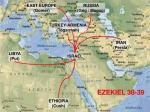
It important to note that there is a 10 Nation Confederation identified in Ezekiel 38, also in Daniel chapters 7 and 9 and again in Revelation chapter 17, as the armies of Armageddon are from the nations of:

Gog, also known as Rosh, (which is Russia), and Rosh, (also known as Russia), Magog, also known as a region in Russia, Gomer, identified as an Eastern European and Southern area of Russia, Put, now named Libya, Cush, also known as Ethiopia, Persia, also known as Iran, Meshech, also known as Modern Day Turkey, and Tubal, also known as an area in central Turkey.

It is clearly stated in Revelation 19, verses 13 through 21, and Revelation 20 verses 1 through 3, that Jesus and His armies appear in the heavens. He does not come to earth and engage in a physical battle. Jesus supernaturally defeats the forces of the antichrist and of the Beast, then an angel is sent to the earth to complete the work of binding Satan. There are some theologians and bible teachers who suggest the angel may have been Jesus, but if the Bible is nothing else, IT IS ACCURATE AND COMPLETE IN ITS WORDING. It was an angel doing the bidding of The Lord.

Next, there is mention of Sodom and Egypt as a symbolism or an allegory for Jerusalem. See this link for a probable explanation.

Finally, the stage is set to lead the people on earth, who bear the Mark of the Beast, to believe they have been triumphant in the defeat of the two Witnesses. But this is merely a method to amplify their dismay, surprise and terror as the Witnesses to come back to life. (End Commentary Break).

Verse 11. But after three and a half days, the breath of life from God came into them, and they stood on their feet; and great fear and panic fell on those who were watching them. Verse 12. And the two witnesses heard a loud voice from heaven saying to them, “Come up here.” Then they ascended into heaven in the cloud, and their enemies watched them. Verse 13. And in that [very] hour there was a great earthquake, and a tenth of the city fell and was destroyed; seven thousand people were killed in the earthquake, and the rest [who survived] were overcome with terror, and they glorified the God of heaven [as they recognized His awesome power].

Verse 14. The second woe is past; behold, the third woe is coming quickly.

The Seventh Trumpet – Christ’s Reign Foreseen

Verse 15. Then the seventh angel sounded [his trumpet]; and there were loud voices in heaven, saying, “The kingdom (dominion, rule) of the world has become the kingdom of our Lord and of His Christ; and He will reign forever and ever.” Verse 16. And the twenty-four elders, who sit on their thrones before God, fell face downward and worshiped God, verse 17, saying, “To You we give thanks, O Lord God Almighty [the Omnipotent, the Ruler of all], Who are and Who were, because You have taken Your great power and the sovereignty [which is rightly Yours] and have [now] begun to reign. Verse 18. And the nations (Gentiles) became enraged, and Your wrath and indignation came, and the time came for the dead to be judged, and [the time came] to reward Your bond-servants the prophets and the saints (God’s people) and those who fear Your name, the small and the great, and [the time came] to destroy the destroyers of the earth.”

Verse 19. And the temple of God which is in heaven was opened; and the ark of His covenant appeared in His temple, and there were flashes of lightning, loud rumblings and peals of thunder and an earthquake and a great hailstorm. (End of chapter 11).

One might wonder, since the elect of God have been removed from earth, and these events will not affect them, why God is revealing these judgements and those yet to come. Perhaps this can be a deterrent for those who read these words and heed them, before this days comes.

Next, we will read in Revelation chapters 12 through 14 a recapitulation of events past and events yet to come, but this is more akin to a ‘backstory’ of sorts, given with great detail and symbolisms explained.

At any rate, those with wisdom and insight should prepare while there is time.

Now to the main event:

THE BOOK OF THE REVELATION – Chapter 12 – The Woman Israel, The Dragon, The Male Child, The Angel Michael

Episode 14

 (These Episodes are meant to not only ask and answer the questions, “When, Why, How and What?”, but also the question, “AND, WHAT? DOES THIS MEAN TO ME”)

We will now get a deeper spiritual perspective of the unfolding events of the Last Days. Chapter 12 gives us a review and an overview from above, of what was, what is and what is to come.

 Please remember and try to understand that “while we look not at the things which are seen, but at the things which are not seen; for the things which are seen are temporal, but the things which are not seen are eternal.” This is the perspective of this Chapter twelve.

 (And, because of the extensive use of symbolism, metaphors and similes, I will comment more than usual, hopefully to give useful insights.)

The Woman, Israel

Revelation 12:1 And a great sign [warning of an ominous and frightening future event] appeared in heaven: a [footnote ‘a’] woman clothed with the sun, with the moon beneath her feet, and on her head a crown of twelve stars. Verse 2. She was with child (the Messiah) and she cried out, being in labor and in pain to give birth.

(Commentary Break: It can be quite obvious that the woman clothed with the sun is Israel. The sun refers to Jacob, (who was also called Israel), and the moon is open to many interpretations, but one is that it possibly refers to Rachel, who is  the younger daughter of Laban and wife of Jacob, and the mother of Joseph and Benjamin, who become two of the twelve tribes of Israel. The crown of 12 stars upon the woman’s head refers to the twelve tribes of Israel, originating with the sons of Jacob and Rachel.

 Verse 2 is, of course, referring to the birth of Jesus, which is very descriptive as “she, the woman Israel, cried out, being in labor and in pain to give birth”. This is but another important time marker of the beginning to the Tribulation Period, known as the BIRTH PAINS, as spoken of by Jesus in Matthew 24, verse 8.

 I am providing a reprint of Matthew 24 verses 3 through 14, below here, to give the full context of (#1), Jesus’ remarks on this matter, and (#2), to show the specific time of the beginning of the BIRTH PAINS segment of The Tribulation, which include the first 5 tribulations, broken at the time of the birth of Christ Jesus! The 6th Tribulation Seal is not mentioned here, as it is the beginning of Daniel’s 70th Week, also known as The Great Tribulation and the beginning of the FINAL SEVEN YEARS of the Tribulation!

Matthew 24:3, And as He was sitting on the Mount of Olives, the disciples came to Him privately, saying, “Tell us, when will these things happen, and what will be the sign of Your coming, and of the end of the age?” 

And Jesus answered and said to them, “See to it that no one misleads you. For many will come in My name, saying, ‘I am the Christ,’ and they will mislead many people. And you will be hearing of wars and rumors of wars, (Tribulation Seals 1 through 2 as described by Jesus in Matthew chapter 24 and Revelation chapter 6). See that you are not alarmed, for those things must take place, but that is not yet the end. For nation will rise against nation, and kingdom against kingdom,(Tribulation Seals  and there will be famines and earthquakes in various places. But all these things are merely the beginning of birth pains.

“Then they will hand you over to tribulation and kill you, and you will be hated by all nations because of My name (Third and fourth Tribulation Seals). And at that time many will fall away, and they will betray one another and hate one another. And many false prophets will rise up and mislead many people. And because lawlessness is increased, most people’s love will become cold. (The Fifth Tribulation Seal). But the one who endures to the end is the one who will be saved. This gospel of the kingdom shall be preached in the whole world as a testimony to all the nations, and then the end will come.”

To repeat: this is to give the full context of (#1), Jesus’ remarks on this matter, and (#2), to show the specific time of the beginning of the BIRTH PAINS segment of The Tribulation, which include the first 5 tribulations, broken at the time of the birth of Christ Jesus! The 6th Tribulation Seal is not mentioned here, as it is the beginning of Daniel’s 70th Week, also known as The Great Tribulation and the beginning of the FINAL SEVEN YEARS of the Tribulation! (End Commentary Break).

The Red Dragon, Satan

Verse 3. Then another sign [of warning] was seen in heaven: behold, a great fiery red dragon (Satan) with [footnote ‘b’] seven heads and ten horns, and on his heads were seven royal crowns (diadems). Verse 4. And his tail swept [across the sky] and dragged away a third of the stars of heaven and flung them to the earth. And the dragon stood in front of the woman who was about to give birth, so that when she gave birth he might devour her child.

(Commentary Break: The seven heads and ten horns correspond to the heads and horns of the beast in Revelation chapter 17, verse 3 through verse 17, and to those of the beast in Daniel chapter 7, verse 7 through verse 8 and following verses as well. Daniel’s description reveals that the ten horns are ten kings who temporarily reign with the Antichrist during the Great Tribulation. These ten kings, or nations, as found in Ezekiel 38, in Daniel chapter 7 and 9 and again in Revelation chapter 17, as the armies of Armageddon are from the nations of:

      1. Gog, also known as Rosh, (Russia) and,
      2. Rosh, (Russia),
      3. Magog, also known as (Russia),
      4. Gomer, also known as (Eastern Europe-Southern Russia),
      5. Put, also known as (Libya),
      6. Cush, also known as (Ethiopia),
      7. Persia, also known as (Iran),
      8. Meshech, also known as (Modern Day Turkey),
      9. Tubal, also known as (an area in central Turkey),
      10. Beth-Togarmah, also known as (Georgia, Chechnya, Turkey/Armenia).

 Next, John sees a sign in heaven: “An enormous red dragon with seven heads and ten horns and seven crowns on its heads. Its tail swept a third of the stars out of the sky and flung them to the earth.” John then relates that the dragon was hurled down to the earth and positively identifies it as “that ancient serpent called the devil, or Satan, who leads the whole world astray” (Revelation 12 verse 9). The dragon is not thrown to earth alone, however: “His angels were cast out with him” (verse 9). The angels that are ejected from heaven with Satan we associate with the “third of the stars” that the dragon’s tail swept from heaven to earth in verse 4. If the “stars” of Revelation 12 verse 4 are indeed a symbolic reference to Satan’s “angels” from verse 9, then what we have is a reference to the fall of a portion of the angels, (the heavenly hosts), who followed Satan in his rebellion. Two thirds of the angels remained loyal to God and are called the “holy angels” in Scripture (for example, Mark 8 verse 38); one third of the original angels joined Satan and are called “unclean spirits” or “demons” today (for example, Mark 9:25).

 This section closes with the obvious reference to Satan’s attempts to destroy the Christ Child. (see King Herod’s attempt to kill Jesus in Matthew 2, verses 1 through 18; and the crucifixion of Jesus in Matthew 27, and chapter 28, verses 1 through 15.) (End Commentary Break).

The Male Child, Christ

Verse 5. And she gave birth to a Son, a male Child, who is destined to rule (shepherd) all the nations with a rod of iron; and her Child was [footnote ‘c’] caught up to God and to His throne. Verse 6. Then the woman fled into the wilderness where she had a place prepared by God, so that she would be nourished there for a thousand two hundred and sixty days (forty-two months; which is three and one-half years).

(Commentary Break:  Jesus is born and “was caught up to God and to His throne” is telling us of the ascension of Christ to heaven following His death and resurrection.

 Verse 6 continues by telling us that the woman, (which is Israel), flees to the wilderness where she had a place to nourished for one thousand two hundred and sixty days, which is 42 months or 3 and one half years. This is a difficult passage, but the woman’s flight into the wilderness for one thousand two hundred and sixty days refers to the future time called the Great Tribulation. Twelve hundred, sixty days is 42 months (of 30 days each), which is the same as 3 and one half years. Halfway through the Tribulation period, the Beast (the Antichrist) will set an image of himself up in the temple that will be built in Jerusalem. This is the abomination that Jesus spoke of in Matthew 24 verse 15 and Mark 13 verse 14. When the Beast does this, he breaks the peace pact he had made with Israel, and the nation has to flee for safety, possibly to Petra (also see Matthew 24 and Daniel 9 verse 27). This escape of the Jews is pictured as the woman fleeing into the wilderness.

 More likely however, rather than a literal place, this is ‘a time of relative peace’ for Israel during the first half of the seven year Great Tribulation period, which begins at the breaking of the 6th Tribulation Seal and will last until the Sounding of the 6th Tribulation Trumpet.. This is the time that they make the peace treaty as referred to in Daniel 9 verse 27. (End Commentary Break).

The Angel, Michael

Verse 7. And war broke out in heaven, Michael [the archangel] and his angels waging war with the dragon. The dragon and his angels fought, verse 8, but they were not strong enough and did not prevail, and there was no longer a place found for them in heaven. Verse 9. And the great dragon was thrown down, the age-old serpent who is called the [footnote ‘d’] devil and Satan, he who continually deceives and seduces the entire inhabited world; he was thrown down to the earth, and his angels were thrown down with him. Verse 10. Then I heard a loud voice in heaven, saying, “Now the salvation, and the power, and the kingdom (dominion, reign) of our God, and the authority of His Christ have come; for the [footnote ‘e’] accuser of our [believing] brothers and sisters has been thrown down [at last], he who accuses them and keeps bringing charges [of sinful behavior] against them before our God day and night. Verse 11. And they overcame and conquered him because of the blood of the Lamb and because of the word of their testimony, for they did not love their life and renounce their faith even when faced with death. Verse 12. Therefore rejoice, O heavens and you who dwell in them [in the presence of God]. Woe to the earth and the sea, because the devil has come down to you in great wrath, knowing that he has only a short time [remaining]!”

Verse 13. And when the dragon saw that he was thrown down to the earth, he persecuted the woman who had given birth to the male Child. Verse 14. But the two wings of the great eagle were given to the woman, so that she could fly into the wilderness to her place, where she was nourished for a time and times and half a time (three and one-half years), away from the presence of the serpent (Satan). Verse 15. And the serpent hurled water like a river out of his mouth after the woman, so that he might cause her to be swept away with the flood. Verse 16. But the earth helped the woman, and the earth opened its mouth and swallowed up the river which the dragon had hurled out of his mouth. Verse 17. So the dragon was enraged with the woman, and he went off to wage war on the rest of her children (seed), those who keep and obey the commandments of God and have the testimony of Jesus [holding firmly to it and bearing witness to Him].

(Commentary Break: Although knowing these things, changes nothing in your life nor in your existence if you have already been Raptured from earth. Nor is there any way you can respond, or need to. But if you have not been saved by faith in Christ Jesus, and do not bear the protective Seal of the Lord, perhaps this is useful. Either way, for your information, Michael the Archangel is described in the Bible, in the books of Daniel, Jude, and Revelation, as a warrior angel who engages in spiritual combat. The word archangel means “angel of the highest rank.” Most angels in the Bible are portrayed as messengers, but Michael is described in all three books as contending, fighting, or standing against evil spirits and principalities (Daniel 10 verses 13 and 21; Jude 1 verses 9; and Revelation 12 verse 7). We do not have a full picture of any angel, and only two are named in the Bible. (Gabriel is the other). Scripture only gives us hints of their movements during human events, but it is safe to say that Michael the archangel is a powerful being (see Got Questions.Org).

 We see here that the Dragon and his angels are thrown down but they continue to deceive the whole world for a time. Knowing his time is short he persecutes Israel and the Christ with increasing ferocity, but is overcome and defeated by Christ Jesus and His armies, “by the Blood of the Lamb and because of the Word of their testimony”, and by the fact that they did not love their life and renounce their faith even when faced with death. This is our example and our response in the days leading up to these events.

 Once again we read that the woman (Israel) goes to the wilderness for safety, this time flown away on the two wings of an eagle, These two wings of an eagle are symbolic and used a metaphor of God’s strength and provision to a way of escape. We can see an example of this, which is found in Psalms 34. The Psalmist says, “The eyes of the LORD are toward the righteous, And His ears are toward their cry for help. The face of the LORD is against evildoers to eliminate the memory of them from the earth. The righteous cry out, and the LORD hears and rescues them from all their troubles. The LORD is near to the brokenhearted and saves those who are crushed in spirit. The afflictions of the righteous are many, But the LORD rescues him from them all.”

It is also interesting to see that ”the Serpent spews or hurls out water like a river out of his mouth after the woman, so that he might cause her to be swept away with the flood”. Three significant floods are mentioned in the Bible.

 The first instance of a flood is found in Genesis 6, verse 17, “Behold, I, even I am bringing the flood of water upon the earth, to destroy all flesh in which is the breath of life, from under heaven; everything that is on the earth shall perish”, in Noah’s day.

 The second instance is found in Daniel 9 verse 26, “Verse 26.  “Then after the sixty-two weeks the Messiah will be cut off and have nothing (see this article on “The Flood in Daniel 9” for details of the 62 weeks), and the people of the prince who is to come will destroy the city and the sanctuary. And its end will come with a flood (this flood is a flood of people, of armies); even to the end there will be war; desolations are determined.

The third instance is found in Matthew 24 verses 38 and 39, “For as in those days before the flood they were eating and drinking, marrying and giving in marriage, until the day that Noah entered the ark, and they did not understand until the flood came and took them all away; so will the coming of the Son of Man be.”

Each instance refers to a catastrophic judgement instituted by God to bring an end to wickedness and to bring His Chosen Elect to Himself, making and forging us, more into the image of Christ, through tribulation. This changes everything for the earth and the people upon the earth. Take heed. Be prepared.

 This section ends with the serpent becoming enraged with the woman, who is Israel, and goes on to make war with her children, (her seed), which are those who keep and obey the commandments of God and have the testimony of Jesus, holding firmly to it and bearing witness to Him. This is saying not only the Jew, but now includes those who have been grafted into the Olive Tree of Israel – all Christians who carry the Name of Christ.  (End Commentary Break).

There we have it. Chapter 12. An abbreviated but a complete overview of God’s Plan for His creation, from beginning to end, run in a ‘fast forward speed’ so to speak.

God placed this in His Word, not just for your reading entertainment nor just for information, but it is important for our preparation for what is coming and for our understanding as ministers and witnesses of His Plan to this lost world.

Next, in Revelation chapter 13, we learn about the Beast from the Sea and the Beast from the Earth.

Your Brother and Friend,

Mike Young

IS THERE A MENTAL ILLNESS PANDEMIC IN AMERICA?


WHAT IS DRIVING THIS SPREADING MENTAL ILLNESS PANDEMIC IN AMERICA?

Media headlines report daily on the insane criminal behavior spreading across America, penetrating all social spectrums. (see FBI and other recent crime reports here). I would ask why, and what is going on here?

I asked Chatgpt and Google Search this question, and they similarly reported:

The primary drivers of the mental health crisis and crime in America heading into 2026 are a combination of long-standing socioeconomic stressors and evolving modern pressures. While crime rates actually showed a significant decline in 2025—with homicides down roughly 21% from the previous year—experts remain concerned about underlying factors like economic instability and inadequate access to mental health care. [1, 2, 3, 4, 5]

Key Drivers of the Mental Health Crisis

 The United States is currently experiencing a mental health crisis affecting all ages, but particularly youth. [1]

  • Economic Distress: Personal finances are the top source of anxiety for Americans in 2026, with 59% reporting significant stress over their financial situation.
  • Technological Pressures: Rapid AI integration is causing job-related anxiety for 47% of adults, while the “always-on” nature of digital communication contributes to chronic burnout.
  • Systemic Gaps in Care: Despite record demand, over 122 million Americans live in areas with severe shortages of mental health providers. High costs and insurance barriers prevent nearly half of those with mental illness from receiving treatment.
  • Social Isolation: The erosion of in-person social connections, often replaced by algorithm-driven digital interactions, has increased feelings of loneliness and “dread,” especially among younger generations. [1, 2, 3, 4, 5, 6, 7]

Factors Influencing Crime Rates

 Although overall violent crime decreased in 2025, several structural issues remain highly correlated with criminal activity and community safety. [1, 2]

  • Socioeconomic Disadvantage: Poverty, unemployment, and housing instability remain the strongest predictors of crime. Communities with high rates of housing instability also report the highest mental health crisis rates (9%).
  • The “Handcuffs Instead of Help” Cycle: Jails have become de facto mental health facilities. Approximately two in five incarcerated individuals have a history of mental illness, often arrested for non-violent offenses related to untreated symptoms.
  • Substance Abuse: The ongoing opioid epidemic continues to fuel both public health and public safety challenges, though many states increased investments in 2025 to combat drug trafficking and expand recovery services.
  • Youth Vulnerability: Disruption in education and limited entry-level career pathways due to automation have increased the risk of youth involvement in crime. [1, 2, 3, 4, 5, 6, 7, 8, 9]

NPR, the Centers for Disease Control and Prevention, Pyschiatry.Org, the Bureau of Health Workforce, CSG Justice Center, and the Behavioral Health News all report on and blame the symptoms of and the sad to disastrous results of mental illness on people and society, but completely fail – or refuse – to address the cause: The absence of traditional standards of morality and ethics. (And by ‘traditional standards’, I am referring to the long-held and thoroughly tested Christian Biblical standards).

I am speaking of a “Traditional Christian ethos” which refers to a set of moral values, habits, and ways of living that developed from the teachings of Jesus Christ and the long history of the Christianity. While it varies across denominations, there are some widely shared core elements:

(From ChatGPT)

  1. Love as the Central Command

At the heart is the idea of love:

  • Love of God
  • Love of neighbor

This comes from teachings like “love your neighbor as yourself,” which shape how believers are expected to treat others—with compassion, forgiveness, and goodwill.

  1. Moral Responsibility & Sin

Traditional Christianity teaches that:

  • Humans are morally accountable for their actions
  • Sin (wrongdoing) separates people from God

Ethical life involves recognizing faults, seeking forgiveness, and striving to live rightly.

  1. Humility & Self-Denial

Humility is a major virtue:

  • Avoid pride and arrogance
  • Put others before yourself
  • Practice self-control and restraint

This often includes the idea of sacrificing short-term desires for higher moral or spiritual goals.

  1. Charity & Service

Helping others—especially the poor and vulnerable—is essential:

  • Giving (charity, almsgiving)
  • Acts of service
  • Hospitality

This reflects the belief that serving others is a way of serving God.

  1. Sanctity of Life & Human Dignity

Human life is seen as sacred because it is created by God:

  • Emphasis on the inherent worth of every person
  • Moral concern for issues involving life, suffering, and justice
  1. Family, Sexual Ethics, and Order

Traditionally:

  • Marriage is viewed as a lifelong union
  • Sexual activity is expected within marriage
  • Family is a central unit of moral and social life

Different denominations interpret these principles with varying strictness today.

  1. Faith, Obedience, and Authority

Believers are encouraged to:

  • Have faith in God
  • Follow divine commandments
  • Respect religious teachings and traditions (such as those found in the Bible)
  1. Redemption & Grace

A key idea is that people are not expected to be perfect:

  • Forgiveness is always possible
  • Salvation comes through God’s grace, not just moral effort
  1. Eternal Perspective

Life is viewed in light of eternity:

  • Earthly life is temporary
  • Actions have spiritual consequences
  • Hope in eternal life shapes moral priorities

Big Picture

Traditional Christian ethos emphasizes:

  • Love balanced with moral discipline
  • Personal responsibility alongside forgiveness
  • Individual conduct tied to a larger spiritual purpose

(From Google Search ai)

The phrase “traditional Christian ethos” generally refers to a set of core values and a “way of being” rooted in the teachings of Jesus and historical church doctrine. It’s less about a specific political stance and more about a foundational moral framework. [1, 2, 3, 4]

Key Pillars of the Christian Ethos

  • Sacrificial Love (Agape): The central idea is putting others before oneself. This isn’t just “liking” people, but a commitment to their well-being, even at a personal cost.
  • Human Dignity (Imago Dei): The belief that every person is created in the “image of God.” This creates an ethical baseline that every life—regardless of status, age, or ability—has inherent, infinite value.
  • The “Golden Rule”: A proactive commitment to treating others as you would want to be treated, which traditionally translates into charity, hospitality, and service to the marginalized.
  • Humility and Repentance: A recognition of human imperfection (sin) and the need for grace. This often manifests as a “spirit of meekness”—not weakness, but power under control.
  • Stewardship: The view that talents, time, and the earth itself are not “owned” but are gifts on loan from God, to be used responsibly for the common good. [1, 2, 3, 4, 5]

The Internal “Moral Compass”

In a traditional sense, this ethos emphasizes virtue over autonomy. While modern culture often prioritizes “living your truth,” the Christian ethos prioritizes aligning your life with a higher, objective Truth through discipline and faith.

Would you like to explore how these values contrast with modern secular ethics, or perhaps how they apply to specific social issues?

In a June 2006 speech at the Call to Renewal conference, then president Barak Obama said, “Whatever we once were, we are no longer just a Christian nation; we are also a Jewish nation, a Muslim nation, a Buddhist nation, and a Hindu nation, and a nation of nonbelievers.”

He did not declare that Christianity was dead in America but that America would no longer be known solely as a Christian Nation – as she had long been known. It was at that defining moment that Barak Obama gleefully announced that the syncretizing (reconciliation or fusion of differing systems of belief, as in philosophy or religion, especially when success is partial or the result is heterogeneous) of America was now complete.

And the American psyche was shattered. As described in Isaiah 5:20, Good became evil and evil became what is good. Read what the the Bible says is the outcome of this defiance of God:

Isaiah 5:20, 
Woe (judgment is coming) to those who call evil good, and good evil;
Who substitute darkness for light and light for darkness;
Who substitute bitter for sweet and sweet for bitter!
Verse 21.
Woe (judgment is coming) to those who are wise in their own eyes
And clever and shrewd in their own sight!
Verse 22. 
Woe (judgment is coming) to those who are heroes at drinking wine
And men of strength in mixing intoxicating drinks,
Verse 23. 
Who justify the wicked and acquit the guilty for a bribe,
And take away the rights of those who are in the right!

Verse 24. 
Therefore, as the tongue of fire consumes the stubble [from straw]
And the dry grass collapses into the flame,
So their root will become like rot and their blossom blow away like fine dust;
Because they have rejected the law of the Lord of hosts
And despised and discarded the word of the Holy One of Israel.
Verse 25. 
Therefore the anger of the Lord has burned against His people,
And He has stretched out His hand against them and has struck them down.
And the mountains trembled, and their dead bodies lay like rubbish in the middle of the streets.
In spite of all this God’s anger is not turned away,
But His hand is still stretched out [in judgment].

Verse 26. 
He will lift up a flag to [call] the distant nations [to bring His judgment on Judah],
And will whistle for them from the ends of the earth;
And indeed, they will come with great speed swiftly.
Verse 27. 
No one among them is weary or stumbles,
No one slumbers or sleeps;
Nor is the belt at their waist undone [as if unprepared for action],
Nor is the strap of their sandal broken.
Verse 28. 
Their arrows are sharp and all their bows are strung and bent;
Their horses’ hoofs seem like flint and their chariot wheels like a whirlwind.
Verse 29. 
Their roaring is like a lioness, they roar like young lions;
They growl and seize their prey
And carry it off and there is no one to save it.
Verse 30. 
And in that day they will roar against them like the roaring of the sea.
And if one looks to the land, in fact, there is darkness and distress;
Even the light will be darkened by its clouds.

And finally, here is a prime example of allowing false gods taint and influence our belief in and obedience of the One True Living God:

In the Bible, King Nebuchadnezzar and King Saul are the most prominent examples of leaders who experienced significant mental instability or “madness” following their drift from God.

  1. King Nebuchadnezzar: The King Who Became a Beast [1, 2]

Nebuchadnezzar II of Babylon is the clearest example of a powerful leader being struck with a specific form of insanity as a direct consequence of pride and turning away from God’s authority. [1]

  • The Drift: Despite witnessing God’s power through Daniel, Nebuchadnezzar’s pride grew until he boasted, “Is not this the great Babylon I have built… by my mighty power and for the glory of my majesty?”.
  • The Insanity: Immediately, a voice from heaven declared his authority was taken. He was driven from human society and lived like a wild animal for seven years (often referred to as “seven times”).
  • The Condition: Biblical descriptions say he ate grass like an ox, his hair grew like eagles’ feathers, and his nails became like birds’ claws. Modern scholars sometimes link this to boanthropy, a rare psychological disorder where a person believes they are a bovine.
  • Restoration: His sanity was restored only when he humbled himself and acknowledged that the “Most High” rules over all earthly kingdoms. [1, 2, 3, 4, 5, 6]
  1. King Saul: The Tormented First King of Israel [King Nebuchadnezzar]

Saul, the first king of Israel, suffered from a gradual mental decline characterized by paranoia and deep depression after he repeatedly disobeyed God’s commands. [1]

  • The Drift: Saul drifted from God through several acts of direct disobedience, including offering an unauthorized sacrifice and failing to follow divine instructions during battle.
  • The Insanity: The Bible states that the “Spirit of the Lord departed from Saul,” and he was subsequently tormented by an “evil spirit”.
  • The Symptoms: Saul experienced extreme paranoia—convinced that David was a threat to his throne—which led to violent outbursts, including multiple attempts to kill David with a javelin. Modern psychiatric analyses often suggest his behavior fits the profile of Bipolar I disorder or severe clinical depression with psychotic features.
  • The Outcome: Unlike Nebuchadnezzar, Saul never fully repented or regained his mental and spiritual peace, ultimately leading to his tragic death in battle. [1, 2, 3, 4, 5, 6, 7, 8]

Modern psychiatric analyses often interpret these biblical accounts as early descriptions of severe mental health conditions, using the “medical file” of scripture to apply contemporary diagnostic criteria.

  1. King Nebuchadnezzar: Boanthropy and Clinical Lycanthropy [1]

The transformation of Nebuchadnezzar into an animal-like state is frequently cited as a case of Boanthropy, a rare form of monomania or clinical zoanthropy where the sufferer believes they are a bovine (cow or ox). [1, 2]

  • Clinical Lycanthropy: Modern psychiatrists often classify boanthropy under the broader umbrella of clinical lycanthropy—a rare subtype of schizophrenia or a psychotic manifestation of a mood disorder where an individual believes they are transforming into an animal.
  • Alternative Medical Theories: Some researchers suggest the symptoms could also align with Porphyria, a group of metabolic disorders that can cause acute neurological symptoms, including hallucinations, anxiety, and paranoia. Others have proposed paralytic dementia caused by late-stage syphilis, which can lead to severe behavioral changes. [1, 2, 3, 4]
  1. King Saul: Bipolar I and Combat Trauma [1]

Saul’s erratic behavior, shifting between deep affection for David and murderous rages, is often viewed through the lens of mood and personality disorders. [1]

  • Bipolar I Disorder: Many psychiatric studies conclude that Bipolar I Disorder is the most likely diagnosis. Saul exhibited clear cycles: manic-like “hyperactive and aggressive” interpersonal reactions followed by periods of “morbid melancholy” and withdrawal.
  • Post-Traumatic Stress Disorder (PTSD): Recent interpretations emphasize the “combat trauma” Saul would have experienced as a lifelong warrior-king. His paranoia and violent outbursts are analyzed as symptoms of chronic anxiety or PTSD, exacerbated by the extreme moral stress of ancient warfare.
  • Neurological Theories: Some scholars speculate that Saul may have suffered from epileptic-like fits or even a brain tumor. The description of him falling down and lying naked for a day and night (1 Samuel 19:24) is sometimes interpreted as a “postictal state”—the recovery period following a major seizure. [1, 2, 3, 4, 5, 6, 7]
  1. The Theological vs. Medical Lens

Modern scholarship also notes a “two-way street” in how these stories are interpreted. [1]

  • Ancient Context: In the ancient Near East, behaviors like Saul’s were sometimes diagnosed as ghost-induced illnesses or “evil winds,” often treated with musical therapy.
  • Socio-Cultural Factors: Some argue that medicalizing these accounts removes the cultural and ethical nuances of the original text. For example, Saul’s “paranoia” toward David could be viewed as a rational response to a genuine political threat (a successor already anointed to take his throne) rather than a purely clinical delusion. [1, 2, 3, 4]

(Sadly and alarmingly, we are seeing these same afflictions and maladies in our soceity today – and they are a growing problem).

There is truly only way back from this abyss and that is by way of The One True and Living God. Turn to (or turn back to) Jesus and obediently put yourself under His care. Follow Him, obey Him, serve Him and live.

Your Brother and Friend in Christ Jesus,

Mike Young.

God has not given you a spirit of fear, but of power and of love and of a sound mind”

2 Timothy 1:7.


The Second Book of Peter, Chapter 1

INTRODUCTION

I have said in many of these Bible studies that I will use “commentary breaks” for commenting or to highlight certain principles and to make certain verses clear for context and intent. All of this is not meant to be as a deep theological study as found in many excellent bible commentaries or helps such as the Blue Letter Bible, BibleHub.com, GotQuestions.Org, Strong’s Concordance or Enduring Word, to name just a few. I will draw on these aforenamed resources for their expertise.

But my primary intention here is to focus on the values, importance and urgency of the application of these scriptures in our daily lives. Not just as a matter for show, but to engage and to release this remarkable power of the Gospel and the authorities given us by our Lord Jesus Christ into the world through our own lives and bodies. (Please know that I am aware of how this might sound to some, but to have all knowledge and wisdom that is unused and unapplied renders it as just idle information. It is as Matthew reminds us, “You are the salt of the earth, but if salt has lost its taste, how shall its saltiness be restored? It is no longer good for anything except to be thrown out and trampled under people’s feet.”

I pray that this Book of the Scriptures, when applied through your life, will accomplish the very things God intended – and nothing will ever be the same.

The Book of Second Peter, Chapter 1

Growth in Christian Virtue, Eyewitness

The Book of First Peter was instrumental in laying out the foundations of the corporate Church. The Book of Second Peter is instrumental in strengthening and preparing the individual Christian to become all that God intended for, in and through His Church.

Please, dear brothers and sisters in Christ, please do not forget that we have learned that although you and I were once not a people, but we are now a people; we are living stones being built up as a spiritual house as a holy priesthood to offer sacrifices that are acceptable to God through Jesus Christ.

You and I, we, are a chosen people, a royal priesthood, a holy nation, a people for God’s own possession, so that you may proclaim the excellencies of Him who has called you out of darkness into His marvelous light; for you once were not a people, but now you are the people of God; you had not received mercy, but now you have received mercy.

This Book is written to you, and for you. So let’s act as His Chosen, as His Royal Priesthood and offer our lives up as that good and acceptable sacrifice to God through Jesus Christ. (To God, you are somebody – you are His.)

Growth in Christian Virtue

2 Peter 1:1, Simon Peter, a bond-servant and apostle of Jesus Christ,

To those who have received a faith of the same kind as ours, by the righteousness of our God and Savior, Jesus Christ:

(Commentary Break): Peter, the impulsive, the brave, the fearful, the chosen. If you had known Peter before his transformation through Christ by way of the transforming power of the Holy Spirit you might have a hard time recognizing him now. Peter whose faith has been forged by the fires of the sufferings of Christ is relating to his brothers in the bonds of this faith. But, if all we do is learn about Peter, we have missed the main point: This is the same faith God is both offering and to which God is calling you. It is this kind of faith that will completely transform you and your life from that of a bystander into a fully devoted disciple of Christ and a fully engaged warrior of the Cross. Once the process of your transformation is begun, people may well ask of you also, “is this the same person I once knew?” This process as taught by Jesus, by which one arrives at or obtains this “faith of the same as ours” is described and taught by Jesus Himself in Matthew 5:1-14. (Please click here and read before proceeding, to The Sermon on The Mount). (End Commentary Break).

Verse 2. Grace and peace be multiplied to you in the knowledge of God and of Jesus our Lord, verse 3, for His divine power has granted to us everything pertaining to life and godliness, through the true knowledge of Him who called us by His own glory and excellence.

(Commentary Break): Please read this again: “For His divine power has granted to us…”. We are not alone; we are not helpless and we are not bystanders. We are, if we so choose, an active participant in a partnership with God, through our advocate Jesus Christ. He has empowered us to accomplish all He has decreed through the power and working of the Holy Spirit which pertains to life, godliness and the true knowledge of Him.

The true knowledge of Him is not just an acknowledgment or ‘head knowledge’ of Him, i.e. it is not just a cognitive matter. This knowledge, (epignōsis) of Him denotes an experiential, relational, and transforming knowledge. It is more than data acquisition; it embraces recognition, acknowledgment, and personal appropriation of truth revealed by God. In the New Testament it is always anchored in divine initiative and always bears moral and spiritual consequences. It is a deep penetrating knowing that originates only in the regenerate spirit of a believer, which wells up through the emotions, the will and the mind, instructing, creating, causing and enabling us by way of His own glory and excellence. This is not a metaphor nor is it a simile. It is the living outcome of the truth spoken into and through the fully devoted and engaged disciple of Christ giving us all things pertaining to life and godliness. (End Commentary Break).

 Verse 4. Through these He has granted to us His precious and magnificent promises, so that by them you may become partakers of the divine nature, having escaped the corruption that is in the world on account of lust.

(Commentary Break): It is estimated, by several sources that the Bible contains somewhere between 7,000 and 8,000 promises in the Bible (depending on how promises are counted and defined) with about 5,000 attributed specifically to God. Many religious people, including Christians, will mistakenly “claim” the promises of God for themselves, as if to say they can “name it and claim it” for their own exclusive use or benefit. But claiming a promise of God really should mean that one is trusting that God is faithful to His Word; that we can pray bases on what God’s Word says; and that we can properly apply scriptures in context. It is less about what will happen and more about relying on God’s character. In this case, however, Peter is telling us that God’s magnificent promises make it possible for us to partake in His divine nature.

(Taken from GotQuestions.Org) There are several notable points in 2 Peter 1:3–4. First, God’s power has granted us the “very great promises” concerning our salvation. Second, it is through those promises that we are made “partakers of the divine nature.” Third, being partakers of the divine nature involves escaping the world’s decay and rising above sinful desires. Simply put, when we are saved, we receive a new nature, by which we do not perish with the world.

Human “nature” in the Bible is what makes us “us.” A man’s nature is the sum total of qualities that make him who he is. It is a person’s inherent character and that which constitutes his or her individuality. According to the Bible, every human being is born with Adam’s nature, which is sinful; we have a natural bent toward pleasing self (Romans 5:12; 7:14). Our natural selves cannot please God (Romans 8:8). Our sin nature keeps us from fellowship with God, keeps us in bondage to sin, and leads eventually to spiritual death (Romans 6:16, 23; 7:14; 2 Peter 2:19). We cannot free ourselves from sin because we cannot change our natures, just as a tiger cannot change its stripes.

When we believe on the Lord Jesus Christ, we are saved (Acts 16:31), and we undergo a radical spiritual transformation. This is what Peter means when he says we are made partakers of the divine nature. We are made new creations in Christ (2 Corinthians 5:17). We are born again (John 3:3). We died, and now our lives are “hidden with Christ in God” (Colossians 3:3). We are “in Christ” (Romans 8:1).

As partakers of the divine nature, believers do not have to follow the sin nature any more. At salvation, our old nature is defeated, and we receive a new, divine nature that desires the things of God (2 Corinthians 5:17). We love what He loves and hate what He hates (Galatians 5:22; 1 John 4:4).

As partakers of the divine nature, believers are no longer enslaved to the passions and sins of the flesh (Romans 6:6, 14). We have power from on high to conquer every temptation that comes against us (1 Corinthians 10:13).

As partakers of the divine nature, believers are made part of the family of God (John 1:12), and this results in a changed life. First John 3:9 says, “No one who is born of God will continue to sin, because God’s seed remains in them; they cannot go on sinning, because they have been born of God.” By giving us His nature, God makes us His sons and daughters and conforms us to the image of His Son (Romans 8:29; 2 Corinthians 6:18).

As partakers of the divine nature, believers have the Holy Spirit indwelling them. God declares that we are “more than conquerors” because of the power of the Holy Spirit within our hearts (Romans 8:37). Our Comforter/Advocate/counselor is with us wherever we go (John 14:16). We will never be forsaken (Hebrews 13:5).

God is faithful to keep His “great and precious promises,” and we praise Him for our Savior and Redeemer, Jesus Christ; for the gift of the Holy Spirit; and for the everlasting life we enjoy as partakers of His divine nature. (End excerpt).

(End Commentary Break).

Verse 5. Now for this very reason also, applying all diligence, in your faith supply moral excellence, and in your moral excellence, knowledge, verse 6, and in your knowledge, self-control, and in your self-control, perseverance, and in your perseverance, godliness, verse 7, and in your godliness, brotherly kindness, and in your brotherly kindness, love. Verse 8. For if these qualities are yours and are increasing, they do not make you useless nor unproductive in the true knowledge of our Lord Jesus Christ.

(Commentary Break): Herein lies the intersection of the human and the divine. Here is where we cease to be idle bystanders, recipients alone waiting for God to change us without our participation, and become partakers, accomplices in His transformative works. This is important for all believers to understand. God begins His transforming work within the believer – in his or her regenerated spirit. This transforming power is infused in our core being, or spirit (pneuma), and wells up and spreads first through our soul (the psyche which is our mind, will and emotions), then having influenced how we feel, and how we think and our will to act, this transformation moves to the cognitive mind and body (soma) and we live out and live in and by His divine nature. This is truly a miracle of unparalleled proportions. As it is said in 2 Corinthians 5:17, you will have been made into a new creation, “Therefore if anyone is in Christ, this person is a new creation; the old things passed away; behold, new things have come”, and again in 1 Thessalonians 5:23, “Now may the God of peace Himself sanctify you entirely; and may your spirit and soul and body be kept complete, without blame at the coming of our Lord Jesus Christ”.   (End Commentary Break).

Verse 9. For the one who lacks these qualities is blind or short-sighted, having forgotten his purification from his former sins.

(Commentary Break): Spiritual nearsightedness can lead to a separation from God, making it difficult to recognize His presence and respond to His call. This condition may also result in poor judgment, self-deception, and a lack of personal growth in faith.

Bible Hub

Consequences of Spiritual Nearsightedness

Spiritual nearsightedness, often referred to as spiritual blindness, can have significant negative effects on an individual’s relationship with God and their overall spiritual well-being. Below are the key consequences:

Separation from God

      • Difficulty Recognizing God’s Presence: Individuals may struggle to feel or see God’s influence in their lives.
      • Inability to Respond to God’s Call: This separation can lead to a lack of awareness of spiritual guidance and purpose.

Poor Judgment

      • Misleading Beliefs: Without clear spiritual vision, individuals may fall for false teachings or ideologies that seem appealing but are ultimately harmful.
      • Inability to Discern Truth: This can result in making unwise choices that lead to regrets.

Lack of Personal Growth

      • Stagnation in Faith: Spiritual blindness can prevent individuals from experiencing growth or maturity in their faith.
      • Missed Opportunities for Fulfillment: Without spiritual insight, individuals may miss out on the deeper blessings and wisdom that come from a relationship with God.

Self-Deception

      • False Sense of Security: People may believe they are on the right path spiritually, even when their actions contradict their beliefs.
      • Hypocrisy: This can lead to judgmental attitudes and a lack of empathy towards others.

Impact on Relationships

      • Strained Interpersonal Connections: Spiritual blindness can manifest as judgmental behavior or a lack of understanding, harming relationships with others.
      • Community Effects: The consequences of one person’s spiritual blindness can extend to families and communities, leading to broader issues.

Addressing spiritual nearsightedness is crucial for restoring clarity and connection with God, allowing for a more fulfilling spiritual life. (End Commentary Break).

Verse 10. Therefore, brothers and sisters, be all the more diligent to make certain about His calling and choice of you; for as long as you practice these things, you will never stumble;

(Commentary Break): Be all the more diligent to make certain about His calling and choice of you”, implies active effort and diligence. The “calling” refers to God’s invitation to salvation. This reflects the biblical tension between divine sovereignty and human responsibility. The assurance of one’s calling and election is not passive but requires active participation in faith and obedience. And, “these things” refer to the qualities listed earlier in the chapter, such as faith, virtue, knowledge, self-control, perseverance, godliness, brotherly kindness, and love. Practicing these virtues is a sign of spiritual growth and maturity. The emphasis on practice suggests that faith is demonstrated through action, aligning with James 2:17, which states that “faith by itself, if it does not have works, is dead.” This concept is echoed in Philippians 2:12, where believers are urged to “work out your own salvation with fear and trembling.” (End Commentary Break).

verse 11, for in this way the entrance into the eternal kingdom of our Lord and Savior Jesus Christ will be abundantly supplied to you.

(Commentary Break): There is much that can be said about verse 11. First, the phrase, “the kingdom (of our Lord and Savior Jesus Christ): Such a succinct and simple sounding statement by Peter is in reality a profound oracle of God. It is the portal to the ‘Other Side’ – from the natural world into the realm where all things originate. It is the ‘Basileia Ouranos’, the Kingdom of Heaven.

 Also see Matthew 5:1, When Jesus saw the crowds, He went up on the mountain; and after He sat down, His disciples came to Him. Verse 2. He opened His mouth and began to teach them, saying, verse 3, “Blessed are the poor in spirit, for theirs is the kingdom of heaven”.

 The kingdom of heaven, from Strong’s #939, conveys the notion of a foundation of power;

1) royal power, kingship, dominion, rule

1a) not to be confused with an actual kingdom but rather the right or authority to rule over a kingdom

1b) of the royal power of Jesus as the triumphant Messiah

1c) of the royal power and dignity conferred on Christians in the Messiah’s kingdom.

(Note:  This comes from a root word baino, “to walk”, AV-foot (sole of);

1) a stepping, walking

2) that with which one steps, the foot

This reminds us of the tremendous proclamation in Joshua 1:3 “Every place on which the sole of your foot treads, I have given it to you, just as I spoke to Moses.” And this is the outcome of the promise and the living reality of “His precious and magnificent promises, so that by them you may become partakers of the divine nature”.

We are becoming and, in a real sense we have already become, heirs of the Kingdom of God, the place of the foundation of all power kingship, dominion and rule, not to be confused with an actual kingdom but rather the right or authority to rule over a kingdom, God’s Kingdom.  It is of the royal power of Jesus as the triumphant Messiah.  It is the Place of the royal power and dignity conferred on Christians in the Messiah’s kingdom.  (From Strong’s concordance, definitions and translations of the Greek and Hebrew languages) Also see Ephesians 1:4, But God, being rich in mercy, because of His great love with which He loved us, even when we were dead in our transgressions, made us alive together with Christ and raised us up with Him, and seated us with Him in the heavenly places in Christ Jesus, (End Commentary Break).

Verse 12. Therefore, I will always be ready to remind you of these things, even though you already know them and have been established in the truth which is present with you. Verse 13. I consider it right, as long as I am in this earthly dwelling, to stir you up by way of reminder, verse 14, knowing that the laying aside of my earthly dwelling is imminent, as also our Lord Jesus Christ has made clear to me. Verse 15. And I will also be diligent that at any time after my departure you will be able to call these things to mind.

Eyewitnesses

Verse 16. For we did not follow cleverly devised tales when we made known to you the power and coming of our Lord Jesus Christ, but we were eyewitnesses of His majesty.

Verse 17. For when He received honor and glory from God the Father, such a declaration as this was made to Him by the Majestic Glory: “This is My beloved Son with whom I am well pleased”— verse 18, and we ourselves heard this declaration made from heaven when we were with Him on the holy mountain.

(Commentary Break): We are not hearing a second-hand news report here, which could be subject to interpretation and error. This is Peter’s first-hand account. It is trustworthy. (End Commentary Break).

Verse 19. And so we have the prophetic word made more sure, to which you do well to pay attention as to a lamp shining in a dark place, until the day dawns and the morning star arises in your hearts. Verse 20. But know this first of all, that no prophecy of Scripture becomes a matter of someone’s own interpretation, verse 21. for no prophecy was ever made by an act of human will, but men moved by the Holy Spirit spoke from God.

(Commentary Break): The Bible, The Word of God, as testified to by the Apostle Peter is prophetic, creative, causative and instructional by its very nature and is never a matter of someone’s own interpretation which is all too often the case in these Last Days. The Word of God moved certain men by the Holy Spirit, and they spoke from God. So, if you hear someone say, in relation to events or situations, “Thus sayeth the Lord”, turn away from the and turn to the Word. The events that surround us may give us a glimpse of what has already been decreed by God, and there is not and will never be any new revelation. Beware. (see Matthew 24:4-5). (End Commentary Break).

(End of the Book of Second Peter chapter 1).

We are not to build nests or dig holes and call them the Church; we are not to ‘settle in and spend our days looking skyward, just waiting for His return, planning and enjoying our ‘christian lifestyles’. No. We are the Church – organic, militant and on the move – finishing the commission and commands of God through Christ; reclaiming His Ground and His Children from the enemy. We know that the gates of hell cannot prevail against us, (see Matthew 16:18, which means that the power of evil and death and the realm of the dead will not overcome the church of Jesus Christ. It assures us as believers that despite challenges, we will ultimately have victory over Satan, death through faith in Christ.

So we, by faith, mount the attack and hold our ground.

Your Brother and Friend,

Mike Young

(Next: The Book of Second Peter, chapter 2, The Appearance of False Prophets.

(Please bookmark this page or subscribe for future episodes).

The Book of First Peter, Chapter 5, Serve God Willingly


The Book of First Peter, Chapter 5

Serve God Willingly

It is unlikely that Peter has any idea that the Church, over the coming centuries, would circle the globe and influence every aspect of life where it was introduced. But Peter’s teachings laid much of the framework for the establishment of the Church, and chapter five moves us from the calling of the individual to the rudiments for the establishment of the corporate Church.

But make no mistake, Satan, the old dragon, seeing that his end is in sight, begins to rage in his death throes, creating deceptions, deploying false christs, wolves in sheep’s clothing, wars and rumors of war, an increase in famines, earthquakes. He will cause people to become lovers of self, lovers of money, boastful, arrogant, slanderers, disobedient to parents, ungrateful, unholy, unloving, irreconcilable, malicious gossips, without self-control, brutal, haters of good, treacherous, reckless, conceited, lovers of pleasure rather than lovers of God, holding to a form of godliness, although they have denied its power.

Jesus had warned these days would come (see Matthew 24) and Peter reminds us (chapter 4 verse 7) “the end of all things is near; therefore, be of sound judgment and sober spirit for the purpose of prayer:”

Serve God Willingly

1 Peter 5:1, Therefore, I urge elders among you, as your fellow elder and a witness of the sufferings of Christ, and one who is also a fellow partaker of the glory that is to be revealed: verse 2, shepherd the flock of God among you, exercising oversight, not under compulsion but voluntarily, according to the will of God; and not with greed but with eagerness; verse 3, nor yet as domineering over those assigned to your care, but by proving to be examples to the flock. Verse 4. And when the Chief Shepherd appears, you will receive the unfading crown of glory. Verse 5. You younger men, likewise, be subject to your elders; and all of you, clothe yourselves with humility toward one another, because GOD IS OPPOSED TO THE PROUD, BUT HE GIVES GRACE TO THE HUMBLE.

(Commentary Break): As Peter began, I reiterate, “I urge elders among you, as your fellow elder; shepherd the flock of God among you, (1) exercising oversight, not under compulsion (anagkastós – The adverb expresses an action carried out from external pressure, constraint, or a sense of unavoidable obligation. It portrays conduct that is reluctant rather than voluntary, driven by necessity rather than willing desire;

(2) “according to the will of God” is a phrase translated by some versions; however, the King James and the New King James omit the phrase, “according to the will of God”; and the English Standard version says “as God would have you”. This verse actually uses only the word “theos”, (God), and could read “as God would have you to do”. In other words, you hearers are admonished to apply the full context of that follows in the rest of verse 1 and the context of verses two and three, as such,

(2a), “not with greed but with eagerness;

(2b), nor yet as domineering over those assigned to your care, but by proving to be examples to the flock.

This is meant to be a safeguard against arrogance, self-importance, and spiritual abuse by pastors and elders, to insure humility and right cooperation among in the congregation of believers and effective unity in the Church which brings honor to God, (End Commentary Break).

Verse 6. Therefore, humble yourselves under the mighty hand of God, so that He may exalt you at the proper time, verse 7, having cast all your anxiety on Him, because He cares about you.

(Commentary Break): All of us in the Church, are reminded that God alone is the Shepherd and Head of the Church. All of us are His servants with a role to be fulfilled. And there are many of those in the Church who will be called upon (exalted) to serve at the proper time. So, we are to “cast all our anxiety on Him” and live in humble unity among ourselves as we serve Him. (End Commentary Break).

Verse 8. Be of sober spirit, be on the alert. Your adversary, the devil, prowls around like a roaring lion, seeking someone to devour. Verse 9. So resist him, firm in your faith, knowing that the same experiences of suffering are being accomplished by your brothers and sisters who are in the world. Verse 10. After you have suffered for a little while, the God of all grace, who called you to His eternal glory in Christ, will Himself perfect, confirm, strengthen, and establish you. Verse 11. To Him be dominion forever and ever. Amen.

(Commentary Break): Peter’s letter is to the Church, although he also makes direct remarks to the elders. Now Peter’s remarks take on a serious if not ominous tone, as he turns his attention to the whole church warning us to “be of sober spirit”, or to be sober minded, for the devil is prowling like lion, seeking someone to devour. This metaphor should be taken as literally as possible. Like a traveler making his way through the forests and jungles, ‘diablo’ is always on the hunt so you must always be on the alert. Drop your guard for a minute and you and perhaps even your companions and loved ones may find yourselves eaten alive – devoured – by the schemes of the evil one. Think on this: all you have committed to, all you have prayed for, all you have sacrificed for, eaten away in one careless moment. So, endure, and after you have suffered for a while, which is your necessary preparation, the God of all grace, who called you to His eternal glory in Christ, will Himself perfect, confirm, strengthen, and establish you. (End Commentary Break).

Verse 12. Through Silvanus, our faithful brother (for so I regard him), I have written to you briefly, exhorting and testifying that this is the true grace of God. Stand firm in it! Verse 13. She (the Church) who is in Babylon, chosen together with you, sends you greetings, and so does my son, Mark. Verse 14. Greet one another with a kiss of love.

Peace be to you all who are in Christ. (End First Peter, chapter 5).

Through this entire epistle, Peter gives instructions on holy living for those suffering persecution. First Peter teaches that God can use difficulties to strengthen Christians and their witness. Knowing this can bring hope. We read First Peter to discover how faith, refined by suffering, can help us see the Lord more clearly. It gives valuable advice for holding firm in difficult times. The apostle Peter saw that increasing hardship and persecution had scattered believers, which spread their witness but caused some to wonder if God had abandoned them. Peter wrote to encourage them, offering them hope and meaning in the midst of their suffering.

Now dear friends in Christ, let’s remember that although this book was initially written to Gentile and Jewish believers in Pontus, Galatia, Cappadocia, Western Asia Minor and Bithynia, it was meant for all believers throughout all the ages. These words are for you and for me, today. This is not ‘about the Bible’ nor is it ‘about our standing in Christ’. Peter is exhorting and testifying that this is the true grace of God today. Let’s stand firm in it!

Your Brother and Friend,

Mike Young

PREVIOUS: The Book of First Peter, Chapter 4, Be of the Same Purpose, Share the Sufferings of Christ.

(Please subscribe or bookmark this page for future episodes).

The Book of First Peter, Chapter 4. Be of the Same Purpose, Share the Sufferings of Christ


The Book of First Peter, Chapter 4

Be of the Same Purpose, Share the Sufferings of Christ

Peter offers what could be considered one of the great challenges for the Christian – deliberately follow Christ and likewise endure His sufferings joyfully so that you may cease from sin. (Please note that the commentaries on this chapter are long and confrontational and some might even say controversial and unconventional.)

Be of the Same Purpose

1 Peter 4:1, Therefore, since Christ has suffered in the flesh, arm yourselves also with the same purpose, because the one who has suffered in the flesh has ceased from sin, verse 2, so as to live the rest of the time in the flesh no longer for human lusts, but for the will of God. Verse 3. For the time already past is sufficient for you to have carried out the desire of the Gentiles, having pursued a course of indecent behavior, lusts, drunkenness, carousing, drinking parties, and wanton idolatries.

(Commentary Break): Perhaps you are like me in that when I look back over my life, I am sorrowful for the trail of sin in my life, and from that perspective, I do not feel qualified to call myself a Christian. But thanks to God for His wonderful grace and such a great salvation. I am learning that when I embrace the same purpose of Christ and His sufferings that I begin to find a relief from sin.

This is a hidden truth of the human psyche – you cannot think narrowly upon one thing that brings you intense suffering passion and pain and yet do another. Scriptures are admonishing us to willfully “arm ourselves with the same purpose as Christ”, because engaging in such a worthy purpose that brings this vexing cleansing pain, the flesh will cease from sin – so we may live the rest of the time in the flesh not for human lusts, but for the will of God. There a few teachings such as this one. It is an unvarnished truth and a dividing line between “knowing about God” and truly knowing Him. It is the difference between calling oneself a Christian and truly being a follower, a disciple a brother and joint-heir with Him.

Those who think they can ‘comfortably serve’ the purposes of Christ will only find the disappointing plague of sin haunting them along the way. Rid yourself of this plague.

(The law of the Spirit of life in Christ Jesus has set you free from the law of sin and of death; for the mind set on the Spirit is life and peace.) (End Commentary Break).

Verse 4. In [connection with] all this, they [the unbelievers] are resentful and surprised that you do not [think like them, value their values and] run [hand in hand] with them into the same excesses of dissipation and immoral freedom, and they criticize and abuse and ridicule you and make fun of your values; verse 5, but they will give an account to Him who is ready to judge the living and the dead. Verse 6. For the gospel has for this purpose been preached even to those who are dead, that though they are judged in the flesh as people, they may live in the spirit according to the will of God.

(Commentary Break): Another effect of “arming oneself with the purpose and the suffering of Christ” is that those with whom you have run in a life of “indecent behavior, lusts, drunkenness, carousing, drinking parties, and wanton idolatries”, will begin to ridicule you and will separate from you and you from them. Do not be discouraged, but embrace the safety of the presence of God, and the Family of God, the Ekklesia, which is now round about you.

Secondly, this spiritual life is not bound by physical death but is eternal, aligning with the promise of eternal life through Jesus Christ (John 3:16). The contrast between judgment in the flesh and life in the spirit emphasizes the hope and assurance of salvation for believers, despite earthly trials. (End Commentary Break).

Verse 7. The end of all things is near; therefore, be of sound judgment and sober spirit for the purpose of prayer.

(Commentary Break): Verse seven should be clear enough when red at its face value. But its clear meaning has been obfuscated by agenda-oriented denominationalists, particularly the dispensationalists. Peter is clearly prophetically stating “The end of all things is near”.

Dispensationalists and religious Traditionalists, however, will say things like “During this time, Christians were experiencing increasing hostility and persecution, which forms the backdrop for Peter’s exhortations, and because of the severe persecution and the ascension of Christ, many Christians including John of Patmos had come to believe the end of all things had come”. Some will even venture to guess that the Apostles were confused or had mistaken the times. All of which is egregiously incorrect, a poor guess at best and at worst, a deliberate misinterpretation of scriptures.

I will concede that if Peter alone had made such a radical statement that “The end of all things is near”, there might be some reason to question his remark. However, Peter was not alone in his remarks. The disciple Timothy, and the Apostles Paul and John made the same and similar references. And if that isn’t enough to settle the matter, Jesus, Himself, has settled the matter in His prophetic remarks found in Matthew chapter 24 and in The Book of The Revelation, chapters six through eight.

Matthew 24:4-31, (Jesus), describing a panorama of the tribulation and the Last Days. Jesus was sitting on the Mount of Olives, the disciples came to Him privately, saying, “Tell us, when will these things happen, and what will be the sign of Your coming, and of the end of the age?” And Jesus answered and said to them, (see Matthew 24:3-4),

(1). In the Last Days, there will be a rise of false Christs and false prophets. (This was an ongoing problem since as early as A.D. 35. See Matthew 24:4-5).

(2). In the Last Days, there will be famines and earthquakes. (This has been a regular occurrence since as early as A.D. 35 or earlier. See Matthew 24:7 and the Fourth Tribulation Seal, found in Revelation 6:5-8).

(3). In the Last Days, there are wars and rumors of wars. (Wars and rumors of war have been occurring since as early as A.D. 35 or earlier. See Matthew 24:6 and the Second Tribulation Seal, found in Revelation 6:3-4).

(4). In the Last Days, there will be a persecution and martyrdom of Christians. (This has been an ongoing problem since as early as A.D. 35. See Matthew 24:9 and the Fifth Tribulation Seal, found in Revelation 6:9-11).

(5). In the Last Days, there will be a falling away from the faith. (This has been an ongoing problem since as early as A.D. 35, and has been increasing to this very day. See Matthew 24:10).

These things, false Christs, wars and rumors of war, famines, earthquakes and plagues, persecutions, martyrs, which Jesus calls the ‘Birth Pangs’ of the tribulation, are nothing new; and from these cited verses, we can plainly see that the first 5 tribulation Seals have been broken, and the effects had begun between the time of the birth of Jesus and A.D 95, and have been overlapping and increasing in their intensity since those early days.

Jesus calls the First phase of the tribulation the ‘Birth Pangs’ (Matthew 24:8). Jesus then calls the Second phase of the tribulation, the Great Tribulation (Matthew 24:21), also known as the Sixth Tribulation Seal (Revelation 6:12-14), and the Great and Terrible Day of the Lord (Joel 2:31), and the Wrath of the Lamb (Revelation 6:16).. (Please click these links for verification and understanding).

Now, what would you think?

Acts 2:14-17, (the Apostle Peter), saying, “let this be known to you, and give ear to my words. For these people are not drunk, as you suppose, since it is only the third hour of the day. But this is what was uttered through the prophet Joel:And in the last days it shall be… (Spoken and written in or around A.D. 30 to A.D. 60).

1 Peter 1:20, (the Apostle Peter), saying, “He, (Jesus), was foreknown before the foundation of the world, but was made manifest in the last times for the sake of you.” (Spoken and written in or around A.D. 30 to A.D. 60).

 1 Peter 4:7, (the Apostle Peter), saying, “The end of all things is at hand.” (Spoken and written in or around A.D. 30 to A.D. 60).

 2 Peter 3:3. (the Apostle Peter), saying, “knowing this first of all, that scoffers will come in the last days. (Spoken and written in or around A.D. 30 to A.D. 60).

If these verses say all these things began occurring in or around A.D. 30 to A.D. 60, and Peter called those days the LAST TIMES, THE LAST DAYS, and it is THE END OF ALL THINGS.

What would you think?

1 Corinthians 10:11, (the Apostle Paul), saying, “Now these things happened to them as an example and warning [to us]; they were written for our instruction [to admonish and equip us], upon whom the ends of the ages have come.” (Spoken and written in or around A.D. 30 to A.D. 60).

Hebrews 1:2, (the Apostle Paul), saying, “but in these last days he has spoken to us by his Son.” (Spoken and written in or around A.D. 30 to A.D. 60).

Hebrews 9:26, (the Apostle Paul), saying, “But as it is, Jesus has appeared once for all at the end of the ages to put away sin by the sacrifice of himself.” (Spoken and written in or around A.D. 30 to A.D. 60).

If these verses say all these things began occurring in the LAST TIMES, THE DAYS, and it is THE END OF ALL THINGS.

What would you think?

 2 Timothy 3:1, (Timothy), saying, “But understand this, that in the last days there will come times of difficulty.” (Spoken and written in or around A.D. 30 to A.D. 60).

If these verses say all these things began occurring in the LAST TIMES, THE DAYS, and it is THE END OF ALL THINGS.

What would you think?

 1 John 2:18. (the Apostle John), saying, “Children, it is the last hour, and as you have heard that antichrist is coming, so now many antichrists have come. Therefore, we know that it is the last hour. (Spoken and written in or around A.D. 30 to A.D. 60).

 Revelation 1:9, (The Apostle John), saying, “I, John, your brother and fellow participant in the tribulation.” (Spoken and written in or around A.D. 95 to A.D. 100).

If these verses say that John was a fellow participant IN THE TRIBULATION in the year A.D. 95.

What would you think?

 Our Lord spoke of these things as they were occurring. The Apostles spoke of these things as they were occurring. They were not confused nor were they mistaken. These testimonies clearly tell us that the Last Days, also known as The End of All Things, The End of the Ages, The Last Hour, The Last Times and the tribulation, began at the birth of Christ and these first 5 tribulation Seals have been overlapping and intensifying since those days. (We are still awaiting the breaking of the Sixth tribulation seal, also known as the Great and Terrible Day of The Lord, the Wrath of the Lamb and the Great Tribulation.

And why is this important? Readiness. Most Christians, including the Church leadership are woefully unprepared, thinking they have nothing more to do or to expect. But if you will read Matthew chapters 24 through 25 you will find that Jesus warns of the consequences of being unprepared. And Peter is warning and instructing Christians, as early as A.D. sixties. These Tribulation Seals of Birth Pains (see Matthew 24:8) have been overlapping and increasing in their intensity to this day. We are now, as Peter has said, “near the end of all things” which commence with the breaking of the Sixth Tribulation Seal and conclude with the pour out of the Seventh Tribulation Bowl – a period referred to in scriptures as The Great Tribulation, The Great and Terrible Day of the Lord and the Wrath of the Lamb – The end of all things, the end of the age. (End Commentary Break).

Verse 8. Above all, keep fervent in your love for one another, because love covers a multitude of sins. Verse 9. Be hospitable to one another without complaint. Verse 10. As each one has received a special gift, employ it in serving one another as good stewards of the multifaceted grace of God.

(Commentary Break): Two Sides of One Coin. On the one side, These verses eight through ten emphasize the supreme importance of the following command. In the context of First Peter, the apostle is addressing believers who are experiencing persecution and suffering. The phrase “above all” indicates that what follows is of utmost priority in the Christian life, surpassing other duties and responsibilities. It echoes the teachings of Jesus, who emphasized love as the greatest commandment (Matthew 22:37-39).

The call to love deeply suggests an intense, fervent, and sincere love that goes beyond superficial or casual affection. This love is rooted in the Greek word “agape,” which denotes selfless, sacrificial love. In the early Christian community, such love was essential for unity and support, especially during times of trial. This command aligns with Jesus’ new commandment to love one another as He loved us (John 13:34-35). The depth of this love is a reflection of the love Christ showed through His sacrifice.

This phrase suggests that love has the power to forgive and overlook offenses, promoting reconciliation and peace within the community. It is reminiscent of Proverbs 10:12, which states, “Hatred stirs up conflict, but love covers over all wrongs.” The idea is not that love ignores sin but that it seeks to forgive and restore relationships. This covering of sins is a type of Christ’s atoning work, where His love and sacrifice cover the sins of humanity. In a communal setting, this principle helps maintain harmony and reflects the forgiving nature of God, as seen in passages like Ephesians 4:32.

On the other side of this coin, it is the unity of believers in Christ that will give us the strength, encouragement, and the help needed both in the days in which we live and in the days to come, as we “arm ourselves with the same purpose as Christ who suffered in the flesh”. (End Commentary Break).

Verse 11. Whoever speaks is to do so as one who is speaking actual words of God; whoever serves is to do so as one who is serving by the strength which God supplies; so that in all things God may be glorified through Jesus Christ, to whom belongs the glory and dominion forever and ever. Amen.

(Commentary Break): Please dear friends in Christ; please read and re-read these words in verse eleven. Jesus gave:

      • Spiritual authority (over demons, sin, and evil)
      • Mission authority (to preach, teach, and make disciples)
      • Representative authority (acting in Jesus’ name)
      • Empowered authority (through the Holy Spirit)

Authority Given During Jesus’ Ministry

      • Matthew 10:1
        “He gave them authority over unclean spirits, to cast them out, and to heal every disease and every affliction.”
        Jesus directly empowers the twelve disciples.
      • Luke 9:1–2
        “He gave them power and authority over all demons and to cure diseases, and he sent them out to proclaim the kingdom of God…”
      • Luke 10:19
        “I have given you authority… over all the power of the enemy…”
        Spoken to a wider group of 72 disciples.

Authority in Spiritual Identity & Representation

      • John 20:21–23
        “As the Father has sent me, even so I am sending you…”
        Includes authority connected to forgiveness of sins.
      • Matthew 16:19
        “I will give you the keys of the kingdom of heaven…”
        Spoken to Peter the Apostle; symbolic authority to bind and loose.
      • Matthew 18:18
        “Whatever you bind on earth shall be bound in heaven…”
        → Extended to the broader group of disciples.

 The Great Commission (Ongoing Authority)

      • Matthew 28:18–20
        “All authority in heaven and on earth has been given to me. Therefore go and make disciples…”
        Jesus delegates His mission under His authority.
      • Mark 16:17–18
        “These signs will accompany those who believe…”
        Authority expressed through miraculous signs.
      • Acts 1:8
        “You will receive power when the Holy Spirit has come upon you…”
        Authority empowered through the Holy Spirit.

 Acting in Jesus’ Name (Delegated Authority)

      • John 14:12–14
        “Whoever believes in me will also do the works that I do…”
      • Luke 24:49
        “Stay… until you are clothed with power from on high.”
      • Ephesians 2:10
        Believers are created for works prepared by God—implying participation in His will
        .

We are not to be idle bystanders. We are active participants in His Purpose. We are His disciples, His ambassadors, sent to do His Works and greater works, all for the glory of God through Jesus Christ our Lord and our Savior!  (End Commentary Break)

Share the Sufferings of Christ

Verse 12. Beloved, do not be surprised at the fiery ordeal among you, which comes upon you for your testing, as though something strange were happening to you; verse 13, but to the degree that you share the sufferings of Christ, keep on rejoicing, so that at the revelation of His glory you may also rejoice and be overjoyed. Verse 14. If you are insulted for the name of Christ, you are blessed, because the Spirit of glory, and of God, rests upon you. Verse 15. Make sure that none of you suffers as a murderer, or thief, or evildoer, or a troublesome meddler; verse 16, but if anyone suffers as a Christian, he is not to be ashamed, but is to glorify God in this name. Verse 17. For it is time for judgment to begin with the household of God; and if it begins with us first, what will be the outcome for those who do not obey the gospel of God? Verse 18. AND IF IT IS WITH DIFFICULTY THAT THE RIGHTEOUS IS SAVED, WHAT WILL BECOME OF THE GODLESS MAN AND THE SINNER? Verse 19. Therefore, those also who suffer according to the will of God are to entrust their souls to a faithful Creator in doing what is right. (End Chapter 4).

I have recently spoken to an associate pastor search committee who are having a difficult time finding a suitable candidate. They have been meeting in the same school gymnasium for over 16 years. They once had a youth program but lost them to another nearby church. Their attendance is steady at around fifty people. Their pastor is nearing 60 years of age. The worship team’s average age is around 70 years of age. When asked, I suggested they begin ministering to those nearby instead of serving themselves. One of the lead elders remarked, “but we are comfortable with the way things are”. And I say that it would appear that so are those who lie in coffins.

Jesus says that we are to go and make disciples. And yes, even when it makes us uncomfortable.

Your Brother and Friend,

Mike Young

NEXT: (Coming Soon) The Book of First Peter, Chapter 5, Serve God Willingly.

PREVIOUS: The Book of First Peter, Chapter 3, Godly Living

(Please subscribe or bookmark this page for future episodes).

(For a more detailed description and scriptural confirmation that we are in the “Last Days” (also known as the “Birth Pains of the Tribulation“, please see “Could This Be the Beginning of The End?”

The Book of First Peter, Chapter 3, Godly Living


The Book of First Peter, Chapter 3

Godly Living

“God has an eternal economy (Ephesians 1:10; 3:9; 1 Timothy 1:4). In this vernacular, ‘economy’ means a plan. God has an eternal plan. He planned in eternity past to do something, and this plan was made by Himself according to His heart’s desire, according to His good pleasure, to carry out His intention. God has a heart’s desire, and He has to do something to work out what He desires. God has an eternal plan, an eternal economy, with an intention to do something”. (Except from “The Overcomers” by Watchman Nee).

The economy of God” refers to God’s plan and administration for distributing Himself to humanity, allowing believers to experience and enjoy His presence and life. It emphasizes the idea that God manages His household in a way that fulfills His purpose and desire for a relationship with people.

Peter, in this chapter, succinctly and powerfully explains God’s plan, and His purpose for us in that plan. We are part of His economy and there is only one way.

Godly Living

1 Peter 3:1, In the same way, you wives, be subject to your own husbands so that even if any of them are disobedient to the word, they may be won over without a word by the behavior of their wives, verse 2, as they observe your pure and respectful behavior. Verse 3. Your adornment must not be merely the external—braiding the hair, wearing gold jewelry, or putting on apparel; verse 4, but it should be the hidden person of the heart, with the imperishable quality of a gentle and quiet spirit, which is precious in the sight of God. Verse 5. For in this way the holy women of former times, who hoped in God, also used to adorn themselves, being subject to their own husbands, verse 6, just as Sarah obeyed Abraham, calling him lord; and you have proved to be her children if you do what is right without being frightened by any fear.

(Commentary Break): This chapter begins with the words “In the same way”, linking it to the previous chapter 2 and Verse 21, “For you have been called for this purpose, because Christ also suffered for you, leaving you an example, so that you would follow in His steps; So, “In the same way”, (homoiós, meaning ‘do likewise, the same way as Christ has subjected Himself to authorities on your behalf which has led to your freedom in the salvation He secured for you’), be subject to (hupotassó, meaning subject yourself in order to secure your safety.

Going Deeper: HUPO – arrange under; TASSOmutually agree upon

The intention of “submission or subjection” is found in the CONTEXT of the words in this chapter of Ephesians, which encourages us to be wise and moral, kind and pure, gentle and forgiving.

The context is also found in the meaning of the words in these verses.

Specifically, “Hupotasso” comes from a Greek military term meaning “to arrange [troop divisions] in a military fashion under the command of a leader”.

These troop formations were called a Phalanx. The Phalanx was the formation, usually in triangular form, in which the hoplite phalanx of the Archaic and Classical periods in Greece (c. 800–350 BC) was the formation in which the hoplites would line up in ranks in close order.

Hoplites were citizen-soldiers of Ancient Greek city-states who were primarily armed with spears and shields. Hoplite soldiers utilized the phalanx formation in order to be effective in war with fewer soldiers. The formation discouraged the soldiers from acting alone, for this would compromise the formation and minimize its strengths.

The hoplites would lock their shields together, and the first few ranks of soldiers would project their spears out over the first rank of shields.

Those at the front were, what we would call today, THE TIP OF THE SPEAR or the POINT MAN. They presented the first defense against the enemy and were the first to engage the enemy and the first to take casualties.

The phalanx therefore presented a shield wall and a mass of spear points to the enemy. Making frontal assaults against it very difficult.

It also allowed a higher proportion of the soldiers to be actively engaged in combat at a given time, rather than just those in the front rank.

This word, “Hupotasso”, in non-military use, is “a voluntary attitude of giving in, cooperating, assuming responsibility, and carrying a burden”.

The Bible gives this as an example for husbands and wives to cooperate and to successfully navigate life and in waging wars against ‘their common enemy’, Satan.

The wife is fully engaged in the marriage relationship, but God says the husband is to be the Tip of the Spear in order to protect and preserve and, if necessary, the first to fall.

Interestingly, Ephesians 5:22, “be subject to your own” uses the word “idios” which means, uniquely one’s own, peculiar to the individual. It is “stronger than the simple possessive pronoun (‘own’). This emphatic adjective means ‘private, personal’ “.

God gives each husband a wife, designed by God, Himself, to fulfill a role specifically for that husband. God gives the wife gifts, talents, abilities and a calling uniquely designed to serve God and to compliment and to complete the husband. (End Commentary Break).

Verse 7. You husbands in the same way, live with your wives in an understanding way, as with someone weaker, since she is a woman; and show her honor as a fellow heir of the grace of life, so that your prayers will not be hindered.

(Commentary Break): This is why the Bible says “Husbands, love your wives, just as Christ also loved the church and gave Himself up for her, so that He might sanctify her, having cleansed her by the washing of water with the word, that He might present to Himself the church in all her glory, having no spot or wrinkle or any such thing; but that she would be holy and blameless.

“So husbands ought also to love their own wives as their own bodies. He who loves his own wife loves himself”.

It is also why God says “Wives, be subject to your own husbands, as to the Lord”.

Neither, the husband nor the wife, can be made complete as persons when finding refuge, protection and provision. But as a God given ability, you can mature and sustain one another, until you understand this Spiritual principal and follow it.

Marriage has mutual strength through commitment and cooperation with one another under God’s Steady Hand.

Please take this to heart, dear ones. This message is so important. The world and the Devil are deceiving the family in to thinking ‘what works for you is OK”. It is NOT OK. God’s design, His plan and His Word is what gives life, and life more abundant. Stop following the world and REASON through God’s Word. Understand it and live!

Please understand this: Marriage – one man and one woman, and the family – are the bedrock, the mainstay of any civil, sane and successful society. Any and all efforts to pervert God’s design in this is a deliberate attempt to destroy that people and their nation. What we are seeing in America, the political rise of homosexuality and marriage, the rise of aggressive feminism, the destruction of marriage and the family, is the work of Satan and the spirit of anti-christ through social and political means; once again, telling Eve, ‘Surely you shall not die’, but die they did and all who followed. (Please, dear friend, deny false teaching, deny the way of ‘self’ and turn to God and His Word, alone. (End Commentary Break).

Verse 8. To sum up, all of you be harmonious, sympathetic, loving, compassionate, and humble; verse 9, not returning evil for evil or insult for insult, but giving a blessing instead; for you were called for the very purpose that you would inherit a blessing. Verse 10. For,

“THE ONE WHO DESIRES LIFE, TO LOVE AND SEE GOOD DAYS,

MUST KEEP HIS TONGUE FROM EVIL AND HIS LIPS FROM SPEAKING DECEIT.

Verse 11. “HE MUST TURN AWAY FROM EVIL AND DO GOOD;

HE MUST SEEK PEACE AND PURSUE IT.

Verse 12. “FOR THE EYES OF THE LORD ARE TOWARD THE RIGHTEOUS,

AND HIS EARS ATTEND TO THEIR PRAYER,

BUT THE FACE OF THE LORD IS AGAINST EVILDOERS.”

(Commentary Break): Peter ‘sums it all up’ and I encourage all of us to make this into a list that we carry with us and commit to memory so we may be “be careful to do [everything] in accordance with the entire Word which God has commanded you; do not turn from it to the right or to the left, so that you may prosper and be successful wherever you go. This Word shall not depart from your mouth, but you shall read [and meditate on] it day and night, so that you may be careful to do [everything] in accordance with all that is written in it; for then you will make your way prosperous, and then you will be successful. Has He not commanded you? Be strong and courageous! Do not be terrified or dismayed (or intimidated), for the LORD your God is with you wherever you go.” (also see Joshua 1:7-9):

      1. be harmonious,
      2. sympathetic,
      3. loving,
      4. compassionate, and
      5. humble;
      6. not returning evil for evil or insult for insult, but
      7. giving a blessing instead;

for you were called for the very purpose that you would inherit a blessing. (End Commentary Break).

Verse 13. And who is there to harm you if you prove zealous for what is good? Verse 14. But even if you should suffer for the sake of righteousness, you are blessed. AND DO NOT FEAR THEIR INTIMIDATION, AND DO NOT BE IN DREAD, verse 15, but sanctify Christ as Lord in your hearts, always being ready to make a defense to everyone who asks you to give an account for the hope that is in you, but with gentleness and respect; verse 16, and keep a good conscience so that in the thing in which you are slandered, those who disparage your good behavior in Christ will be put to shame. Verse 17. For it is better, if God should will it so, that you suffer for doing what is right rather than for doing what is wrong.

(Commentary Break): These verses speak for themselves. However, I would like to add, by way of observation that far too many pastors, preachers and church ‘leaders’, will boldly and fiercely proclaim the Gospel while standing among the brethren in the Church; they will beat their breast and command others to go and tell the world of Jesus. But they never step outside the Church with their bravado. They are cowardly and timid in public. Do not be like those who ‘broaden their phylacteries’ and lord it over you in the sanctuary, but grow strangely silent among the lost and the heathens. Be as one that Peter describes, “always being ready to make a defense to everyone who asks you to give an account for the hope that is in you, but with gentleness and respect”. (End Commentary Break).

Verse 18. For Christ also suffered for sins once for all time, the just for the unjust, so that He might bring us to God, having been put to death in the flesh, but made alive in the spirit; verse 19, in which He also went and made proclamation to the spirits in prison, verse 20, who once were disobedient when the patience of God kept waiting in the days of Noah, during the construction of the ark, in which a few, that is, eight persons, were brought safely through the water. Verse 21. Corresponding to that, baptism now saves you—not the removal of dirt from the flesh, but an appeal to God for a good conscience—through the resurrection of Jesus Christ, verse 22, who is at the right hand of God, having gone into heaven, after angels and authorities and powers had been subjected to Him.

(Commentary Break): Taken from BibleHub.com, And this water symbolizes the baptism that now saves you also; The reference to “this water” connects to the preceding verses discussing Noah’s flood. Just as the floodwaters were a means of salvation for Noah and his family, baptism is a symbol of salvation for believers. The floodwaters cleansed the earth of sin, paralleling how baptism represents the cleansing of sin. Baptism is not merely a ritual but signifies a deeper spiritual reality. It is an outward expression of an inward faith, aligning with the practice of the early church as seen in Acts 2:38, where Peter calls for repentance and baptism in the name of Jesus Christ for the forgiveness of sins.

“not the removal of dirt from the body”; This phrase clarifies that baptism is not about physical cleanliness. In the cultural context of the time, ritual washings were common in various religious practices, including Judaism, where ceremonial washings were part of purification rites. However, Peter emphasizes that Christian baptism transcends these rituals. It is not about external purification but an internal transformation. This aligns with Jesus’ teaching in Matthew 15:11, where He states that what comes out of the mouth defiles a person, not what goes into it, highlighting the importance of inner purity over external rituals.

“but the pledge of a clear conscience toward God”;
Baptism is described as a “pledge” or “appeal” to God for a clear conscience. This indicates a personal commitment and response to God’s grace. It involves a conscious decision to turn away from sin and live a life pleasing to God. The concept of a clear conscience is significant in the New Testament, as seen in Hebrews 9:14, which speaks of the blood of Christ cleansing our conscience from dead works to serve the living God. This pledge is a declaration of faith and a commitment to a new way of life in Christ.

“through the resurrection of Jesus Christ”;
The resurrection of Jesus is the cornerstone of Christian faith and the basis for the efficacy of baptism. It is through His resurrection that believers are given new life and hope. Romans 6:4 explains that just as Christ was raised from the dead, we too may live a new life. The resurrection signifies victory over sin and death, providing the power for believers to live transformed lives. It fulfills Old Testament prophecies, such as Psalm 16:10, which foretold that God’s Holy One would not see decay, affirming Jesus as the Messiah and the source of salvation. (End Commentary Break).

(End Chapter 3).

This chapter rightly ends with the words, “Christ, who is at the right hand of God, having gone into heaven, after angels and authorities and powers had been subjected to Him.” Peter begins this chapter teaching wives are to be subject to their husbands and ends with “angles and authorities and powers subjected to Him. The subjugation of and to God is not a tyrannical theocracy. It is the economy of God which provides sanctuary, safety, and Godly success even in the midst of trials and sufferings. It is built upon the Chief Cornerstone, that of Christ Jesus. And having subjected oneself to this model, you will find the peace, safety, and eternal promise that God has laid away for you since before the foundations of this world.

Your Brother and Friend,

Mike Young

NEXT: The Book of First Peter, Chapter 4, Keep Fervent in Your Love, Share the Sufferings of Christ

PREVIOUS: The Book of First Peter, Chapter 2, As Newborn Babes, As Living Stones, Christ is Our Example.

(Please subscribe or bookmark this page for future episodes).

THE BOOK OF 1 PETER, Chapter 2, As Newborn Babes, As Living Stones, Christ is Our Example


The Book of First Peter, Chapter 2

As Newborn Babes, As Living Stones, Christ is Our Example

Although this epistle is titled after the author, perhaps it would be good to stop and realize who is writing these epistles. This is the same once impulsive and often erratic disciple, (Simon) Peter, now using careful, kind, dedicated and deliberate wording to prepare the Church for what is upon them in the first century – as well as for all the ages to come. What we see is an example of the working of God and the Holy Spirit upon the life of Peter and within any believer who will follow and obey Jesus.

Although Peter’s instructions are completely counter-cultural and, I can imagine, a bit confusing at first, even to the new Church, chapter two of First Peter continues to be one of the clearest teachings and instructions of who we are as Christians and what we are to be in the eyes of God and in the eyes of this world. This is also the clearest of instructions for our mission and method.

As twenty-first century believers, I suggest we ready our minds, sharpen our focus, ready our pens and notepads and give our complete attention as we prepare to deploy.

The first verse of this chapter begins with the word “therefore”, connecting it to the closing verses in the previous chapter (1), Verse 22. “Since you have purified your souls in obedience to the truth for a sincere love of the brothers and sisters, fervently love one another from the heart, verse 23, for you have been born again not of seed which is perishable, but imperishable, that is, through the living and enduring word of God. Verse 24. For, “ALL FLESH IS LIKE GRASS, AND ALL ITS GLORY IS LIKE THE FLOWER OF GRASS. THE GRASS WITHERS, AND THE FLOWER FALLS OFF, Verse 25, BUT THE WORD OF THE LORD ENDURES FOREVER.” And this is the word which was preached to you.”

As Newborn Babes

1 Peter 2:1, Therefore, rid yourselves of all malice and all deceit and hypocrisy and envy and all slander, verse 2, and like newborn babies, long for the pure milk of the word, so that by it you may grow in respect to salvation, verse 3, if you have tasted the kindness of the Lord.

(Commentary Break): To “rid oneself of” is likened to shedding old worn out and dirty clothing which has been stained by malice, deceit, hypocrisy, envy and slander, (a metaphor for the old nature of sin) and being transformed as a “newborn baby” (representing the “born again, man or woman”) – with a clean mental and spiritual slate, longing for nourishment from “the pure mile of the Word, so that by it you may grow in respect to salvation”. Peter uses these metaphors and similes to give us understanding of “Thoughts are not our thoughts and Ways that are not our ways; for God’s Ways are higher than our ways and His Thoughts are higher than our thoughts”.  Isaiah 55:10-12 tells us, “For, as the rain and the snow come down from heaven, and do not return there without watering the earth And making it produce and sprout, and providing seed to the sower and bread to the eater; So will My word be which goes out of My mouth; It will not return to Me empty, without accomplishing what I desire, and without succeeding in the purpose for which I sent it.” And so it is with the transformation of our nature and our character, if you have tasted the kindness of the Lord. (End Commentary Break).

As Living Stones

Verse 4. And coming to Him as to a living stone which has been rejected by people, but is choice and precious in the sight of God, verse 5, you also, as living stones, are being built up as a spiritual house for a holy priesthood, to offer spiritual sacrifices that are acceptable to God through Jesus Christ. Verse 6. For this is contained in Scripture:

BEHOLD, I AM LAYING IN ZION A CHOICE STONE, A PRECIOUS CORNERSTONE,

AND THE ONE WHO BELIEVES IN HIM WILL NOT BE PUT TO SHAME.” Verse 7. This precious value, then, is for you who believe;

but for unbelievers, “A STONE WHICH THE BUILDERS REJECTED,

THIS BECAME THE CHIEF CORNERSTONE,” verse 8, and,

“A STONE OF STUMBLING AND A ROCK OF OFFENSE”;

for they stumble because they are disobedient to the word, and to this they were also appointed.

(Commentary Break): Peter’s mind, heart and soul express what The Master has taught him, what he is become and what we are destined to be: “living stones”. There are numerous references to Christ as the Chief Cornerstone (many of which I have highlighted with links in these verses). But the one that should stand out in our minds is from Matthew 16:18, “And I say to you that you are Peter, and upon this rock I will build My church; and the gates of Hades will not overpower it.” Now look carefully at these dynamically prophetic words:

(1). “you are Peter” – “Petros”, meaning a stone – a small stone – used metaphorically of a soul, hard and unyielding.

(2). “and upon this rock” – “Petra”, meaning a large, massive projecting rock; used metaphorically of a being like a large projecting craggy rock; if of a man or woman, it is by reason of his or her unmovable firmness and strength of soul.

(3). Here we see that we are the innumerable multitudes of smaller stones that are being built upon the Choice Cornerstone; being built up as a spiritual house for a holy priesthood, to offer spiritual sacrifices that are acceptable to God through Jesus Christ.

NOTE: Although Peter uses a metaphor, this is an expression of one of the deepest and more profound Truths of Scriptures. If we miss the significance of this Truth then we will likely remain inert and unable to fulfill our mission. Dwell on this: We are the collection of smaller stones from the Chief Cornerstone; a soul made of the same material as the Chief Cornerstone; hard and unyielding; of a man or woman who by reason of their unmovable firmness and strength of soul can withstand and even overcome the methods and wiles of the devil, and the gates of hell shall never prevail against us. This is for believers.

But for unbelievers”; This part of the verse is a direct quotation from Psalm 118:22, a messianic prophecy that is frequently referenced in the New Testament (e.g., Matthew 21:42, Acts 4:11). The “builders” symbolize the religious leaders and authorities of the time who rejected Jesus, failing to recognize His messianic role. Despite this rejection, Jesus becomes the cornerstone, the most crucial part of God’s redemptive plan. This transformation from rejection to foundational importance is a powerful testament to God’s sovereignty and the fulfillment of prophecy. The use of this imagery would have been particularly poignant for Peter’s audience, who were familiar with the Jewish scriptures and the significance of the cornerstone in construction. It serves as a reminder of the unexpected ways in which God accomplishes His purposes, turning what was dismissed by men into the central element of His divine plan. (see BibleHub.com). (End Commentary Break).

Verse 9. But you are A CHOSEN PEOPLE, A royal PRIESTHOOD, A HOLY NATION, A PEOPLE FOR GOD’S OWN POSSESSION, so that you may proclaim the excellencies of Him who has called you out of darkness into His marvelous light; verse 10, for you once were NOT A PEOPLE, but now you are THE PEOPLE OF GOD; you had NOT RECEIVED MERCY, but now you have RECEIVED MERCY.

(Commentary Break): But you are a CHOSEN people, from the Greek word, “Eklektos”, the elect, the elected ones, the ‘chosen out from’; literally ‘chosen out from by personal preference; an intentional election’. Typically, Strong’s concordance number 1588, ‘eklektós’ , (“select, chosen”) describes people who choose to follow the Lord, i.e. become God’s choice by freely receiving faith (Strong’s concordance number 4102, ‘písti’s) from Him. Accordingly, these two terms are directly connected (see Titus 1:1; Luke 18:7,8).

(NOTE: This could lead to a discussion about the doctrines of Election and Predestination, which I will forgo. However, here is an interesting link if you must: Predestined or Not?) (End Commentary Break).

Verse 11. Beloved, I urge you as foreigners and strangers to abstain from fleshly lusts, which wage war against the soul. Verse 12. Keep your behavior excellent among the Gentiles, so that in the thing in which they slander you as evildoers, they may because of your good deeds, as they observe them, glorify God on the day of visitation.

(Commentary Break): Peter is urging us, not in a casual way, but pleading with a sense of urgency as our spiritual shepherd, to remember that we are temporary resident aliens and that it is the custom and practice of our permanent home that we must demonstrate on this earth. We must disassociate from our former ways of “self” – self-preservation, self-righteousness, self-rights, self-serving, delighting our self (our flesh). Putting all of that behind us, putting it “to death” and taking up the mantle and cross of Christ. Our time on this earth is short. We must make best use of it “so they may, because of our good deeds, as they observe them, glorify God on the day of visitation”. This will only come by willing self-sacrifice and self-discipline. So, is it any wonder that “many are called but few are chosen”? (also, see Chaptgpt). (End Commentary Break).

Honor Authority

Verse 13. Submit yourselves for the Lord’s sake to every human institution, whether to a king as the one in authority, verse 14, or to governors as sent by him for the punishment of evildoers and the praise of those who do right. Verse 15. For such is the will of God, that by doing right you silence the ignorance of foolish people. Verse 16. Act as free people, and do not use your freedom as a covering for evil, but use it as bond-servants of God. Verse 17. Honor all people, love the brotherhood, fear God, honor the king.

Verse 18. Servants, be subject to your masters with all respect, not only to those who are good and gentle, but also to those who are harsh. Verse 19. For this finds favor, if for the sake of conscience toward God a person endures grief when suffering unjustly. Verse 20. For what credit is there if, when you sin and are harshly treated, you endure it with patience? But if when you do what is right and suffer for it you patiently endure it, this finds favor with God.

(Commentary Break): This is what it means for you, as a Christian, to be in this world but not part of this world; a resident alien, a foreigner and a sojourner; set apart from this world. Knowing that your time here is important only for the Mission of Christ and is temporary. As any fully dedicated “alien invader” You observe but you do not engage in conflict. You are to bring the Message and Example of Christ – the Gospel. It is by being gentle and subject to your masters and to government authorities, whether they are reasonable or harsh, steadfastly and uncompromisingly serving our Lord, Jesus Christ, in plain view of all, that you accomplish your Mission and give honor to God. (If you take a close look around you, it is sad and shameful that only a very few of us could be called faithful and obedient to this calling). (End Commentary Break).

Christ Is Our Example

Verse 21. For you have been called for this purpose, because Christ also suffered for you, leaving you an example, so that you would follow in His steps, verse 22, HE WHO COMMITTED NO sin, NOR WAS ANY DECEIT found IN HIS MOUTH; verse 23, and while being abusively insulted, He did not insult in return; while suffering, He did not threaten, but kept entrusting Himself to Him who judges righteously; verse 24, and He Himself brought our sins in His body up on the cross, so that we might die to sin and live for righteousness; by His wounds you were healed. Verse 25. For you were continually straying like sheep, but now you have returned to the Shepherd and Guardian of your souls. (End Chapter Two).

Dear brothers and sisters, let’s allow these last verses, (twenty-one through twenty-five), remain in our minds. Read them again and again. It is not that our calling and mission is just difficult, but it would be impossible if not for the indwelling presence of the Holy Spirit and the knowledge that the Mighty Hand of God is our covering. It is spoken that we shall overcome by the word of our testimony and by the Blood of the Lamb. Fear not.

(Dear Lord, God and Savior: I pray for myself, for my companions in the faith and for all who have read these words of First Peter, that you inspire, strengthen, enlighten, embolden and preserve us all that we might be found able and faithful).

Your Brother and Friend,

Mike Young

(PS: There are those of certain denominational leanings who focus on the last words in verse 24, “by His wounds you were healed” as a promise or a claim of God that you have physical healing by the wounds and stripes suffered by Jesus. That is an incomplete understanding of these verses at best and a twisted self-centered view at worst. “By His stripes you are healed” is a phrase from Isaiah 53:5, linking Christ’s suffering to the healing of believers. “Stripes” refers to the physical wounds inflicted on Jesus during His scourging, a common Roman practice before crucifixion, which fulfills the prophecy of the suffering servant. The term “healed” can be understood both physically and spiritually, indicating the comprehensive nature of salvation. While some interpret this as physical healing, the broader context suggests spiritual restoration and reconciliation with God, as seen in passages like Psalm 103:3 and James 5:15. This healing is of entire person – body, mind, soul and spirit – a present reality and a future hope, pointing to the ultimate restoration in the new creation (Revelation 21:4)).

NEXT: The Book of First Peter, Chapter 3, Godly Living

PREVIOUS: The Book of First Peter, Chapter 1, A Living Hope and a Sure Salvation,

(Please subscribe bookmark this page for future episodes).

The Apostle Paul – vs – pastor John Hagee: Women pastoring over men in the Church


The Apostle Paul – vs – pastor John Hagee

“Women pastoring over men in the Church”

     VS 

1 Corinthians 14:33(b), As in all the churches of the saints, verse 34, the women are to keep silent in the churches; for they are not permitted to speak, but are to subject themselves, just as the Law also says. Verse 35. If they desire to learn anything, let them ask their own husbands at home; for it is improper for a woman to speak in church. Verse 36. Or was it from you that the word of God first went out? Or has it come to you only?

https://www.facebook.com/reel/1281694657193540

Pastor John Hagee excuses and dismisses these plain teachings in scriptures when they do not fit his religious-secular worldview. Let me say that it would appear that John Hagee is now teaching heresy. He understands scriptures, but has decided to go his own way. He has now shown himself to be an arrogant blasphemer and sadly looks the fool. But, sadly, most of Pentecostalism and The Assemblies of God have gone this way – choosing man’s ways over the clear teaching of God. (Hagee says the sanctuary was divided by a curtain was by CUSTOM and TRADTITION, is a lie. Women were segregated to maintain purity, safety and order).

Read 1 Corinthians 14:33-26 again: As in all the churches of the saints, verse 34, the women are to keep silent in the churches; for they are not permitted to speak, but are to subject themselves, just as the Law also says. Verse 35. If they desire to learn anything, let them ask their own husbands at home; for it is improper for a woman to speak in church. Verse 36. Or was it from you (John Hagee) that the word of God first went out? Or has it come to you only, (John Hagee)?

If Hagee denies and twists these particular scriptures for no good reason except to express and impose his own opinions, then how much more of God’s Word has he distorted?

This edict or teaching about women pastor and women being pastors over men actually begins with “subjection”, one to another in the Body of Christ and specifically about women wives being subject to their own husbands. (see Ephesians 5:21).

  1. Part One – Here what and why the Bible says what it says about women pastoring over men:

Come, Let us Reason

“TIP OF THE SPEAR”

What does that phrase mean to you?

The “Urban Dictionary” puts it this way: “An American idiom commonly used in military operations to mean the first soldiers to go into a war zone. In common usage, it means the first to venture into a new endeavor. A trailblazer.”

The Bible uses a similar term to describe relationships between Christians in general and between husbands and wives in particular. The word is Hupotasso“.

You will never find that word spelled, as such, in your Bible, though. It is the Greek word ‘hupotasso’ used for “Submit to” or “be subject to”.

The King James uses the word “submit” but, it reads this way in the New American Standard version of the Bible:

Ephesians 5:21“and be subject to one another in the fear of Christ.”

Verse 22. Wives, be subject to your own husbands, as to the Lord. Verse 23. For the husband is the head of the wife, as Christ also is the head of the church, He Himself being the Savior of the body. Verse 24. But as the church is subject to Christ, so also the wives ought to be to their husbands in everything.

The word Hupotasso” literally means:

1) to arrange under, to subordinate;

2) to subject, put in subjection

3) to subject one’s self, obey

4) to submit to one’s control

5) to yield to one’s admonition or advice

6) to obey, be subject.

HUPO – arrange under; TASSOmutually agree upon

The intention of “submission or subjection” is found in the CONTEXT of the words in this chapter of Ephesians, which encourages us to be wise and moral, kind and pure, gentle and forgiving.

The context is also found in the meaning of the words in these verses.

Specifically, “Hupotasso” comes from a Greek military term meaning “to arrange [troop divisions] in a military fashion under the command of a leader”.

These troop formations were called a Phalanx. The Phalanx was the formation, usually in triangular form, in which The hoplite phalanx of the Archaic and Classical periods in Greece (c. 800–350 BC) was the formation in which the hoplites would line up in ranks in close order.

Hoplites were citizen-soldiers of Ancient Greek city-states who were primarily armed with spears and shields. Hoplite soldiers utilized the phalanx formation in order to be effective in war with fewer soldiers. The formation discouraged the soldiers from acting alone, for this would compromise the formation and minimize its strengths.

The hoplites would lock their shields together, and the first few ranks of soldiers would project their spears out over the first rank of shields.

Those at the front were, what we would call today, THE TIP OF THE SPEAR or the POINT MAN. They presented the first defense against the enemy and were the first to engage the enemy and the first to take casualties.

The phalanx therefore presented a shield wall and a mass of spear points to the enemy. Making frontal assaults against it very difficult.

It also allowed a higher proportion of the soldiers to be actively engaged in combat at a given time, rather than just those in the front rank.

This word, “Hupotasso”, in non-military use, is “a voluntary attitude of giving in, cooperating, assuming responsibility, and carrying a burden”.

The Bible gives this as an example for husbands and wives to cooperate and to successfully navigate life and in waging wars against ‘their common enemy’, Satan.

The wife is fully engaged in the marriage relationship, but, God says the husband is to be the Tip of the Spear in order to protect and preserve and, if necessary, the first to fall.

Interestingly, Ephesians 5:22, “be subject to your own” uses the word “idios” which means, uniquely one’s own, peculiar to the individual. It is “stronger than the simple possessive pronoun (‘own’). This emphatic adjective means ‘private, personal’ “.

God gives each husband a wife, designed by God, Himself, to fulfill a role specifically for that husband. God gives the wife gifts, talents, abilities and a calling uniquely designed to serve God and to compliment and to complete the husband.

This is why the Bible says “Husbands, love your wives, just as Christ also loved the church and gave Himself up for her, so that He might sanctify her, having cleansed her by the washing of water with the word, that He might present to Himself the church in all her glory, having no spot or wrinkle or any such thing; but that she would be holy and blameless.

“So husbands ought also to love their own wives as their own bodies. He who loves his own wife loves himself”.

It is also why God says “Wives, be subject to your own husbands, as to the Lord”.

Neither, the husband nor the wife, can be made complete as persons when finding refuge, protection and provision. But as a God given ability, you can mature and sustain one another, until you understand this Spiritual principal and follow it.

Marriage has mutual strength through commitment and cooperation with one another under God’s Steady Hand.

Please take this to heart, dear ones. This message is so important.

The world and the Devil are deceiving the family in to thinking ‘what works for you is OK”. It is NOT OK. God’s design, His plan and His Word is what gives life, and life more abundant. Stop following the world and REASON through God’s Word. Understand it and live!

So, how does this apply to women in the church, and specifically women as pastors in a church? In this instance, it is much simpler to explain from Scriptures and even easier to understand than the first half of this article. Allow me to lay the groundwork:

First, all Scripture is the Breathed-out Word of God, according to 2 Timothy 3:16-17. The Bible tells us that the Word of God is without any error, is dependable, revealing, powerful, piercing, and eternal. It is the lamp unto our feet and the light upon our path. John 14:14-18 tells us that the Word became flesh and dwelt among us, and that Jesus is the Word! Additionally, Jesus tells us that He came to tell the truth (John 18:37), and that He in fact is The Truth (John 14:6). So, it is safe and wise to believe and to do whatever the Bible says – especially the plain things!

Therefore, when the Bible says, “As in all the churches of the saints, the women should keep silent in the churches. For they are not permitted to speak, but should be in submission, as the Law also says. If there is anything they desire to learn, let them ask their husbands at home. For it is shameful for a woman to speak in church.”

I have read the numerous opinions and commentaries on this matter of women being ordained as a pastor. Reading the pros and cons doesn’t take one long to determine what the varying authors believed before they wrote their opinion. One such opinion, found on Bible.Org, written by a Sandra Glahn, who holds a Master of Theology degree from Dallas Theological Seminary (DTS) and a PhD in The Humanities, Aesthetic Studies from the University of Texas at Dallas, tries to frame the Apostle Paul’s words in the context of spiritual gifts, specifically prophecy and speaking in tongues. I find her attempt clumsy and severely biased at best, and the use of eisegesis, a deliberate distortion of scriptures, at worst, connecting dots that don’t align, so to speak.

The context of Paul’s remarks are about orderly worship but come under the heading of submission to authority as a protective covering as described throughout the Bible

1 Corinithians 11:2-3, “Now I commend you because you remember me in everything and maintain the traditions even as I delivered them to you. But I want you to understand that the head of every man is Christ, the head of a wife is her husband, and the head of Christ is God.”

The rebellious and feeble attempts to change the meaning and the context of this matter and these verses, should cause the rebel to remember these words: “Now the serpent was more crafty than any other beast of the field that the Lord God had made. He said to the woman,Did God actually say…?

His Word was made flesh and dwelt among us. God sent His Son to seek and to save – to make safe, to make whole, to make healthy and sound, with a great purpose and direction in life! And to as many as received Him by faith, He has given them the right to be the children of God.

For your own sake and safety, don’t change even one letter or iota of His Word! Believe and Live!

Your Brother and Friend,

Mike Young

https://whitestone2020.com/2024/11/18/about-submission-and-women-pastors/

PART 2

  1. Now for part 2 – Submission and Women as pastors – It isn’t what you think

(This is an addendum to the original article “About Submission and Women Pastors”)

I have recently been challenged by someone suggesting that “since the Bible cites women who prophesied in the Bible, and since prophecy can be defined as both ‘forth telling’ and as ‘foretelling’, and since ‘forth telling’ is the same as preaching, the women can be pastors.”

Wow! Wow, wow, wow. Okay. Since A equals B and B equals C and C equals D, there really is no A because it is really a D; or a B or a C?

Seriously, let’s begin by being reminded that Jesus fulfilled the old covenant and thereby has established the New Covenant in His Blood. For one (big) example, there is no longer any need for repeated animal sacrifices to atone for sin. Jesus, the Lamb of God, was and is the final sacrifice for atonement (made “at one”, reconciled) with God.

Next, the Apostle Paul explains that the law (the Torah, also known as the “Halakha” which translates as “the path that one walks”, also referred to as the “Mitzvot”, “Mishna” and the “Talmud”, was codified into what we call the Old Testament around 400 to 200 B.C.). Paul was clear when He said, “Therefore the law was our tutor to bring us to Christ, that we might be justified by faith. But after faith has come, we are no longer under a tutor.”

This is important to remember when it comes to properly interpreting, reading and understanding Scriptures. We are to consider Scriptures in their original text and context, with the Old Testament as background and the New Testament as its fulfillment.

(Another example is found in Matthew 5: 21-26, “You have heard that the ancients were told, ‘You shall not murder,’ and ‘Whoever commits murder shall be answerable to the court.’ But I (Jesus) say to you that everyone who is angry with his brother shall be answerable to the court; and whoever says to his brother, You good-for-nothing,’ shall be answerable to the supreme court; and whoever says, ‘You fool,’ shall be guilty enough to go into the fiery hell. Come to good terms with your accuser quickly, while you are with him on the way to court, so that your accuser will not hand you over to the judge, and the judge to the officer, and you will not be thrown into prison. Truly, I say to you, you will not come out of there until you have paid up every last cent.”

The New Testament (the New Covenant) is built upon the Old Testament (the Law and the Old Covenants), and the New Covenant has fulfilled the Law. That Law is now written upon our hearts and minds (see Jeremiah 31:33 and Hebrews 10:16), and we have the Holy Spirit as our guide.

This should lead us to consider some misconceptions held by some who would co-mingle or syncretize the old and the new Covenants. Remembering that Jesus warned,“neither is new wine put into old wineskins. If it is, the skins burst and the wine is spilled, and the skins are destroyed. But new wine is put into fresh wineskins, and so both are preserved.”

Some say it is okay for a woman to hold the office of pastor and to preach in a general assembly of believers, over both men and women. They say the Old Testament says that women prophesied, and since prophesying is a form of preaching, they can be pastors. I am not certain how a person could or even would link those two thoughts, but let me be clear. Number one, the role of a prophet or prophesying has absolutely no direct tie or effect upon the role of a pastor. A pastor might prophesy, whether preaching or foretelling, and a prophet might preach, but the roles are distinctively separate.

FACTS:

  1. Nowhere in the Old Testament do we find a woman as a pastor (although she may have been a teacher. Some say men in leadership was just a cultural norm, and that custom has changed in the modern world. That  allegation is never mentioned in scriptures. What is mentioned is that God (and His Word) are the same yesterday, today and forever.
  2. As mentioned above, we live under the New Covenant.
  3. The Apostle Paul and the New Testament teaches that The Spiritual Gifts of apostles, prophets, evangelists, pastors, and teachers are offices but only the office / gift of pastor is restricted to men.
    1. Jesus and the Apostle Paul taught on differences between the role and office of prophet and gift of prophecy.
    2. The word Pastor is a term derived from a Greek word for “shepherd”, and is reserved for the male in the Bible – a role for men. Pastoral Gifts include integrity and compassion. A shepherd (i.e., a pastor), is the feeder, protector, and ruler of a flock of men. Figuratively, a pastor is someone who the Lord raises up to care for the total well-being of His flock (the people of the Lord).  (Strong’s Concordance). Pastor:   This term derives from a Greek word for “shepherd”.  Pastoral Gifts include integrity and compassion.

The term “poimén” primarily refers to a shepherd, one who tends, leads, and cares for a flock of sheep. In the New Testament, it is used both literally and metaphorically. Literally, it describes those who care for sheep, while metaphorically, it refers to leaders or pastors who guide and nurture a community of believers, akin to a shepherd with his flock.

The image of a shepherd was deeply embedded in the cultural and religious consciousness of the Israelites, often symbolizing leadership, provision, and protection. This imagery is prevalent throughout the Bible, where God is depicted as the ultimate Shepherd of His people, and leaders are often called to emulate this role.

(The tasks of a Near Eastern shepherd were to watch for enemies trying to attack the sheep to defend the sheep from attackers to heal the wounded and sick sheep to find and save lost or trapped sheep to love them, sharing their lives and so earning their trust.

​During World War II, a shepherd was a pilot who guided another pilot whose plane was partially disabled back to the base or carrier by flying alongside him to maintain visual contact.)

4. In the New Testament, the office of prophet is to equip the saints for the work of service through exhortation, edification, and consolation (1 Corinthians 12:28; 1 Corinthians 14:3 Ephesians 4:11).  The prophet’s corresponding gift is prophecy. Prophecy is “reporting something from God’s Word that God brings to your mind”. Prophecy is addressed to the human understanding “he who prophesies speaks to men,” Corinthians 14:1-25. The prophet “edifies the church” (14:4).

5. Preaching is a role of an Apostle, Apostle: The title apostle comes from the Greek word apostolos which means “a messenger, one sent forth with orders”.  It refers to one who has been delegated authority by another in a foreign land.  Apostles were the first leaders of the Church; they were commissioned by Jesus to initiate and direct the preaching of the gospel , andthey were all men. No woman has even been assigned as an Apostle in the Bible. And although the OFFICE of Apostle is closed, the gift of bringing the message of the Gospel is still active.

7. Preaching is a role of an Evangelist. Evangelist:   An evangelist is one who devotes himself to preaching the gospel. In the New Testament, evangelists preached from city to city, church to church.

8. Preaching is a role of a Teacher:  Someone who devotes his or her life to preaching and teaching the Christian faith. When teaching is provided for the Church by God, two gifts are actually given—to the Church is given a teacher and along with the teacher comes a divine capacity to teach.

9. Finally, the Apostle Paul, in 1 Corinthians 14:33- 38, speaks to the matter of women speaking in Churches. “As in all the churches of the saints, verse 34, the women are to keep silent in the churches; for they are not permitted to speak, but are to subject themselves, just as the Law also says. Verse 35. If they desire to learn anything, let them ask their own husbands at home; for it is improper for a woman to speak in church. Verse 36. Or was it from you that the word of God first went out? Or has it come to you only?“

Verse 37. If anyone thinks that he is a prophet or spiritual, let him recognize that the things which I write to you are the Lord’s commandment. Verse 38. But if anyone does not recognize this, he is not recognized.”

This is a matter of authority-covering, protection and authority over God’s Church. There are so many roles and only one is absolutely, by scriptural authority, reserved for men – that of the office of Pastor, his roles, duties and responsibilities.

If someone knowingly links or lumps these offices together, it is both a misrepresentation of scriptures and a claim that the Word of God in incomplete and is malleable, open to personal interpretation. (However, 2 Peter 1:20 clearly mandates, But know this first of all, that no prophecy of Scripture becomes a matter of someone’s own interpretation.)

Next, this is also using the method of Eisegesis to make a personal interpretation of scriptures, an interpretation of a text, especially a biblical text, by reading one’s own ideas or biases into it, rather than drawing out its original meaning. This approach is often subjective and can distort the intended message of the text. And although eisegesis itself is not classified as a heresy, it can lead to heretical interpretations of Scripture by imposing personal biases rather than drawing out the text’s original meaning. This practice is often criticized in theological discussions for distorting the intended message of the Bible.

When a church or a pastor decides to do these things, he (and she?) are operating “in the flesh” and outside the boundaries of clearly defined Scriptural mandates. And there really is no need nor a good reason to add one’s opinion to scriptures to achieve a personal result or to suit a personal view – and besides, there would be consequences in the Body.

Your Brother and Friend,

Mike Young

https://whitestone2020.com/2025/10/28/submission-and-women-as-pastors-it-isnt-what-you-think-an-addendum/

“The serpent said to the woman, “You certainly will not die!” Yet they died – all of them and trillions more.

Scriptures, from the beginning, have said to wives, “Your desire shall be for your husband, and he shall rule over you.” Yet, like Eve and like Sarah, when things did not go their way quickly enough, the acted on their own impulses. And the curse and consequences of sin ensued. And we suffer those consequences to this day.

“And men, you are to love you wives as Christ loves the Church”.

THE BOOK OF 1 PETER, Chapter 1, A Living Hope and a Sure Salvation


The Book of First Peter, Chapter 1

A Living Hope and a Sure Salvation,

Peter gives instructions on holy living for those suffering persecution, and teaches that God can use difficulties to strengthen Christians and their witness. Knowing this can bring hope. The Book of First Peter helps us discover how faith, refined by suffering, can help us see the Lord more clearly. It gives valuable advice for holding firm in difficult times. The apostle Peter saw that increasing hardship and persecution had scattered believers, which spread their witness but caused some to wonder if God had abandoned them. Peter wrote to encourage them, offering them hope and meaning in the midst of their suffering.

We are perhaps better able to see, as time has passed, that the coming persecution (the fifth tribulation seal of birth pains) which Jesus warned about before His ascension, was already coming upon the Church.

First Peter provides us, The Christian, with a paradigm that we of the twenty-first century seldom take seriously. Peter describes Christians as “resident strangers, foreigner and sojourners”, scattered about the major population centers of Pontus, Galatia, Cappadocia, Asia, and Bithynia, which were the established Jewish communities and growing Gentile churches. These represent the “diaspora”. Peter calls them “elect exiles” or “strangers scattered” from the Greek word diaspora, which echoes Jewish dispersion language. (Some recipients were likely Jewish Christians dispersed outside Israel. Many were Gentile believers who now shared in Israel’s spiritual identity (1 Peter 2:9–10)). This is a description that we twenty-first century Christians should understand and embrace.

These provinces were firmly under Roman governance. Christians there were:

  • Socially marginalized
  • Viewed with suspicion
  • Facing increasing hostility

Peter’s letter prepares them for suffering (1 Peter 4:12–16). The mention of these provinces situates the letter in a real political and cultural environment where loyalty to Christ conflicted with loyalty to Caesar. And it is not just reasonable, but is justifiable that current day Christian should assume the same mindset and posture in our political and cultural environs.

By naming a broad arc of territories, Peter emphasizes:

  • Believers are scattered but united.
  • They are temporary residents in earthly regions.
  • Their true citizenship is heavenly (1 Peter 1:3–5).

The same is true today. A geographic spread mirrors the spiritual theme: “God’s chosen people are dispersed in the world but belong to another kingdom”.

The big picture significance is that the regions of Pontus, Galatia, Cappadocia, Asia, and Bithynia highlight:

  1. The wide expansion of Christianity.
  2. The fulfillment of the Great Commission beyond Israel.
  3. The reality of suffering among dispersed believers.
  4. The identity of Christians as elect exiles awaiting future glory.

Now I encourage you to pray and prepare your heart and mind as we enter an emotionally charged, a theologically packed and a spiritually challenging word – and you will be challenged.

A Living Hope and a Sure Salvation

1 Peter 1:1, Peter, an apostle of Jesus Christ, to those who reside as strangers, scattered throughout Pontus, Galatia, Cappadocia, Asia, and Bithynia, who are chosen (elect), verse 2, according to the foreknowledge of God the Father, by the sanctifying work of the Spirit, to obey Jesus Christ and be sprinkled with His blood: May grace and peace be multiplied to you.

(Commentary Break): It would be good. First, to define certain words for our understanding and personal application.

(1). “The chosen” or “the Elect” in verse1, aligns with the biblical theme of God’s election and predestination, as seen in Romans 8:29-30. I.e., the Elect being Christians, then, now and of all the ages. (Regardless of how your denomination views this doctrine, you can rest in this assurance).

(2). “According to the foreknowledge”, (from the Greek word, ‘prognōsis’, denoting the prior knowledge and purposeful awareness of God that undergirds His sovereign actions in history. More than mere foresight, it is the personal, relational knowing by which God sets His redemptive plan in motion and lovingly fixes His regard upon His people before their existence in time. Note: God does not need to have a thought or an idea, He is omniscient – all-knowing and He has always existed. There is no beginning and no end with God. It is difficult if not impossible for the human mind to grasp this reality, but that again is the mystery of God. Take great assurance that “He chose (you) in Him before the foundation of the world, that we would be holy and blameless before Him”. (Ephesians 1:4).

(3). “…by the sanctifying work of the Spirit”, from the Greek word ‘hagiasmos’, meaning a state of consecration brought about by God that issues in practical holiness of life. It embraces both the decisive setting-apart that occurs at conversion and the ongoing transformation that conforms believers to the image of Christ. Romans 6:19 and Romans 6:22 link

      1. sanctification to freedom from sin’s dominion.
      2. Justification declares the believer righteous;
      3. sanctification makes that righteousness visible in conduct,

d, anticipating glorification.

1 Corinthians 1:30 sets sanctification alongside righteousness and redemption, showing that Christ Himself embodies and secures every stage of salvation.

Recap: Peter is telling you that, as a Christian, you are one of God’s Chosen, His Elect, and have been since before the beginning of time. Rejoice. And that it is and always has been the process of sanctifying, preparing you through all circumstances, freeing you from the power and the penalty of sin by the miraculous work of the Holy Spirit, calling you and setting you aside for God’s special purpose. You are just and in right standing before God even before your righteousness is visible. All this glorifies God alone – and the benefits are yours! (End Commentary Break).

Verse 3. Blessed be the God and Father of our Lord Jesus Christ, who according to His great mercy has caused us to be born again to a living hope through the resurrection of Jesus Christ from the dead, verse 4, to obtain an inheritance which is imperishable, undefiled, and will not fade away, reserved in heaven for you, verse 5, who are protected by the power of God through faith for a salvation ready to be revealed in the last time.

(Commentary Break): It is by God’s great mercy and the resurrection of our Lord Jesus Christ alone, that we have received this inheritance, a Living Hope. Please take care to note that it is (1), imperishable, (2), undefiled and (3), will never fade away. This is made secure and certain as you and your inheritance are protected by the power of God through a faith which has been given you by Him in these last days.

AN ESCATALOGICAL NOTE: The phrase “the last time” as used in verse five, comes from the two Greek words, ‘eschatos’ for ‘last’, meaning the end of time. and ‘the end of days’; and the Greek word ‘kairos’, meaning a critical moment and an appointed time; i.e., The end of Days, The last Days, The end if this age. We are put on notice that this is indeed the period of the birth pains of the tribulation, which will be followed by the the Great and Terrible Day the Lord also known as the final seven years of the Great Tribulation and the Wrath of the Lamb.

Peter is not only preparing us and instructing us he is informing us of the coming Day of the Lord and our need to stay ready, on the alert and sounding the shofar – the alarm – for this weary and waiting world! (End Commentary Break).

Verse 6. In this you greatly rejoice, even though now for a little while, if necessary, you have been distressed by various trials, verse 7, so that the proof of your faith, being more precious than gold which perishes though tested by fire, may be found to result in praise, glory, and honor at the revelation of Jesus Christ;

(Commentary Break): Rejoicing in fiery trials seems to be counter-intuitive, and indeed it is. That is unless you are aware of the necessity and the purpose of these trials. They are the work of sanctification by the Holy Spirit in your life which gives you freedom from sin’s dominion, leading to a justification which declares you righteous before God; and sanctification makes that your righteousness visible in conduct resulting in praise, glory, and honor at the revelation of Jesus Christ. (End Commentary Break).

Verse 8, and though you have not seen Him, you love Him, and though you do not see Him now, but believe in Him, you greatly rejoice with joy inexpressible and full of glory, verse 9, obtaining as the outcome of your faith, the salvation of your souls.

(Commentary Break): All this through the work of our God and Father and of our Lord Jesus Christ, who according to His great mercy has caused us to be born again to a living hope through the resurrection of Jesus Christ from the dead, so we would obtain an inheritance which is imperishable, undefiled, and will not fade away, reserved in heaven for you, who are protected by the power of God through faith for a salvation ready to be revealed in the last time. Of course we would believe in Him, rejoicing! (End Commentary Break).

Verse 10. As to this salvation, the prophets who prophesied of the grace that would come to you made careful searches and inquiries, verse 11, seeking to know what person or time the Spirit of Christ within them was indicating as He predicted the sufferings of Christ and the glories to follow. Verse 12. It was revealed to them that they were not serving themselves, but you, in these things which now have been announced to you through those who preached the gospel to you by the Holy Spirit sent from heaven—things into which angels long to look.

(Commentary Break): It was revealed to them” – This phrase refers to the prophets of the Old Testament. God disclosed to them insights about the coming Messiah and the salvation He would bring. This revelation was not through human wisdom but divine insight, emphasizing the role of the Holy Spirit in imparting knowledge of God’s plans.

“that they were not serving themselves, but you” – The prophets understood that their messages were intended for future generations. Their prophecies were not for their own benefit but for those who would come after, particularly the early Christians. This highlights the continuity of God’s plan across generations and the selfless nature of prophetic ministry.

“when they foretold the things now announced” The prophets spoke of the coming of Christ and the salvation He would bring. These prophecies were fulfilled in the New Testament era, as the apostles and early church leaders proclaimed the gospel. This connection between prophecy and fulfillment underscores the reliability of Scripture! (End Commentary Break).

Verse 13. Therefore, prepare your minds for action, keep sober in spirit, set your hope completely on the grace to be brought to you at the revelation of Jesus Christ. Verse 14. As obedient children, do not be conformed to the former lusts which were yours in your ignorance, verse 15, but like the Holy One who called you, be holy yourselves also in all your behavior; verse 16, because it is written: “YOU SHALL BE HOLY, FOR I AM HOLY.”

(Commentary Break): Peter now calls us to alert. You and I are not wandering wayfarers. We are ambassadors for Christ. We are missionaries – each and every one of us – completing the mission and calling of Christ Jesus. We are agents of the kingdom of God. We are Holy Spirit influencers. We are God’s invading force, recapturing and reclaiming all that is His. He is taking His children back and out of this world of darkness and into His Light. We are told to be sober in spirit with our focus completely on the revelation of Jesus Christ. No looking around; no side glances at the lures of this world. We are to be holy as He is Holy. The war is begun. (End Commentary Break).

Verse 17. If you address as Father the One who impartially judges according to each one’s work, conduct yourselves in fear during the time of your stay on earth; verse 18, knowing that you were not redeemed with perishable things like silver or gold from your futile way of life inherited from your forefathers, verse 19, but with precious blood, as of a lamb unblemished and spotless, the blood of Christ. Verse 20. For He was foreknown before the foundation of the world, but has appeared in these last times for the sake of you, verse 21, who through Him are believers in God, who raised Him from the dead and gave Him glory, so that your faith and hope are in God.

(Commentary Break): We should pay particular attention to these verses, seventeen through twenty-one. Not only do they articulate God as our Father and our Judge, but causes us to question and to confirm our identity and relationship with Him. And if we are to rightly call ourselves a Christian, a child and son of the Most High God, and are to expect Him to judge us impartially according to our work, we are to conduct ourselves in fear, (from the Greek word phobos) meaning exceeding fear of judgment and reverence toward God during our brief stay on earth; knowing that we are redeemed from sin, darkness an hell by the most precious Blood of Christ Jesus – Who appeared IN THESE LAST (‘eschatos’, the last in place of time) TIMES (‘chronos’, an individual opportunity, a particular period of time) for our sake (see verse 20). (End Commentary Break).

Verse 22. Since you have purified your souls in obedience to the truth for a sincere love of the brothers and sisters, fervently love one another from the heart, verse 23, for you have been born again not of seed which is perishable, but imperishable, that is, through the living and enduring word of God. Verse 24. For, “ALL FLESH IS LIKE GRASS,

AND ALL ITS GLORY IS LIKE THE FLOWER OF GRASS.

THE GRASS WITHERS,

AND THE FLOWER FALLS OFF,

Verse 25, BUT THE WORD OF THE LORD ENDURES FOREVER.”

And this is the word which was preached to you. (End Chapter One).

We are reminded that as Christians we are resident aliens of earth, citizens of the kingdom of God, here on mission, and that we should behave as such, and we should consider our many trials and suffering as the proof of your faith, being more precious than gold which perishes though tested by fire, may be found to result in praise, glory, and honor at the revelation of Jesus Christ. Peter also gives us recurring themes that God is the Originator and Giver of life, of our faith, is our redeemer and the author of our salvation, our provider, and our Keeper.

And finally, we must not ignore that Peter clearly states that these are indeed The Last Days (which began at the time of Jesus’ birth) as “He was foreknown before the foundation of the world, but has appeared in these last times (i.e., the final days) for the sake of you”. Knowing this reminds us that in the grand scheme, time is short and being about our Father’s Work paramount to our success in His Calling and mission. (How close are we? Please also see The Fifth Tribulation Seal and When Does The Seven Years of Great Tribulation Begin?)

Your Brother and Friend,

Mike Young

NEXT: THE BOOK OF FIRST Peter, Chapter 2, As Newborn Babes, As Living Stones, Christ is Our Example.

(Please subscribe or bookmark this page for future episodes).

When does the 7 years of The Great Tribulation, The Great and Terrible Day of the Lord and The Wrath of the Lamb begin?


THE END OF DAYS CLOCK

ARE WE APPROACHING THE FINAL HOUR?

Please ask yourself these most important questions:

  1. Is it possible the “birth pains” of tribulation have begun and if so,
  2. When was the First tribulation seal broken?
  3. Where are we in the tribulation seals (one through seven)?
  4. When do the 7 years of Great Tribulation begin?
  5. When does the “Great and Terrible Day of The Lord” being, and what is it?
  6. And, when does the “midpoint” (3.5 years of the final 7 years) occur?

You may have heard or have been taught in certain denominations that these are future events which, if you are a Christian, you will never have to experience. But what if the Bible clearly is saying otherwise? What if Jesus, the Apostles Paul, Peter and Timothy say otherwise?

This can be a great mystery. But, it should not be. Remove the denominationalism and read the clear face-value teachings of the Bible:

You will read in Matthew 24:3-8, “And as He was sitting on the Mount of Olives, the disciples came to Him privately, saying, “Tell us, when will these things happen, and what will be the sign of Your coming, and of the [b]end of the age?”

“And Jesus answered and said to them, “See to it that no one misleads you. For many will come in My name, saying, ‘I am the Christ,’ and they will mislead many people. And you will be hearing of wars and rumors of wars. See that you are not alarmed, for those things must take place, but that is not yet the end. For nation will rise against nation, and kingdom against kingdom, and there will be famines and earthquakes in various places. But all these things are merely the beginning of birth pains” of the tribulation.

The phrase “the beginning of birth pains” is a statement made by Jesus in or around the year AD 30 and is a translation of the Greek archē ōdin. The meaning of the phrase, translated in the KJV as “the beginning of sorrows” is a direct reference to preliminary birth pangs that ultimately lead to the full-scale contractions and travail, which leads to the actual birth.

Recognizing the Old Testament reference that Jesus was hearkening to is an essential, but often overlooked, key to determining the timing of the prophecy. Jesus was pointing his disciples to two key passages from the prophet Isaiah.

The first passage is Isaiah 26, a portion of Scripture found in the middle of what is sometimes referred to as “Isaiah’s little apocalypse”. There, the Lord speaks through Isaiah, specifically contrasting the expectations of the Jewish people regarding deliverance, redemption and physical resurrection with the reality of the pain, suffering and travail that they had corporately experienced. In verses 16-18, the complaint of Israel is raised that despite having endured the great suffering of labor, the expected “birth” of deliverance, redemption and resurrection had not arrived.

This makes clear that the Last Days and the opening of the tribulation Seals began sometime between 2 B.C., and AD 30.  Other references which confirm this date as spoken by Jesus and the Apostles Paul, Peter and Timothy, are found in :

(Also see “The Fifth Tribulation Seal”)

Here is the Tribulation Timeline, in summary:

Section A.1. The opening of Tribulation Seal ONE began between A.D. 30 and A.D. 69, and perhaps as early as 2 B.C.   Seals ONE through FIVE have been broken, progressively, up until this day.

We are now standing at the precipice of the breaking of the Sixth Tribulation Seal .

Section A.2. With the breaking of the Sixth Tribulation Seal we will see that THE SUN WILL BE DARKENED, AND THE MOON WILL NOT GIVE ITS LIGHT, AND THE STARS WILL FALL from the sky, and the powers of the heavens will be shaken. “And then the sign of the Son of Man will appear in the sky, and then all the tribes of the earth will mourn, and they will see the SON OF MAN COMING ON THE CLOUDS OF THE SKY with power and great glory. “And He will send forth His angels with A GREAT TRUMPET and THEY WILL GATHER TOGETHER His elect from the four winds, from one end of the sky to the other. (Matthew 24:29-31 & Revelation 6:12-16).

Section A.3. The Antichrist enters into a treaty with Israel at the beginning of Daniel’s Seventieth Week, which is marked by the breaking of the Sixth Tribulation Seal, which is also beginning point of the final seven-years of the Great tribulation, as known as the Great and Terrible Day of the Lord and the Wrath of the Lamb.  This event is prophesied in Daniel 9:24-27).

Section A.4. At the midpoint of the tribulation (1,260 days later), the Antichrist breaks the treaty, desecrates the temple, and begins to persecute the Jews.

Section A.5. At the end of the tribulation (1,260 days after the desecration of the temple), Jesus Christ returns to earth and defeats the forces of the Antichrist.

Section A.6. During the next 30 days (leading up to 1,290 days after the desecration of the temple), Israel is rebuilt, and the earth is restored.

Section A.7. During the next 45 days (leading up to 1,335 days after the desecration of the temple), the Gentile nations are judged for their treatment of Israel.

Section A.8. The dispensation of the millennium begins, and it will last for 1,000 years (Revelation 20:3, 5–6).

(Below here is a more complete description of the Tribulation Timeline. Concern yourself with the first SIX SEALS.)

Section B.1. The tribulation period of birth pangs (Matthew 24:8 & Revelation 6) begins with the breaking of the First Tribulation Seal and continues through the Fifth Tribulation Seal, during which time we will see the

    • Apostasy,
    • the great persecution of Christians,
    • the revealing of the man of perdition and
    • the signing of a peace treaty between Israel and her enemies.

The First Seal of the tribulation was being broken perhaps sometime just after the birth of Jesus up until just after the death and resurrection of Christ. The succeeding seals (Seals 2 – 5) have been broken at various periods of time sometime since A.D. 1 and that we have now entered a time of the intensification of the Fifth Tribulation Seal. Jesus refers to this period, the breaking of the tribulation Seals ONE through FIVE as the beginning of the birth pangs”, and He points out that “this is not yet the end”.

Section B.2. The breaking of the Sixth Tribulation Seal , also known as ‘THE GREAT AND TERRIBLE DAY OF THE LORD’, or ‘THE GREAT TRIBULATION’, is yet to happen. (Matthew 24:29, & Revelation 6:12)

The Sixth Tribulation Seal, as described in Matthew 24 we see in Verse 29.Immediately after the tribulation of those days THE SUN WILL BE DARKENED, AND THE MOON WILL NOT GIVE ITS LIGHT, AND THE STARS WILL FALL from the sky, and the powers of the heavens will be shaken.

Verse 30. “And then the sign of the Son of Man will appear in the sky, and then all the tribes of the earth will mourn, and they will see the SON OF MAN COMING ON THE CLOUDS OF THE SKY with power and great glory.

Verse 31. “And He will send forth His angels with A GREAT TRUMPET, and THEY WILL GATHER TOGETHER His elect from the four winds, from one end of the sky to the other.”

Section B.3. The “7 years of Great Tribulation” (a.k.a. Daniel’s 70th week) begins with the breaking of the Sixth tribulation seal, and, will reach the mid-point of the tribulation period, (after 3.5 years) with the sounding of the Sixth Trumpet of the Great Tribulation.

Section B.4. Then, the Great Tribulation will end with the pouring out of the 7 Bowls of Wrath.

THE TRIBULATION JUDGMENTS LEAD TO THE END OF THE AGE

The world has endured, and is enduring, the first five tribulation seals, and is now experiencing the intensifying of the Fifth tribulation seal (which will include the appearing of the Antichrist, martyrdom of Christians, the great falling away from the faith,).

You should concern yourself with preparation and the immediacy of the breaking of the Tribulation Sixth Seal and the Great and Terrible day of the Lord!

Here is a Short outline comparing Jesus’ account of the Tribulation period both in the Book of Revelation and in the Book of Matthew:

Revelation Chapter 6 – as corresponding to – Matthew Chapter 24

the First Tribulation Seal  –  Global conquest and political intrigue

the Second Tribulation Seal –  Wars and Rumors of War

the Third Tribulation Seal  –  Famine

the Fourth Tribulation Seal  –  Death

the Fifth Tribulation Seal  –  Martyrs, persecution, Anti-Christ, falling away

The Opening of the Sixth Tribulation Seal is The BEGINNING OF the 7 years

“THE GREAT TRIBULATION”

the Sixth Tribulation Seal  –  Cosmic disturbances, blood moon, darkened sun

  • Sealing of the 144,000
  • The Rapture
  • Multitude from the tribulation before the Throne of God

I will continue through the ‘Bowl Judgments’ in part 2 of this article, but, for the Christian, The Rapture will have occurred by this point and Jesus has taken His Spotless Bride, The Church, to the Throne of God, Her eternal home.

Be Sure. Be Ready. Be Secure.

Receive Him and Declare Him as Lord Today
Become a Child of God Today

Dear Lord Jesus, I know that I am a sinner, and I ask for Your forgiveness. I believe You died for my sins and rose from the dead. I turn from my sins and surrender my heart and my life to you.  I will trust and follow You as my Lord and Savior the rest of my days.

Eternally In His Grip – Your Brother and Friend

Mike Young

PS: Please don’t be confused or deceived by denominationalism. Trust the Bible. The Pre-Wrath-Tribulation view says that (#1). The first tribulation judgement seals were broken (opened) at or just after the birth of Jesus, and (#2). Tribulation seals ONE through FIVE have been opened sequentially, progressively, overlapping, and the effects have been intensifying to this date.

The SIXTH tribulation seal is still a future event, at which time and Matthew 24, verse 29 “immediately after the tribulation of the previous days, the sun will be darkened, and the moon will not give its light, and the stars will fall from the sky, and the powers of the heavens will be shaken. Verse 30 And then the sign of the Son of Man will appear in the sky, and then all the tribes of the earth will mourn, and they will see the Son of Man coming on the clouds of the sky with power and great glory. Verse 31 And He will send forth His angels with a great trumpet blast, and they will gather together His [c] elect from the four winds, from one end of the sky to the other.”

This is not a matter of your salvation if you are already saved, it is a matter of preparation and being ready for what is upon us (see Matthew 24 – Matthew 25).

NOTE – NEW ADDITON: 

Finally, the Apostle Paul, gives a defining key to these mysteries in Ephesians 1:9, which reveals the mystery of God’s will regarding His plan and the time for the fullness or the completion of time – bringing all things in the heavens and for the earth together – in Christ. Jesus’ Birth is the defining moment for the Final Days. His birth starts the final countdown where time leaves the Age of Grace and enters the Birth Pains period of the tribulation, which leads to the Great Tribulation period of the final Seven Years.

KEY VERSE linking all the above: Ephesians 1, verses 9-10, “He made known to us the mystery of His will, according to His good pleasure which He set forth in Him, (verse 10), regarding His plan of the fullness of the times, to bring all things together in Christ, things in the heavens and things on the earth”.

RECAP: with captions: (Ephesians 1:9-10), He, (God the Father),

made known to us the mystery of His will (God the Father’s will),

according to His, (God the Father’s),

good pleasure which He, (God the Father),

set forth in Him (Jesus – God the Son),

regarding His, (God the Father’s),

plan of the fullness of the times, —–> (the “Plan of the fullness of the times” is another way of saying THE LAST DAYS or THE END OF THE AGE or THE CONSUMATION OF THE AGE)

to bring all things together in Christ, —–> (is another way of saying that Jesus is bringing the culmination of the Age. “Jesus did not come to abolish the law and the prophets, but to fulfill it”  and “”These things happened to them as examples and were written down as warnings for us, on whom the fulfillment of the ages has come),

things in the heavens and things on the earth.” —–> (This is another way of saying that God has put all things in subjection to Jesus). (This is the Word of God through the Apostle Paul).

God said He would reveal and has revealed the mystery of Daniel’s Prophetic dream and vision, (Daniel 10 – 12), which is about the End of Days, His Plan of Salvation and of Judgment, which was to be kept secret until it would be revealed as “His plan of the fullness of the times” to bring all things together “in Christ” – things in the heavens and on the earth. I.e., Jesus IS THE REVELATION of God’s plan of the fullness of times.

His Birth marks the beginning of the final days – The End of Days – which lead to the End of All Things and the Rebirth or Recreation of all things. And Ephesians 1:9-10 is the “key” that unlocks the mystery!

This is why Jesus said “these are but the beginnings of the birth pains”, when referring to the tribulation in Matthew 24 and specifically in verse 8; and again in The Book of The Revelation chapters 6, 7 and 8.

Far too many Christians have been lulled to complacency having been taught that being saved is all this is necessary. But Jesus says otherwise. Once you have secured His great gift of salvation for your life and soul, then you and I are to join Him in His Great Command and Commission to go and make disciples, telling and teaching them all He has commanded us. Please dear ones, do not be the one who, when face-to-face with our Lord, to hear the words “why did you not do what I asked of you and commaned that you do?”

Your Brother and Friend,

Mke Young

The 7th Tribulation Seal – (click to continue) – The announcement of the 7 Trumpet Judgments.

IS THIS THE END?

16 of the best articles on “Clues pointing to the Last Days, the Beginning of the Days of Distress, Birth Pangs and the Beginning of the Tribulation and the Great and Terrible Day of the Lord”.

Church – friend or foe?


WARNING – this could be considered controversial.

Perhaps you have read some books on Christianity or read of some people’s testimonies about the benefits and goodness of Christianity. Or maybe you have read some church websites that describe their cultures, goals and offerings. From what I have read, it would seem these would be some of the friendliest, kindest, warmest, happiest, safest, most understanding places on the earth. So why not give it a try?

Typically (which will vary from church to church) you walk into a church and are met by trained greeters at the door. They will seem friendly enough. Then you might even be met by an usher who will help you find a place to sit. At some point during the service, you may be directed by the worship leader or pastor to ‘turn and greet one another’. Then, depending on the denomination and the size of the church, you might be greeted by the pastor or an elder or deacon as you exit the church.

Not all the time, but sometimes this can seem very scripted. Almost like attending a theatre performance or a play.

They were polite, for the most part. But it was like everyone was detached from the present moment and were in a “presentation of another reality”, they were greeting people, but it was just for the program; they may have seemed to be in a hurry so they could move on to the next ‘guest’.

My presence, as a visitor, seemed to make no difference to them after the “job of greeting” was completed. (Even my grocery store will absent-mindedly welcome me. as I walked in. But their intentions were up-front. They wanted to make sure I would make a purchase – help them make a profit. Maybe I should have entered or left the church saying “I plan on giving or I gave to the offering today?”)

On one occasion I ran into some of the greeters from a church I had visited earlier that Sunday at a restaurant. I approached them to say I had enjoyed my visit, only to be met with a distant stare and a nod of approval. “Odd”, I thought.

On a couple of other occasions, I went out of my way to return to a church I had visited to meet the pastor later during the week for a more personal encounter only to be left with a feeling that I might have intruded on his time. (I kept thinking, afterward, that I might have had a friendlier encounter at my local Elks club or at the local bar (although I don’t frequent bars).

During a Wednesday evening service at another church we had been attending, we watched a video on ‘sexuality in the Bible’. Afterward we had a question-and-answer period. A man walked around the auditorium with a microphone allowing those who wanted, to answer questions about experiences of improper responses to sexual situations with Christians and how we handled them. I volunteered to contribute a story. Half was through my story a woman in the back of the church began to shout at me, “you sound like a chauvinist!” She continued to rant stopping me from speaking. I had been at this church less than a year, so I thought it best to go silent. After the class dispersed, many people came to me thanking me for my remarks and lamenting that I could not finish. The woman was not censured – not even spoken to about her ‘lunatic’ behavior. Yep. Just like any old townhall meeting – except we were in church.

Another time during a rather large Sunday School class, I was chatting before class began with a person I was trying to befriend. Suddenly, the ‘teacher’ bellowed across the room at me in an angry tone, “Mike, sit down. I want to get this going”. Both I and my ‘almost friend’ were shocked. This guy is an elder in the church and the teacher – yelling at me to sit down and be quiet? Realizing our shock, he stammered, “he’s a neighbor, so it’s okay”. (Well, we are neighbors, but no, it was not okay).

At another church, (at which I served as an associate pastor) the pastor had been confronted with adultery charges. It had become overwhelmingly plain that there was credibility to the allegations. I asked him privately if a third-party mediator from the district would be a good idea and he shouted at me to mind my own business. Then I suggested a counsellor or a therapist and he suggested I leave the church – which I did, later. (He was eventually found out).

Another time a pastor of another church asked to have lunch. I agreed. He attempted to get me to proselyte members from my current church to his startup church. I refused, whereupon he began to shout at me, accusing me of not being a good person nor of being a good Christian. (Sometimes I think I must have imagined these things. But these are real accounts).

My wife and I had been visiting yet another church for a few Sundays, and at the last minute decided to go to a Wednesday evening service. I did not have time to go home to get my Bible, but went went into this church anyway. As chance would have it, we encountered the pastor in a hallway before the service. I greeted him by saying hello, we are new here. He responded dryly saying “where’s your Bible?” I explained the circumstances and told him we had just moved into the area and told him my vocation. He stared at me and finally replied, “Well, good luck on that”, and walked away.

(These experiences happened at three different Southern Baptist churches, a Nazarene church and a Presbyterian church. I could go on and on, from church to church. But hopefully, you get the idea. We were members of our first church as Christians from 1976 through 1978 during a temporary military assignment in Texas and it was friendly and biblically sound. It was like a big family. Then we became members of a church in Virginia from 1978 through 1987 and it became our family – but things were changing. We moved to a church closer to our home from 1988 through 2005 and it was like a family-business. We relocated to another city and became members of a church – and an associate pastor – from 2005 through 2008, and it had an agenda and a philosophical socio-political worldview. We relocated to Florida and visited a church from 2008 through 2010 and joined as members from 2010 through 2018. We have been at our current church from 2018 to current day).

My experiences and assessment have to be an aberration. Right? I talk to some regular church goers and they say their church isn’t like that. That their church is really, really friendly. (So, I visited some of their churches, and I found them to be polite. I found them to be nice. But no. They weren’t really, really friendly.) So, I am left feeling that maybe it’s just me? I just don’t fit in there…or there…or there? Or am I just complaining? Neither. Or am I just saying aloud, what so many of you have been thinking. But, I am offering a solution – if we are willing.

Many pastors and church leaders will attempt to explain or excuse this behavior saying something like “church is a place for people, and people are sinners (hypocrites, liars, cheaters, etc.) covered by the Blood of Jesus and being sanctified to be like Christ – they are in process”. But many of these folks have been considering themselves as Christians for decades. So how long does this process of “becoming Christlike” take before they stop overt and blatant sinful behavior and actually become “Christlike”? Or is another issue at work here?

Please read this from Galatians 5:16, But I say, walk by the Spirit, and you will not carry out the desire of the flesh. Verse 17. For the desire of the flesh is against the Spirit, and the Spirit against the flesh; for these are in opposition to one another, in order to keep you from doing whatever you want. Verse 18. But if you are led by the Spirit, you are not under the Law. Verse 19. Now the deeds of the flesh are evident, which are: sexual immorality, impurity, indecent behavior, verse 20, idolatry, witchcraft, hostilities, strife, jealousy, outbursts of anger, selfish ambition, dissensions, factions, 21envy, drunkenness, carousing, and things like these, of which I forewarn you, just as I have forewarned you, that those who practice such things will not inherit the kingdom of God. Verse 22. But the fruit of the Spirit is love, joy, peace, patience, kindness, goodness, faithfulness, verse 23, gentleness, self-control; against such things there is no law. Verse 24. Now those who belong to Christ Jesus crucified the flesh with its passions and desires.”

I believe many are not taking seriously (or just don’t understand) what it means to walk by the Spirit, so that you will not carry out the desire of the flesh. I believe this behavior in the church is becoming or has become the “new normal” in churches across our nation. It would seem that most of us who go to church have just adjusted to this “new normal” and accept it..

We used to say “my church is my family”. Now it is “this is where I go to church – it is where I attend”. (I attend a church now and as long as I stay quiet and speak when spoken to, we get along just great! You know, friends-at-arms-length).

One of the most foreign and socially inept, dysfunctional, and alienating places I have been in the last 10 or 15 years may be church.

Jesus warned that this day was coming. He said, in Matthew 24:12, “And because lawlessness will be increased, the love of many will grow cold.” This verse highlights that during difficult times, especially in the end times, people’s love for one another can diminish due to increasing wickedness and challenges.”

(These examples I have cited are the milder examples. It is getting worse. Much worse. (https://arrestedpastor.com/).

So, let’s move on from this negative approach of “having identified the problem”, and please allow me appeal directly to the Body of Christ – you, the Church, (and yes, I am referring to myself, also):

Having been warned that these things would happen doesnt’ seem to have done much for correcting the problem. But folks, this just ain’t right.

Please read about the CHURCH, according to Strong’s Bible concordance. The term “Church”, comes from the Greek word Ekklesia, and it means “the called; the called-out ones:; these are people called out from the world’s belief systems and to God’s teachings on how to think, act and behave; the outcome being the Church (the mystical body of Christ) – i.e. the universal (total) body of believers whom God calls out from the world and into His eternal kingdom. This is what we, the Body of Christ should begin to focus on and practice until we get it right. Until it becomes not just what we do, but what we believe and are compelled to do by our mind, conscience, will and emotions.

The basics of the Ekklesia is that we, the Church, are called out of this world and no longer part of this world. Please let that sink in. Get the best picture of that in your mind as you are able.

We as Christians, are to be the mystical Body of Christ. We are being made into a peculiar people, made as God’s own possession for His own use.

This is a radical departure or progression from ‘going to church’ to be a better person, to a becoming a peculiarity. We are people who, as Christians, live in this world as resident aliens, foreigners and sojourners, travelers in a foreign nation – we have become citizens of the kingdom of heaven, on mission upon the earth.

Therefore, and thereby, we do not adopt but we must adapt. We do not adopt, copy or resemble this world and its ways but we adapt as we spread the message of the Kingdom of God. (Now, please, stop, and consider how you dress, how you talk, the things you do for entertainment and how you adorn your body. Do you mimic this world’s standards? Please understand that we are not secret agents just fitting in. We are openly and brazenly ambassadors for Christ. This is the litmus test.).

We are not to conform to this world, but we are to have been transformed by the renewing of our minds by the word of God, mirrowing Biblical beliefs and standards, so we may prove what is the good, acceptable and perfect will of God to those around us. (This phrase is from Romans 12:2 in the Bible, which encourages individuals not to adopt the behaviors and values of the world around them, but instead to be transformed by renewing their minds to understand God’s will, which is good and perfect. It emphasizes the importance of inner change and spiritual growth).

1 Peter 2:9, from the King James Bible, tells us, “But ye are a chosen generation, a royal priesthood, a holy nation, a peculiar people (from the Greek word, ‘peridoiesis’ – a preserving, saving unto the soul, God’s own property or possession, He has obtained); that ye should shew forth the praises of him who hath called you out of darkness into his marvelous light”.

1 Peter 2:9, in the New King James Version puts it this way, “you are a chosen generation, a royal priesthood, a holy nation, His own special people, that you may proclaim the praises of Him who called you out of darkness into His marvelous light”.

And, 1 Peter 2:9, from the New American Standard Bible say it thusly: “But you are A CHOSEN PEOPLE, A royal PRIESTHOOD, A HOLY NATION, A PEOPLE FOR GOD’S OWN POSSESSION, so that you may proclaim the excellencies of Him who has called you out of darkness into His marvelous light”.

Also,

Again in

Then

Psalms 135:4. also tells us “For the LORD hath chosen Jacob unto himself, and Israel for his peculiar treasure.

Titus 2:14. repeats that, “Who gave himself for us, that he might redeem us from all iniquity, and purify unto himself a peculiar people, zealous of good works.

1 Peter 1:1-2., puts it this way, “Peter, an apostle of Jesus Christ, to those who reside as strangers, (parepidemos – a resident foreigner, an alien, a pilgrim, stranger) scattered throughout Pontus, Galatia, Cappadocia, Asia, and Bithynia, who are chosen (electos – chosen, elect, favorite).

And Jesus, in John 17:14 makes it clear when He praying to His Father and says, “I have given them Your word; and the world has hated them because they are not of the world, just as I am not of the world. Verse 15. I am not asking You to take them out of the world, but to keep them away from the evil one. Verse 16. They are not of the world, just as I am not of the world.

Matthew 5:13, reminds us that“You (followers of Christ Jesus) are the salt of the earth; but if the salt has become tasteless, how can it be made salty again? It is no longer good for anything, except to be thrown out and trampled underfoot by people.

Verse 14. “You are the light of the world. A city set on a hill cannot be hidden; verse 15, nor do people light a lamp and put it under a basket, but on the lampstand, and it gives light to all who are in the house. Verse 16. Your light must shine before people in such a way that they may see your good works, and glorify your Father who is in heaven.

We are to be counter-cultural to the world and its systems and beliefs.  We are to be cultural influencers, agents of change.

Like light is to darkness and salt is to infection.

Light shows the way, stays rot and decay, provides safety in travel and reveals that which is unknown.

Salt is essential for maintaining fluid balance in the body, aiding in nerve function and regulating muscle contraction. It also enhances the flavor of food and is used in food preservation. So is the life and teachings of Christ.

We live in the world, but we are not of this world. We walk, we talk, we eat, drink and breathe the air. We are bipedal, we have sight. On first glance, we look like everyone else, but upon closer observation, we are not like everyone else at all. Not even close.

We may be like the sheep being led to slaughter, but do not be deceived – we overcome the evils of this world mightily by the word of our testimony and by the Blood of the Lamb. And in that we have a message of bad news and of Good News.

The bad news is that this world is perishing and even now is in the throws like a mother in birth pains. However, these pains lead to death and destruction, the final judgements of God on a sinful and decadent world, always and only doing evil.

The Good News is that there is a way out of this spiritual anarchism and chaos. A way to be saved from the destruction that is at hand. A way to live now, in peace, love, joy, patience, kindness, goodness, faithfulness and with self-control and ultimately in the kingdom of our God, in His presence where there are no more tears, no more sickness or death, no more hatreds. Where there is no need of the light of the moon or the sun because He will be our Light. In the place where the river of life flows freel

He is calling to you, now. He is saying “Come, follow Me. I am the Way the Truth and the Life. I am the Only Way to the Father and to the eternal home I have prepared for you.”

Just saying these things or saying they are so is not enough. We must live in them because we know it is so. People are watching and waiting and God has chosen us to be that peculiar people as a living example of what it means and what it looks like to be one of His Chosen.

For we are a fragrance of Christ to God among those who are being saved and among those who are perishing:  to the one an aroma from death to death, to the other an aroma from life to life. And who is adequate for these things? For we are not like the many, peddling the word of God, but as from sincerity, but as from God, we speak in Christ in the sight of God. (2 Corinthians 2:15-17).

Please consider this as an appeal in humility.

Your Brother and Friend,

Mike Young.

GOD’S Plan and Path for your Church to Grow?

Plan, Purpose, Methods and Ways

(Concealed Church Name)

(Concealed City Name)

  • Engage, Evangelize, Edify, Equip, and Encourage
  • Introduce, inform, instruct, inspire, ignite
  • (Reaching the Lost and Making Disciples for Jesus)
  • Family, Individual and Youth Discipleship and Development

Objectives: Reach the lost and gather the straying sheep, build up the Body of Christ, His Church.

We are to be built up into the priesthood of believers, commissioned and sent as missionaries and ambassadors of Christ, to

(# 1), the lost, and,

(# 2), the straying sheep of God, and

(# 3), for the building up of the Body of Christ.

(In other words, we need to tell and show the lost and remind the straying sheep of God, the Gospel message in word, by our behavior and deed. Then, to make disciples, teaching and training them to also become missionaries (disciple-makers) for Christ. By this we establish the Church (Ekklesia, the called out ones) within our Church Body.

Jesus taught that “Foxes have holes and Birds of the Air have nests”. He is saying that we are to go out and make disciples. We are not to retreat to the comfort and safety of our ‘fox dens’ or our ‘feathered nests’. He never advocated a stationary and static church, i.e., a “legacy type of church”.

We should be careful to not prematurely integrate people into a static church (a legacy type of church). We should allow people to naturally gravitate into God’s fellowship of believers, but, while that occurs, we must provide fertile soil which comes from the mission Jesus gave the Church, the gamelan of ministry and the cycle of discipleship, i.e., the way Jesus taught and demonstrated.

Everything we do should point to making individuals, families (fathers, mothers and children) integral  participants in Jesus’ Mission, in our local Body.

We must change what ‘coming to church’ or ‘attend church’ means. We come to Church in order to GO OUT from the Church to reach our community and world, and that is how we are to GROW! 

To accomplish this, we probably need to consider reviewing or changing our attitude and paradigm of “coming to church”.

First of all, research shows that people come to church for specific reasons. And becoming an audience or an adherent is not on the list. But, they will leave if thier initial expectations are not met.

Here are the top 10 reasons given by Americans who attend religious services at least once a month, according to Pew. Survey. (For you information, respondents were allowed to give more than one reason.) The percentage refers to people who said this was a “very important” reason for their decision:

  1. To become closer to God. (81%)
  2. So their children will have a moral foundation. (69%)
  3. To become a better person. (68%)
  4. For comfort in times of trouble or sorrow. (66%)
  5. They find the sermons valuable. (59%)
  6. To be part of a faith community. (57%)
  7. To continue their family’s religious traditions. (37%)
  8. They feel a necessary obligation to go. (31%)
  9. To meet new people or socialize. (19%)
  10. Because the pastor knows my name. (added by author.)

People need to come to church to meet Jesus; to learn about Him, to come to know Him personally and intimately by the Word of God, and by our living example; they need to  learn how to follow Him – which is both taught and caught, and learn to become fully devoted followers of Jesus. Then, they and we, together, GO and live out our relationship with Him let that be our witness! Go and order to Grow!

(for the full ariticle see Please Don’t Leave).

We need to understand the demographics and discover ways to become more visible and find UNIQUE ways to serve the community – and that boils down to being like Jesus and doing what He did and taught.

GO OUT with activities: Churches tend to hold ‘events’ in order to attract people to Church. So, we invite people to Chruch on a holiday or a speical occasion, maybe once very few months, hoping we will attract some to come back. But unless there is something to keep them coming back, (about 25% will come back a second time if everything goes just right), it’s a one-and-done matter.

It is God who draws people and saves them. We are simply His Hands, Feet and Voice. We go in His Name. But,

#1. We need “Meet them where they live”. We take the Church to them. It can no longer be “Come Grow With Us”. It has to be “Let’s GO and Grow in Christ Together”. Find ways to keep them coming back, every week.

Many church-growth programs actually pander to the community, so they attract those ‘already saved’ who are shopping churches. That is, I believe, why baptisms are so low. We aren’t reaching a lost world, we are reaching a saved and straying world!

We can continue to do what is working. PLUS, here are some EXAMPLES of IDEAS to go OUT and build:

(1). Build a youth soccer program – Soccer wrapped in the Gospel – A uniquely Christian approach – teach and coach joy, to be peacemakers, kind, good, patient, gentle, self-controlled, yet, proficient, competitive, hardworking, reaching for excellence. Imagine the (Concealed Name) Baptist Church Family Youth Soccer Program!

(Just FYI, I have had experience and qualifications as national youth license, 15 + years experience.

Area Demographics known. Here is an examples of another church doing these very things: Shepherds.Org.

(1.a). Pickleball is one of the fastest growing sports in America! Kids love it, Dads and Moms love it and if you try it, you will love it too! It is a perfect FAMILY activity! Build a Soccer Program wrapped in the Gospel – a uniquely Christian approach to this sport and influence our area for Christ!

This is a kid and family magnet. Imagine, the (Concealed Name) Baptist Church Family Pickleball Club!!

(And by the way, I have been a pickleball club director and I am currently rated as an advanced player and coach)

(1b.) Bible Quzzing is another exciting and fun ways to get our kids and teens into memorizing the Bible. This is an exciting activity with a purpose! You would be greatly suprised how fun this is and how much the kids love it!

Imagine the (Concealed Name) Baptist Church Quiz Team!! (And by the way, my wife has been a Quizzing coach and organizer when our kids were adolescents and teens).

(1c). Offering public neighborhood and citywide conferences on subjects such as

“Is The End Of The World A Possibility?” (Eschatology – End Times),

“Is Peace Possible in this crazy world – And How About Me and My Family?”,

“How Can I Know That God Really Exists – And How Does That Change Things for Me?”

Future planning: There is a plethora of other means and a multitude of ideas, but the main thing is that we build continuity into our Family, Teen and Children’s ministry. Something parents and kids will come back for, week after week, and not just a seasonal or occasional ‘one-and-done’ activity which repeats quarterly or annually.

ALL OF THESE THINGS, AND MORE, TO INFLUENCE AND REACH YOUR HOME AREA AND BEYOND FOR CHRIST!

(2) We must intentionally ADOPT our visitors and new members as “being part of our family”, from day ONE.

(a). Greeting our visitors and getting to know our new members in ways that make them feel at home, can be intimidating for our MEMBERS. So, perhaps we should hold classes and teach, help and train our MEMBERS the “HOW TO techniques and methods” on greeting, creating conversations and making our visitors feel at home and part of our Church Family. (Improve our ‘meet and greet the people around you’ only to go back to ‘sitting in our own little groups, staring forward and listening to the sermon after our greetings.)

(3). Coming to church AS A VISITOR can be uncomfortable, and even intimidating for most people. We must remember that our visitors are just that: visiting us. And we only get ONE CHANCE at making a FIRST IMPRESSION, and that it is a 25-70 deal at best. So, we must turn that around and make it about them. We need to let them know how important they are to us and to Jesus. We need to make them feel as if they are at home, and it is as if we are the visitors in their house! We have to change the paradigm.

(4). Perhaps we could form Parent-children mentoring (discipleship) sessions early in the visitation process or “new member’s class” process. For example:  we begin meeting in special orientation sessions as a way to help them  integrate.

(4a). Design short discussion games with parents and kids.

(4b). Separate into parent groups and youth groups.  Teach from selected scriptures. Then, discuss achievements and needed improvement in behaviors, activities, family environments, etc., in light of selected scriptures.

Form and Technique: What is meant is that we must build the next generation by TRULY making disciples. I.e., “we must decrease in our influence so Jesus can increase through us and the others among us”. It means that we must teach, train, encourage and send; THEN we must begin to replace ourselves with THE NEXT GENERATION – on purpose!

We will be building a Family Ministry to young families and youth as  part of the main Body here at (Concealed Name) Baptist Church, yet separate from the routine – think of it as a Missionary Church Plant WITHIN OUR OWN BODY!

Our focus must be on Jesus’ mission, calling, plan, methods and ways. We should minimize our own creativity. We must constantly be on mission, teaching, instructing, training and inspiring fathers, mothers and children to become mature as living examples, teaching, and training in righteousness, so that they, as servants of God are thoroughly equipped for every good work through the Spiritual Gifts God has granted each one for the building up of the Body: (also see Pastor Vern Collins, UMC Boone).

  1. Lead them to Christ; disciple them in His Name, His calling, His mission, His purpose and His ways;
  2. Lead them to become fully involved, inspired, excited, devoted followers of Jesus, and
  3. Teach them to become disciple makers,
  4. Executing Jesus’ mission, His plan, using His method for His purpose.
  5. Then, send them. They, then, ARE the Church. “It is no longer ‘we four, and no more’”.
  6. Encourage and assist them in building His Church (not ‘our church’), and sending His church out (not ‘our church’). WE MUST DECREASE SO HE, JESUS, CAN INCREASE.

NOW THE BOMBSHELL. Plant a Church within our Church, just like Jesus did it.

We begin with those in our Church whom God has gifted to be disciple-makers. God has alredy Gifted and Equipped them. These will become our Church Planters (Family and Youth Ministry planters) within our Church. This will be and EXTENSION of our Body, new and separate, but fitted together with the Body.

God will provide the gifts and talents necessary, not only for our Church Planters but also for these new believers to – FROM DAY ONE – to become capable of leading the way forward!

God will provide the gifts and talents necessary, not only for our Church Planters but also for these new believers to – FROM DAY ONE – to become capable of leading the way forward! Please take a look at this list of Spiritual Gifts and the linked test below this list.

GIFTS                  MINISTRIES            EFFECTS             OFFICES

Romans 12      1 Corinthians 12     1 Corinthians 12:28   Ephesians 4:11

Prophecy           Word of wisdom        Apostle                    Apostle

Serving              Word of knowledge   Prophet                   Prophet

Teaching            Faith                          Teacher                   Evangelist

Exhortation       Gifts of healing          Miracles                  Pastor

Giving               Miracles                       Kinds of healing    Teacher

Overseer            Prophecy                    Helps

Mercy                Distinguishing spirits     Administration

(Click here for an online Spiritual Gifts Test).

I am providing an example here, of how new believers become “fitted together with the Body” when establishing a Young Families and Youth Ministry by Planting a church within a Church. (see Boone UMC – Vern Collins link below). My son and his family were living in Boone, NC. Their pastor was a man named Vern Collins.  I met him at my son and daughter-in-law’s house during a soccer related cookout. (My son and family were moving). Instead of leaving after the cookout, Vern stayed and helped them pack their moving van. Vern lives with and in Jesus’ Church body. They are his extended family. I visited their church after they moved and got to know Vern Collins just a little better. The Boone United Methodist church needed to attract and establish (grow) a youth group.

They started by building a group within the Church and ended up planting a new church INSIDE the existing Church and eventually they GREW TOGETHER and ‘co-mingled’. They are still doing that to this day! (Please view the LINK at the bottom of this page).:

We say that we are ambassadors for Christ which is just another way to say that we are missionaries for Christ. We are on mission, planting churches – first within our own Church Body, then OUTSIDE our walls in the future!

We say we are missionaries and ambassadors for Christ. So, let’s be that!

(And as an addition to my resume and experience: I have had decades experience working with youth, both in the church and outside the church).

Your Brother and Friend,

Mike Young (Pastor/Teacher/Evangelist/Church Planter).

(Additional resources):

AND YOU SHALL BE MY DISCIPLES

A PROPHETIC WORD FROM JESUS TO GIVE YOU LIFE

CHRISTIAN ETHOS IN ACTION – “IF YOU”…

Statistics show that we, the Church, are losing attendance, losing members, losing credibility, and we are losing the next generation to the world’s ways and beliefs. Some are dropping out from boredom, some from disappointment, others dont’ see the relevance. They are being influenced and trained by liberal and pagan social media outlets.

We have to engage them in Biblically sound and exciting ways. It has to be exciting, relevant, active, life challenging and life changing. It has to be the Gosple as Jesus taught it. People, families and kids want to be involved and not just an idle audience.

God is calling, and if we are willing, this is going to happen. We will be that “light of the world, a city set on a hill that cannot be hidden”.

Your pastor, brother and friend,

Mike Young

PS:

I would not be coming here to perpetuate a Legacy Church. I am called to do the will of God by following Jesus

By proclaiming and teaching His Message, His Methods and His Ways;

To execute His Plan by adopting and following his Purpose, Using His Methods.

I have no doubt in my mind that God is calling me, has commissioned and sent me to bring His Good News to the humble and afflicted;

That He has is sending me to bind up the wounds of the brokenhearted, and to release the mental, emotional, physical and spiritual captive from their confinement, condemnation and bondage and to set those prisoners free by the will and power of the Gospel of Jesus.

I am here to proclaim the favor of the LORD is to come upon this Church.

I am here to comfort all who mourn, to give them a new hope instead of living in the ashes of the past; I am bringing oil of gladness instead of mourning, and a cloak of praise instead of a disheartened spirit.

You would become known as oaks of righteousness, a planting of the LORD, that He may be glorified.

We will rebuild the ruins of the postmodern Church, and we will raise up and restore the former ways of Christ Jesus.

We will renew the ruined sanctuary of God, and the memory of the glories our God to this generation and this in this day.

Henceforth, people you haven’t known up until now, will come and will give to you freely, and they will become your laborers in God’s Work here.

You shall be called the priests of the LORD in this place; people will speak of you as the ministers of God.

You will enjoy a new health and new wealth.

Instead of our former embarrassments or shame we will share in a double portion of God’s Spiritual Blessings; And instead of past humiliation we will shout for joy over this new portion from God.

Everlasting joy will be ours – for those who will trust and follow God in all of His plans, purposes, methods and way.


THE BOOK OF JOHN, Chapter 21, Jesus at the Sea of Galilee, The Love Question, Our Times are In His Hands


THE BOOK OF JOHN, Chapter 21

Jesus Appears at the Sea of Galilee, Jesus Provides, The Love Question, Our Times are in His Hand.

It would seem that Jesus’ earthly ministry is coming to a close, but in reality, it is just beginning. The disciples have been taught in the ways of the Master and soon they will be sent to perpetuate the work of the Father, at the command and under the unction of the Son. They will be instructed to make disciples by the authority of Jesus Christ and through the filling of the Holy Spirit the entire world will experience the explosion of the Gospel across the globe – and nothing will ever be the same.

You don’t want to miss this, and you don’t want to miss out on this. Listen. Become a follower of Jesus and experience the most meaningful and amazing adventure of your life. There will be no spectators in heaven – only the participants will rise with Him in the end.

Jesus Appears at the Sea of Galilee

John 21:1, After these things Jesus revealed Himself again to the disciples at the Sea of Tiberias, and He revealed Himself in this way: verse 2, Simon Peter, Thomas who was called Didymus, Nathanael of Cana in Galilee, the sons of Zebedee, and two others of His disciples were together. Verse 3. Simon Peter said to them, “I am going fishing.” They said to him, “We are also coming with you.” They went out and got into the boat; and that night they caught nothing.

Verse 4. But when the day was now breaking, Jesus stood on the beach; yet the disciples did not know that it was Jesus. Verse 5. So, Jesus said to them, “Children, you do not have any fish to eat, do you?” They answered Him, “No.” Verse 6. And He said to them, “Cast the net on the right-hand side of the boat, and you will find the fish.” So, they cast it, and then they were not able to haul it in because of the great quantity of fish. Verse 7. Therefore, that disciple whom Jesus loved said to Peter, “It is the Lord!” So, when Simon Peter heard that it was the Lord, he put on his outer garment (for he was stripped for work), and threw himself into the sea. Verse 8. But the other disciples came in the little boat, for they were not far from the land, but about one hundred yards away, dragging the net full of fish.

(Commentary Break): The personalities and the souls – the heartfelt emotional state of these disciples – is on full display here. It would seem that Peter, in resignation or just simple emotional exhaustion, decides to return to his former occupation of fishing. “I am going fishing.” The others with him said, ‘We are also coming with you.’ They went out and got into the boat; and that night they caught nothing.” You should be able to feel the forlorn resignation and the sense of failure, “and that night they caught nothing. But then – the day was now breaking – Jesus was standing.” Listen dear friends, it is not a stretch to say that when things are the darkest and all seems to have ended in failure, with Jesus the dawn is always breaking!

So, Jesus said to them, ‘Children, you do not have any fish to eat, do you?’” It is so telling that Jesus calls these men, “children” (or “paidion” in the Greek). Jesus is referring to them as “half grown boys”, which they were by age, and “immature Christians”, which was also true. Such a sight that the Lord would endear Himself to these boys-soon-to-be-men in such a way.

Jesus states the obvious “you do not have any fish to eat, to you?” And instructs them to cast the net on the right-hand side of the boat, saying, “and you will find the fish.” So, they did as He said, and then they were not able to haul it in because of the great quantity of fish. Therefore, that disciple whom Jesus loved said to Peter, “It is the Lord!” And in the same way that Mary Magdalene did not immediately recognize the risen Christ, now they knew. And Peter, impetuous Peter, dives into the water and swims to the beach while the other bring the boat, dragging their haul of fish with them.

Such a picture of the soon-to-be Church. (End Commentary Break).

Verse 9. So, when they got out on the land, they saw a charcoal fire already made and fish placed on it, and bread. Verse 10. Jesus said to them, “Bring some of the fish which you have now caught.” Verse 11. So, Simon Peter went up and hauled the net to land, full of large fish, and although there were so many, the net was not torn.

Jesus Provides

Verse 12. Jesus said to them, “Come and have breakfast.” None of the disciples ventured to inquire of Him, “Who are You?” knowing that it was the Lord. Verse 13. Jesus came and took the bread and gave it to them, and the fish likewise. Verse 14. This was now the third time that Jesus revealed Himself to the disciples, after He was raised from the dead.

(Commentary Break): Jesus, the Lord, Priest, King and provider. All things were already set in place – a charcoal fire already made and fish placed on it, and bread – a foreshadowing of the things to come – “Go, therefore, and make disciples of all the nations, baptizing them in the name of the Father and the Son and the Holy Spirit, teaching them to follow all that I commanded you; and behold, I am with you always, to the end of the age.” (see Matthew 28:19-20) Please, dear friends, hold onto these things as you go and do these works that He has prepared ahead of time for you to walk in. He has all authority and He is always with you. (End Commentary Break).

The Love Question

Verse 15. Now when they had finished breakfast, Jesus said to Simon Peter, “Simon, son of John, do you love Me more than these?” He said to Him, “Yes, Lord; You know that I love You.” He said to him, “Tend My lambs.” Verse 16. He said to him again, a second time, “Simon, son of John, do you love Me?” He said to Him, “Yes, Lord; You know that I love You.” He said to him, “Shepherd My sheep.” Verse 17. He said to him the third time, “Simon, son of John, do you love Me?” Peter was hurt because He said to him the third time, “Do you love Me?” And he said to Him, “Lord, You know all things; You know that I love You.” Jesus said to him, “Tend My sheep.

(Commentary Break): This account of Jesus questioning Peter’s love is not just for our reading pleasure or for our entertainment. It is not idle information.

Jesus addresses Peter directly, indicating a personal and intimate conversation. This is significant as Peter had previously denied Jesus three times. The use of Peter’s original name, Simon, may suggest a return to foundational identity and calling.

Just days earlier, Peter had denied Jesus three times. Now, after the resurrection, Jesus publicly restores him. Three times Jesus asks, “Do you love Me?” Three times Peter answers, “Yes, Lord, You know that I love You.”

Three times Jesus responds with a commission: “Feed My lambs”, “Tend My sheep”, “Feed My sheep.” The threefold questioning mirrors Peter’s three denials — this is deliberate and deeply symbolic.

In Greek, two different words for love are used: Agapē / agapaō – sacrificial, unconditional love; Phileō – brotherly affection, friendship love.

The pattern: The first time Jesus asks: “Do you agapāō Me?”. Peter replies “I phileō You.” The second time Jesus asks, “Do you agapāō Me?”; and the second time Peter replies “I phileō You.”

So, the third time Jesus changes the wording to reflect Peter’s response, “Do you phileō Me?”; and Peter says, “Lord, You know everything; You know that I phileō You.”

Many interpreters see this as Jesus calling Peter to the highest form of love and Peter responding humbly, aware of his recent failure. So, Jesus meets Peter where he is on the third question.

It is with all of us, as it was with Peter, Jesus meets us where we are, even in our deepest moments. He reveals to us and causes us to see our true intentions.

None-the-less, each affirmation of love is followed by responsibility: “Feed My lambs”, “Tend My sheep”, and, “Feed My sheep”. This passage restores to Biblical servanthood and prepares for future roles in His church.

(Please note: This is meant for each and every Christian and not just for those we incorrectly and errantly call “leaders”. Each of us have a role, a calling, gifts of service, and besides, Jesus said, “do not be called ‘leaders’ for only One is your leader, that is Christ” (see Matthew 23:10).

No matter what your calling, gifting or office in service to Jesus and His Church, His question and His command remains the same: “Do you agapāō Me?”  “Feed and tend My sheep”. Ours is to love one another and it is through this that the world will know that we are His disciples – through our service of teaching, protecting, guiding, nourishing and loving one another.

Peter denied Jesus publicly. We all run risk of denying Jesus in many ways.

Jesus will restore the repentant – publicly. Failure is not final when there is repentance.

Jesus does not ask, “Are you brave?, are you loyal, or are you gifted?” He asks: “Do you love Me?” Love for Christ is the qualification for serving Him, His Church and for shepherding His people.

John 21:15–17 teaches:

      • Christ restores fallen believers.
      • Service flows from love for Christ.
      • Loving, serving and shepherding God’s people is sacred stewardship.
      • Past failure does not disqualify a repentant servant.

(End Commentary Break).

Our Times Are in His Hand

Verse 18. Truly, truly I tell you, when you were younger, you used to put on your belt and walk wherever you wanted; but when you grow old, you will stretch out your hands and someone else will put your belt on you, and bring you where you do not want to go.” Verse 19. Now He said this, indicating by what kind of death he would glorify God. And when He had said this, He said to him, “Follow Me!”

(Commentary Break): The phrase “stretch out your hands” is often interpreted as a metaphor for crucifixion, a form of execution that was common in the Roman Empire. This imagery foreshadows Peter’s martyrdom, as tradition holds that he was crucified in Rome.

 Jesus has told us that we must ‘crucify the flesh’ and ‘die to self’ in order to follow Him. The stretching out of hands can also symbolize submission and vulnerability. Theologically, it reflects the cost of discipleship and the ultimate surrender to God’s will, even unto death. This prophecy is fulfilled in the tradition that Peter was martyred for his faith, highlighting the theme of sacrifice and commitment in following Christ. (End Commentary Break).

Verse 20. Peter turned around and saw the disciple whom Jesus loved following them—the one who also had leaned back on His chest at the supper and said, “Lord, who is the one who is betraying You?” Verse 21. So, Peter, upon seeing him, said to Jesus, “Lord, and what about this man?” Verse 22. Jesus said to him, “If I want him to remain until I come, what is that to you? You follow Me!” Verse 23. Therefore, this account went out among the brothers, that that disciple would not die; yet Jesus did not say to him that he would not die, but only, “If I want him to remain until I come, what is that to you?”

(Commentary Break): The question “what about him?” suggests Peter’s curios interest in the fate of John, possibly in light of Jesus’ earlier prophecy about Peter’s own future martyrdom. This moment emphasizes the theme of individual callings and destinies within the Christian faith, as Jesus’ response will focus on the importance of following Him regardless of others’ paths. This interaction also serves as a reminder of the unique roles each disciple plays in the unfolding of God’s plan, echoing the diverse gifts and callings mentioned in 1 Corinthians 12. (End Commentary Break).

Verse 24. This is the disciple who is testifying about these things and wrote these things, and we know that his testimony is true.

Verse 25. But there are also many other things which Jesus did, which, if they were written in detail, I expect that even the world itself would not contain the books that would be written. (End Chapter 21 – End the Book of John).

John aptly closes this writing saying, This is the disciple who is testifying about these things and wrote these things, and we know that his testimony is true”. This is not hearsay, but a first-hand account of these matters.

Jesus’ earthly ministry is coming to a close. Luke 24:50-53 and Acts 1:9-11, give us the primary account of Jesus’ ascension and what follows, Jesus says, “Truly, truly I say to you, the one who believes in Me, the works that I do, he will do also; and greater works than these he will do; because I am going to the Father. (see John 14:12). So, it begins – the greater works of Christ – the world turned upside down – the beginning of the End is at hand.

Your Brother and Friend,

Mike Young

PREVIOUS: THE BOOK OF JOHN, Chapter 20, The Empty Tomb, Jesus Among His Disciples, Why This Gospel Was Written.