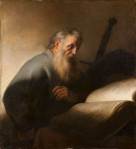
The Apostle Paul – vs – pastor John Hagee
“Women pastoring over men in the Church”
 VS
VS 
1 Corinthians 14:33(b), As in all the churches of the saints, verse 34, the women are to keep silent in the churches; for they are not permitted to speak, but are to subject themselves, just as the Law also says. Verse 35. If they desire to learn anything, let them ask their own husbands at home; for it is improper for a woman to speak in church. Verse 36. Or was it from you that the word of God first went out? Or has it come to you only?
https://www.facebook.com/reel/1281694657193540
Pastor John Hagee excuses and dismisses these plain teachings in scriptures when they do not fit his religious-secular worldview. Let me say that it would appear that John Hagee is now teaching heresy. He understands scriptures, but has decided to go his own way. He has now shown himself to be an arrogant blasphemer and sadly looks the fool. But, sadly, most of Pentecostalism and The Assemblies of God have gone this way – choosing man’s ways over the clear teaching of God. (Hagee says the sanctuary was divided by a curtain was by CUSTOM and TRADTITION, is a lie. Women were segregated to maintain purity, safety and order).
Read 1 Corinthians 14:33-26 again: As in all the churches of the saints, verse 34, the women are to keep silent in the churches; for they are not permitted to speak, but are to subject themselves, just as the Law also says. Verse 35. If they desire to learn anything, let them ask their own husbands at home; for it is improper for a woman to speak in church. Verse 36. Or was it from you (John Hagee) that the word of God first went out? Or has it come to you only, (John Hagee)?
If Hagee denies and twists these particular scriptures for no good reason except to express and impose his own opinions, then how much more of God’s Word has he distorted?
This edict or teaching about women pastor and women being pastors over men actually begins with “subjection”, one to another in the Body of Christ and specifically about women wives being subject to their own husbands. (see Ephesians 5:21).
- Part One – Here what and why the Bible says what it says about women pastoring over men:

Come, Let us Reason
“TIP OF THE SPEAR”
What does that phrase mean to you?
The “Urban Dictionary” puts it this way: “An American idiom commonly used in military operations to mean the first soldiers to go into a war zone. In common usage, it means the first to venture into a new endeavor. A trailblazer.”
The Bible uses a similar term to describe relationships between Christians in general and between husbands and wives in particular. The word is “Hupotasso“.
You will never find that word spelled, as such, in your Bible, though. It is the Greek word ‘hupotasso’ used for “Submit to” or “be subject to”.
The King James uses the word “submit” but, it reads this way in the New American Standard version of the Bible:
Ephesians 5:21, “and be subject to one another in the fear of Christ.”
Verse 22. Wives, be subject to your own husbands, as to the Lord. Verse 23. For the husband is the head of the wife, as Christ also is the head of the church, He Himself being the Savior of the body. Verse 24. But as the church is subject to Christ, so also the wives ought to be to their husbands in everything.
The word “Hupotasso” literally means:
1) to arrange under, to subordinate;
2) to subject, put in subjection
3) to subject one’s self, obey
4) to submit to one’s control
5) to yield to one’s admonition or advice
6) to obey, be subject.
HUPO – arrange under; TASSO – mutually agree upon
The intention of “submission or subjection” is found in the CONTEXT of the words in this chapter of Ephesians, which encourages us to be wise and moral, kind and pure, gentle and forgiving.
The context is also found in the meaning of the words in these verses.
Specifically, “Hupotasso” comes from a Greek military term meaning “to arrange [troop divisions] in a military fashion under the command of a leader”.

These troop formations were called a Phalanx. The Phalanx was the formation, usually in triangular form, in which The hoplite phalanx of the Archaic and Classical periods in Greece (c. 800–350 BC) was the formation in which the hoplites would line up in ranks in close order.
Hoplites were citizen-soldiers of Ancient Greek city-states who were primarily armed with spears and shields. Hoplite soldiers utilized the phalanx formation in order to be effective in war with fewer soldiers. The formation discouraged the soldiers from acting alone, for this would compromise the formation and minimize its strengths.

The hoplites would lock their shields together, and the first few ranks of soldiers would project their spears out over the first rank of shields.
Those at the front were, what we would call today, THE TIP OF THE SPEAR or the POINT MAN. They presented the first defense against the enemy and were the first to engage the enemy and the first to take casualties.
The phalanx therefore presented a shield wall and a mass of spear points to the enemy. Making frontal assaults against it very difficult.
It also allowed a higher proportion of the soldiers to be actively engaged in combat at a given time, rather than just those in the front rank.
This word, “Hupotasso”, in non-military use, is “a voluntary attitude of giving in, cooperating, assuming responsibility, and carrying a burden”.
The Bible gives this as an example for husbands and wives to cooperate and to successfully navigate life and in waging wars against ‘their common enemy’, Satan.
The wife is fully engaged in the marriage relationship, but, God says the husband is to be the Tip of the Spear in order to protect and preserve and, if necessary, the first to fall.
Interestingly, Ephesians 5:22, “be subject to your own” uses the word “idios” which means, uniquely one’s own, peculiar to the individual. It is “stronger than the simple possessive pronoun (‘own’). This emphatic adjective means ‘private, personal’ “.
God gives each husband a wife, designed by God, Himself, to fulfill a role specifically for that husband. God gives the wife gifts, talents, abilities and a calling uniquely designed to serve God and to compliment and to complete the husband.

This is why the Bible says “Husbands, love your wives, just as Christ also loved the church and gave Himself up for her, so that He might sanctify her, having cleansed her by the washing of water with the word, that He might present to Himself the church in all her glory, having no spot or wrinkle or any such thing; but that she would be holy and blameless.
“So husbands ought also to love their own wives as their own bodies. He who loves his own wife loves himself”.
It is also why God says “Wives, be subject to your own husbands, as to the Lord”.
Neither, the husband nor the wife, can be made complete as persons when finding refuge, protection and provision. But as a God given ability, you can mature and sustain one another, until you understand this Spiritual principal and follow it.

Marriage has mutual strength through commitment and cooperation with one another under God’s Steady Hand.
Please take this to heart, dear ones. This message is so important.
The world and the Devil are deceiving the family in to thinking ‘what works for you is OK”. It is NOT OK. God’s design, His plan and His Word is what gives life, and life more abundant. Stop following the world and REASON through God’s Word. Understand it and live!
So, how does this apply to women in the church, and specifically women as pastors in a church? In this instance, it is much simpler to explain from Scriptures and even easier to understand than the first half of this article. Allow me to lay the groundwork:
First, all Scripture is the Breathed-out Word of God, according to 2 Timothy 3:16-17. The Bible tells us that the Word of God is without any error, is dependable, revealing, powerful, piercing, and eternal. It is the lamp unto our feet and the light upon our path. John 14:14-18 tells us that the Word became flesh and dwelt among us, and that Jesus is the Word! Additionally, Jesus tells us that He came to tell the truth (John 18:37), and that He in fact is The Truth (John 14:6). So, it is safe and wise to believe and to do whatever the Bible says – especially the plain things!
Therefore, when the Bible says, “As in all the churches of the saints, the women should keep silent in the churches. For they are not permitted to speak, but should be in submission, as the Law also says. If there is anything they desire to learn, let them ask their husbands at home. For it is shameful for a woman to speak in church.”
I have read the numerous opinions and commentaries on this matter of women being ordained as a pastor. Reading the pros and cons doesn’t take one long to determine what the varying authors believed before they wrote their opinion. One such opinion, found on Bible.Org, written by a Sandra Glahn, who holds a Master of Theology degree from Dallas Theological Seminary (DTS) and a PhD in The Humanities, Aesthetic Studies from the University of Texas at Dallas, tries to frame the Apostle Paul’s words in the context of spiritual gifts, specifically prophecy and speaking in tongues. I find her attempt clumsy and severely biased at best, and the use of eisegesis, a deliberate distortion of scriptures, at worst, connecting dots that don’t align, so to speak.
The context of Paul’s remarks are about orderly worship but come under the heading of submission to authority as a protective covering as described throughout the Bible
1 Corinithians 11:2-3, “Now I commend you because you remember me in everything and maintain the traditions even as I delivered them to you. But I want you to understand that the head of every man is Christ, the head of a wife is her husband, and the head of Christ is God.”
The rebellious and feeble attempts to change the meaning and the context of this matter and these verses, should cause the rebel to remember these words: “Now the serpent was more crafty than any other beast of the field that the Lord God had made. He said to the woman, “Did God actually say…?
His Word was made flesh and dwelt among us. God sent His Son to seek and to save – to make safe, to make whole, to make healthy and sound, with a great purpose and direction in life! And to as many as received Him by faith, He has given them the right to be the children of God.
For your own sake and safety, don’t change even one letter or iota of His Word! Believe and Live!
Your Brother and Friend,
Mike Young
https://whitestone2020.com/2024/11/18/about-submission-and-women-pastors/
PART 2
- Now for part 2 – Submission and Women as pastors – It isn’t what you think
(This is an addendum to the original article “About Submission and Women Pastors”)
I have recently been challenged by someone suggesting that “since the Bible cites women who prophesied in the Bible, and since prophecy can be defined as both ‘forth telling’ and as ‘foretelling’, and since ‘forth telling’ is the same as preaching, the women can be pastors.”
Wow! Wow, wow, wow. Okay. Since A equals B and B equals C and C equals D, there really is no A because it is really a D; or a B or a C?
Seriously, let’s begin by being reminded that Jesus fulfilled the old covenant and thereby has established the New Covenant in His Blood. For one (big) example, there is no longer any need for repeated animal sacrifices to atone for sin. Jesus, the Lamb of God, was and is the final sacrifice for atonement (made “at one”, reconciled) with God.
Next, the Apostle Paul explains that the law (the Torah, also known as the “Halakha” which translates as “the path that one walks”, also referred to as the “Mitzvot”, “Mishna” and the “Talmud”, was codified into what we call the Old Testament around 400 to 200 B.C.). Paul was clear when He said, “Therefore the law was our tutor to bring us to Christ, that we might be justified by faith. But after faith has come, we are no longer under a tutor.”
This is important to remember when it comes to properly interpreting, reading and understanding Scriptures. We are to consider Scriptures in their original text and context, with the Old Testament as background and the New Testament as its fulfillment.
(Another example is found in Matthew 5: 21-26, “You have heard that the ancients were told, ‘You shall not murder,’ and ‘Whoever commits murder shall be answerable to the court.’ But I (Jesus) say to you that everyone who is angry with his brother shall be answerable to the court; and whoever says to his brother, ‘You good-for-nothing,’ shall be answerable to the supreme court; and whoever says, ‘You fool,’ shall be guilty enough to go into the fiery hell. Come to good terms with your accuser quickly, while you are with him on the way to court, so that your accuser will not hand you over to the judge, and the judge to the officer, and you will not be thrown into prison. Truly, I say to you, you will not come out of there until you have paid up every last cent.”
The New Testament (the New Covenant) is built upon the Old Testament (the Law and the Old Covenants), and the New Covenant has fulfilled the Law. That Law is now written upon our hearts and minds (see Jeremiah 31:33 and Hebrews 10:16), and we have the Holy Spirit as our guide.
This should lead us to consider some misconceptions held by some who would co-mingle or syncretize the old and the new Covenants. Remembering that Jesus warned,“neither is new wine put into old wineskins. If it is, the skins burst and the wine is spilled, and the skins are destroyed. But new wine is put into fresh wineskins, and so both are preserved.”
Some say it is okay for a woman to hold the office of pastor and to preach in a general assembly of believers, over both men and women. They say the Old Testament says that women prophesied, and since prophesying is a form of preaching, they can be pastors. I am not certain how a person could or even would link those two thoughts, but let me be clear. Number one, the role of a prophet or prophesying has absolutely no direct tie or effect upon the role of a pastor. A pastor might prophesy, whether preaching or foretelling, and a prophet might preach, but the roles are distinctively separate.
FACTS:
- Nowhere in the Old Testament do we find a woman as a pastor (although she may have been a teacher. Some say men in leadership was just a cultural norm, and that custom has changed in the modern world. That allegation is never mentioned in scriptures. What is mentioned is that God (and His Word) are the same yesterday, today and forever.
- As mentioned above, we live under the New Covenant.
- The Apostle Paul and the New Testament teaches that The Spiritual Gifts of apostles, prophets, evangelists, pastors, and teachers are offices but only the office / gift of pastor is restricted to men.
-
- Jesus and the Apostle Paul taught on differences between the role and office of prophet and gift of prophecy.
- The word Pastor is a term derived from a Greek word for “shepherd”, and is reserved for the male in the Bible – a role for men. Pastoral Gifts include integrity and compassion. A shepherd (i.e., a pastor), is the feeder, protector, and ruler of a flock of men. Figuratively, a pastor is someone who the Lord raises up to care for the total well-being of His flock (the people of the Lord). (Strong’s Concordance). Pastor: This term derives from a Greek word for “shepherd”. Pastoral Gifts include integrity and compassion.
The term “poimén” primarily refers to a shepherd, one who tends, leads, and cares for a flock of sheep. In the New Testament, it is used both literally and metaphorically. Literally, it describes those who care for sheep, while metaphorically, it refers to leaders or pastors who guide and nurture a community of believers, akin to a shepherd with his flock.
The image of a shepherd was deeply embedded in the cultural and religious consciousness of the Israelites, often symbolizing leadership, provision, and protection. This imagery is prevalent throughout the Bible, where God is depicted as the ultimate Shepherd of His people, and leaders are often called to emulate this role.
(The tasks of a Near Eastern shepherd were to watch for enemies trying to attack the sheep to defend the sheep from attackers to heal the wounded and sick sheep to find and save lost or trapped sheep to love them, sharing their lives and so earning their trust.
During World War II, a shepherd was a pilot who guided another pilot whose plane was partially disabled back to the base or carrier by flying alongside him to maintain visual contact.)
4. In the New Testament, the office of prophet is to equip the saints for the work of service through exhortation, edification, and consolation (1 Corinthians 12:28; 1 Corinthians 14:3 Ephesians 4:11). The prophet’s corresponding gift is prophecy. Prophecy is “reporting something from God’s Word that God brings to your mind”. Prophecy is addressed to the human understanding “he who prophesies speaks to men,” Corinthians 14:1-25. The prophet “edifies the church” (14:4).
5. Preaching is a role of an Apostle, Apostle: The title apostle comes from the Greek word apostolos which means “a messenger, one sent forth with orders”. It refers to one who has been delegated authority by another in a foreign land. Apostles were the first leaders of the Church; they were commissioned by Jesus to initiate and direct the preaching of the gospel , andthey were all men. No woman has even been assigned as an Apostle in the Bible. And although the OFFICE of Apostle is closed, the gift of bringing the message of the Gospel is still active.
7. Preaching is a role of an Evangelist. Evangelist: An evangelist is one who devotes himself to preaching the gospel. In the New Testament, evangelists preached from city to city, church to church.
8. Preaching is a role of a Teacher: Someone who devotes his or her life to preaching and teaching the Christian faith. When teaching is provided for the Church by God, two gifts are actually given—to the Church is given a teacher and along with the teacher comes a divine capacity to teach.
9. Finally, the Apostle Paul, in 1 Corinthians 14:33- 38, speaks to the matter of women speaking in Churches. “As in all the churches of the saints, verse 34, the women are to keep silent in the churches; for they are not permitted to speak, but are to subject themselves, just as the Law also says. Verse 35. If they desire to learn anything, let them ask their own husbands at home; for it is improper for a woman to speak in church. Verse 36. Or was it from you that the word of God first went out? Or has it come to you only?“
“Verse 37. If anyone thinks that he is a prophet or spiritual, let him recognize that the things which I write to you are the Lord’s commandment. Verse 38. But if anyone does not recognize this, he is not recognized.”
This is a matter of authority-covering, protection and authority over God’s Church. There are so many roles and only one is absolutely, by scriptural authority, reserved for men – that of the office of Pastor, his roles, duties and responsibilities.
If someone knowingly links or lumps these offices together, it is both a misrepresentation of scriptures and a claim that the Word of God in incomplete and is malleable, open to personal interpretation. (However, 2 Peter 1:20 clearly mandates, But know this first of all, that no prophecy of Scripture becomes a matter of someone’s own interpretation.)
Next, this is also using the method of Eisegesis to make a personal interpretation of scriptures, an interpretation of a text, especially a biblical text, by reading one’s own ideas or biases into it, rather than drawing out its original meaning. This approach is often subjective and can distort the intended message of the text. And although eisegesis itself is not classified as a heresy, it can lead to heretical interpretations of Scripture by imposing personal biases rather than drawing out the text’s original meaning. This practice is often criticized in theological discussions for distorting the intended message of the Bible.
When a church or a pastor decides to do these things, he (and she?) are operating “in the flesh” and outside the boundaries of clearly defined Scriptural mandates. And there really is no need nor a good reason to add one’s opinion to scriptures to achieve a personal result or to suit a personal view – and besides, there would be consequences in the Body.
Your Brother and Friend,
Mike Young
https://whitestone2020.com/2025/10/28/submission-and-women-as-pastors-it-isnt-what-you-think-an-addendum/
“The serpent said to the woman, “You certainly will not die!” Yet they died – all of them and trillions more.
Scriptures, from the beginning, have said to wives, “Your desire shall be for your husband, and he shall rule over you.” Yet, like Eve and like Sarah, when things did not go their way quickly enough, the acted on their own impulses. And the curse and consequences of sin ensued. And we suffer those consequences to this day.
“And men, you are to love you wives as Christ loves the Church”.



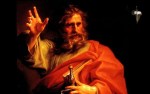




 WARNING – this could be considered controversial.